My Favorite Working Pony

Here are a couple of photos of the one I still think of as the “new horse.”  It is made up of mostly recycled and scrap wood that I was hoarding for just such a project.  More than ten years later, I am still quite happy with the size and design of this one. It isn’t perfect for everything, but what is? It has produced bows and darts, spears and walking sticks, and held dozens of other projects along the way. It is a sturdy saw bench and a nice place to sit and have a beer at the end of the day.
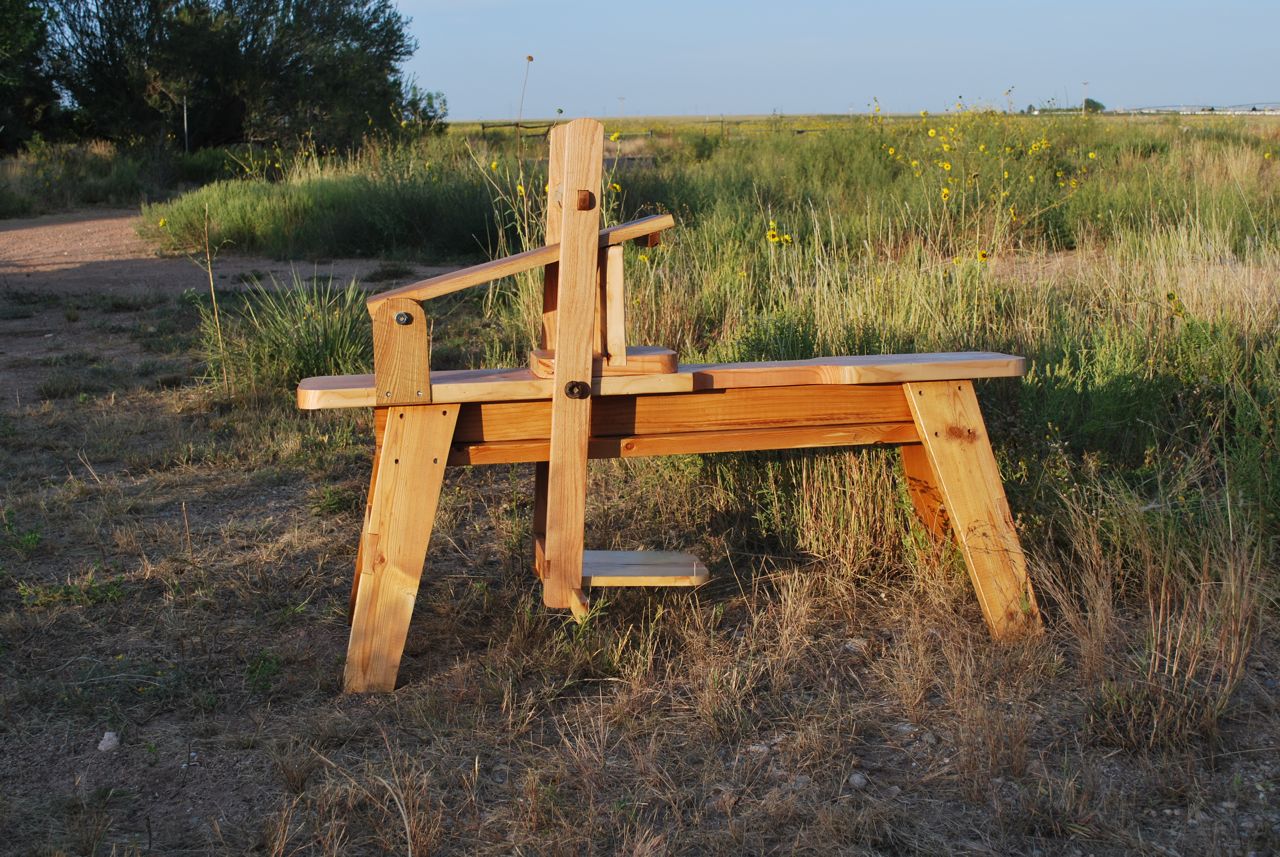
The bench itself is made of pine and fir dimensional lumber. The working portions are red oak, white oak, hickory, and popular.  The large bolts are salvaged from an old Ford truck spare tire holder.

What is Poor?

Carpenters at work. Wood is certainly one of man’s oldest durable building materials.

“The man who, by his own and his family’s labour can provide a sufficiency of food and raiment, and a comfortable dwelling-place, is not a poor man.”

From: Cottage Economy, William Cobbett 1833.

Handmade Sandals

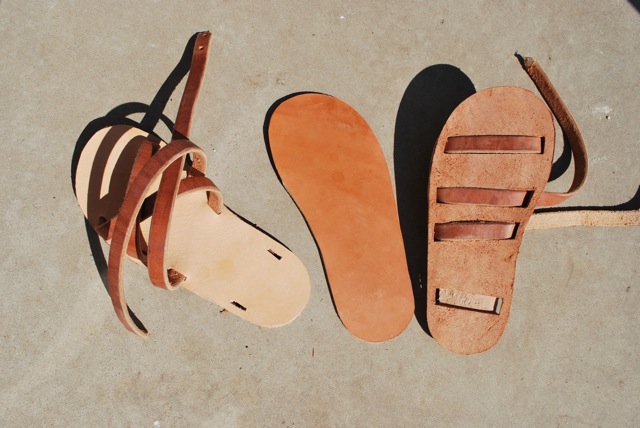
Sandals in progress…

If you have ever taken a class with me you might know that all the intimidating sewing isn’t as bad as it looks.  The sole is three layers thick but the use of a good, sharp awl makes the double needle sewing go quickly.  A lot more work goes into these than I would have initially thought but I really think they come out great in the end.  It took several pairs to get the pattern just right but research into design and construction led me to this final design.  The sole is three layers thick (or more historically) and have been made this way in Europe and North Africa for more than 2,000 years.

The thickness of additional layers isn’t just to provide safety for the feet but the central layer provides a path for the straps to travel through without lumping under the feet.  The parts consist of an insole (medium weight oak tan leather), mid-sole to allow tunneling the straps through, and an outer sole, in this case, leather.  The straps are 48″ per foot plus the heel yoke.

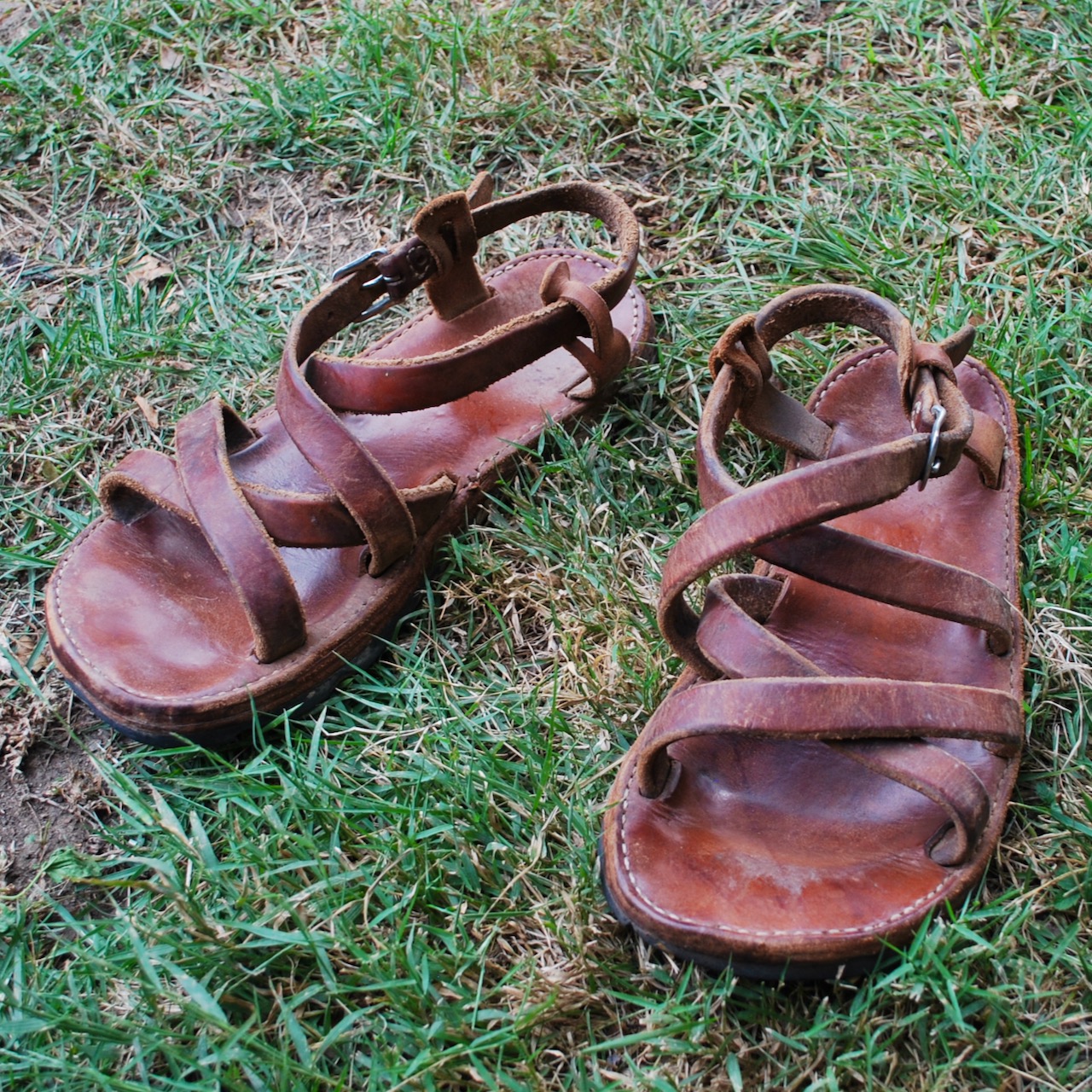
This is how they looked when I thought I was finished. Shortly after, I added buckles and have since been through a few more soles. Currently they are shod with rubber.

Nine years on and still going strong. The patina that good leather takes on cannot be simulated. They get a coat of dubbin every six months or so but otherwise, need little care. I hope to get back to a time when I can wear them daily again.

Everyone Should Cultivate Manual Training

Does this mean we should neglect our intellect? Absolutely not.

In fact, the opposite. We should strive to cultivate both mind and body to become the most perfect specimen we can become, daily.

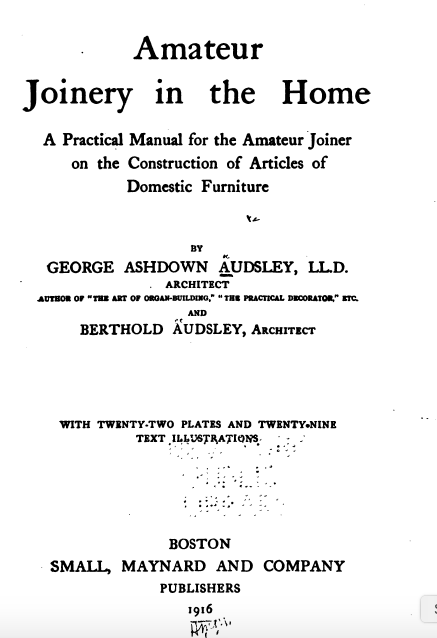
I came across this passage while reading a bit this morning from Amateur Joinery in the Home (1916) by George and Berthold Audsley and thought it would be worthwhile to share.

There is a lot of good advice here but the above sentences stuck with me while taking the morning walk. “One never knows when life or limb may depend on the expert use of the hand and ordinary tools.” This could be applied to so many facets of an interesting life and is the basis of human survival that has put us where we are for a million years.

I have been using the down time afforded us by the events of 2020 to catch up on an ever-growing list of books and articles I have been amassing for decades. When I was working in archaeology full-time, the hundreds of pages of reading most weeks necessary just to keep current pushed many other interests into side avenues. I hope you all are using your time in a way that works well for you. In the mean time, this book is available for anyone with an interest in tools and working with their hands. It may even inspire new projects.

Click here to download a pdf file of the book. Amateur Joinery in the Home.

Pleasant to Behold

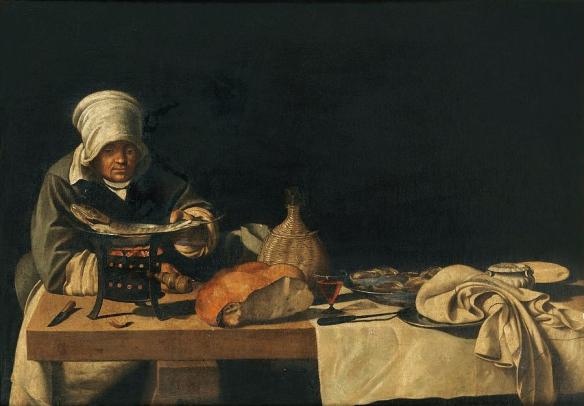
“And, pray, what can be pleasanter to behold? Talk, indeed, of your pantomimes and gaudy shows; your processions and installations and coronations! Give me, for a beautiful sight, a neat and smart woman, heating her oven and setting in her bread! And, if the bustle does make the sign of labour glisten on her brow, where is the man that would not kiss that off, rather than lick the plaster from the cheek of a duchess.”

William Cobbett – Cottage Economy 1833

A Gathering Saw

Here’s another small project happening amidst all the “real work” that needs to get done during this quarantine.

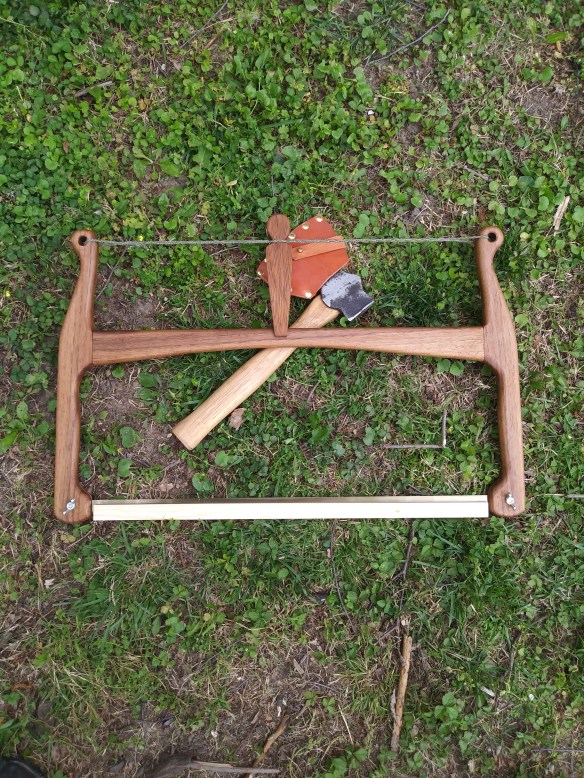
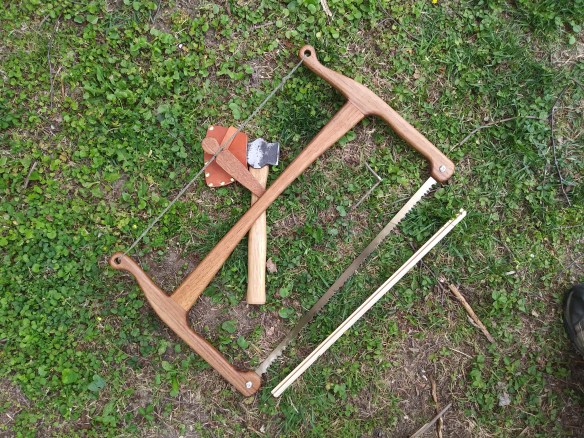
24 inch frame saw made from Missouri grown walnut. The “hanged man” style flapper is a scrap of mahogany from some repurposed shelves. The sheath here is pine.

I seem to sell or occasionally give away the saws I make. I needed a new one. The last one went into the Winter Count raffle as the prizes were looking a little scant this year.

I went into the workshop without much of a specific plan but came out with this little gem. Just a matter of removing the unnecessary bits really.

Finally, the pin sheath is stained and a canvas quiver is made to cover the saw when broken down for travel. This one is from old,, heavyweight canvas salvaged from a truck tarp. It will all fit into a neat 24 inch bundle.

I want to keep this one but after inquiries rolling in, it may go into the shop (or another just like it).

Be Safe!

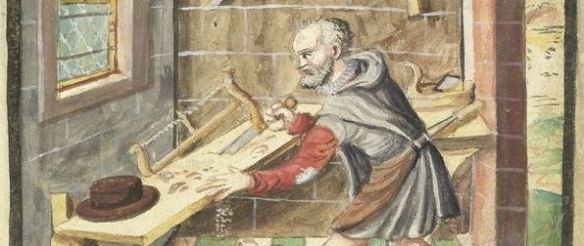
For your enjoyment: a Carpenter from 1589, Mendel Manuscript.

Sandals

This post came from looking through a few class photos from Rabbitstick several years ago based on an inquiry. This is one of the years I taught my favorite sandal design, an ancient one though still cleverly marketed as a modern style.

I call them saint sandals as they look like something you would see on a medieval depiction of some holy wanderer from Europe or the Middle East.  To me, these are the greatest sandals I have ever owned.

This design is a good introduction to leather working and specifically, making footwear, which can be a bit more complex than most people know.  Shoes really need to fit well in order to not cause pain or damage to the feet so an open design is a good way to start on this craft.

As I make them, the sewing is fairly minimal and can be eliminated entirely with the use Barge Cement.  The sewing makes them a stronger design and I think adds a sense if beauty and craftsmanship to the final product.  It is also a good introduction to double needle saddle stitching.

With a little dedication, these can be made in a long half day and are ready for use immediately.

Thank you to all the patient students who have learned this and taken home to teach others.  I look forward to this class each time I offer it.