A Story of Growing Up in a Sheep Wagon

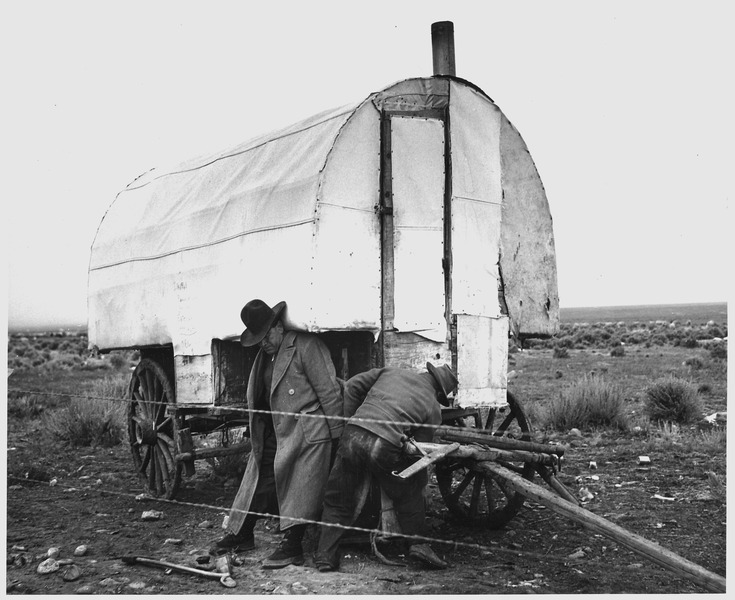
Greasing the axles of a sheep camp n Taos County, New Mexico ca. 1941.
Greasing the axles of a sheep camp in Taos County, New Mexico ca. 1941.

“Victor Croley grew up with a sheepherder father, his family of six lived happily in a wagon like this, entertained by the outdoors and a fiddle.”

Victor Croley describes growing up in a nomadic family of six with a sheepherder wagon for home and how years down the road he felt the urge to build a wagon of his own.
Mother Earth News, May/June 1970

Here is great story I read years ago about being raised in a family of six in a sheep camp measuring about 7 x 8′! (I think that’s the floor space).  I recently relocated the article in Mother Earth News.

Croley’s Wagon.
Schematic of a typical sheep camp.

Here’s an excerpt:

“The canvas-covered sheep wagon was roughly about seven feet wide by eight feet long. On the front end a door opened out of the middle and you stepped down onto the wagon tongue and thence to the ground. From the inside looking out, the stove was on the left of the door. On the right was a small wash stand with several wooden drawers for storage of linens, towels and socks. A bucket of water and washbasin were on the oil cloth covered top and a small mirror hung above the basin for shaving. Soap, toothbrush, razor and essentials rested on top of the stand when in location or were stowed in a drawer when moving.”

Download the print article here: CroleysSheepCamp.

New and Improved

That’s the idea at least.  I have been diligently working to re-write the Vardo building pages in such a way as to make them a little more instructive.  The benefit of hindsight has allowed me to address issues that seem to be common questions.  I kept the comments in place (I hope) as they provide a lot of information and discussion from over the years.  Over the next few days I intend to keep adding photos.  Please feel free to comment, question, or point out any obvious typos or other errors.

overviewClick the preview image to go the the first page of the re-write.  More pages will be published as I get the images and text in place.  Also I would deeply appreciate it if readers could share this in appropriate media with links back to the blog.

Cheers! ~GTC

Home is Where the Hearth Is

…and the Vardo Will be Close by.

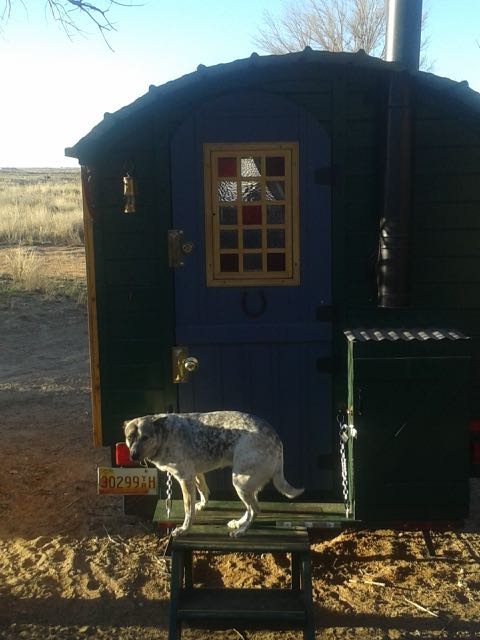
20150329_073652
Somebody hates to be left out.

Some important facts about caravan living before the ultra-modern RVs came along that may help people understand some of the choices I have made about my own wagon:

atHome
At the most basic level, life revolves around food and shelter.
  • The caravan is the hub around which camp is built, but most “living” actually takes place outside in the wide world.  Sometimes this means tents or other temporary structures provide added protection from the elements.  Prior to the second world war, caravan Travellers in Europe often slept outdoors, under the caravan when necessary while the kids were corralled inside.  This makes a lot a sense as adults stay up later, and kids can wander off.
  • Cooking is done outdoors, over a fire.  The stove, when there is one, is for heat and drying.  The hearth is the focus of family life, just as it has been for a million years.  That is where people congregate, music and stories happen there, and it is provides comfort and cheer.
Hearth and home has a real meaning.
  • There is no water closet or toilet inside the caravan.  That is considered by connoisseurs to be repugnant in such a small space.  Needing to defecate in such a small space is a modern, and to some, a filthy idea.  However, this is one of the most common criticisms I hear about mine or other traditional wagons; seemingly from folks with little travel or camping experience.
J. Lequesca's sheep graze in Jordan Valley, Oregon.
J. Lequesca’s sheep graze in Jordan Valley, Oregon.
  • A consistent anthropological observation about nomads is the strict rules of hygiene and cleanliness.  Working and wandering outdoors can be a dirty business so strict rules are adhered to.  Some of these reach the level of taboos and can be traced back over at least a thousand years.  Living on the road can make one appreciate this need.Family

    Family
    A happy family from the road.
  • The fancy wagons of 19th century Britain are the exception, not the rule.  Functional but sometimes homely carts and wagons have likely served as the home base for nomads of various types since 500 B.C. or before.  They came to their peak of perfection in Britain in the 19th century before morphing into the RVs we see today.
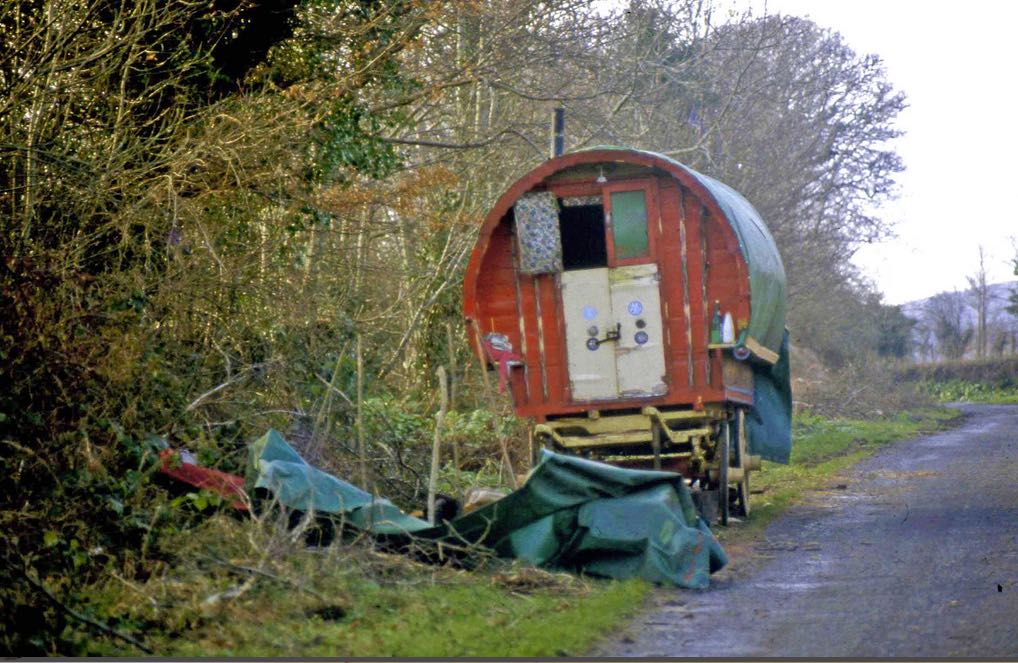
TravellerinSWengland
A Traveller in southwest England. This simple accommodation is much cheaper and more readily built from cheap or found materials than the fancy production models.

Then as today, a conscientious traveller uses a fire pan to prevent scorching the earth by the roadside.  Mine is an old plow disk.

And finally, above are a few examples of outside extensions added to late 19th century caravans across Britain exhibiting the functionality of canvas to extend the living space in less-than-perfect weather.

Caravanroadside
You never quite know where the day might end.


The Tiny House Movement

Here’s a redux from a conversation held last year.

George Crawford's avatarPreindustrial Craftsmanship

Here’s a recent conversation I had, as best I can recall, of creating disappointment and maybe using the wrong words when describing the Vardo.

A woman in a grocery store parking lot jogs up to the vardo while I’m making a sandwich shouting, “Oh my gosh!  That is so cool!  Wow! Is that a Tiny House like on TV? Can I have a look inside?”

“Yes, of course.  You can look inside.”  So far, it’s progressing just like a hundred other conversations I’ve had over the years.

“Is it like the little TV houses? You know, like on that show?”

“I don’t know the show but it’s actually a little camping caravan.”

“It’s not a Tiny House?  Oh, never mind then,” turning on her heel she walked away without a backward glance.  Then to another gentleman walking towards us she shouts, “It’s nothing.  It’s not like the Tiny House Show”…

View original post 292 more words

English Caravans for Rent

1111
A familiar classic vardo layout.

I’m not sure when the word “glamping” entered out lexicon but it is a craze that enterprising hostlers are hoping on world-wide it seems.  This luxurious little wagon is for rent in Pembrokeshire near Norwich in England.

View from the master bed.

I don’t know anything about these other than they look classy and would be a nice place to spend a few days out of the ordinary.  The setup appears to cater to somebody wanting to “rough it” a tiny bit but still have the creature comforts.

An inviting little home to give a first taste of vardo life.

Have a look at their other “Glamperous” opportunities if you have a pocket full of pound and are looking for an interesting accommodation in England sometime. Of course, I’m mostly into these to explore design options and to seek innovations for my own work and I won’t attempt to replicate their website but here is another option available in the Dorset countryside.

A Beautiful bowtop intereor for rent.
A Beautiful bowtop interior for rent in Dorset.

There is obviously a demand for this sort of thing and I’m happy that there are reasonable alternatives to chain motels for a getaway.

Recycling an old vardo is great idea.
13
I can’t imaging the furniture stays outside year-round as it is England but it does add something nice to the outfit.
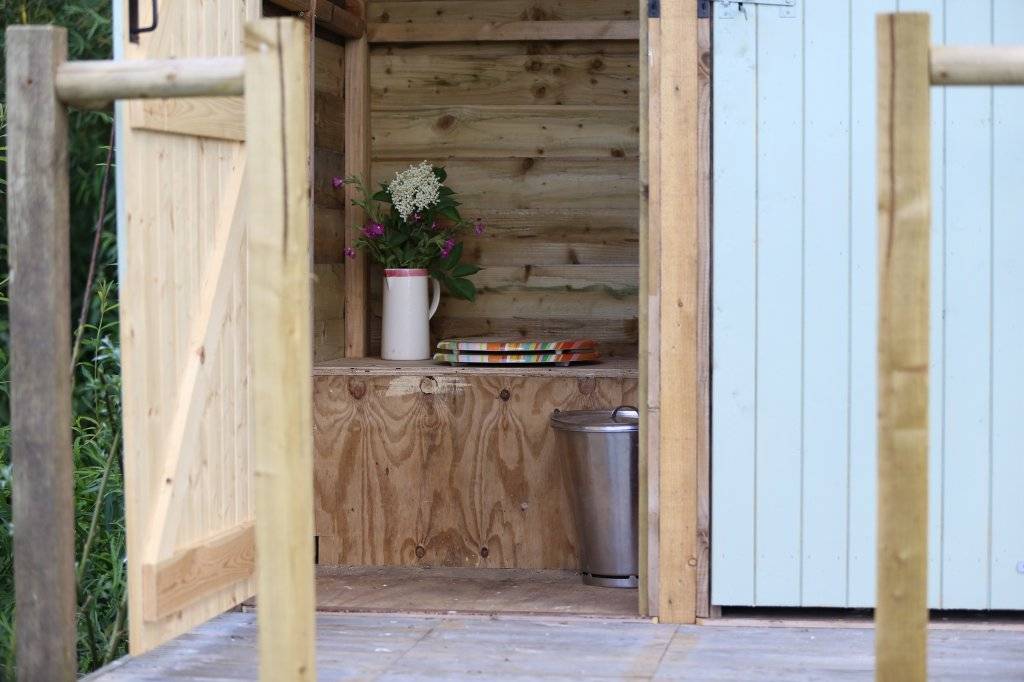
wc
For the pragmatic reader, here’s a quick shot of the facilities nearby; a composting toilet.

I’m not advertising for them but you can see more interesting opportunities on their website by clicking the logo. unearthed-white-coloured

An Open Lot Accommodation

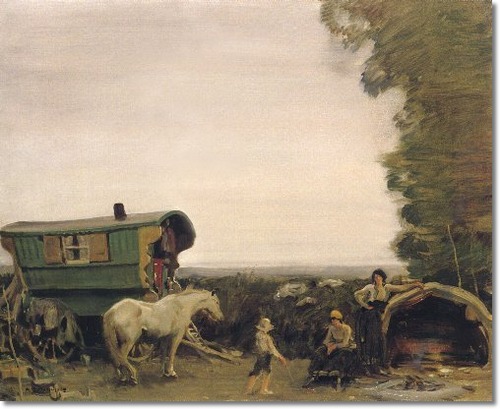
A little something for Wagon Wednesday.  A simple bow-top accommodation.  Very little of the wagon is seen in the image but we can rest assured that it was painted green at one time.  Hedley picked up some fine details here including bolts, boards, the tarp attachment, and a very nice little driving lamp.
LastLast in Market, Ralph Hedley 1885.  Hedley really captured life in rural northern Britain.