Making a Bucksaw – Retrospective

At “Echoes in Time” Champoeg State Park, Oregon, USA 2014.

This is the prototype saw I used for teaching a bushcraft class at Echoes in Time in 2014.  Unfortunately, a split in the original wood spread last winter and I had to rebuild it.  Actually though, that is a beautiful thing when you can make your own tools.  I didn’t spend any abstract money for a new one, I didn’t have to trow away some sort of useless and polluting garbage, and I could readily improve the design based on several year’s use and observation.  I’ve sold about 20 of these now so the pattern is firmly ingrained in my brain and sinews while tweaking each batch to make them more pleasing to use and efficient to make. without losing the aesthetic of this ancient design.

Saw ready for assembly.

It has been a very successful class for me at both Winter Count and Rabbitstick over the years and I’ve honed the teaching so that each student can really get them most out of it.  Not only is there basic shaping and carving, but also learning to make a simple blind mortise and tenon joint, drill holes by hand-power, and think about design options.  I hope to be teaching this one-day class again soon as it is a great introduction to hand woodworking  while building a manageable and extremely useful tool.
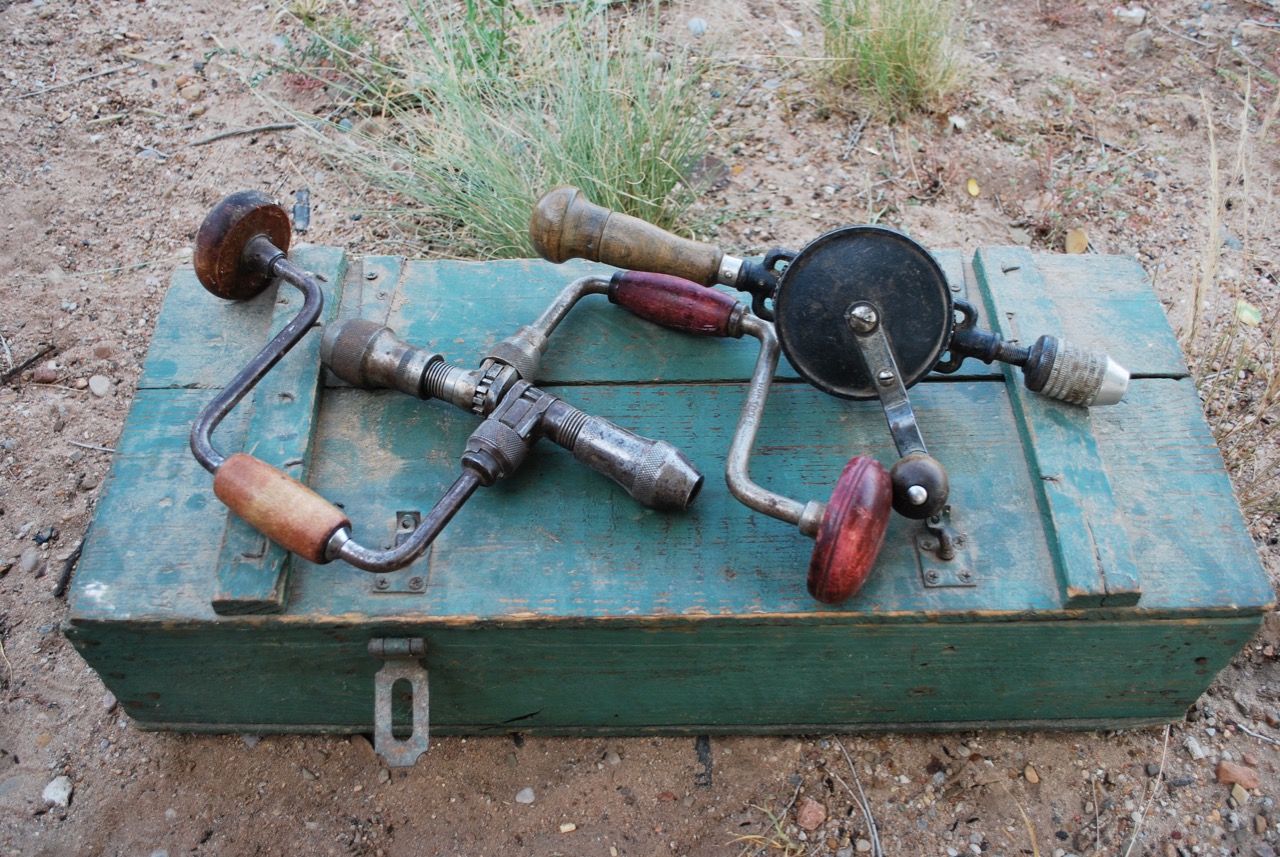
Assortment of cordless tools used in class.

U.S. Army Riding Gloves Pattern – free

In my internet sleuthing I have gathered literally thousands of images, plans, and patterns of things I would like to make or have for reference.  Government documents, like the scans below, are invaluable resources for the maker when they are made public.  Who would know how to better and more efficiently make a pair of riding gloves than the U.S. Cavalry.  This design is the culmination of more than 110 years in the business.

Click the pattern for the full-sized image. Scale to fit the dimensions shown for the standard sizing or scale them to fit your hand, be it a tiny little paw or oversized ham (note the three sizes on the pattern).
Part of the fun is learning the names of the parts; I had no idea there was even such a thing as a quirk in a glove.

I hope to get around to making a pair soon myself but please let me know if you have any success when you try these.  Thanks for reading and please click “Like” or leave a comment if you have one.

Campsite Life

Scenes of life on the road and around the campsites.

october-1951-mrs-robert-matthew-an-mps-wife-campaigning-at-a-gypsy-encampment
October 1951: Mrs Robert Matthew, an MP’s wife, campaigning at a gypsy encampment.
Kidsatthecampsite
Kids at the campsite.
landing
A classic image of Traveller children.
couple
Modern gypsies (Romany) in their simple accommodation.
caravanandbender
I really love these little bender tents.
Family Life
A fine caravan for a successful traveller.
This is part of a series of images, mostly Romany, Irish, and Scottish Travellers collected from around the internet.  Many of these historic images found on the web are without citation.  When a clear link to a source is found, I try to include it.  If a source is known, please pass it on and I will gladly include it or remove it if necessary.

“The Travelling Tinker” by John Burr

The Travelling Tinker

A painting by the Scottish artist John Burr (1831-1893).  Tinkers were originally tinsmiths or “tinners”.  One of many itinerant jobs pursued by a class of casual laborers.  These were mostly skilled and specialized crafts like basket making, shoe repair, leather work, and metal work but many poorer workers were migrant farm labor picking hops and tending the market gardens during the peak harvest.  The fellow in the image above appears to be a fairly well-off repairman mending a seam in a pot.  This from a time when new items were a rare purchase.

I love deciphering images like this for the details of domestic life.  Unlike most photos, there is real intention in what the artist chose to include or not in the painting.  The house is clearly a poor one but a freshly killed chicken hangs from a nail on the wall by some dry roots.  A handmade broom leans against the wall next to a basket that has the tradesman’s coat lying across it.  The oldest daughter tends the infant while the mother stands by the laundry basin with a toddler behind.  All the children look on while the novel worker plies his trade in a waistcoat and hobnail walking shoes.

Making a Stitching Pony; Video Tutorial

Stitching Pony, Leather Worker’s Clamp, or Saddler’s Clam…

Whatever you call it, it is a handy device to own if you sew any leather.  These are simple devices that just about anyone can make with little time or money invested.  Although there are many varieties and models, the one shown in this tutorial by Harry Rogers of Bucklehurst Leather is the one I have most commonly seen.  Is there no end to this man’s skill and diversity of talents?


The only comments I really have are:

YES, the jaws should be lined with thick, smooth leather and that the gap is necessary to keep the jaws as flat as possible against the work.  It is also nice, but not necessary, to have a compression spring over the bolt to push the jaws apart when loosened.   And finally (terrible way to open a sentence in writing I know), a recent comment from a friend suggested that the tightening nut could be replaced and a better system be devised from a bicycle quick release axle.  Maybe on the next one.

Check out his leather work here:

bucklehurstleather_stamp_0fd2bd01-fcde-4de3-b992-c6787c49c8de_180x

Wandering Minstral

A Wandering Minstral
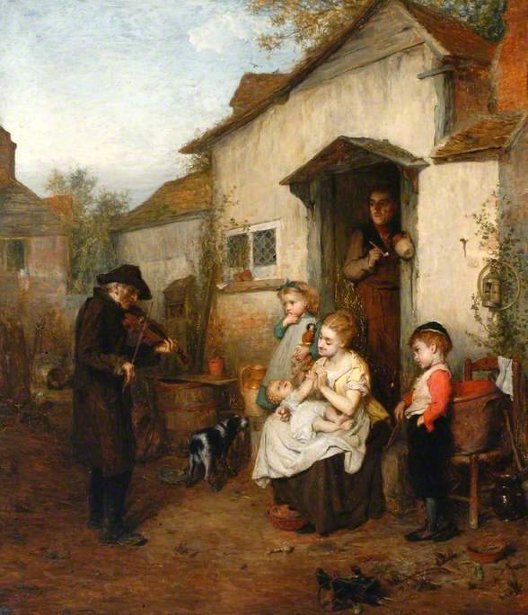
A Wandering Minstrel

Here is a painting by the Scottish artist John Burr (1831-1893) of an itinerant fiddler playing for a family in a Scottish lane probably trying to make enough money to eat or maybe even receive some food for his entertainment.  I can’t help but think the father looking out has a skeptical look; possibly wondering what this will cost in the end.

Music and storytelling were a very different commodity in an age of widespread illiteracy and 24 hour media.  It’s hard to even imagine a time when all music was handmade and intimate and not an item to be mass marketed.

Saddle Stitching

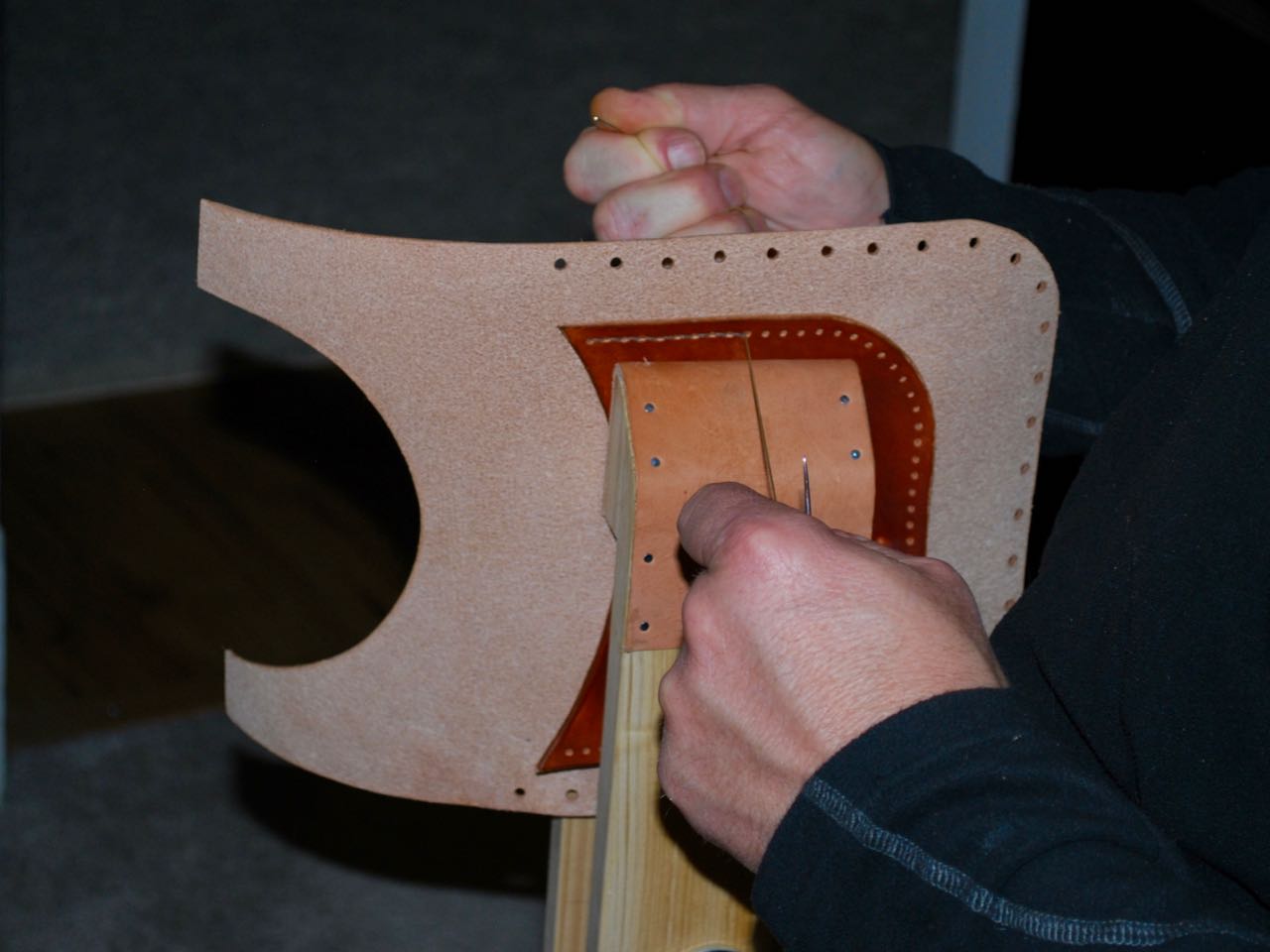
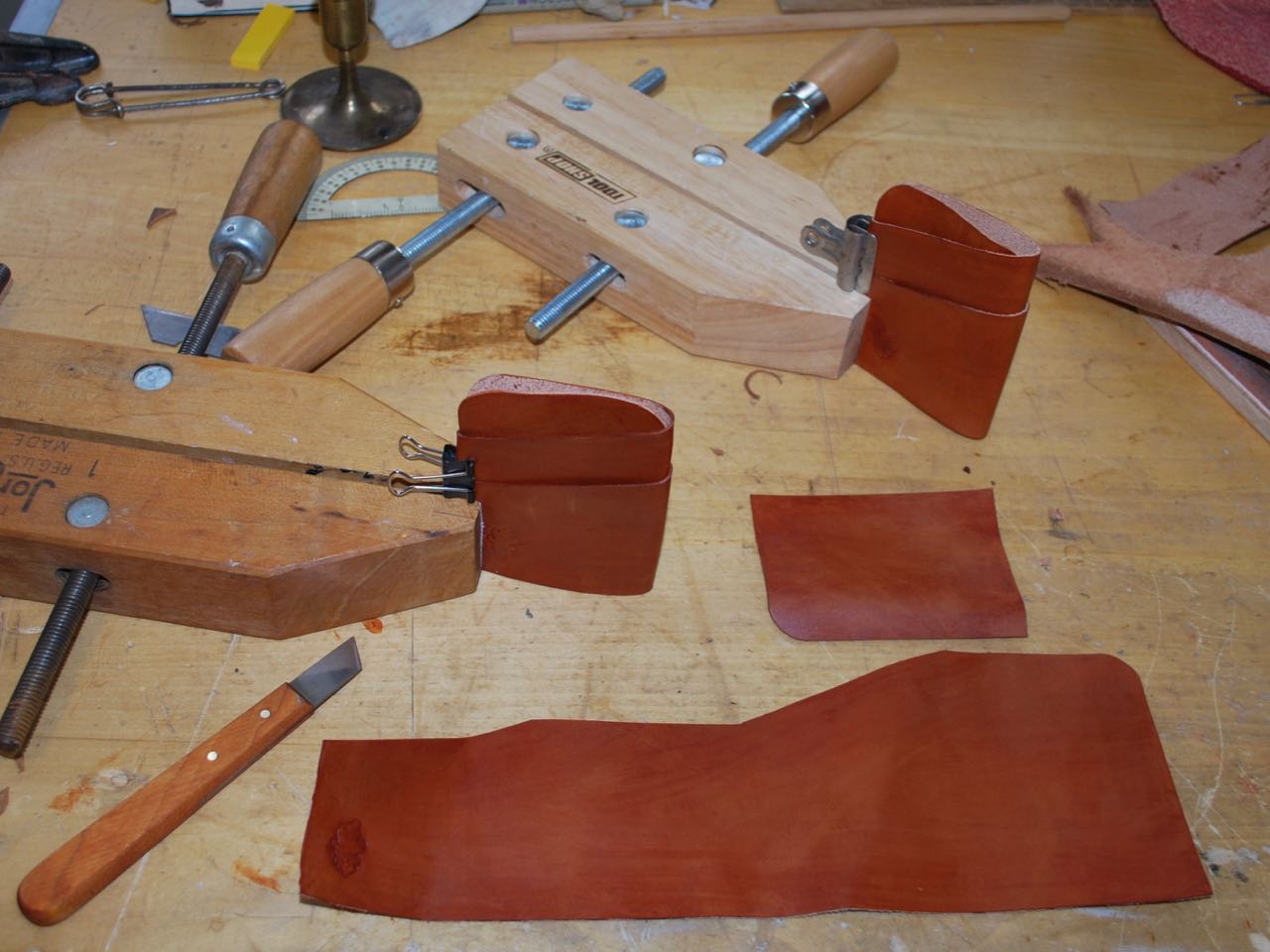
When teaching a leather craft or making an item for someone, I am often asked about the machine used to sew such thick leather or through so many layers in tight areas.  People are often astounded when I explain that this is all hand sewn, with an awl and two needles.

Some earlier work. Good, but not great, stitching.

I learned saddle stitching before the internet was a thing and without a book.  I was sewing leather bags, moccasins, and clothing in a relatively poor and untutored way.  As I became more savvy over the years I was able to analyze older pieces and read an article or two about saddle stitching and cordwaining that began to make my work look more professional.

Saddle stitching is the only way to build a large, complex leather project without some ridiculously expensive machinery.

While I have considered making a video to give an introduction to saddle stitching I know there are many master craftsmen out there far more skilled to do this properly.  One of them is Nigel Armitage of Armitage Leather.  He is a member of the Guild of Master Craftsmen of Britain which I understand is nothing to sneeze at (I can hardly imagine the level of dedication most of these men and women have for their crafts).

Image result for Guild of Master Craftsmen

On to the show…

This is probably the best and simplest tutorial I have seen online about learning the basics of saddle stitch.  If you are new to this, remember, the pricking iron is not an absolute necessity for starting out but it will make you seams straight and beautiful.  If you don’t own one, you can still mark and follow a line or even mark the stitches with a ruler and awl (I did this for a very long time).

I hope this answers some question for those getting interested in leather work and saves you some of the headaches I experienced without proper instruction.


Art and Craft Fair

I would not have ever thought myself a craft fair kind of guy yet here we are…

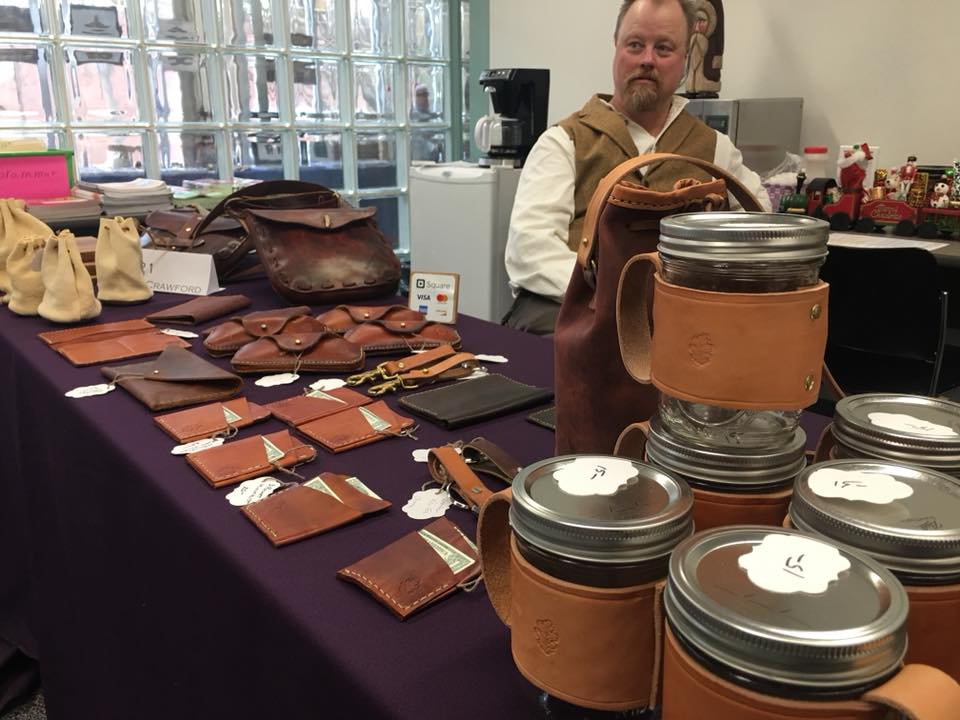
A sneaky photo of the maker discovered this afternoon.

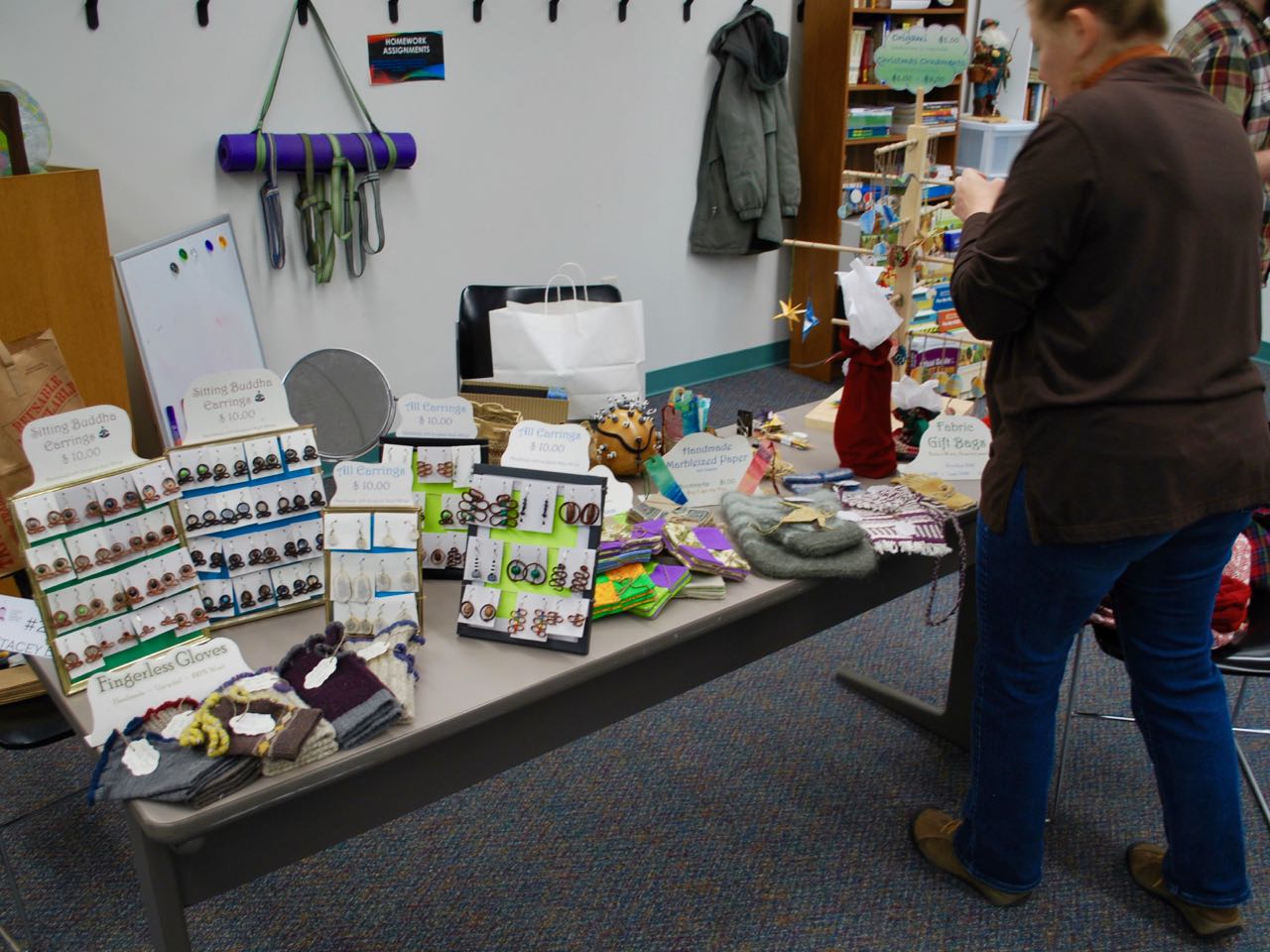
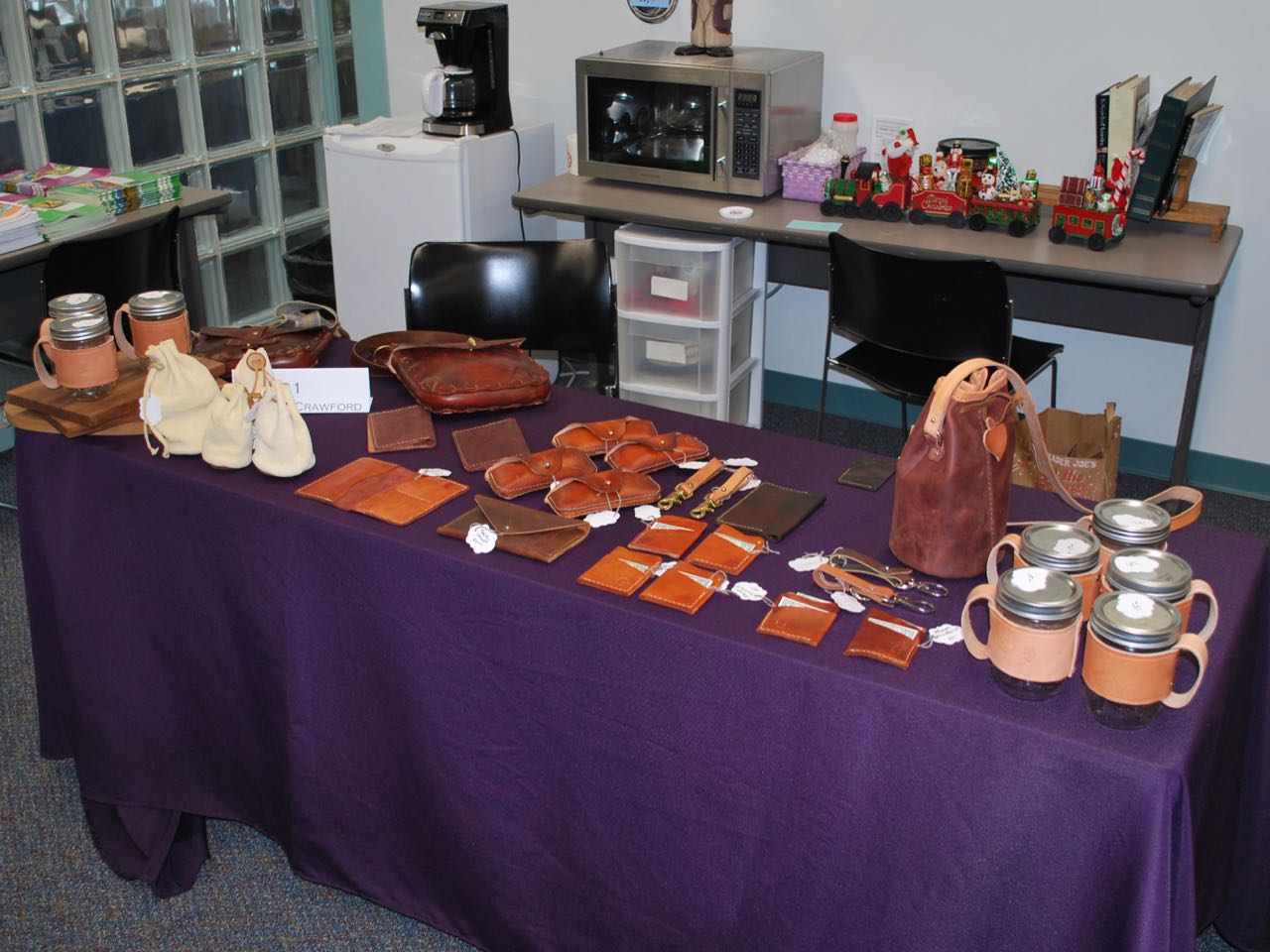
Last year, our local community center hosted an arts and craft fair as a way to bring local artisans together and raise money for public programs (art classes, GED education, computer skills, tax assistance, etc.).  Being new to the area we joined in last year and were invited back for a second go around last weekend.  It was a good cause and a way for us to make a little extra spending money for the holiday season.

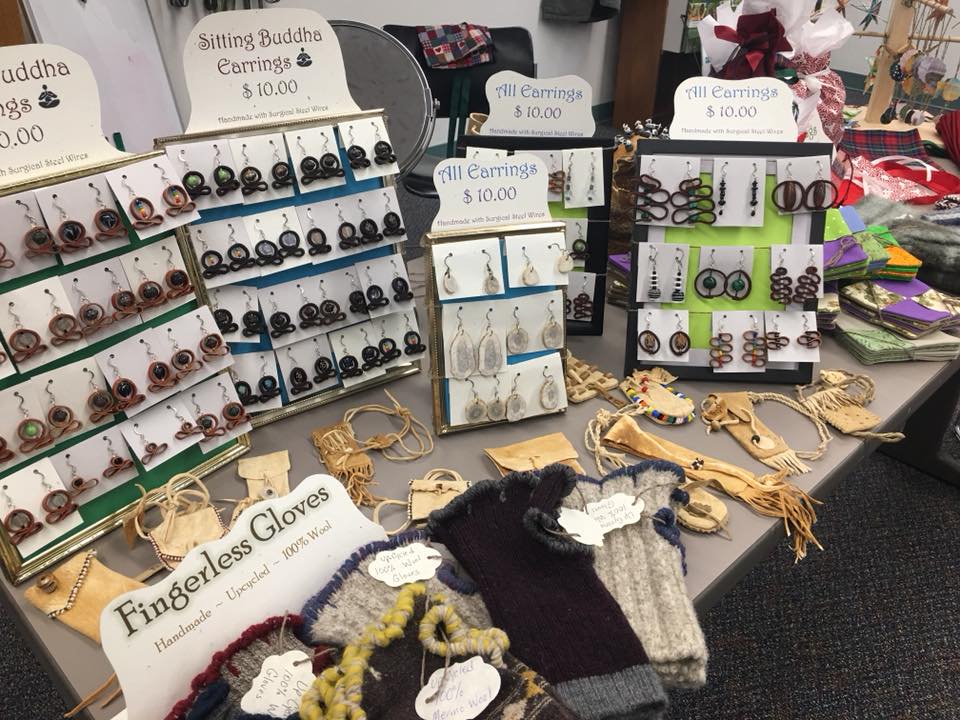
Stacey’s jewelry, sewing, weaving, and holiday arts.

Times are tough and it seems that most people have little to spare on superfluous items this time of year.  Despite this, it was still a profitable venture and a portion of everyone’s proceeds went to a good cause.

Details…

Two very good outcomes from joining in this effort were:

  1. Forcing us to buckle down and finish a load of projects in a very short period and
  2. Putting us in touch with a lot of local makers we may not have met otherwise.

There are some very talented people out there and it is often difficult for them to show their work. Venues like this allow the small, part-time players like us to showcase some of what we do.  Now, as a primitive tech artist, I steered myself more toward items that were affordable and would appeal to the average person; especially someone looking for gifts appropriate for the holidays.  I even brought a few walnut cutting boards as they are fairly popular gifts.

Painters, printers, writers, jewelers, and even wonderful candy and jam makers were there and we a grateful for the opportunity to participate again this year.

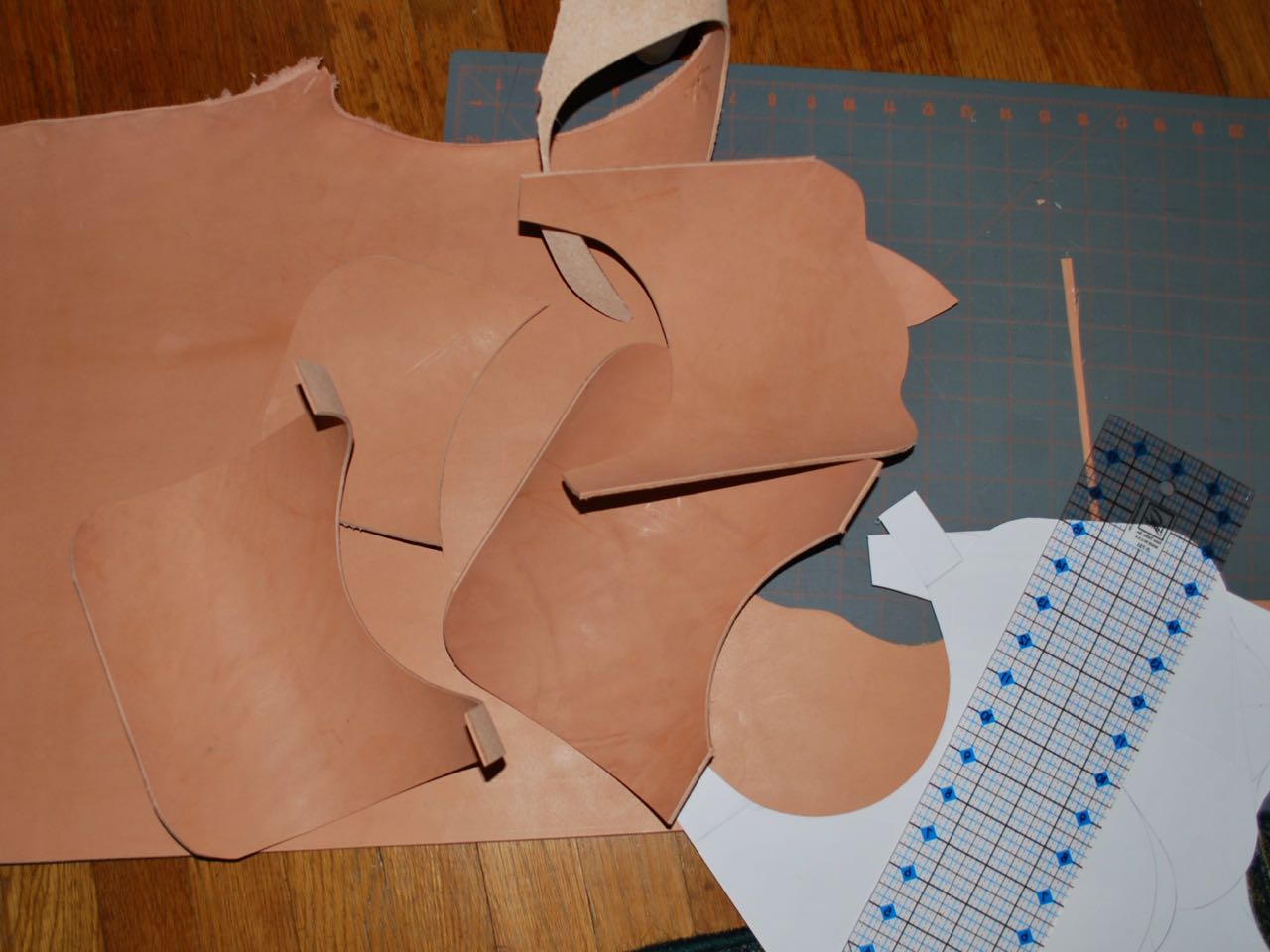
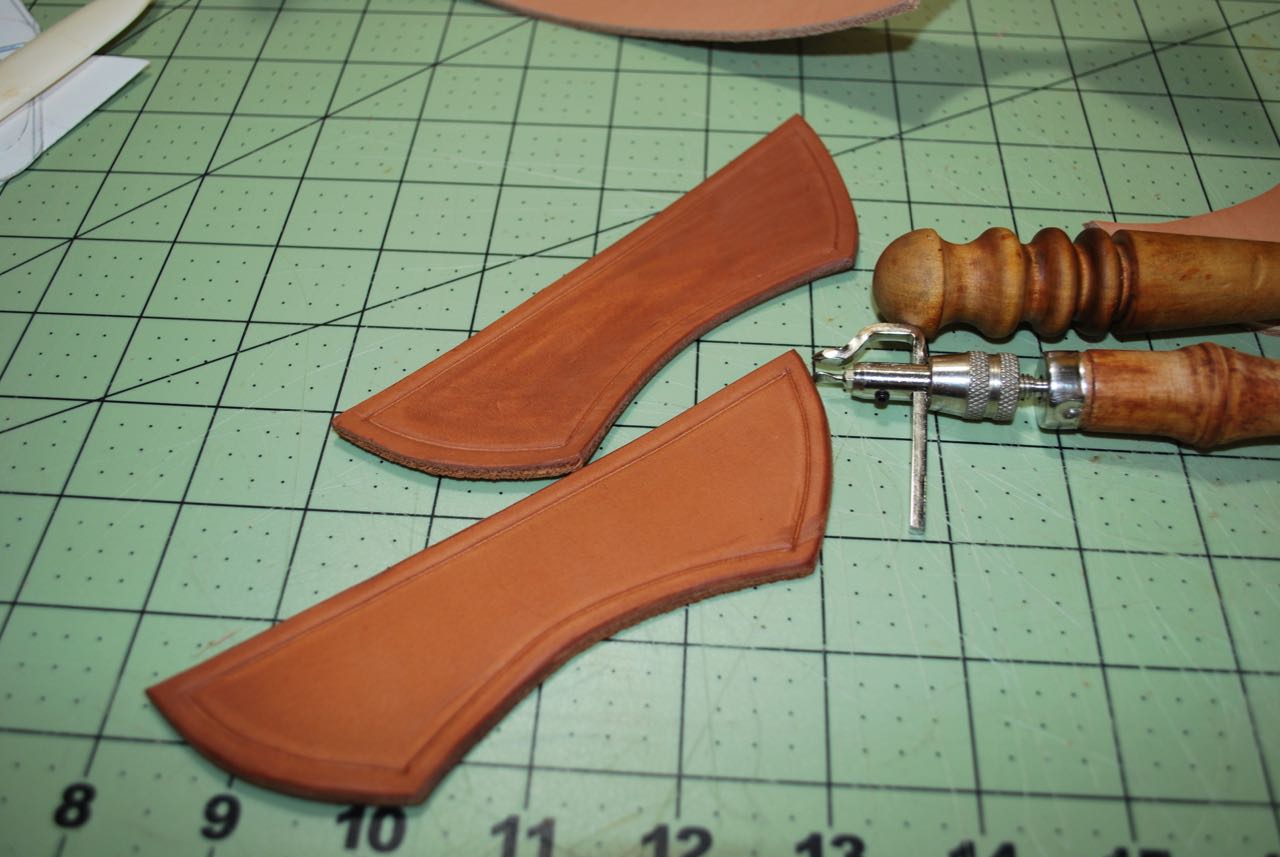
I thought I’d share a few bench photos leading up to the fair.

Three Million Views

I guess it’s time to celebrate…

Sometime yesterday this blog surpassed three-million views.  I am both astonished and grateful.  I have often thought of just shutting down the page as a closed chapter in my life but I do enjoy writing and sharing some of my nonsense with anyone out there in the wide world who wants to read.  It is often a conversation.

Honestly, I have no idea why this number should be a milestone, it just seems like a good excuse to celebrate on a cold a dreary day.

So, for everyone who has stopped by, read a bit, and maybe even given some feedback in the form of clicking “like” or commenting on a post, I thank you.  I have gotten to know quite a few people through these rambles and probably given away more of myself than I ever intended.

Your feedback is always appreciated.