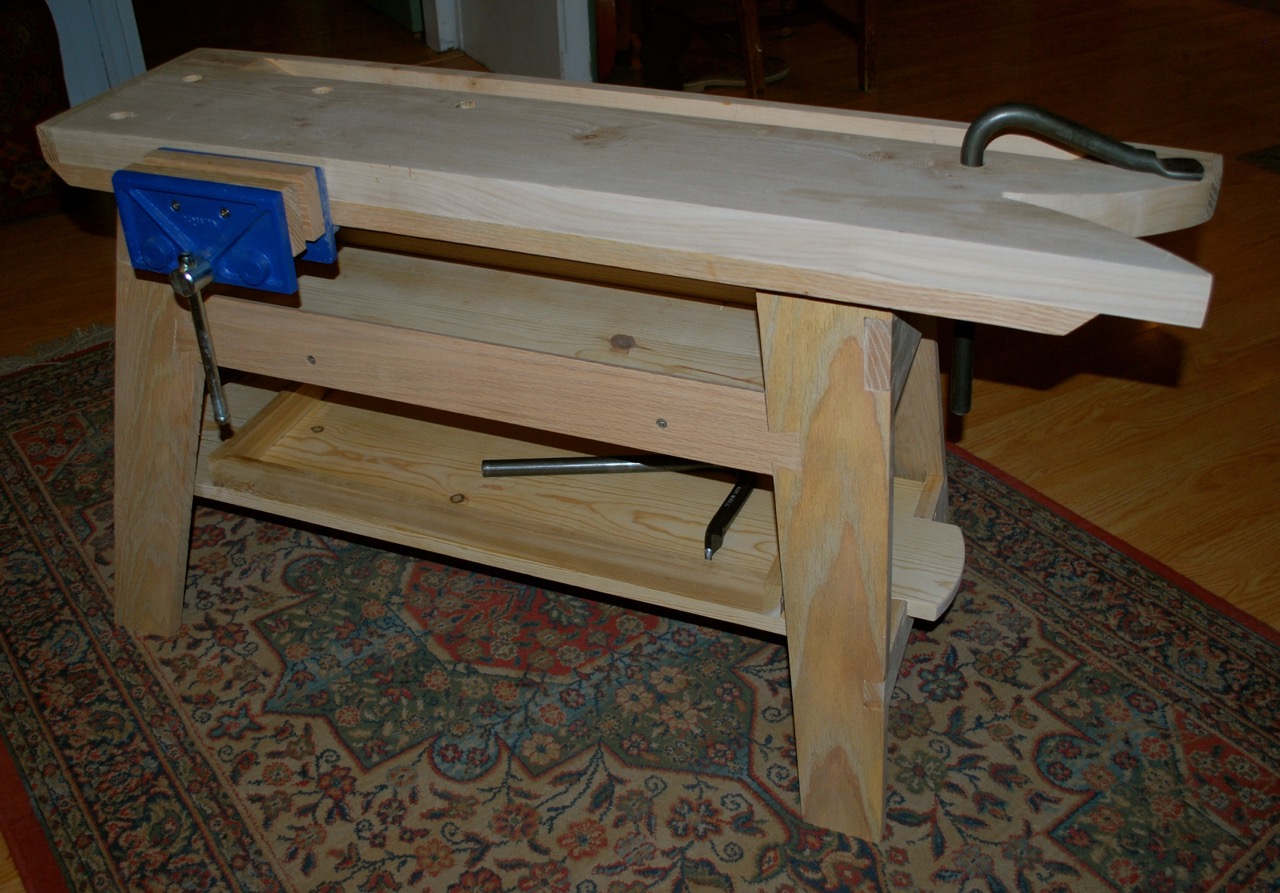
I worked on the bench a little more last weekend and have already put it to work over the last few evenings for some small projects. I have found it’s usefulness and it is a tool I know I won’t regret owning.
Front side.
A second till shelf has been added to store saws, bench hook, etc. and a few holdfast holes have been bored through.
The off-side.
I realize now I didn’t get any low angle shots. I’ll take those when I get it oiled up a pretty.
View of the bottom till.
Sturdy and low-cost, this project allowed me an opportunity to employ some free-form joinery, use some rough-looking scraps and enjoy a bit of wabi-sabi* design. It’s not perfect, but neither am I.
*Wabi-Sabi: an aesthetic based partly on the acceptance of transience and imperfection. The aesthetic of wabi-sabi can be described as a beauty that is “imperfect, impermanent, and incomplete.”
What an odd combination. I like it indeed. The short article is HERE.
“It provided a stylish place to sleep at the Meredith Music Festival in Victoria earlier this month while his fellow campers were forced to rough it in tents.
“It’s quite well insulated in there. It’s more comfortable than a tent,” he said.”
The frame saw. Virtually every house in North America contained one of these prior to oil and gas heat.
Advertisement from 1913.
These saws are an excellent and handy way to cross-cut large logs quickly. the design is over 2,500 years old solving the problem of keeping a stiff blade with a minimum amount of metal. This style come in at about 4 1/2 pounds giving enough heft to aid in cutting. Teeth cut both ways and the blades tend to be made from excellent steel. Perfect for re-use if you can find one mouldering in the corner of a flea market. I picked on up several years ago in “like new” condition and it has given great service ever since. Limbs can be simply replaced if they become rotted or otherwise damaged. These are the chainsaws of our forebears.
Home-built camper fans will probably really appreciate this remarkable future-retro monstrosity. Conceived, designed, and built by Bill Guernsey while recovering from a broken back, it took two years to complete. Follow the link below to the short write-up on the Makezine Blog or click here to straight to the Instructable: http://www.instructables.com/id/Rocket-Camper-Revealed/
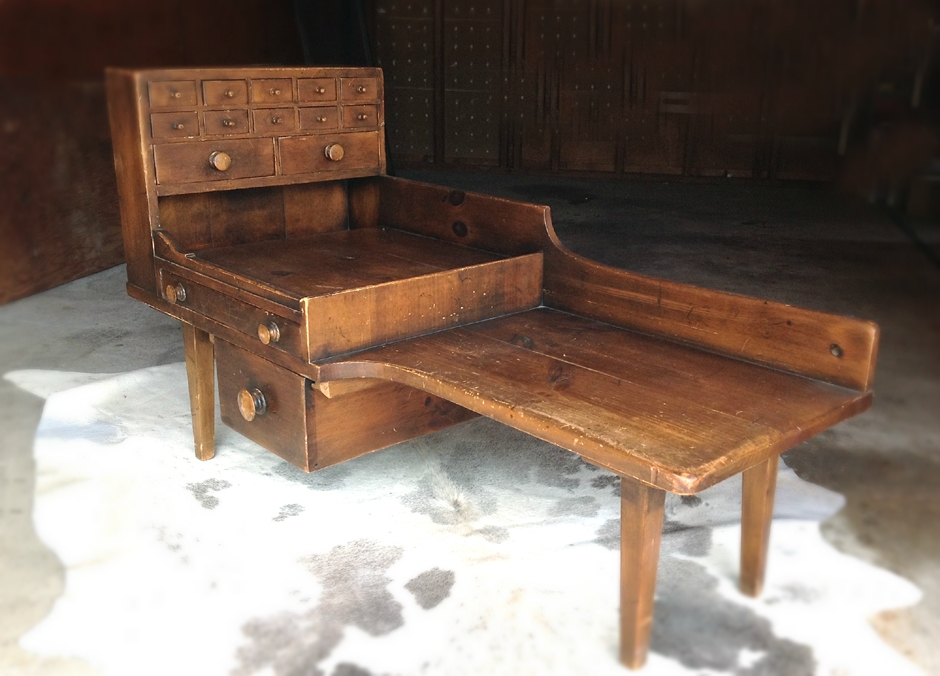
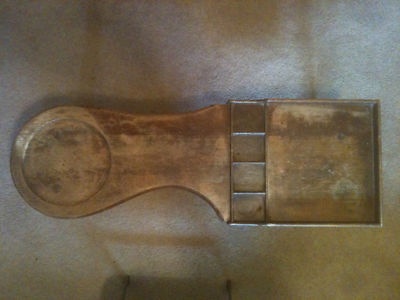
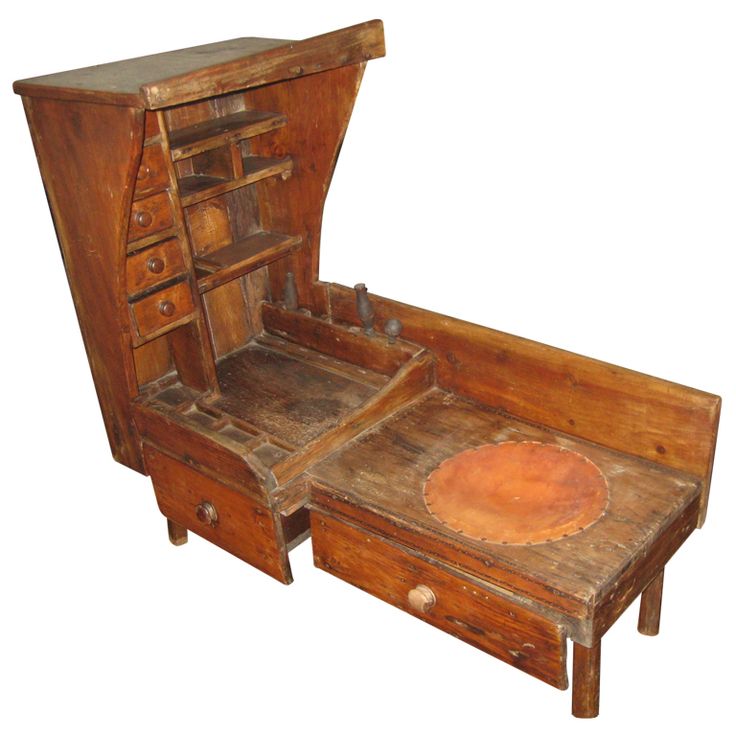
I have come across these little benches for quite some time and I find them fascinating. I even started a folder in my image library for them. A quick search around the web finds many of these in auction houses, on Ebay, Craigslist, and elsewhere, generally at exorbitant prices. It appears they generally end their long lives as side-tables in a middle class home, assisting in the creation of nothing; just a curiosity to a collector. They really are remarkable and interesting professional tools; clearly bespoke to the needs and means of the craftsman who used them. You can almost see their ancestry written upon them; a Roman or Medieval bench with simple splayed legs, a cutaway for seat, a little rail to keep tools from rolling away. Later some small tills might be created to segregate nails and needles, and knife slots added so that they might be handy but safe.Really, a simple slab of wood, but as “needs must” it becomes a little workshop, self-contained.
Drawers or cubbyholes became a natural addition to the workspace as the bench replaces tool caddies. Some can be locked up for safe-keeping and fancy builders made more comfortable seats.
The essential layout seems to always be the same. We are, after all, given the same basic human shape and the need is the same. Organization, convenience, and a solid place to work.I can see this type bench being useful for other crafts as well but it would definitely end up modified over time to suit the specifics.Even the above humble specimen has found a home, holding more collected crafts. Slowly dying as a curio for some of us to ponder as a useful holdover from an era when we made for ourselves.The designs seem varied as the places they originate and the ingenuity of the makers. Cordwainers, cobblers, leather bag makers, can all find the beauty in this design.Many a zapatero could still find great assistance with a shop setup like this.I could make great use of this as an itinerant craftsman. And maybe I shall someday. Perhaps, by looking into the past, we are seeing a better, simpler future
Cobbler at work, no citation, no date. Click for “source”.
“Round and ’round the cobbler’s bench, the monkey chased the weasel…”
“Rooted in my love of Mathematics and geometric simplicity, I create visually strikingly pieces of wood art that are also household items.”
Beautiful work. I love the detail in the finger joints. You can find more of his excellent work here: Affine Creations. Here are a few of his other projects.
Cobblers
This letter was sent to me by an old friend.
Hi, Gary!
May I give you a story, as promised?
The story is told that if you were a young person in medieval France embarking on a spiritual quest, if you were fortunate you might meet up with someone older, perhaps a teacher, who would say this to you: I think I understand what you are seeking. Let me give you the name of someone I know, a cobbler, in Dijon. I think that it might work out well if you were to become his apprentice. If that happens, let me give you one piece of advice. Don’t talk with him about spiritual matters; just let him teach you how to make shoes.
So, time passes, and you find yourself in Dijon, and you seek out the cobbler. Sure enough, as it works out, you become his apprentice.
From the YouTube channel, Chop With Chris where he does “amazing woodworking projects with no power tools.” At last count, he has 19 “how to” videos available and a slew of other good things on his YouTube channel.
From his “About” Page:
“I play in that weird intersection of woodworking and music! A few years ago I randomly picked up this woodworking hobby that started with a few cheap flea market tools and a wooden stump. Driven by inspiration and passion to try bigger and better projects, this “hobby” has turned into an obsession with wood, tools, and video editing. Join me for the excitement, the entertainment, and the eduction on my next woodworking adventure. Come on and Chop With Chris!“
Graham Haydon of the Joiner’s Workbench shows a fun experiment while showing off his new dovetail saw from Skelton Saws. Graham joins a couple 1 x 6’s in three minutes and does a pretty good job of it. This is what I imagine some apprentice doing back in the pre-industrial era when he’s showing off his newly mastered skills to the master or a shop rival. There is no real point for the speed other than to demonstrate how little time and effort is really necessary to form a traditional wood joint. This is definitely upping my interest in perfecting traditional joinery.










 Graham Haydon
 Preindustrial Craftsmanship