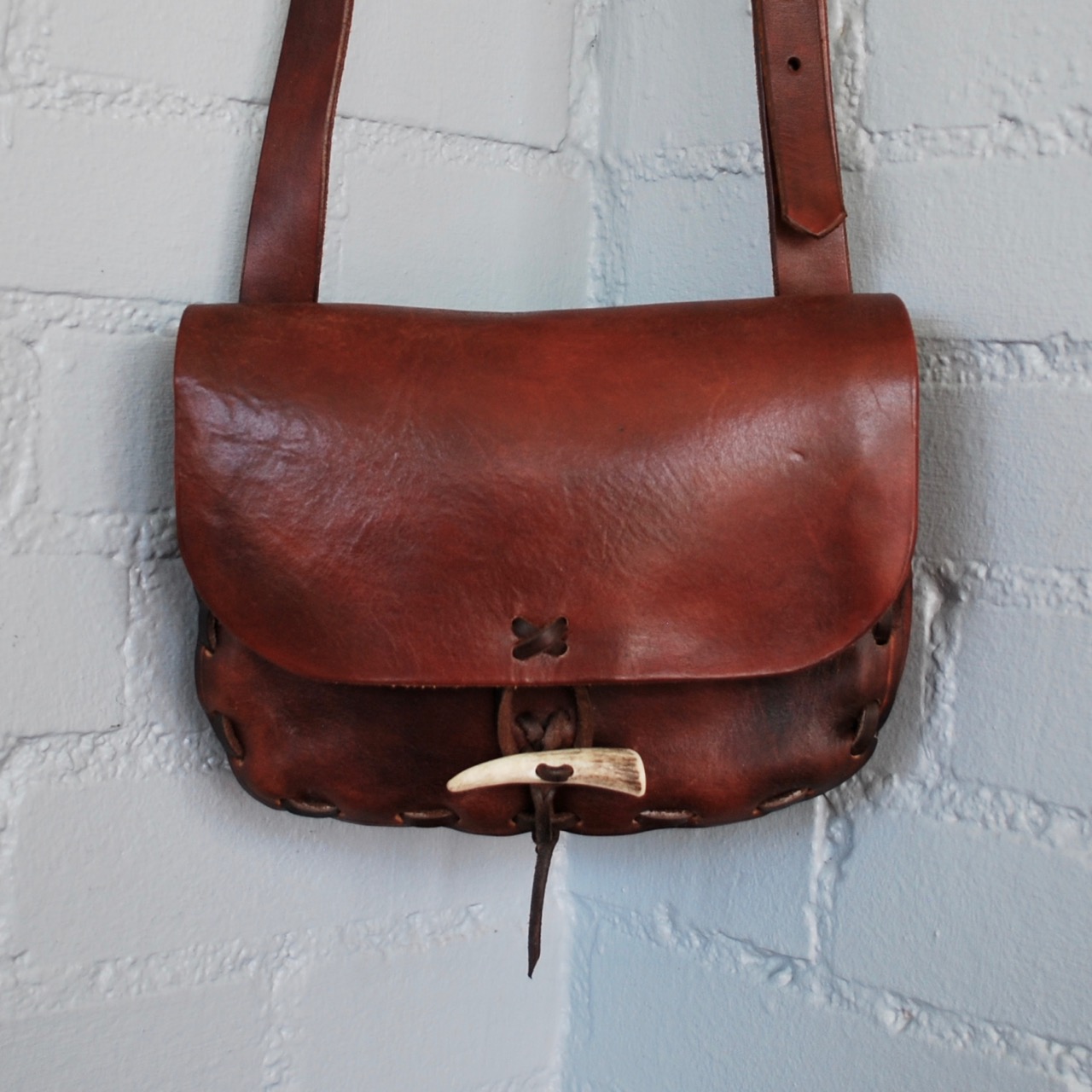
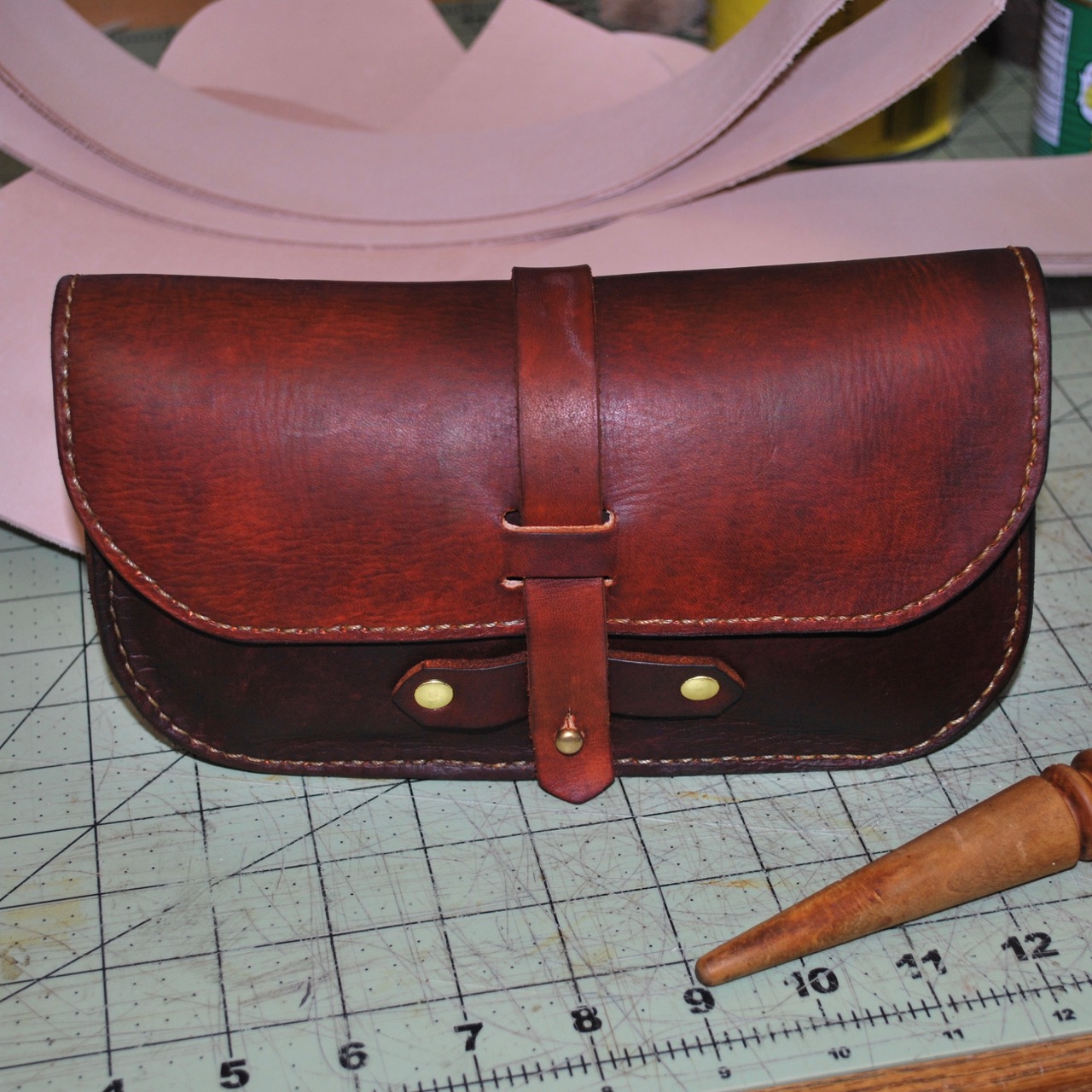
I think of this type of bag as a forager bag, mainly because it is the type I carried in the late 80s while working on a High Adventure summer program teaching outdoor skills. It’s really just a classic shooting bag; the type that could be found just about anywhere in North America or Europe for the past three hundred years in similar form.
7 ounce Hermann Oak leather is thick but supple. Antler toggle closure keeps contents secure.
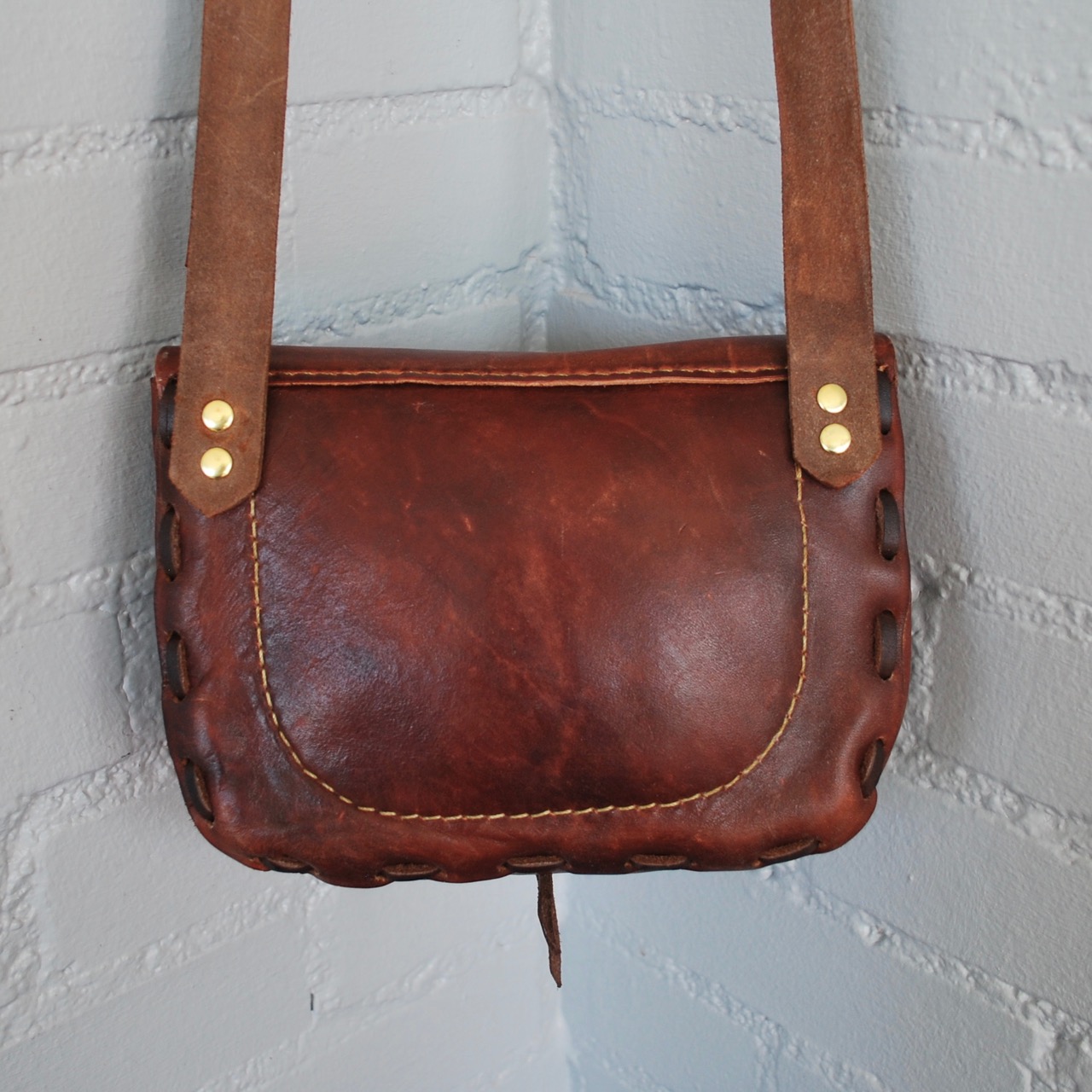
Double needle saddle stitching for flap and pocket.
Interior pocket to separate small items.
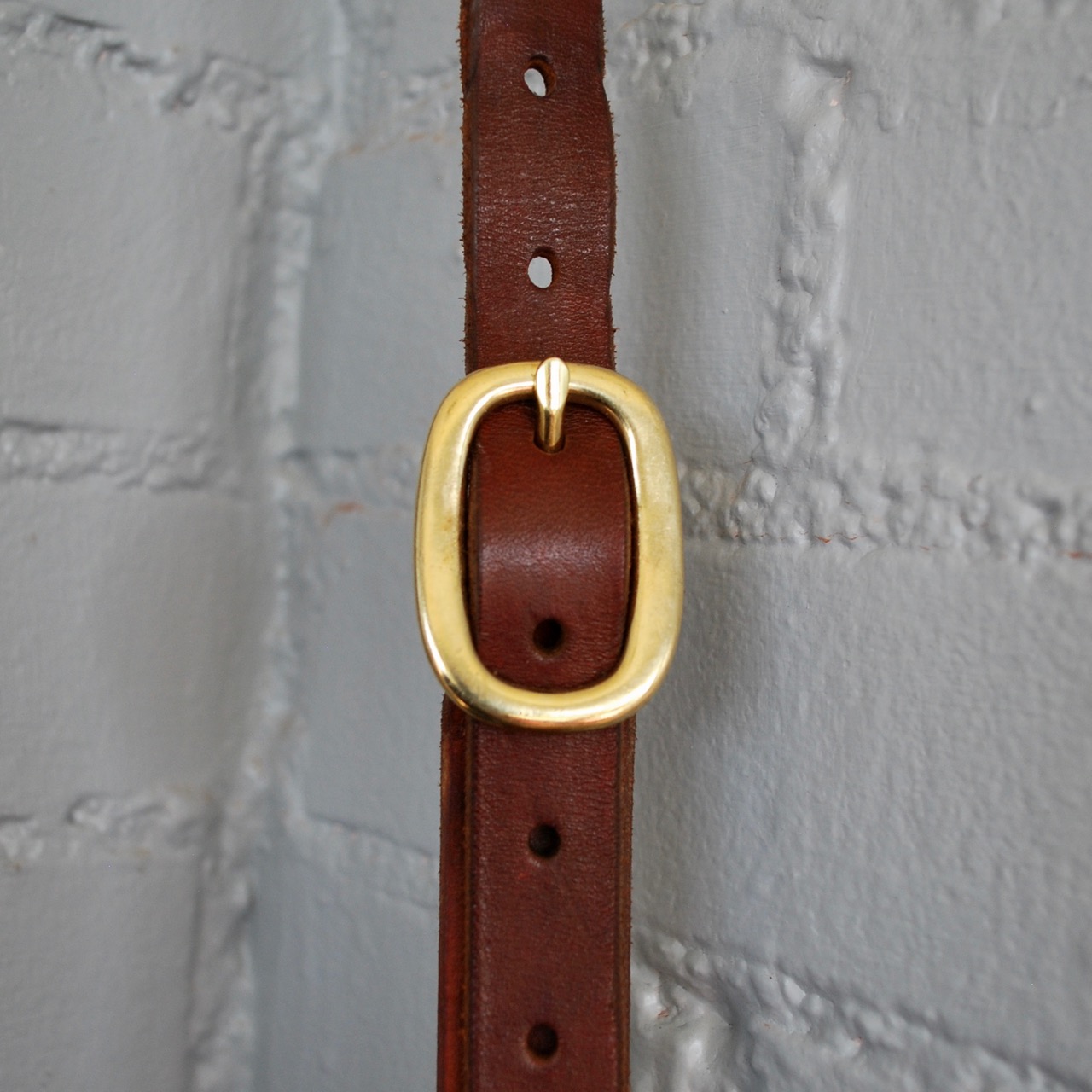
Heavy, harness brass buckle and pure brass rivets complete the bag.
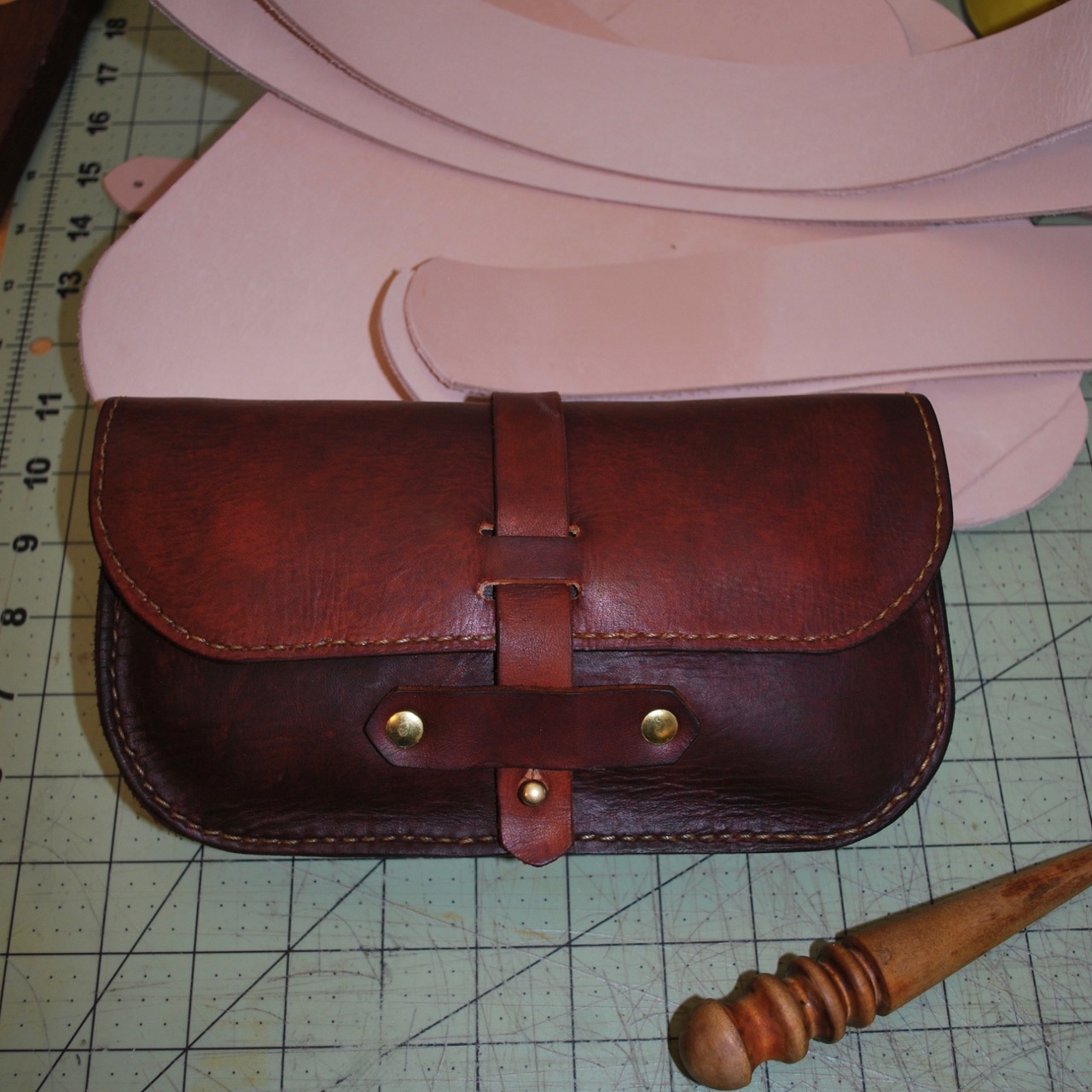
It takes a lot of work to prototype a new bag design. To get just the right shape and proportion, find the right materials, and choose the appropriate construction technique is a big deal; especially if it’s going to be done well.
The completed prototype. I’m very happy with this design.
I wanted something that looked like it appeared out of the preindustrial world of the 18th century or before. As an archery person, I think I take my personal style from the “what would Robin Hood wear?” collection. But honestly, this one owes much of its design to the military belt pouches of the early musket days.
What do I plan to use it for you ask? I wanted something that would accommodate a few essentials including a fire kit, compass, notebook, spoon, whetstone and the like.
So if you follow along here you have seen several bags just like this one posted in the past year and so far, they have sold like hotcakes, as they say. It is a popular shape, size, and design so I think this will become a mainstay in my shop.
It is a very adaptable design as well and could be fitted with internal pockets, a wrist strap or d-rings and become a clutch purse or removable backpack pocket in its own right.
Colored saddle thread was on sale at my supplier last month so, guess what? I’m going to try it out on some upcoming projects and see what the reception is. Nothing too flashy, just a bit of red, yellow, or blue on the horizon.
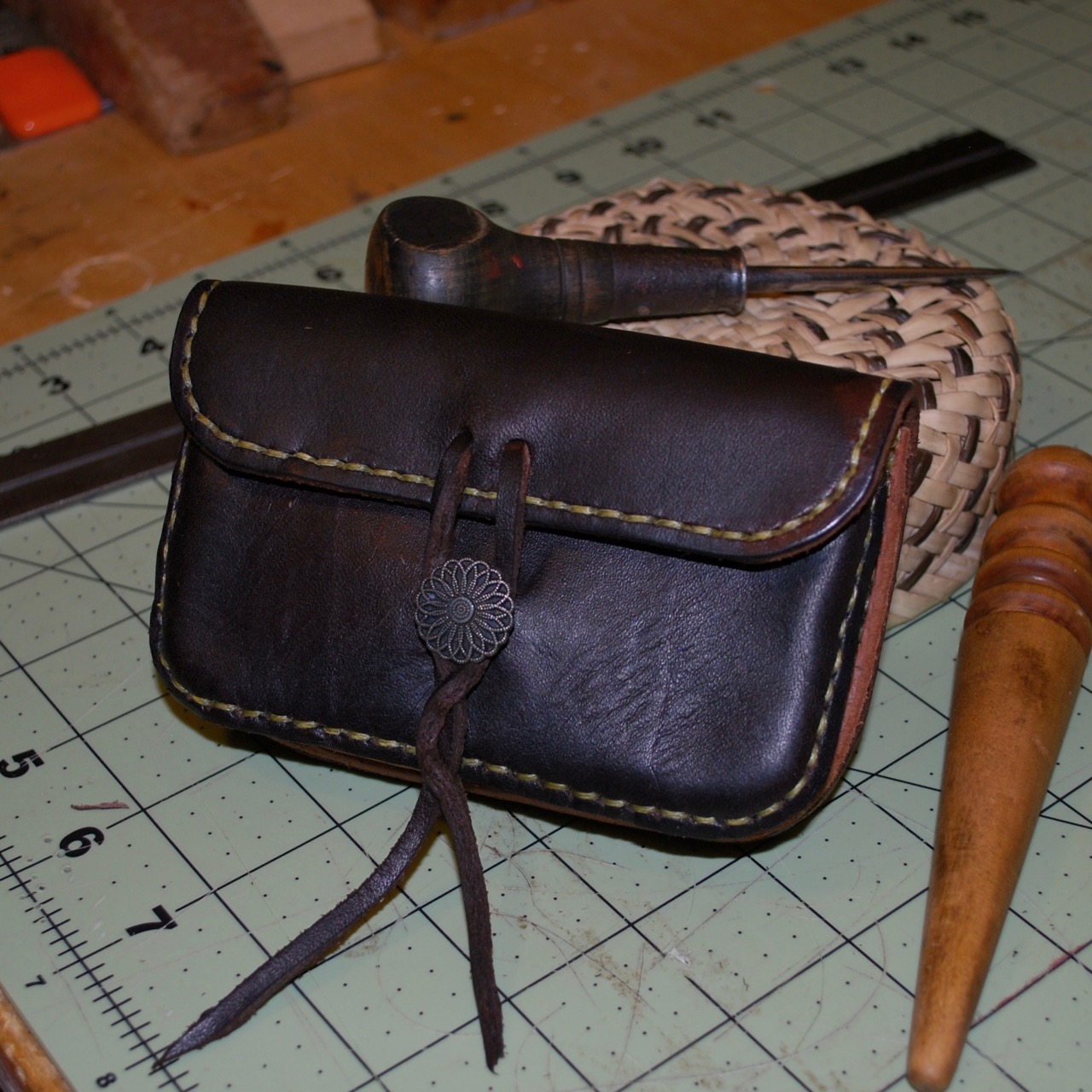
Since I’m also a fan of mixed materials, this next bag is two-toned; Hermann Oak natural and drum-dyed in brown. To my eye it is a good match.I think this combination will age beautifully and settle into a nice two-toned patina. Stacey found this nice pewter vintage button for a closure. The photo above shows it on the workbench stuffed with a rag an drying after wet-forming and burnishing. Tomorrow, it will be time for a coat of dubbin and off to market.
This is a requested repost of a series I did almost five years ago when I took my eight foot single-axle vardo caravan and reconstructed it into a 12 foot body on a robust tandem trailer.
After adding up the mileage from the log book I keep with the Vardo, I see we have clocked over 21,000 miles since she was first put to the road in February of 2010. I have, no doubt, missed some small side trips and there are excursions I know I forgot to record, but this is, more-or-less, where we stand. The trailer frame itself was high-mileage but well-maintained when I acquired it back around 2002 having first been owned by a university, then by a private individual before coming to me.
My “before” photo. Rated at 2,000 lb. gross vehicle weight. It was solid and well-built but already showing some signs of age and life in the salt air of the Pacific Coast.
The real beauty of this trailer is the square tube construction and heavy-duty hitch. Starting small was wise for me as it constrained the build and forced me to squeeze every inch out of the design.
On the way to becoming the “after” photo. The full box body nearly done.
I eventually replaced the original jack with a more heavy-duty model and replaced the jack wheel with a large foot for stability. For safety, the tires were replaced when the trailer was re-purposed due to age, not wear. If you missed it and want to read more about the construction of the micro house we call a vardo, GO HERE.
The Vardo; Where are we now? What do we want?
This little living wagon is great and serves it’s function well. It’s a little beat up and showing it’s miles; living and traveling in all weather, a lot like it’s owner. But still, it’s a little homey shelter from the elements, providing all the necessary comforts, and making travel a breeze. With about 49.5 square feet of living space inside (4.6 sq. meters) it is spacious for one and comfortable enough for two adults who do most of their activities outdoors. However, I have long pondered placing my vardo on a longer trailer, either to gain cargo space for tools and the like OR to extend our living space. Sticking with the Minimalist thinking, I decided long ago that 12 feet was about the maximum I want in a trailer. With a standard 4 foot hitch that makes for 16 feet (4.9 meters) dragging behind the truck or about the length of a second truck. I did the math on the new space and I liked it.
So back to it. What do we really need?
Thinking of the many scenarios we find ourselves in, some added amenities could be handy in certain situations. From wilderness areas in Utah to posh campgrounds in San Diego, highway rest areas in the Midwest and museum parking lots in Santa Fe, or even stealth camping on a city street, our needs are varied. Although the vardo was built as a wilderness base camp, sometimes it feels like a miniature fortress or space station or temple of solitude. When we’re camping in the remote west, beyond the confines of civilization and snooping gawkers, it’s not a problem spending most of our time outdoors, using a campfire or cook stove to fry up some bacon and boil some coffee, but try that in a grocery store parking lot in the city and you will only find trouble. But we still essentially live outdoors. We don’t need a dance floor inside.
Two thing we want that this space can supply:
A simple kitchen. By this I don’t mean a Martha Stewart style, butcher block countertop with rotating spice racks, dual ovens and a six burner ceramic-top range. We need a dedicated space to store our cookware and food, do some prep-work, and make simple meals in any weather, beyond the prying eyes of the local gendarmerie.
Secondly, we want more storage space for our personal belongings when we finally hit the long open road and don’t look back. Tools for making things and raw materials alone take up a lot of our space. Leather, wood, sewing supplies, fasteners, etc. all require more space than we have. On top of this, a large, flat work surface would be a nice addition indoors.
After several (many) sketches and mock-ups… Voila! I think we nailed it, the vardo formerly known as the Snail reborn as Nautilus 78. Even though we know that nothing comes from nothing, our minds like to think of things as having a beginning, middle, and end.
So in that sense, here’s to our new beginning.
The new foundation. Tandem wheels, brakes, breakaway safety system, LED lights and 7,000 GVWR. Let’s hope we’ll never need this much trailer.
Too many badges, certificates and insignia. Still, and excellent buy I think.
First things first. The heavy wooden floor must go.
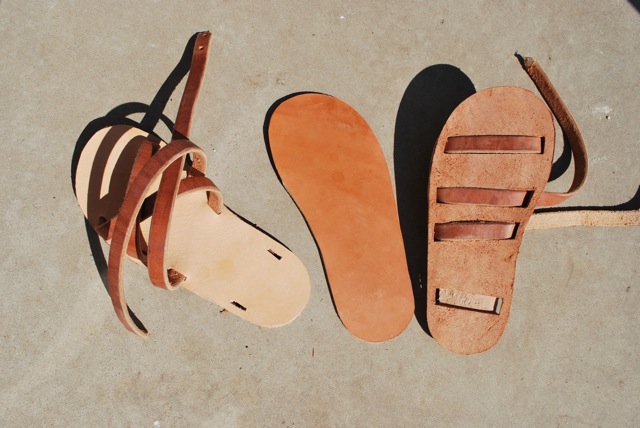
If you have ever taken a class with me you might know that all the intimidating sewing isn’t as bad as it looks. The sole is three layers thick but the use of a good, sharp awl makes the double needle sewing go quickly. A lot more work goes into these than I would have initially thought but I really think they come out great in the end. It took several pairs to get the pattern just right but research into design and construction led me to this final design. The sole is three layers thick (or more historically) and have been made this way in Europe and North Africa for more than 2,000 years.
The thickness of additional layers isn’t just to provide safety for the feet but the central layer provides a path for the straps to travel through without lumping under the feet. The parts consist of an insole (medium weight oak tan leather), mid-sole to allow tunneling the straps through, and an outer sole, in this case, leather. The straps are 48″ per foot plus the heel yoke.
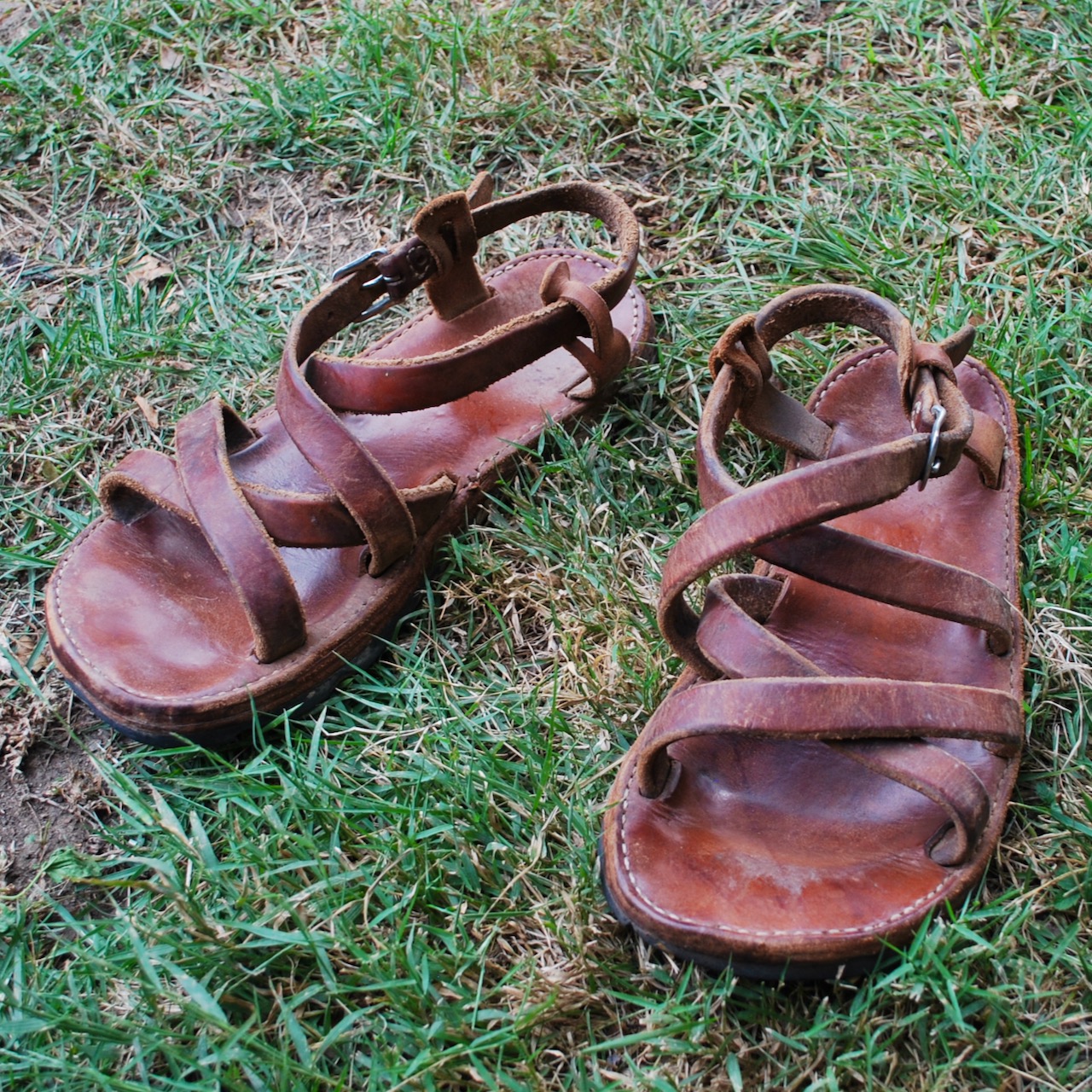
This is how they looked when I thought I was finished. Shortly after, I added buckles and have since been through a few more soles. Currently they are shod with rubber.
Nine years on and still going strong. The patina that good leather takes on cannot be simulated. They get a coat of dubbin every six months or so but otherwise, need little care. I hope to get back to a time when I can wear them daily again.
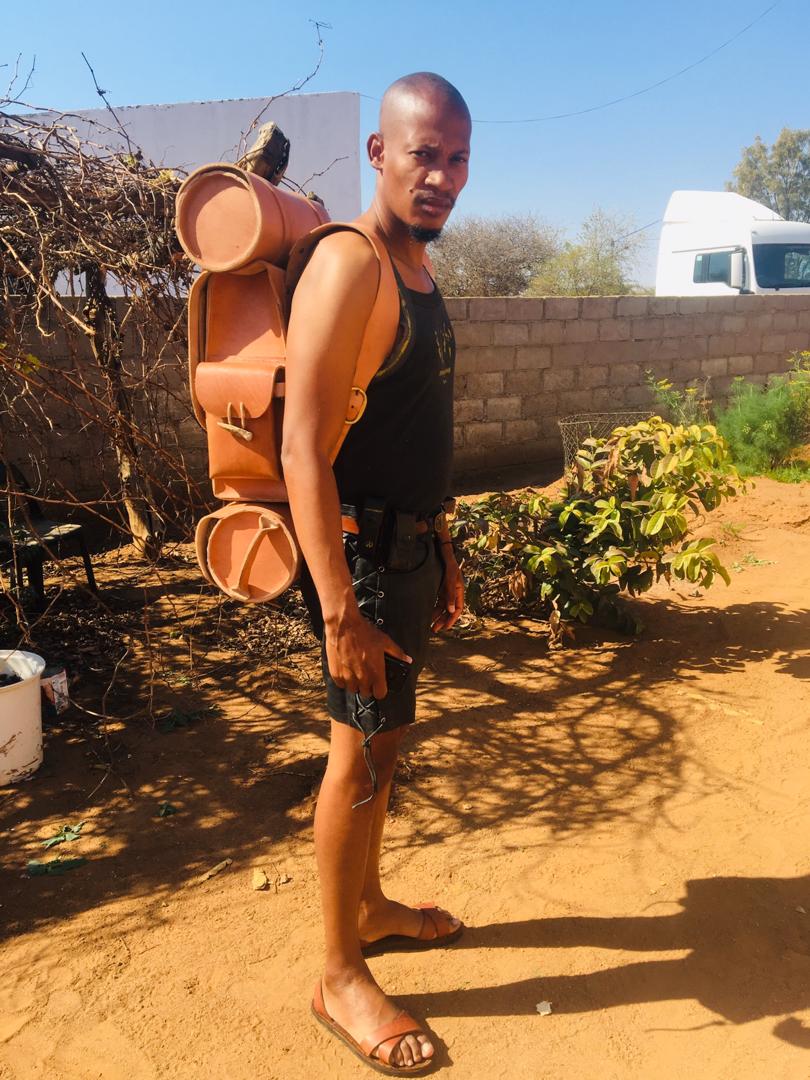
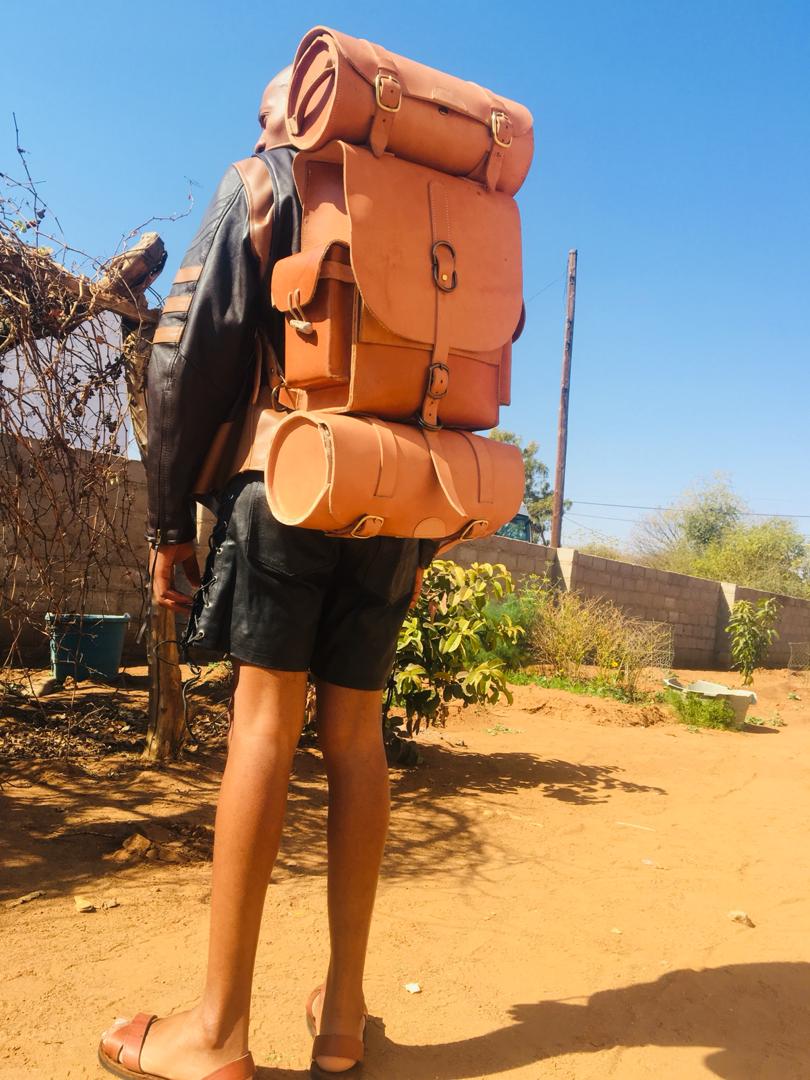
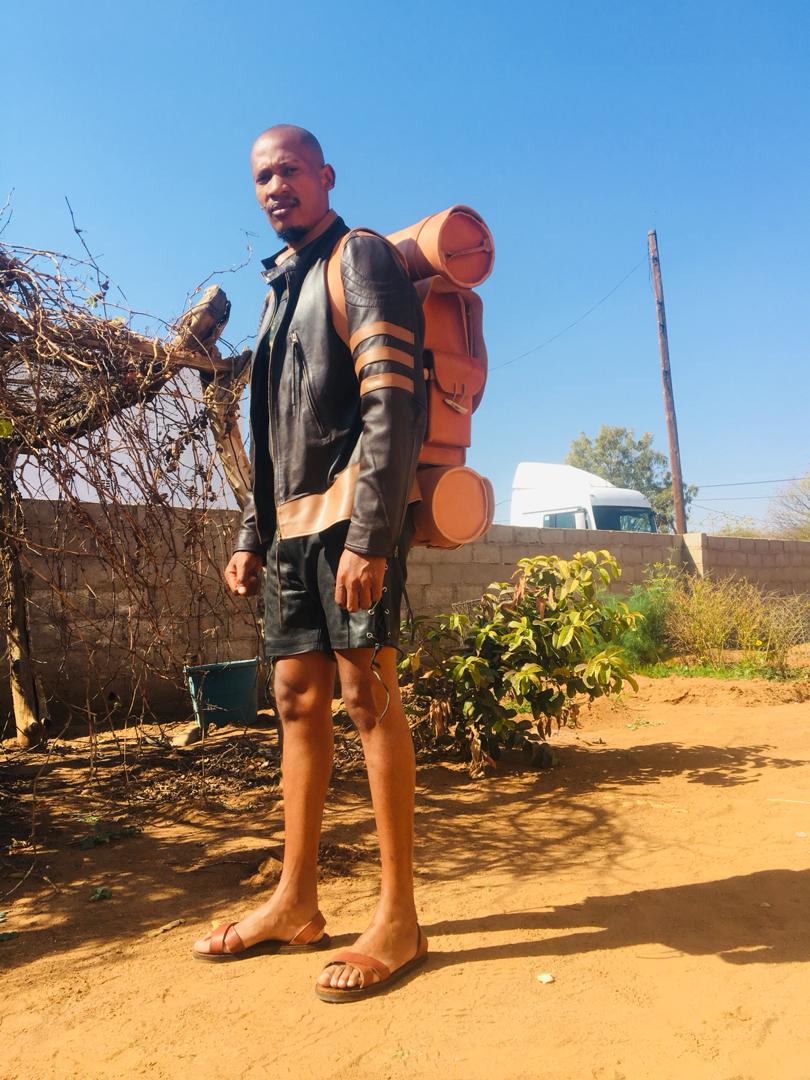
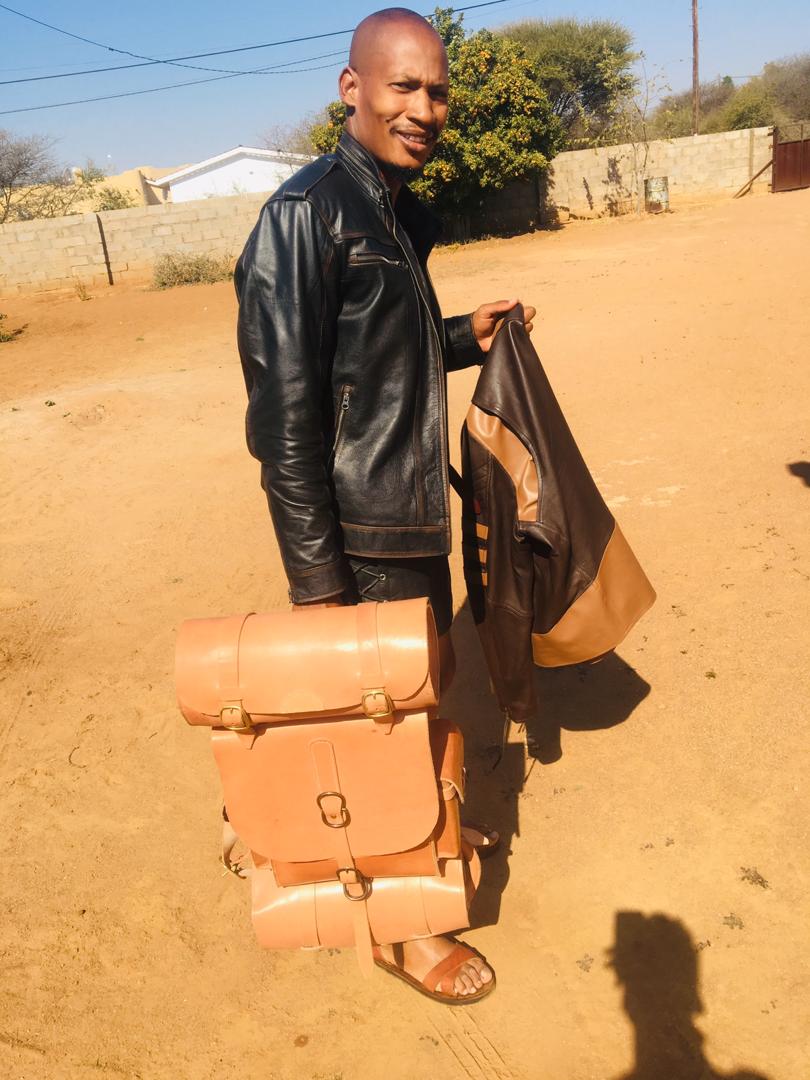
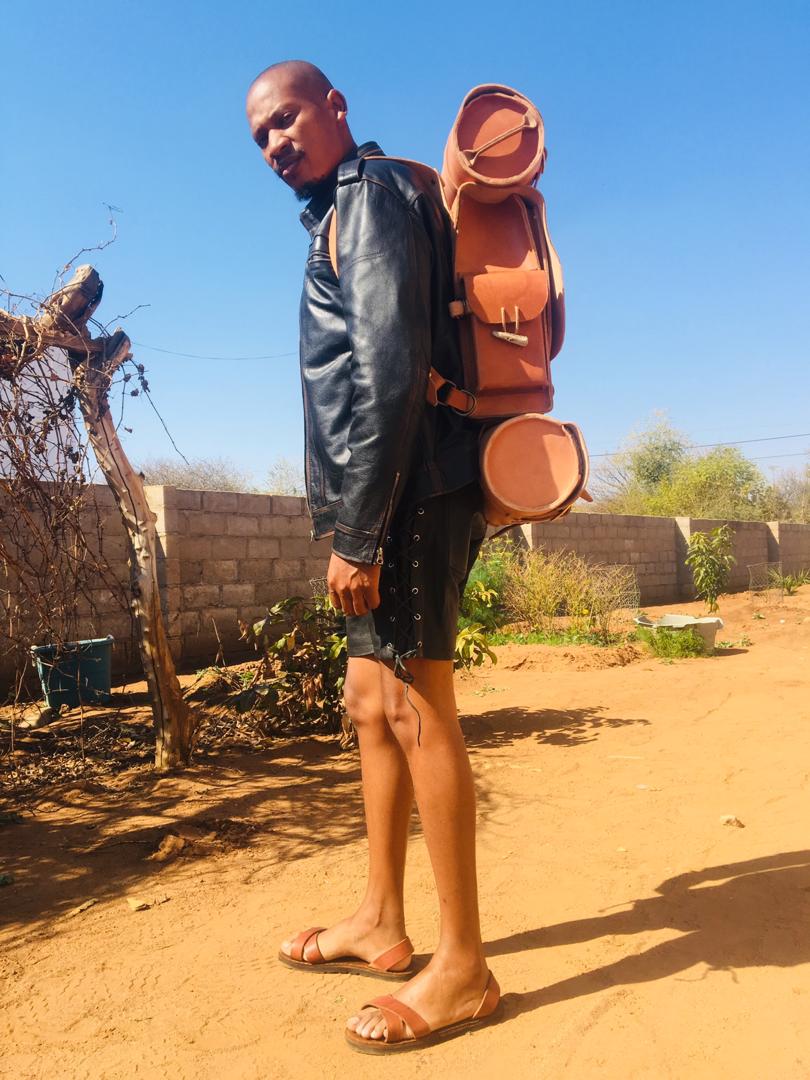
One of the better things about modern communication is the ability to meet and talk to people from nearly all parts of the globe. I have been in communication with Jacob from Botswana for years now and he has shared some photos of the beautiful backpack he made based on my earlier design. That one now resides in Montana and I hope serves some function for its owner. My personal pack has since been replaced by this one and is my new favorite piece of gear. But enough about me.
Right now, according to Google Maps, I am about 13,670 km (8,494 mi) from central Botswana and am unlikely to ever make it there, though not for lack of wanting to. However, the internet allowed us to connect across a vast distance in space and share ideas with strangers who have common interests.
Anyway, here is Jacob’s very own leather rucksack and the two portmanteaus inspired by this post to carry his gear into the bush of southern Africa. I suspect a backpack like this will outlive us all and become a fine heirloom to pass on to the next generation. Thank you so much for sharing these Jacob. I hope it serves you well for many years.
Well this is exciting. I got interviewed at winter count near Florence, Arizona back in February.
It’s heavily edited from a much longer discussion but I don’t think I sound too stupid here talking about the Vardo. The interview is very close-up and tight but you can get a feel for the interior layout. There is a lot of good stuff on the Cheap RV Living website and I’ve been a reader for a very long time. Check it out.
Here’s another small project happening amidst all the “real work” that needs to get done during this quarantine.
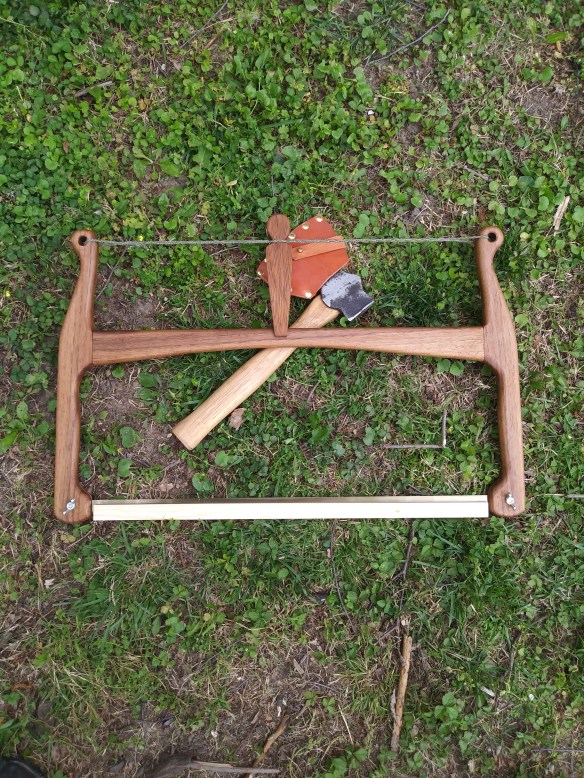
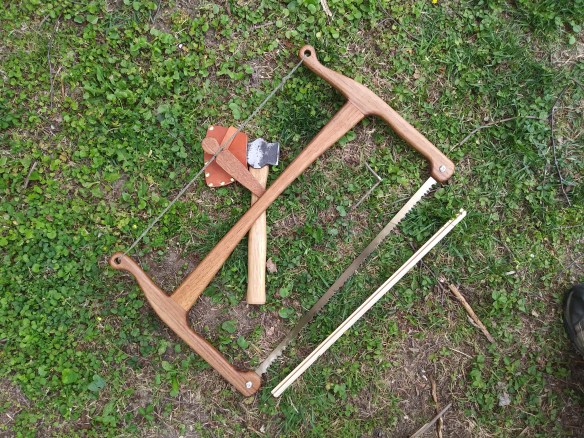
24 inch frame saw made from Missouri grown walnut. The “hanged man” style flapper is a scrap of mahogany from some repurposed shelves. The sheath here is pine.
I seem to sell or occasionally give away the saws I make. I needed a new one. The last one went into the Winter Count raffle as the prizes were looking a little scant this year.
I went into the workshop without much of a specific plan but came out with this little gem. Just a matter of removing the unnecessary bits really.
Finally, the pin sheath is stained and a canvas quiver is made to cover the saw when broken down for travel. This one is from old,, heavyweight canvas salvaged from a truck tarp. It will all fit into a neat 24 inch bundle.
I want to keep this one but after inquiries rolling in, it may go into the shop (or another just like it).
Be Safe!
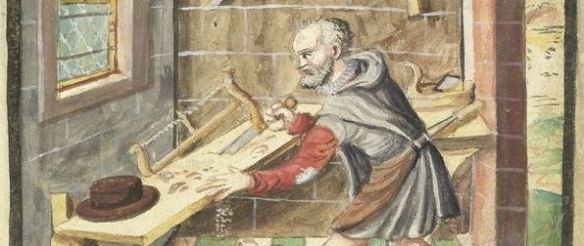
For your enjoyment: a Carpenter from 1589, Mendel Manuscript.
I am stunned to hear from several recent misguided enthusiasts to the gentle art of wilderness skills that their new hobby costs them so much money… I guess even our low-tech approach to life can be marketed and sold to the right customer with our ingrained need for newer, quicker, and “approved” gear. Let’s hope this ailment isn’t catching.
Making something for one’s self is, in itself, an act of rebellion in these troubled times so I thought I would share what I’ve been up to in the idle hours these past few days.
After someone sweet-talked me out of my last (and personal) bucksaw I was in need of a replacement. I lucked upon some beautiful walnut last year and set some aside to make a few saws. Straight-grained, strong, and beautiful, this 5/4 sawn chunk was ripe for carving into something nice. I spent far too much time in finish and detail on this one but a beautiful tool is much nicer to use than an ugly one and curves appeal more than straight lines to this gentleman.
There isn’t much need for a lengthy instructable for this design but notice that the straight grain was respected in all dimensions and runs the length of each arm. As for hardware, it was my intention to inset square nuts into the handles and connect the blade with round-head machine screws. However, looking through my hardware on hand, that would have required a trip to a store, so for now, we use carriage bolts and wing nuts.
The devil is truly in the details and it is a joy to carve such fine wood with sharp tools. The entirety is polished with Lundmark carnauba wax as it brings out the color and grain while providing excellent protection against water.
I have been trying to write this post for a month now… Even small posts can take too much time.
Anyone who knows me well is probably aware that sometimes my attention span is like that of a goldfish. Since more or less recovering from surgery I have been in a frenzy to catch up on the many things I’ve wanted to do these many months. I did accomplish a few small leather working projects, messed around with watercolors, did some good reading, and took some actual paid work (yes, an actual job) to cover the ever-present bills.
Watercolor miniature in the works.
I’ve now been released back into the wild by the surgeon and the physical therapist and declared healthy enough to begin working out and to go about my normal activities. With so many things to do I have little interest or time to spend in front of a computer screen and I loathe it more than usual. I am very happy that I have been encouraged to re-integrate real exercise back into my daily routine. Just because we get older, doesn’t mean we need to let ourselves go. I am as guilty of this myself.
We learn to be lazy, but we don’t have to be.
I have taken much inspiration by the work of my fellow artisans and the projects they post online, without the stupidity you find in regular social media. I am sometimes shamed by my own lack of productivity but still thrilled that so many people I know have grown their talents to such heights.

















 Preindustrial Craftsmanship