A Traveller’s (sic) Tuesday. Just a glimpse into life in a bender tent. Despite the glamorous view of life on the road depicted by the romantic English Gypsy Caravans, this is how most Roma lived in 19th Century Britain.

Adventures of an Imperfect Man In Search of a Handmade Life

A Traveller’s (sic) Tuesday. Just a glimpse into life in a bender tent. Despite the glamorous view of life on the road depicted by the romantic English Gypsy Caravans, this is how most Roma lived in 19th Century Britain.
Sounds like a great time. Wish I were there!
Guest post by Kevin Bowen

First off, I must thank Todd Walker for the opportunity to write this piece for his blog. He really wanted to attend Kephart Days this year but an even more important event took place the same weekend that required his attendance, the birth of a beautiful, healthy grandson. Congratulations good buddy!!!
I first met Todd online about a year or so ago and then had to chance to meet up with him and Bill Reese at one of the Workshop in the Woods classes, hosted by primitive expert/teacher/author, and all around great guy, Scott Jones. If you regularly follow Todd’s blog, you have been introduced to Scott already. Since then, I have garnered a great respect for Todd’s attitude, an affinity for his ideas and work ethic, and more than anything, a love for his friendship. It’s truly an honor to help him out…
View original post 2,589 more words
Here is a great little instruction set on how to make a European Medieval-style belt bag. You see these in paintings and illustrations on just about every traveler. Not only will you come out with a nice bag but it is a fine and simple introduction into leather working and sewing. All makers need to start somewhere and this might be the right project.
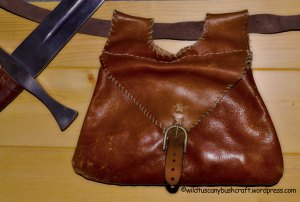 Old style bushcraft: a medieval possible pouch
During the Middle Age was common carrying small items like coins, keys, inside pouches or purses attached to the belt.
There are many archaeological and iconographical documents, you can search for your favorite patterns, but there is a model that in my opinion, is one of the best for a bushcrafter.
View original post 298 more words


A tent has been invented by Major H. H. Sibley, of the army, which is known as the “Sibley tent.” It is somewhat similar to the Comanche lodge, but in place of the conical frame-work of poles it has but one upright standard, resting upon an iron tripod in the centre. The tripod can be used to suspend cooking utensils over the fire, and, when folded up, admits the wooden standard between the legs, thereby reducing the length one half, and making it more convenient for packing and traveling.
This tent constituted the entire shelter of the army in Utah during the winter of 1857-8, and, notwithstanding the severity of the climate in the elevated locality of Camp Scott, the troops were quite comfortable, and pleased with the tent.
In permanent camps the Sibley tent may be so pitched as to give more room by erecting a tripod upon the outside with three poles high and stout enough to admit of the tent’s being suspended by ropes attached to the apex. This method dispenses with the necessity of the central upright standard.
When the weather is very cold, the tent may be made warmer by excavating a basement about three feet deep, which also gives a wall to the tent, making it more roomy.
The tent used in the army will shelter comfortably twelve men.
Captain G. Rhodes, of the English army, in his recent work upon tents and tent-life, has given a description of most of the tents used in the different armies in Europe, but, in my judgment, none of them, in point of convenience, comfort, and economy, will compare with the Sibley tent for campaigning in cold weather. One of its most important features, that of admitting of a fire within it and of causing a draught by the disposition of the wings, is not, that I am aware, possessed by any other tent. Moreover, it is exempt from the objections that are urged against some other tents on account of insalubrity from want of top ventilation to carry off the impure air during the night.
Randolph Barnes Marcy, The Prairie Traveler: A Handbook for Overland Expeditions, with Maps, Illustrations, and Itineraries of the Principal Routes between the Mississippi and the Pacific, 1859.

Looks serene.
This is a re-post from an earlier entry. Say what you will about British imperial policy of the 19th and 20th centuries. They certainly worked out minimalist travel with a fair amount of style and comfort on a very personal level. These old catalogs give some great ideas for camp living.
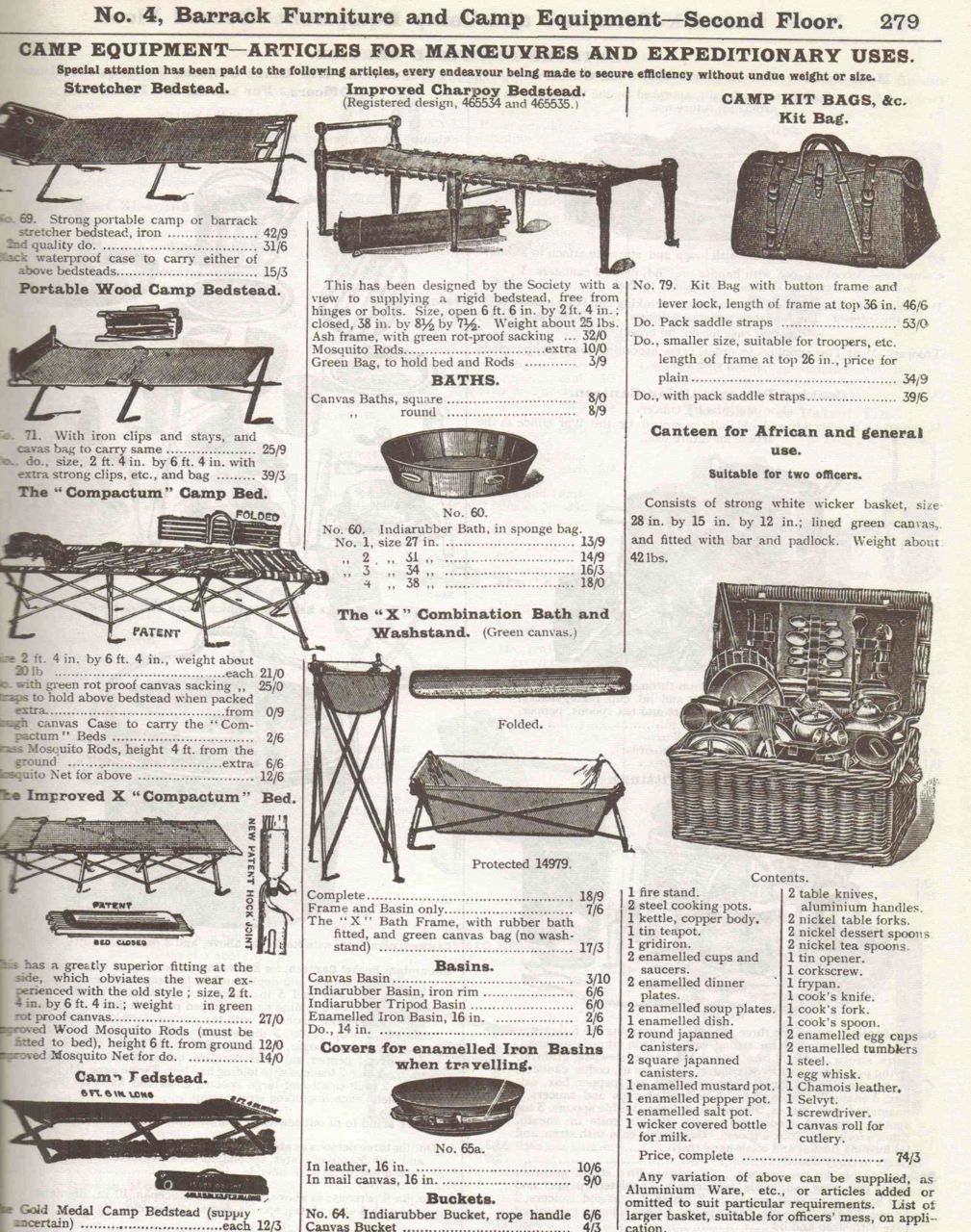


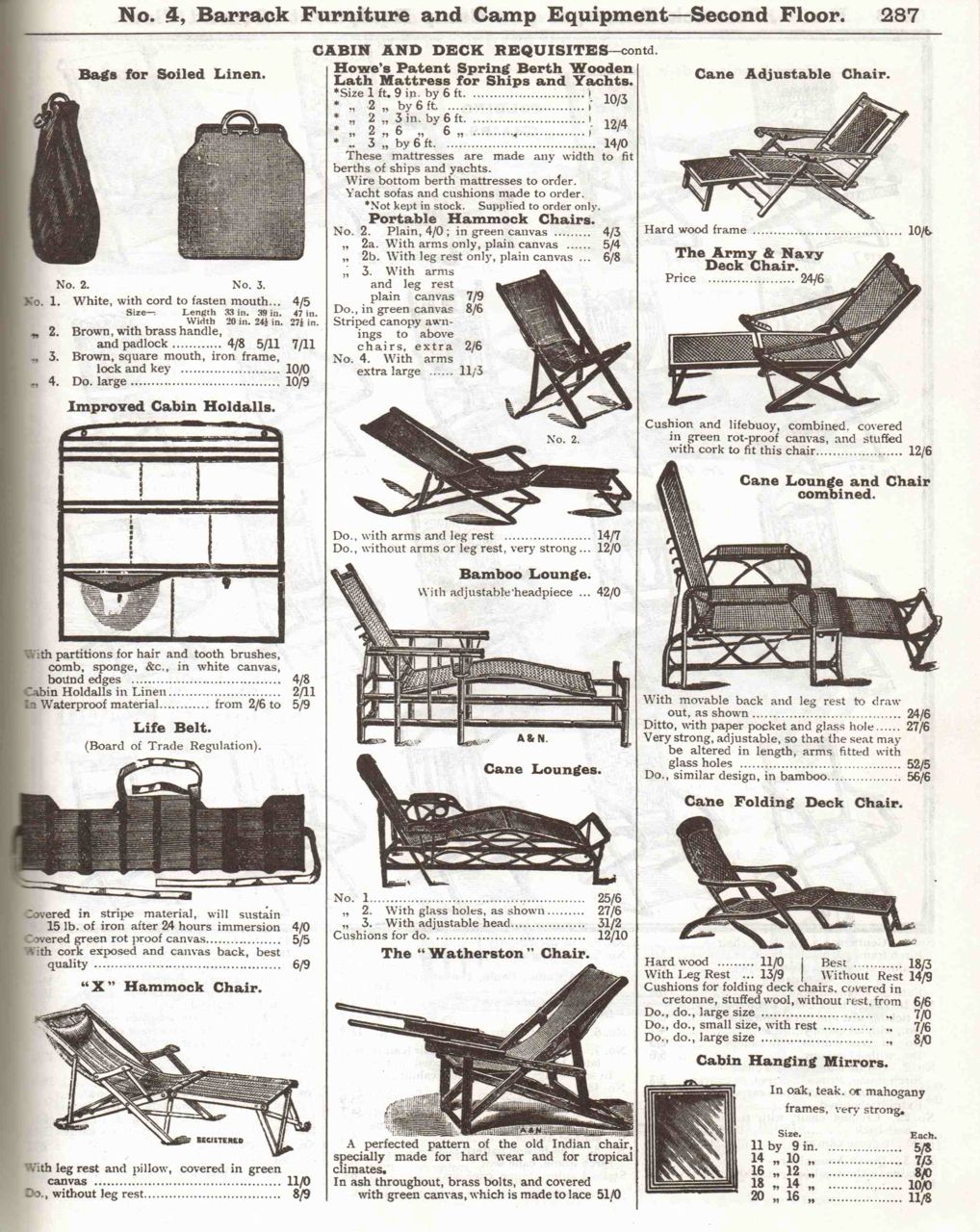

 There are some excellent items here that should give some inspiration for fabricating some classic and classy gear. From an era before the activity of “camping” was fully segregated from “regular living”.
Much more of this to come…
Waiting for the plumbers gave me a few minutes to put up this post. This is a lot more than a bunch of nifty images (but it is that as well). There are some excellent items here that should give some inspiration for fabricating some classic and classy gear. From an era before the activity of “camping” was fulling segregated from “regular living”.
Much more of this to come…
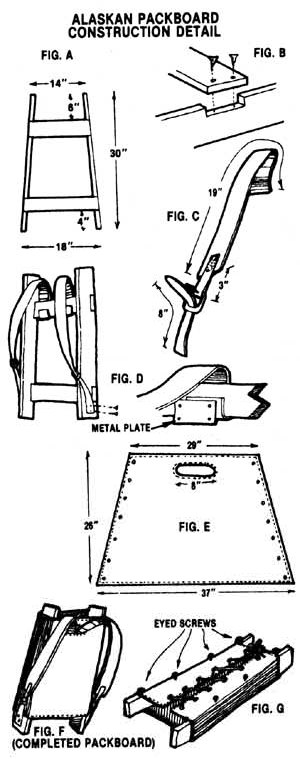
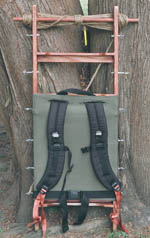
One of many projects happening around here this yule-tide season. A new classic-style rucksack is being sewn, much leatherwork is occurring, and this pack frame is being finished. The wood is shagbark hickory (Carya ovata) made from a bowstave section and some other scrap from the pile. All was split before finishing so the grain is perfectly aligned with the lumber. This made for easy steam bending. As I was working from many examples but no actual plan, there was a lot of mock-up and tweaking of the design to fit my size and intended needs. There’s no metal in the construction. The freight bar and cross members are half-lapped and lashed with rawhide. The bar is also pegged to prevent slipping under load. More to come as it gets finished and field tested.


Here’s a few older frames I could find around the ‘net:



 Preindustrial Craftsmanship