Here’s another excellent photo of a pack of vardos (caravans) in the wild. It looks like everyone came out and maybe even spruced themselves up for the photo. I couldn’t find any metadata on this one but it looks fairly early, probably late nineteenth century. These appear to be high-end models in great condition still.
So, a vardo is a small space, especially when living with a dog.
Stationed for maximum observation.
The old dog loved sleeping under the rig as she took her guard duties seriously but unfortunately, she is no longer with us. The youngster, on the other hand, has no interest in that sort of nonsense and only wants to be by my side as much as possible. She loves enclosed spaces so the vardo is a big attraction for her. She spends much of her time under the main bed, hidden away, and often forgotten about until she decides to get under foot. I even lost her for the better part of a day when she snuck in while I wasn’t looking, slipped into her bed, and was locked in for several hours. When I found her, she looked content enough and came out stretching like a sleepy child.
Making it fit.
Much of 2016-2017 I was lucky enough to spend many nights camped in the gypsy wagon with just my dog for company. She doesn’t get on furniture inside the house but the dog has decided the floor or her bed are not good enough when she’s in the vardo. Since she knows she not really supposed to sneak into the bed, the (too small) bench seat is often her compromise in the wagon. She doesn’t really fit but I guess it makes her feel like one of the family.
A bed’s eye view in the morning.
A couple years ago I learned to be extra careful when sliding out of bed, especially in the dark, as she often plants herself on her favorite felted rug; right under my feet. In this case, it also happens to be in front of the ceramic heater on a chilly morning.
Photo-bomb. She climbed out from her bed in order to not miss the action.
Even while getting ready to go to work, she seems to manage a photo-bomb; always lurking nearby and not wanting to be left behind. Just because it’s a small space, there is still plenty of room for a dog; sort of.
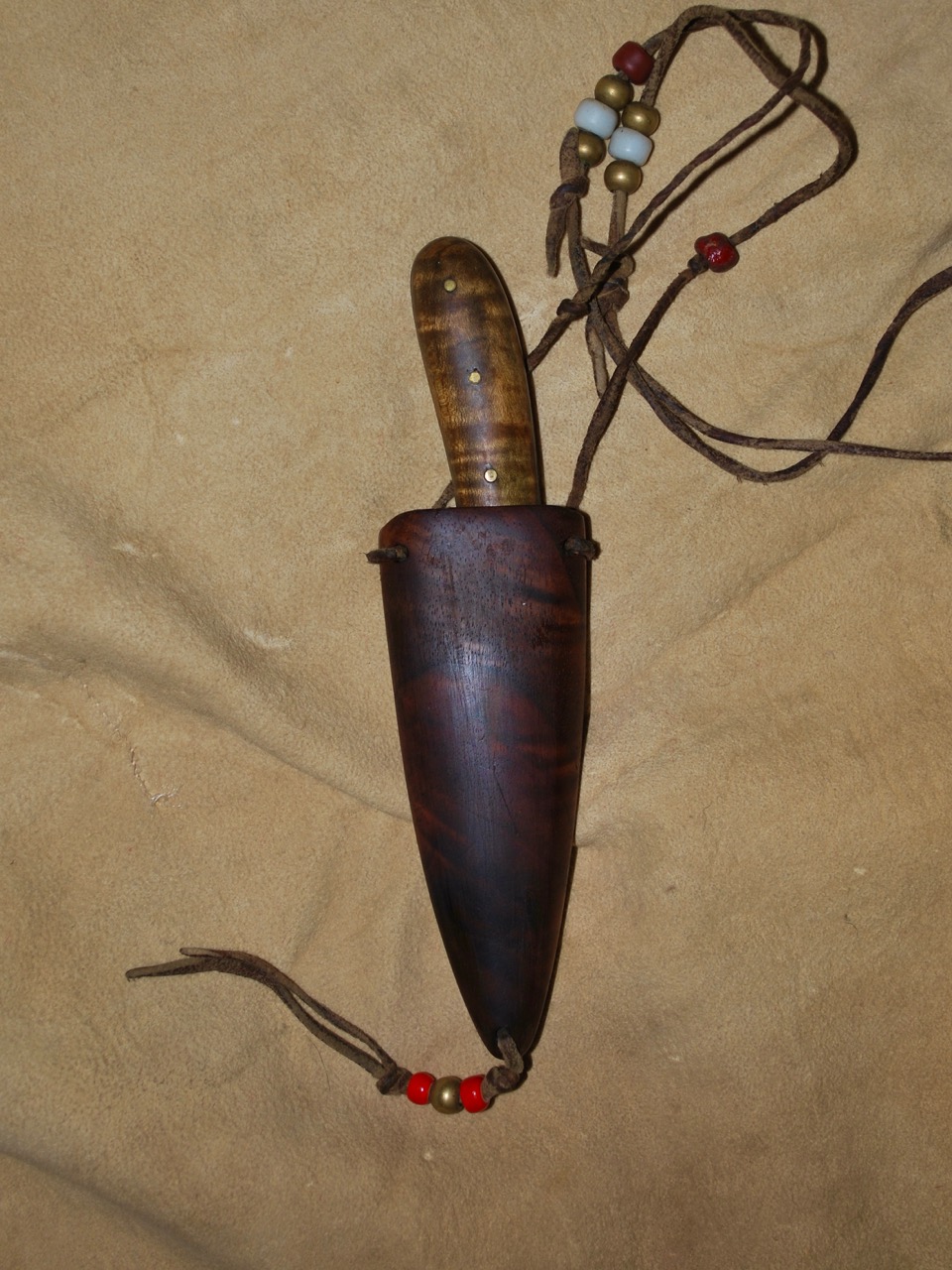
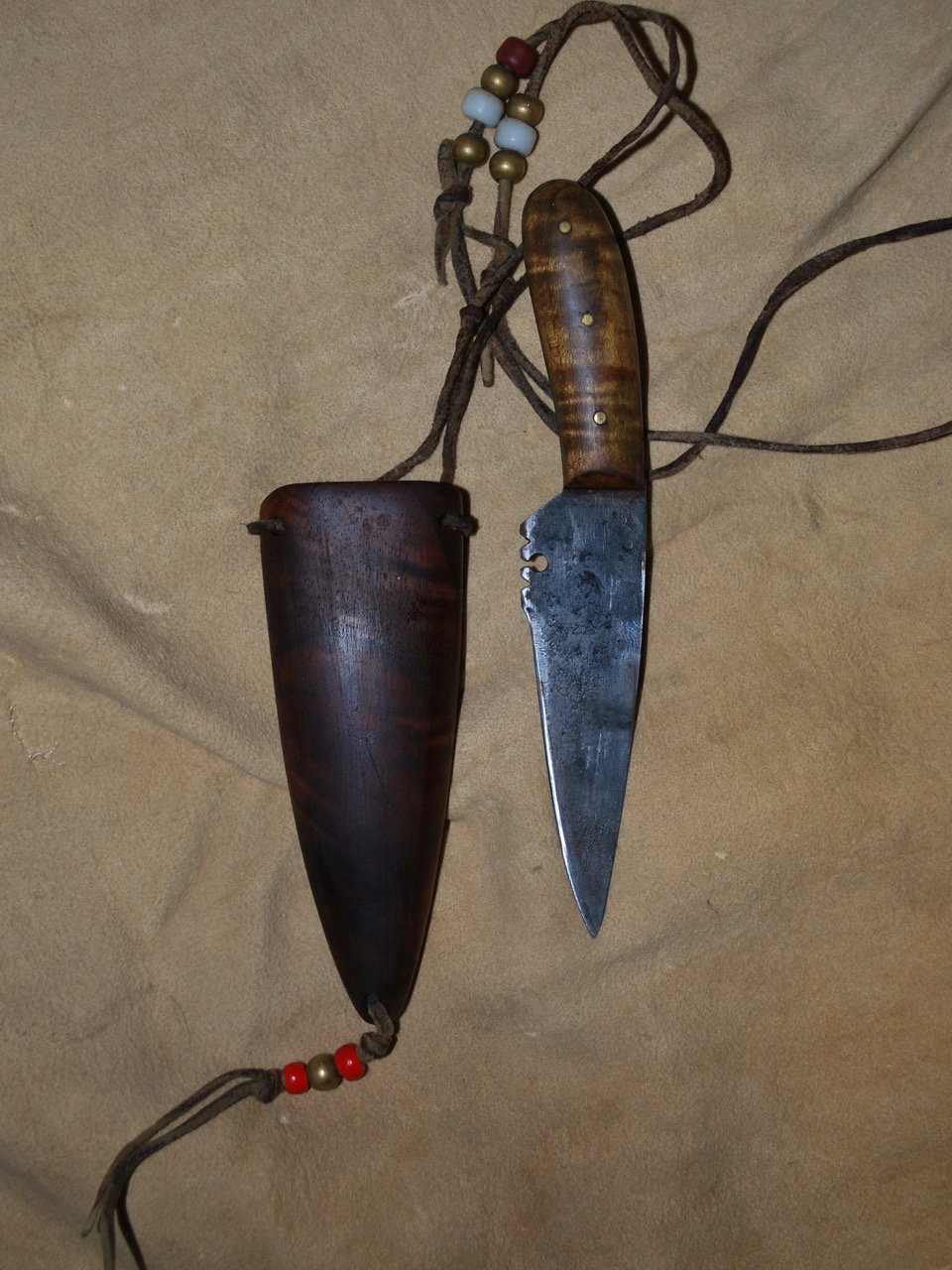
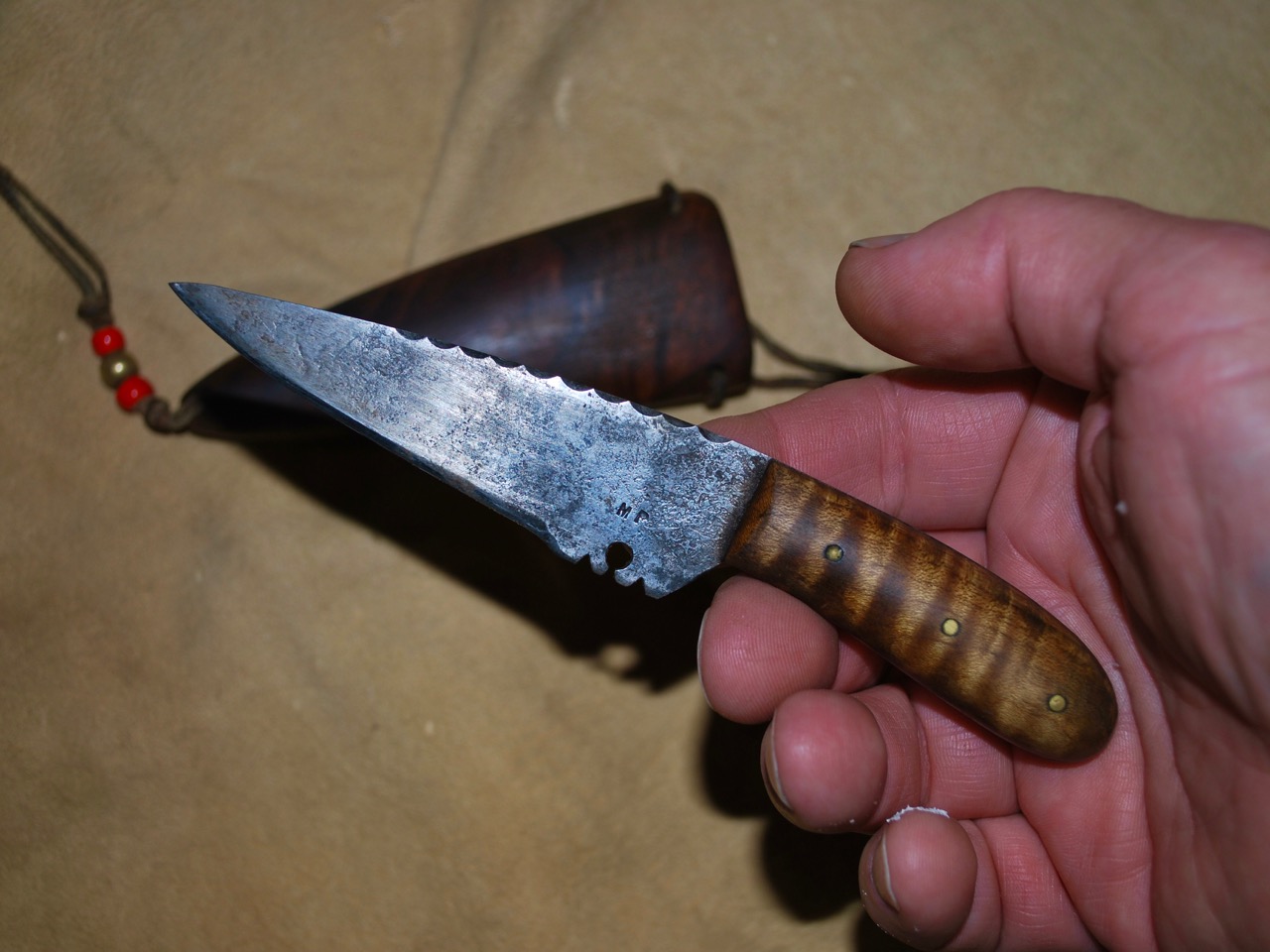
In the spirit of the internet Bushcraft trend of pulling out our tools and comparing I decided to join in the fun. This is the patch / neck knife I purchased back around 1986 when I first started getting primitive.
A poor photo of the walnut sheath.I went with wood as I was wearing this almost constantly whle working a backwoods program for the Scouts. I decided it might just impale me through the sternum or neck if I took a bad fall so the wooden block sheath was the solution.Human hand for scale.
This one was made by a bladesmith from an antique crosscut saw and has a beautiful tiger-striped maple handle. This is probably its third sheath but it’s the one I’ve stuck with since around 2001. It’s been camping and on thousands of miles of field projects, not always around my neck but almost always close-by in my pack. For some reason, our society thinks you’re a little weird if you wear a knife around your neck all the time.
I would like to re-share this older post I wrote about a caravaner, scholar, and philosopher I am quite intrigued by – Dugald Semple
Dugald Semple was a Scottish philosopher of the early 20th Century and an advocate for simple living. After becoming and engineer he took to the woods and, for a period, a life on the road, living in a tent and in various caravans in order to write and travel and avoid the enslavement of increasingly urban society.
Semple on the beach.
His major question was always “How ought we to live?” an ancient subject for thinkers the world-over and a very important topic in Asian philosophy as well. His teachings are interesting and he still has a serious following of vegans, fruitarians, and Christian Phlosophers around the world. He apparently never ate meat, eggs, or cheese, and subsisted on a mostly fruit diet. It clearly worked well-enough, as he died at the age of 79 in 1964. Not bad, but think of all the bacon he missed!
Of course, my interest in Dugald lies primarily in his simple lifestyle and his fondness for caravans and living in the open. He married well. Cathie, his wife was a widow who was independently wealthy, owning a large house and grounds. This certainly contributed to the success of the life-long experiment in simple living. Even as he settled down, he still philosophized and associated with his old friends who roamed the countryside and set up guilds of craftsmen (Nerrissa Wilson, Gypsies and Gentlemen). He envisioned a new generation of skilled travelers who could pack up their trades and families and move to where the work was, thus alleviating some of the new stress of urban life.
Semple in his summer camp.
I love this camp. This wagon seems perfectly suited for summertime use with the fully opening sides. Too bad his dream didn’t catch on, but he admitted that life on road could be stressful and difficult. At least we can give it a try; even if in a limited capacity.
As an end note, here’s a quote he is well known for on his philosophy of a vegan lifestyle:
Personally, I began rather drastically over 50 years ago by cutting out not only all meat or flesh foods, but milk, eggs, butter, tea and coffee. Cheese I have never eaten; indeed I hate the very smell of this decayed milk. Next, I adopted a diet of nuts, fruit, cereals and vegetables. On this Edenic fare I lived for some ten years, and found that my health and strength were greatly improved. Probably this was also because I lived more in the fresh air and closer to Nature. (Emphasis added by the ed.).
I just don’t know if I can fully trust a man who won’t eat cheese…
Working away on a weekend day a little while back. Enjoying time on the prairie in my little rolling home; coffee, a banjo, and connection to a HotSpot so I can get some work done. The best of all worlds.
A reminder to myself as to how the vardo is in constant change. Little updates happen all the time and I often forget them until looking back on a photo like this one.
I don’t remember for sure but I suspect there is a dog or two laying on the floor or, more likely, under the wagon keeping an eye out for wildlife. I’m itching to get back out on the road.
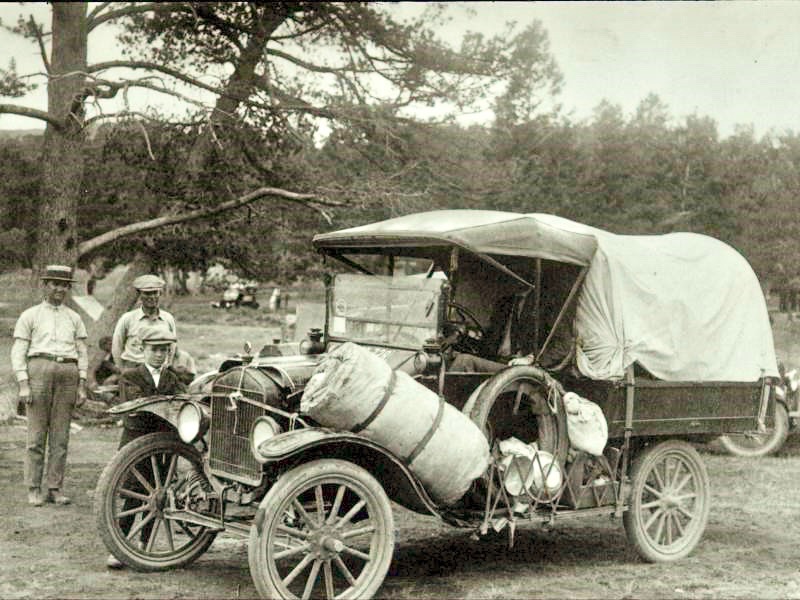
I love finding old images like this. They show that we never really change yet are on a continuum of adaptation. The bows that support the canvas top on this (I believe aftermarket) truck bed are reminiscent of much earlier wagons of the Old West.
Camping in Yellowstone 1924 – Mattress on the fender, pots, pans and a tool kit on the side board, these spiffy fellas were ready for an adventure. Image – https://www.nps.gov/parkhistory/
Space was extremely limited in the cab of these old vehicles so if there were three on-board, I suspect someone, probably the boy, rode in back with the luggage.
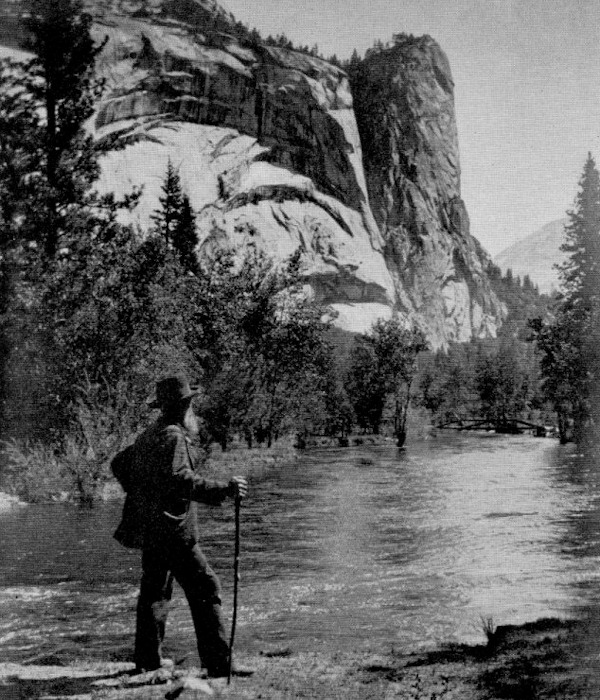
“Hiking – I don’t like either the word or the thing. People ought to saunter in the mountains – not hike! Do you know the origin of that word ‘saunter?’ It’s a beautiful word. Away back in the Middle Ages people used to go on pilgrimages to the Holy Land, and when people in the villages through which they passed asked where they were going, they would reply, “A la sainte terre,’ ‘To the Holy Land.’ And so they became known as sainte-terre-ers or saunterers. Now these mountains are our Holy Land, and we ought to saunter through them reverently, not ‘hike’ through them.” John Muir
___
I’ve spent a lot of my adult life walking long distances, without a trail to follow, through wild and untouched places, mostly as part of my job. This can be a thousand miles or substantially more some years and it was usually the most enjoyable part of my work.
Walking gives you a lot of time to think or meditate and is really a lost art to modern folks. I have worked with college students who don’t know how far or fast a human can walk in a day or even in an hour.
Hiker with walking cane, hat and backpack – Photographer: Eduard Schlochauer – via Getty Images)
___
I find that I walk a little slower than most of my colleagues and friends. I am a natural saunterer and like to look around which is maybe why, as an archaeologist, I find a lot of artifacts and cultural features when I walk. I want to take in the landscape, the plants, animals, the geology, and the smells of a place. I like to walk in silence. It is rarely a race for me and I don’t like to focus on the destination as much as the walk. Many people I know walk with a pack by putting their head down and looking at the ground while trying to walk as fast as their bodies will take them along. This is no fun to me. Walking is about the most enjoyable thing I can do. That’s why I’m so fond of writers like John Muir and Henry David Thoreau. They loved to walk and see its value on so many levels.
___
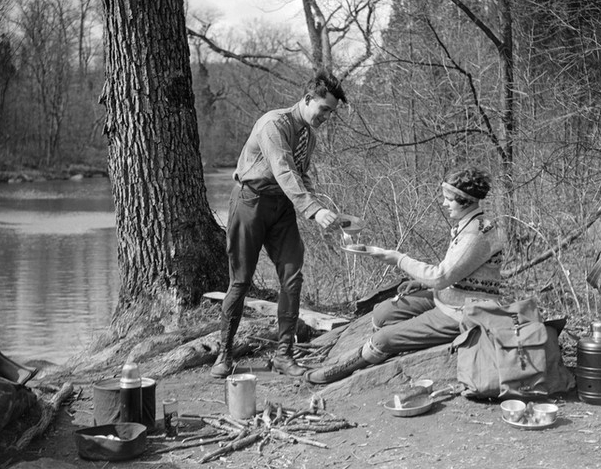
So, I’d like to suggest leaving the insanity behind for a while, pack a small rucksack, grab your best guy or gal friend, and take a walk in the wild. Your mind will thank you for the break.
Who knows what great memories you’ll make along the way?
When I’m asked if I want to go hiking or backpacking I usually say ‘no but I’ll walk with you while you hike.’
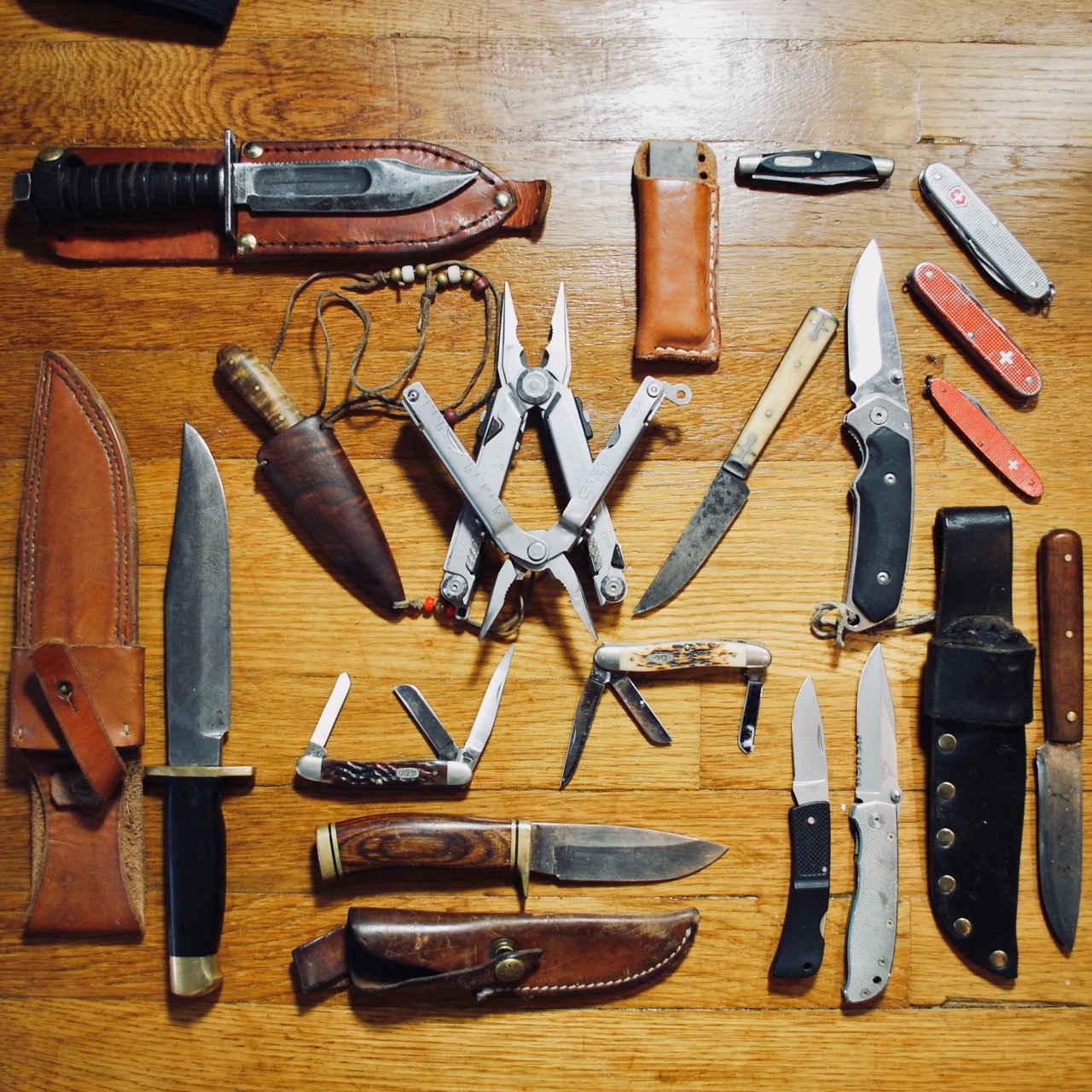
This is what happens as you travel, receive gifts, buy better stuff, always need a good knife, etc.
From the upper left: Camillus 5-1967 (a friend carried this through Vietnam), my small Arkansas stone for field touch-ups, Buck folder, two classic Victorinox Pioneer knives (I’ve carried this style every day since high school) and a small pen knife, a lock-blade Buck made in Idaho, a 19th century bone handle knife cut down from a larger eating knife, two Gerber multi-tools (the original is from 1990 and a more modern, but heavy version beneath), a hand-made patch knife by M.P. with walnut neck sheath I’ve had since 1986, a Solingen-made high carbon Bowie knife with ebony handle, two classic Case XX folders, two small folding Gerbers, a hand-made camp knife from a fine Colorado maker, and at the bottom my “go to” Buck field knife that has worked on archaeological projects, cut up animals, dog holes, and performed about every other imaginable task.
This photo came about as I decided to organize my camping gear. While emptying packs and bags I realized there were knives in every one, usually in more than one pocket. After throwing them out on the floor and arranging for a quick photo I began to think about the ones in various tool boxes, my wood carving knives, a couple collector knives I can’t seem to part with, and others stashed away around the house. My search for minimalism is failing when it comes to good tools.
 Here’s another excellent photo of a pack of vardos (caravans) in the wild. It looks like everyone came out and maybe even spruced themselves up for the photo. I couldn’t find any metadata on this one but it looks fairly early, probably late nineteenth century. These appear to be high-end models in great condition still.







 Preindustrial Craftsmanship