U.S. Army Riding Gloves Pattern – free

In my internet sleuthing I have gathered literally thousands of images, plans, and patterns of things I would like to make or have for reference.  Government documents, like the scans below, are invaluable resources for the maker when they are made public.  Who would know how to better and more efficiently make a pair of riding gloves than the U.S. Cavalry.  This design is the culmination of more than 110 years in the business.

Click the pattern for the full-sized image. Scale to fit the dimensions shown for the standard sizing or scale them to fit your hand, be it a tiny little paw or oversized ham (note the three sizes on the pattern).
Part of the fun is learning the names of the parts; I had no idea there was even such a thing as a quirk in a glove.

I hope to get around to making a pair soon myself but please let me know if you have any success when you try these.  Thanks for reading and please click “Like” or leave a comment if you have one.

The Hardest Part of Learning to Sharpen

Wise words. Learning to really properly sharpen an edge tool by hand is an epiphany and makes wood and leatherworking a real joy.

Steve S.'s avatarThe Literary Workshop Blog

The other day, I was teaching a friend to sharpen his plane iron, and it got me thinking about sharpening.  Of all the skills I have learned while working wood, sharpening has been the most life-changing. It started with chisels and plane irons, but then I began sharpening my kitchen knives and pocketknives.  I had no idea that steel could get so sharp!  It used to be that dull tools were merely inconvenient, but now I find a dull knife a heartbreaking disappointment.

I say this because I want to share a recent article on sharpening by Chris Schwarz, former editor at Popular Woodworking Magazine and current head of Lost Art Press.  In it, Schwarz reflects (well, more like pontificates) on how few woodworkers actually know how to sharpen an edge tool.  Even the some of the professionals who write for the big-name magazines often lack basic sharpening skills.  He…

View original post 314 more words

Weaving Wagon

This is an excellent idea, especially for a skilled willow weaver.

If you need a bicycle wagon and can get a lightweight frame built, this seems to be a great, eye-catching option.  I suggest watching the short videos on their site as well.  I find their site somewhat difficult to navigate, but who am I to talk with all the clutter around here?

Here is a quick link to the video about the Weaving Wagon:

Click here for their full post  about the Weaving Wagon and I suggest looking around.  They have some neat stuff going on.

https://earthanddotcom.files.wordpress.com/2017/06/20170604_163142-collage.jpg?w=1000I think I would really love to have something like this.

Possibles Bag

Here is an update on the most recent possibles bag I have been working on:

The buffed leather reflects a lot more than I realized while photographing.

Sorry the photos aren’t so great but here is the description: Made from 7 oz (~3 mm) Hermann-Oak full-grain harness leather top dyed and antiqued Fiebings medium brown with a single patch pocket inside. It still needs a little edge detailing, waxing and buffing before it is truly done but that will happen later today.

The interior is natural but will darken with use and waxing.

Rustic, laced construction, unlined, 18th century “English-style” bag.  The main pocket is 8 x 8 inches (1.5 litre in volume), while the overall body length is about 12 inches. 

The edges are all burnished for a smooth and comfortable feel in hand. The thick oak-tanned will soften with time and use.

The eared shape is to keep the bag from riding around to the front or back of the torso during use. This leather will age nicely and will last longer than any of us with normal rugged use. 

All sewing is double needle free-hand saddle stitch.

1 1/4″-wide strap extends to about 56″ to fit the most well-padded or heavily coated hunter. Going out for trade in the next couple days.

The Caveman Catalyst in Your Tinderbox

It’s always time to up your fire-building game. Survival Sherpa Todd Walker does just that in this post. Check it out.

Survival Sherpa's avatarSurvival Sherpa

by Todd Walker

The Caveman Catalyst in Your Tinderbox - TheSurvivalSherpa.com

The human love affair with fire is intimate and ancient. Over the flames we cook, celebrate, spin tales, dream, and muse in the swirls of wood smoke. Fire is life. Its warming glow draws us like moths to a flame.

It’s not a stretch to believe that a Stone Age chemist recognized the idea of using carbon for future fires. Disturbing the leftover carbon ashes from the night fire, she stares at sparkles of light glowing like the pre-dawn stars above. She carefully nurses a baby “star” back to life to warm her hearth and home.

It ain’t rocket surgery. Even cavemen knew the importance of the sixth most abundant element in the universe.

Carbon and Future Fires

The game of chasing lightning strikes for each fire was no longer required. This unreliable practice was abandoned for twirling sticks together to create enough heat to initiate the…

View original post 1,375 more words

The Handy Neck Knife

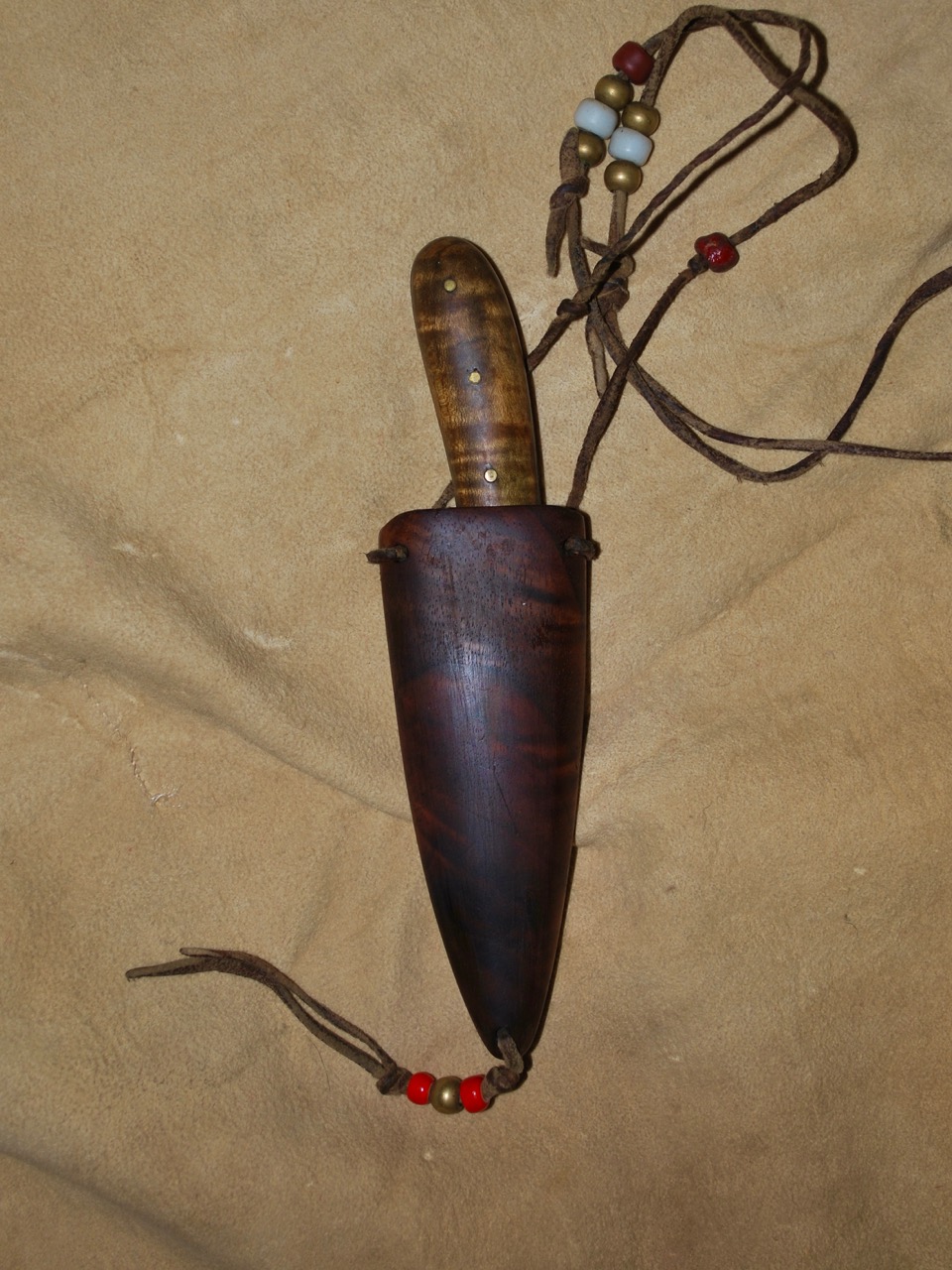
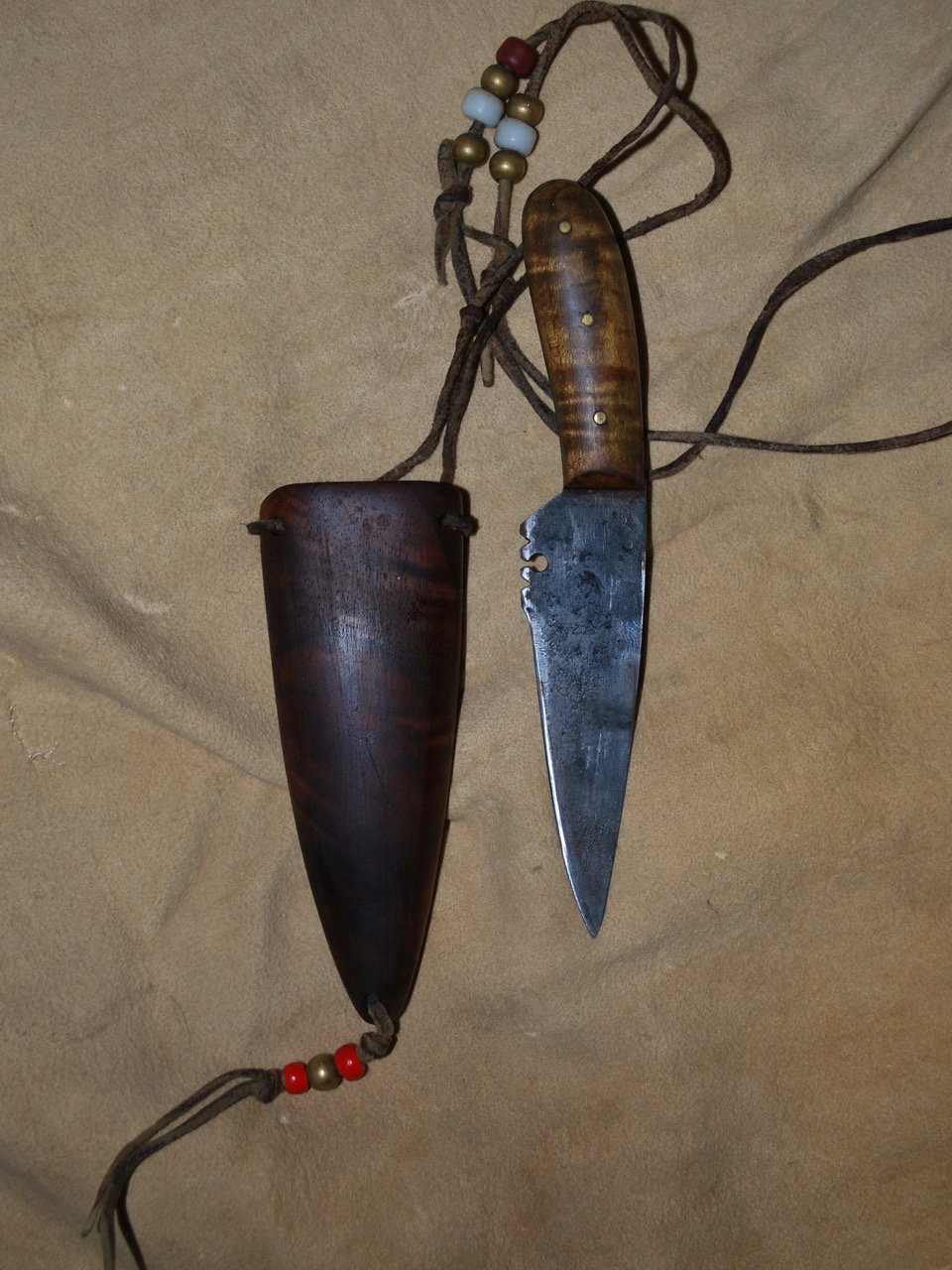
In the spirit of the internet Bushcraft trend of pulling out our tools and comparing I decided to join in the fun.   This is the patch / neck knife I purchased back around 1986 when I first started getting primitive.

A poor photo of the walnut sheath.
I went with wood as I was wearing this almost constantly whle working a backwoods program for the Scouts. I decided it might just impale me through the sternum or neck if I took a bad fall so the wooden block sheath was the solution.
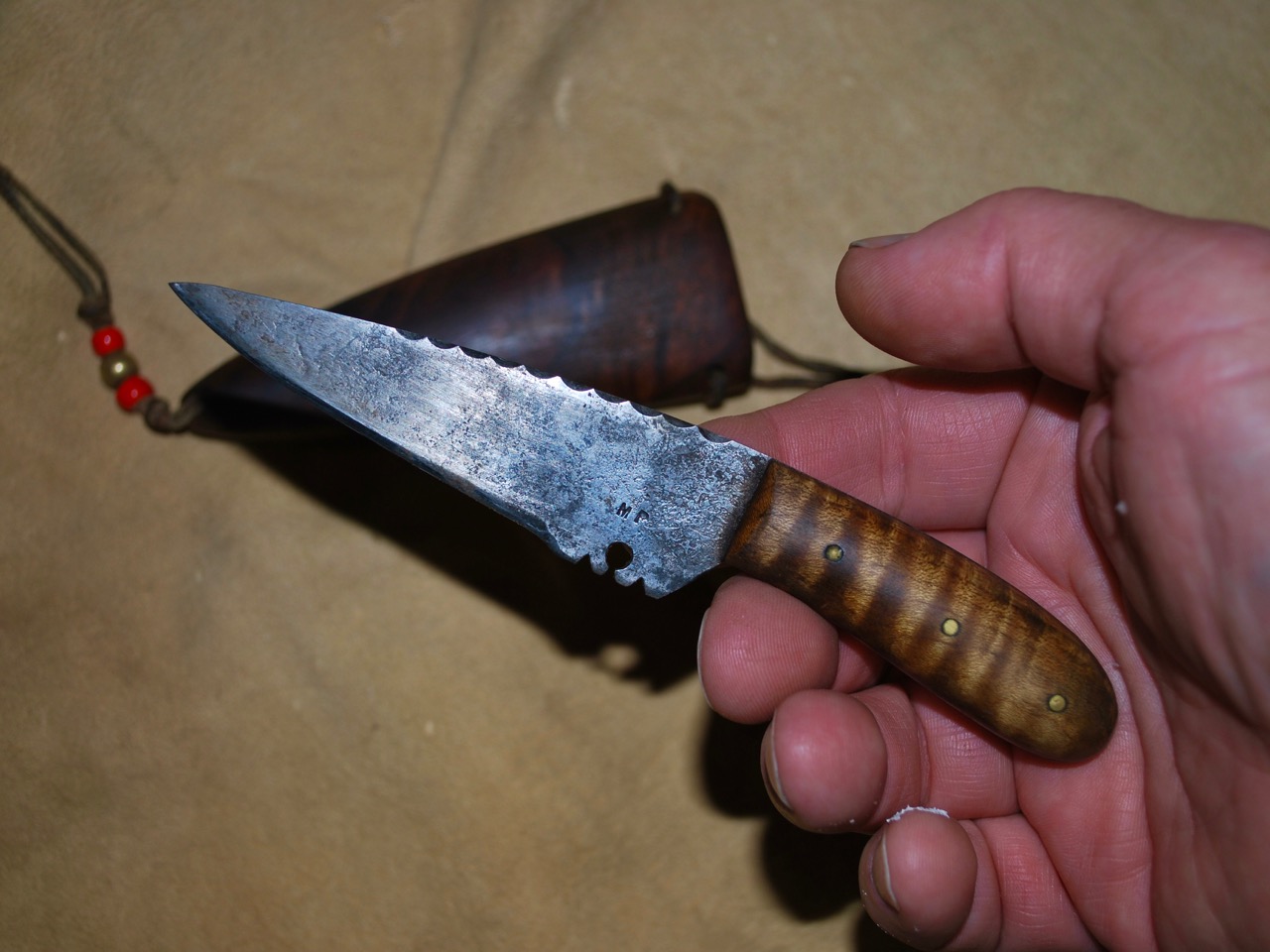
Human hand for scale.

This one was made by a bladesmith from an antique crosscut saw and has a beautiful tiger-striped maple handle. This is probably its third sheath but it’s the one I’ve stuck with since around 2001. It’s been camping and on thousands of miles of field projects, not always around my neck but almost always close-by in my pack. For some reason, our society thinks you’re a little weird if you wear a knife around your neck all the time.

Early Car Camping

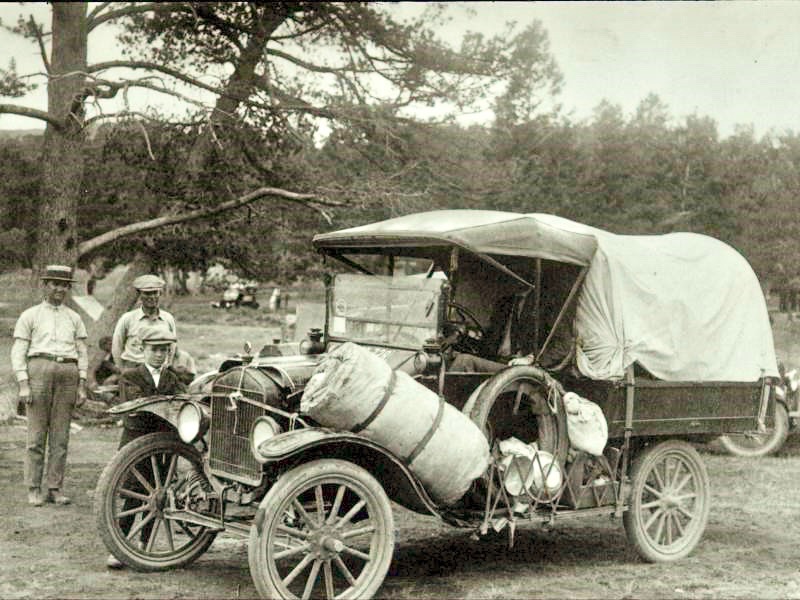
I love finding old images like this.  They show that we never really change yet are on a continuum of adaptation.  The bows that support the canvas top on this (I believe aftermarket) truck bed are reminiscent of much earlier wagons of the Old West.

Camping in Yellowstone 1924 – Mattress on the fender, pots, pans and a tool kit on the side board, these spiffy fellas were ready for an adventure. Image – https://www.nps.gov/parkhistory/

Space was extremely limited in the cab of these old vehicles so if there were three on-board, I suspect someone, probably the boy, rode in back with the luggage.

Bamboo Bait Box

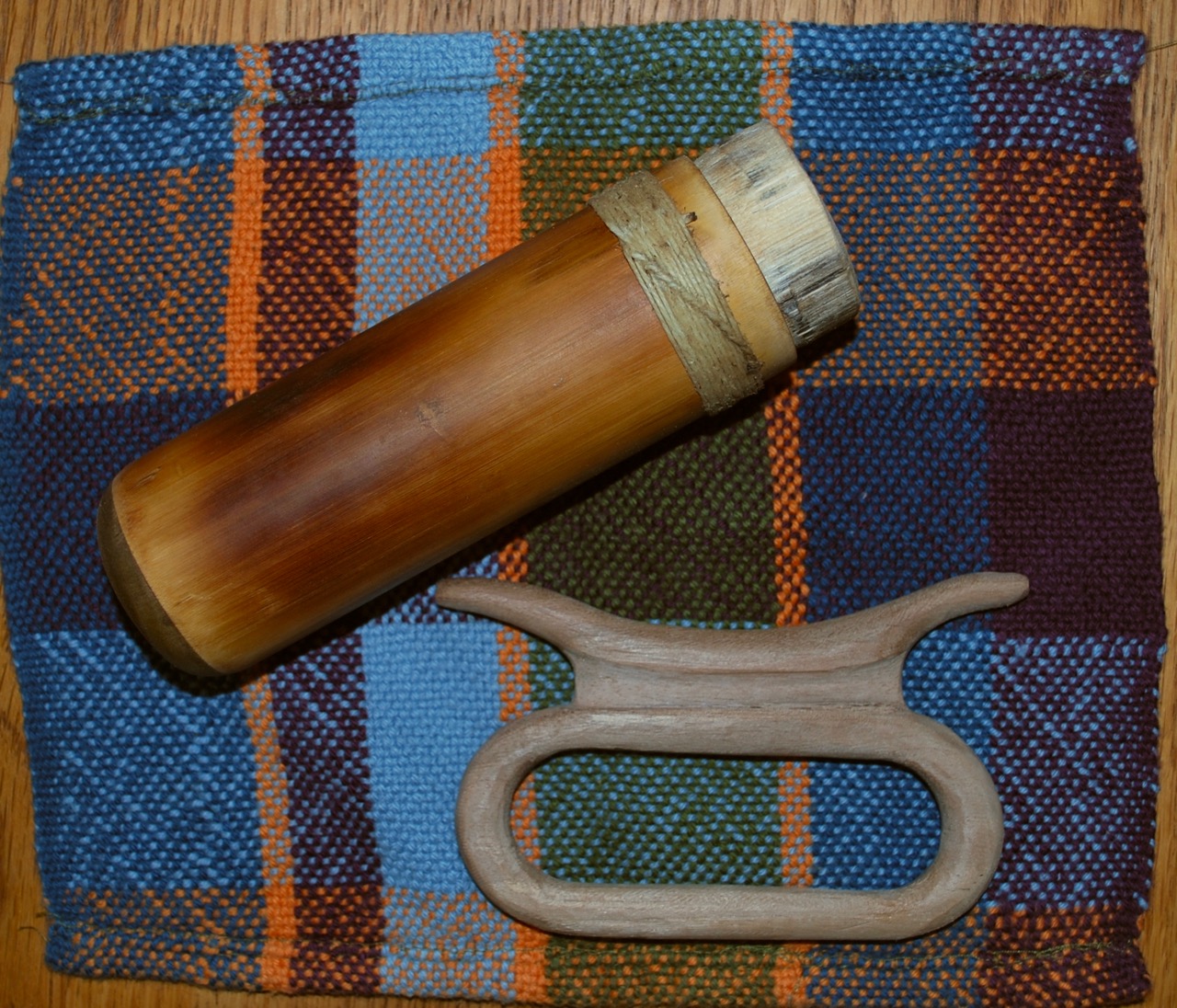
Bamboo container with walnut reel. The background cloth is from some test cloth my wife wove and turned into small lunch napkins.

Here’s a bamboo container I may integrate into the new fishing kit.  It’s made from a big stalk we got from a friend in Georgia (USA).  I plugged the bottom with a poplar stopper and made the lid from a sotol stalk.   I’ve found that the sotal is denser than most yucca but is still relatively soft and easy to work.

The box can fit a lot of gear (lures, hooks, line, sinkers, floats) or could work as a bait box equally well.  The top is tightly wrapped with hemp cordage to prevent splitting and will be treated with pine tar.

Fishing Reel

I’ve been working on a new hand reel to keep in my pack with my travel fishing kit.  I didn’t have much of a plan when I started so I drilled out a couple of one-inch holes a little further apart than the width of my hand and started from there.  The wood came from the scrap pile and is a very solid chunk of walnut.  I’m a little concerned about the possibility of cracking but this piece is old, well-aged, and extremely solid so I suspect it will be okay in the end.  It will be heavily waxed to waterproof the wood and I’m working on making and trying a few silk leaders.  Anyone with experience with hand-made fishing gear have any thoughts on this?

The hand reel and the primary tools used.

These little projects are a nice way to spend the evening in a productive way.  After looking at so many artifacts over my career it becomes apparent that our ancestors often created works of art and beauty that truly come from within maker and their influences throughout their lives.

When you make for yourself, your tools and possessions become a reflection of who you are, not where you shop.