Making a Bucksaw – Retrospective

At “Echoes in Time” Champoeg State Park, Oregon, USA 2014.

This is the prototype saw I used for teaching a bushcraft class at Echoes in Time in 2014.  Unfortunately, a split in the original wood spread last winter and I had to rebuild it.  Actually though, that is a beautiful thing when you can make your own tools.  I didn’t spend any abstract money for a new one, I didn’t have to trow away some sort of useless and polluting garbage, and I could readily improve the design based on several year’s use and observation.  I’ve sold about 20 of these now so the pattern is firmly ingrained in my brain and sinews while tweaking each batch to make them more pleasing to use and efficient to make. without losing the aesthetic of this ancient design.

Saw ready for assembly.

It has been a very successful class for me at both Winter Count and Rabbitstick over the years and I’ve honed the teaching so that each student can really get them most out of it.  Not only is there basic shaping and carving, but also learning to make a simple blind mortise and tenon joint, drill holes by hand-power, and think about design options.  I hope to be teaching this one-day class again soon as it is a great introduction to hand woodworking  while building a manageable and extremely useful tool.
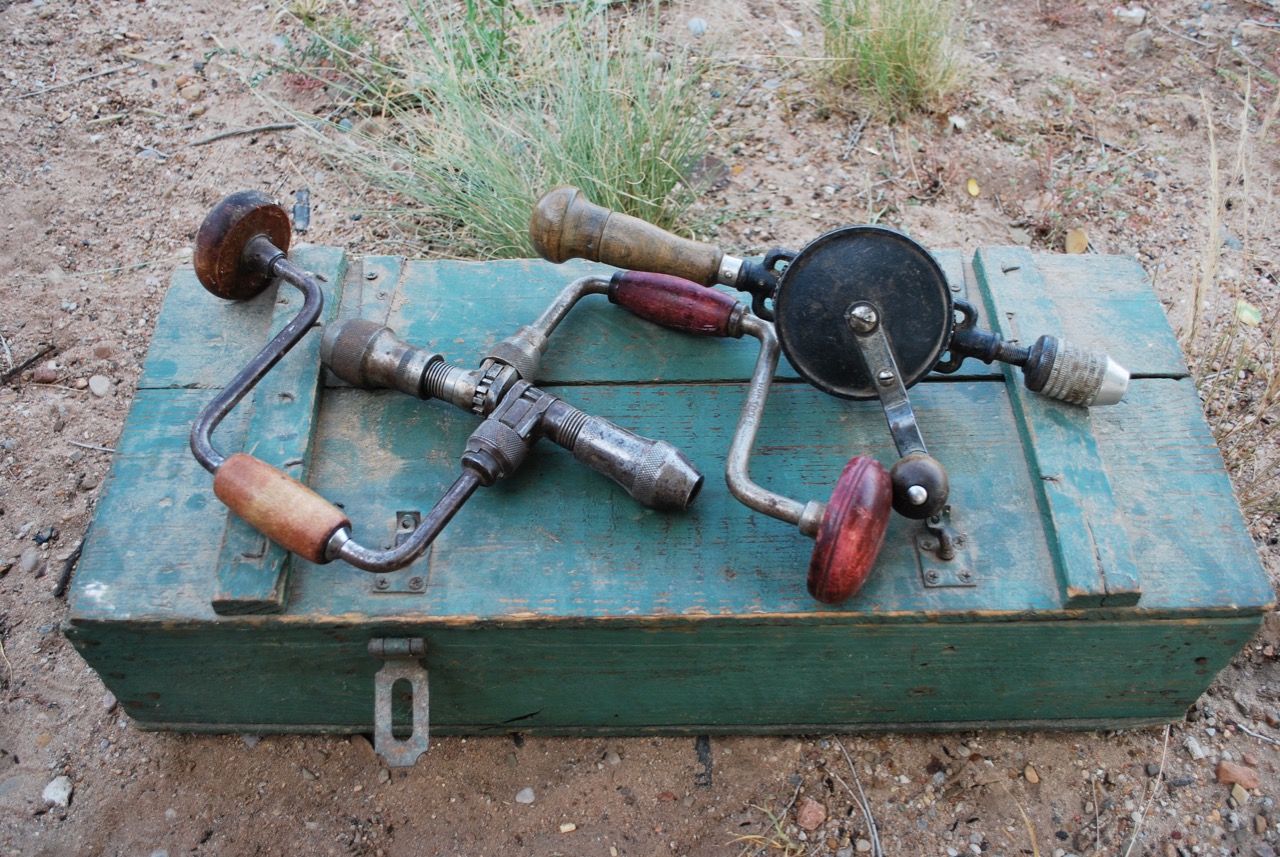
Assortment of cordless tools used in class.

Romanian Gypsies

By Peter van Beek
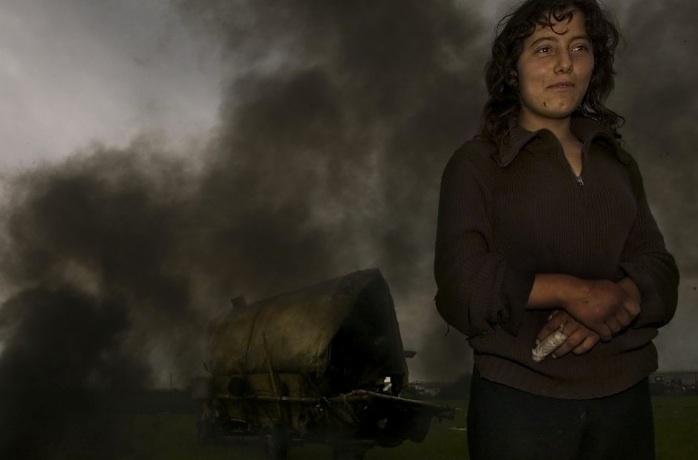
A mix of old and new technology.  Horse power on modern running gear.  Photo by Peter van Beek.  Click the image to view the photo album.

Peter van Beek has documented the difficult life of nomads in a modernizing Europe.  Fear, stereotypes, and unfamiliarity dominate their way of life and place them into a partially self-imposed, marginalized portion of society.  Although there is terrible poverty, he documents family life and survival of these remarkable people.

Untitled
Simple shelter as used by our ancestors since the beginning of time.
Untitled 2
It isn’t easy being a nomad in a modern technological world. There is easy place for this lifestyle.
Untitled 3
The world has changed but many traditions have not.


Untitled 4
There are certainly exceptions to nomadism. Many Romany cling to their traditions and morph them into a new lifestyle. All of our people have done this.

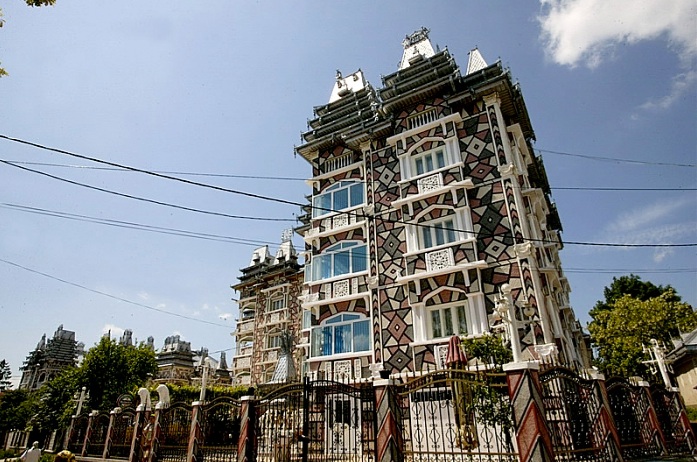
But it isn’t all oppressive poverty “By collecting and selling iron they get very rich and build their own village with huge palaces where they started living.”  While settling down, the community keeps it’s own unique sense of style.

Untitled 5
Hard work and some flexibility can make assimilation slightly easier.
Palace
Ethnic identity shows in this vernacular style.
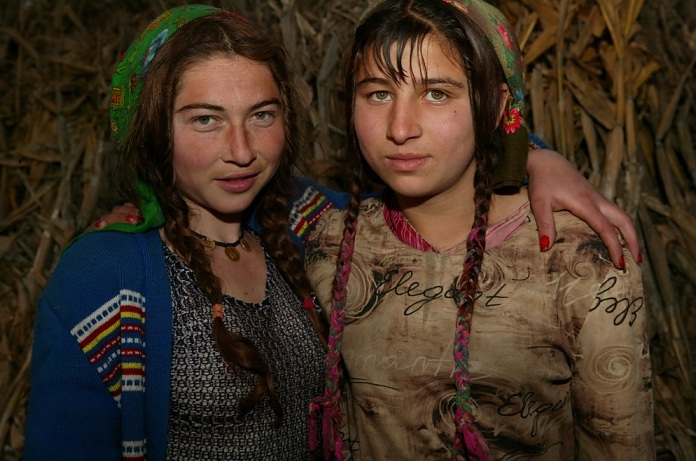
Kalderash
Beautiful young women with a foot in both worlds.

“Many Kaldarash people (the coppersmiths) still wear colorful clothes, living in a beautiful traditional way.  In some villages, time seems to stand still.”

From Peter van Beek’s website:

“The only nomadic gypsies in Europe live in Romania, the country that joined the European Union in 2007. Living a hard life in Romania these semi-nomadic people hold on to traditions and rituals. Amongst them are story-and fortunetellers, musicians and coppersmiths. Despite a law against nomadic life these gypsies still live in their harsh and remarkable way.”

Images found at Peter Van Beek Photography.  Check out his beautiful work and consider buying his book about the Roma:

140105_Metropolis_Roma_adv.indd

Campsite Life

Scenes of life on the road and around the campsites.

october-1951-mrs-robert-matthew-an-mps-wife-campaigning-at-a-gypsy-encampment
October 1951: Mrs Robert Matthew, an MP’s wife, campaigning at a gypsy encampment.
Kidsatthecampsite
Kids at the campsite.
landing
A classic image of Traveller children.
couple
Modern gypsies (Romany) in their simple accommodation.
caravanandbender
I really love these little bender tents.
Family Life
A fine caravan for a successful traveller.
This is part of a series of images, mostly Romany, Irish, and Scottish Travellers collected from around the internet.  Many of these historic images found on the web are without citation.  When a clear link to a source is found, I try to include it.  If a source is known, please pass it on and I will gladly include it or remove it if necessary.

Weaving Wagon

This is an excellent idea, especially for a skilled willow weaver.

If you need a bicycle wagon and can get a lightweight frame built, this seems to be a great, eye-catching option.  I suggest watching the short videos on their site as well.  I find their site somewhat difficult to navigate, but who am I to talk with all the clutter around here?

Here is a quick link to the video about the Weaving Wagon:

Click here for their full post  about the Weaving Wagon and I suggest looking around.  They have some neat stuff going on.

https://earthanddotcom.files.wordpress.com/2017/06/20170604_163142-collage.jpg?w=1000I think I would really love to have something like this.
The World is Your Workshop

In Britain and Ireland, the Romany Gypsys and the Traveller community are often associated with low-skilled work such as scrap dealers, horse traders, musical entertainers, or more nefarious activities outside the societal norms.  However, there were plenty of skilled craftsmen and craftswomen providing goods and services to people around the country.

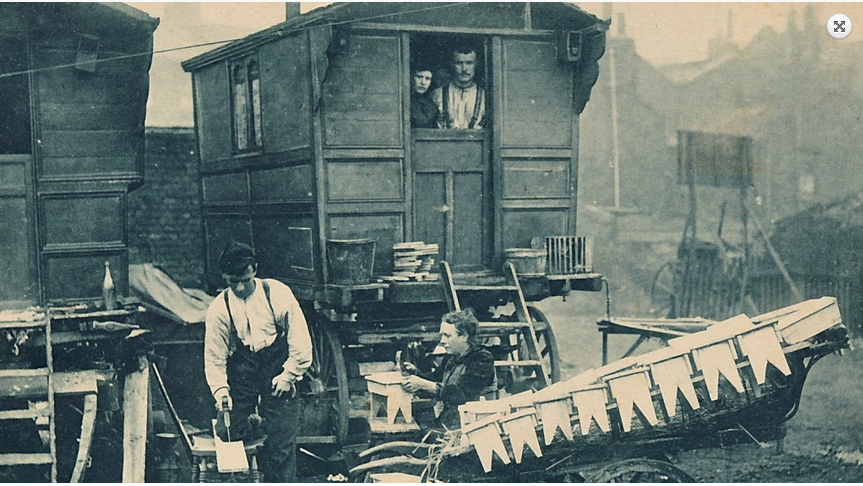
Below is an image of a couple, working together making footstools outside their vardo while another couple looks on from the comfort of their wagon.

Gypsy carpenters making small and large stools for market. From an early 20th century postcard.  Source: Romany and Traveller Family History Society.

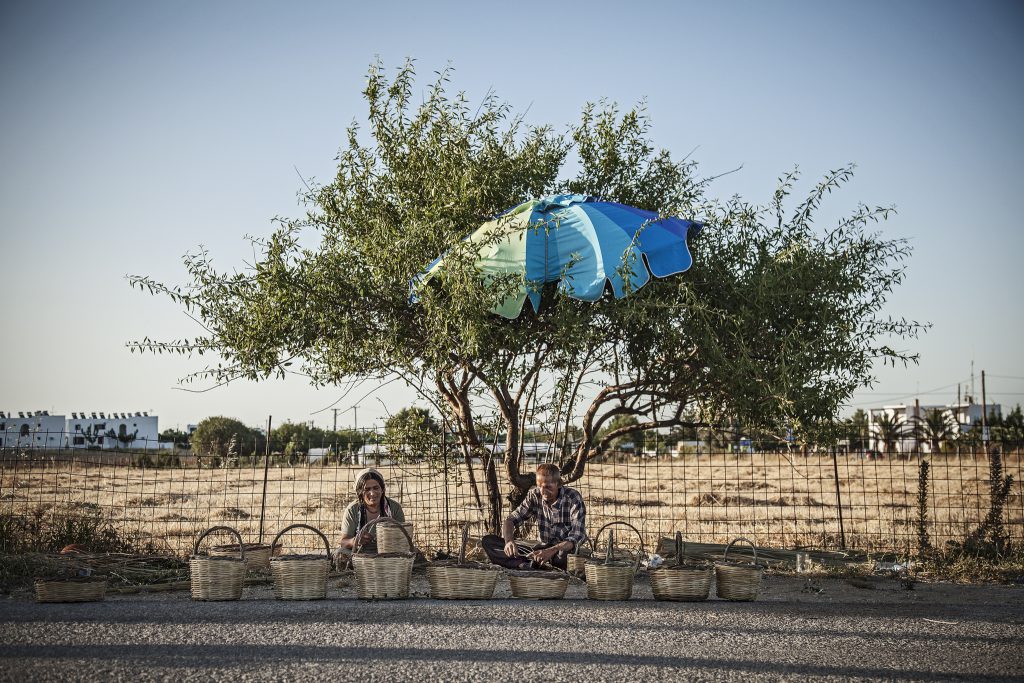
Other Gypsy families were blacksmiths, basket weavers, or similar occupations that could be taken on the road, required little stock or overhead, and could be performed independently or with a minimum of family help.

Gypsy Basket Weavers on Skyros. Source: http://from-hand-to-hand.org/.

There is more to wandering people than the romantic or demonized images we carry.  People are just people after all.

Gypsy Blacksmith. Source.
Gypsies France 1930s-1960s
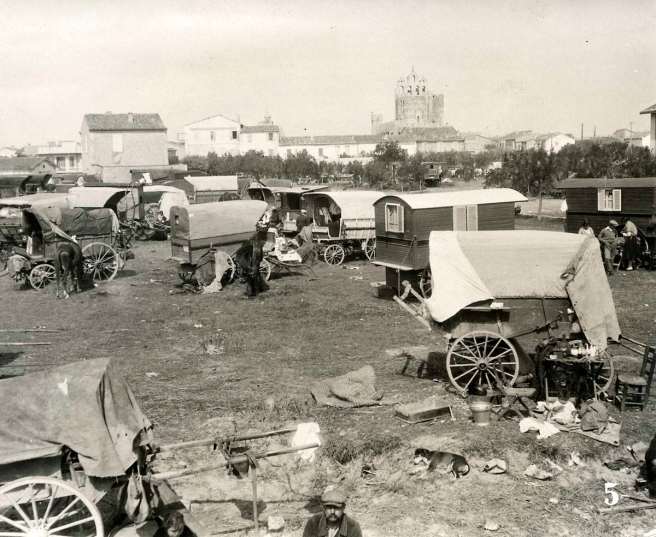
Encampment on a pitch somewhere in France, early mid-20th century.

Tents and the Vardo Life; What is a Bender?

vardoandbender
The bender tent provides shelter from the damp while keeping the living space outdoors.

Travellers in Europe and Britain have always been associated with a style tent called a bender.  This comes from the construction technique of cutting saplings and bending them into a dome, elongated dome, or half cylinder shape,  These frameworks were then covered with tarps and made watertight in the temperate damp.  The origins of this design are lost in the mists of time and are believed by archaeologists to be one of the earliest style of recognizable tent structure used by humans.

Screen Shot 2018-11-21 at 19.45.31
This size bender can more than double the living space of a vardo in a matter of minutes.

Even after a certain level of affluence allowed some Romany and other Travelling folk to own living wagons, the bender continued (and continues) to be a way to extend the living space without the need for a lot more gear.

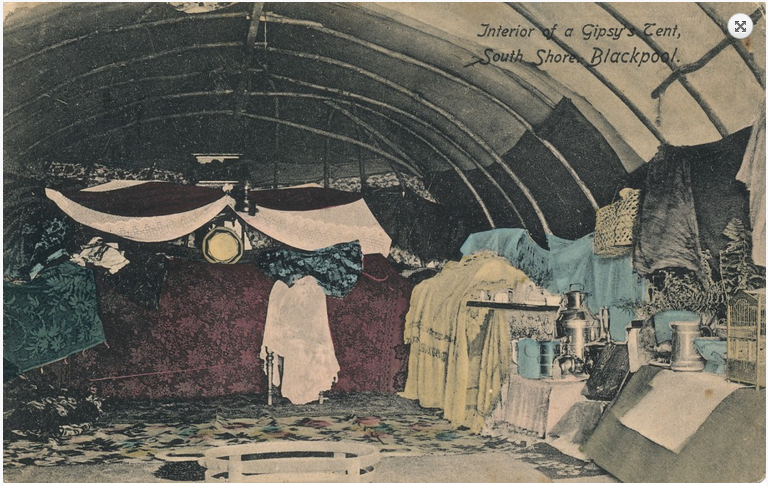
In England, Gypsy women often used their homes for fortune-telling, especially around the Gadjo (non-Gypsy) vacation centers. Image, early 20th century. Source: Romany & Traveller Family History Society.

The fact that a tent becomes the subject for a Blackpool post card shows the ongoing fascination with “Gypsy Culture,” especially in the British Isles where Travellers are simultaneously suspect and romanticized.

Fortune Teller
The front or vestibule provides a place to do business in relative privacy. Source: Romany & Traveller Family History Society.

If you have family that me be Romany, Traveller, or Fairground folk in Britain or just want to learn more, check out the Romany & Traveller Family History Society at http://rtfhs.org.uk/.

A Romany Family in Scotland

Near Boglehill in Midlothian, Scotland, n.d. late 19th century. Source: Romany and Traveller Family History Society.

I really like everything about the image above.  We see three very different types of wagon-home-conveyances and a family, wearing clothing of the time.  Travellers on the margin of mainstream society have been shunned, persecuted, and culturally dismissed while at the same time romanticized for their freedom and seeming lack of attachment to a more mundane life.  I am glad to see a revitalization and pride from reconnecting with family roots.

Legal Documents.

People who have lived “off-grid” so to speak often have few documents or any official standing, making family histories more difficult to trace.  Hospital records, cemetery documents, or government permits, such as the Pedlar’s Certificate above, are the only way for many to trace their ancestry.


Diaper Family Portrait.

Fortunately, there is a concerted effort in Britain by the Romany & Traveller Family History Society (RTFHS) to create a clearinghouse for descendants of those often overlooked by the mainstream.

About the RTFHS:  Back in the early 1990s, a group of keen family historians with British Gypsy ancestors first met at a Gypsy family history conference organised by the historian and author, the late David Smith. Until that moment we’d all thought that we were pretty much alone in trying to trace our travelling ancestors and that there was no-one out there to learn from or share our experiences, trials and tribulations with.