Ultra Minimalists, Part 4 – Modern Minimalism

For the Ultra Minimalists, Part 1, click here.

Modern Minimalists 

Everything I Own: My 288 Things

By Joshua Fields Millburn

  • Life Tools & Accessories – 33 items, including my car, guitar, books, hairbrush, toothbrush, etc.
  • Consumables – 5 groups of items, including food, cleaning supplies, hygiene supplies, office supplies and paper goods
  • Kitchen Items – 19 items, including pots, pans, utensils, coffeemaker, toaster, oven mitt, etc.
  • Bathroom Items – 6 items, including my bathroom scale, rugs, trash can, shower caddy, etc.
  • Electronics – 10 items, including my BlackBerry, MacBook, Printer, iPod, etc.
  • Furniture  – 18 items, including my bed, couch, coffee table, desk, chairs, etc.
  • Decorations – 14 items, including decorative plants, artwork, digital picture frames, wall clock, etc.
  • Clothes (Miscellaneous) – 58 items, including shoes, socks, underwear, belts, gym shorts, coats, etc.
  • Casual Clothes – 79 items, including jeans, hoodies, T-shirts, button-down shirts, etc.
  • Dress Clothes – 50 items, including suits, ties, dress shirts, etc.

“That’s everything I own. 288 things. Count them if you’d like. The nicest thing about creating this list is that I actually use everything I own. There is not a kitchen item or a piece of furniture or an article of clothing that I do not use regularly. It’s an amazing feeling.”  Click here to read the full text of his excellent essay.

Next time: my move toward Minimalism and the search for balance.
Handcrafts

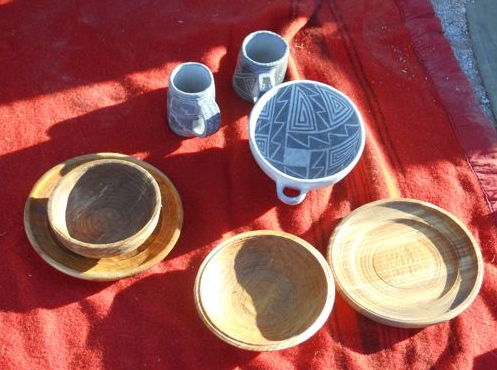
Some craftsmanship seen at Winter Count 2014.  Moving a little closer to a hand-made life, one skill at a time.

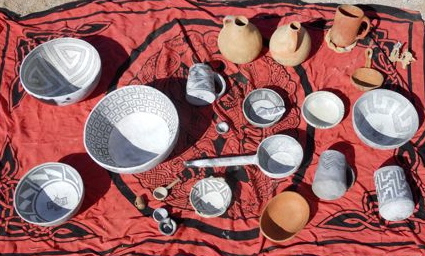
Ceramics by Roger Dorr, Woodwork by Mick Robins.

Hand made pottery made by artisans who collect the raw clays, slips, and paints make for greatly loved cookware and cups.  Wood turned on a foot-powered lathe from cleared alder trees make for intimate dinnerware.

Pots
The wares of just one of the many great craftspeople associated with Backtracks and the Society of Primitive Technology.

Many cultures are represented at the gatherings but in the Southwest, the black-on-white ceramics dominate the fancy wares.

Packbasket
Packbasket

Packbaskets are found worldwide but only in small sectors of the western population.  This one is particularly beautiful.

Making a bowl by burning and scraping.
Making a bowl by burning and scraping.  Delicious ducks roasting in the background.

Even a simple bowl can be a satisfying accomplishment when it holds it’s first meal.

Fresh deer skins being turned into buckskin.

A lot of time and labor goes into dressing a fresh deer hide but the payoff is immense.  Buckskin clothing will last for many many years.

Perfectly tanned hides by "Digger".
Perfectly tanned hides by “Digger”.

Skilled artisans and craftsmen can make the best customers as they know and understand the care and effort that goes into a handcrafted project.

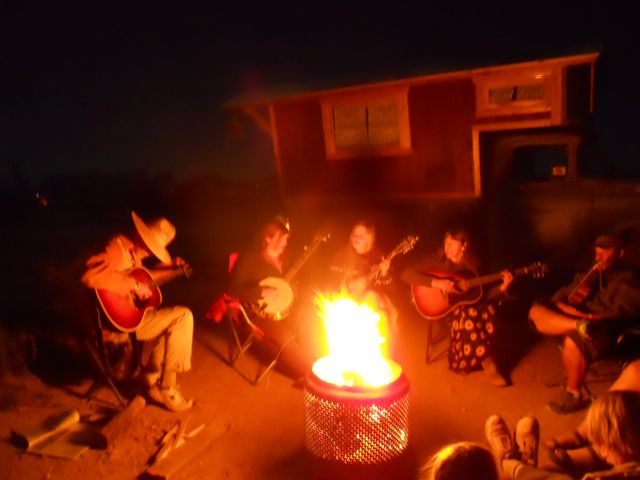
musicThe talent doesn’t end with the crafting of artifacts.  People who “Make” have skills that reach far beyond the world of modern consumption.  The primitive technology crowd brims over with artists and musicians of many types and genres.

More making, less taking.

Ghillie Making at Winter Count 2014

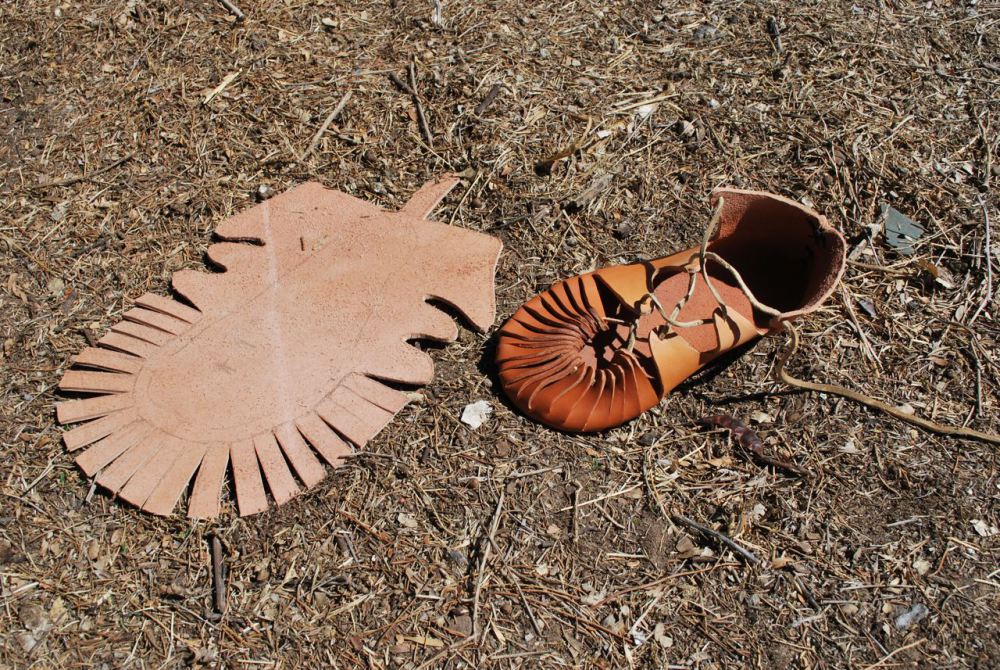
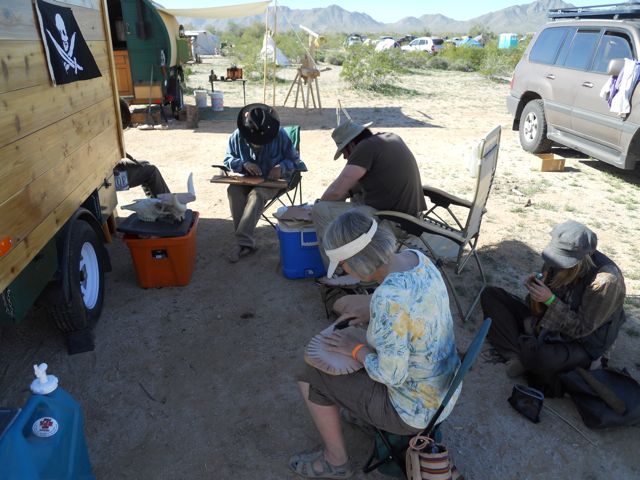
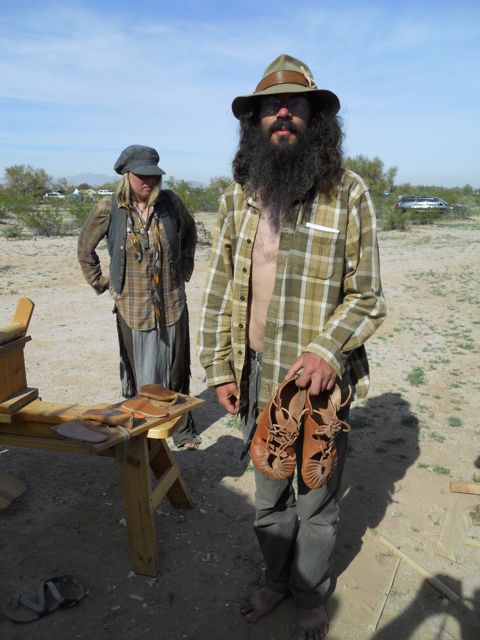
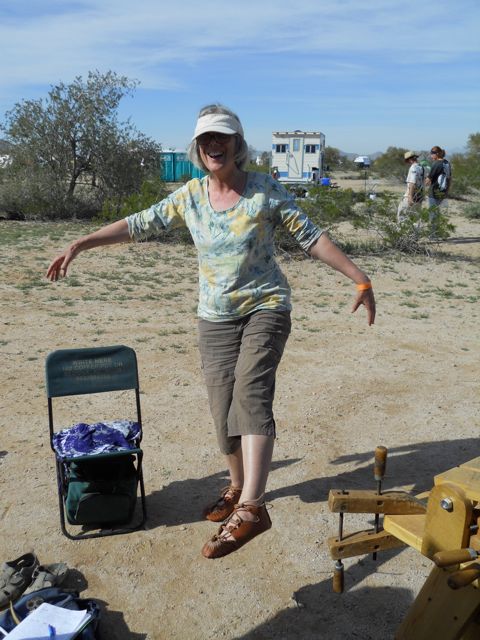
One of the many things taught at Winter Count this year was shoe making in the form of carbatina or ghillies.  These are relatively simple shoes notable for their one piece construction and generally involve very little sewing.  I am interested in how things are learned and for me, the process is more important than any other aspect.  Hopefully, students take away some knowledge that they can apply beyond the class setting and in an afternoon can learn something that they can use for life.

ghillieHistorical examples vary widely but tend to have a lot of similarity in the complex toe-cap.  Shoes are a difficult piece of clothing and protection because the fit is critical and even minor problems with the shoe will impact the feet in a negative way.

Marx-Etzel2The toe cap is formed by strips of leather overlapping which gives flexibility and room for expansion.  The simplest forms are one piece but better versions are found with insoles and outer soles to extend the life and create a sturdier shoe.

DSCN4029 DSCN4030 DSCN4031 DSCN4033 DSCN4034These were all made from premium oak tanned leather (ca. 8 oz. or 3.2 mm) which proves to be tough to cut but provides a long lasting shoe.  It was a great set of students in the classes and I think we ended up with 17 pair of shoes in the end.

An earlier post describing my journey into Ghillies can be found HERE.

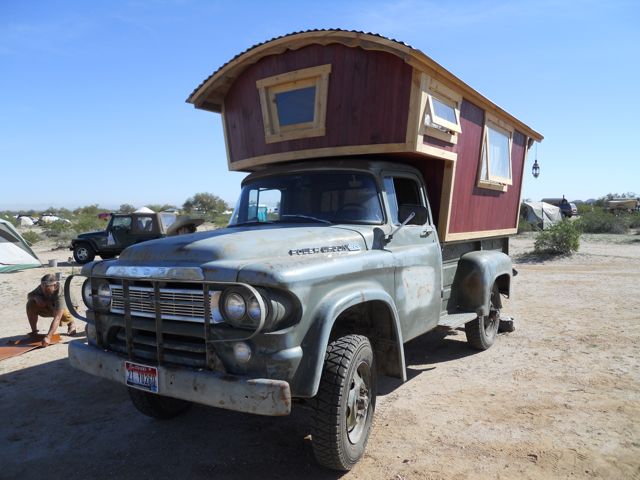
Jed and Hilary’s Power Wagon Vardo

As unveiled at Winter Count 2014 near Maricopa, Arizona.

DSCN4000This classic kite shaped beauty is built into the bed of an old Dodge Power Wagon.  Like all projects of this nature, she’s a work in progress but is already and awe-inspiring thing of beauty.

DSCN4001The layout is a traditional elevated cross-bed with a kitchen down one side with additional storage and seating down the other.  A clever table is concealed under the counter and pulls out to be utilized from side-by-side seating.

DSCN4002The tail gate porch is an excellent addition to the space.

DSCN4003 DSCN4004Best of luck to both Jed and Hilary in their future adventures.

Road Check

Safety Check!
Safety Check!

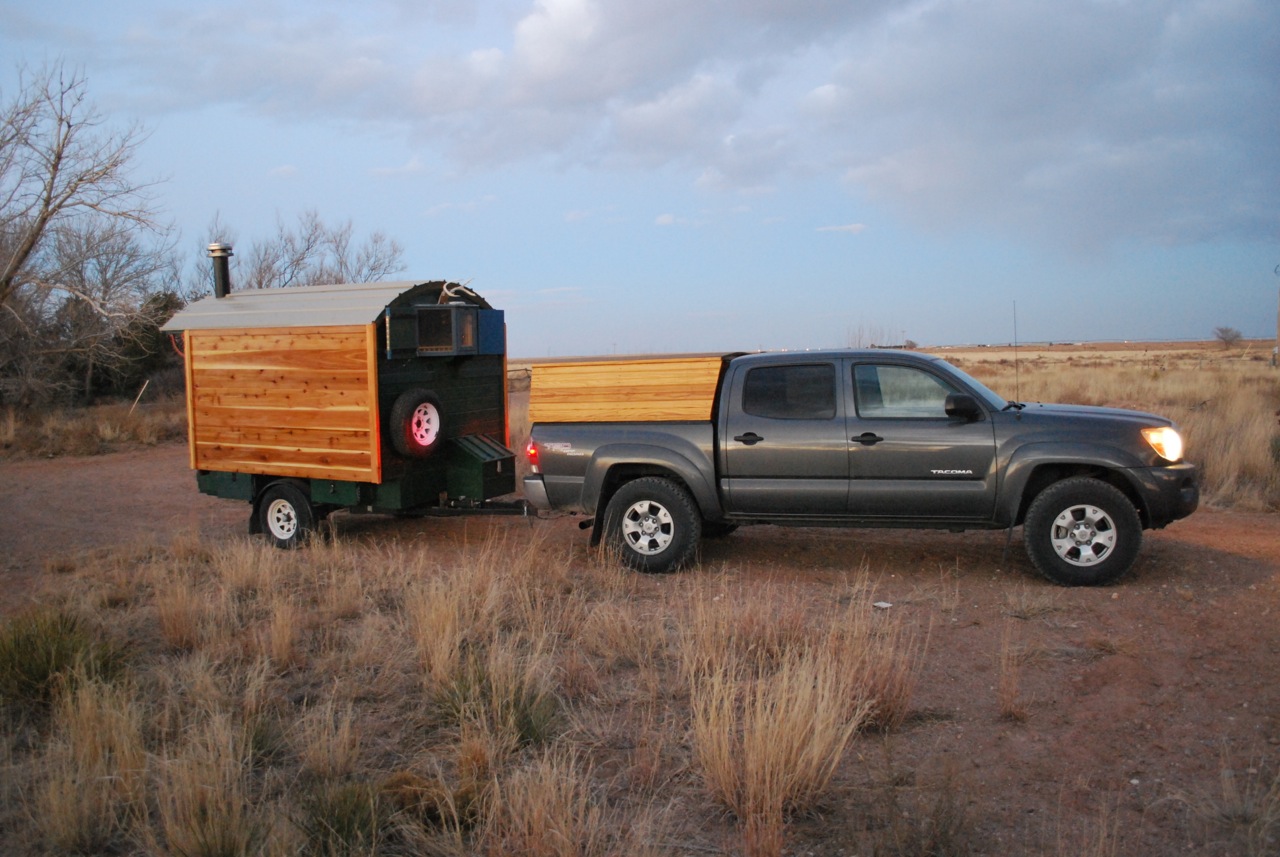
For those who know the Snail, you might notice something different.  I’m making a little post about the new look but I just loved the sunset picture from today after work.  I have a very short window of light at the end of the work day but try to use it best I can.  More changes to come in the very near future.

I am hating my job so much right now I’m ready to jump in and run away.  Bad people can really ruin your day no matter how much you try to make things better.

I’ll get more pictures up soon.

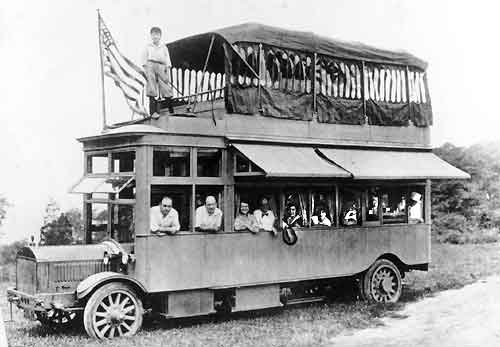
The Conklin House Bus

15conklin_gypsy-vanRoland and Mary Conklin of Huntington, N.Y., made house-car travel a family experience. Their bus factory built the Gypsy Van, shown above, and in the summer of 1915, the Conklin family set out to see America.

Photo & caption courtesy of the Smithsonian Institution,
the Huntington Historical Society (New York),
and Home on the Road: The Motor Home in America,
a book by Roger White

Found at http://www.oldwoodies.com/gallery-rv.htm