There is a need for learning the right stories in childhood.
A young knight facing a dragon, Warwick Goble (British, 1862–1943).
“Since it is so likely that (children) will meet cruel enemies, let them at least have heard of brave knights and heroic courage. Otherwise you are making their destiny not brighter but darker.”
Today, it’s sheep camps from Wyoming from the Wyoming Tales and Trails webpage. Great photos and some good information about Western history.
Note the important things; wood stove, wash pan hanging on the door, the big tub sitting outside, and a fiddle for company. I could spend a good chunk of my life like this!
Another sheep camp, dog included.
This camp is downright crowded with two wagons.
Although the site is a bit difficult to navigate, there is a lot of information about western history to be found there. Have a look around.
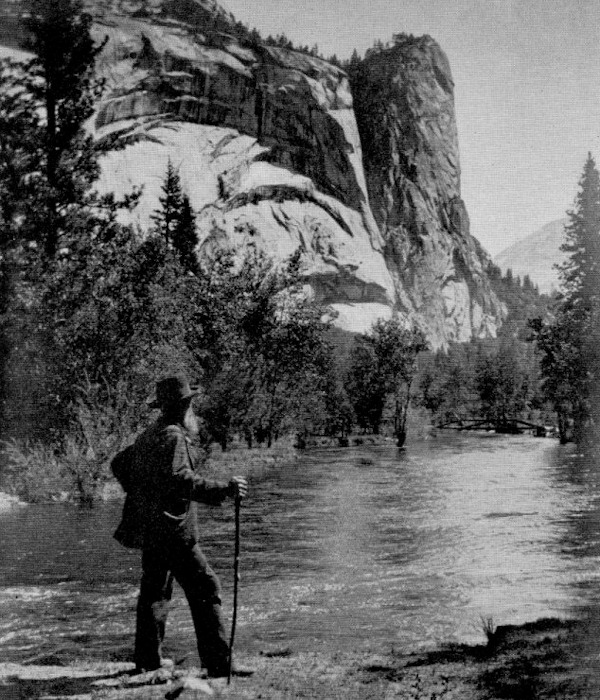
“Hiking – I don’t like either the word or the thing. People ought to saunter in the mountains – not hike! Do you know the origin of that word ‘saunter?’ It’s a beautiful word. Away back in the Middle Ages people used to go on pilgrimages to the Holy Land, and when people in the villages through which they passed asked where they were going, they would reply, “A la sainte terre,’ ‘To the Holy Land.’ And so they became known as sainte-terre-ers or saunterers. Now these mountains are our Holy Land, and we ought to saunter through them reverently, not ‘hike’ through them.” John Muir
___
I’ve spent a lot of my adult life walking long distances, without a trail to follow, through wild and untouched places, mostly as part of my job. This can be a thousand miles or substantially more some years and it was usually the most enjoyable part of my work.
Walking gives you a lot of time to think or meditate and is really a lost art to modern folks. I have worked with college students who don’t know how far or fast a human can walk in a day or even in an hour.
Hiker with walking cane, hat and backpack – Photographer: Eduard Schlochauer – via Getty Images)
___
I find that I walk a little slower than most of my colleagues and friends. I am a natural saunterer and like to look around which is maybe why, as an archaeologist, I find a lot of artifacts and cultural features when I walk. I want to take in the landscape, the plants, animals, the geology, and the smells of a place. I like to walk in silence. It is rarely a race for me and I don’t like to focus on the destination as much as the walk. Many people I know walk with a pack by putting their head down and looking at the ground while trying to walk as fast as their bodies will take them along. This is no fun to me. Walking is about the most enjoyable thing I can do. That’s why I’m so fond of writers like John Muir and Henry David Thoreau. They loved to walk and see its value on so many levels.
___
So, I’d like to suggest leaving the insanity behind for a while, pack a small rucksack, grab your best guy or gal friend, and take a walk in the wild. Your mind will thank you for the break.
Who knows what great memories you’ll make along the way?
When I’m asked if I want to go hiking or backpacking I usually say ‘no but I’ll walk with you while you hike.’
It was a lonely life on the range. “Even if a herder does not particularly care for reading, he will be driven to it in self-defense.” I wanted to re-share a good story about sheepherding life. Gilfillan was a shepherd for 20 years and went on to become a well-known humorist, author, and speaker.
“Archie Gilfillan was South Dakota’s sagebrush philosopher. His prairie wit entertained people in the ranching areas of Montana, North Dakota, Wyoming and South Dakota through the Great Depression.”
As to why he never married,
“You profess sincere and unbounded admiration for the beauties of the opposite sex and you practically lay your heart at their collective feet; and then you meet some individual who combines the poorer qualities of a mama wildcat and a bitch wolf, with a voice like a buzz saw, the temper of a slapped hornet, and a disposition that would curdle the milk in four adjoining counties. And then you have to revise your opinion of the sex all over again –– and downward.” In short, he never met a woman he liked who would have him as a husband.
The full article can be found here in South Dakota magazine.
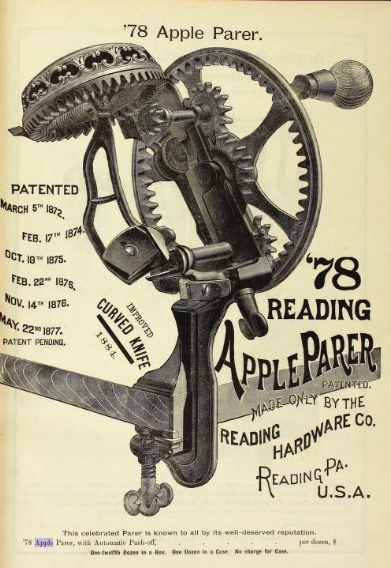
From the 1885 Reading Hardware catalog. Manufactured through 1993 and brought back into production shortly thereafter by Lehman’s. I grew up using one of these. Now, it looks like something a Steampunk engineer would create to use as many moving parts as possible. It was a more interesting kitchen in those days and I think you’d only need to buy one of these about every three or four generations.
From the most recent Lehman’s catalog:
Total number of cast iron, cast bronze or steel pieces Per Apple Peeler: 31
Holes Drilled: 22
Holes Tapped: 10
Number of Assembly Steps: 44 (From start to packed in box)
Time it takes to Make One Apple Peeler: 48 Minutes
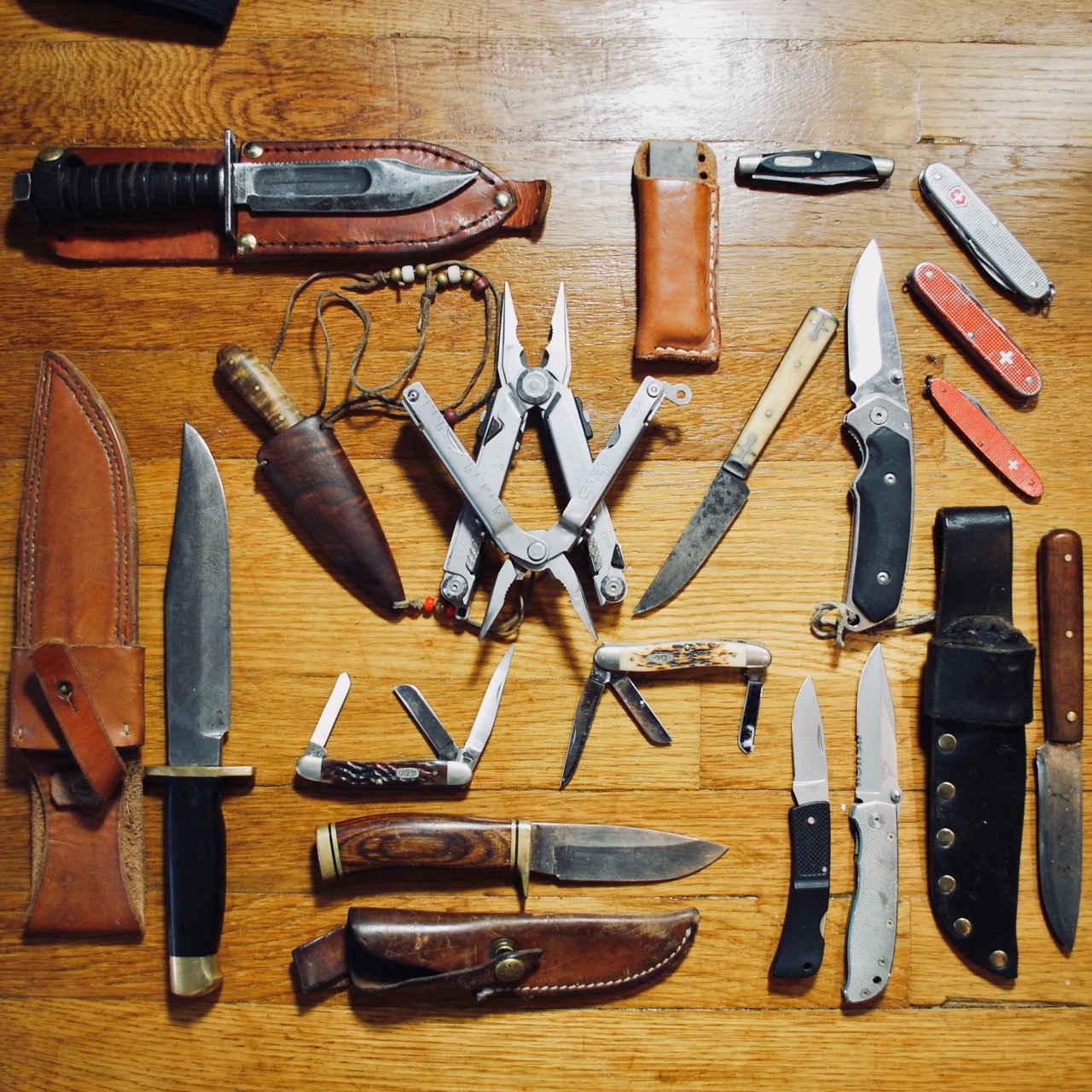
This is what happens as you travel, receive gifts, buy better stuff, always need a good knife, etc.
From the upper left: Camillus 5-1967 (a friend carried this through Vietnam), my small Arkansas stone for field touch-ups, Buck folder, two classic Victorinox Pioneer knives (I’ve carried this style every day since high school) and a small pen knife, a lock-blade Buck made in Idaho, a 19th century bone handle knife cut down from a larger eating knife, two Gerber multi-tools (the original is from 1990 and a more modern, but heavy version beneath), a hand-made patch knife by M.P. with walnut neck sheath I’ve had since 1986, a Solingen-made high carbon Bowie knife with ebony handle, two classic Case XX folders, two small folding Gerbers, a hand-made camp knife from a fine Colorado maker, and at the bottom my “go to” Buck field knife that has worked on archaeological projects, cut up animals, dog holes, and performed about every other imaginable task.
This photo came about as I decided to organize my camping gear. While emptying packs and bags I realized there were knives in every one, usually in more than one pocket. After throwing them out on the floor and arranging for a quick photo I began to think about the ones in various tool boxes, my wood carving knives, a couple collector knives I can’t seem to part with, and others stashed away around the house. My search for minimalism is failing when it comes to good tools.
Just a short show-and-tell today because I needed a new eating spoon. I lost my old favorite a few weeks ago and as near as I can remember, it was about 20 years old. I remember this because it was cut from the end of a bow stave of a bow I love. Here is the new one made from Walnut harvested in southeast Missouri.
The growth rings helped determine the sweep to the handle.
It is satisfying to use something you create yourself, even if it isn’t perfect.
Maybe not as dense as Osage orange (Maclura pomifera) but walnut will hold up well and darken with time.
The board this came from was quite variable in density and color. This spoon comes from the lighter-colored part.
For me, function comes first for a tool like this but grace and beauty should not be left out of the equation.
After it was finished, the whole spoon was rubbed down with walnut oil and it will be treated again in a couple of days to help protect the wood from soaking up flavors.











 Preindustrial Craftsmanship