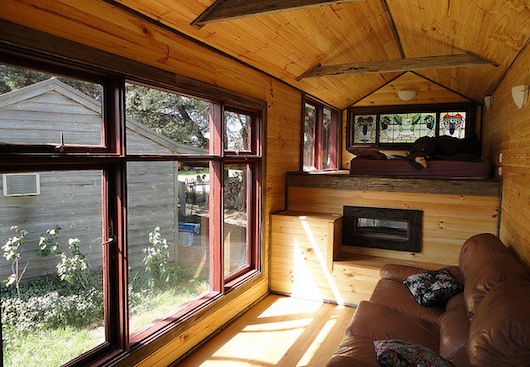
Tiny Homes: Simple Shelter

I received an advance copy of Tiny Homes: Simple Shelter when I went to my post office box today.  I have been thumbing through it all all evening, looking at the photos and pondering the meaning of Shelter.

Maybe the tides of change are subtle in the beginning.  But I never thought I would be part of a movement when I began to sketch out plans for a tiny, mobile shelter for myself almost ten years ago.  I am honored to be included amongst these great constructions in Lloyd Khan’s newest book about Tiny Homes.  I am awed and inspired by so many great approaches to scaling back from the obnoxious sprawling but soulless houses of the last few decades.

The photos are beautiful and the layout is very well thought out.  Like all the Shelter Publications, it will become an important and classic work to those of us outside the mainstream.  Tiny Houses my be the flavor of the month to the media at the moment but will always be important to real people in need of real shelter.

And to keep up-to-date on interesting architecture, skateboarding, good music, and a host of other interesting topics, check in to Lloyd’s Blog from time-to-time.

Inspiring Plans, pt 2

A modern RV, like a house, is a structure enclosing a lot of empty space.  This is why a large house costs (the builder) substantially less per square foot.  It costs virtually nothing to build more floor space but a lot of resources go into things like corners and openings such as windows and doors.  The essentials of habitable structure are walls, a minimum of space for sleeping and storage, ventilation, and maybe heat.

The beautiful illustrations here are from the book The English Gypsy Caravan.  Nineteenth century caravan builders distilled out the necessities of living on the move.  Not enough room to host a country dance but enough room to sleep, have some some privacy when necessary, and shelter from bad weather.  The Open Lot design, above, has a fair amount of seating, an expandable bed, and small amount of dedicated storage for personal items.  Prior to the twentieth century in the industrial world, most people “lived” outdoors with the “house” serving as protection and privacy.

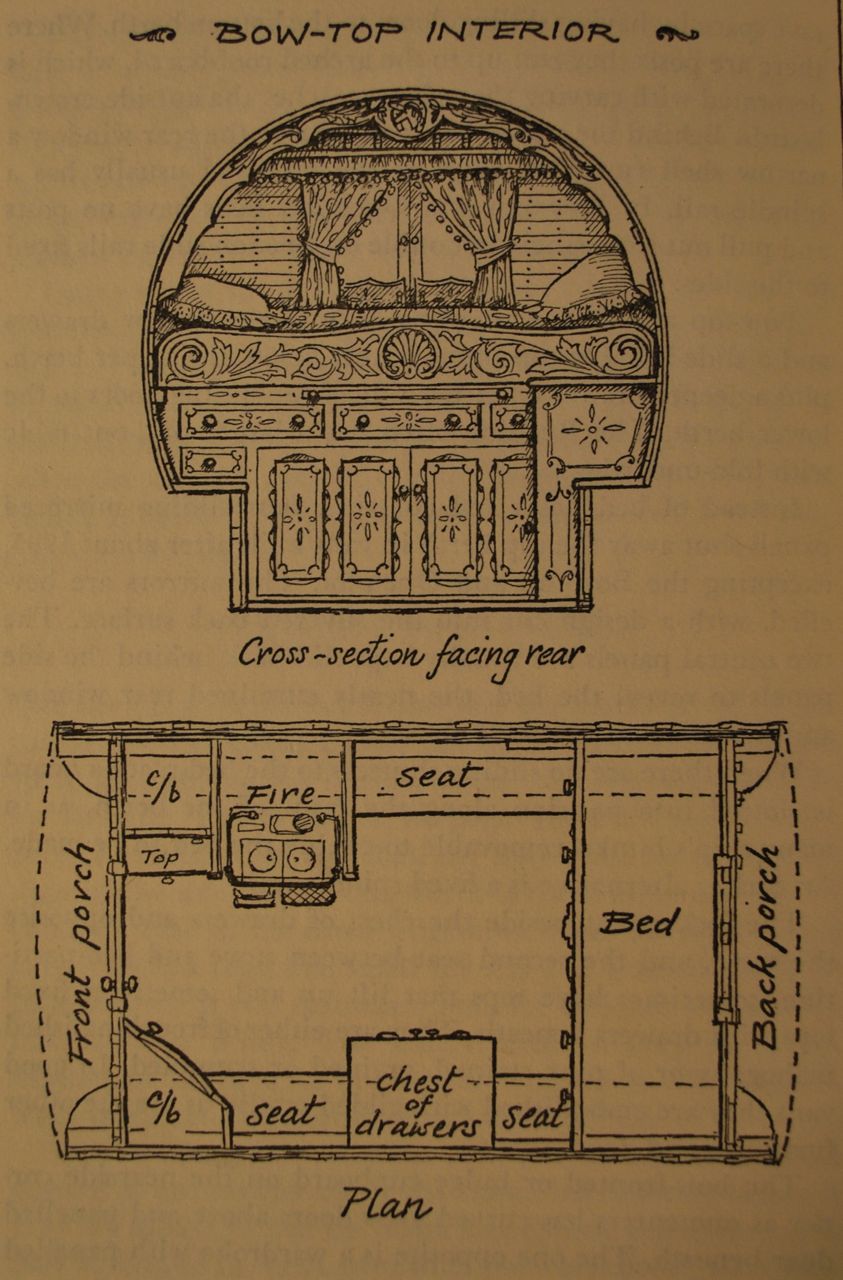
The evolution into the Bow Top shows more storage and less room for seating but also the ability to cook inside and more dedicated storage.  It should be taken into consideration that wagon dwellers in the 19th and 20th century Europe generally slept outdoors unless in all but the worst conditions.  The wagons were safe havens to keep your possessions and children whereas adults slept under the stars or occasionally in tents.

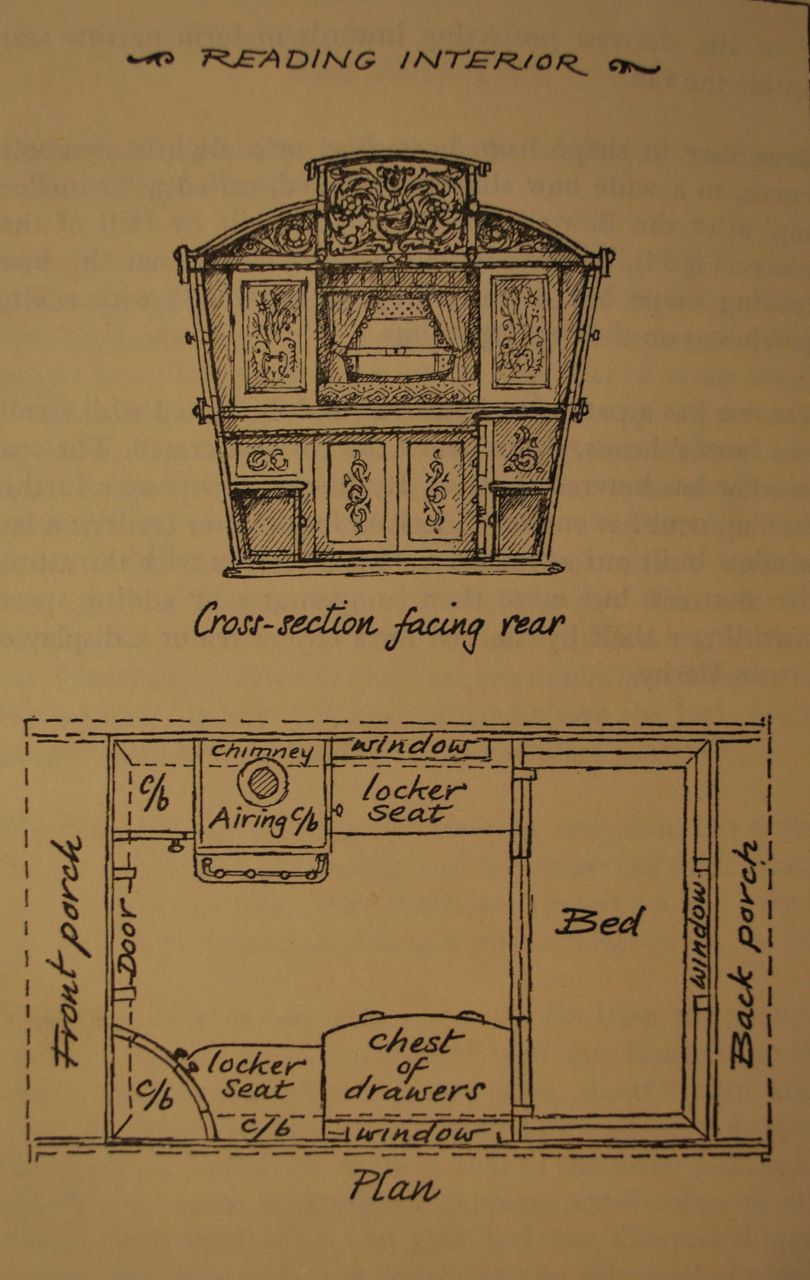
Many innovations came with the full development of the Reading wagon.  As the body is built more like a box, underseat storage really adds security to possessions on the move.  The chest of drawers remains but additional cabinetry adds ever more segregated storage.
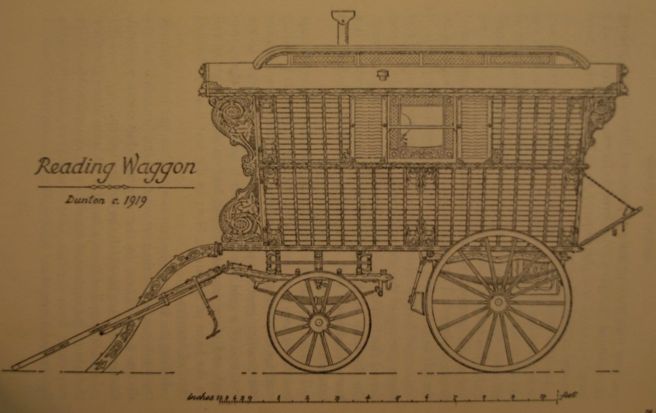
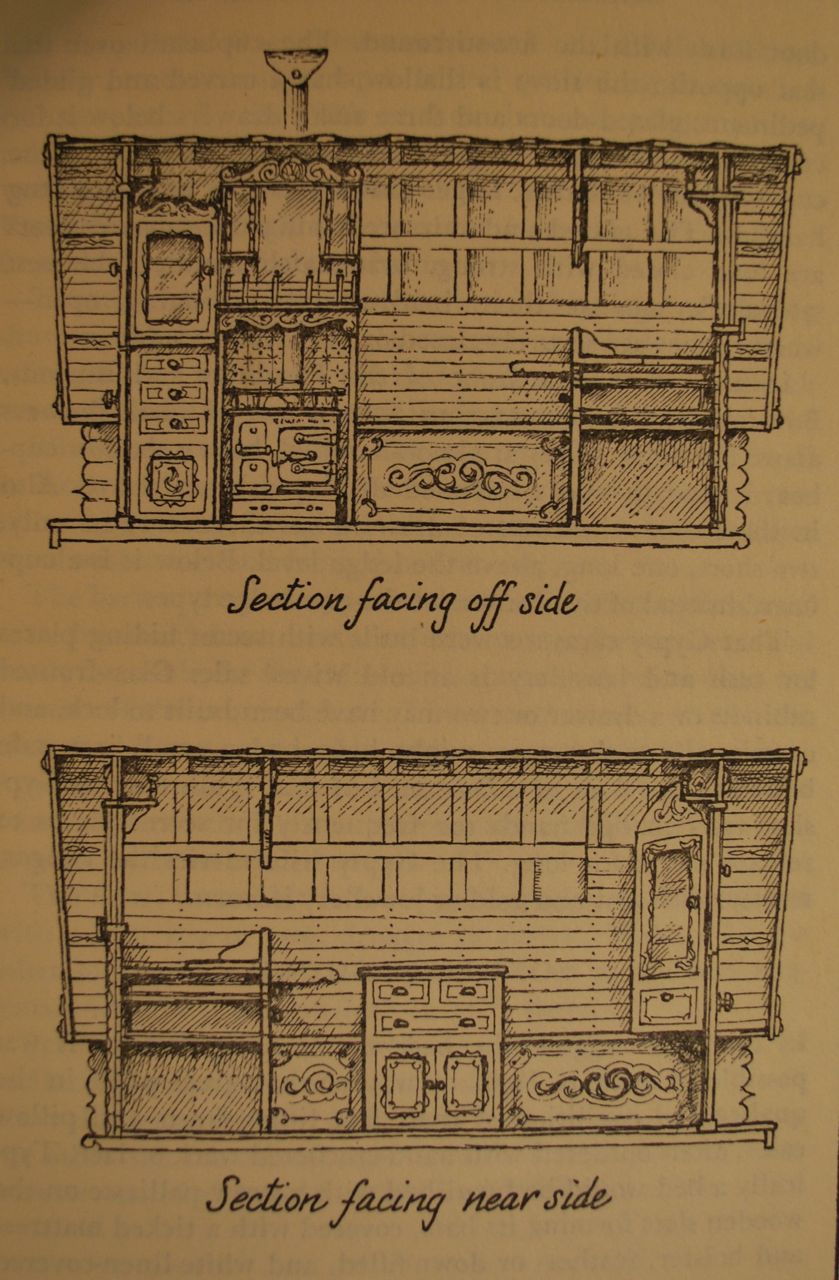
The finest wagons of the era included a mollycroft or central raised portion of the roof allowing for small windows for ventilation and light.  In the image above, you can even see the small chimney vent that was placed over the mounted oil lamp as coal oil produced a lot of soot lowering air quality inside.

Inspiring Plans, pt 1

The following are plans from The English Gypsy Caravan.  This book taught me a lot about layout in such a small space.  There is rarely anything new under the sun and the early builders thought through the process quite thoroughly.

Figure 20.

The figure numbers on the images are from the book.  The above is a classic “Open Lot”.  Essentially the simplest of the caravan designs.  More sturdy than something like an American Conestoga as the walls are at least partially wood lined and there are a couple built-in cabinets.  This could suit a couple people fairly well.

Figure 18.

The “Bow Top” is a more sophisticated version of the Open Lot.  More cabinetry, a small cook stove, and some shelving.  Notice the corner cabinets to use the vertical space in both the above plans.

Figure 16.

Finally, the famous Reading Wagon.  This is what most people envision when they think of the gypsy caravan or wagon.  Kite-shaped from the end-view, this wagon has a lot of useful indoor space.  Cupboards and underseat storage are integrated and these generally have substantial chest-of-drawers built in.  The later roofs had mollycrofts to allow more light and the walls were decked out with mirrors to give the illusion of spaciousness.  Straight wooden walls lend themselves to hooks, pictures, or small shelves everywhere.  At about ten feet long, this was and is the epitome of traveling luxury.

The best laid plans …

Everything has to begin with a plan, whether its in your head or on paper depends on the complexity and steps required.  While going through some old notebooks from the last few years I came across some early sketches of the vardo in progress.

I know it’s not a great sketch and didn’t scan particularly well but gives an idea of an early stage in the evolution of the caravan as it is now.  I kept some very strict size constraints but definitely increased the height from the early incarnations.  I did not waste the time making an exact blueprint of the caravan as I didn’t see a need.  I also wanted to keep the design flexible and open to change along the way after getting a feel for the space.

Click the image to access more sketches or link here.

House Trucks Again

My appreciation for house trucks has grown immensely over the years.  It’s not easy building a structure that is both light, strong, and wind-resistant.  Caravans, house trucks, and RVs have to undergo the rigors of hurricane weather every time they hit the road and still be light enough to be pulled.  If you are willing to get RV-type mileage from your vehicle  you can convert an older RV, large truck, fire engine, or bus into a fine living platform.  Starting from a link on Lloyd’ Blog I began looking at some very cool house truck conversions.  These have been around all my life and I’m surprised I haven’t started one yet.

These Bedford Fire Engines make beautiful platforms.

The trucks below were featured on the Tiny House Talk web page.

I wouldn’t want to drive these in high winds but the interior spaces are great.  Visit his Flikr page to see more interesting work.  They look very practical and I appreciate the low-maintenance exteriors.

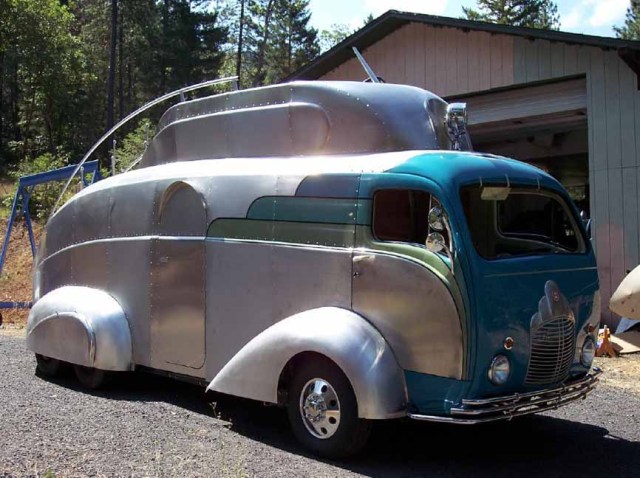
And finally, one of the most beautiful art car builds I have ever seen… The Decoliner.  While on his website, its worth looking at his other projects as well, especiall the 1800 cubic inch, 1000 h.p. tank motor turned art/race car.

Take the chassis from an old RV, add a classic truck cab and a lot of beautiful design work and this is what can happen.  This is my new dream car.  Time to peruse Craig’s List to start looking for a chassis.

Yucca Fiber Skirt

Summer before last, the girl decided to branch out from just turning our yuccas into cordage.  After being inspired to make natural clothes by constructing a cattail hat, she decided to make a yucca skirt roughly modeled on the elderberry skirt example in Paul Campbell’s  book Survival Skills of Native California.

The completed skirt.  The buckskin shirt isn’t usually tucked in but is here show the top of the skirt.

In the past we have cleaned the fibers both by retting and by cooking.  The cooking is far faster so she spent a couple days stewing and cleaning the leaves for the project.  The resulting skirt was from a single large narrow-leaf yucca.  To make it fuller, it would take about twice this much fiber.  This is an excellent project that I think would translate well into other materials and could result in a cape, blanket, or even shelter.

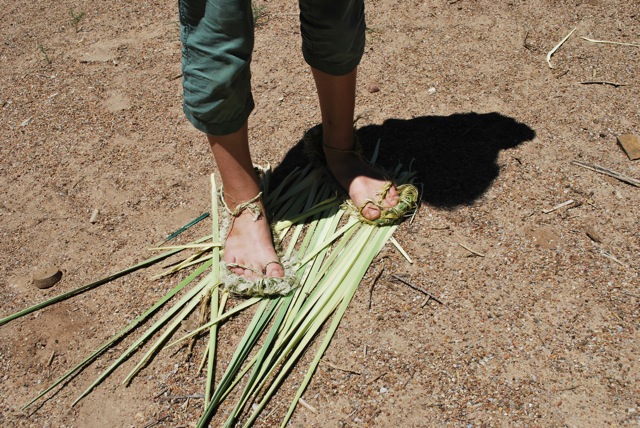
To top it off, here are a pair of yucca fiber sandals to complete the outfit.

These aren’t the fanciest pair but were quick and easy.  One pair can take almost as much fiber as a skirt.  Next time, I’ll try to document the process in a “how to” format.

Folding Stools and Table

I have had many requests for dimensions of the stools and table so I finally sucked it up and measured some things to include here.  The only ones apparently on the web cost money so here are my dimensions.  Please modify them to fit your style, needs, or lumber.  A little time with some graph paper will go a long way.

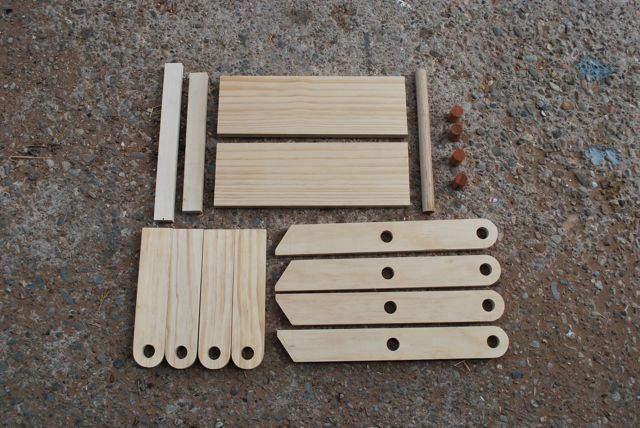
Folding stools.  Here is my cutting list from most recent batch.  The angles of the feet  will have to be worked out for yourself.  Also, not listed are the stretchers (the cross boards between legs).  These are not absolutely necessary but make the whole shebang a lot stronger.  Use whatever you have.

Legs 1×3″: 4 @ 18″
Skirts 1×3″: 4 @ 11″
Seat 1×6″: 2 @ 16″ (can vary substantially.  adjust dowels accordingly)
Dowels 1″ oak: 1 @ 12 3/4″
Dowels 1″ oak: 4 @ 1 1/2″

First, make these parts.
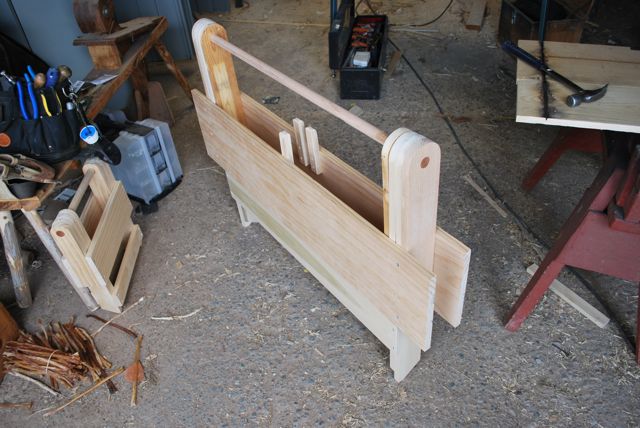
Assemble like so...

Then finish with the rest of the parts (See top photo).

Table test. Suitable for light dancing.

Note in above photos the far side stretcher isn’t in place.  I ran out of wood this day.

Table
For a 28″ tall table:
Legs 1×4″ hardwood: 4 @ 34″
Skirts 1×4″: 4 @ 20″
Top 1×12″: 2 @ 36-48″

Assemble just like the stool.

A little nomad furniture project.  Great for when guests arrive too.  If you are creative, the tops can be cut into ovals, rounded rectangles, or made circular.

Tool Tote

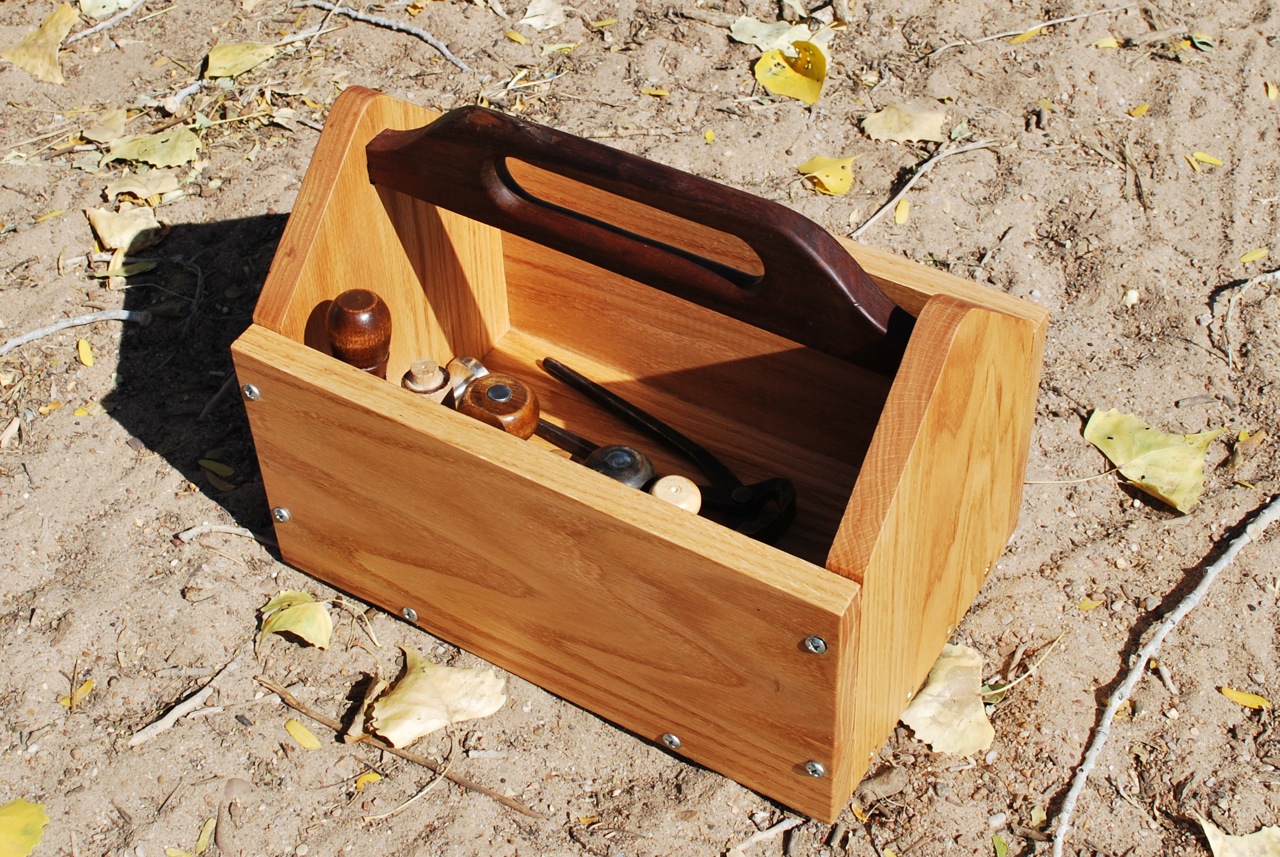
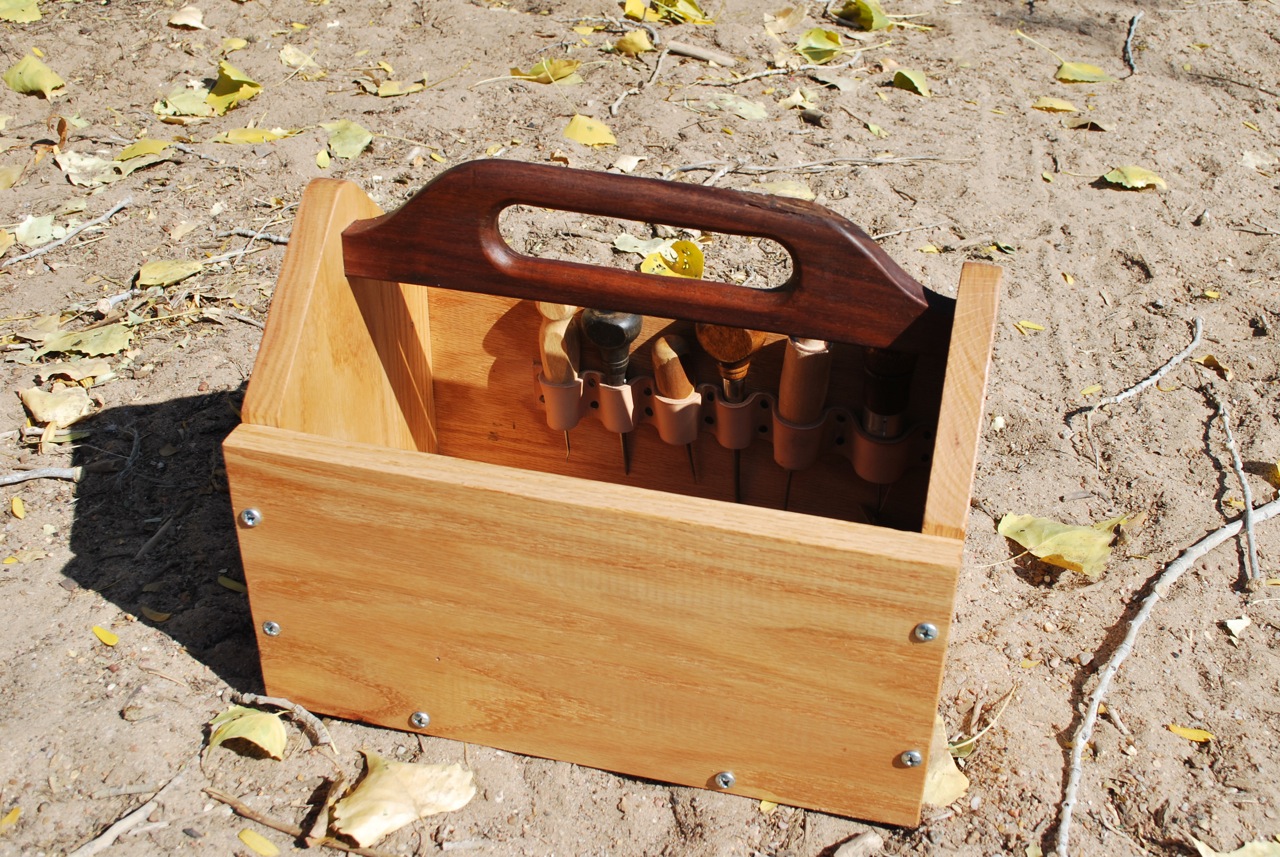
The shoemaker’s tote is essentially done and I had the chance to get a couple photos over lunch.  I will be adding more leather pocketing to hold tools but wanted to wait until I knew where things should be.

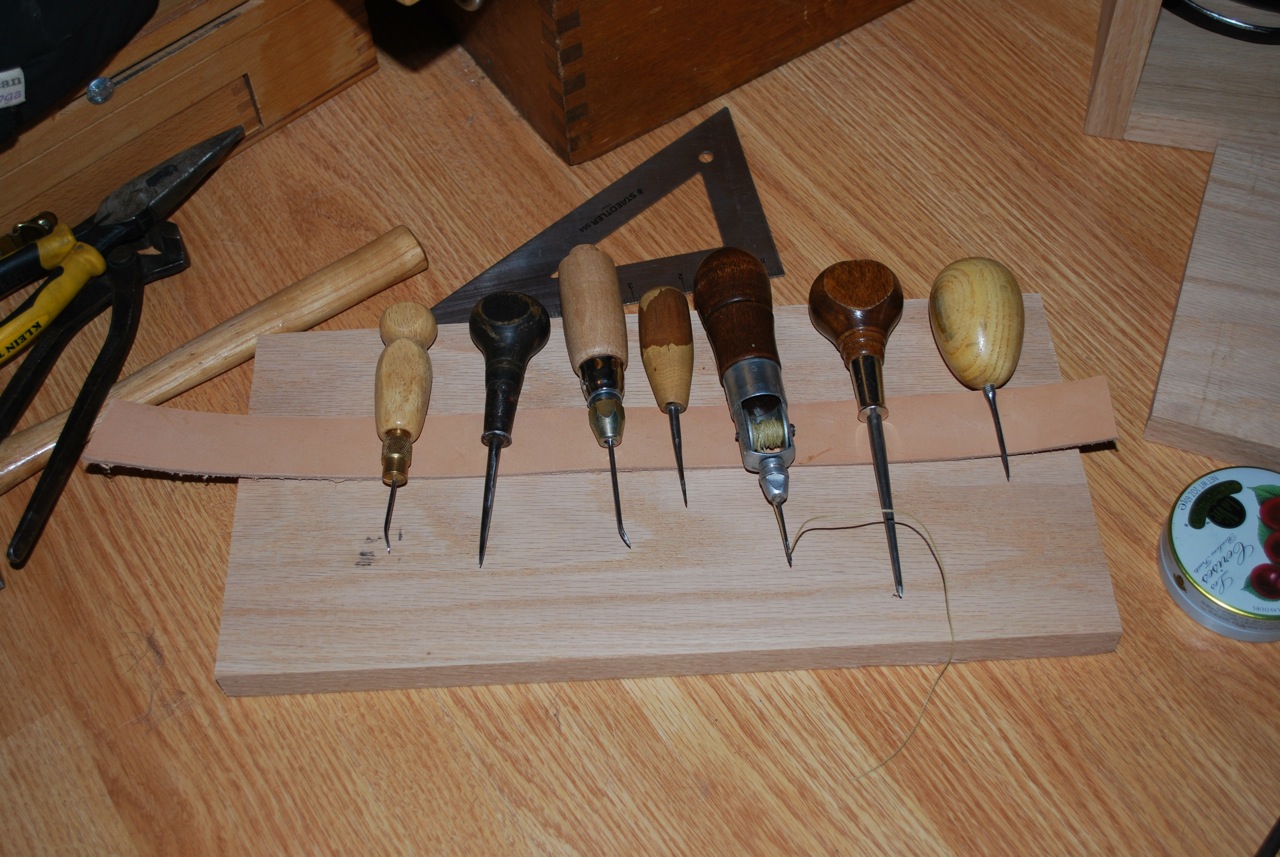
Laying out the tools

This is the inside of the side panel.  The tools that I know for certain need to be handy, not rolling around on the bottom of the box.

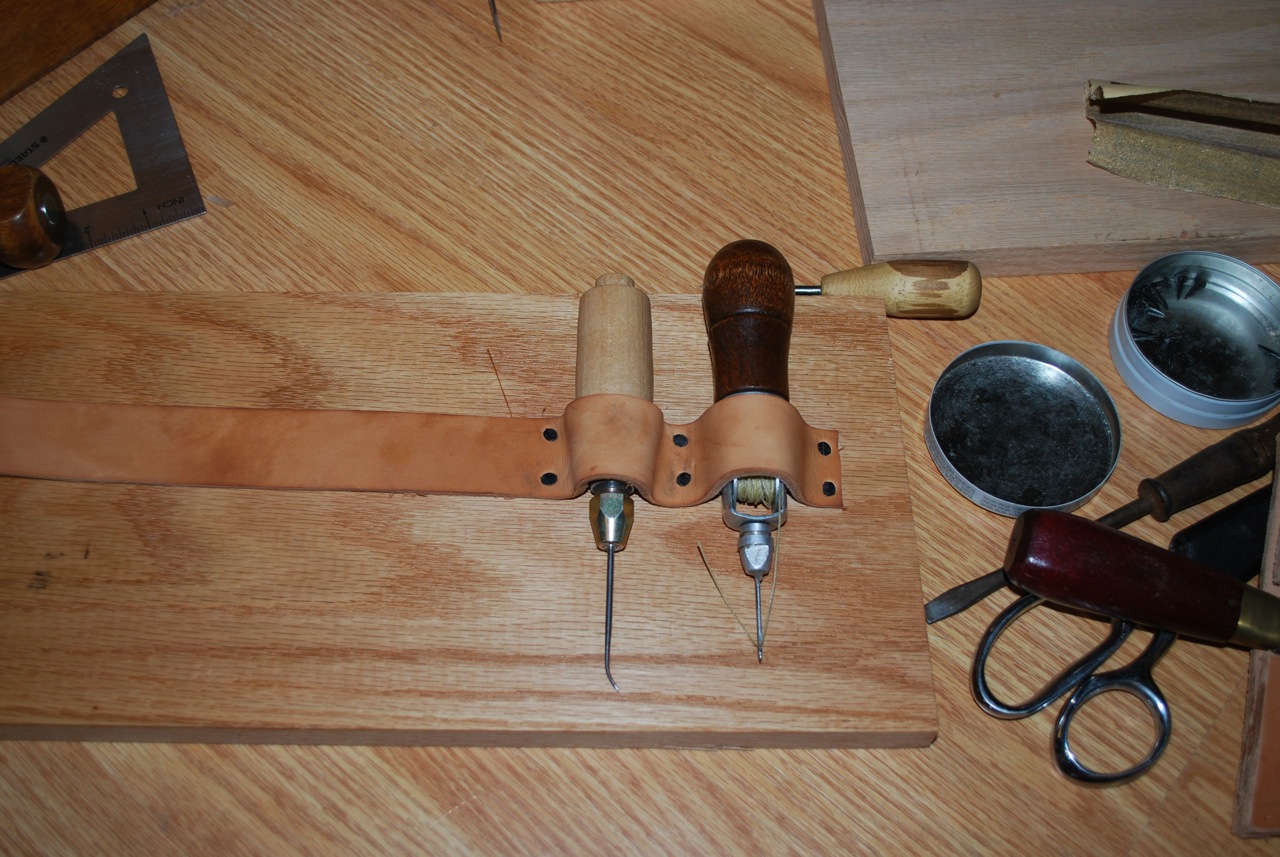
Test fitting a couple tools.  The strap was cut 1 1/4″ wide and is not as long as it should be.  I am using carpet tacks as I had some laying around.  Note that the inside has been given a coat of boiled linseed oil prior to placing the leather.

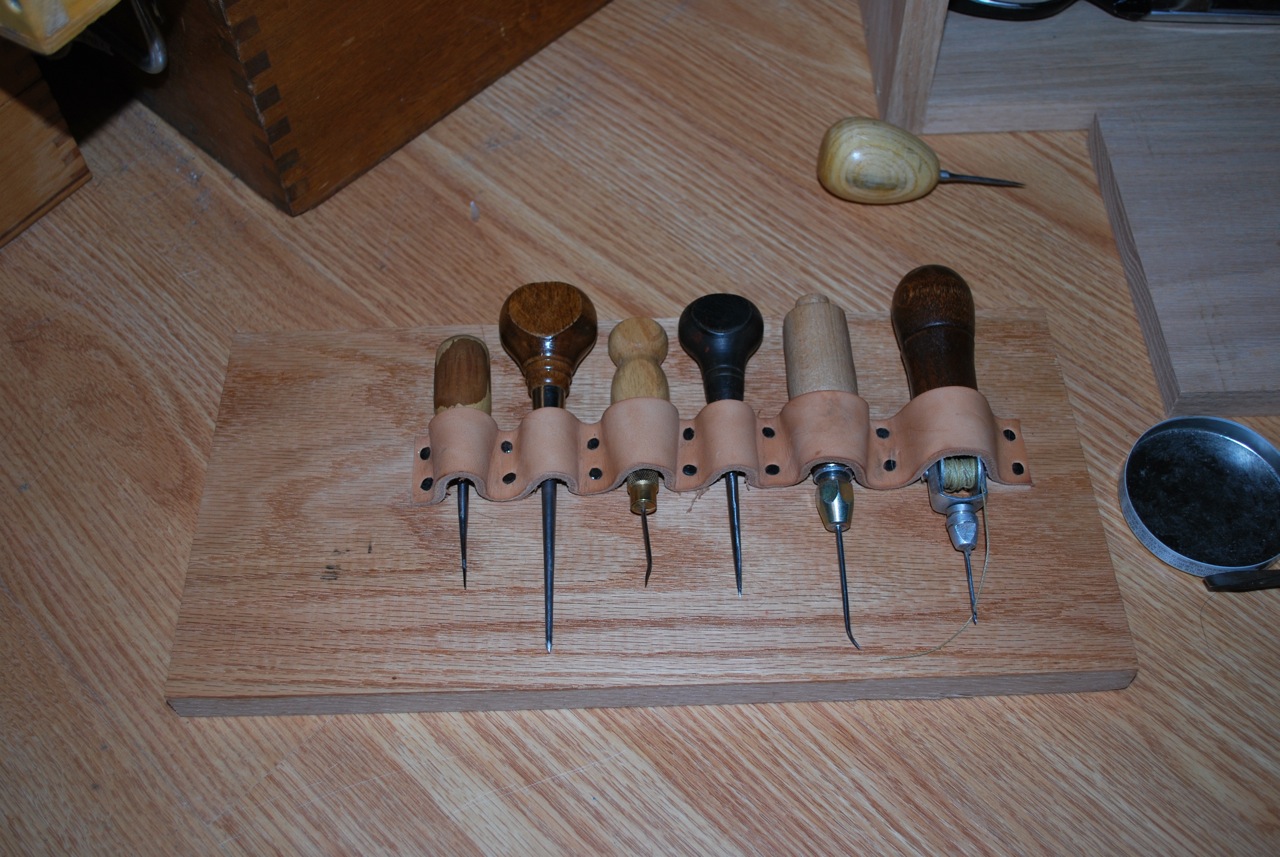
The essentials in place.  The bent awl is a little too deep and barely touches the floor of the box.

I used a few pan head screws I had handy.  They work as bumpers.  The box has been oiled at this point with boiled linseed.

And the other side.

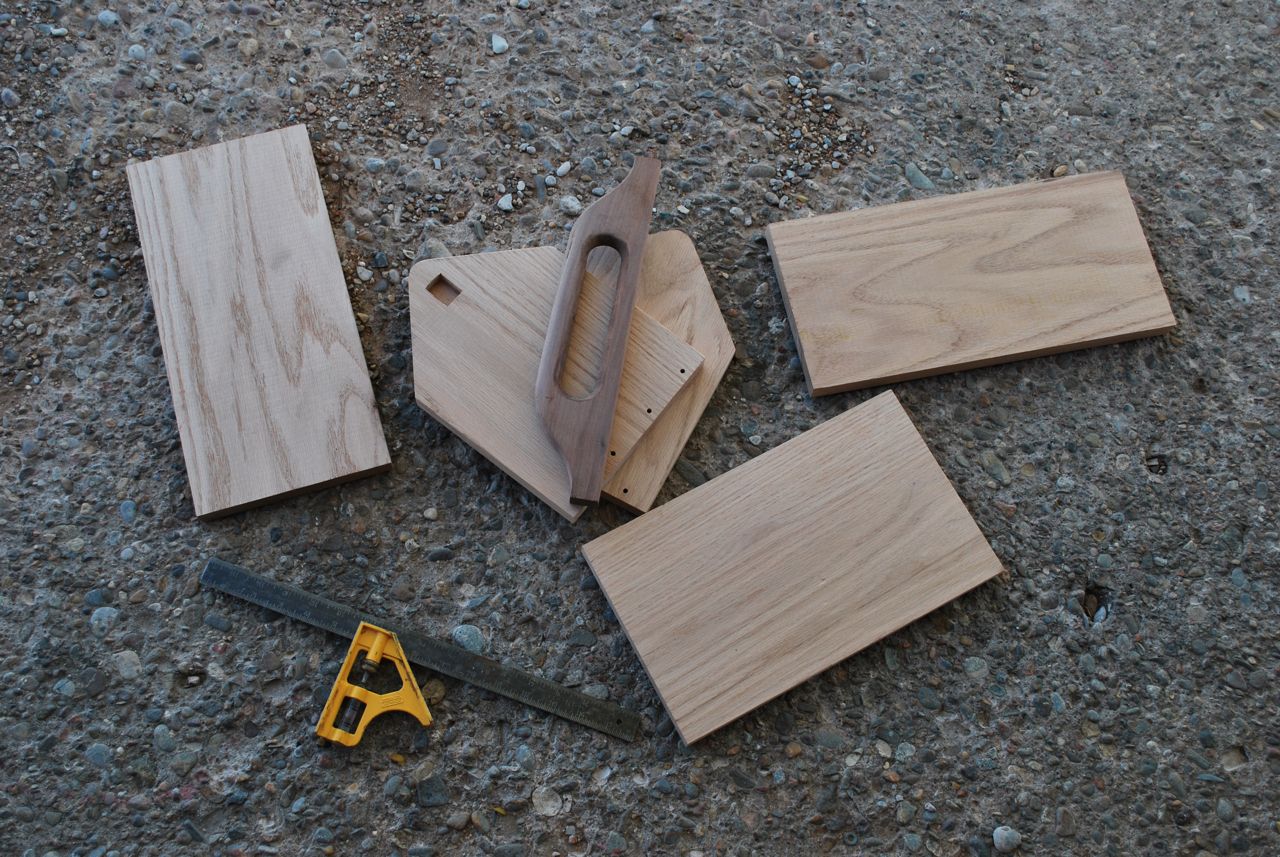
If you didn’t see the previous post, this is the plan photo.

Three rectangles, two pentagons, and a handle of choice.

Final dimensions are 14 5/8″ long, 9 1/2″ wide, 10 3/4″ tall.  I wanted to be able to comfortably fit a twelve inch ruler in the bottom.