Travel Shutters

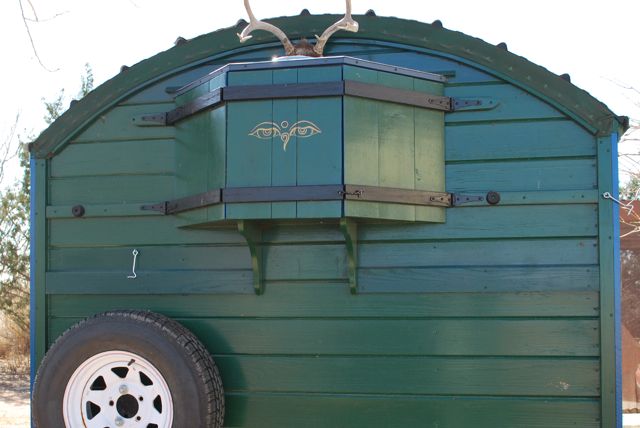
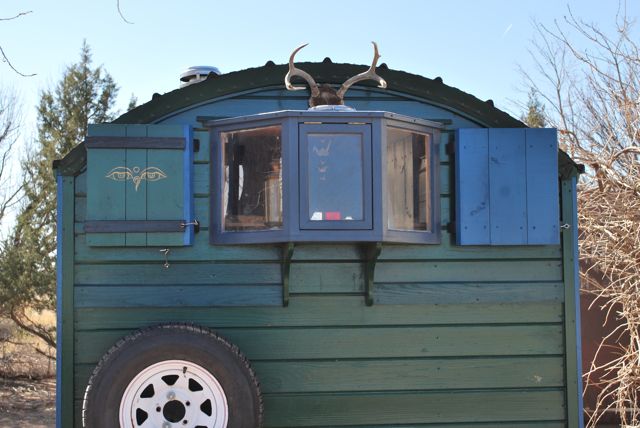
I wanted to put up photos of the travel shutters.  As the windows face forward, they take a real beating on the road.  After solving the issue of covering three sides, the construction was pretty simple.  Being small, I was able to knock these together from scraps around the barn.

Simple but effective. These should protect the windows from most flying debris.
Normal open position. There are rubber bumpers behind each to prevent the bumping sound in high winds.

Leatherworker’s Tool Tote

Updated: Last weekend I finally finished the leatherworker’s tool tote.  It took time to figure out what needed to be included and handy.  Since the leather straps are fairly specific to the tool they hold, it pays to get it right.  The original post is here: https://paleotool.wordpress.com/2011/10/26/tool-tote/

It may not look exciting but it is a great boon to have handy, easy to access tools.

A fun and useful project.

More Vardos

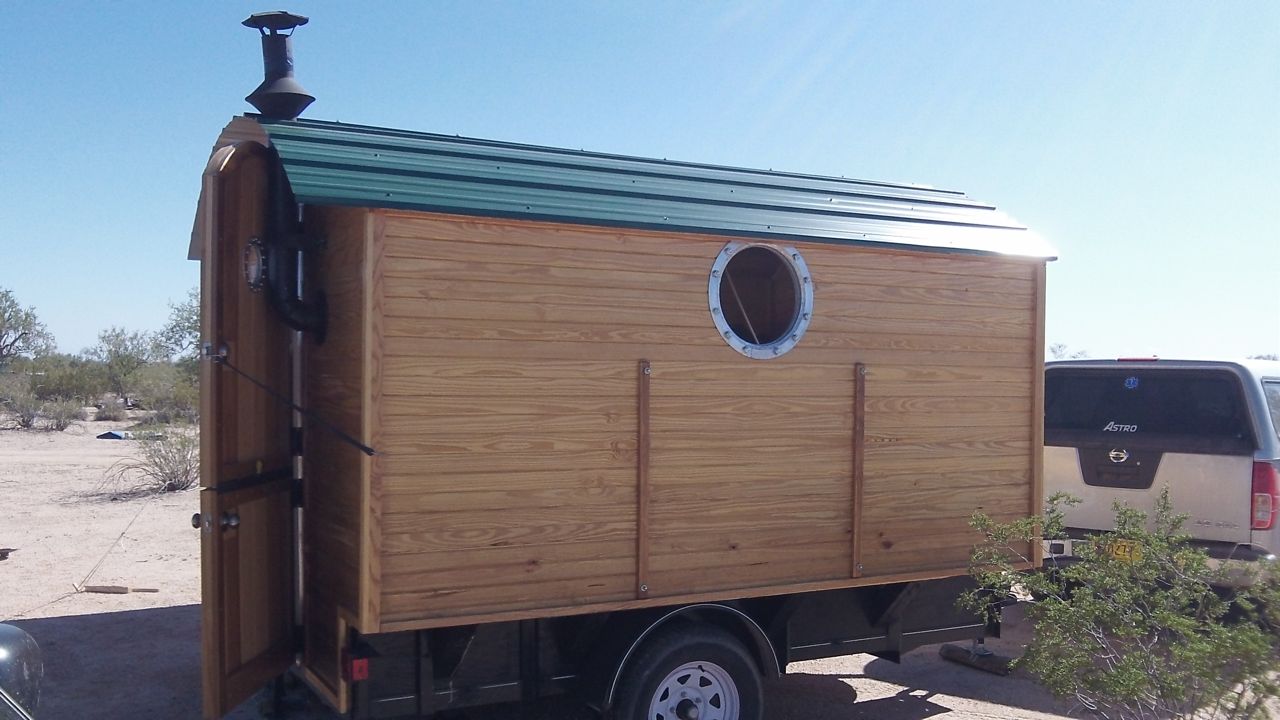
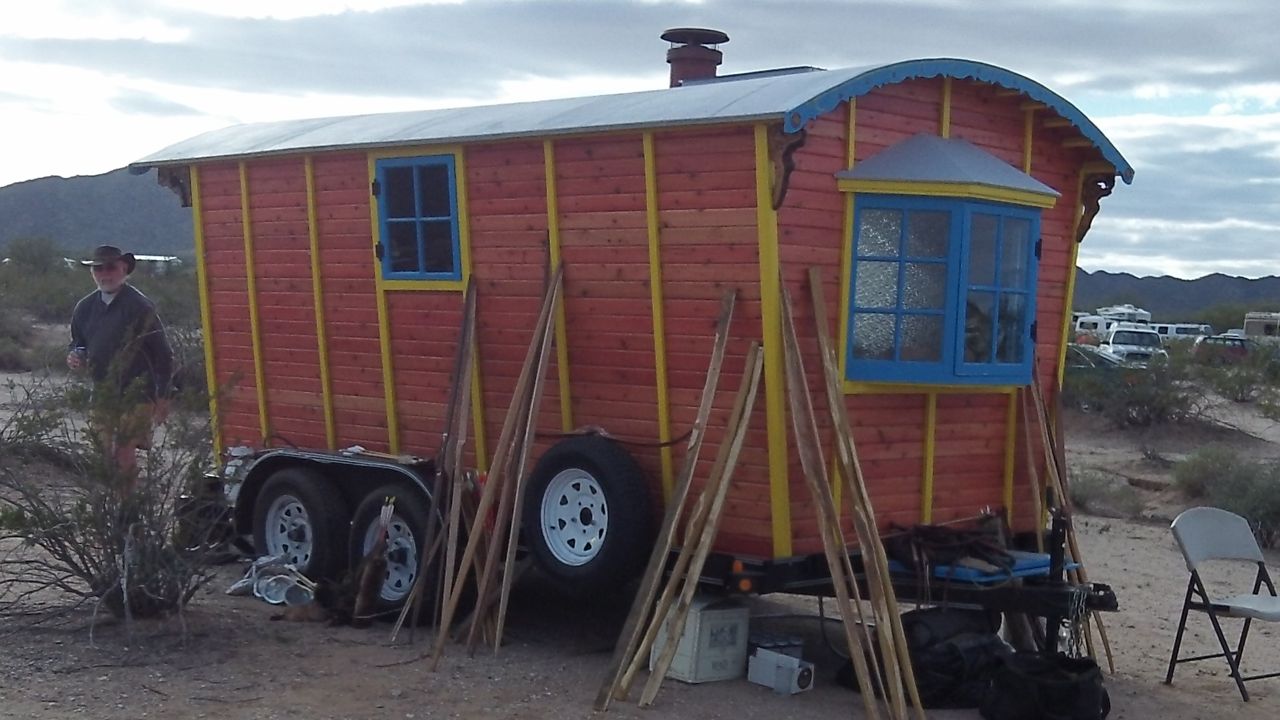
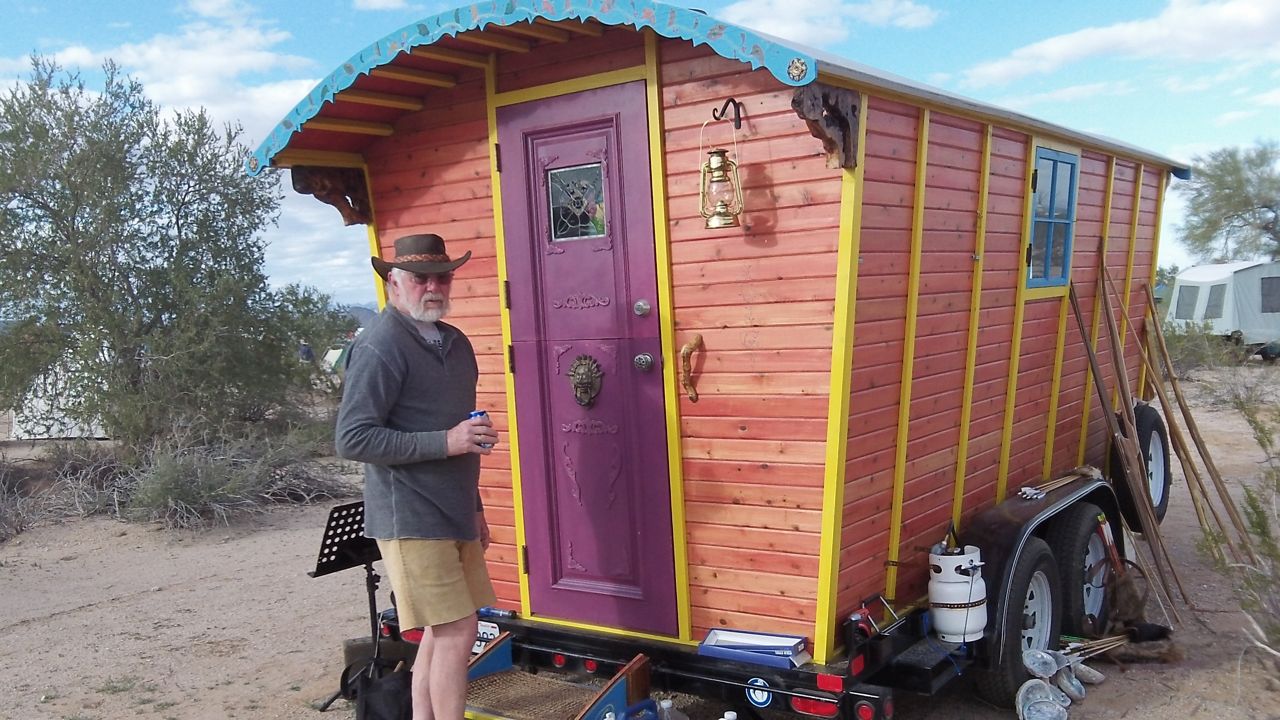
Here are a couple new Vardos found in the Arizona desert this February.

Jack’s wagon, nearly complete inside.  I helped him build the main structure in my driveway last summer and he has been trimming it out ever since.  It essentially the same design as mine (with a few logical improvements) and lengthened by two feet.

The portholes were purchased from a ship salvage company and add a cool nautical look.  This one is ten feet long (3 m) and feels very spacious inside.

Paul’s wagon is a beauty but I suspect weighs quite a bit.  The tandem trailer alone might outweigh my little rig.  This one is 14 feet (4.25 m) long and could host a small dance party inside.

The color scheme and interesting details really make this one stand out in the crowd.

Winter Count Bow Makers

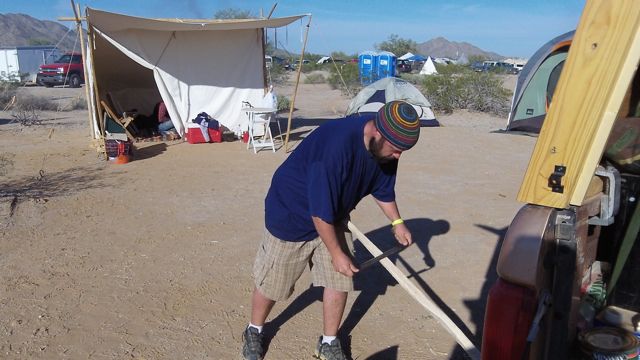
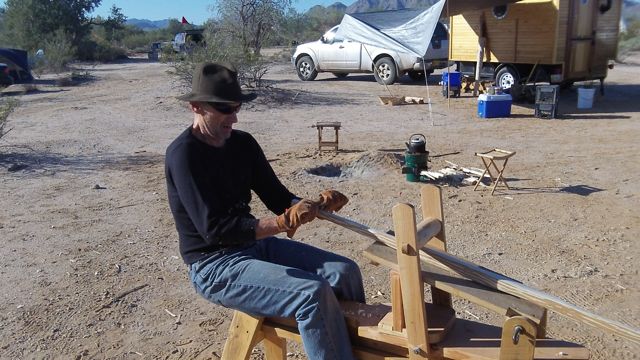
Thanks to those who participated in our bow making class this year.  I failed to get many photos so if anyone would be willing to share theirs with me, I would be most grateful.  Email me at zcoyotez (at) yahoo.com.

We made very traditional flat bows.  This is a straight-forward, predictable design that is easy to tiller and makes a fine shooter.

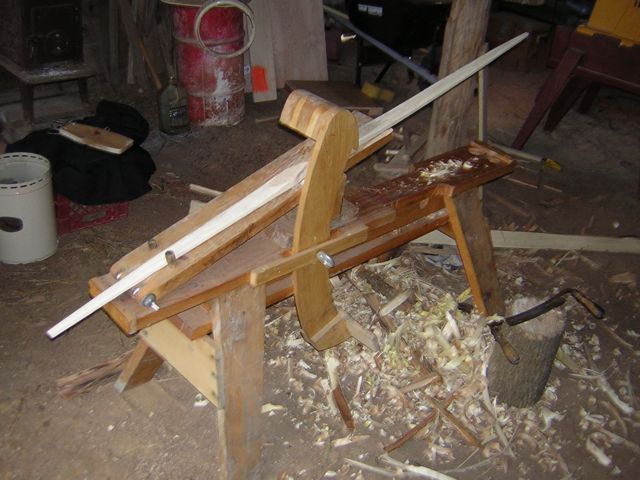
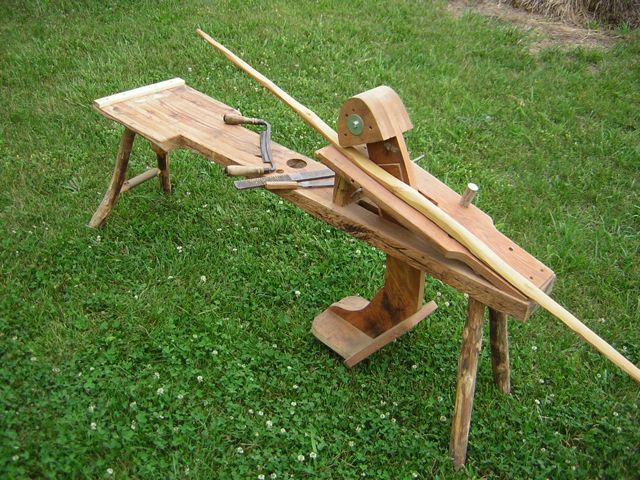
I use a minimum of tools, relying primarily on the axe, drawknife, and spokeshave for the heavy work with rasps and cabinet scraper for finishing.

It is a little more difficult to teach such a hands-on skill to groups, as opposed to individuals, but the class seemed to go very well.  The point was not to just make a bow but to learn enough of the concepts that everyone in the class should be able to go home and make more without much guidance.  A key to the success is using good staves to begin with.  There is enough to learn without added problems of twists and knots in the raw material.

All of the bows were successful and I hope will bring happiness for years to come.

A Letter from a Freed Slave to His Former Master

This was on Letters of Note, and interesting website.  As it says above, it is a letter from a former slave to his master.  The audacity of the request he is responding to is just the beginning and it is worth reading to the end.  More subtle than most of us would be, I think, in pointing out crimes without ever quite becoming accusatory. 

(Source: The Freedmen’s Book; Image: A group of escaped slaves in Virginia in 1862, courtesy of the Library of Congress.)

Dayton, Ohio,

August 7, 1865

To My Old Master, Colonel P.H. Anderson, Big Spring, Tennessee

Sir: I got your letter, and was glad to find that you had not forgotten Jourdon, and that you wanted me to come back and live with you again, promising to do better for me than anybody else can. I have often felt uneasy about you. I thought the Yankees would have hung you long before this, for harboring Rebs they found at your house. I suppose they never heard about your going to Colonel Martin’s to kill the Union soldier that was left by his company in their stable. Although you shot at me twice before I left you, I did not want to hear of your being hurt, and am glad you are still living. It would do me good to go back to the dear old home again, and see Miss Mary and Miss Martha and Allen, Esther, Green, and Lee. Give my love to them all, and tell them I hope we will meet in the better world, if not in this. I would have gone back to see you all when I was working in the Nashville Hospital, but one of the neighbors told me that Henry intended to shoot me if he ever got a chance.

I want to know particularly what the good chance is you propose to give me. I am doing tolerably well here. I get twenty-five dollars a month, with victuals and clothing; have a comfortable home for Mandy,—the folks call her Mrs. Anderson,—and the children—Milly, Jane, and Grundy—go to school and are learning well. The teacher says Grundy has a head for a preacher. They go to Sunday school, and Mandy and me attend church regularly. We are kindly treated. Sometimes we overhear others saying, “Them colored people were slaves” down in Tennessee. The children feel hurt when they hear such remarks; but I tell them it was no disgrace in Tennessee to belong to Colonel Anderson. Many darkeys would have been proud, as I used to be, to call you master. Now if you will write and say what wages you will give me, I will be better able to decide whether it would be to my advantage to move back again.

As to my freedom, which you say I can have, there is nothing to be gained on that score, as I got my free papers in 1864 from the Provost-Marshal-General of the Department of Nashville. Mandy says she would be afraid to go back without some proof that you were disposed to treat us justly and kindly; and we have concluded to test your sincerity by asking you to send us our wages for the time we served you. This will make us forget and forgive old scores, and rely on your justice and friendship in the future. I served you faithfully for thirty-two years, and Mandy twenty years. At twenty-five dollars a month for me, and two dollars a week for Mandy, our earnings would amount to eleven thousand six hundred and eighty dollars. Add to this the interest for the time our wages have been kept back, and deduct what you paid for our clothing, and three doctor’s visits to me, and pulling a tooth for Mandy, and the balance will show what we are in justice entitled to. Please send the money by Adams’s Express, in care of V. Winters, Esq., Dayton, Ohio. If you fail to pay us for faithful labors in the past, we can have little faith in your promises in the future. We trust the good Maker has opened your eyes to the wrongs which you and your fathers have done to me and my fathers, in making us toil for you for generations without recompense. Here I draw my wages every Saturday night; but in Tennessee there was never any pay-day for the negroes any more than for the horses and cows. Surely there will be a day of reckoning for those who defraud the laborer of his hire.

In answering this letter, please state if there would be any safety for my Milly and Jane, who are now grown up, and both good-looking girls. You know how it was with poor Matilda and Catherine. I would rather stay here and starve—and die, if it come to that—than have my girls brought to shame by the violence and wickedness of their young masters. You will also please state if there has been any schools opened for the colored children in your neighborhood. The great desire of my life now is to give my children an education, and have them form virtuous habits.

Say howdy to George Carter, and thank him for taking the pistol from you when you were shooting at me.

From your old servant,

Jourdon Anderson.

Free food

Sitting on the couch late in the evening, drowsiness coming on when a nearby gunshot pierces the air.  The dogs go on alert and I am up on my feet.  Probably neighbor poachers, but I need to have a look around anyway.  My nearest neighbor is more than half mile away.  The road is several hundred yards from the house, so I don’t get a lot of extraneous noise.  Walking out onto the front porch I see the lights from three police cars lined up along the highway about 100 yards apart.  Spotlights and flashlights were scanning the area, both toward and away from me. Weird stuff happens and I seem to be a magnet for crazy so my first thought was some sort of manhunt.  Very awake now, I drive up the driveway toward the police.  It would normally be a walk but I didn’t think it wise to come out of the dark toward a bunch of cops in the grass.

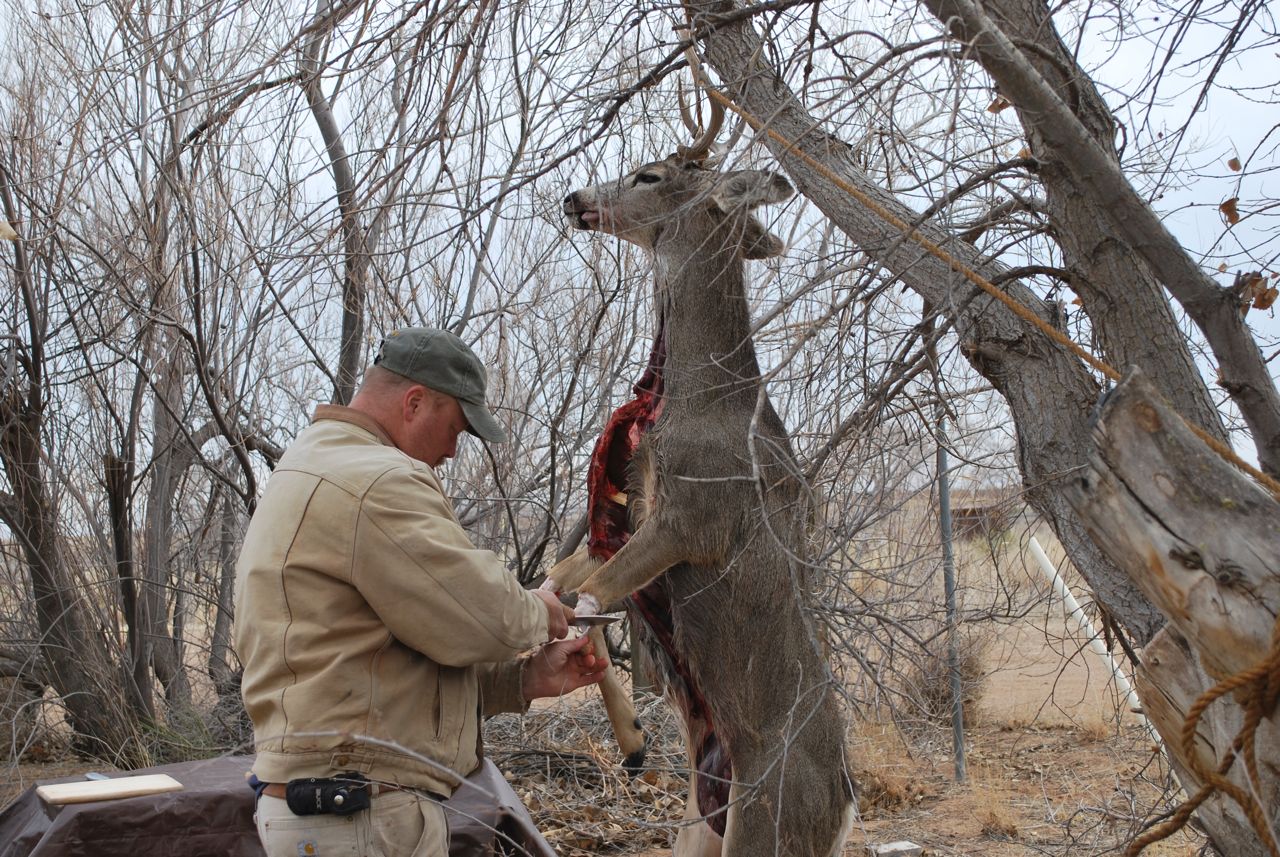
Luckily, I was completely wrong.  It turned out that two cars traveling in the same direction simultaneously hit two bucks crossing the highway.  The gunshot I heard was an injured buck being put down.  The spotlights and police were looking for other possible injured deer.  When I got to the road, one of the officers recognized me and said the magic words, “would you like one of these deer?”  The only right answer is “hell yes, let me get a knife.”  I was tired, it was late, but even a damaged deer is a gift of food.

I don’t like to butcher beat up meat.  And this was the first road kill I did on my own.  A cleanly killed animal is much easier to disassemble as you don’t have to work around bruising and broken bones.  That stuff is edible but not very good.  Survival food only for me.

However, dogs aren’t picky.  They like it nasty.  Good dog food is expensive so I decided to harvest as much meat that I couldn’t butcher cleanly into stew meat for the dogs.  They love me.

Click the image to see more of the processing.

Now the bad part was that I had to work my day job and the light is still a bit short this time of year.  I worked as I could, letting the carcass hang about 15 hours before butchering.  In the end, we maybe got 30 good pounds of human food including two beautiful tenderloins, a few small roasts, and a lot of stew meat.  As a bonus, the hide was in excellent condition and I was able to pull it off with only a few small cuts at the neck, legs, and tail.  Although not large, the antlers are beautiful so I sawed off the top of the skull to deal with them later.

I am of the school of thought that it is everyone’s right to make his or her best effort to feed themselves and family.  Due to many reasons, including the stupid human factor, this needs to be regulated in the modern world.  This makes it difficult to hunt, especially in places like New Mexico with less than easy hunting regulations.  After living on either home-grown cow or wild game for quite some time, the last few years have been a let down, having to buy commercial meat.  I’ve seen the feed lots and I don’t want to contribute to those companies any more.  Luckily, some free food came our way last week.

Hickory Bow part 2

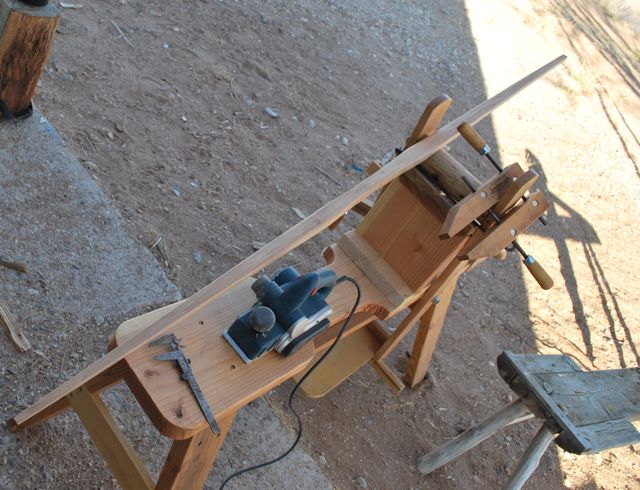
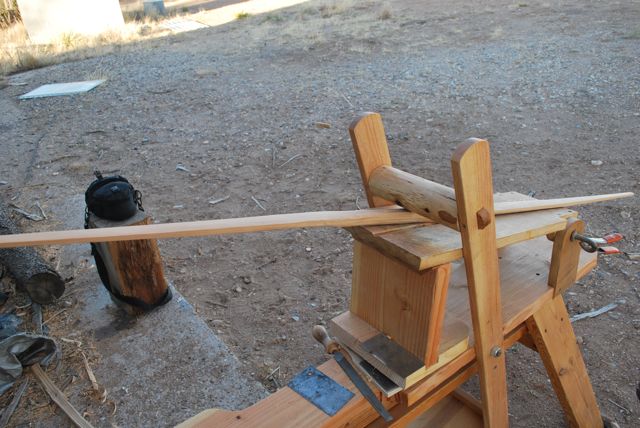
The winds slowed, the killer dust settled and I was able to get back to the bow.  A few minutes with the power planer took the rough shape down to a nearly finished product.  The calipers are useful and can save a lot of guesswork when making the same style bow over and over.

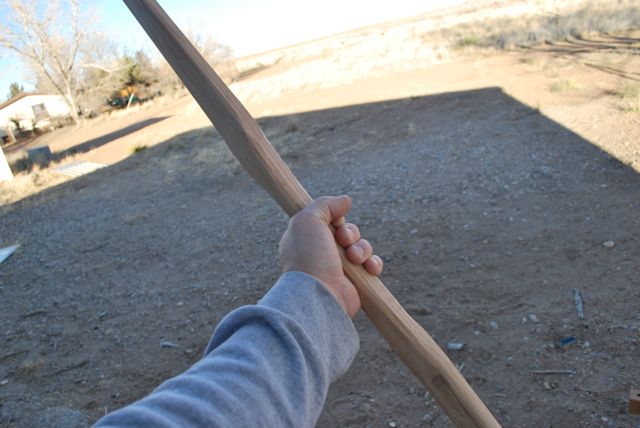
Above, the bow seen in its near-final form.

Despite the great labor savings that come from the power tools, wood is very organic and has character therefore need some finer, more controllable tools.  These are the two draw knives I use the most.

I took the limbs down til there was some little flexibility.  Probably in the 100 pound range but still too sketchy to put a string on.  As the day was drawing late I decided to rough out the grip and central riser area.  Surprisingly, this takes quite a bit of time as it needs to fit the hand well, and look pleasing.  It is difficult to get it “just right” in all dimensions as a tiny variance takes away from the symmetry of the piece.  This part is purely about looks.

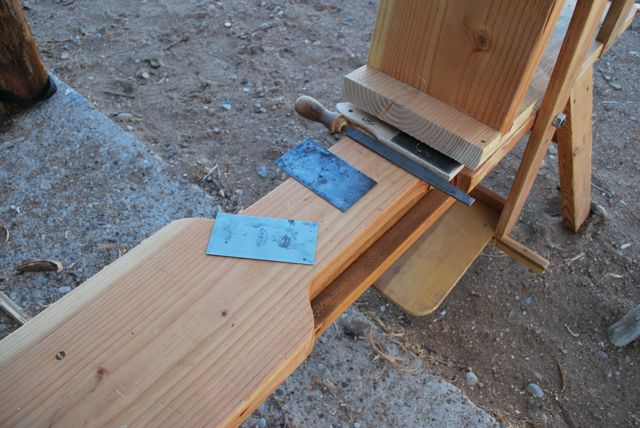
Once the knife work is done, its time to move to the cabinet scraper.  Here are the two I use.  To keep a good sharp edge I switch between the two as one dulls.  The larger one is a standard Stanley cabinet scraper and the smaller is a Garlick of England.  The English one is much harder steel but more difficult to get a good edge when sharpening.  With them are the bastard file and file brush used to touch up the edge.

I hope to find time for the finish tillering sometime this week.

Hickory Bow

The next hickory bow.  I have a barn full of aged staves languishing that need to be made into bows.  Today the weather was good and I had some free time so I jumped on the opportunity to get back into production.  Over the last three years I’ve only made about one bow per year as commissions.  That’s the result of abstract (albeit interesting) work cutting into an honest living.
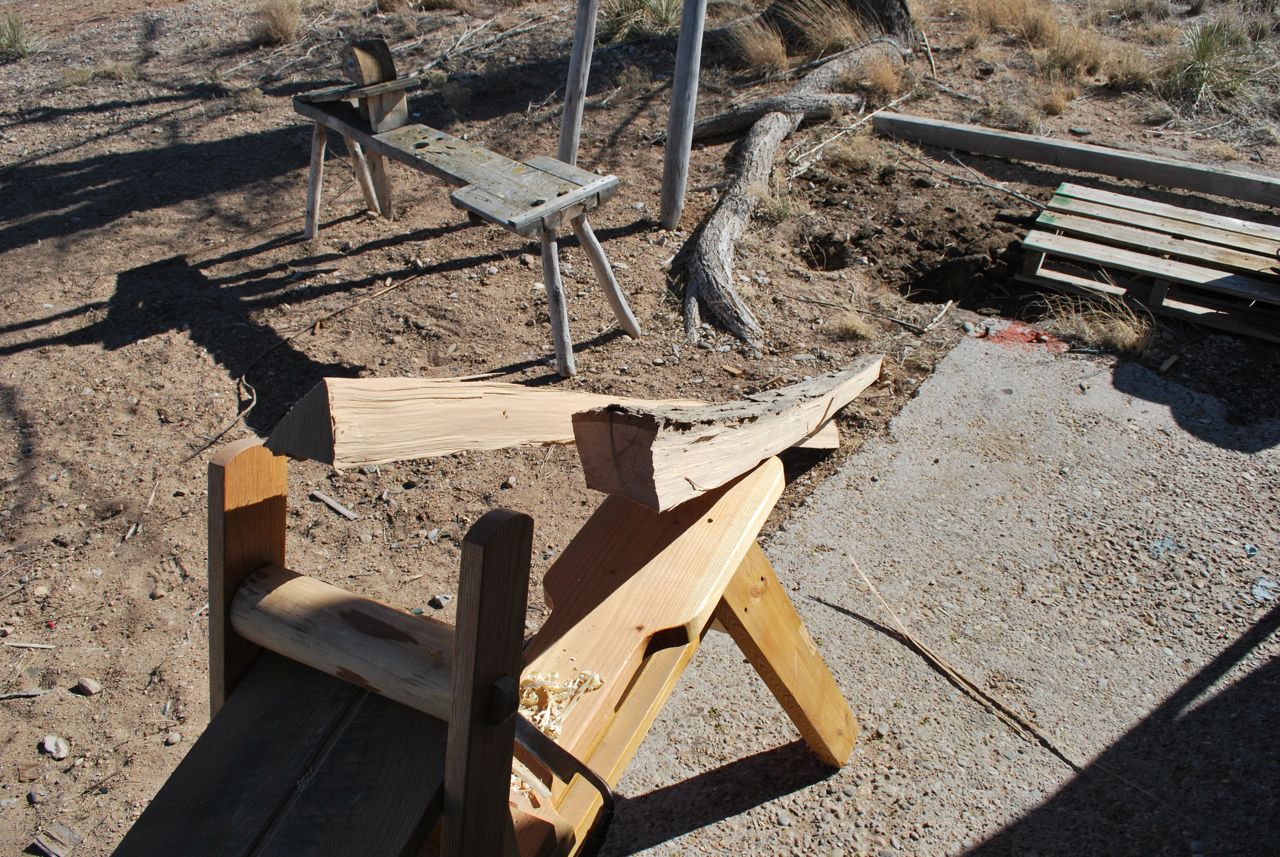
Above are a couple hickory staves cut from the old tree farm in Missouri.  This tree was as near perfect as possible so I intend to get bows from both inner and outer portions of the trunk.  The few bows made from this tree already are fine shooters so my hopes are high.
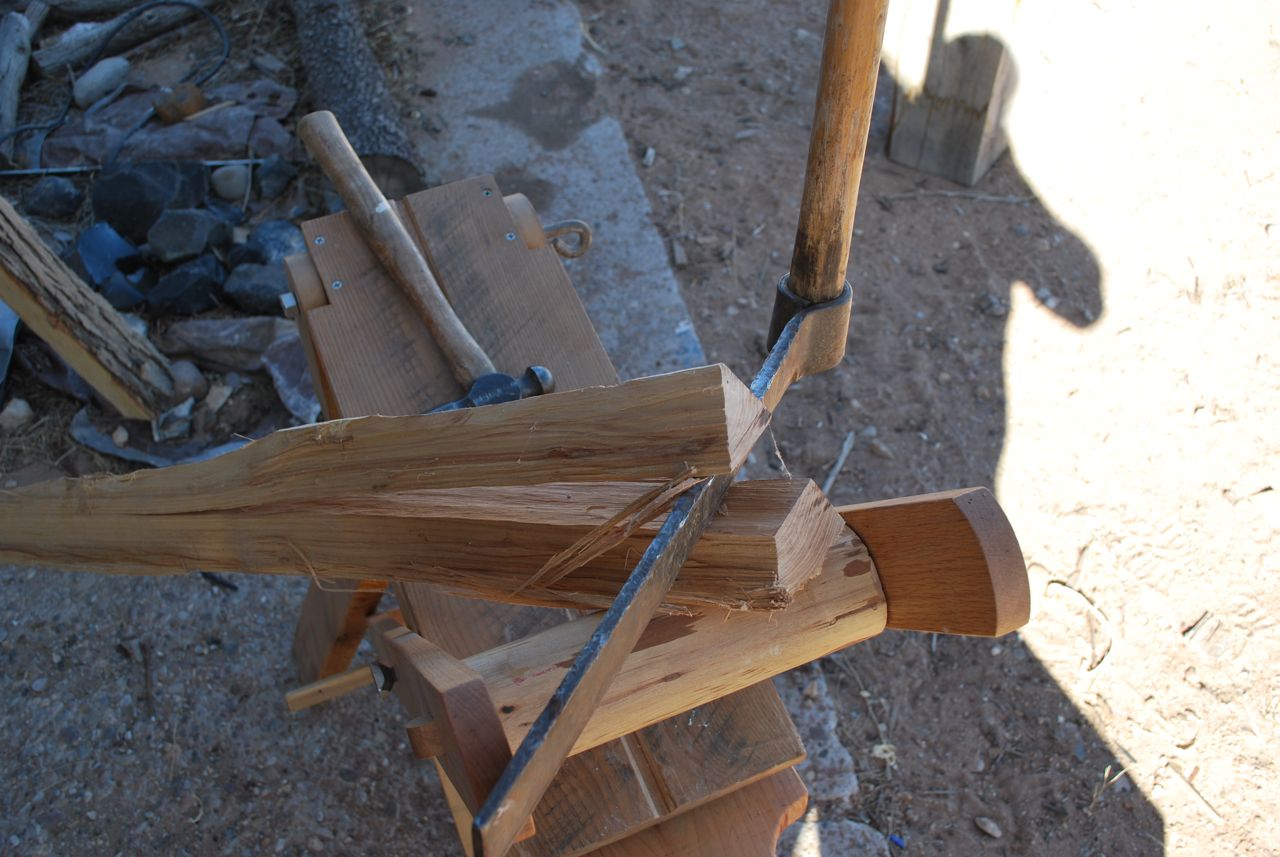
Although I will be using power tools for much of the roughing out, old-fashioned methods are at least as fast at this stage.  The froe is a handy tool that any green wood worker should have.
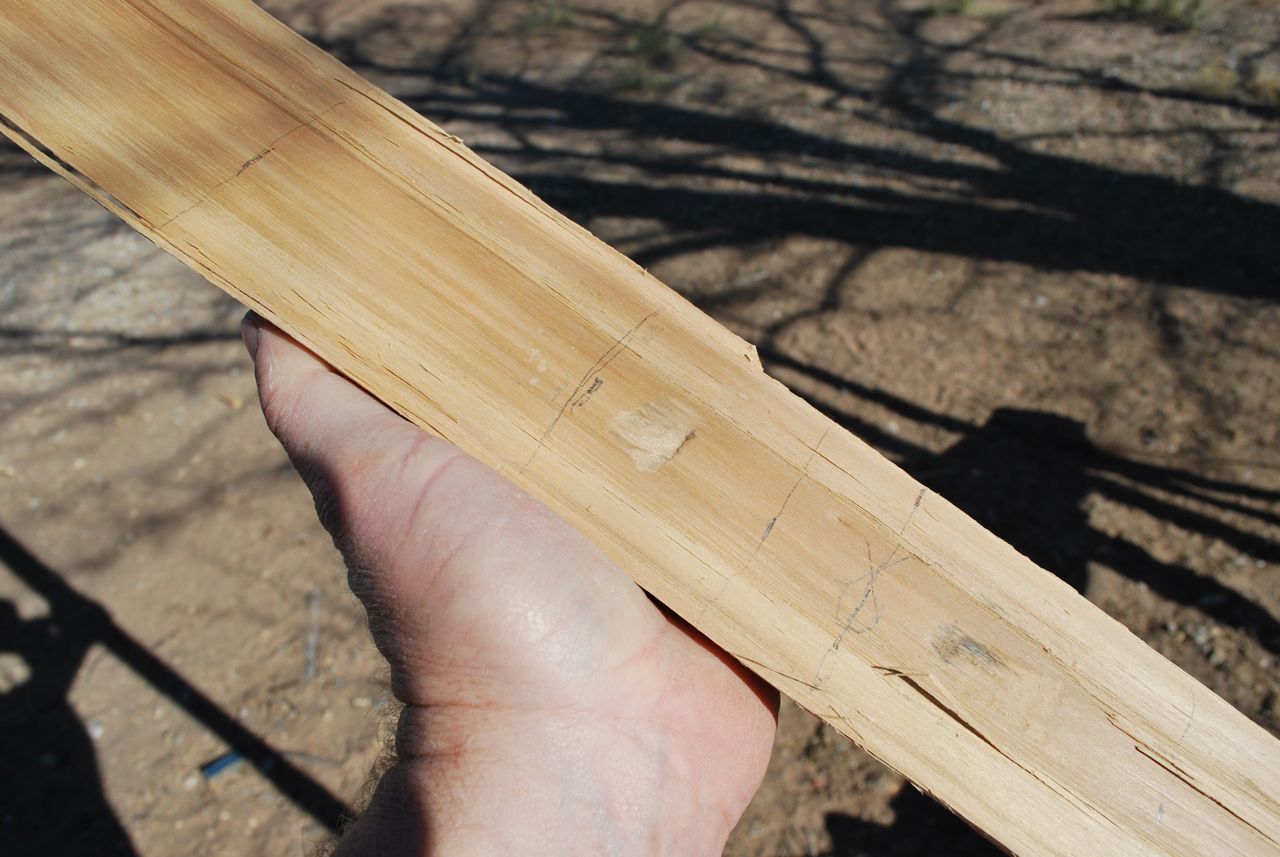
This stage is a bit of a break from tradition for me.  This bow is sort of a test in speed and efficiency as I don’t have a lot of leisure time in my week currently.  This stave was split from a larger piece and, as consequently there is some tear-out between growth rings.  The rough back is the cross-over between rings that will need to be smoothed to a single, perfect growth ring before finishing.  As it was very close to perfect, I skipped this normal step and began to roughly mark out some landmarks of the final bow such as the center of the bow, handle, limb width, etc.
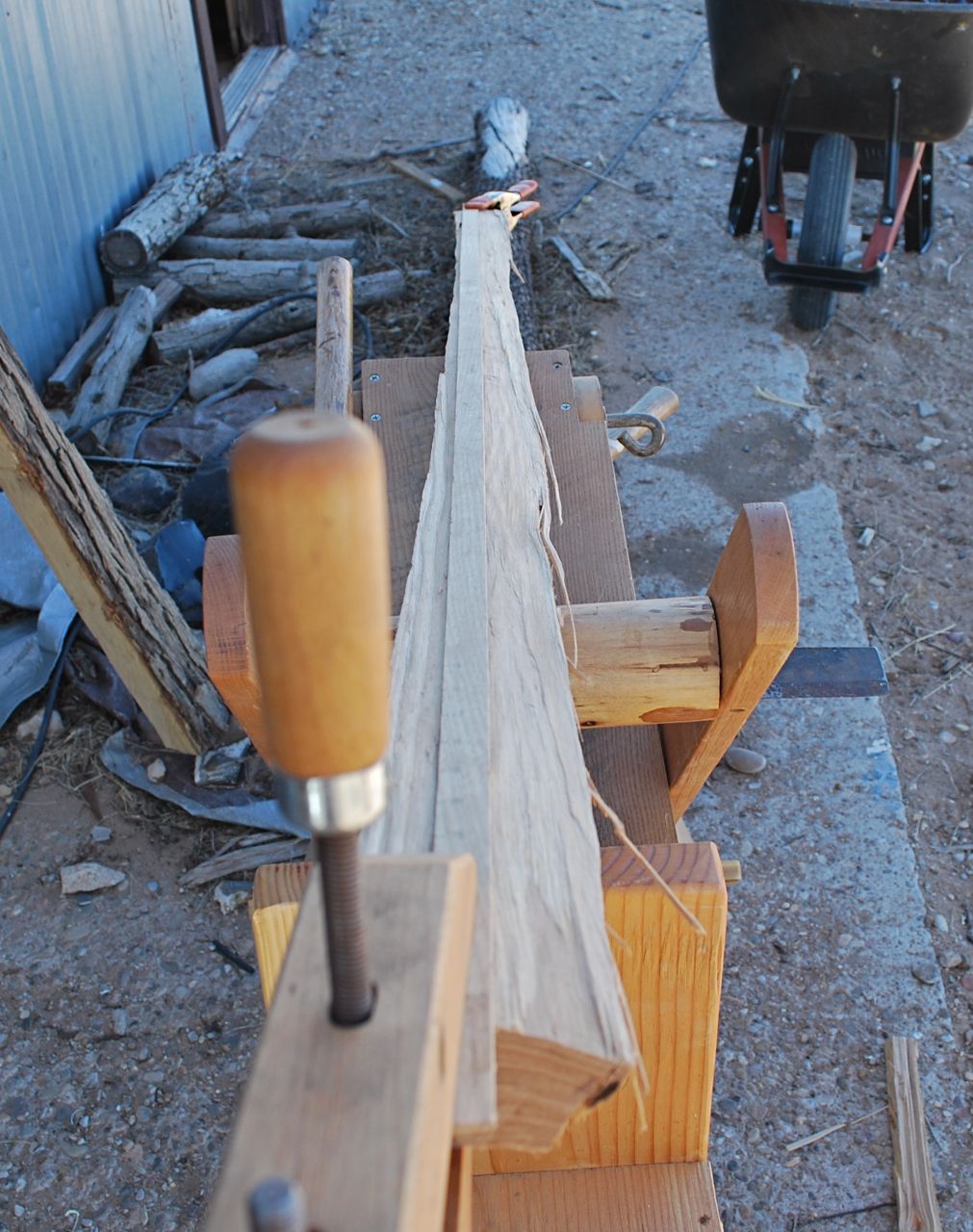
The lath I use to mark a clear center line.  I have markings and distances marked for various length bows.  I find a flexible lath and a good eyeball to work better than a chalk line on the curved and undulating surface of rough wood.  This stave is an excellent teaching example as it has almost perfectly straight grain.  The sketch on the bow back is an idealized version of the finished product.  During the shaping process, knots, wavy grain, and twists are taken into account.
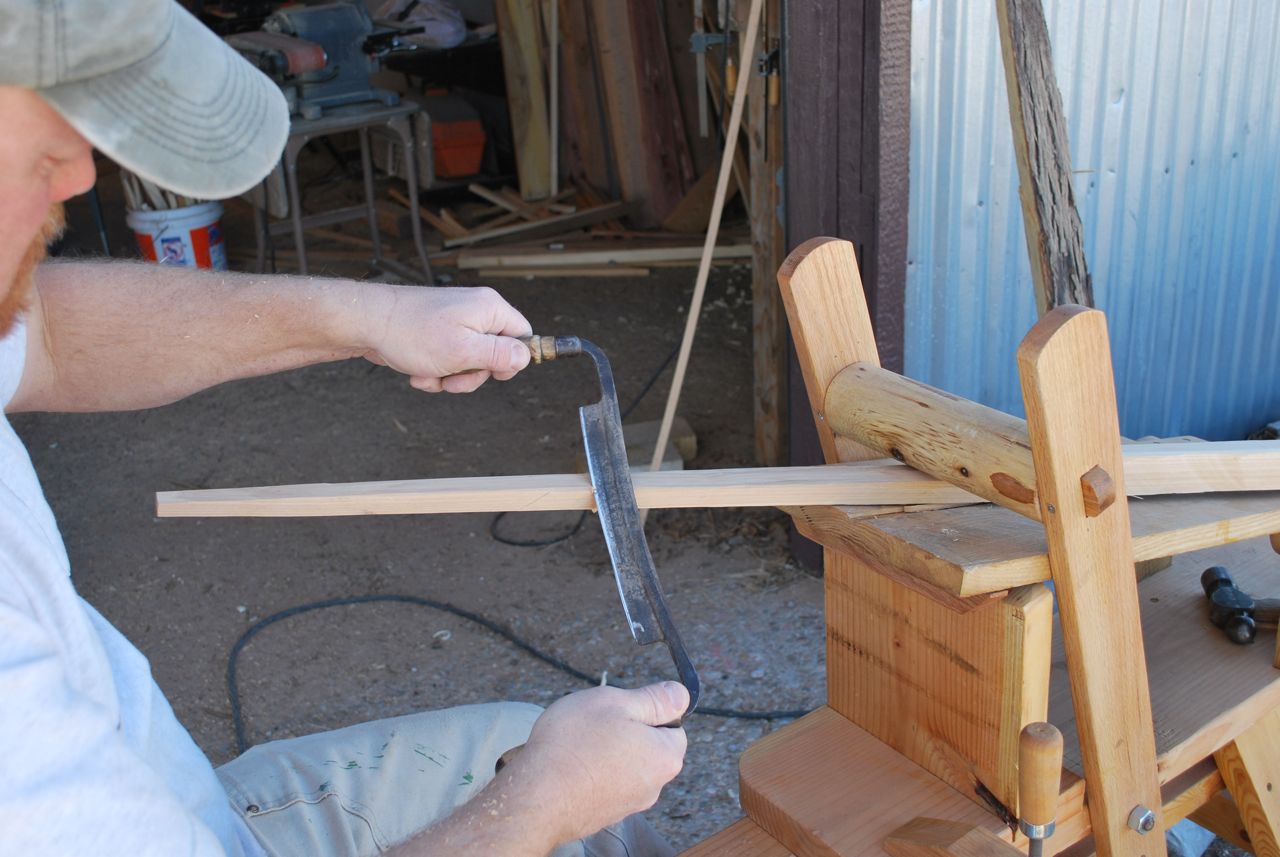
It is apparent here that the bow has progressed.  To speed the process, I sawed away much of the excess down to an approximate shape for the finished bow.  Final shaping a tillering commence.  Most of this will be done with a draw knife, spoke shave, scraper, and rasps.
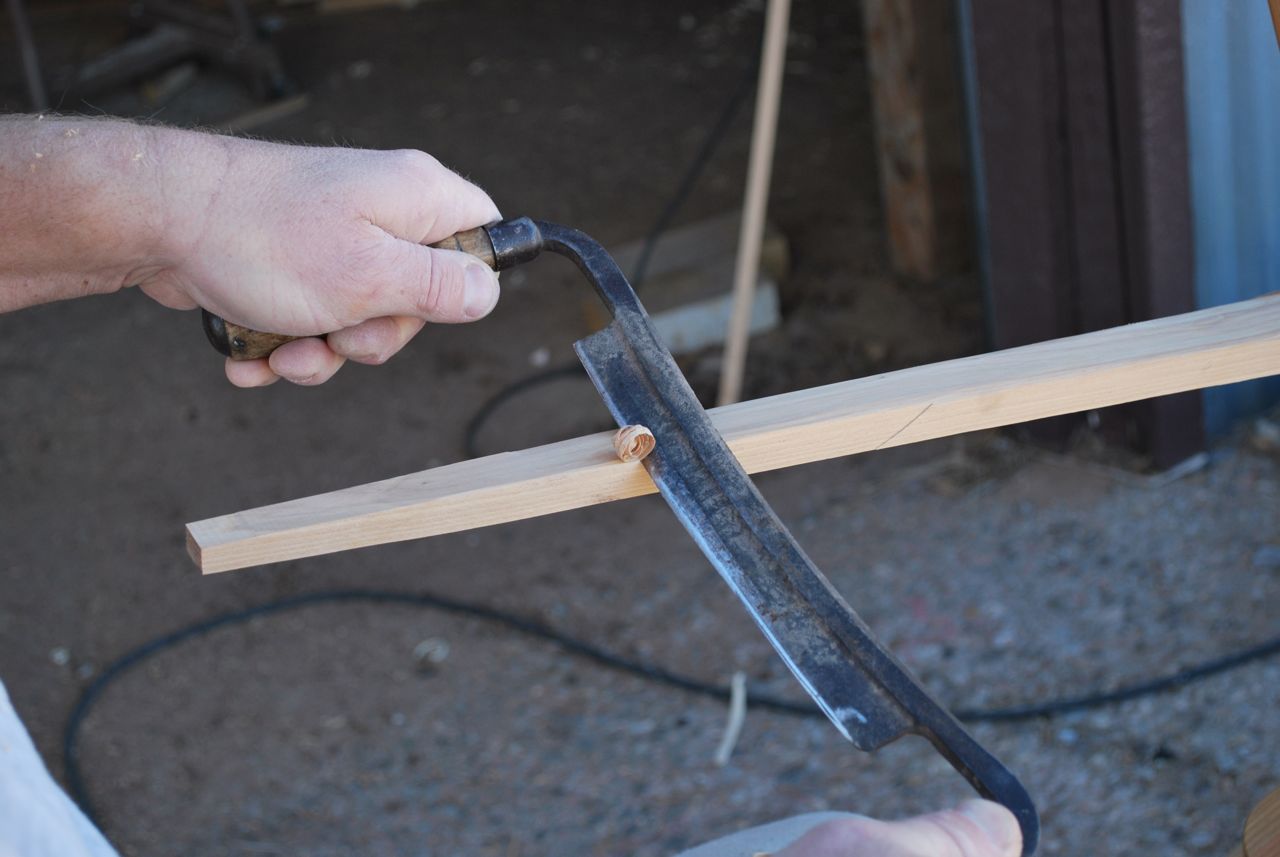
This hickory has been air dried on the high plains of New Mexico for much of the last seven years (damn I’m old) and is extremely hard and dense.  Sharp tools are essential at this point for precision and control.
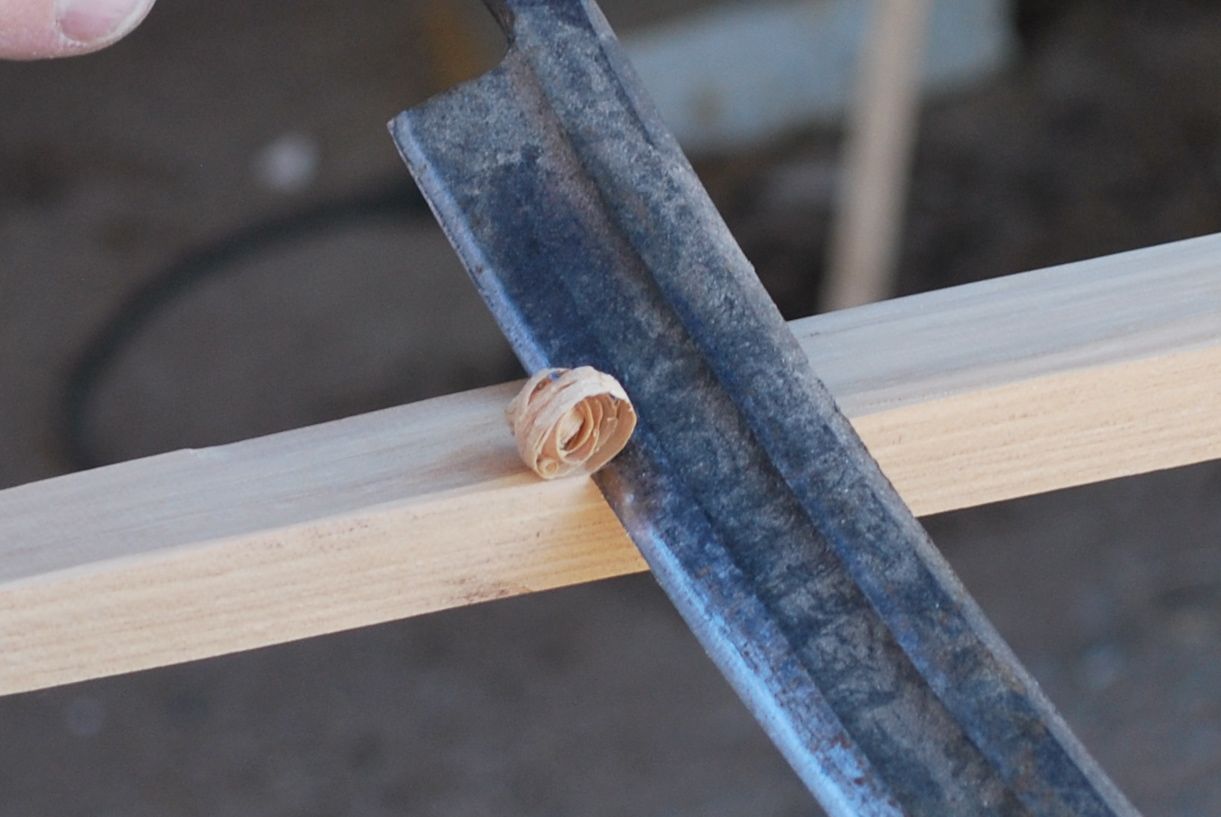
Lots of shavings like the one above will be generated tomorrow as I ran out of light today.

A note on the the bow itself.  The design is a classic flat bow with consistently tapered limbs.  Although, like many bowyers before me, I experimented and tried many designs over the years, I am returning to basics for the present and a design that has worked for thousands of years. More to follow tomorrow.

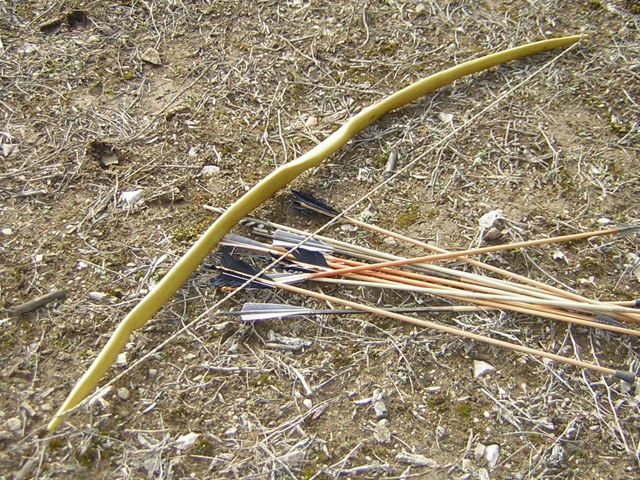
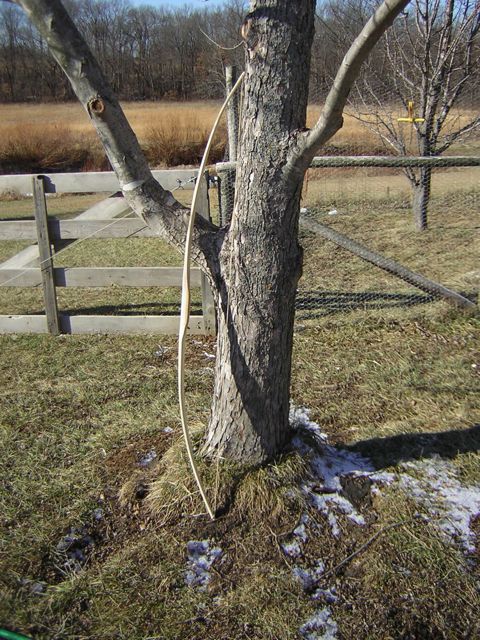
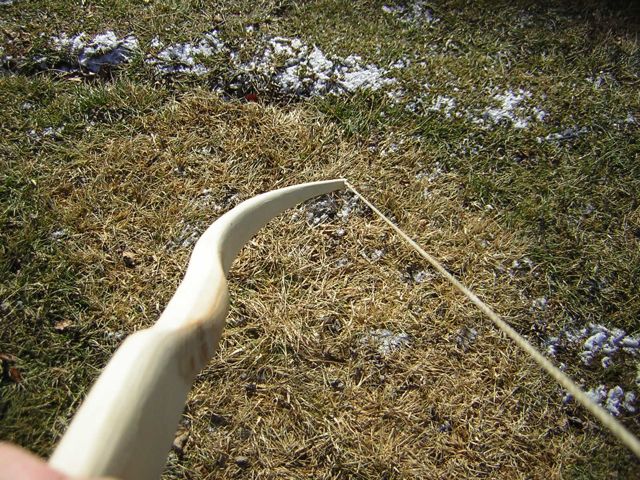
In the mean time, here are a few other more recent bows I’ve made.  Most of these are are probably posted around the site already.