Joinery Journey

Joinery doesn’t have to be a mystery or an unknowable. Have a read of Mr. Merritt’s take on joinery. I’m looking forward to more!

Greg Merritt's avatarHILLBILLY DAIKU

I love joinery.

There is something magical about fitting two or more pieces of wood together.

Before the advent of mechanical fasteners, joinery reigned supreme.  At that pre-industrial time is was the cheapest, fastest and strongest way of building with wood.  As nails, bolts and screws became less expensive they began to displace joinery for building with wood.  Mechanical fasteners required less skill and were faster. Thus the products produced became less expensive and the structural and aesthetic compromises were  accepted as “progress”.  Machines too brought an end to joinery’s reign.  Some joints that can be “easily” cut by hand are either impossible to cut with a machine or the setup is too costly.  So joinery was simplified or abandoned to accommodate mass production.

I have no intention of delving into a philosophical diatribe on the pros and cons of the industrial revolution.  My intent with the preceding was to…

View original post 612 more words

Making a frame saw

These are nearly the same type I make.  A frame saw is a useful and simple introduction to woodworking and tool-making.  If you are interested in woodworking, Paul Seller’s blog has a lot to offer.

P1110869

From Paul Seller’s:

If you have not yet made one of these you should. They are quick and simple to make and give you the European push and pull stroke saw in a single saw which is useful depending on where you want to…

Source: Making a frame saw

Bookcase-Progress 1-Design

As usual, Greg Merritt at BY MY OWN HANDS has again shared a great project with his beautiful drawings to illustrate the work. Check out this nice little bookcase below.

Greg Merritt's avatarHILLBILLY DAIKU

As we continue the never-ending unpacking of boxes and putting away of stuff, it has become apparent that the Hillbilly household is in immediate need of a bookcase.  This of course means that the nightstands have been bumped from the top of the list to the #2 position.  In either case, neither of these projects can be started until I have the new shop space up and running.  I’m getting close on that front and might even post about it as early as tomorrow.  Anyway, back to the bookcase.

We currently have a standard, tall bookcase that was purchased many years and holds quite a few books.  That piece now resides in my office and holds all of my woodworking and craft related tomes.  It’s full.  Additionally, there are a few built-in shelves in the new house and they hold several books.  They too are full.  We own a lot…

View original post 629 more words

Expectations and the Literal Thinker

I cannot even express how much this speaks to me. I have been reprimanded for not being willing to make extensive working drawings of furniture for a lazy half-wit on more than one occasion. My Vardo building pages have been attacked by the entitled internet Anons for not being able to state in exact measures how many fasteners will need to be purchased to build their own project. I was loudly scolded for not making an exact dimensional cutting list for the thousands pf pieces that make up the project, and so on and on and on.

“Close your mouth, open your mind, get off your ass and put a little effort into life. You will be amazed at what you can accomplish” says it all.

Greg Merritt's avatarHILLBILLY DAIKU

In the past few days there has been a, lets call it lively, discussion over on Paul Sellers’ Woodworking Masterclasses forum.  Generally speaking, the entire thing centered on two complaints voiced by a single member.

The first complaint was that the when and why of which joinery to employ was not being directly addressed.  The second complaint was that the woodworking instruction was not directly addressing how to design a piece of furniture.  While these issues are technically correct, all of the information is there in Mr. Sellers’ videos and blogs for those willing to observe, think and extrapolate for themselves.

For some reason society in general has shifted to an absolute literal way of thinking.  Every step and element of a process must be spelled out in order for people to understand and perform that process.  Here is an example from my workplace:

An employee was told to sweep the floor in his…

View original post 514 more words

More Joinery

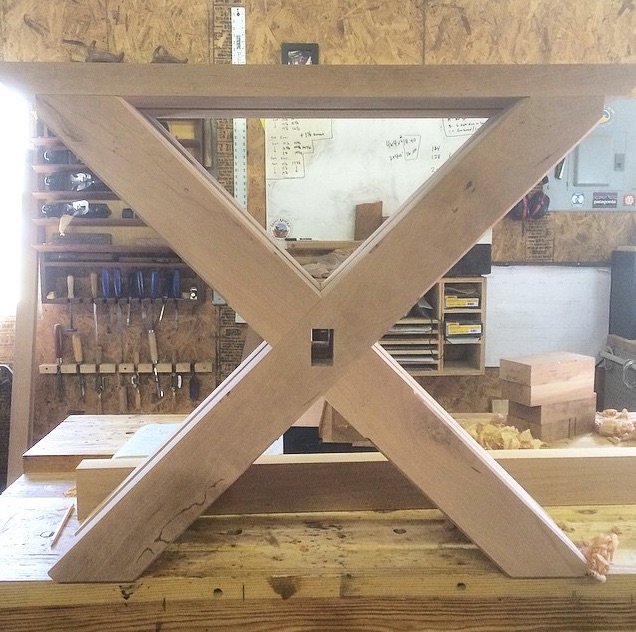
Here’s a beautiful trestle table coming together in Andy Rawls’ studio; spotted on his Tumblr this morning.

trestleSeeing this makes me realize I can’t wait to get some projects done over the three day weekend.  It makes me a little sad to say something like that.  Choosing a job for pay instead of a love for what you do every day.  Of course, the grass always looks greener…

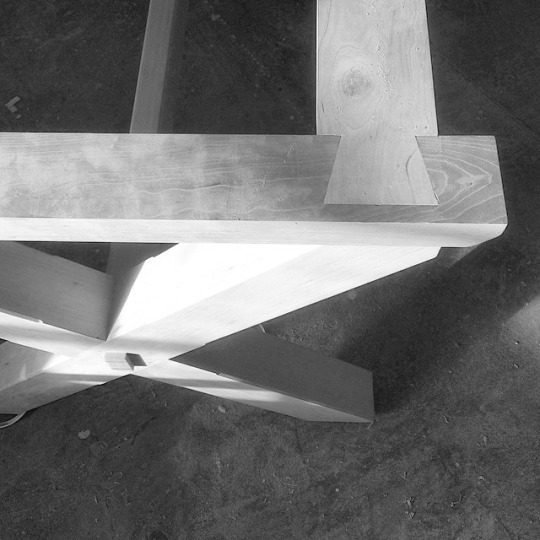
dovetailtressleThis will be one solid table and will last for ages if treated well.  This kind of craftsmanship has slipped away from most of our daily lives.  You won’t find this at a big chain furniture store.  Have a look at more of his remarkable work by clicking the link below.

Rawls_weblogo2

Sawing Planks

RippingPlanks
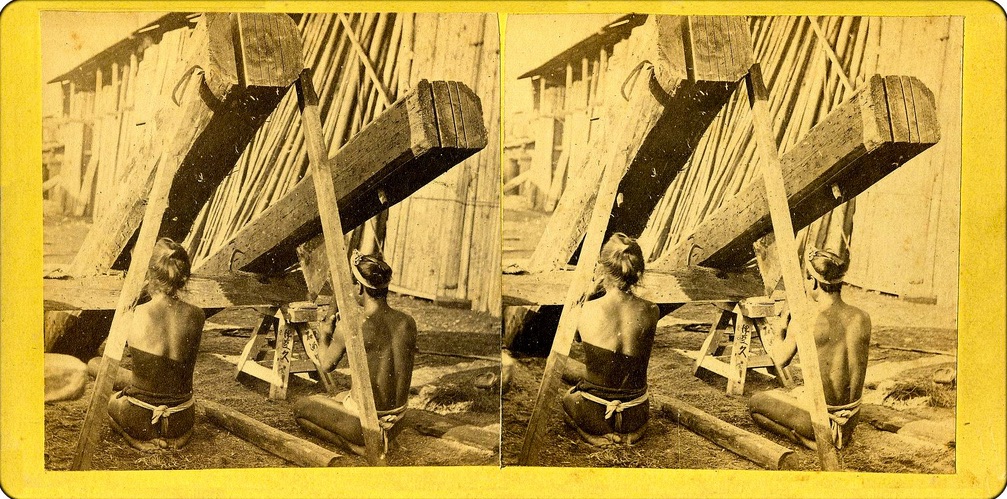
Sawing Planks by hand and eye in Japan ca. 1870.

Before powered saw mills, making lumber was much more labor intensive.  Now I can flip a switch to crank up the band saw or table saw; or pull the cord to fire up the chainsaw for big work.  It’s easy to forget how good we have it.  Notice the sturdy little sawhorse holding up the trunk.  I suspect this was hot and hard work.

There is much more about this stereo image here.

Making Connections with Kindred Spirits

The Internet is neither good nor bad.  It is just a repository of information like a giant disorganized library that is constantly in flux.  Like a library, it is a tool and like a library it can be a meeting place.  Probably the two best things about having an Internet presence is the vast amount of knowledge that can be shared or learned and the bringing together of like-minded individuals that would have never met otherwise.  I have had meaningful discussions and comments from all over the world about this oddball and eclectic blog and I would like to share a recent email of a connection made through the website from Rob Hanson of Evenfall Studios.  This, for me, sums up the heart of the message; “It makes me feel less solitary, as we are not the most common demographic these days.”

Hi George,

I enjoy your blog, and your approach to making and living. Thanks for sharing it.

Dick Proenekke lived in remote Alaska and made his cabin at Twin Lakes as well as much of whatever else he needed with tools that didn’t require power. Sure it was out of necessity, but I like that he didn’t make a big deal out of it. He just did what he needed to live, knowing the season to complete this was short. Dick was maybe somewhat of an uncommon adventurer in the late 1960’s, but 75 years prior, he would have been much more a common man in the western states.  Hours of our day in pre-industrial time were spent like Mr. Proenneke’s, assuring we had our life in order. Prepared for living life as it comes. It was everyone’s daily do.

I make hand tools for a living. I make pre-industrial tools, sort of. Probably developed in the early period of sloyd. Shooting boards, sawing and drilling tools, sharpening tools. I don’t do this because I intend to be pre-industrial, I do it because the premise of these tools is still amongst a “best method” approach to making things. Industrialization didn’t necessarily improve the possible outcomes, and so the relevance of these tools today is still alive.

I sort of got lucky. My Grandparents on both sides of the family were born very early in the 20th century and brought up on dairy farms. This was in the Pacific NW about 30 years after settling there began, so there was a lot of frontier knowledge in both sides of the family. Everything was still really old school. One great granddad had been in furniture making before coming to the west coast. He taught my granddad a lot that was passed on. This granddad had only daughters, so he waited a while longer for grandsons. Anyway, both grandfathers and dad were always independent makers, and I got a front row seat. They were hybrid. They did use power tools too, but their original skills were hand tools, and often they would choose the hand tool over the powered one.

The thing was, it was never as much about the tools as it was about having the skill and doing a good job when you make. It was inspirational to me and eventually after other careers, I had the opportunity to be a toolmaker and I took it. As a Toolmaker, I understand that this is about tool acquisition for many of my clients – they aspire to have a working shop. My deeper hopes are always in that the tools I make inspire them to be able to make what they envision and do so more directly. It’s one thing to have a tool, and another to become skilled with using it. Then you can “see” things in your mind’s eye and just make them.

I like that you have “made” with your hands and tried it out, made adjustments and evolved what you build while using tools that are the means to the end. This is the real process behind how things evolved. People read your blog and think oh, that’s how you do that, I could do that! They begin to get a taste for what they didn’t know they could do and they like it. This is inspirational. Once you have the skills that create craftsmanship, no one can take them from you. You could parachute into anywhere and scab up tools. Tools from ordinary things. Make shelter. Fire, food. things you’ll need, all with skill because you understand how to wield the tools. This is more between the head and the hands than in the environment. I hope that makes sense.

I think you probably understand our ancestors given your profession, and I like that you have endeavored to understand them in your hands as well as your head. It’s the physical understanding that is hardest to convey. Experiential knowledge. It isn’t imparted from reading about it, you have to do, or live it. Post Industrial life has perhaps blurred this connection to our past. Your blog shows people this and how rewarding it can be to reconnect. I hear from a lot of people who want to get reconnected, and it’s an enriching endeavor.

Paleotool has shared a lot of cool philosophy and stuff.  Stuff isn’t the loss for a better word.  Stuff, as in the physical examples of all sorts of pre-industrial life, and people are trying to get their hands around it. Trying to do it. They can leave their televisions and still be able to do. You are helping people leave their couch and go “live” instead of “watch” life. It’s cool!

Not everyone can do what Dick Proenneke did, or even do what you have done and are doing, because they may be afraid, or their life path won’t currently accommodate it so completely, but they get to try a leg up. You have piqued their interests. Trying a bit on allows them to grow, and it lights them up. I lit up when I saw what you were doing too. I have a busy business, and so free time is minimal, but I do get to work with my hands in craftsman skills and do what I love, so thanks for being another who uses the skill and lives a life you can love. It makes me feel less solitary, as we are not the most common demographic these days.

If you have time and you like, my website is at www.evenfallstudios.com.  Check the menus because there is a lot there. I have a blog and an online library with old books on making from all the old craft and trade ways. If you have time, I’d love to hear back from you sometime.

Best,

Rob Hanson, Evenfall Studios
evanfallheaderHave a look at the beautiful tools at Evenfall Studios but even more importantly, don’t miss the articles or immense library of downloadable books assembled there.  Thank you Rob!

Make a Shop Apron

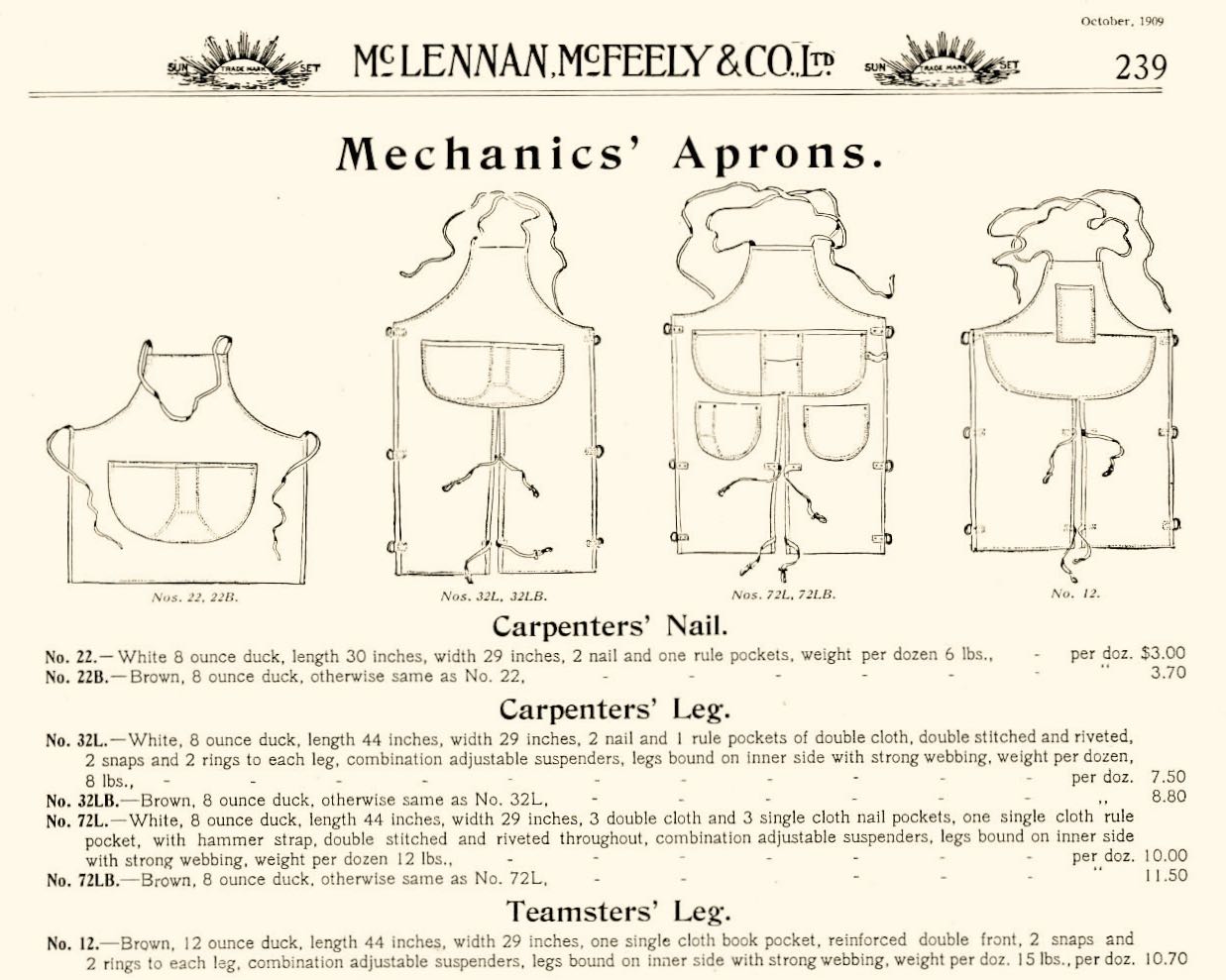
ApronsShop aprons are not as widely used as in the past.  I believe this is related to our modern view on clothing and how it has changed over the past century.  Not only are we training less in the trades, our clothes are ridiculously cheap in the modern world.  Low prices and availability keeps our incentive to protect them pretty low.  As I have reduced my quantity of clothing I have grown to appreciate the humble shop apron more than ever.  In the past, my only incentive was for protection when grinding metal or welding but now I begin to understand the real role a good apron can play in the shop.

A good shop apron can cost quite a bit of money ($40 – $100 or more) so I present the above catalog page as a starting point for construction.  Heavy canvas or leather are the obvious choices for material.  Although heavier, I prefer leather as is it is fireproof and offers some protection against cuts.  As for protection, here’s an image I found when looking for designs.  It’s from a Navy singlestick exercise.  Somehow the design seems familiar.

navysinglestickDSC_0003

A Chairmaker’s Work bench

cmw1
Chairmaker’s Work Bench by Ambrose Vevers.

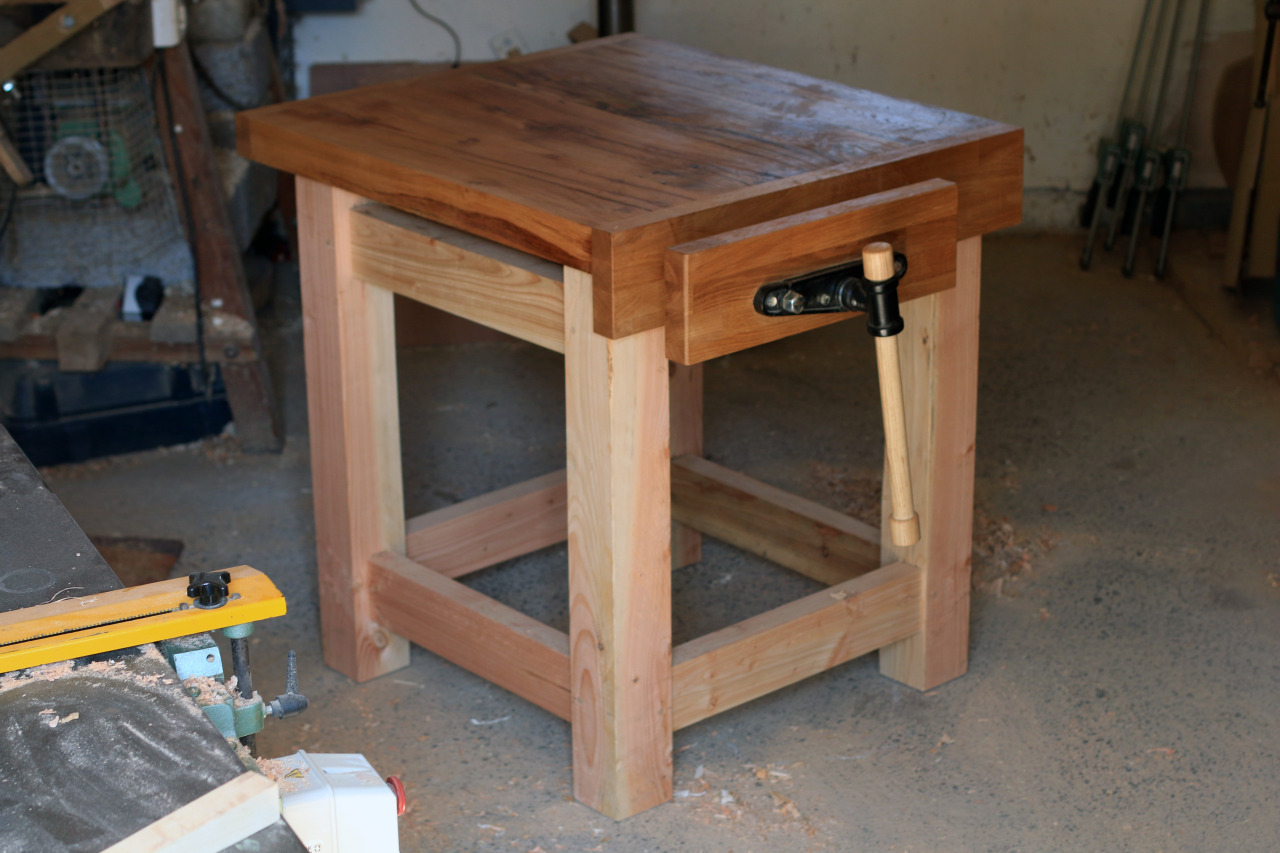
I saw this beautiful and sturdy chairmaker’s work bench on AMBROSE VEVERS’ Tumblr blog early this morning and wanted to share it.  It is a great example of a purpose-built and appropriate sized benched for a craftsman.  Not every bench needs to look like an 18th Century Diderot drawing or Roubo bench.  That sets the bar prohibitively high for so many woodworkers, especially those with limited space.

roubogermanbench
Roubo-style bench.

When I first left graduate school, I went back to work as a woodworker-carpenter and I was living in a small apartment.  Needless to say, my work space was extremely limited and most of the sawing was actually done on a small balcony to keep the dust outdoors.  Prior to this, I shared an 1,800 square foot work shop, and though it was not perfect it was extremely spacious.  Moving to the apartment really began my thinking about spaces and portability which has influenced me ever since.  I am always on the lookout for workshop solutions and I am a huge fan of recycled lumber.

cmw2
“Chunky reclaimed Oak top with Douglas fir frame and a York spindle vice.”

To see more of Ambrose’s work, head over to his Tumblr page.  Here’s his description from the website:

“Ambrose’s workshop is nestled in the Ancient Stannary town of Ashburton, within Dartmoor National Park. Each piece of furniture is skilfully crafted by hand from locally sourced materials.”

Ambrose's workshop is nestled in the Ancient Stannary town of Ashburton, within Dartmoor National Park. Each piece of furniture is skilfully crafted by hand from locally sourced materials.