

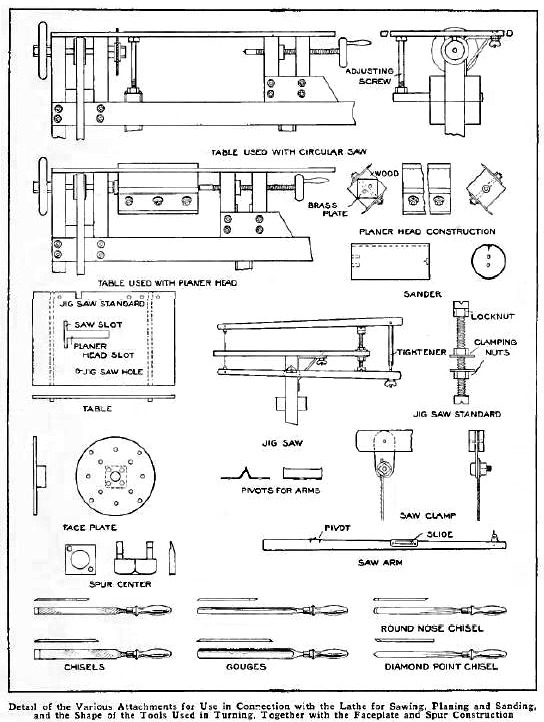
Whether you’re planning on going green in your workshop or prefer working with traditional hand tools, here’s some old plans for a pedal driven lathe.
Adventures of an Imperfect Man In Search of a Handmade Life

Whether you’re planning on going green in your workshop or prefer working with traditional hand tools, here’s some old plans for a pedal driven lathe.
Henry David Thoreau, Walden


A sidecar is a one-wheeled device attached to the side of a motorcycle, scooter, or bicycle, producing a three-wheeled vehicle. A motorcycle with a sidecar is sometimes called a combination, an outfit, a rig or a hack.
Mr M Bertoux, a French army officer, secured a prize offered by a French newspaper in 1893 for the best method of carrying a passenger on a bicycle. The sidecar wheel was mounted on the same lateral plane as the bicycle’s rear and was supported by a triangulation of tubes from the bicycle. A sprung seat with back rest was mounted above the cross-member and a footboard hung below. A sidecar appeared in a cartoon by George Moore in the January 7, 1903, issue of the British newspaper Motor Cycling. Three weeks later, a provisional patent was granted to Mr. W. J. Graham of Graham…
View original post 293 more words
Wow! Too cool.

We have a modest collection of cookbooks, both old and modern, as well as secondary resources related to the topic 18th century cooking here in my office. I appreciate being able to read other people’s interpretations of the old recipes, to see how my conclusions line up with collective wisdom. I have my favorites: Karen Hess’s epic annotative work, for instance, titled Martha Washington’s Booke of Cookery, and C. Anne Wilson’s classic, Food and Drink in Britain. The Oxford Companion to Food and even the Oxford English Dictionary have also proven on multiple occasions to be invaluable sources of information.
When it comes to research, however, my greater joy and satisfaction comes from the challenge of searching through and deciphering the original texts. Primary research can be difficult. If you’ve attempted it before, you know the biggest challenge is usually access. Most of the books in which I’m most interested are locked away in climate-controlled vaults…
View original post 2,032 more words
An art lost to many people with the cheap alternatives in containers. Baskets have been an important part of our toolkit for tens of thousands of years.

Basket bottoms. Two of our household baskests; c. 1987-90. The one on the left is a standard item; square bottom, round top. Ash with hickory rims; hickory bark lashing. The one on the right is our colored-pencil basket. Gets lots of use. A rectangular basket, all ash, rims either oak or hickory.

Here’s the bottom of the square one. Typical weave, resulting in openings between the uprights. Probably most splint baskets are like this.

Here’s what I call a “filled” bottom – thin and narrow filler strips woven between the uprights.
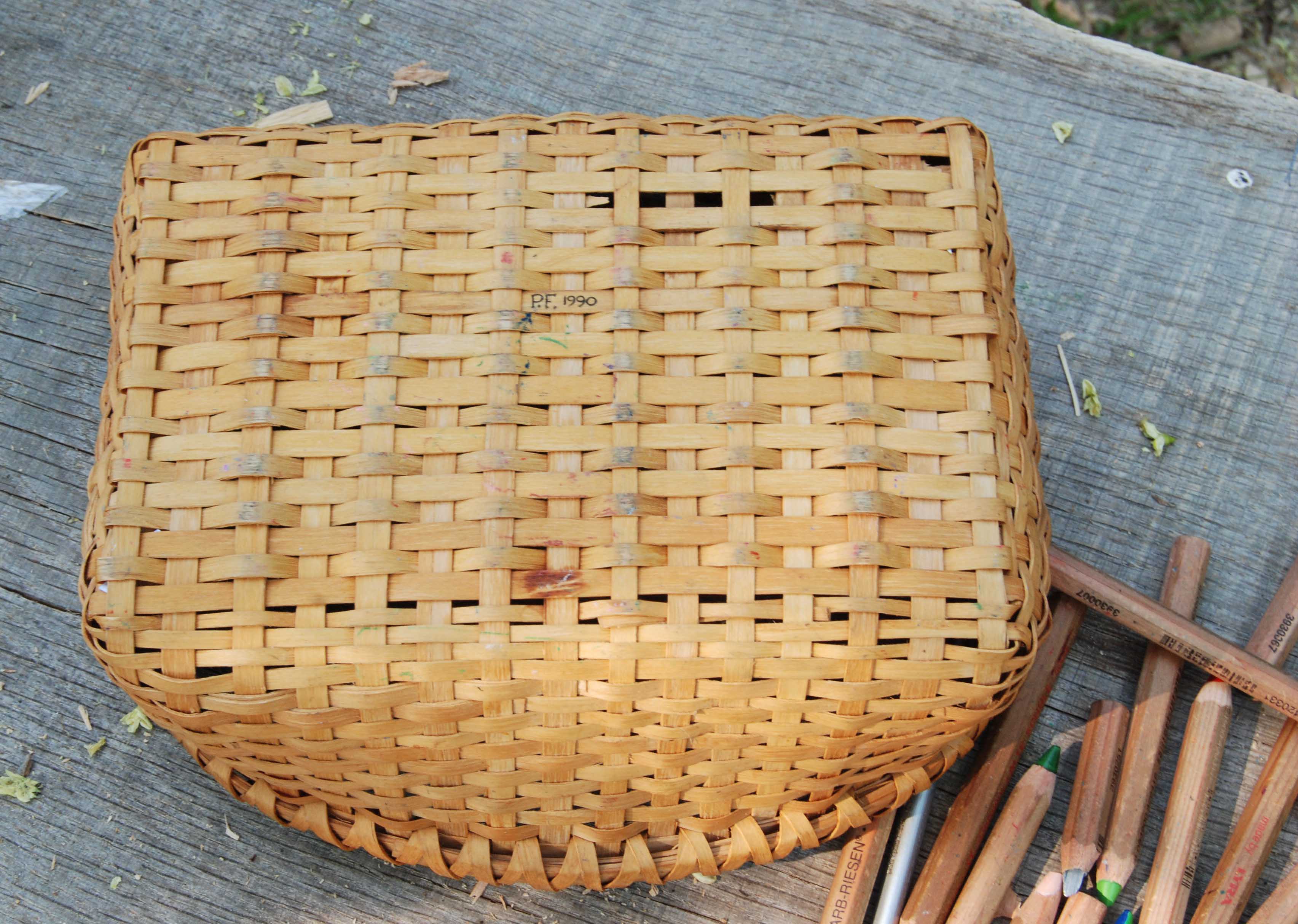
The filled bottoms of baskets are made a few different ways. One is to make a round basket, with “spokes” laid out to form the bottom and sides. I do these with 16 uprights; laid out in 2 batches of 8 spokes. Here’s the underside of our laundry basket; showing this spoke bottom from below.

Each upright, or spoke, is…
View original post 454 more words
Check out the blog of an up-and-coming leatherworker at http://uncommoncate.wordpress.com/.

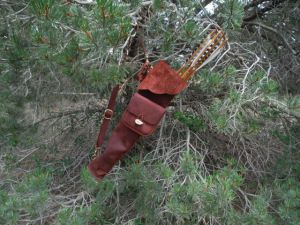
 This lovely little bag was made to match the Leather Quiver from last post. It functions as either a belt bag or as a quiver bag. It was made to be a quiver bag for the most part, but I have found myself wearing it as a trendy little purse alternative instead. At about six by six inches, it is perfect for a cell phone and wallet.

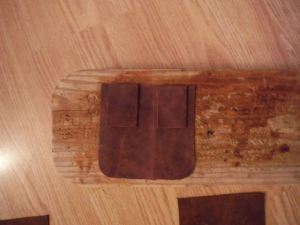
It began as six pieces. The front, the back (identical to the back), the closure flap (identical to the front and back except slightly shorter), the belt loops, and the sides and bottom strip. I began by sewing the belt loops to the back panel (saddle stitch as usual).
 Next, I attached the closure flap to the back panel. The belt loop tops are sewn into the same seam as the closure flap.
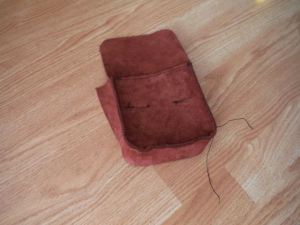

The front and back panels were sewn to the…
View original post 119 more words
A sad commentary but it seems we can’t tolerate people who are different than us.

We used to have them in Norway too, until the government decided sometimes in the fifties that it was time to put an end to it. They ordered the police around the country to take their horses and slaughter them. This was normally done right there by the road side while the owners watched. It is a part of my country’s history I’m deeply ashamed about and I blame it on the old-school social democracy’s love of mediocrity and the principle of forced equality.
I saw an interview with a man of the travelling people who was a small kid back then and he told that the only time he ever saw his father cry was the day the police slaughtered his horse.
It is strange that so many of us find it so hard to accept people who chose to live their life on the outside of the mainstream…
View original post 2 more words


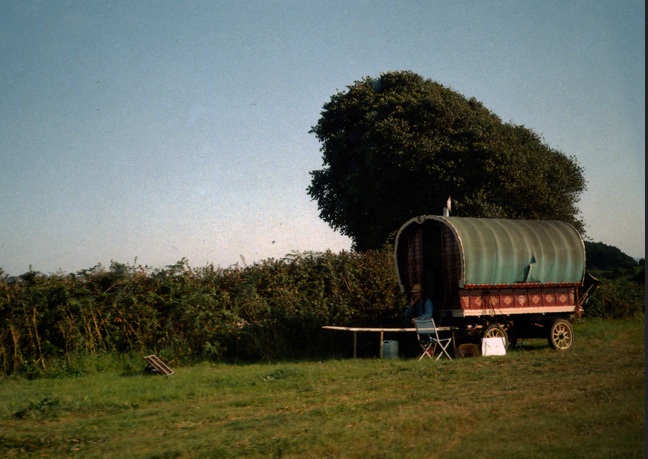
 Plenty of great Waggons to look at here. Click an image to be re-directed to Les Wattam’s page.


 Preindustrial Craftsmanship