The Zen of whittling spindles (or how to drive a 12p nail in 3 strokes)

Becoming a master means doing it yourself, of course.

D.B. Laney's avatarA Woodworker's Musings

I’m whittling spindles for several Windsor chairs.  A friend of mine says to me, “why don’t you just buy those spindles?  Why waste your time making them?”  I thought about his question for a moment.  It was reasonable.  It made sense.  I mean, at my age, I shouldn’t be wasting time on unimportant things.  Right?  Ah…not wrong, but definitely, not right.

Show me a carpenter who has not challenged his mates to a nail driving contest and I’ll show you a guy who probably has a lot of “pulls and re-starts.”  Some people think of repetitious tasks as being boring, perhaps to the point of deadening the creative spirit.  Well, I’m here to tell you that is a bunch of baloney.  Watch a master craftsman at his trade.  Certainly, intelligence, talent and desire help to make him a master.  But it is the act of doing something time after time, learning…

View original post 88 more words

On Attachment

“I have no desire for wealth or possessions, and so I have nothing. I do not experience the initial suffering of having to accumulate possessions, the intermediate suffering of having to guard and keep up possessions, nor the final suffering of losing the possessions. This is a wonderful thing.”

Milarepa from Ten Teachings from the Songs of Milarepa

Milarepa-greattibetianyogi

Roof Valleys

michaellangford2012's avatarmichaellangforddotorg

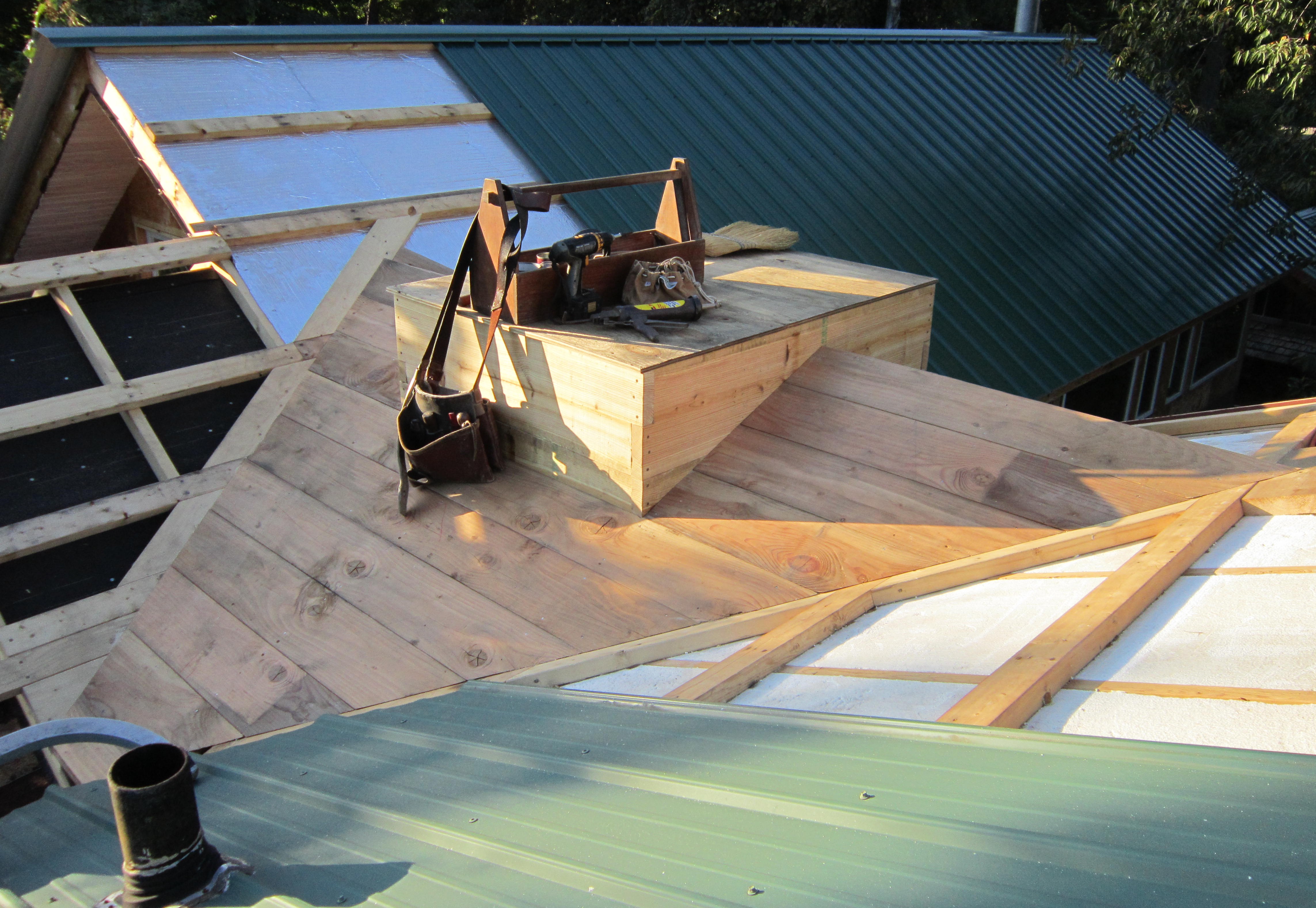
Trigonometry, once you understand the basics, is fairly easy to use.  The sine curve/cosine curve model works great for electrical engineering, but isn’t very useful for building math.  Really, just the ++ quadrant of a unit circle is sufficient for every trigonometry problem you’re likely to encounter as a carpenter.

IMG_1516

This is the intersection of an 8/12 roof and a 5/12 roof.  The cricket has an 8/12 slope on one side, and a 5/12 on the other.  Two of the valleys are regular, they are at an angle of 45º to plan.  The other two valleys are irregular, one side is 5/12, the other 8/12, and the valleys lie at an angle other than 45º to plan.  This requires a slightly more sophisticated approach than the conventional solutions.

Here’s a simple isometric of the basic idea, with the individual triangles lined out in colors.  The trick is to determine a common…

View original post 138 more words

A little more about creating an elliptical plan

Following up on the ellipse.

D.B. Laney's avatarA Woodworker's Musings

Several folks wrote and said that they were having some difficulty getting their heads around this method.  Well don’t despair.  When I first read about this method, it took me a couple of days for it to sink in.  And, if you don’t have much experience with projective drawing, it’ll take a bit of cogitation.  Of course, at my age, everything takes a long time to sink in.  But it doesn’t necessarily stay “sunk in” for long.

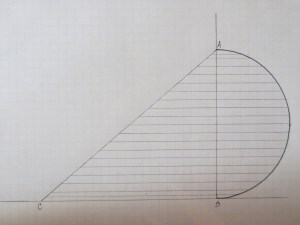
But here’s a little more graphic information that might help.  First off, I elongated the major axis to make the model a little more easily understood.  So remember, A-B is the Minor axis, A-C is the Major axis.  I’ve divided the A-B line into equal segments (with a couple of little “cheater” segments at the ends.

001

Again, I extend the segments at right angles to the diagonal line and transfer the line measurements…

View original post 126 more words

Found 1300-Year-Old Ski and 6000-Year-Old Arrows in Reinheimen

ThorNews's avatar

Viking Age Ski Norway

Archaeologist Runar Hole with the 1300-year-old ski. (Photo: Oppland County Authority)

In recent summers, many sensational archaeological discoveries in Norwegian national parks have been made. This summer there was found 390 objects from the Stone Age, Bronze Age and Iron Age, including sixty 6000-years-old arrows and an 1300-year-old ski.

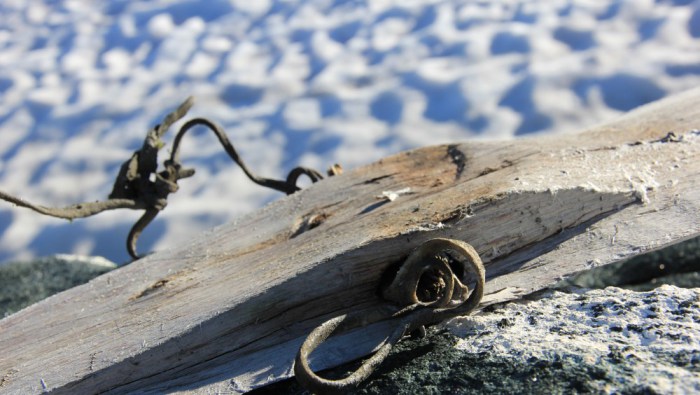
The Early Viking Age ski is 172 cm (69 in) long and 14.5 cm (5.7 in) wide, well-kept with binding constructed of wicker and leather straps. The binding sits on a raised section in the middle of the ski, and there is a hole where it was attached.

(Article continues)

Viking Age Ski Norway 2

The discovery shows Vikings used skis with bindings – which meant they could move fast and steady on the snow. (Photo: Oppland County Authority).

There are about 2,700 glaciers in Norway, and these glaciers have an area of ​​approximately 2700 square kilometers (1042.5 mi²). When they melt due to climate change…

View original post 233 more words