… an interesting historical post about the fate of traveling folk in 17th century Scotland
Scotland had draconian laws against travelling folk. Hostility towards “Egyptians” took off under King James VI, who was also famously opposed to Border Reivers, Gaelic-speaking Highlanders, alleged Witches, Protestant religious dissenters and tobacco smokers. Edinburgh, 13 May 1682: ‘His Royall Highnes his Maties heigh Comisioner and lords of privie counsel being informed by the Earl […]
Read the rest of this interesting but seldom taught piece of history by clicking the link below.
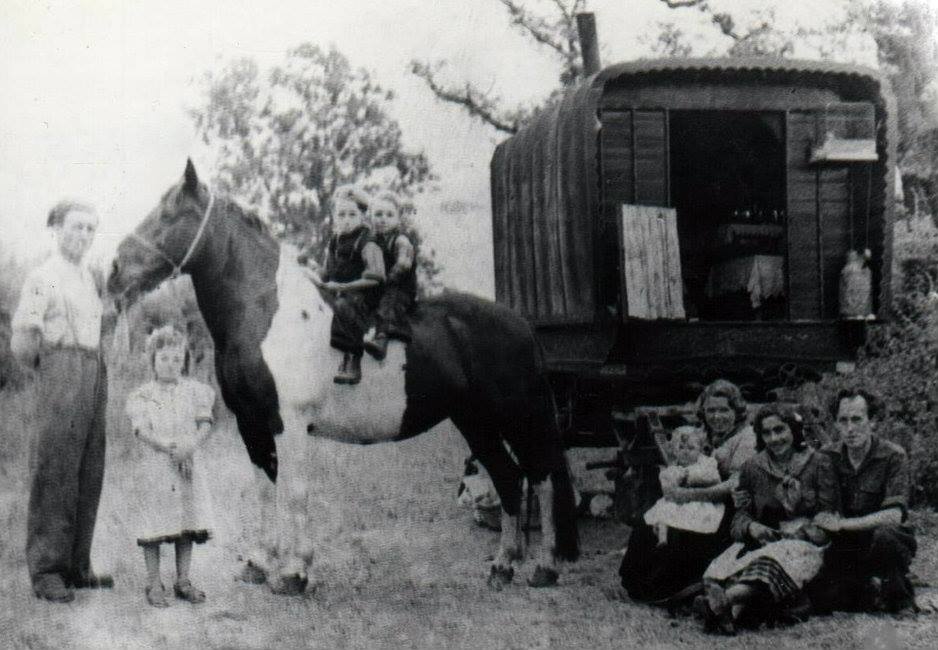
Here’s another look at an image I posted quite a while ago. I really like this photo. These Scottish Travellers give a glimpse of some less-than-stereotypical living waggons (sic). Very few wanderers could afford the classic Dunton Reading wagon but made do with more affordable accommodations; possibly even owner-built.
Tyne & Wear Archives & Museums. Click HERE for the source.
All three of the caravans pictured have mollycrofts for light and air but are of a pretty simple variety. I am struck by the one on the right mostly by how plain it is (plank siding without exposed ribs) and it’s very small proportions. I suspect there were many more of this variety than the elite, custom-built wagons on the roads in Britain in the heyday.
I found this beauty on http://theromanipeople.tumblr.com/. Sometimes there are some very nice images there but like much of Tumblr and Pinterest it seems to be stripped of all associated data. Anybody with any facts please feel free to pass them on to me.
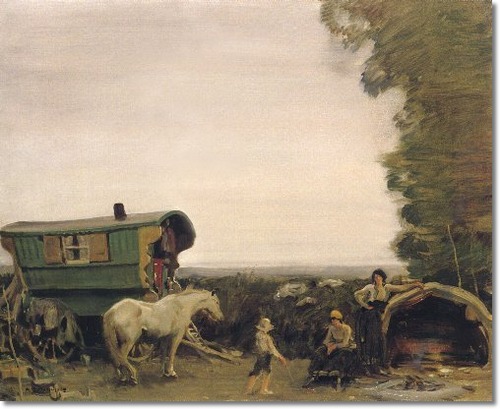
A nice little roadside camp.
I suspect this is early 20th century in Britain. I like the ubiquitous water can by the door and the nearly universal birdcage. Maybe I need an addition to my menagerie.
Some important facts about caravan living before the ultra-modern RVs came along that may help people understand some of the choices I have made about my own wagon:
At the most basic level, life revolves around food and shelter.
The caravan is the hub around which camp is built, but most “living” actually takes place outside in the wide world. Sometimes this means tents or other temporary structures provide added protection from the elements. Prior to the second world war, caravan Travellers in Europe often slept outdoors, under the caravan when necessary while the kids were corralled inside. This makes a lot a sense as adults stay up later, and kids can wander off.
Cooking is done outdoors, over a fire. The stove, when there is one, is for heat and drying. The hearth is the focus of family life, just as it has been for a million years. That is where people congregate, music and stories happen there, and it is provides comfort and cheer.
Hearth and home has a real meaning.
There is no water closet or toilet inside the caravan. That is considered by connoisseurs to be repugnant in such a small space. Needing to defecate in such a small space is a modern, and to some, a filthy idea. However, this is one of the most common criticisms I hear about mine or other traditional wagons; seemingly from folks with little travel or camping experience.
J. Lequesca’s sheep graze in Jordan Valley, Oregon.
A consistent anthropological observation about nomads is the strict rules of hygiene and cleanliness. Working and wandering outdoors can be a dirty business so strict rules are adhered to. Some of these reach the level of taboos and can be traced back over at least a thousand years. Living on the road can make one appreciate this need.
A happy family from the road.
The fancy wagons of 19th century Britain are the exception, not the rule. Functional but sometimes homely carts and wagons have likely served as the home base for nomads of various types since 500 B.C. or before. They came to their peak of perfection in Britain in the 19th century before morphing into the RVs we see today.
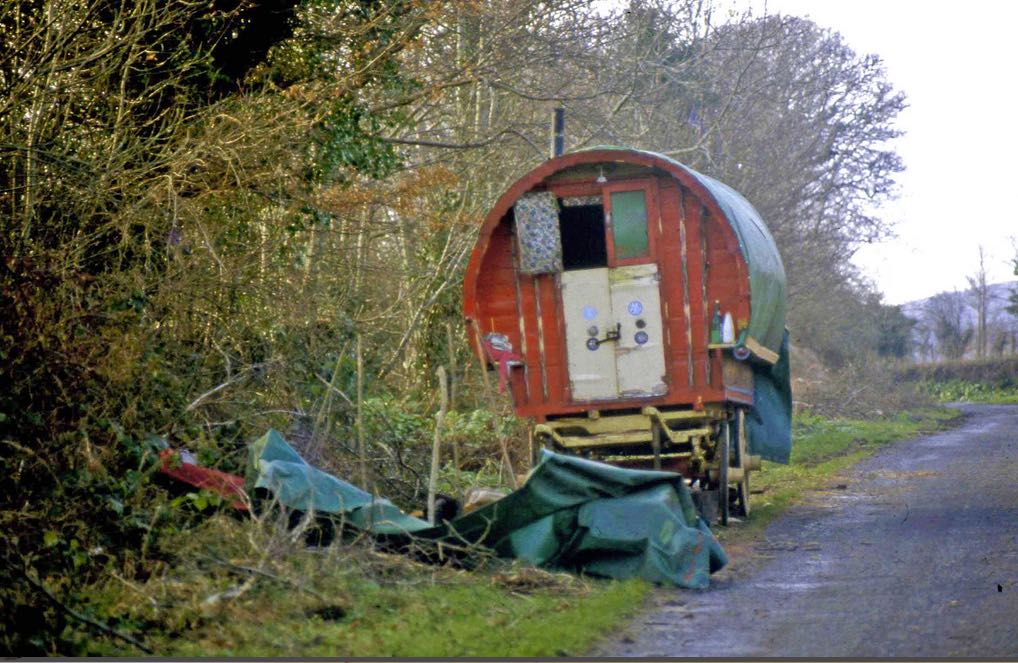
A Traveller in southwest England. This simple accommodation is much cheaper and more readily built from cheap or found materials than the fancy production models.
Then as today, a conscientious traveller uses a fire pan to prevent scorching the earth by the roadside. Mine is an old plow disk.
And finally, above are a few examples of outside extensions added to late 19th century caravans across Britain exhibiting the functionality of canvas to extend the living space in less-than-perfect weather.
As usual, Lloyd Kahn always finds the good stuff to post when it comes to unique Shelter. The Tiny House Truck is built on an old flatbed and is a true marvel of engineering as it “pops” out into a faux castle. An appropriate home I suppose for these traveling performers. Some of the luxuries include a separated toilet, separated shower, full kitchen, and a bath tub (with hot water) on the roof patio. There are some extremely modern amenities and ingenious storage solutions here. It is worth the twelve minutes to watch the video and see this remarkable home as still photos do not do it justice.
The original story is on the Living Big in a Tiny House blog HERE.
At the end of the first decade of the twentieth century, the young artist Frances Jennings became a semi-invalid and was advised by her doctor to spend as much time as she could in the open air. Being a Victorian lady at loose ends, the obvious choice was to take to the open road. Her simple rig and a good spirit served her well. As described by J. Harris Stone:
She is extremely delicate, partially paralysed, and her doctor told her that she should practically live in the open air. Being of an active and practical mind she set to work to see how she could, within her means, carry out the drastic requirements of her medical adviser. She joined the Caravan Club, and all the assistance, in the way of pitches and introductions, was of course afforded her. Her desire was to take to the road and live altogether in the open air in rural parts of the country. Her cart—it can scarcely be called a caravan—she describes as “strange and happy-looking.” It is four-wheeled, rather like a trolley, and painted bright blue, with a yellow oilskin hood—something like a brewer’s dray in shape.
Beauty in a caravan is in the eye of the beholder.
“I carry,” she tells me in one of her letters from a pitch in a most out-of-the-way spot in rural Gloucestershire, ”a hamper of food, and one of soap and brushes and tools, etc., and a box of books, a small faggot of wood for emergencies and a gallon can of water. I have a covering of sheepskins with the wool on them, and a sack of oats, bran, chaff, hay, or something to feed my little ass upon. Also I keep in a sack the donkey’s brush and comb and chain, etc., and the harness when not in use. I do not generally travel after dark, but if overtaken by dusk I hang out my candle lantern.”
Cooking over a campfire with the ubiquitous fire hook.
“…I build immense fires. That constitutes a great happiness to me. I have a kettle-hook and hanging pot, and I buy food in the villages. At the farms I find a plentiful supply of milk, fruit, honey, nuts and fresh vegetables. I build the fire just by the cart, with the donkey near at hand.”
Described in her first year on the road, she “sleeps in the covered cart, and she carries a few straight rods with her to drive into the ground on her pitch, on which she hangs squares of sacking across as a screen to keep off the gaze of curious watchers when she wants to sit by the fire ” and dream, and not be the object of their gaze.”
In her own Walden experience, things were not always easy or perfect. “I find great excitement, in the winter, in hearing the storms raving around me in the black of night… I feel my present outfit and way of getting along is very far short of perfection!… at present it is rather by the skin of my teeth that I manage to exist amid the elements of wind and rain and cold and space.”
Speaking of her time with the more traditional travellers, she says: “They have spoken like poets, worn silver rings on their copper hands and rosy beads around their necks; and their babies have round little twigs of hazel-nuts in their red hands. And perhaps the roof of their cart has been on the sea—the sail of a ship.”
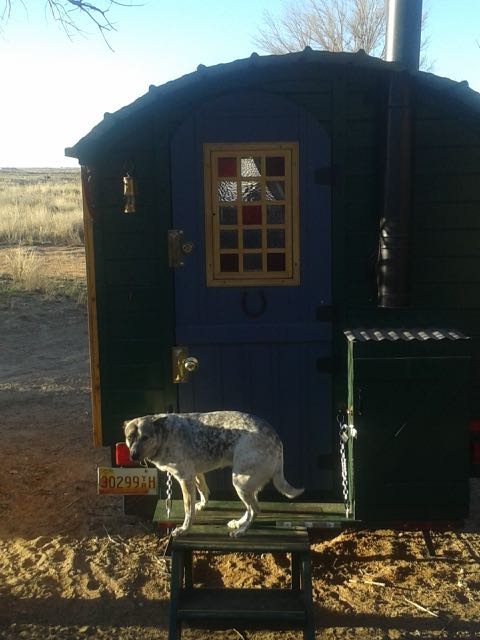
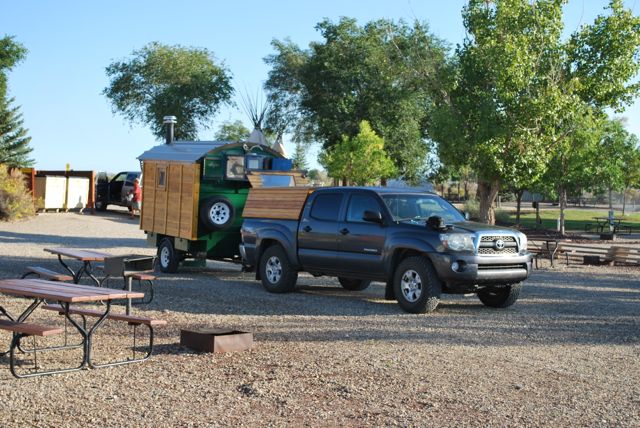
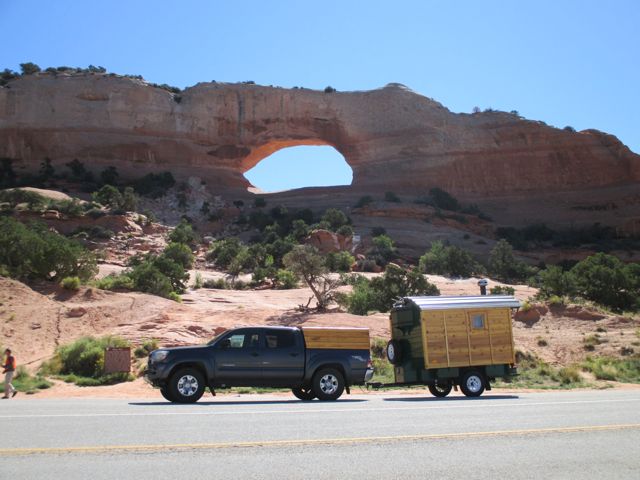
We just put another couple thousand miles on the Little Green Vardo. It’s always an adventure when you are pulling something like this around the country and it makes for some interesting conversations.
Campground in Cortez, Colorado.
Most of the people we meet are great but the comments are sometimes a little difficult. Of course, the number one question from most people is “what does it weigh?” Not that the numbers mean much to them but it just sounds like something to ask. Another favorite is “does it leak a lot?” I guess this is a reasonable question for someone. If my house leaked, I hope I would remedy it pretty quickly.
What we look like going down the road.
It’s great to get all the smiles, nods, and waves from other travelers. It must say something that out of the thousands of vehicles you might see on a trip, only a few evoke any real response. It’s hard to get gas or take a break without having a real conversation about it with someone. While getting coffee in a small Colorado town a watched a woman burst out of an office door across the road and sprint across a busy four-lane road just to have a peak. It was flattering when she said “I know you from the Internet! I’m a huge fan of tiny homes and little campers!”
Another fun interaction happen in Monticello, Utah when an elderly man came running out from a house to talk about Sheep Wagons. His wife grew up in one and wanted to have her own after they retired. As this was a tall order, he built her this beautiful scale model sheep camp complete with tiny dutch oven, pans, tools, a broom, and even a tiny fried egg.
Looks like I need a different hitch.
Maybe, not too long from now, I’ll be able to take to the road for a longer adventure.
Coming home to Purgatory, New Mexico with a list of improvements and a slew of minor changes to the Vardo. I can’t wait for the cooler weather to make this happen.
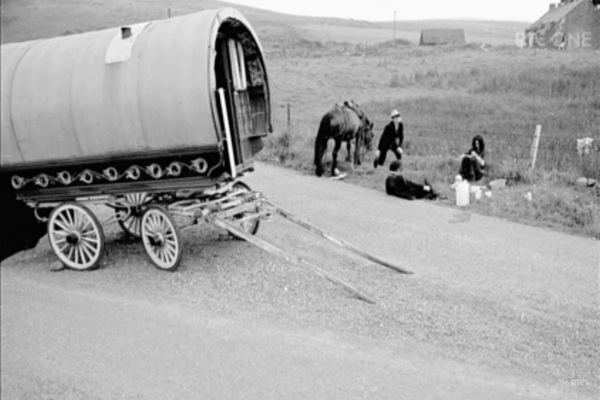
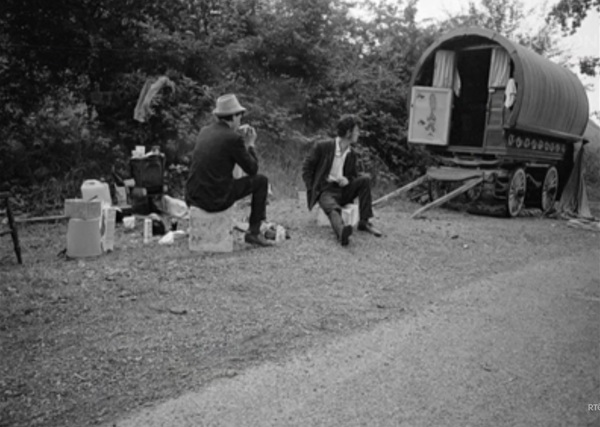
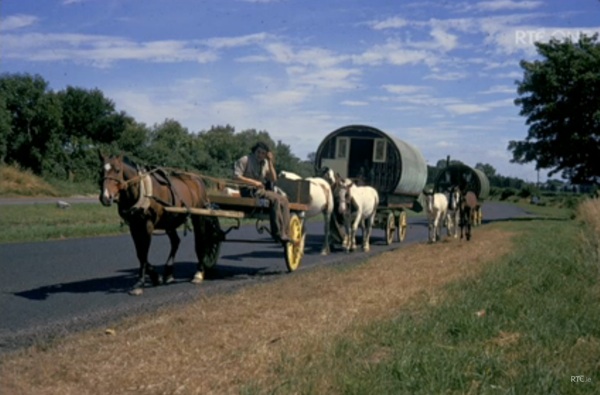
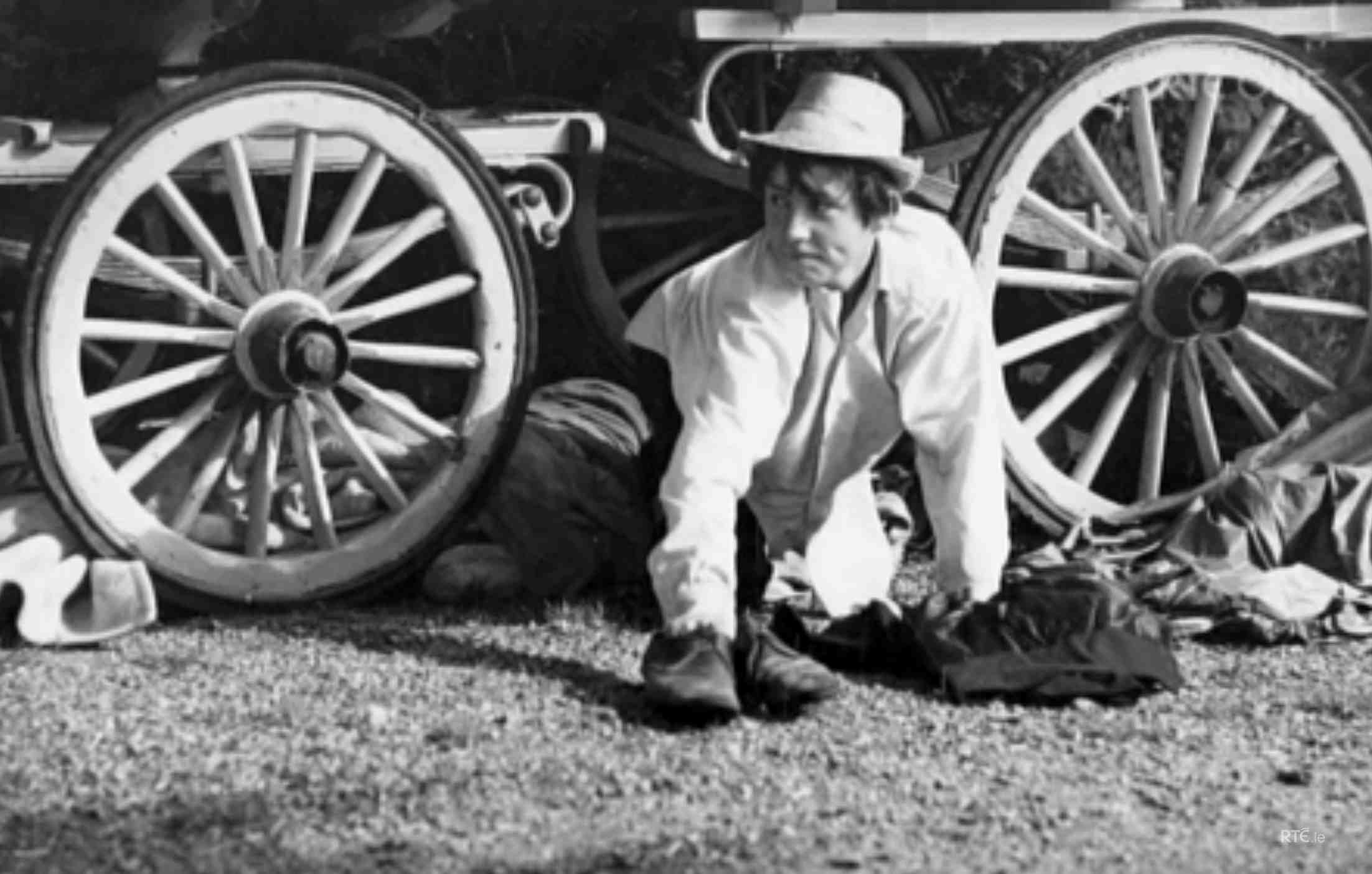
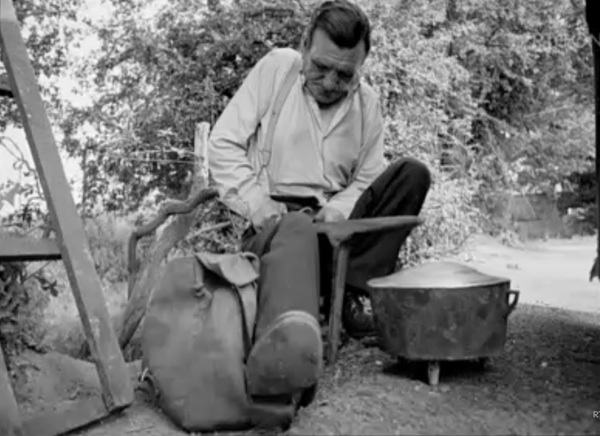
Screenshot images from Tinker to Traveller, a documentary about “Two Californian anthropologists who spent a year living with the travelers on a Dublin site in 1970 return to Ireland to learn what has happened in the intervening years.”













 Preindustrial Craftsmanship