Walking Shoes


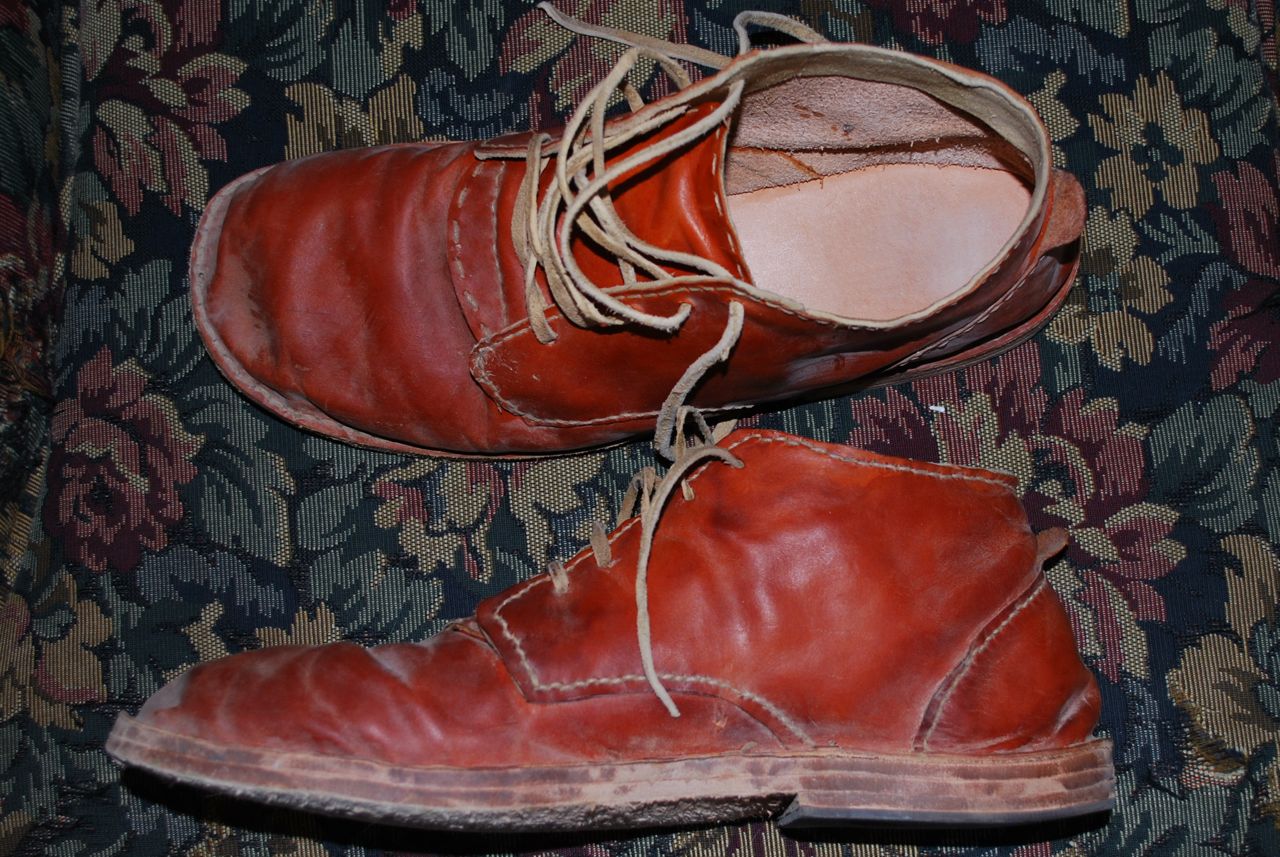
My new walking shoes.  Simple stitch-down design weighing in at about 14 oz (0.4 kg) each.  The leather is Hermann Oak 2/3 oz for the uppers and 12 oz (I think) for the mid-sole and out-sole.  There is also a double layer stacked heel that has a thin rubber layer on the bottom.

They have about 6 trail miles on them in this photo.  They are dyed “light tan” and coated in home-made dubbin.*

The goal was to create an extremely lightweight shoe that will protect from the gawd-aweful sand burrs, cacti, and other sharpies that get into the sandals.  They are loosely based on “desert boots” but provide a bit more protection.  They are re-soleable, environmentally friendly, and made without sweatshop labor.  Since I have little fashion sense, they can be worn with anything and in public.  My only change in design will be to make the toe portion of the upper in slightly heavier leather as they will hold their shape better.

*A waterproofing concoction, in this case made from beeswax, olive oil, and walnut oil.
 

A few more images:

The shoes are unlined.  Constructed with a double needle saddle-stitch.  I wasn’t even concerned with stitching on this pair so they aren’t perfectly straight or small.  The tongue is lined with brain-tanned deer hide and there is a band of brain-tan around the top edge for comfort.  The laces are also brain-tan deer from a heavier hide.

The out-sole stitch is trenched in about 1/8″ to protect the thread.

They may not be fashionable but I think they have style.


New Boots for the Young Lady

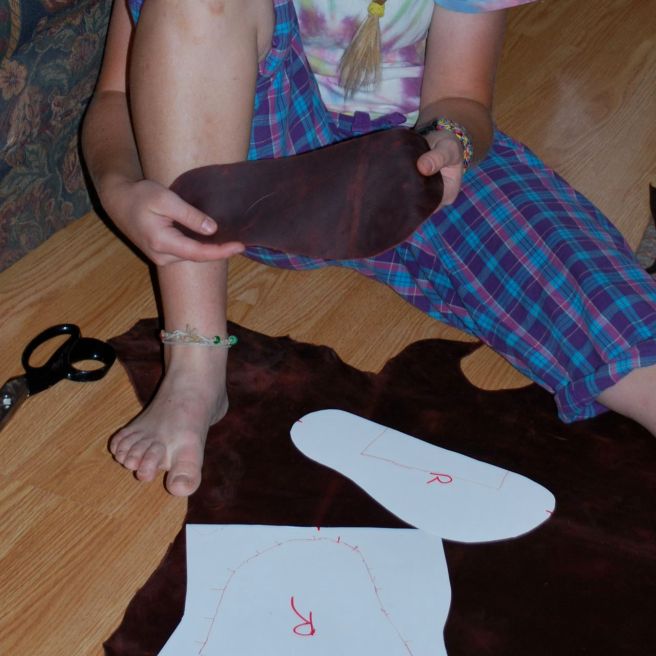
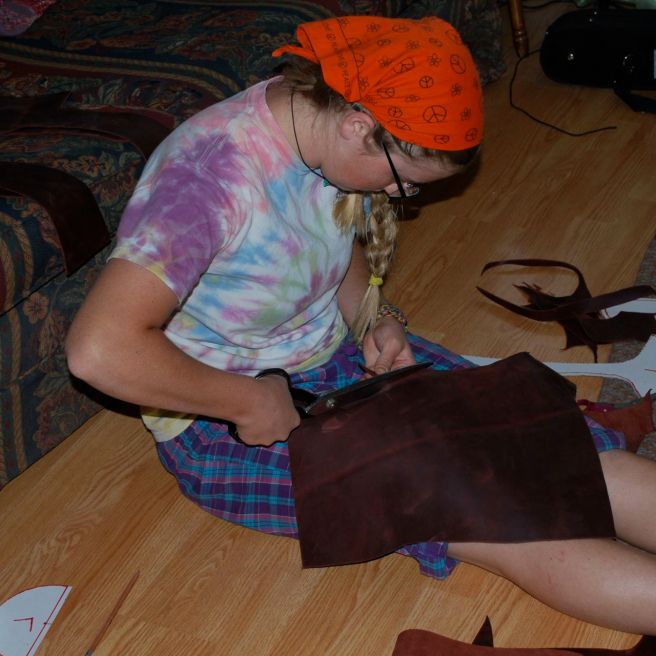
My daughter finally dove in and made her first pair of shoes, primarily from the instructions given by Mr Morris of Seamlyne Design.  I think it’s a fine tutorial for the uninitiated but would like to see a few photos along the way.  Anyway, they came out excellently and fit rather well.  Just FYI, they take about 10 square feet of leather as shown here.  Neither of us felt up to documenting the whole process but here are the basics.

Finished Boot, side.
Finished front.
Laying out the pattern.
Cutting out.
Cementing down the soles.

For durability, we added a rubber outsole of Soleflex (18 Iron). If you’re looking for a straight-forward tutorial on boot building, Mr Morris’ site is an excellent source.  Maybe I’ll make a pair later this summer and try to photo-document the process.

Tool Tote

The shoemaker’s tote is essentially done and I had the chance to get a couple photos over lunch.  I will be adding more leather pocketing to hold tools but wanted to wait until I knew where things should be.

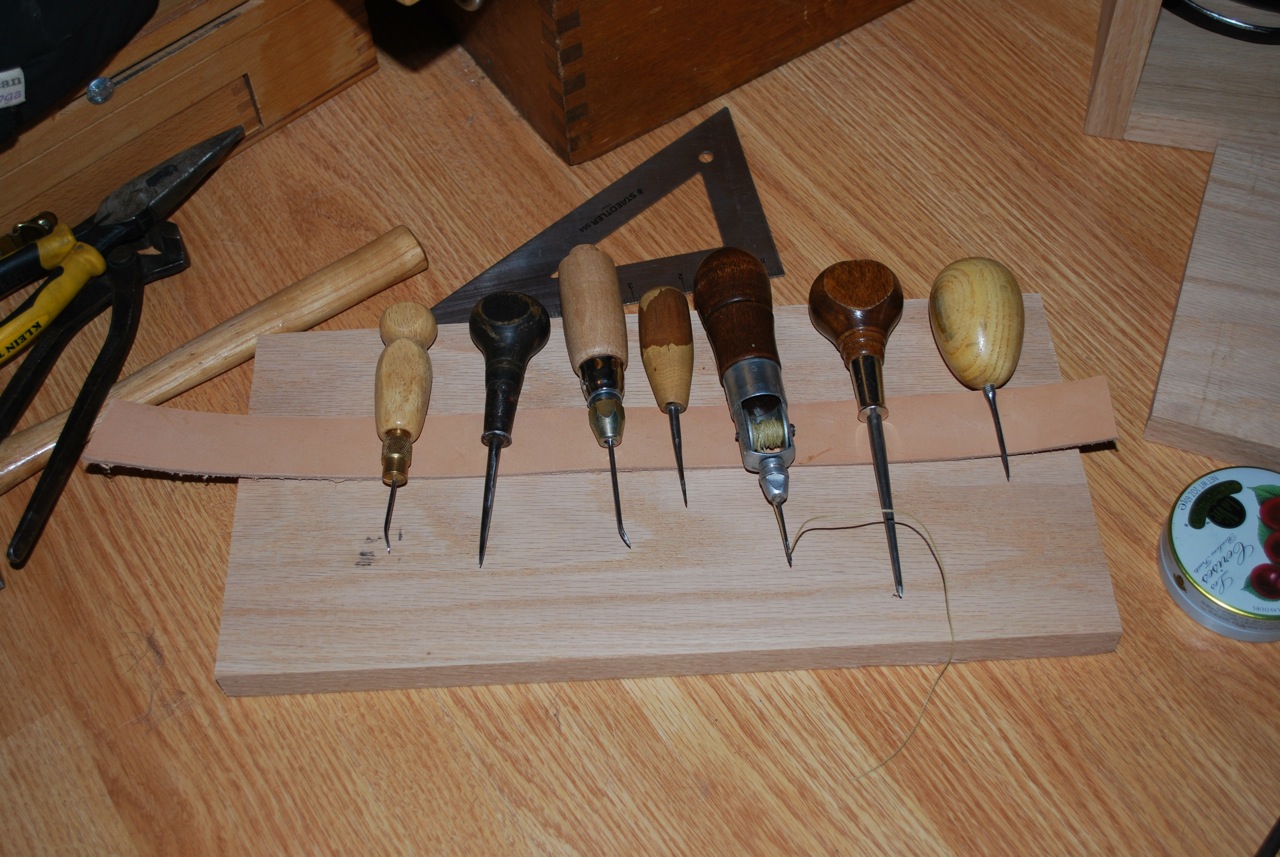
Laying out the tools

This is the inside of the side panel.  The tools that I know for certain need to be handy, not rolling around on the bottom of the box.

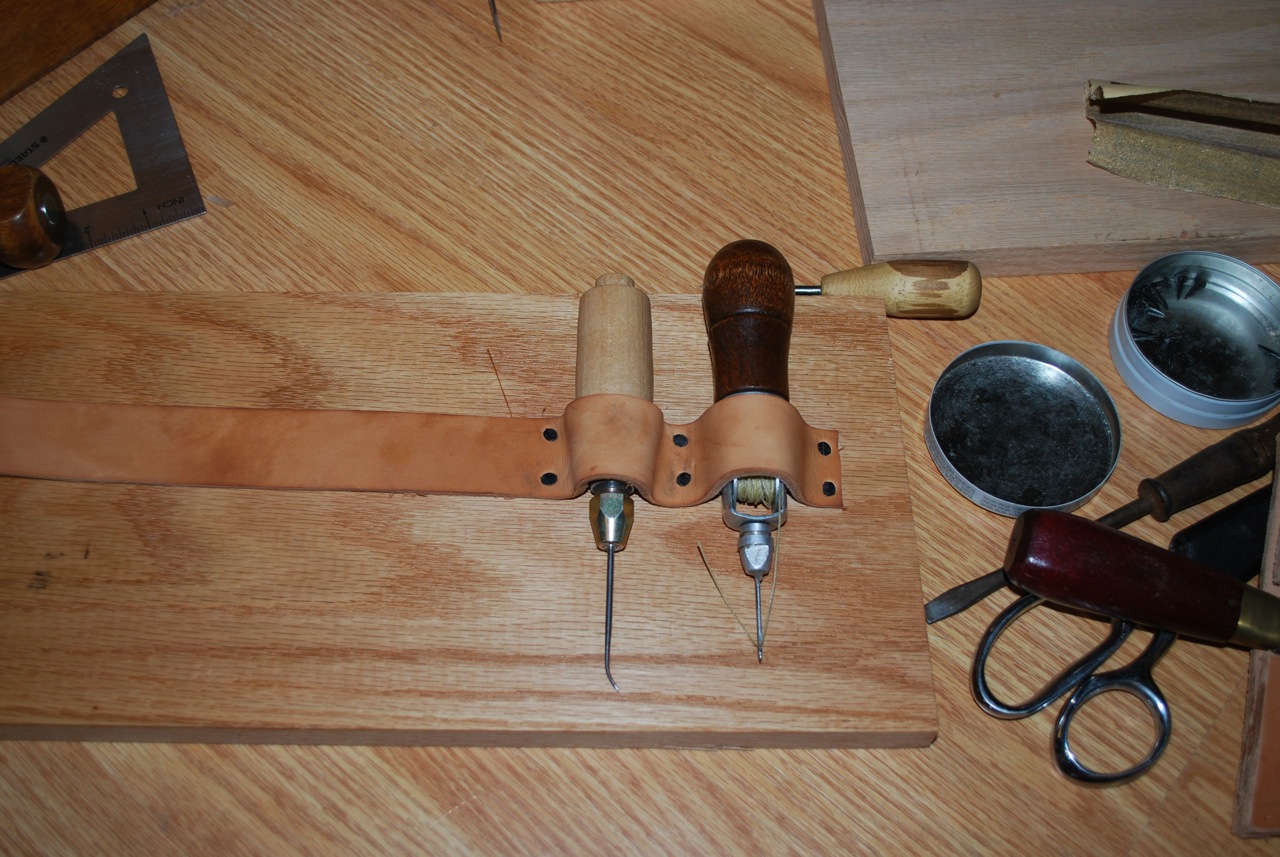
Test fitting a couple tools.  The strap was cut 1 1/4″ wide and is not as long as it should be.  I am using carpet tacks as I had some laying around.  Note that the inside has been given a coat of boiled linseed oil prior to placing the leather.

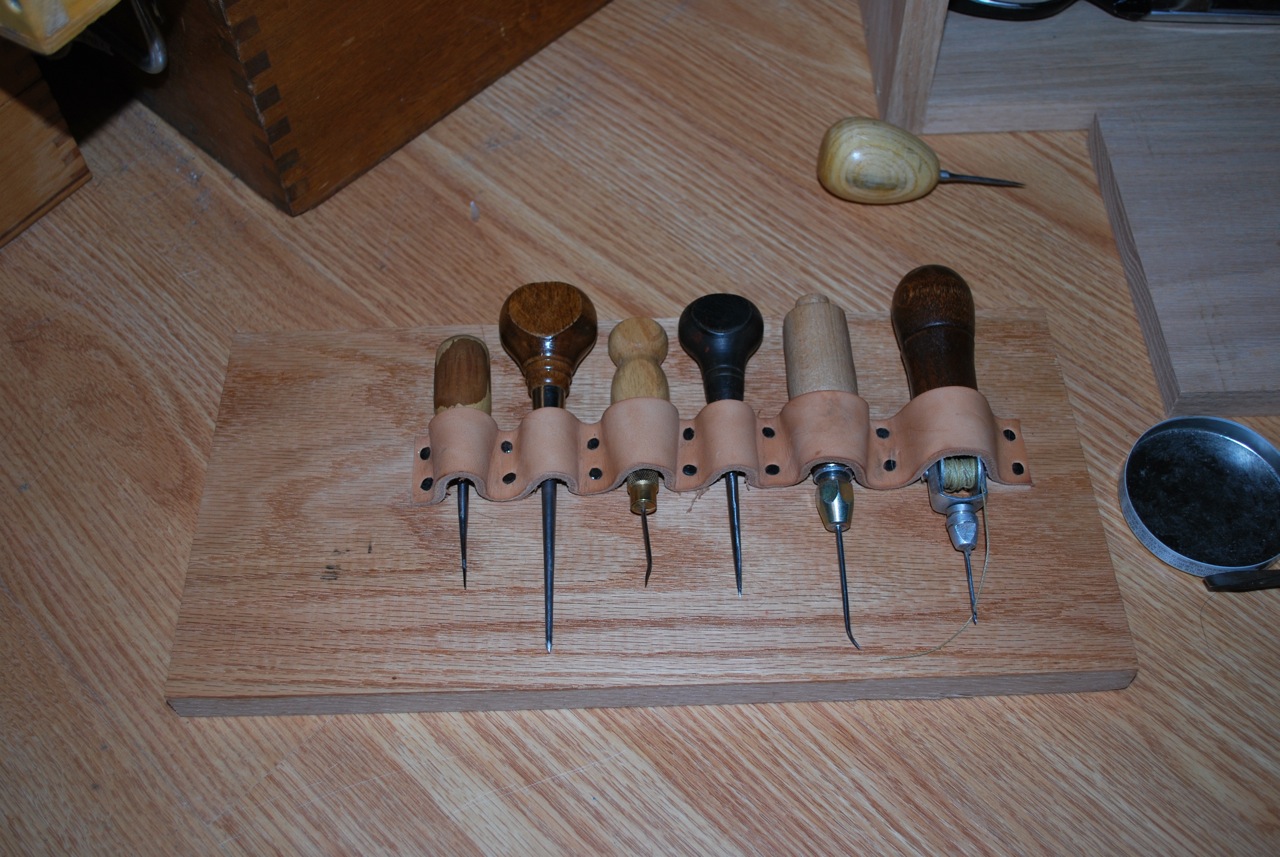
The essentials in place.  The bent awl is a little too deep and barely touches the floor of the box.

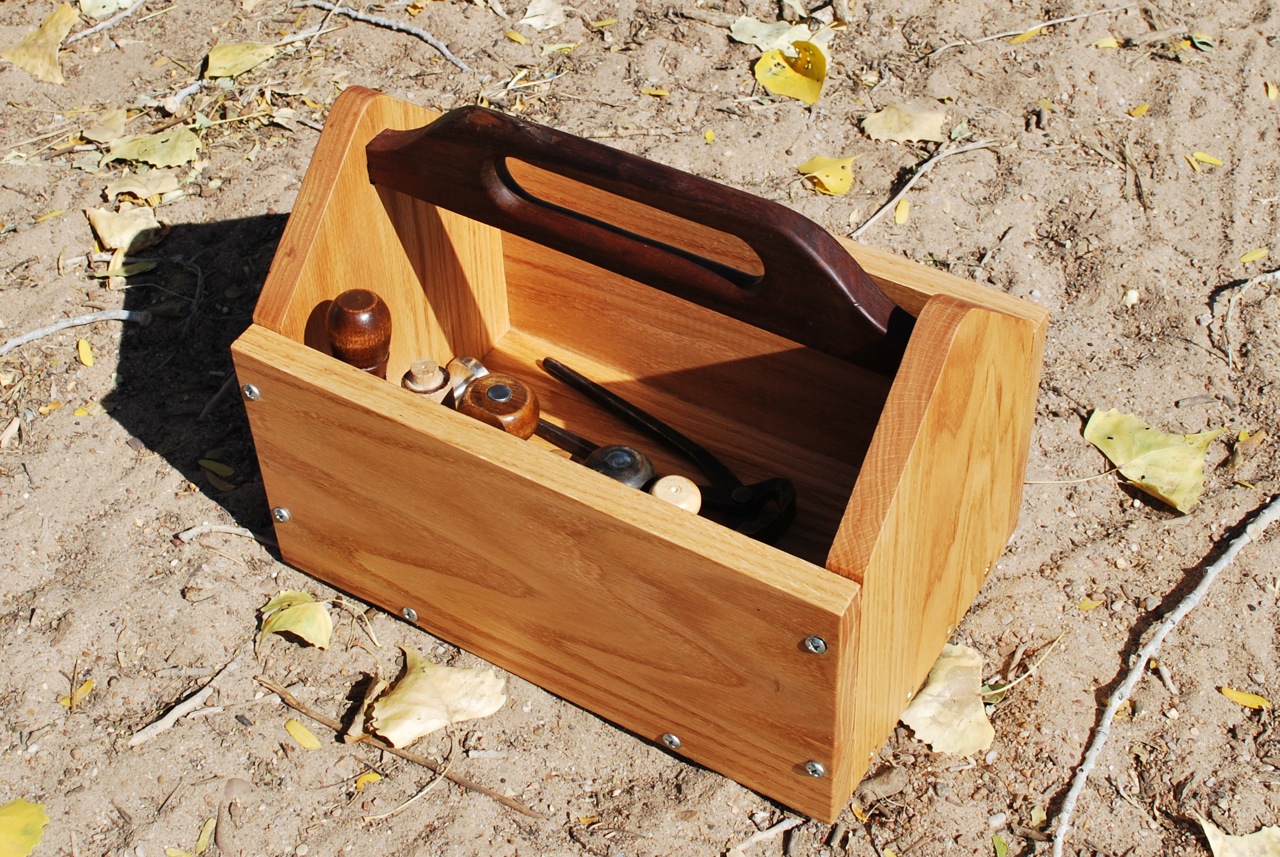
I used a few pan head screws I had handy.  They work as bumpers.  The box has been oiled at this point with boiled linseed.

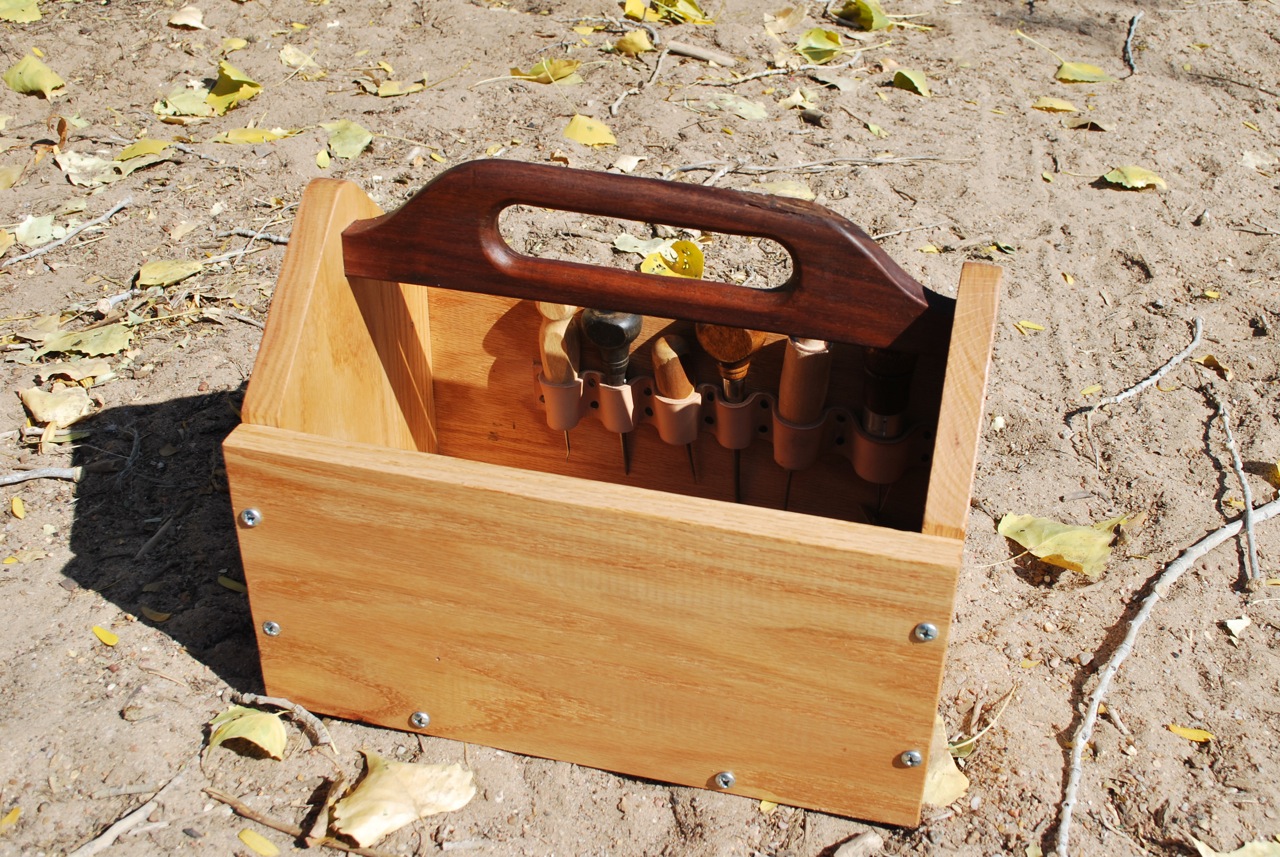
And the other side.

If you didn’t see the previous post, this is the plan photo.

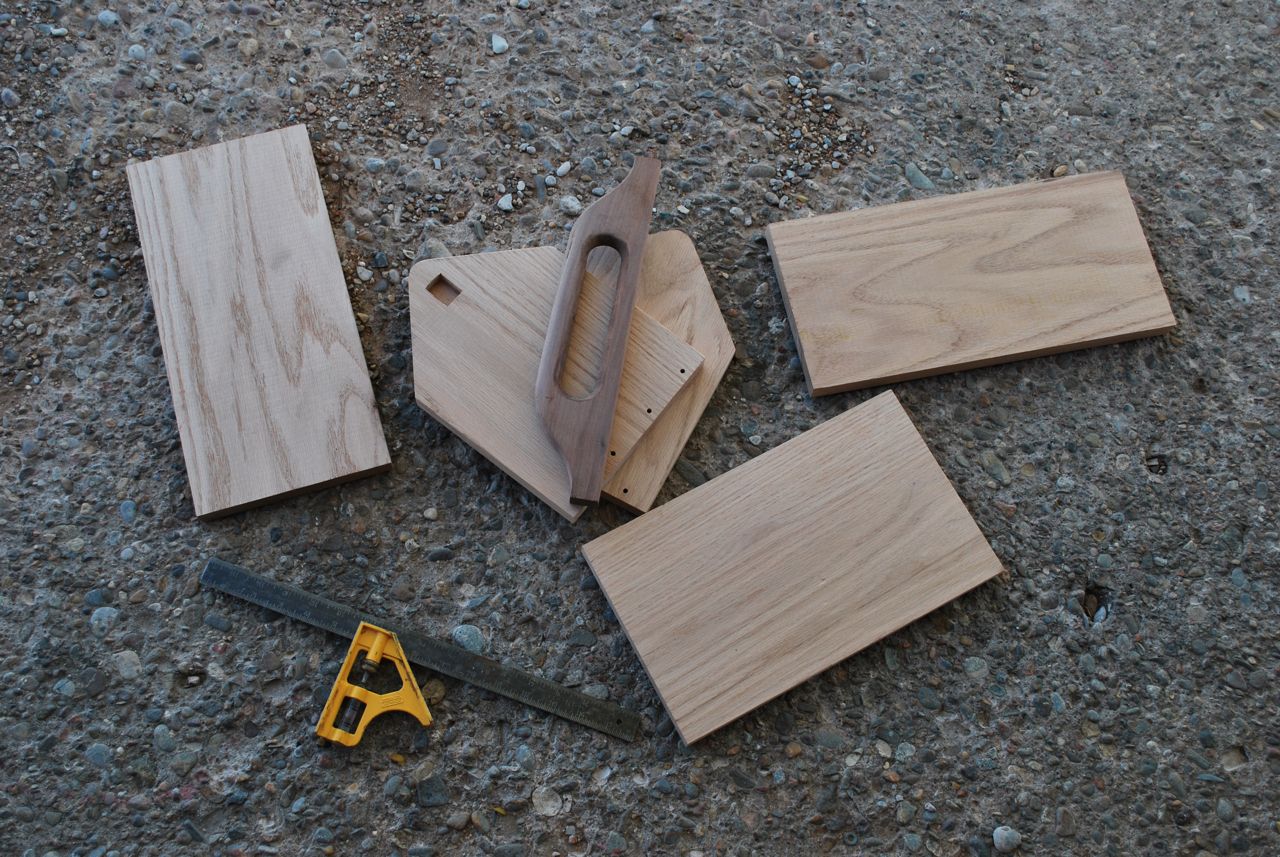
Three rectangles, two pentagons, and a handle of choice.

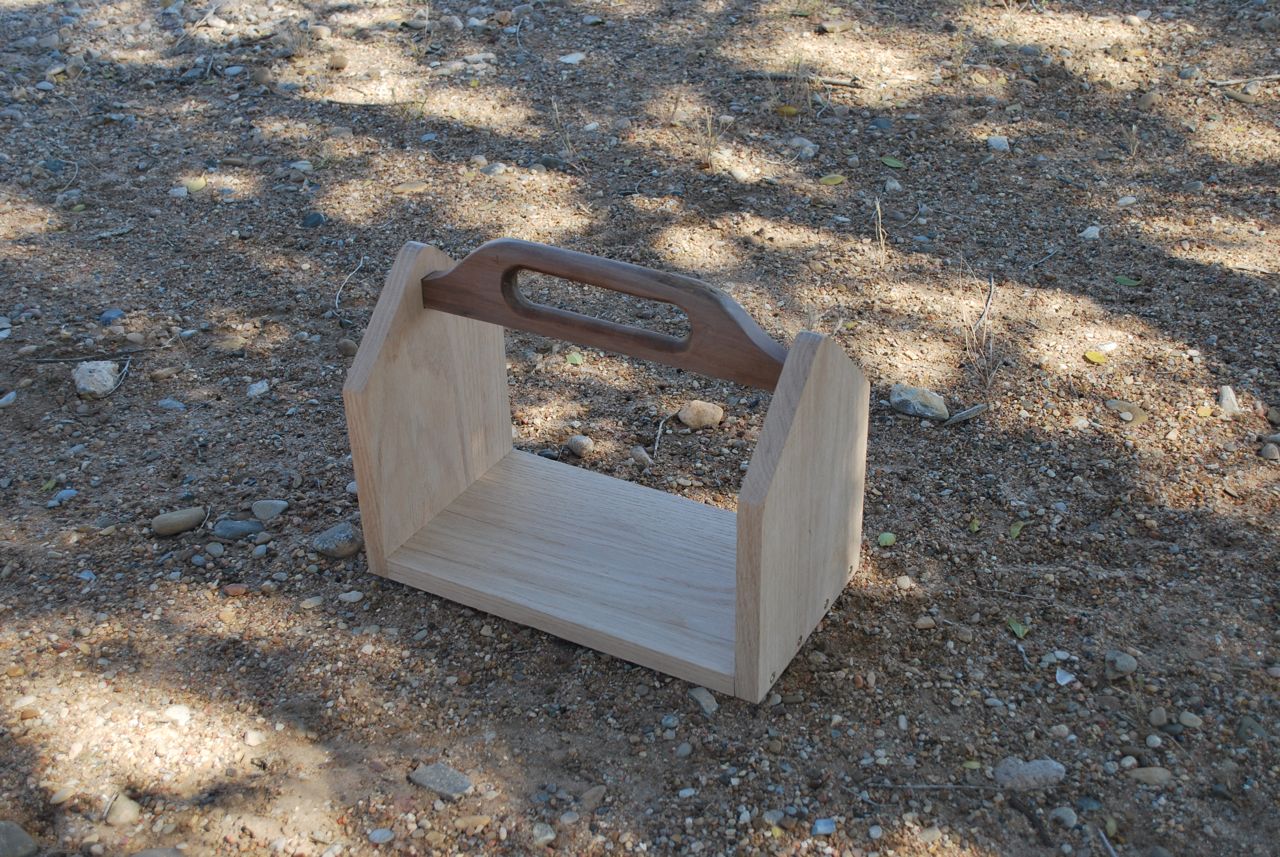
Final dimensions are 14 5/8″ long, 9 1/2″ wide, 10 3/4″ tall.  I wanted to be able to comfortably fit a twelve inch ruler in the bottom.

Shoemaker’s Toolbox W.I.P.

Lunch-time post:

I began working on a shoemaker’s toolbox this weekend.  It’s based on an eighteenth century design but probably goes back further.  It will have leather “pockets” for the awls and some long tools.  The difference between this and a carpenter’s box is in the upright storage to keep the tools very handy.  The box I based it on can be found here: http://aands.org/raisedheels/Other/Toolbox/toolbox.php.

No complicated joinery other than the half mortises for the handle.  The sides are off still to tack in the leather pockets.  The original was nailed together but mine uses wood screws (brass).  Material is red oak with a walnut handle.  More to follow.