A Feast of Gers

I save images from around the internet to serve as references and inspirations for projects and dreams.  I have wanted to build a yurt (ger) for many years now but never quite seem to get around to it.  Other projects spring up and I’m not desperate for housing but it is still something floating out there on the edge of my mind.  While looking through images, mostly from Tumblr and Flickr, I thought I would share some traditional  images I’ve found because I’ll bet I’m not the only one interested.  Prior to the internet, I remember very few people knowing what these were unless you were into Asian culture or alternative dwellings, but now they seem to have a great following again.  To me, they are a sensible dwelling with very low impact on the earth, can pack down small enough to haul all over the country, yet provide a spacious, weatherproof habitation.  If they are constructed of all natural materials there will be little trace when they are abandoned and nothing to overflow the landfills.  All of these images are reposted from elsewhere but I have tried to link them to the source where I found them when possible.

ger500

FlickGer

sunsetyurt

chinayurt

rusger

smallyurt2
smallyurt
Very good link!

dryingon the roof

Between the villages of Olgi and Altai in Mongolia
novascotiayurt

tajikyurt

More good photos at the link.
hunter

Xinjiang
Xinjiang
gerroof

yurtinalandscape
tumblr_m5by2hR4D51rq8279o1_400
Herder family moving their ger by truck Bayan Olgii Mongolia

settingup-ger
More good photos at this link.
roof and liner

china

Beautiful.  I love the cart.
Beautiful. I love the cart.
kyrgyurt

I’ll add more when I get the time.  Looking at the details fires up my urge to craft a yurt of my own.

My Favorite Working Pony

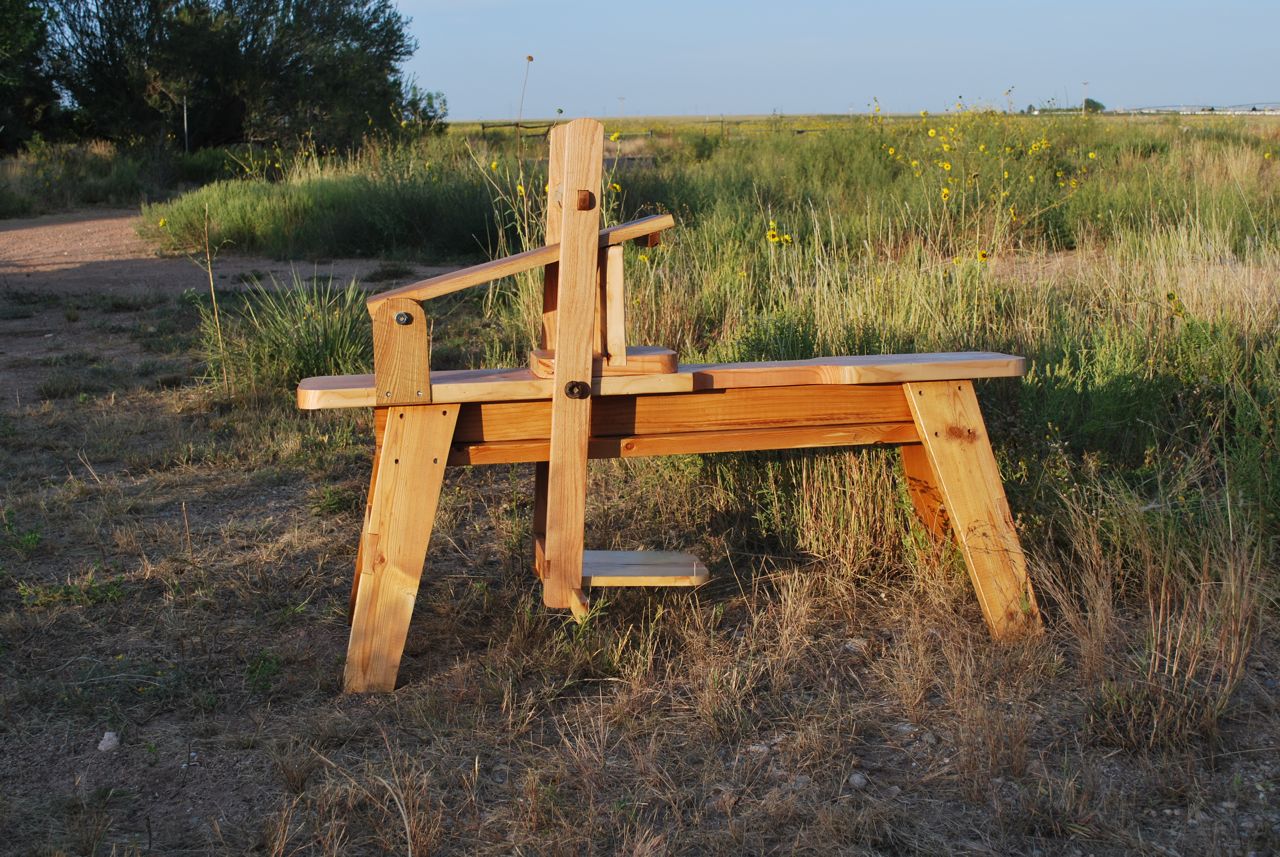
Here are a couple of photos of the one I still think of as the “new horse.”  It is made up of mostly recycled and scrap wood that I was hoarding for just such a project.  More than ten years later, I am still quite happy with the size and design of this one. It isn’t perfect for everything, but what is? It has produced bows and darts, spears and walking sticks, and held dozens of other projects along the way. It is a sturdy saw bench and a nice place to sit and have a beer at the end of the day.

The bench itself is made of pine and fir dimensional lumber. The working portions are red oak, white oak, hickory, and popular.  The large bolts are salvaged from an old Ford truck spare tire holder.

Basketmaker Style Spearthrower 13 Years On

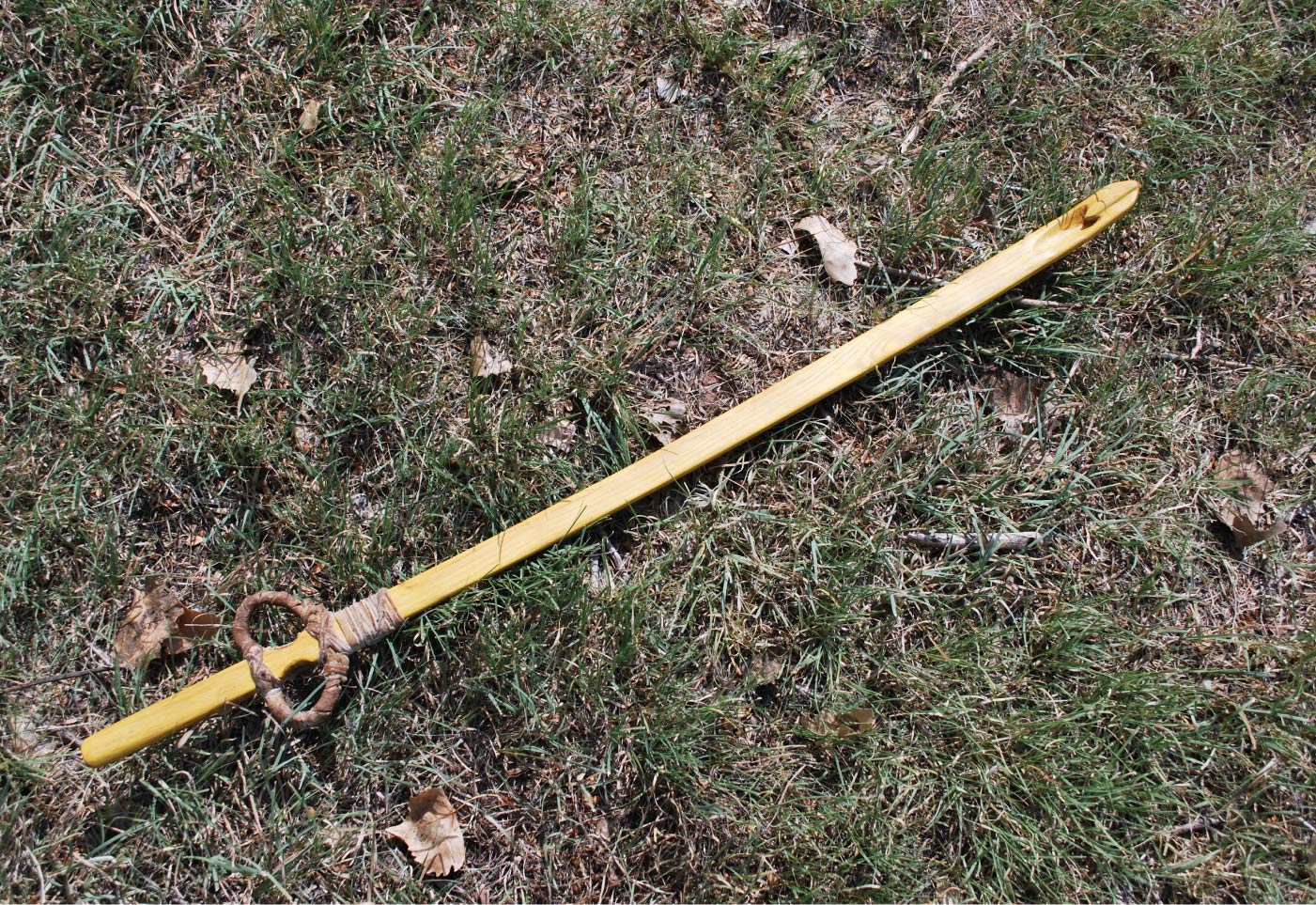
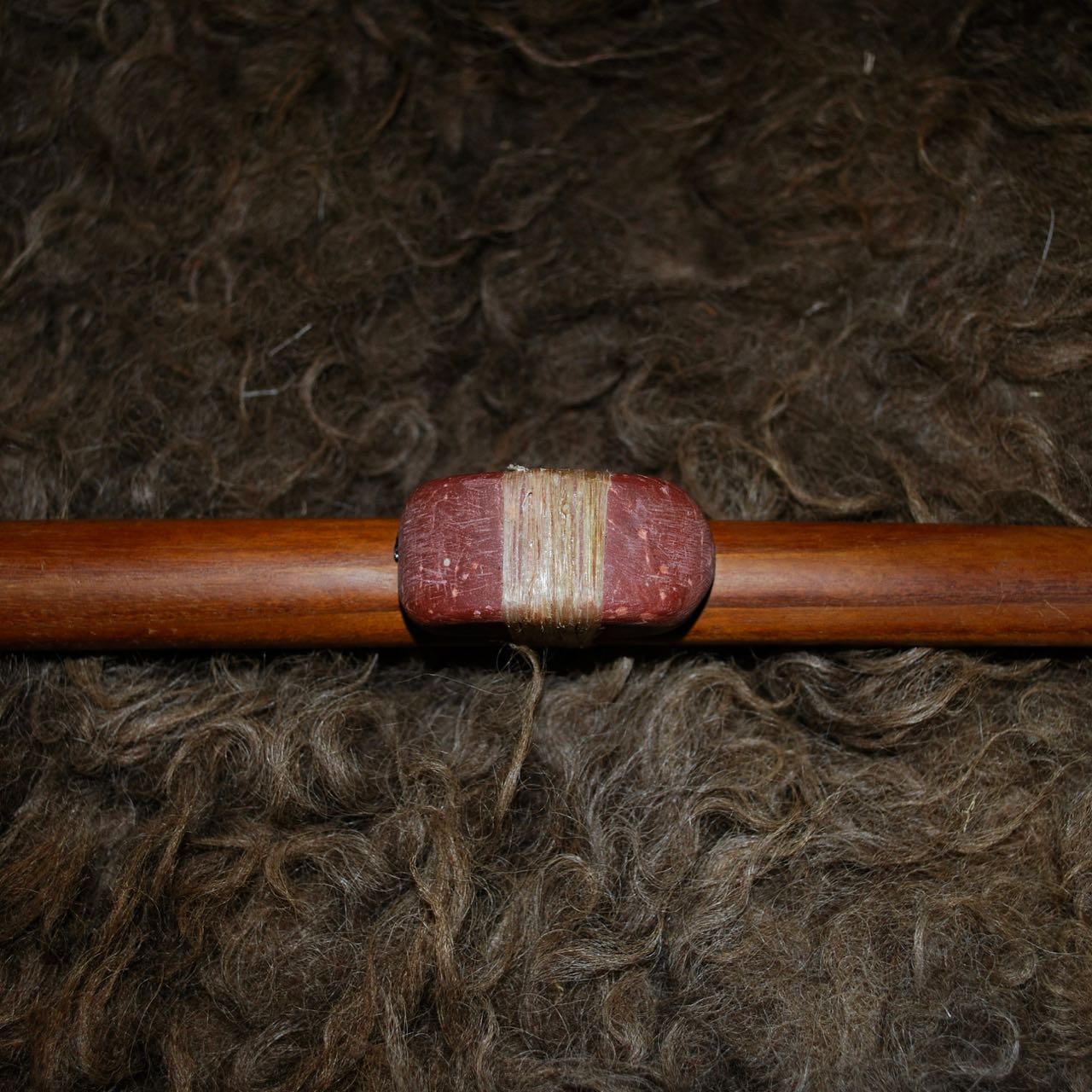
Here is an update on one of my favorite throwers. It was created one morning from a scrap of Osage Orange wood from the bow-making pile. The finger loops are rawhide. The style is a generalized Basketmaker/Great Basin but is probably a bit heavier than some of the originals as I throw darts that are probably heavier too.  It works for me. It has no weight attached yet in the above photo but had one added later just for the “tradition”. It throws well; even with my heavy Paleo darts.

This small but efficient hook style has never let me down.
I really enjoy seeing how much the Osage orange wood has darkened over time to a beautiful depp color.
The weight is attached with pitch glue (that has somehow never failed yet) and lashed tight with sinew and hide glue.
The natural curve of this piece is perfect for me.
I wasn’t really sure if I was going to succeed with these loops but they have held up remarkably well.
The weight is a chunk of argillite from central Arizona.

This piece has made me think of longevity of simple tools. Since I made my first thrower in 1987 I have learned much from examination and experimentation. If I used it everyday, I’m certain it would be battered and possibly broken by now. When a spear thrower isn’t being used for its intended purpose, I suspect it would be a club, digging stick, reach pole, or any other purpose that a stick is used for.

Fire Kits Again

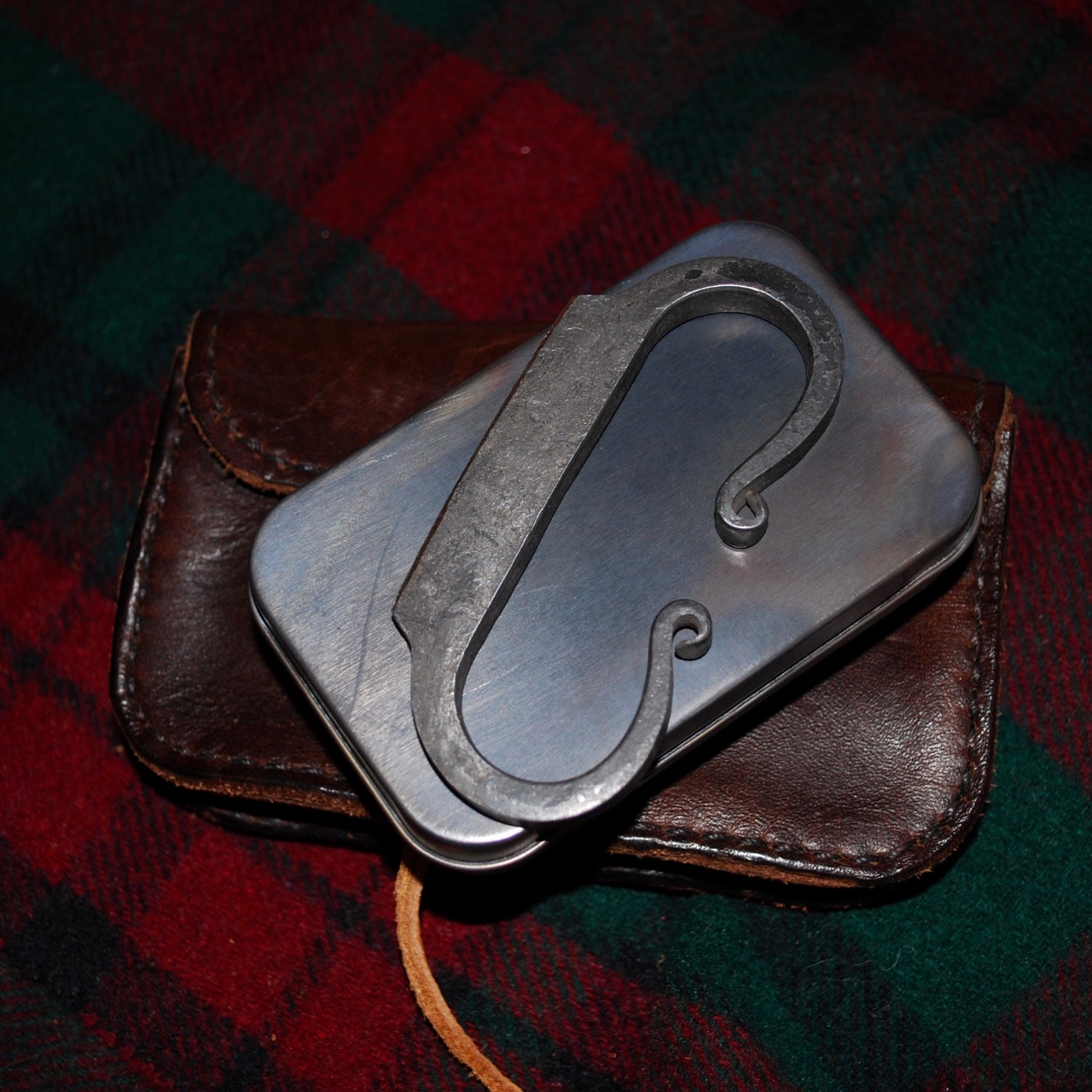
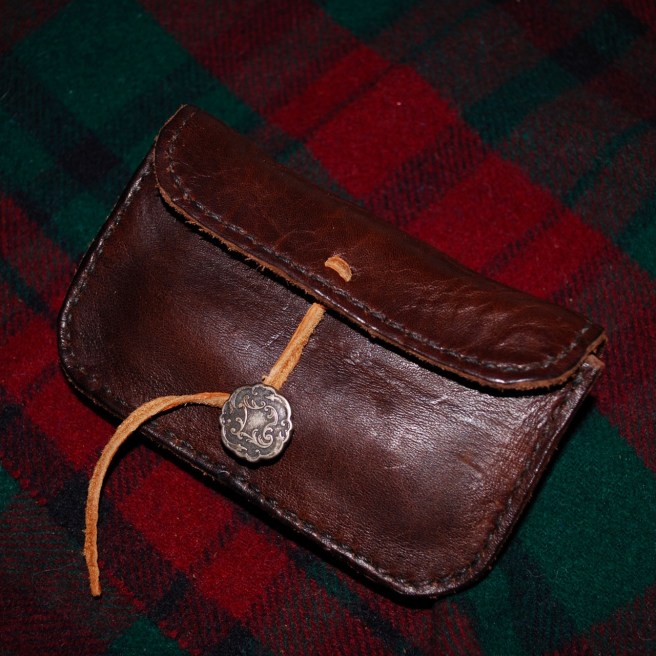
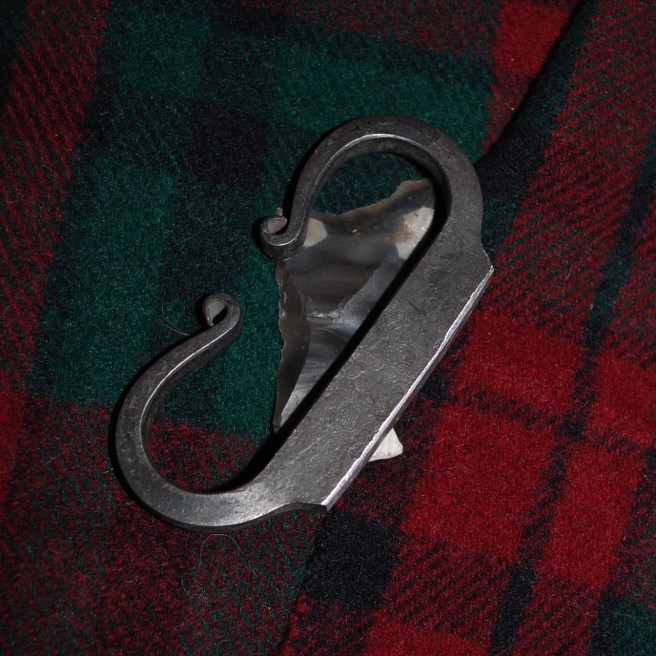
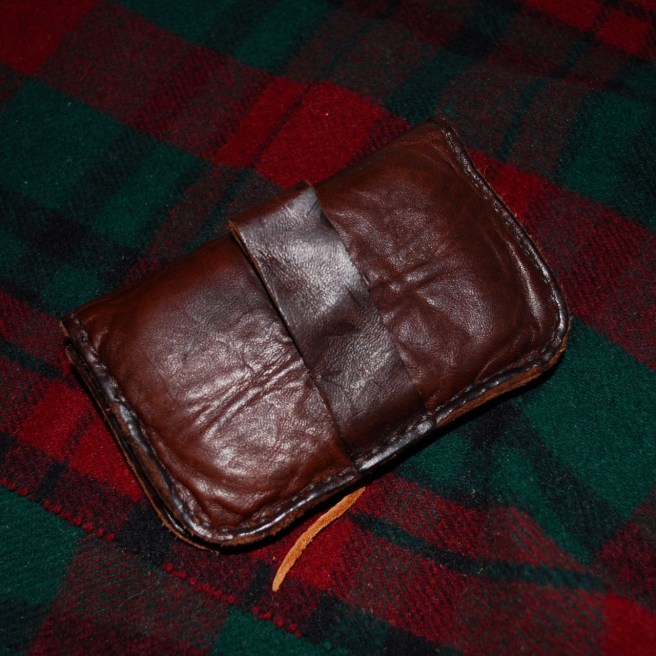
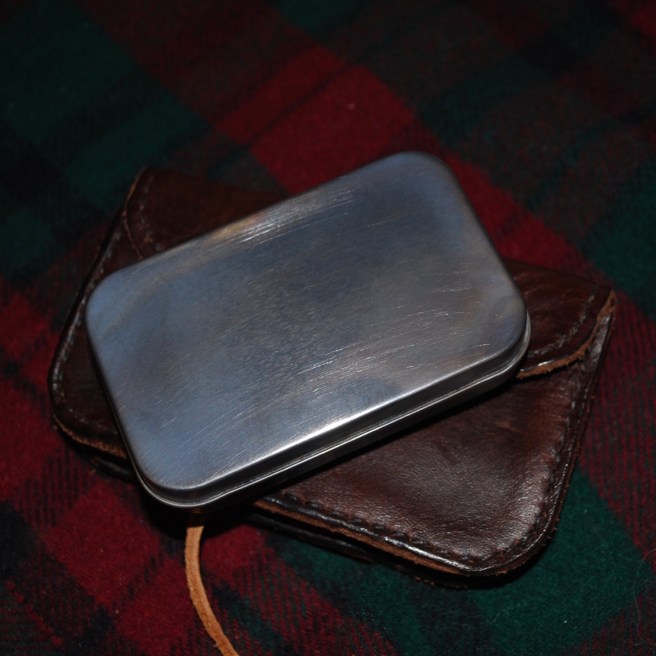
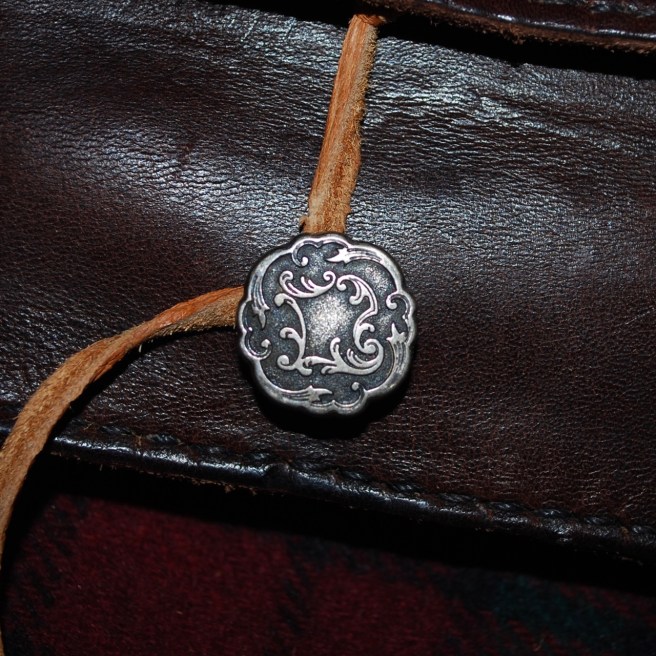
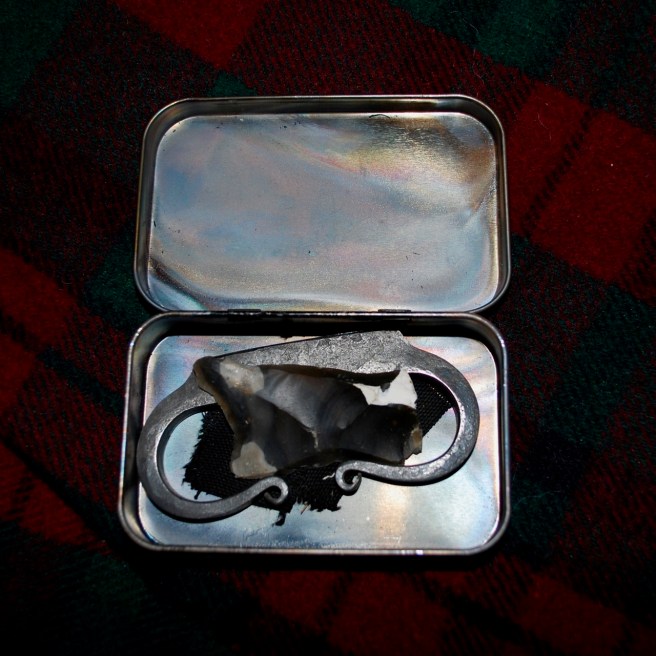
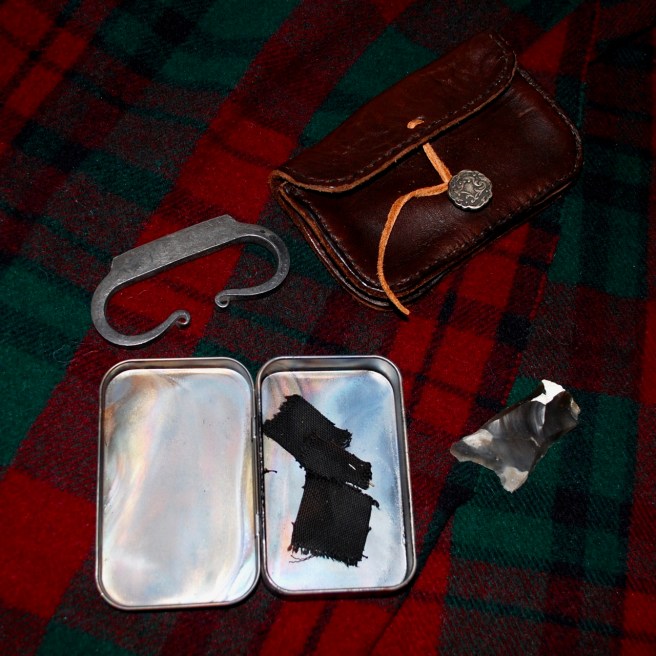
These Flint and Steel Fire Kits are hard to keep in stock. Since I don’t mass-produce things, I’m pretty slow at filling the shop. We did well enough last year that I still haven’t caught up but hope to in the coming weeks and months. Please check out the shop and consider making it a Favorite to keep up on the new listings.

https://www.etsy.com/shop/LostWorldCrafts

With the addition of a little tinder, the first few fires are on me.

Ghillie Shoe Class

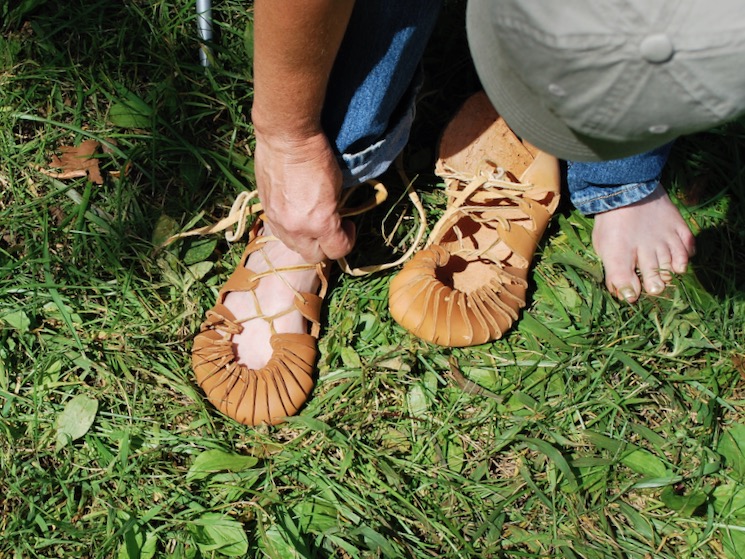
Here are some throwback photos from Ghillie shoe making classes from 2009 and 2011.  The first pair is from a small class at the Bois d’Arc Rendezvous in southwest Missouri (note the lush green of late summer).  Maybe not as sexy as the arrow-making class but it is a very real and useful skill.  I have been honing the teaching method since I was taught how to fit and make these back in 1986.

DSC_0145 (7)

One of the appeals this design has for many people is that they require very little sewing.  If you don’t work with leather regularly, stitching can be intimidating.  Some careful cutting and you can make some stylish shoes in a short time.

DSC_0144 (11)

An hour of work and you’re ready to walk the world. More importantly, with the knowledge in your head you can always make more and keep right on walking.

Winter Count, Maricopa, Arizona 2011.

Save

Moccasin upgrade time again

DSC_0003

These ratty old moccasins have spent a lot of time in the woods.  These have been my winter moccasins for over two decades.  I can’t remember exactly when I made them but it was a quick and dirty sewing job.  They have been re-soled at least twice and need it again.  The uppers are an oil-tanned leather I bought from a saddle and boot maker supply house I found while driving through north Texas.  As can be seen, the tops can be worn up or down.  They aren’t beauties but they are definitely ME.

Handmade Sandals

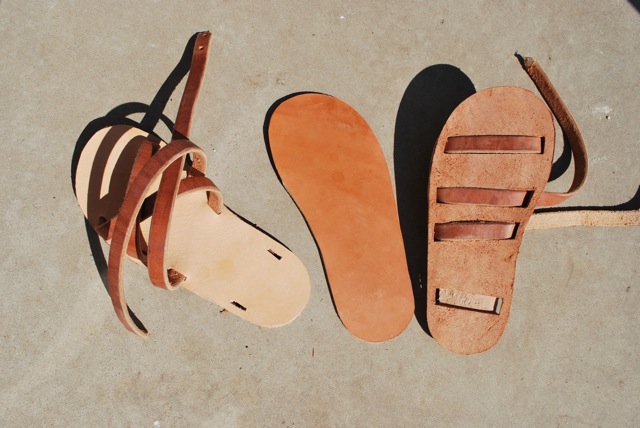
Sandals in progress…

If you have ever taken a class with me you might know that all the intimidating sewing isn’t as bad as it looks.  The sole is three layers thick but the use of a good, sharp awl makes the double needle sewing go quickly.  A lot more work goes into these than I would have initially thought but I really think they come out great in the end.  It took several pairs to get the pattern just right but research into design and construction led me to this final design.  The sole is three layers thick (or more historically) and have been made this way in Europe and North Africa for more than 2,000 years.

The thickness of additional layers isn’t just to provide safety for the feet but the central layer provides a path for the straps to travel through without lumping under the feet.  The parts consist of an insole (medium weight oak tan leather), mid-sole to allow tunneling the straps through, and an outer sole, in this case, leather.  The straps are 48″ per foot plus the heel yoke.

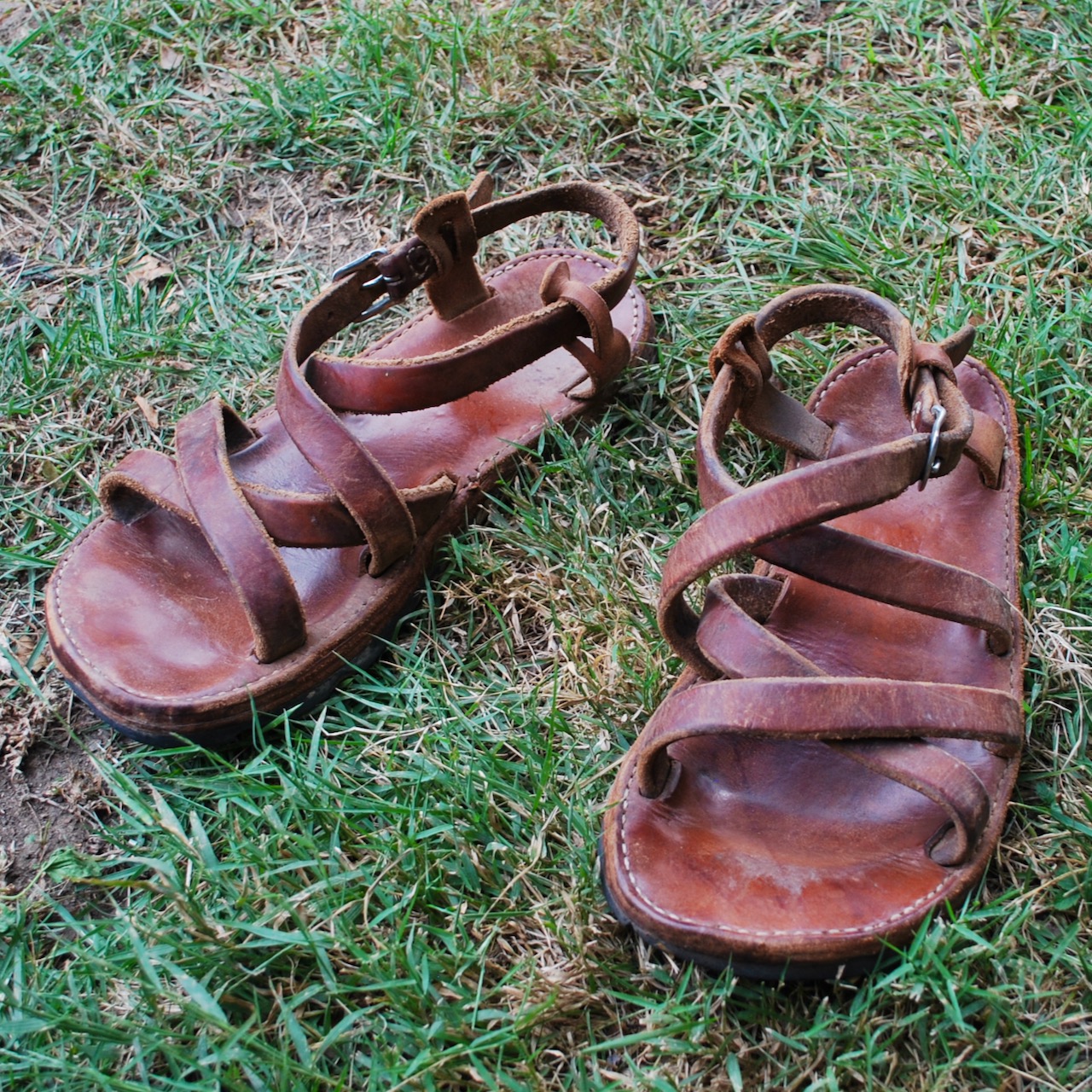
This is how they looked when I thought I was finished. Shortly after, I added buckles and have since been through a few more soles. Currently they are shod with rubber.

Nine years on and still going strong. The patina that good leather takes on cannot be simulated. They get a coat of dubbin every six months or so but otherwise, need little care. I hope to get back to a time when I can wear them daily again.

Winter Count is Coming

I’m happy to say that I will be heading to the annual primitive skills gathering known as Winter Count down in the Sonoran Desert. Thankfully, it has moved to a more remote location further into the desert and far away from the Phoenix sprawl.


I will be teaching a course that I have been doing for some time now; Constructing the Ancient Frame Saw. I say “ancient” because this style saw goes back to the very beginning of metal working. It is a way to create an extreme amount of tension, and thereby stiffness, on a very small piece of metal; saving on a very precious resource.

Even though this, in essence, can be thought of as a one-off craft project. I hope that people will take time to learn the skills and take away more knowledge than a simple material good.


I think it might be easy, at first glance, to think of a project like this as a cheap way to get something that you might not be able to afford otherwise; and that is fine. However, learning basic skills like layout, simple joinery, and the use of hand tools are transferable skills that can be used for a myriad of other projects; from constructing a spear-thrower to timber frame building.

There is even plenty of opportunity to add one’s own style and artistic flare to the project.

Learning to operate even a few simple hand tools, edges and wedges in this case, connect your brain to your body in a way that pushing buttons and looking at screens could never do.


Maybe I’ll see you there someday.

The Joys of a Morning Quickie

Sometimes you have needs

And also the solution.

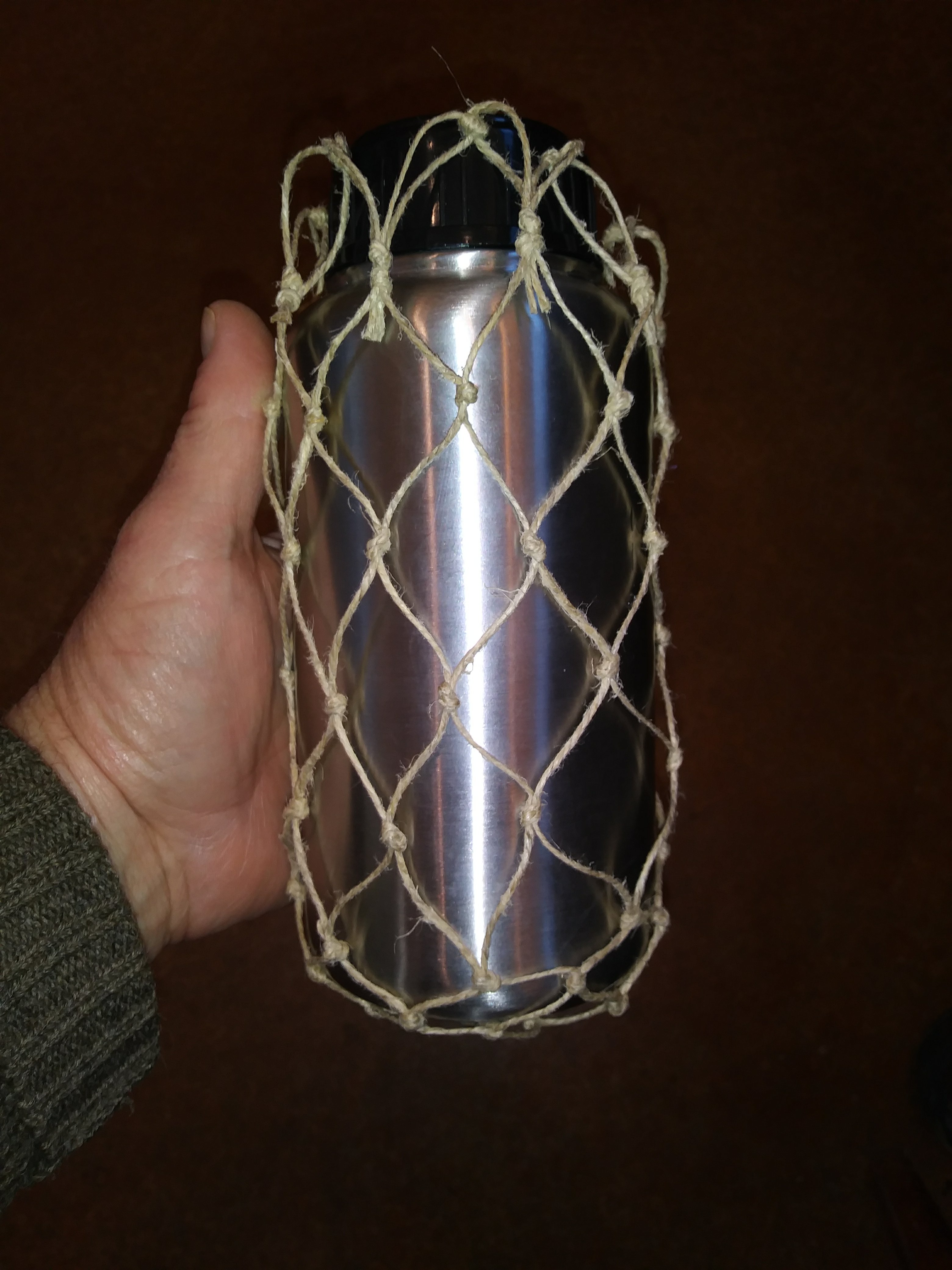
I needed a net bag for my water bottle while I’m on the road. I knew this was going to be a problem when I left home so I threw in a ball of string in case I had some time on my hands. I almost always bring something to keep myself busy. Idle hands are the something’s something, or whatever.
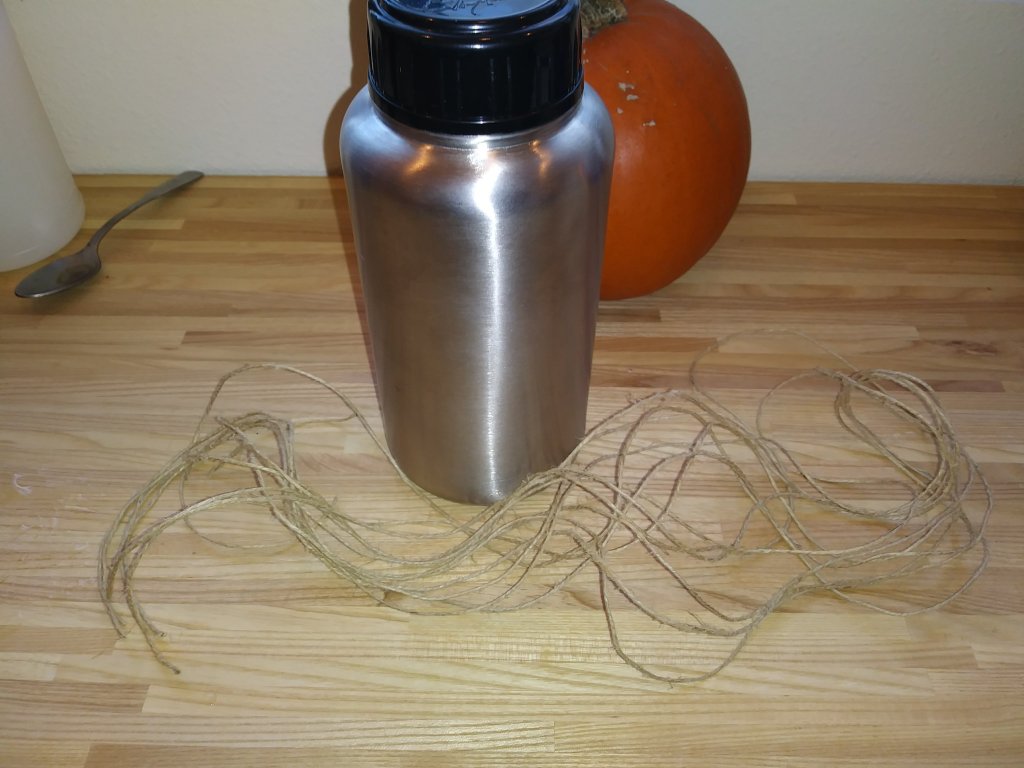
The bottle in need and the raw material to make it happen.
I’ve been making nets and net bags for a very long time. Decades in fact. Some are fancy but most are quite plain and utilitarian. This one definitely falls into the latter category. However, it will serve the purpose and I suspect will be around for quite some time.


I took a few photos along the way and thought I would make a short tutorial as even simple knot work is often mysterious to the uninitiated. I hope this helps someone. It’s a great introductory project.

INSTRUCTIONS

This little bag uses a simple overhand knot technique and is probably the simplest mesh you can make. Other than a cutting instrument there really are no required tools for this so gather your string, fetch the object that will be held (in this case a water bottle), grab your knife and we can begin.

String is measured and cut.

For a regular cylinder that’s about 3:1 height to width you need to have at least twice its height in netting material. Each string will doubled so that they meet at the bottom without a complex knot.
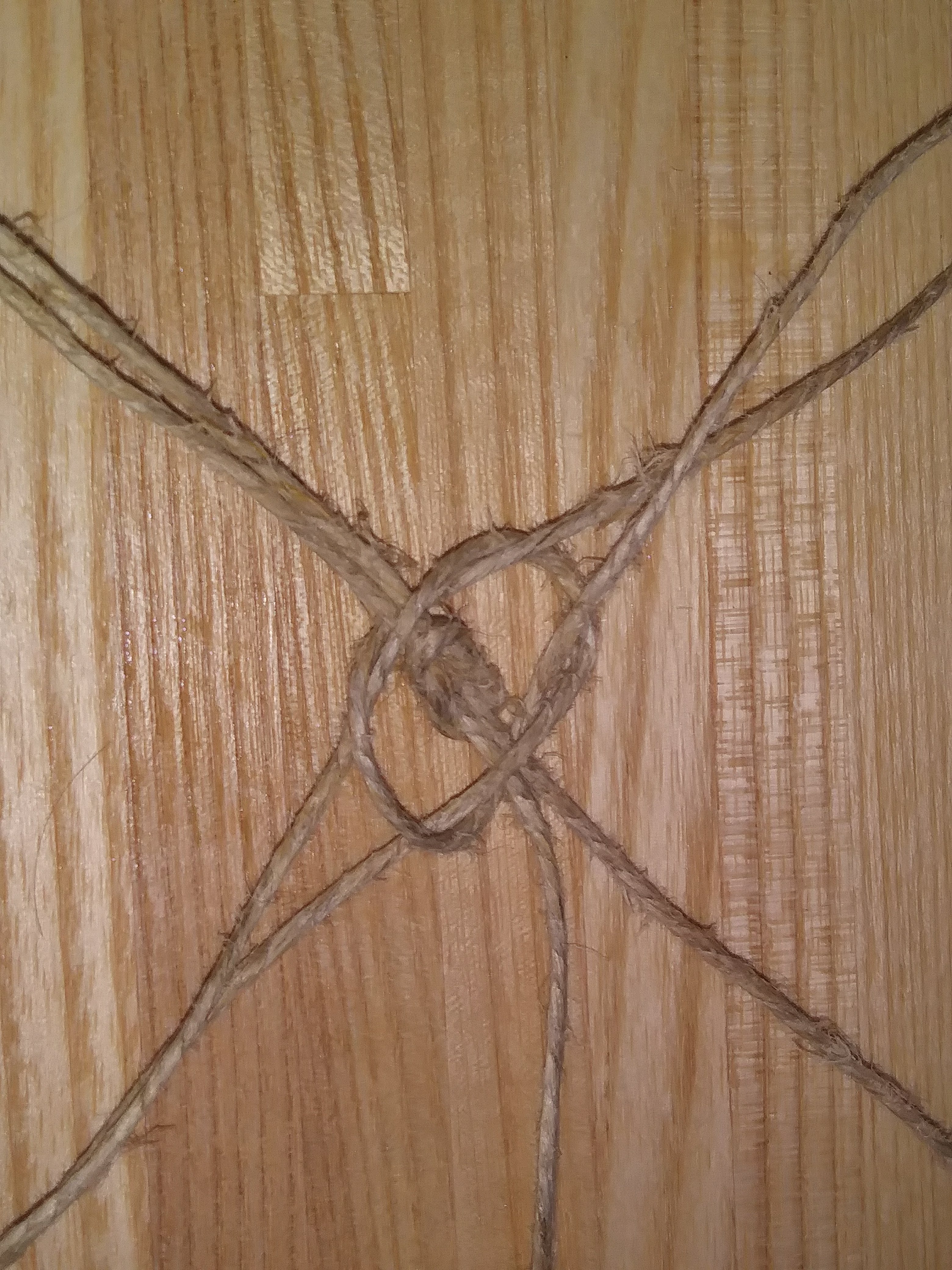
Centers of the first strings are joined in a square knot.

The next thing to figure out is how many strings you will need. Much of this will have to do with how small you want the holes in your net; more holes, more strings. I estimate this bottle is about 12 inches in circumference and I thought the minimum number of strings I could get away with would be about 16. Since they’re doubled in the middle that means there will be 8 strings cut at least four times the length of the bottle.

The second pair of strings is added across the first.

And pulled tight.

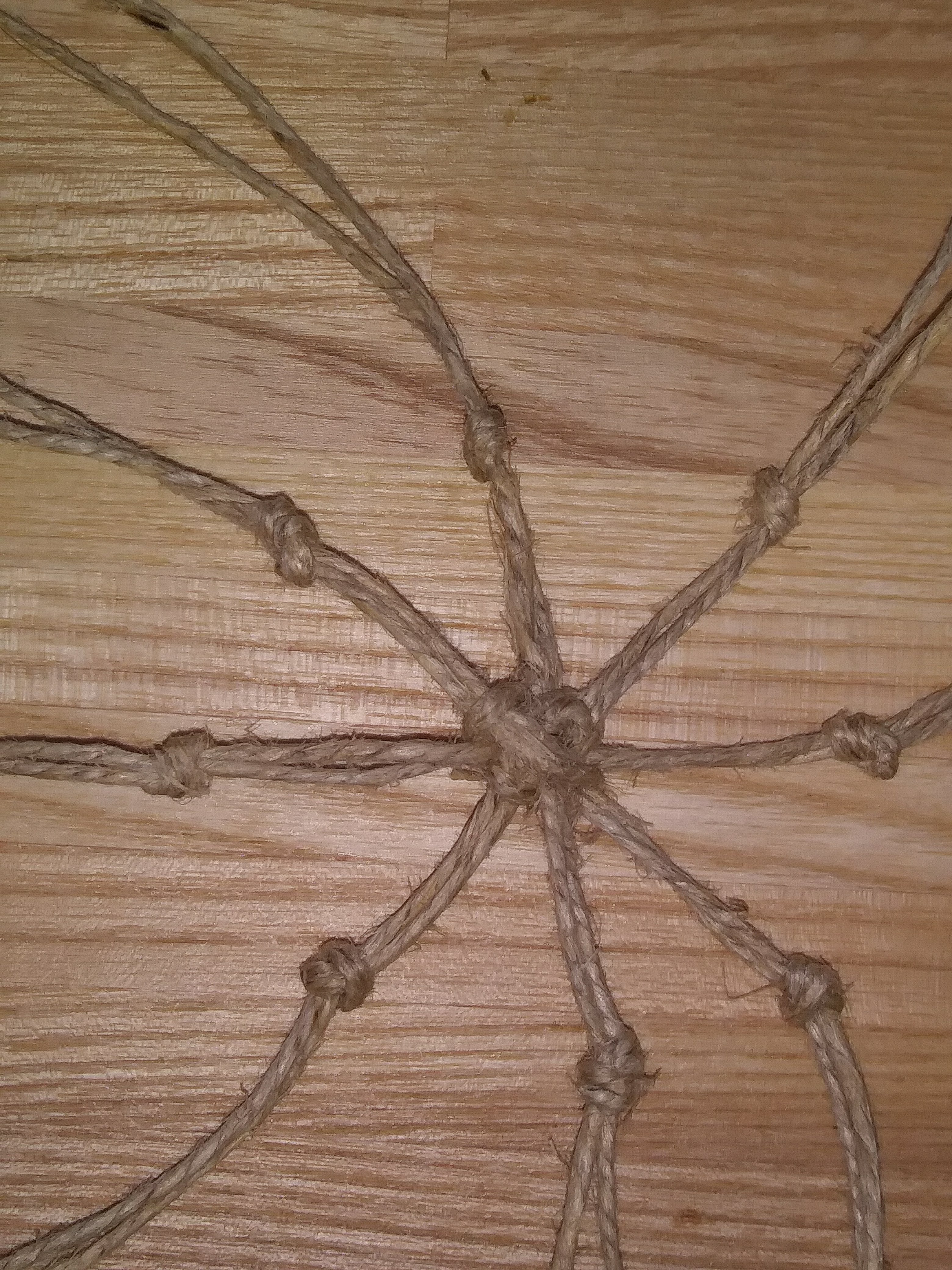
After the first two sets of strings are put together the remainder are added like spokes on a wheel. If you’re going to use a lot of strings, say to make a cast net in this way, you would need to add a ring of cordage as the center to attach all the spokes to. Otherwise, you would end up with a bulky knot in the middle.


After all the spokes are added it becomes a simple project of making overhand knots in pairs.

The first set of knots made.

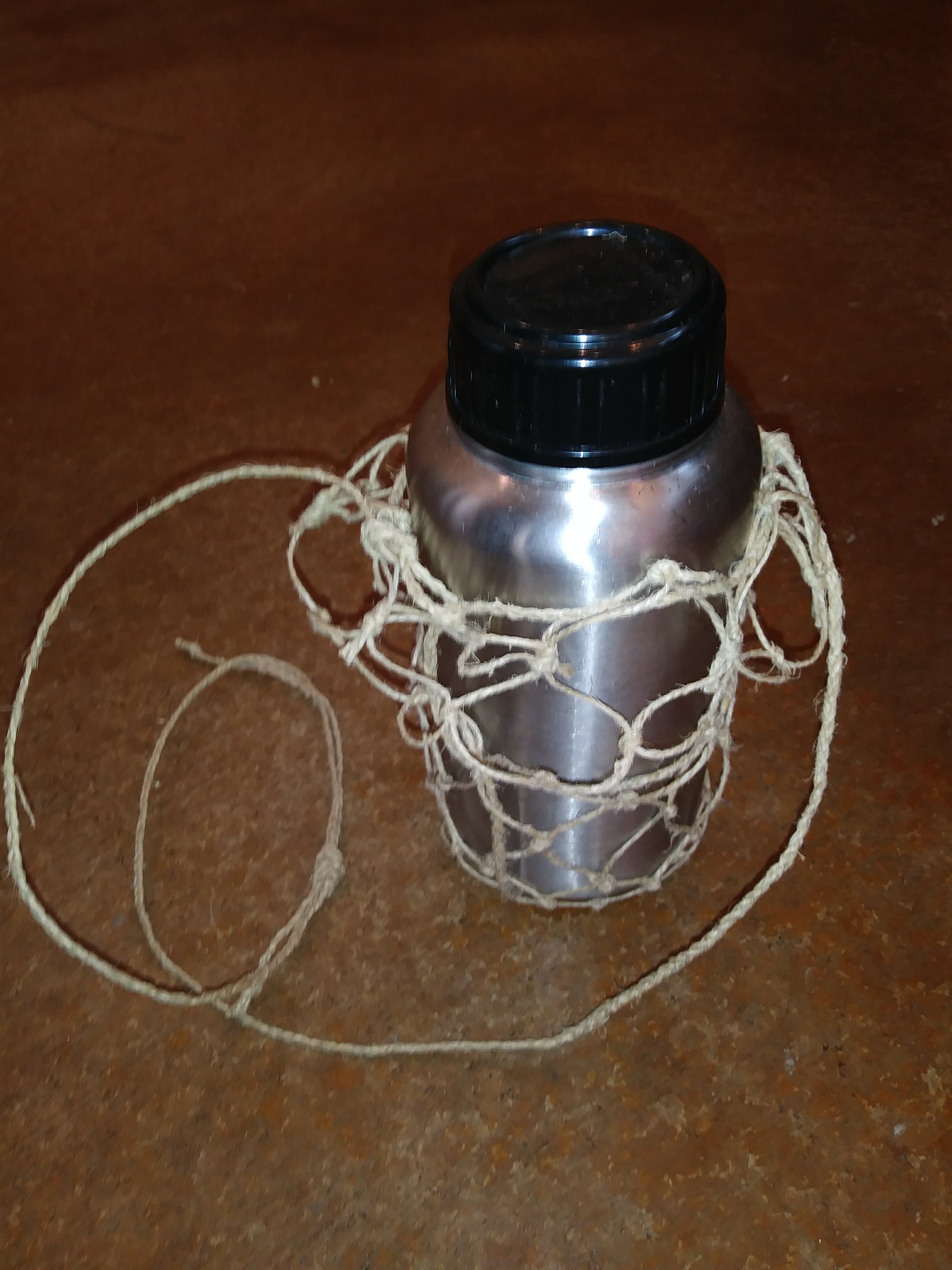
Here’s where it seems to get tricky for some people. The next step is to connect neighboring strings to create a diamond pattern. That is to say, each half of a knotted pair will join its neighbor.

It’s helpful to tie it to something when you’re working.

Connecting the alternate pairs.

Repeat ad nauseam.
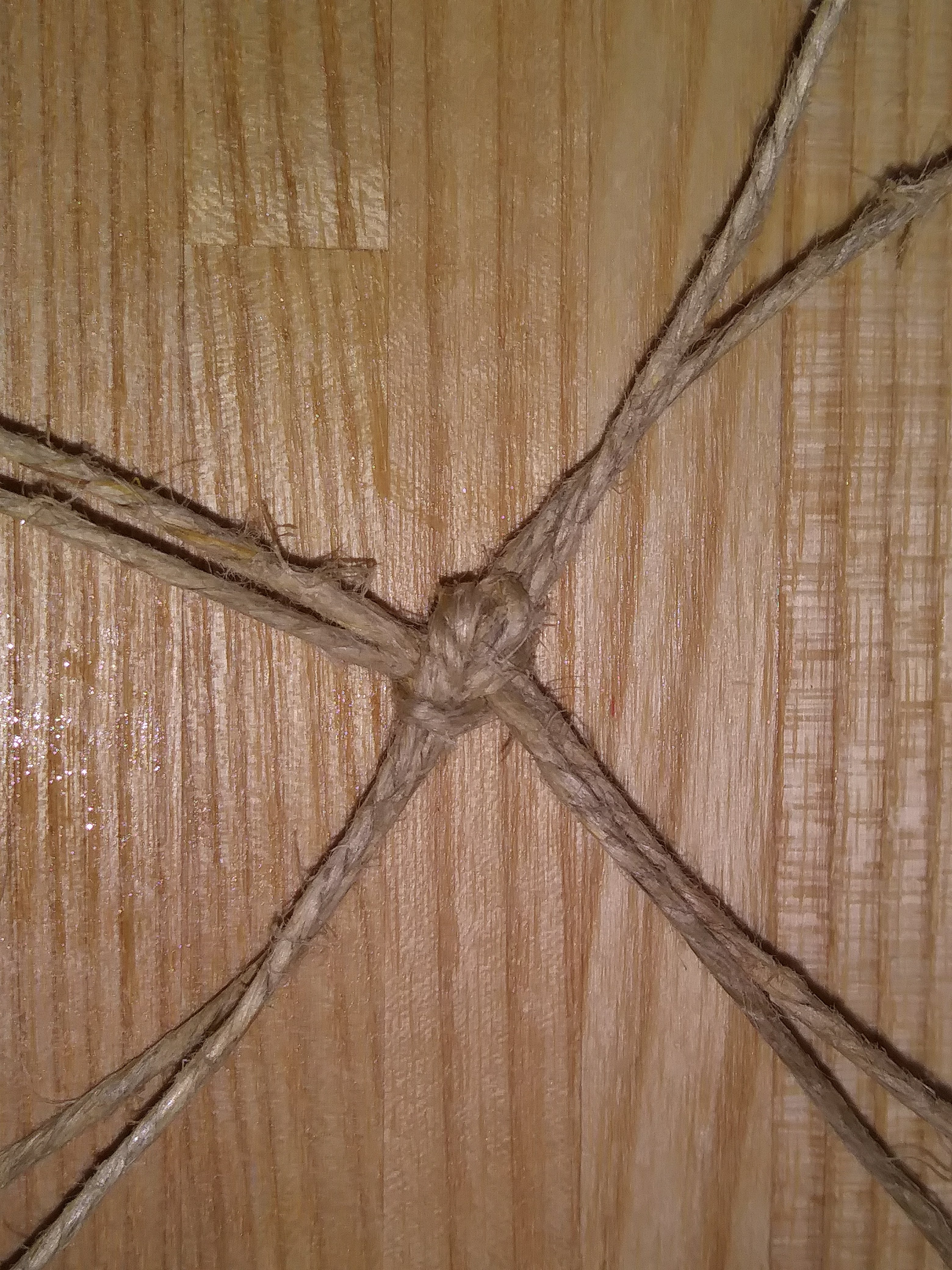
If you notice your bag is coming out too skinny you need to space the knots further apart. If you need to taper it in at the base or the top, make the knots closer together.

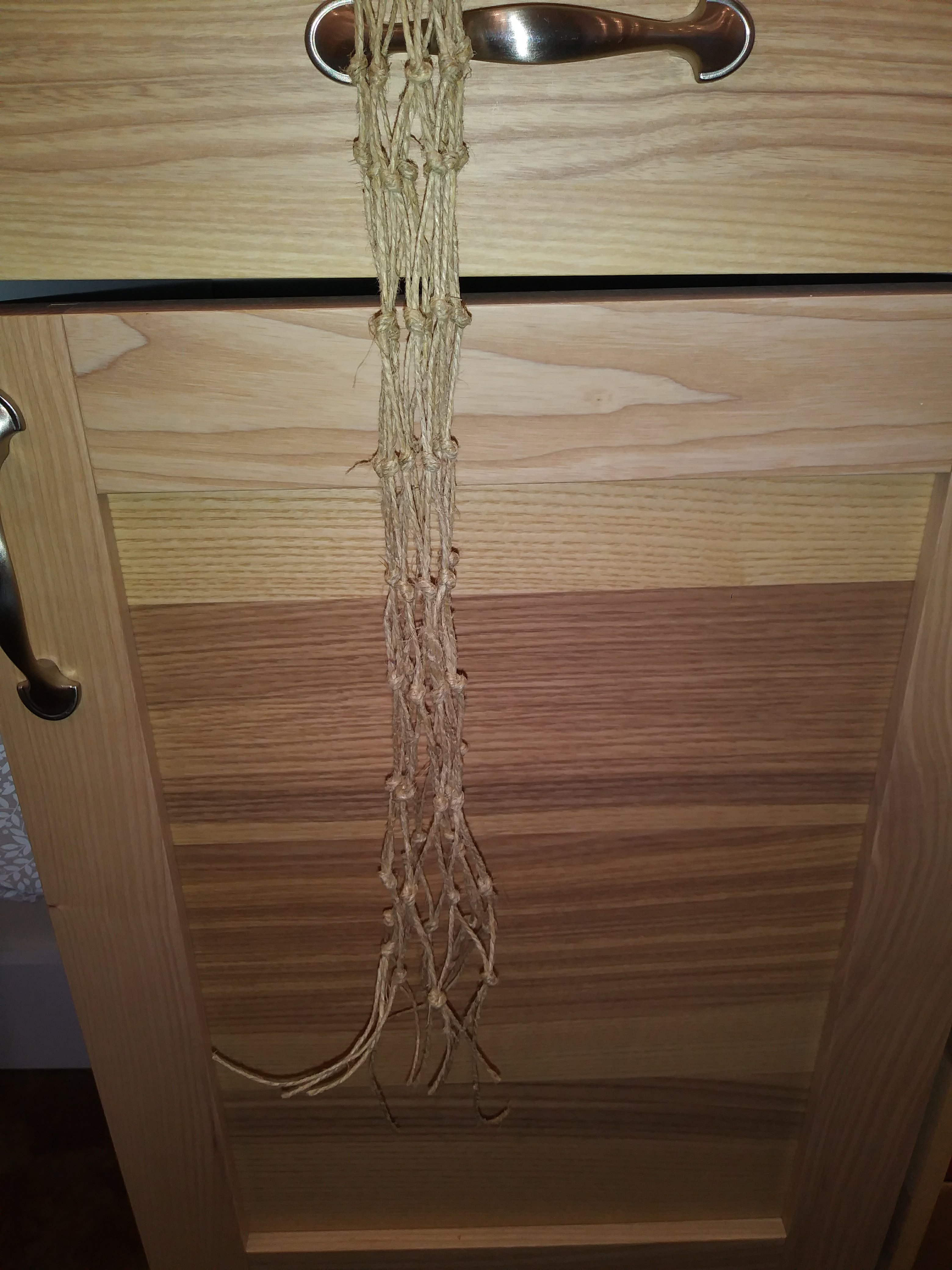
The body of the net is finished.

Instead of binding the top in any fancy way I simply ended the last round of knots folded back to the previous. See the picture above.

I added reinforcement.

All I had was the string to work with so I had to make a heavier cord from this for a drawstring and strap. The simplest solution was to just braid up a heavier cord. In this case I just did a simple three strand braid. If I were making something more lasting I would probably finger weave a strap or maybe use a thicker, more complex braid.

Three 10 ft lengths of string become an 8-foot cord.

I ran the strap underneath the canteen to help support the weight.

The finished product closed.

And open.

Ready for the trail again.

I realize these instructions are not very detailed but this level of Technology is extremely simple and has been reinvented time and time again. It needs a little detailing if you are willing to spend the time and experiment a bit. Don’t be afraid to tie and untie things, to add more string, to have a less than perfect outcome.

This is how we truly learn. When we have to make decisions on our own based on the skills, materials, and information we have at hand.

GOOD LUCK!