Ultra Minimalists, Part 1

Learning a thing or two from the past…Part 1, 21st century americans are not the first to minimalize.

kylixdonkey
How much stuff do we really need to lug through life?

This is a lengthy ramble.  So long in fact, that I have broken it into several posts to be trickled out over the coming days, weeks, or months.  Skip on to the fun stuff if you aren’t interested in Minimalist* philosophy.  There’s a lot of recent talk about Minimalism as a social movement.  Not long ago, it was associated with artists and aesthetes, wanderers, mystics, and philosophers.  That is to say, the fringe element, outsiders, and weirdos.  These things come in cycles and I think, as a backlash against generations of sell-out philosophy and the creation of a professional consumer class, many people are reaching for something new.

We come to learn that everything old is new again.

I’ve been looking into history and prehistory on a full-time basis for many decades now.  As hard to believe as it may be, I even get paid a salary to do it.  One of my professional interests involves tools, tool-kits, and strategies for surviving that various people have come up with for dealing with the world.  As a primitive skills-survival instructor and full-time frugalist I think it important to not reinvent a lifeway when we have millennia of ancestors who dealt with most of the same issues we do today.

San
A San bushman demonstrating fire-making.  Ostrich egg canteen in the foreground.

For most humans, for most of our history, owning too much stuff has never really been an issue.  We had what we needed and either made what we needed or did without the things we didn’t have.  It brings a smile to my face to know that more than 2,400 years ago, well-to-do people in China, India, and the Middle East were contemplating the nature and evils of acquiring Stuff; even writing about it.  That’s not to say that I have immediate plans to become a wandering mendicant like a medieval friar (as appealing as that might sound to some) but I do have an interest in lightening my material load and some very specific goals for the coming year.

mendicant

My foundation as a minimalist – I have been thinking about what stuff a person needs to survive since I was a teenager.  Like virtually every young boy, I had grand ideas of escaping the family and traveling unhindered across the world.  I devoured Jack London and Mark Twain stories as a kid.  I loved the extensive and well-thought out gear lists provided in the Boy Scout Handbook, the Explorer’s Handbook, and the Philmont Guides.  I read Larry Dean Olsen’s great book of Outdoor Survival Skills and Colin Fletcher’s The Complete Walker.  I read about the mountain men of the fur trade, and always, took note of what they carried or didn’t seem to need.  I would copy lists into a notebook and ponder them while sitting in some boring high school class, making my own lists of what I have, what I need, and what I want.  This thinking encouraged me to work and save money to buy a better knife, backpack, or stove.  I was probably the only kid I knew who wanted, and got, a file and whetstone for Christmas one year (my grandpa was good that way).  My friends and I spent our teens and early twenties hiking and camping year round, mostly in the woods of the Ozarks in southern Missouri testing our mettle at that time in life time when all teenagers know they are invincible.  Some of us even made it to Europe, Asia, Africa, and beyond.

BooksIn a modern sense of survivalist, many people look to the military or the loonies of teh mainstream media.  Often, military service is the time when young men and women are introduced to such things for the first and only time.  Realistically however, the military itself acknowledges it’s shortcomings on a personal basis as (with the exception of a few special operations units) its entire system is dependent on lengthy and complex supply lines, support chains, and de-emphasis of the individual and personal decision making.  Military survival is therefore, approached as a means of keeping alive until help arrives.  Great for fighting a war, but not always so good when you are turned loose into the world.

Coming up next…Ultra Minimalists Part2.   Let’s look at a military example anyway: Romans.

legionary

* here are a few links to modern Minimalists of various ilks and philosophical merit.  A journey through these links will hint at the breadth and depth of people on different paths but moving in the same direction.

Read, research, think, and enjoy!

Go to Part 2

Learning from Masters (not me, just what I seek)

Using archaeology to find out hows things “should be” done?  A response to a common question, by George Thomas Crawford

I am regularly asked about my connection to archaeology and my interest in primitive technology.  I’ve also been chided by some people in the primitive tech community on behalf of other archaeologists because they (archaeologists) are not all directly interested in the primitive skills.  There is so much more to the anthropology of material culture and our human past than just the replicative technology.  It just happens to be what I’m into.

Many of my anthropological colleagues are way smarter and more focused than I am and go in for chemistry, microscopy studies, site and landform formation, human-animal interaction, plant-use, kinesiology, geology and humans, climate change, genetics, biocultural evolution, and a slew of other cool stuff that isn’t generally covered in the popular press.

But on that note, I scan journals and the web for hints at solutions to my own replicating attempts and experiential archaeology.  These are the masters.  For example: A person who earned his keep as an archer 4,500 years ago will know an infinite amount more about bows, arrows, strings, and animals than I could glean in a lifetime of the modern world.  Lucky for me, this type of thinking ties directly to how I want to live.  That is to say, in a style that predates, in many ways, the horrors and unforeseen consequences of the Industrial Revolution.  Not as a seeker of some non-existent Golden Age but as a searcher for the truth.  We have succeeded as a species in our present form for only a very short time so far, though we think of ourselves as lords and masters of all we survey.  We even create institutions and religions to reaffirm this and place ourselves where we see fit in this scheme.

Moving on – I was given some excellent advice by an old professor when I was in college that guided my wild academic wanderings for many years. Unfortunately I expect this sort of thinking would not go far with many students today.  The advice is essentially as follows.

– Assume that most everything you will imagine as a young scholar has been thought about, examined, and studied by your predecessors.  This does not mean to lose hope, just realize you have a long way to go and a high hurdle to cross. You can’t stand on the shoulders of giants without a serious climb.

1) For a student who truly wants to learn, it is now your full-time occupation whether that is college or not.  Scholar is a job.  You have chosen to not just take up space in a classroom and have your named checked off as attending.  Those people waste all of our time and you know who you are.  Best of luck, just don’t bother us.

2) It is your responsibility to teach yourself as much as possible.  This is done by filling your spare time by exposing yourself to knowledge not mindless entertainment.  Leave that to the zombies and the drones of the world.

A simple way to learn is to park yourself in the library and to peruse journals.  Not starting with today, but starting with research from a hundred years ago, or preferably more.  I was advised (and I did this) to pick up the earliest bound volumes of Nature, Antiquity, and American Antiquity and flip through every issue.  Read the Table of Contents.  Now, pick at least one article from each and read it.  Really read it.  You may not retain all of this information but it sticks with you in some form.  You will begin to see trends in how we think and study and write about what we do.

3) Stop worrying about what you will do for a job after college.  People obsessed with this are the most unsuccessful people I know.  If you truly just want to make money, drop out of college NOW and go learn a trade.  Be a welder, mechanic, or a carpenter*.  If you don’t want to contribute to society in any real way or are just of a greedy or slightly evil turn of mind, try banking or investment.  If you just want to slide through without too much effort or reward, try the federal government or other forms of middle management.  I see too much vocational thinking in the quest for knowledge and not enough seeking.

4) Finally, develop a passion for what you want to learn.  Hopefully this is obvious and has already happened to you but sometimes we need to be told.  If we don’t love what we do, this short life will be a very unhappy one (by “do” in this sentence, I don’t necessarily mean “how we earn our money” but what we identify as; e.g., potter, woodworker, musician, or knitter).

And a final caveat: I don’t think I am in any position give real advice to others but I do feel that maybe I should answer some of the questions I’ve become so adept at evading.  Have a great day and hopefully a happy life.

GTC

*I personally think this is critical to become a well-rounded person anyway.

Simplify

More great thoughts from Henry David Thoreau on simplifying.

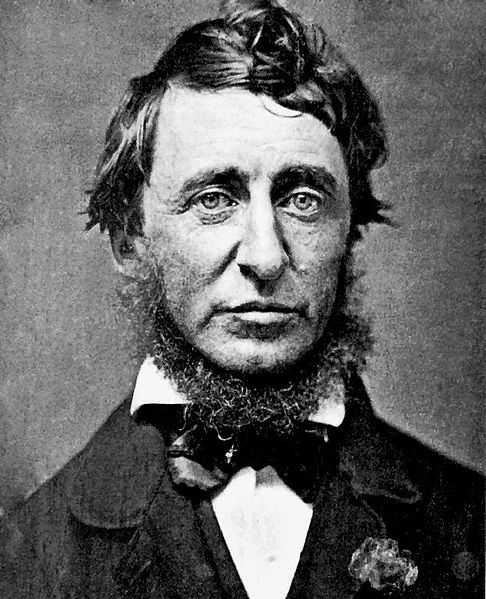
“I do believe in simplicity. It is astonishing as well as sad, how many trivial affairs even the wisest thinks he must attend to in a day; how singular an affair he thinks he must omit. When the mathematician would solve a difficult problem, he first frees the equation of all incumbrances, and reduces it to its simplest terms. So simplify the problem of life, distinguish the necessary and the real. Probe the earth to see where your main roots run.”

— Henry David Thoreau to H.G.O. Blake, March 27th, 1848


Intelligence, something to think about

“Suppose my auto-repair man devised questions for an intelligence test. Or suppose a carpenter did, or a farmer, or, indeed, almost anyone but an academician. By every one of those tests, I’d prove myself a moron, and I’d be a moron, too. In a world where I could not use my academic training and my verbal talents but had to do something intricate or hard, working with my hands, I would do poorly. My intelligence, then, is not absolute but is a function of the society I live in and of the fact that a small subsection of that society has managed to foist itself on the rest as an arbiter of such matters.
”
Isaac Asimov, from What is Intelligence, Anyway?

Living Without Money

Not a new story, but one that seems to keep resurfacing.  Maybe there’s a crumb of wisdom that intrigues people about this concept.  Most people in the Western World have never, for a second, considered life without money, yet for most of the world, and nearly all of our history, this was the natural condition.

Can we all do it tomorrow? No. Can we move toward a less abstract, personally productive life? Yes.  Click the photo to read the short article or link below to visit the website and his book.

Headliner
Mark Boyle has a cuppa out the front of his caravan. He has forgone money and says he has found happiness.

“I believe the fact that we no longer see the direct repercussions our purchases have on the people, environment and animals they affect is the factor that unites these problems. The degrees of separation between the consumer and the consumed have increased so much that it now means we’re completely unaware of the levels of destruction and suffering embodied in the ‘stuff’ we buy.”

This is the most salient point that so many of us miss in our daily routine.

“Very few people actually want to cause suffering to others; most just don’t have any idea that they directly are. The tool that has enabled this separation is money, especially in its globalised format.”

“I am not anti anything. I am pro-nature, pro-community and pro-happiness. And that’s the thing I don’t get – if all this consumerism and environmental destruction brought happiness, it would make some sense. But all the key indicators of unhappiness – depression, crime, mental illness, obesity, suicide and so on are on the increase. More money it seems, does not equate to more happiness.”

Mark Boyle is the founder of the Freeconomy Community www.justfortheloveofit.org. The Moneyless Man, a book about his year without money, is available here and elsewhere on the web.

Makers to the Rescue

Makers, Dreamers, Builders, and Inventors, Unite:

reflections on saving our world

“Perpetual devotion to what a man calls his business, is only to be sustained by perpetual neglect of many other things. And it is by no means certain that a man’s business is the most important thing that he has to do”  Robert Louis Stevenson.

Coup_de_poing_acheléen

Humans are, by nature, makers of things.  That’s how we deal with the world…  or did, until the Industrial Revolution tore us away from our connection with the earth.  Somebody is still making all the stuff, of course, its just outsourced and corporatized,  repackaged, and branded.  Strangely, the stuff that should last, like clothes, housing, or tools are generally poorly made and often unfixable while the junk that should be disposable is made from plastics that will endure for a geologic age or poison our descendents.  But maybe, with a little effort, it doesn’t have to be this way.

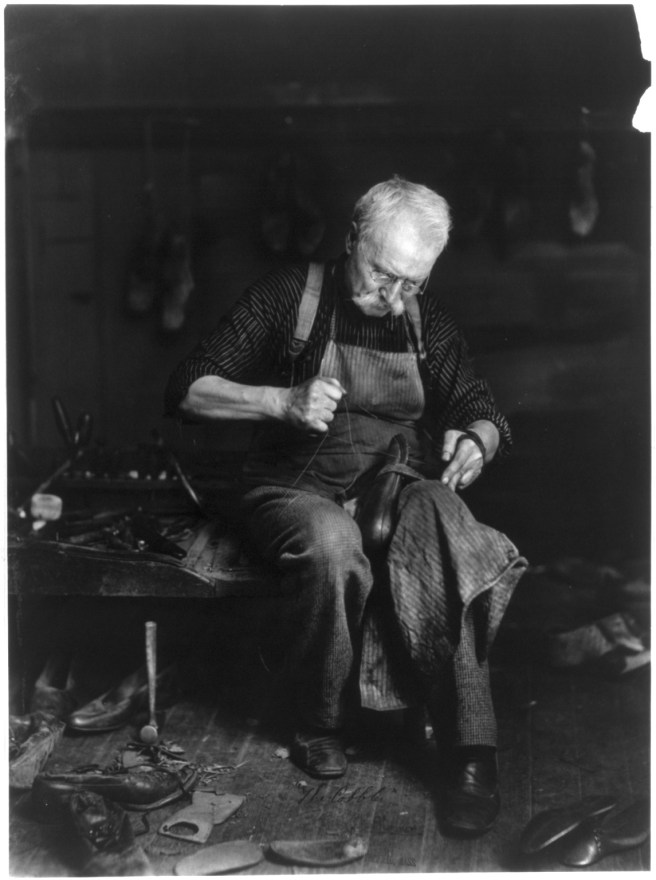
TheCordwainer

Today, instead of procuring our needs directly or through someone we know, we trudge off into an abstract man-made environment to be treated as children and told to perform an obtuse task or two or twenty.  And in exchange for giving up our time, we get slips of paper (or more likely, digits only readable to a computer on a plastic card) that confirm that we have performed our work and are now in a position to gather food, shelter, clothing, heat, etc. from a middle-man where profits are almost never seen by the makers.

FullApron
Hand Crafted Apron from THOSE WHO MAKE.

Creating things like fire, rope, or cutting tools, not to mention shoes or housing will baffle most modern people.  Weaving a blanket, sewing a shirt, or butchering an animal are simply out of the question for most of us in the western world.  Many of these activities will get you strange looks at best or a call to the authorities at worst.  This mindset means that most of us can’t feed or cloth ourselves any longer even if we really want to.

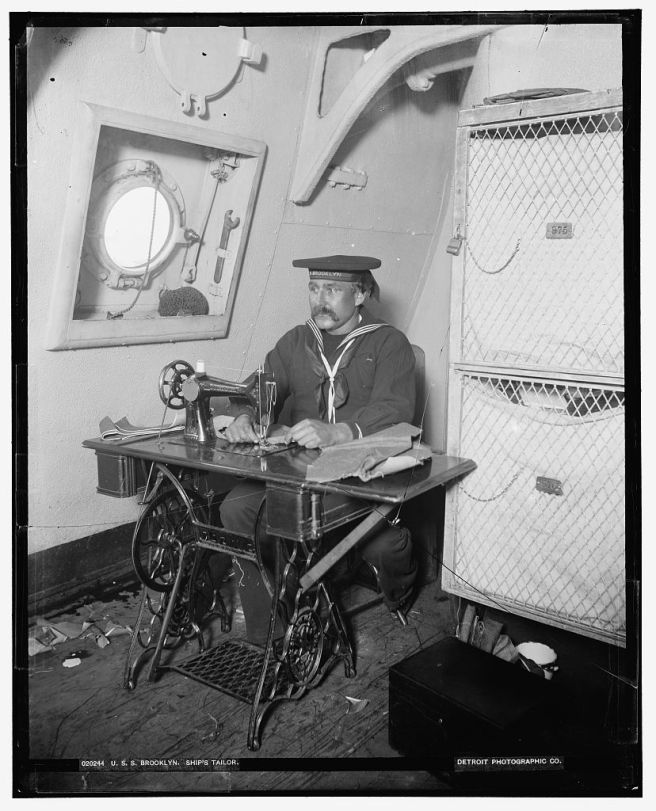
tailorMakers are the hope.  We’re out there.  Doing things and making stuff.  Fending for ourselves in an hostile but lethargic world of expected and nearly enforced consumerism. Once you realize the machine doesn’t work, you can realize it doesn’t really exist.
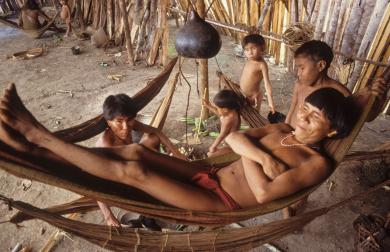
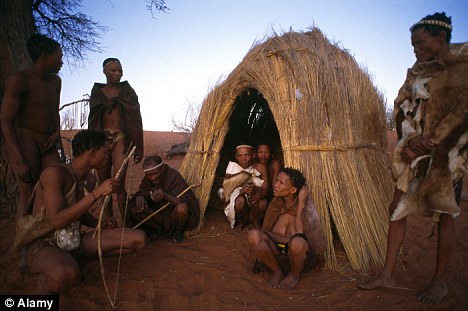
Most of my adult life, I’ve noticed an interesting paradox.  Typical wage-slaves who proudly give 50 hours per week to a faceless and unappreciative mechanism are convinced that the dreamers and the creators are just a bunch idlers and flâneurs when it’s, in fact the lifestyle that they really envy.  If it isn’t recognized as drudgery, somehow it’s not real work.  But how much do we really need to be happy?

hammock

As a side note, many modern philosophers trace this thinking directly to the Protestant Reformation when, as they claim, much of the fun was beaten out of life and holidays were things to be frowned upon.  But here I digress.

The internet actually gives me hope, especially seeing the wonderful documentaries of real craftsmen and makers around the world that are emerging from obscurity.  Maybe to many, Makers are just a novelty.  Something to be ogled at.  But knowing there are others out there looking for a deeper purpose and a better existence makes me feel a little better about humanity.

BicycleRepair
Repairing something is a first step toward making something.

Let’s be realistic; most modern folks wouldn’t opt to live as hunter gatherers as their ancestors did, but maybe we can reach a better balance with our lives than to adopt the imposed role as absolute consumers.  And hopefully conscience people can do some good things along the way.  Maybe by thinking outside the consumer mindset and choosing to build our homes, make our own socks and shirts, ride a bike, and hunt our meat we can make a difference by both our action and our inaction.

In the words of Samuel Johnson, “To do nothing is within everyone’s power.”

san

Remember: “An idle mind is a questioning, skeptical mind. Hence it is a mind not too bound up with ephemeral things, as the minds of workers are. The idler, then, is somebody who separates himself from his occupation: there are many people scarcely conscious of living except in the exercise of some conventional occupation”

Robert Louis Stevenson, idler extraordinaire.

stillWhy not go make something?  Your great grandparents did.
P.S. Pardon the Friday late night ramblings.  My disdain for the modern world is heightened at the end of a ridiculous week at work.

Camouflage

Some thoughts occurred recently while looking through some of my wildlife photos.  Especially how so many creatures really “fit” in their surroundings.

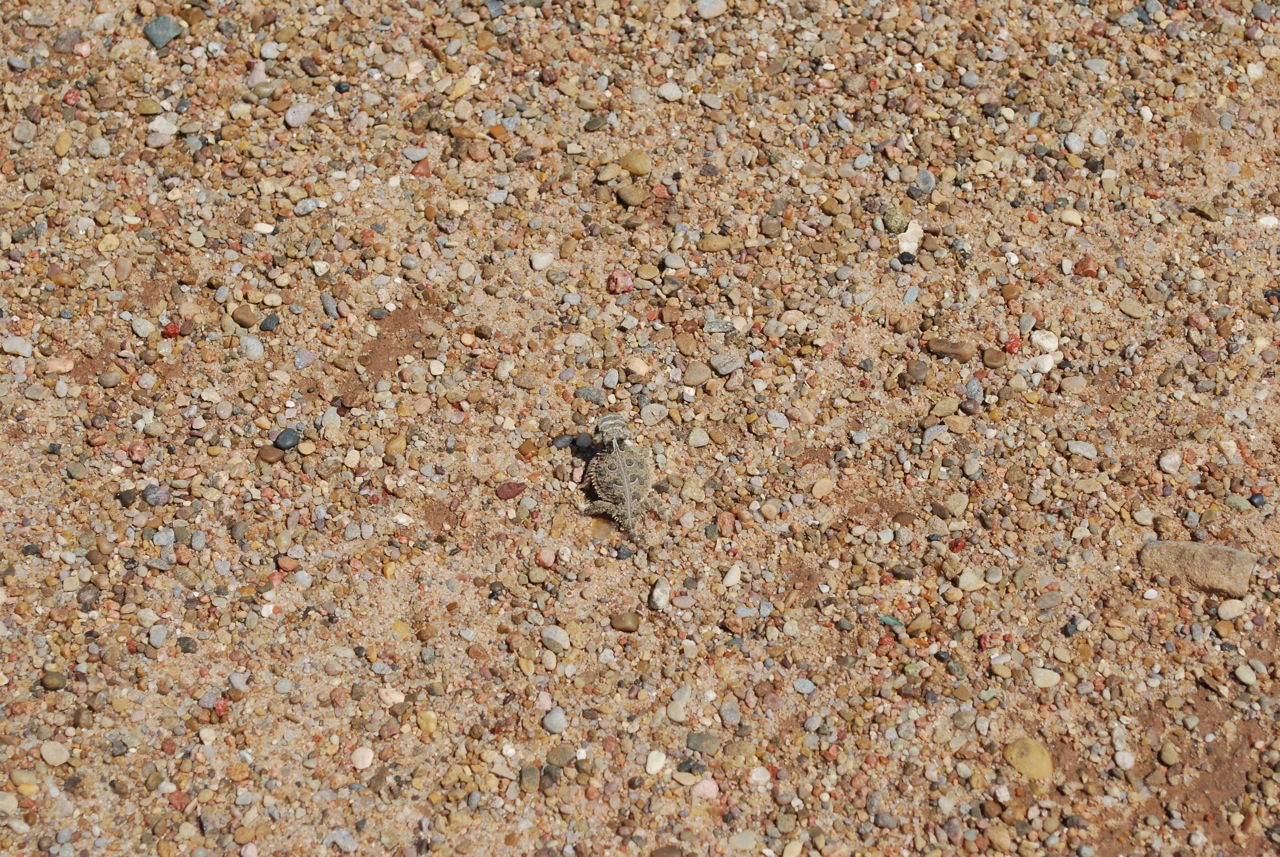
Horned lizard in the driveway gravel.

I realize it is mostly for defense (or sometime offense) but it just makes more apparent how poorly most of us humans seems to fit our surroundings.  We want to distance ourselves from dirt and sand and smells of nature and cover our scents with industrial chemicals and our flesh with cheap, poorly made clothes.

TreeFrogNo point to this ramble really, other than to note the feeling of discord with our surroundings while displacing those who may fit in better.

GopherSnakeCropI currently live in a fairly harsh place; a marginal land overrun with industrial agriculture.  A land of extremes where creatures are in constant struggle for water or food.  Yet we survive, and hopefully learn to harmonize and not run counter to the way of the earth.

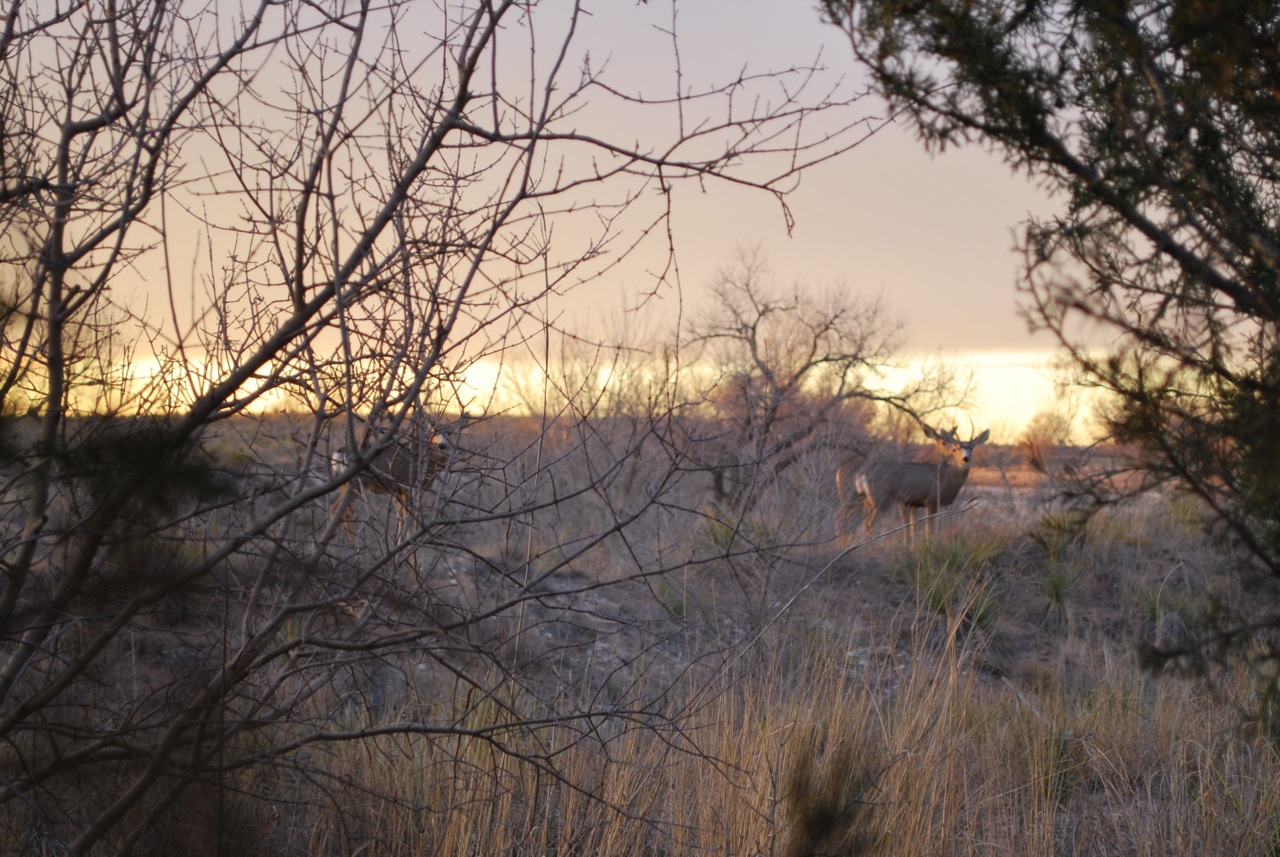
Mulies

Does This Thingy Add Value…

A new post from the Minimalists.

“I don’t own many things. But everything I own adds value to my life.

Each of my belongings—my kitchenware, furniture, clothes, car—functions either as a tool or gives some sort of positive aesthetic value to my life. That is, as a minimalist, every possession serves a purpose and/or brings me joy.

Over time, though, situations’ll change. They always do. And so I’m forced to ask the same important question over and over and over again: Does this thing add value to my life?

And but it’s not just material possessions at which I posit this query. I ask it, too, in regard to relationships, social media, and any other potentially superfluous matters in lifeemphasis added.

Good things to ponder as we just absorb everything, new and old, around us.

Read the whole post here or, better yet, check out their other writings:

http://www.theminimalists.com/

American Nomads

I never really classed myself as a “nomad” when I was young and traveled a lot.  It was more like I was just traveling to see things.  I was fortunate.  Though not wealthy, I was able to spend a lot of time in the American Midwest, camping and canoeing much of the Ozarks, bicycling southern California, and drifting around parts of Western Europe, even slipping into North Africa for some exciting adventures.  By luck, my college career sent me back to Europe and my early career as an archaeologist lead me around the western United States into some pretty amazing little corners of wilderness I would never have seen otherwise.

With the far-sighted perspective of time, I can see than I have been on the move much of the time since I left high school.  Being tethered to other, more sedentary people, gives a sense of having a base that may really be a false reality.  Having let go of things has opened my eyes to the freedom that having few possessions can provide.  It’s a big world out there, and it’s always an education to experience it.

Here’s another interesting documentary about modern American Nomads produced by BBC4 in 2011 based on the book by Richard Grant.  They come from all walks of life and choose some very different paths; “Among them are retirees in RVs, teens hopping trains, hitchhikers and rodeo cowboys.”  Check out his other books if you get a chance, they are certainly interesting reads.

[youtube=http://youtu.be/5Ci7DEUks-E]

About the author:

Richard Grant is a British writer currently living in the Mississippi Delta. He is the author of three books, Crazy River: Exploration and Folly in East Africa (Free Press, 2011), God’s Middle Finger (Free Press, 2008),published in the UK as Bandit Roads, and American Nomads (Grove Press, 2003), published in the UK as Ghost Riders. In addition, he writes articles for magazines and newspapers, publishing regularly in the Telegraph magazine (UK), and Port. He is the writer, presenter and narrator of the television documentary American Nomads, broadcast on BBC4 in November 2011, and currently working on a documentary about tribal life in Ethiopia.