Sandals of the New Kingdom, Egypt (1550 – 1070 B.C.)

Some shoe solutions from the Bronze Age, North Africa.

SandalMaker
This image is virtually a sandal pattern ready to be made.

Sandal maker – New Kingdom, 18th Dynasty from Thebes ca. 1504–1425 B.C.  

Like a Diderot illustration this gives a good insight to the workshop of an artisan with the essentials of his trade.  There’s the stool, which is useful in leatherwork as it gives a good lap to work on.  A beam, probably implying that the leather is made on-site.  A couple of awls in handles are shown and what is probably a curved awl, made from antelope horn, useful when weaving leather (my speculation based on huaracheros and other traditional weaving tools).  The sole of the sandal looks to be leather and is being punched with the awl.  Other sandals are made from fiber, probably by a different artisan specialist, while burial sandals were likely a specialty industry and are often made from wood or precious metals.

Sandals2

Papyrus fiber sandals.  Second Intermediate Period–Early New Kingdom, 17th-18th Dynasty, Thebes ca. 1580–1479 B.C. These are constructed using a coil basketry technique which involves wrapping a soft fiber around a thicker, linear element while “sewing” into the adjacent coil.

Sandals

Papyrus fiber sandals.  Second Intermediate Period–Early New Kingdom, 17th-18th Dynasty, Thebes ca. 1580–1479 B.C.

SandalsRed

Red ochre stained calfskin leather sandals.  New Kingdom 18th Dynasty during the joint reign of Hatshepsut and Thutmose III ca. 1473–1458 B.C.  These are interesting as they are tooled to look like woven sandals.  The leather might be harder-wearing but the woven style may have denoted more wealth (i.e., flimsy shoes equates to more wealth or less need to labor).  A very simple design used for thousands of years and well-illustrated in the sandal maker panel above.  This is a good survival sandal that could be made quickly in the field from many materials today.

two pair

SandalsAu2

Finally, a couple pair of golden burial sandals (women’s) from Thebes, New Kingdom 18th Dynasty during the reign of Thutmose III ca. 1479–1425 B.C.  Note the embossing to imitate stitching.  A simple design that could be made up in a very short time.

SandalsAu

All of the above images are from the Metropolitan Museum of Art, New York and clicking any of the photos will take you to the appropriate page for the artifact.  I chose these sandals as I believe the best survival solutions are tried and true and generally exhibited in the archaeological record if the material survives.  Make yourself a pair of shoes.  With a little practice, basic footwear can be made that is serviceable and fit for public wear.  Our ancestors did this for thousands of years, we can too.

Leatherwork is Timeless

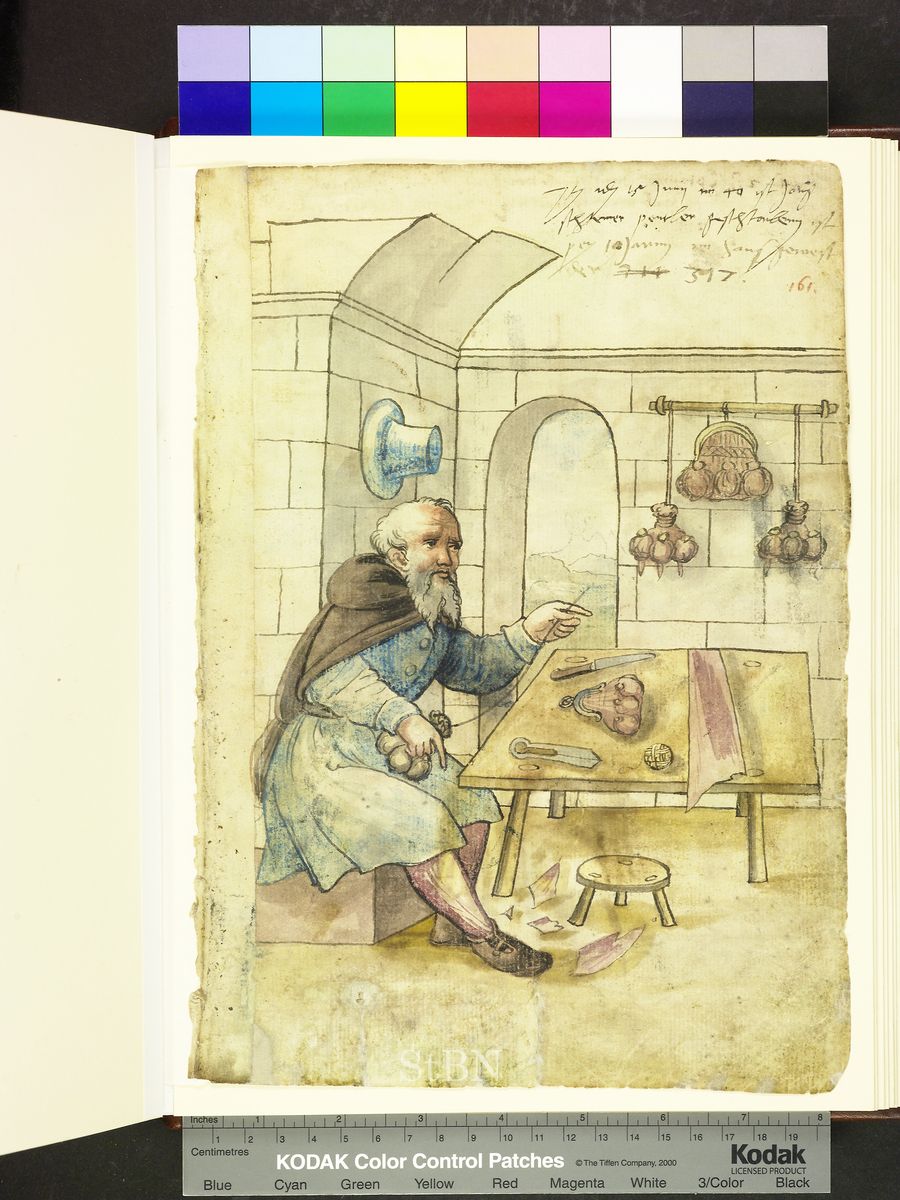
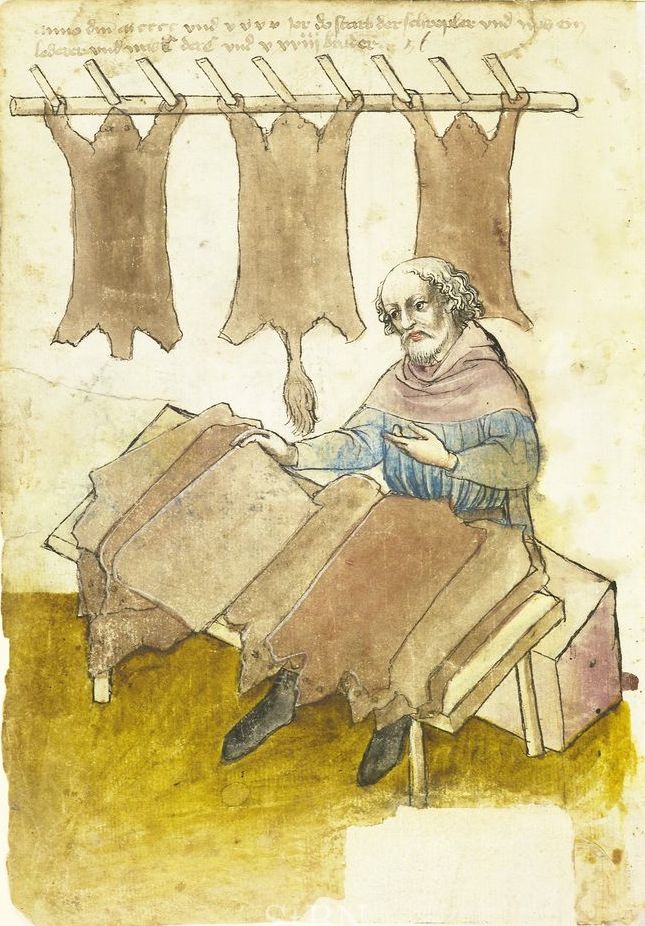
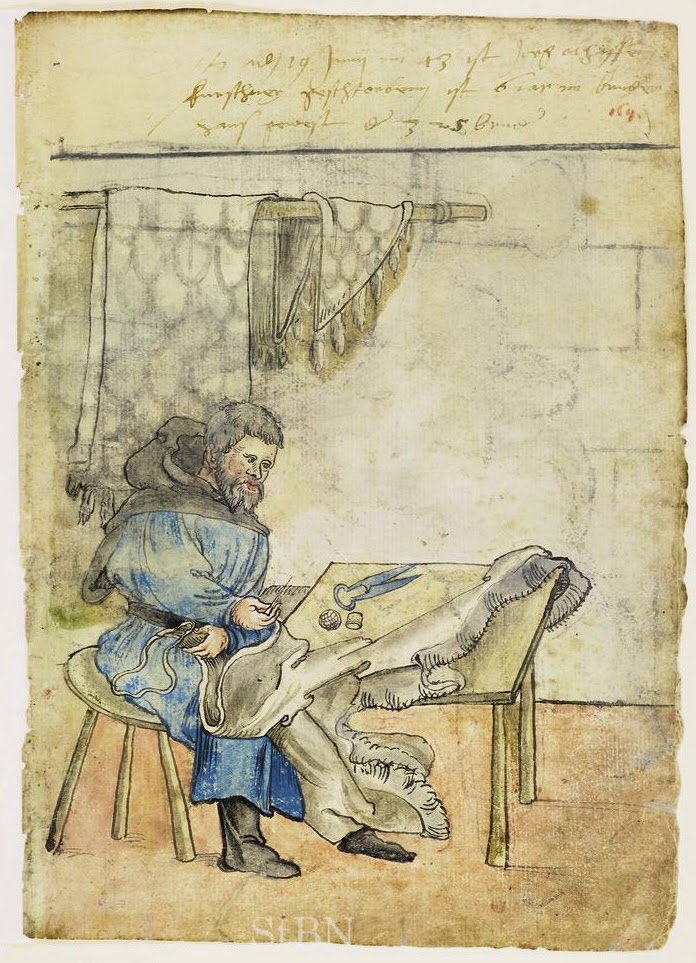
Images from Mendel, A.D. 1425.

I’m dedicating the next few weeks to my small leatherwork business. When I’m making things with my hands and simple tools, I feel a real connection with our ancestors. It’s nice to get lost in the projects and learn new techniques along the way. When I’m away from this portion of my world it seems that there is a lag when restarting as the hands and mind relearn their movements and the order of things.

Hopefully, I’ll be able to restock the Etsy store with some exciting goods while the weather is cold. I’m looking forward to spring and the time to get out into the wild to gather materials and supplies from nature; a much overlooked time-consumer for the primitive technology teacher. And just maybe, we’ll be able to gather together again soon to share our skills and camaraderie of our community.

In the mean time, keep well and keep on making.

A Touch of Color

Colored saddle thread was on sale at my supplier last month so, guess what? I’m going to try it out on some upcoming projects and see what the reception is. Nothing too flashy, just a bit of red, yellow, or blue on the horizon.

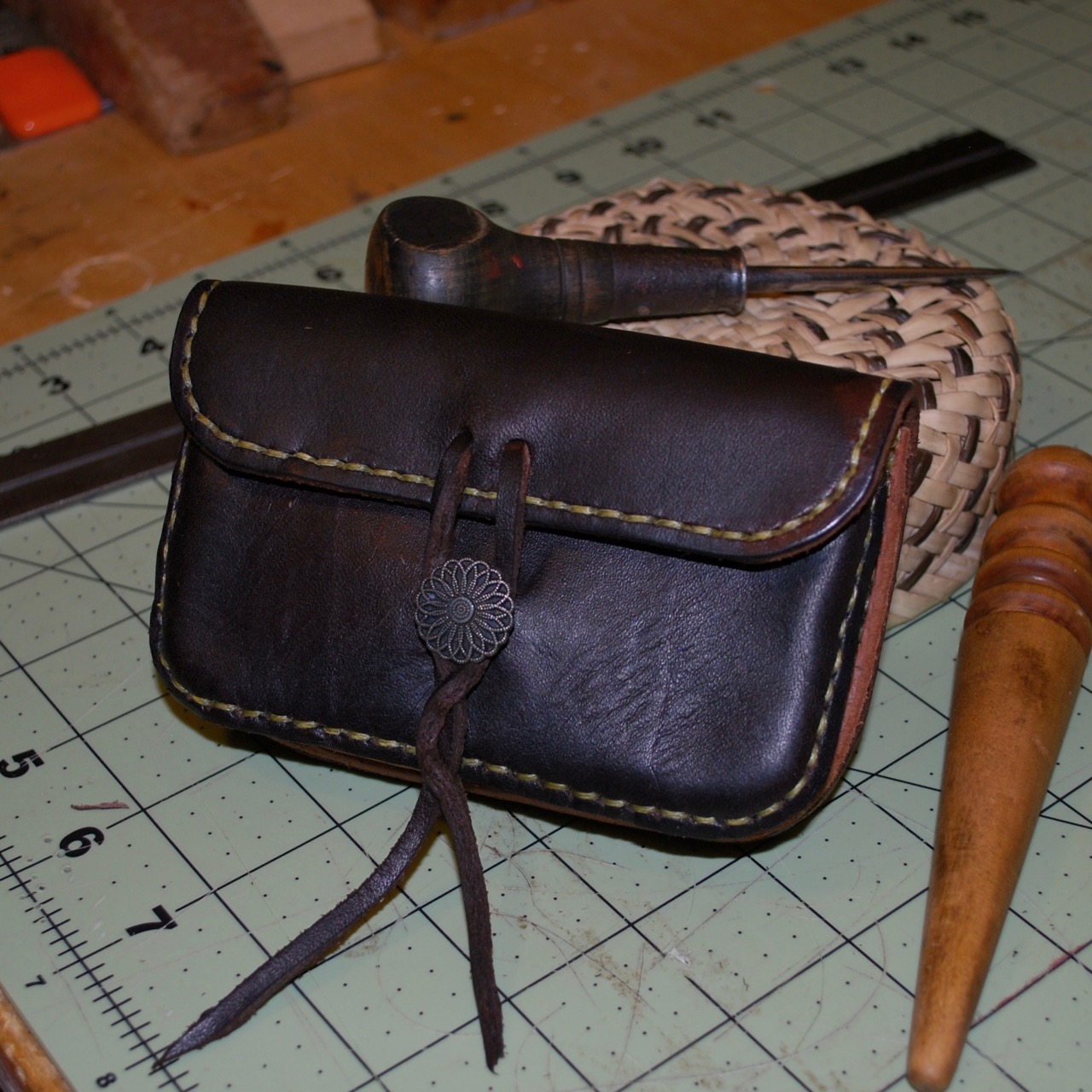
Since I’m also a fan of mixed materials, this next bag is two-toned; Hermann Oak natural and drum-dyed in brown. To my eye it is a good match.
I think this combination will age beautifully and settle into a nice two-toned patina.
Stacey found this nice pewter vintage button for a closure. The photo above shows it on the workbench stuffed with a rag an drying after wet-forming and burnishing. Tomorrow, it will be time for a coat of dubbin and off to market.

Ghillie Shoe Class

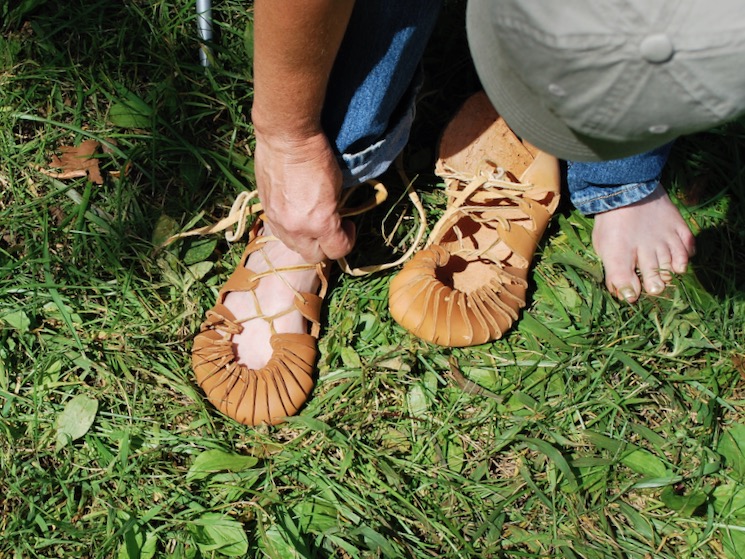
Here are some throwback photos from Ghillie shoe making classes from 2009 and 2011.  The first pair is from a small class at the Bois d’Arc Rendezvous in southwest Missouri (note the lush green of late summer).  Maybe not as sexy as the arrow-making class but it is a very real and useful skill.  I have been honing the teaching method since I was taught how to fit and make these back in 1986.

DSC_0145 (7)

One of the appeals this design has for many people is that they require very little sewing.  If you don’t work with leather regularly, stitching can be intimidating.  Some careful cutting and you can make some stylish shoes in a short time.

DSC_0144 (11)

An hour of work and you’re ready to walk the world. More importantly, with the knowledge in your head you can always make more and keep right on walking.

Winter Count, Maricopa, Arizona 2011.

Save

Moccasin upgrade time again

DSC_0003

These ratty old moccasins have spent a lot of time in the woods.  These have been my winter moccasins for over two decades.  I can’t remember exactly when I made them but it was a quick and dirty sewing job.  They have been re-soled at least twice and need it again.  The uppers are an oil-tanned leather I bought from a saddle and boot maker supply house I found while driving through north Texas.  As can be seen, the tops can be worn up or down.  They aren’t beauties but they are definitely ME.

Handmade Sandals

Sandals in progress…

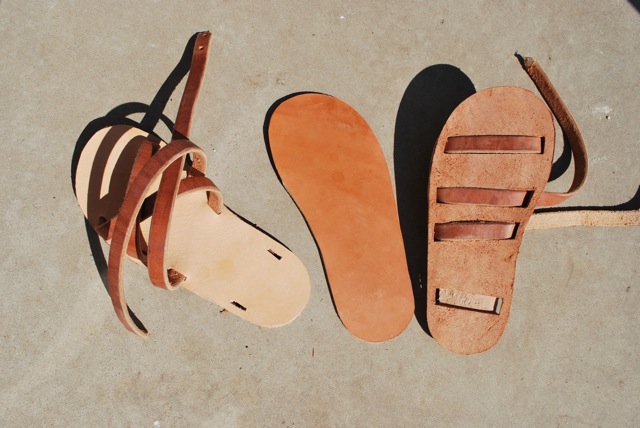
If you have ever taken a class with me you might know that all the intimidating sewing isn’t as bad as it looks.  The sole is three layers thick but the use of a good, sharp awl makes the double needle sewing go quickly.  A lot more work goes into these than I would have initially thought but I really think they come out great in the end.  It took several pairs to get the pattern just right but research into design and construction led me to this final design.  The sole is three layers thick (or more historically) and have been made this way in Europe and North Africa for more than 2,000 years.

The thickness of additional layers isn’t just to provide safety for the feet but the central layer provides a path for the straps to travel through without lumping under the feet.  The parts consist of an insole (medium weight oak tan leather), mid-sole to allow tunneling the straps through, and an outer sole, in this case, leather.  The straps are 48″ per foot plus the heel yoke.

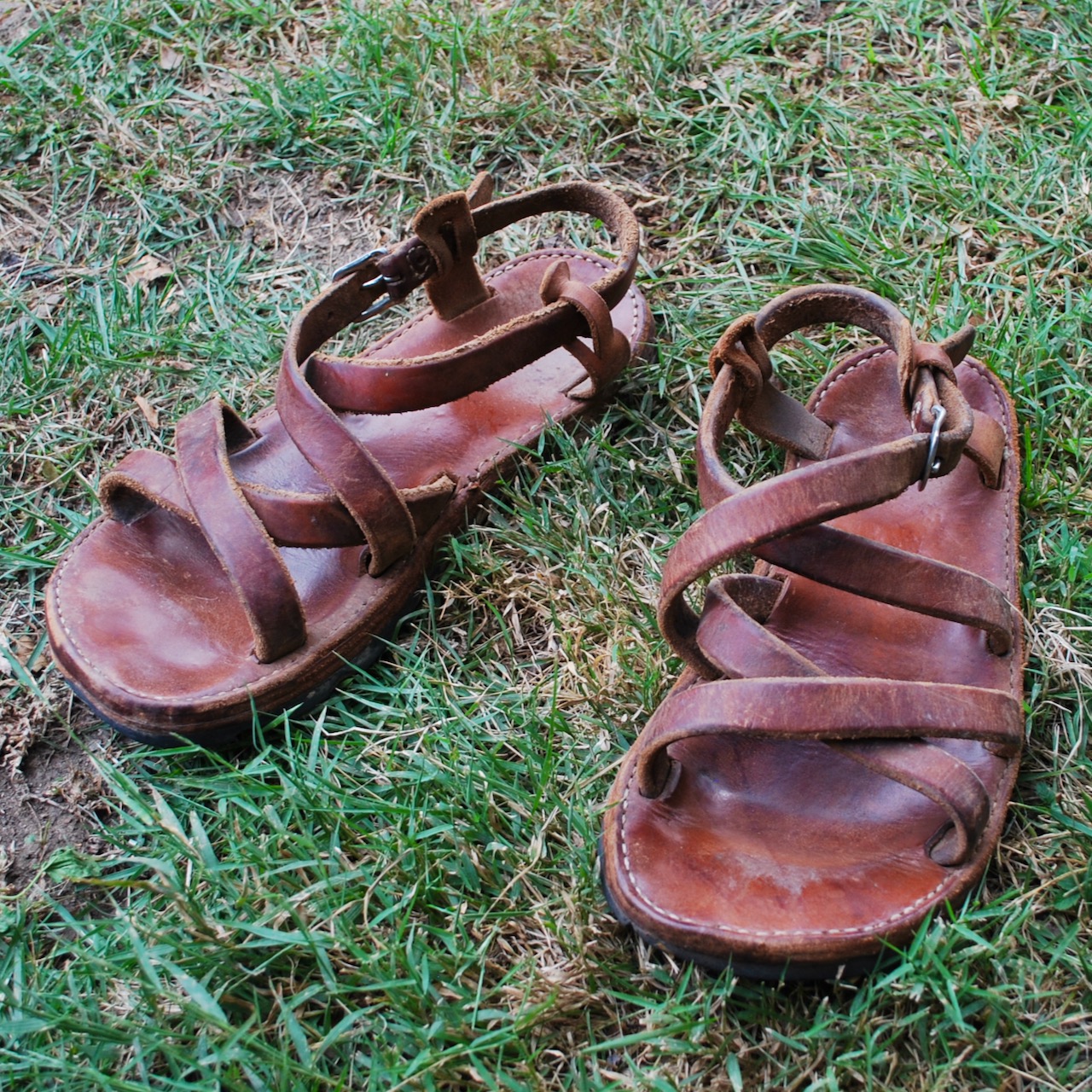
This is how they looked when I thought I was finished. Shortly after, I added buckles and have since been through a few more soles. Currently they are shod with rubber.

Nine years on and still going strong. The patina that good leather takes on cannot be simulated. They get a coat of dubbin every six months or so but otherwise, need little care. I hope to get back to a time when I can wear them daily again.

Jacob’s Beautiful Leather Backpack

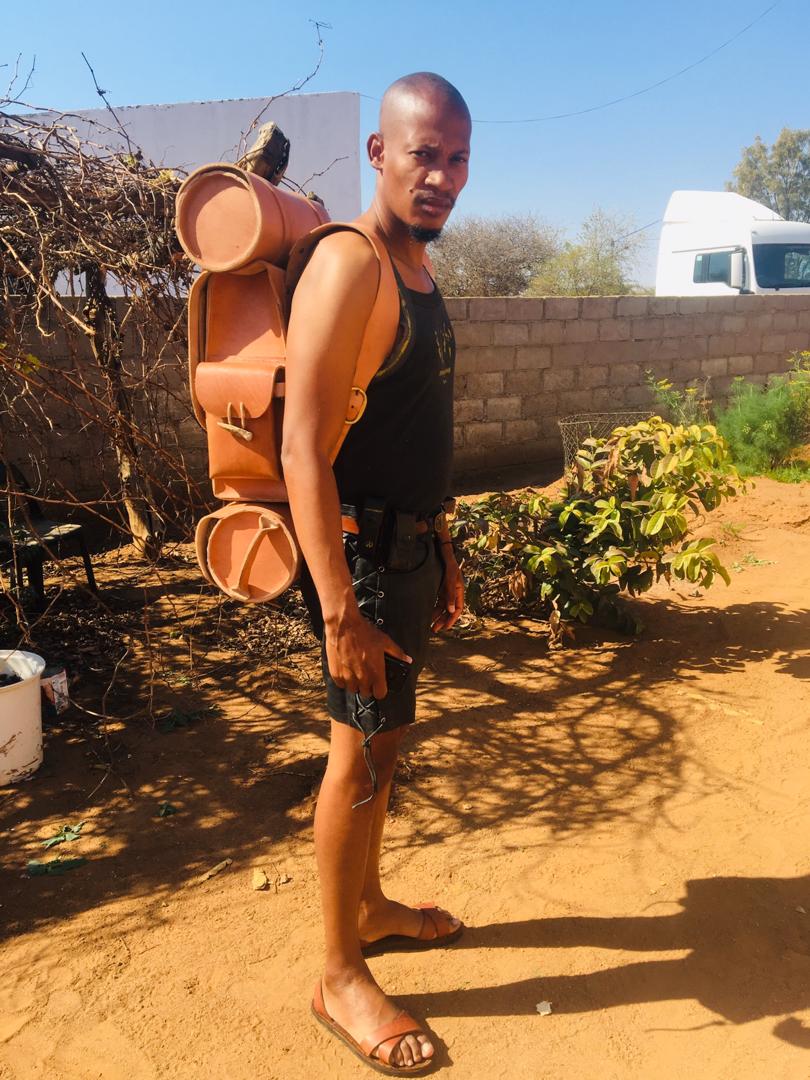
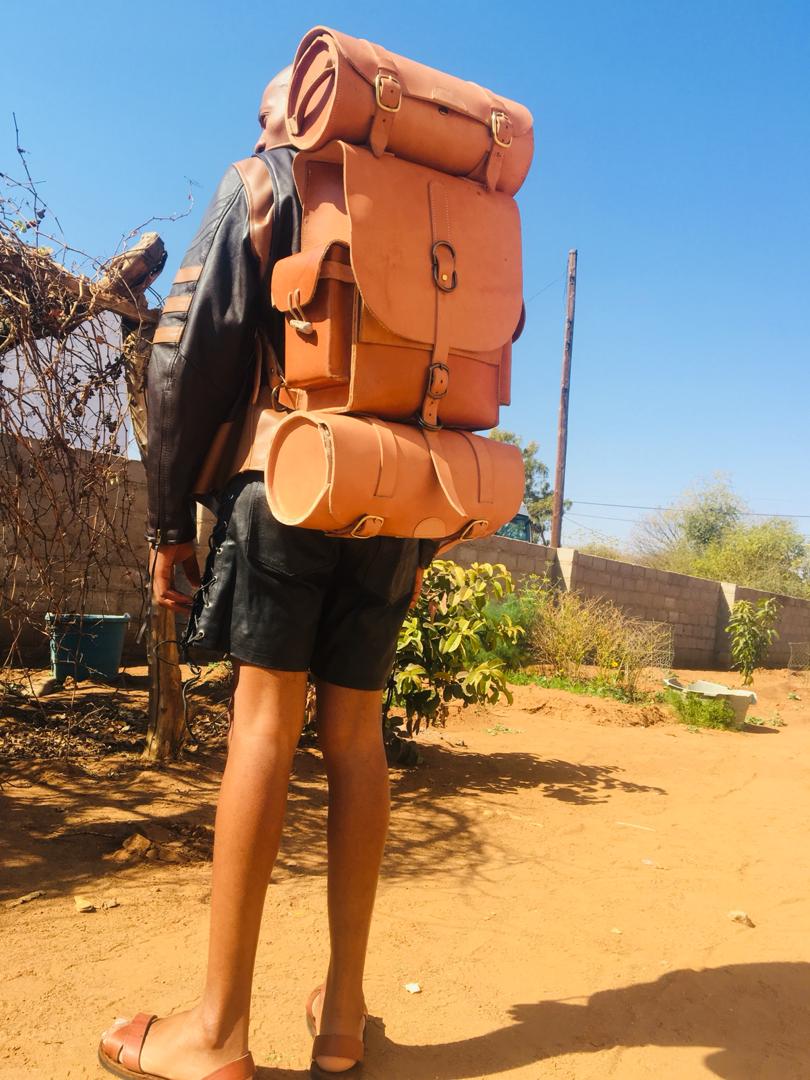
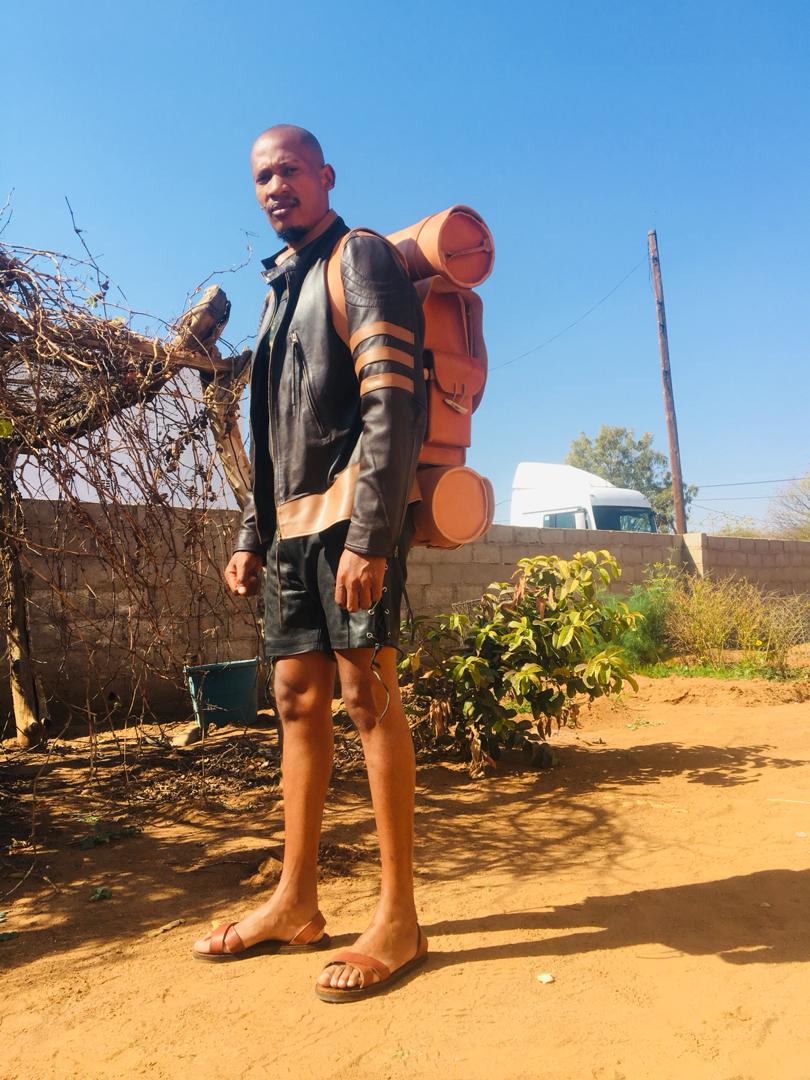
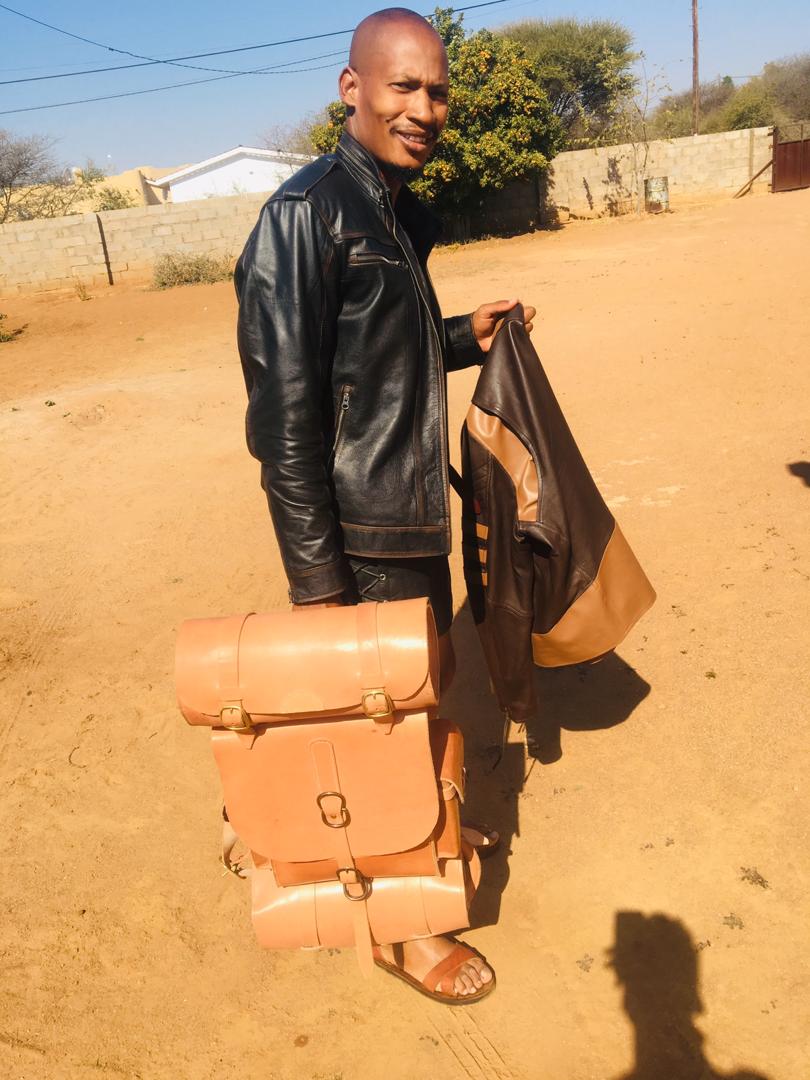
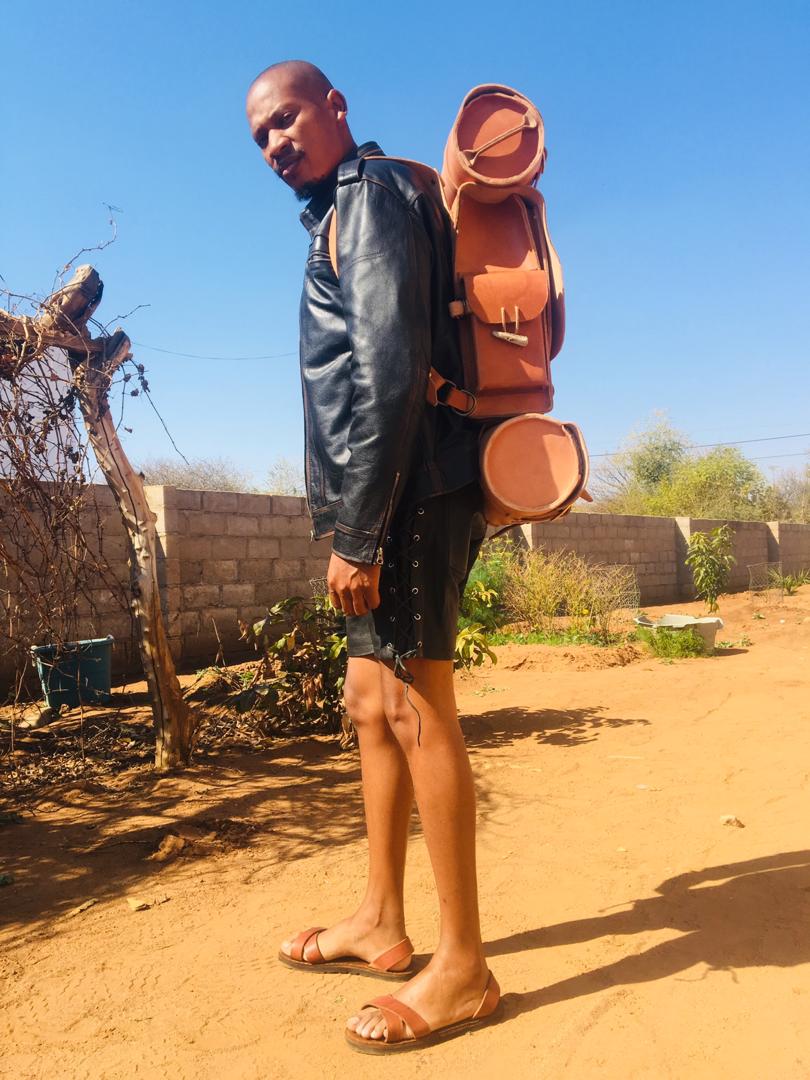
One of the better things about modern communication is the ability to meet and talk to people from nearly all parts of the globe. I have been in communication with Jacob from Botswana for years now and he has shared some photos of the beautiful backpack he made based on my earlier design. That one now resides in Montana and I hope serves some function for its owner. My personal pack has since been replaced by this one and is my new favorite piece of gear. But enough about me.

Right now, according to Google Maps, I am about 13,670 km (8,494 mi) from central Botswana and am unlikely to ever make it there, though not for lack of wanting to.  However, the internet allowed us to connect across a vast distance in space and share ideas with strangers who have common interests.

Anyway, here is Jacob’s very own leather rucksack and the two portmanteaus inspired by this post to carry his gear into the bush of southern Africa. I suspect a backpack like this will outlive us all and become a fine heirloom to pass on to the next generation.     Thank you so much for sharing these Jacob. I hope it serves you well for many years.

Coat of arms of Botswana

Leather Knapsack Prototype

Why do this?

In my life-long quest for better designs and finer gear, I am constantly on some sort of hare-brained mission to make something new.  Some readers may remember the earlier backpack I made and eventually traded off to a new owner.   My friend Jacob, even made a fine copy for himself and it now lives happily in Botswana, hopefully seeing many great adventures.

Snapshot of the pack, ready for waxing.

Leather and Brass? (or, what the hell were you thinking?)

One thing that can be said about real leather is that it will, barring some mishap, last a lifetime but eventually fade back into to earth, leaving little trace.  Leather is strong, wears well, is abrasion and heat-resistant, feels good to the touch, and cannot be beat for beauty.  While I considered antler for buckles, I decided to go with a slightly more modern closures and fasteners made from solid brass.  As I use antler in most of my creations, I chose to make a few well-shaped toggles as practical accents.

The downside? These materials are heavier than modern, lightweight materials but, for me, the trade-off is completely worth it.

It begins with the little things. There are many repetitive steps in large projects such as this.

This backpack started off as some daydreaming and sketches on graph paper sometime last November but other projects and commitments made me set it aside again and again.  This was good though; it allowed me to rethink the plans and make modifications as they occurred to me in the quiet hours of the night.

The harness system took some time, thought, and modelling before work could commence.

What were the design parameters?

Design is always the toughest part when creating something new.  I’ve been looking at handcrafted bags and packs for years so I’m sure there are a thousand images bouncing around inside my skull influencing the composition of this piece.  Honestly, choosing a size was the most puzzling part of all for me.  I’m a biggish guy and have a tendency to go big when I make gear so I was determined to keep this one reigned in.

Once the more difficult decisions were made, cutting and sewing could begin.

I already had a “look”  in mind and already decided on the construction technique.  Should it be a six panel body for easier layout or single panel around the body for a more seamless build?  Should it be sewn, laced, or riveted and what pockets does it need?  Will it be “turned” (seams hidden inside) or will the closings be visible?  Finally, where to begin construction?  We can’t close the body until the external sewing is done so pockets and straps were a good place to start.

Not long after getting most of the parts gathered and cut, I found myself wounded, with only one arm for practical use.  This slowed down sewing to a crawl.  What should take fifteen minutes took over two hours so this bag became an exercise in patience.

Still, I managed to make headway and the pack came together over several weeks.

A “turned” pocket freshly attached to the body.

Maybe not my prettiest stitching ever, but as it will be mine, and not for sale, I will still cherish every flaw.

Large pocket accessible with the main flap closed.

As a prototype, there were changes that must be made on the fly but overall I was happy with the design.

The shoulder straps were made to be replaceable without too much hassle and are long enough to accommodate a heavy coat in winter.

A carry handle was a heavy debate in my mind but makes a lot of sense for modern travel.

Each side has a slip pocket, tie down D rings and a compression strap at the top of the pack.

Bottoms up! I was able to place a scar in the hide on the bottom of the bag. The two rectangular patches are for blanket straps.

Details – brass rivets, antler toggles, and beautiful leather called for a heavy pillow ticking to serve as the liner.

Waiting to be packed for an adventure. I hope to get it waxed and outside later this week. Hopefully, I’ll get some photos of the new pack in use.

  Specifications:

  • Materials – 8 ounce veg tanned leather body, 4 – 5 ounce leather pockets, brass and antler
  • Height – 16 inches
  • Width – 12 inches
  • Depth – 6 inches
  • Weight – 5 pounds

Thoughts?  Suggestions?  Selfies of your hand-made gear?

Work from the Leather Shop

  • Long, cold nights in the Midwest. 
  • Limited mobility due to injury. 
  • A need to create new things
  • A desire to fund my trips later this year…

This is a recipe for high productivity in the workshop.

dsc_0106
Hot off the workbench.

Fortunately, I have a fairly large stockpile of leather and supplies to see me through my projects as I find inspiration in different projects.  I am leaning toward things that have been popular in the past years but if anyone has ideas or suggestions, I will gladly consider them.

dsc_0107
Sam Browne button in solid brass.

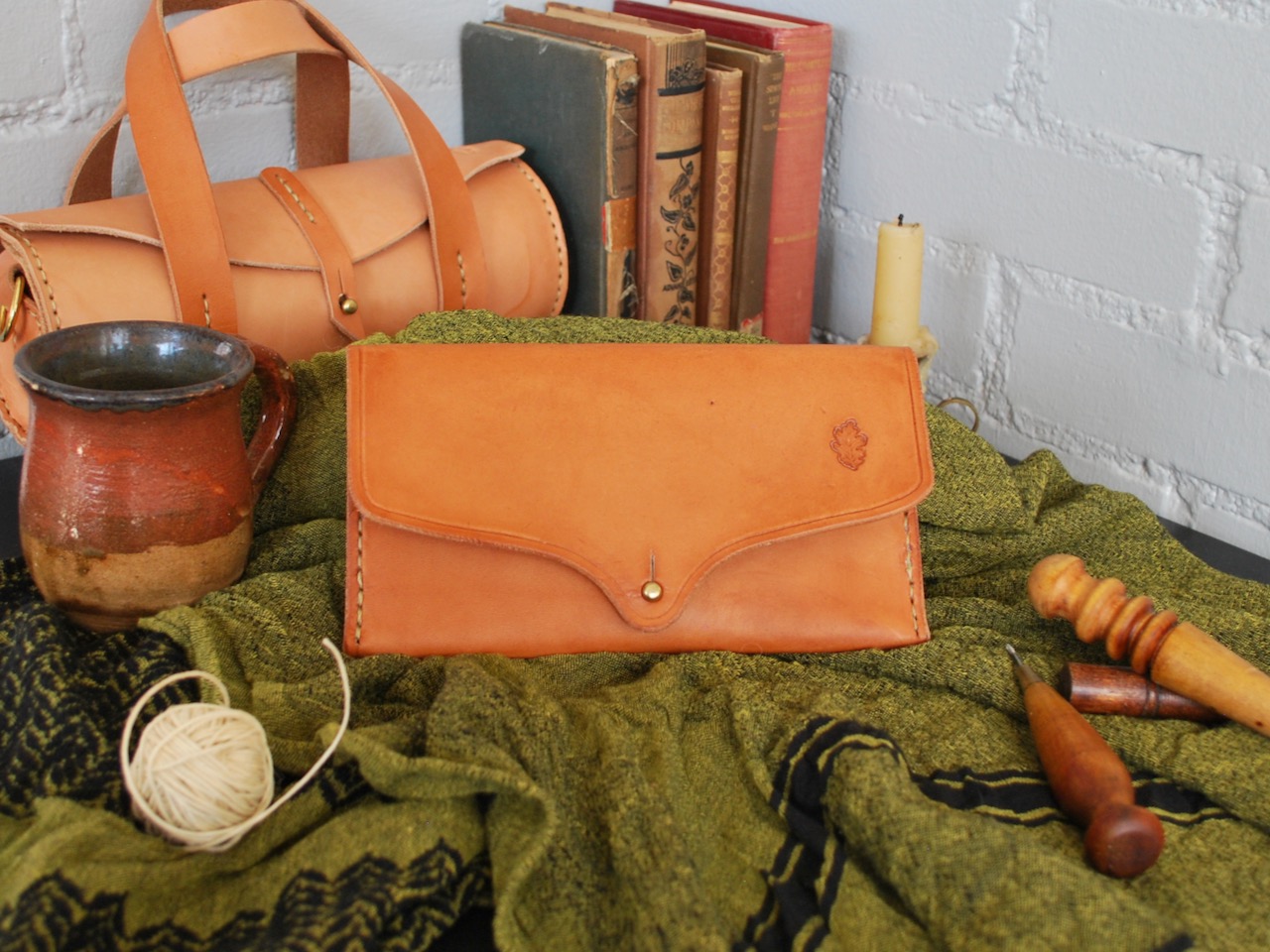
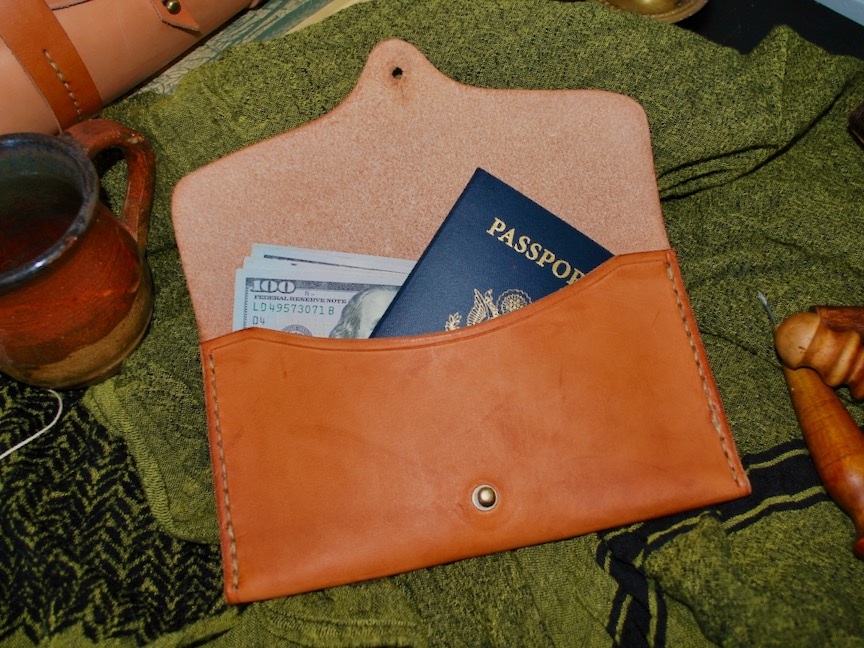
This is my travel wallet design.  It’s a simple clutch-style document case to keep things safely stowed when you want more than a card wallet.

dsc_0109
Simple, rugged design.

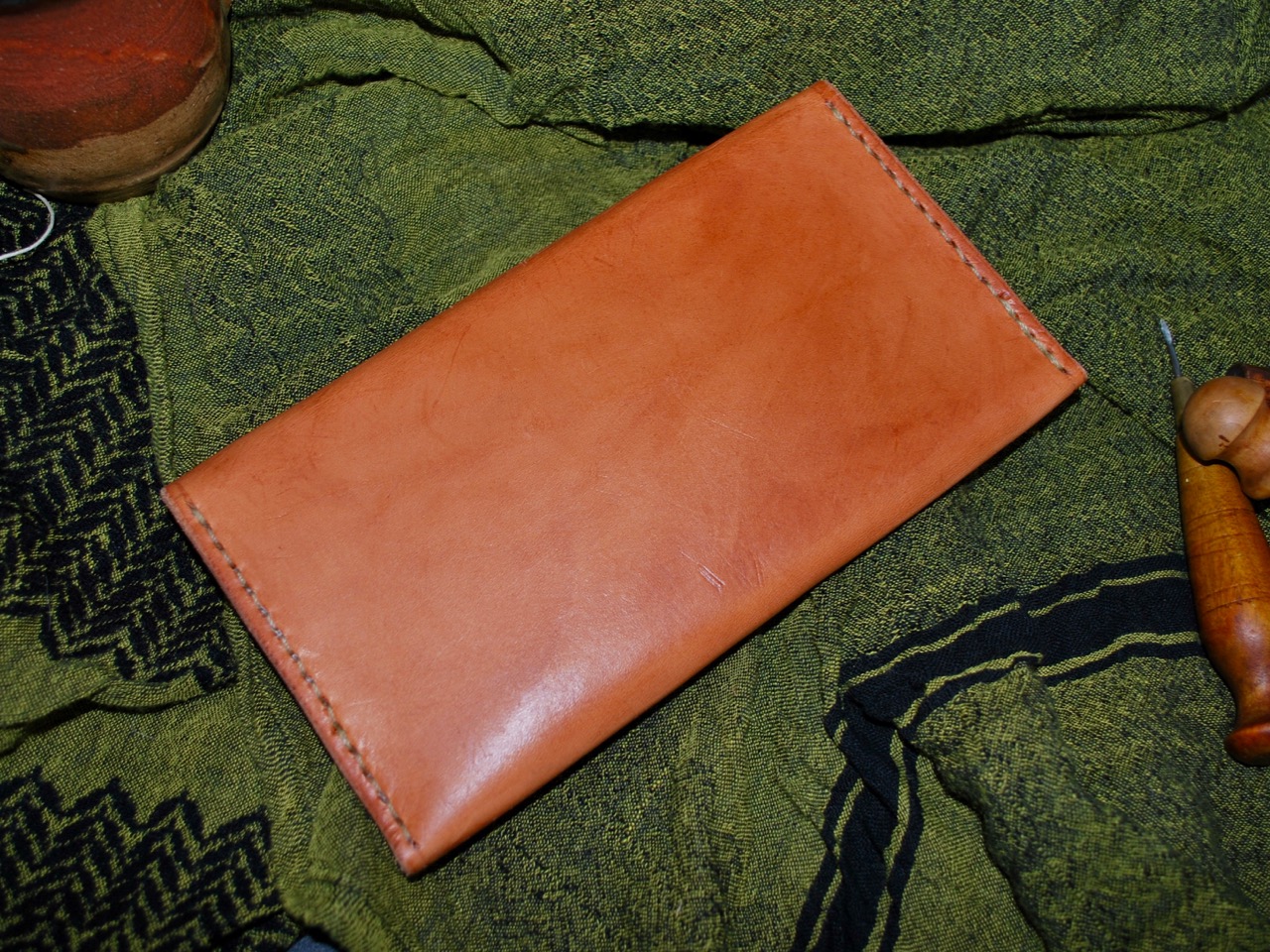
No frills but elegant in its own way, this one was left natural color and rubbed with dubbin (a mix of neatsfoot oil and beeswax).  Full-grain veg-tanned leather like this ages beautifully and takes on a golden brown patina.  This wallet should outlive its owner.

dsc_0108
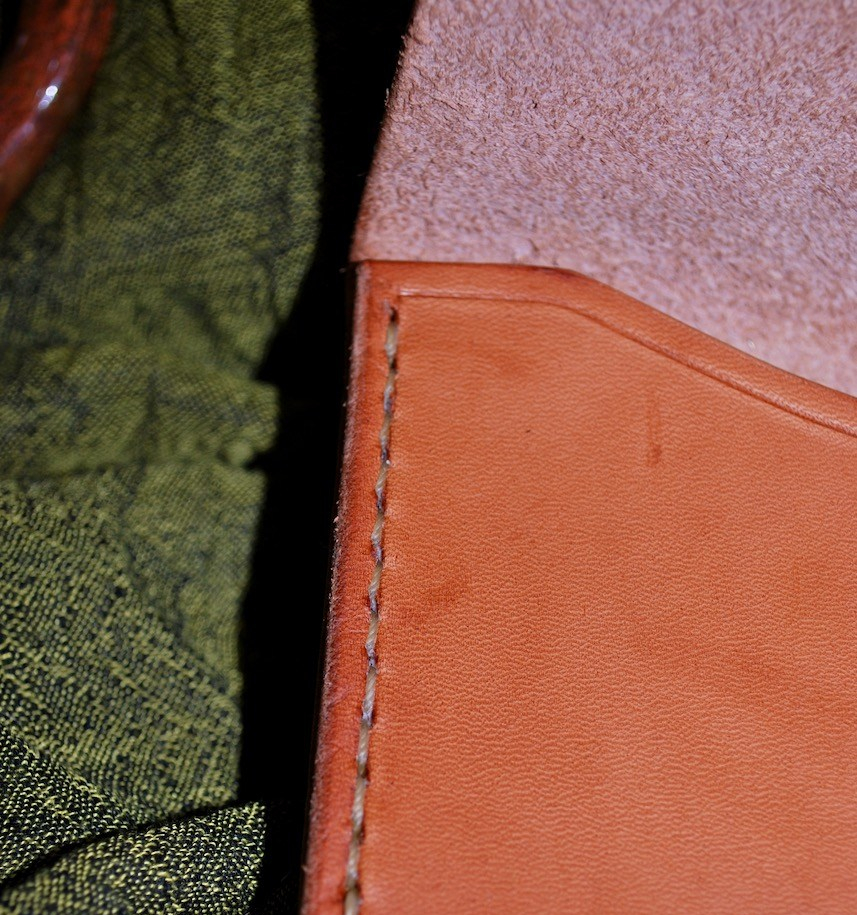
Hand stitching.

As always, the stitching is double-needle saddle-stitch for strength and hard-wearing.  If you are interested in this or similar goods, please check out our new Etsy shop at https://www.etsy.com/shop/LostWorldCrafts or just click the banner below.  We hope to have the site fully running and stocked with new goodies in the coming weeks.

lostworldcrafts