A modern RV, like a house, is a structure enclosing a lot of empty space. This is why a large house costs (the builder) substantially less per square foot. It costs virtually nothing to build more floor space but a lot of resources go into things like corners and openings such as windows and doors. The essentials of habitable structure are walls, a minimum of space for sleeping and storage, ventilation, and maybe heat.
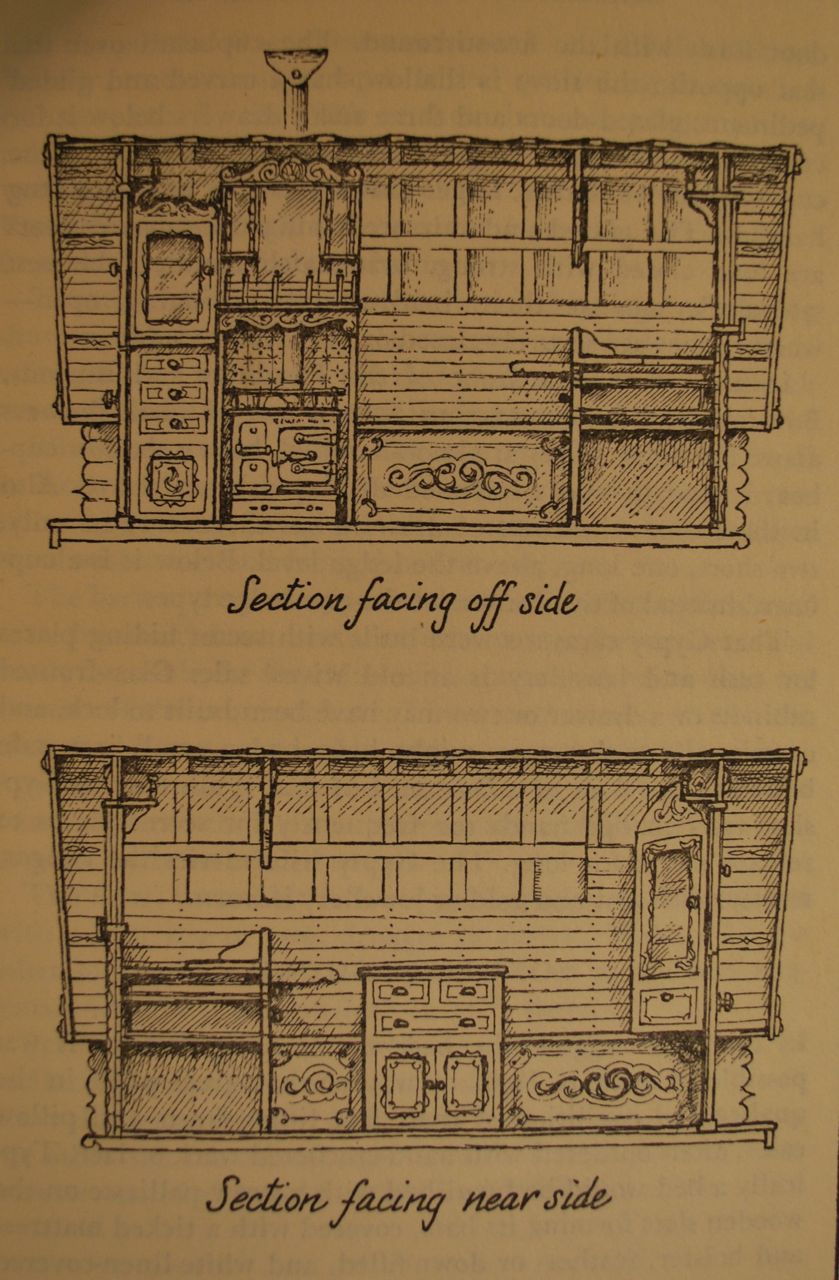
 The beautiful illustrations here are from the book The English Gypsy Caravan. Nineteenth century caravan builders distilled out the necessities of living on the move. Not enough room to host a country dance but enough room to sleep, have some some privacy when necessary, and shelter from bad weather. The Open Lot design, above, has a fair amount of seating, an expandable bed, and small amount of dedicated storage for personal items. Prior to the twentieth century in the industrial world, most people “lived” outdoors with the “house” serving as protection and privacy.
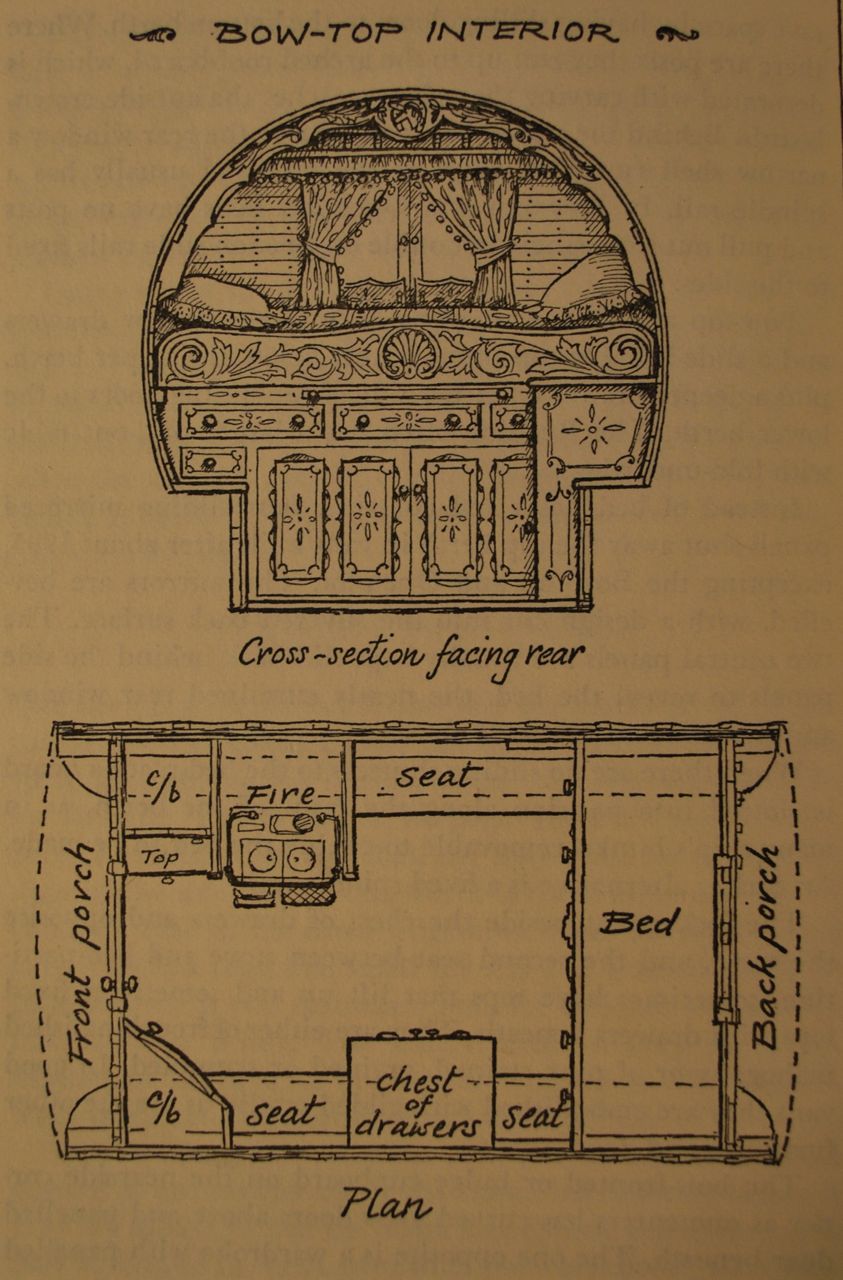
 The evolution into the Bow Top shows more storage and less room for seating but also the ability to cook inside and more dedicated storage. It should be taken into consideration that wagon dwellers in the 19th and 20th century Europe generally slept outdoors unless in all but the worst conditions. The wagons were safe havens to keep your possessions and children whereas adults slept under the stars or occasionally in tents.
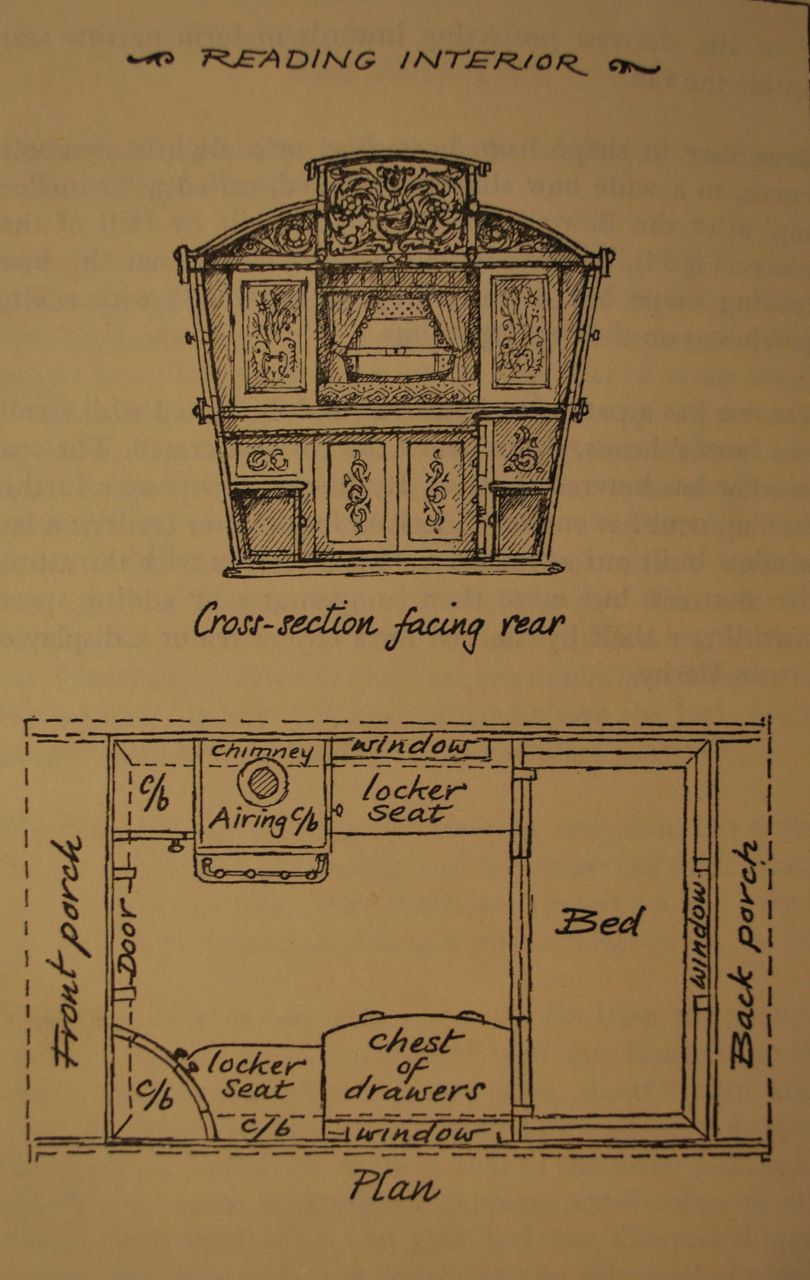
 Many innovations came with the full development of the Reading wagon. As the body is built more like a box, underseat storage really adds security to possessions on the move. The chest of drawers remains but additional cabinetry adds ever more segregated storage.
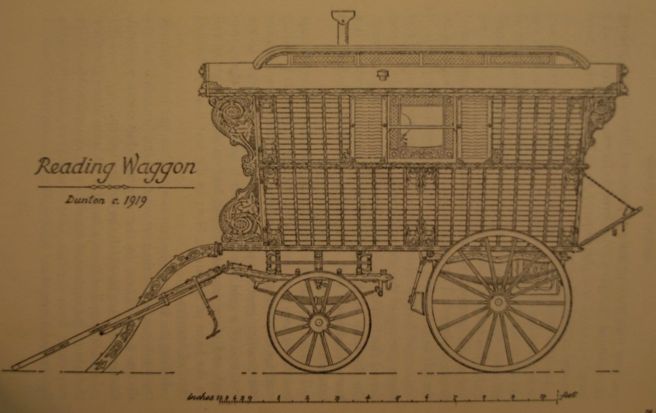 The finest wagons of the era included a mollycroft or central raised portion of the roof allowing for small windows for ventilation and light. In the image above, you can even see the small chimney vent that was placed over the mounted oil lamp as coal oil produced a lot of soot lowering air quality inside.

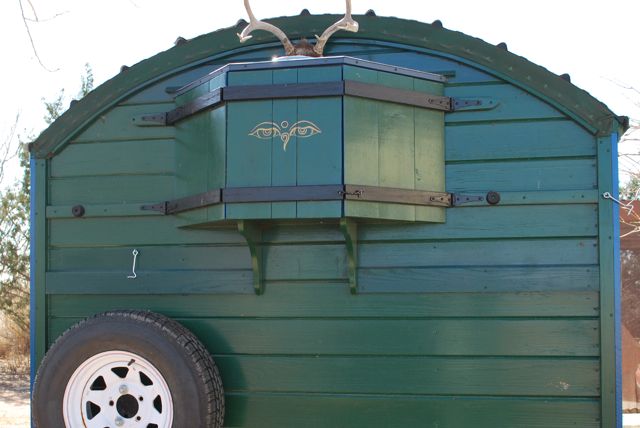
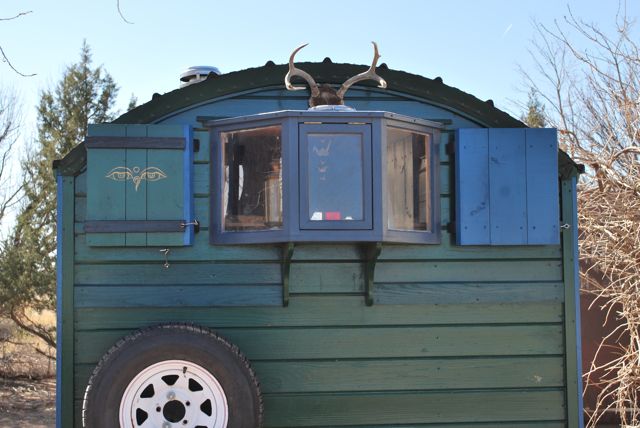

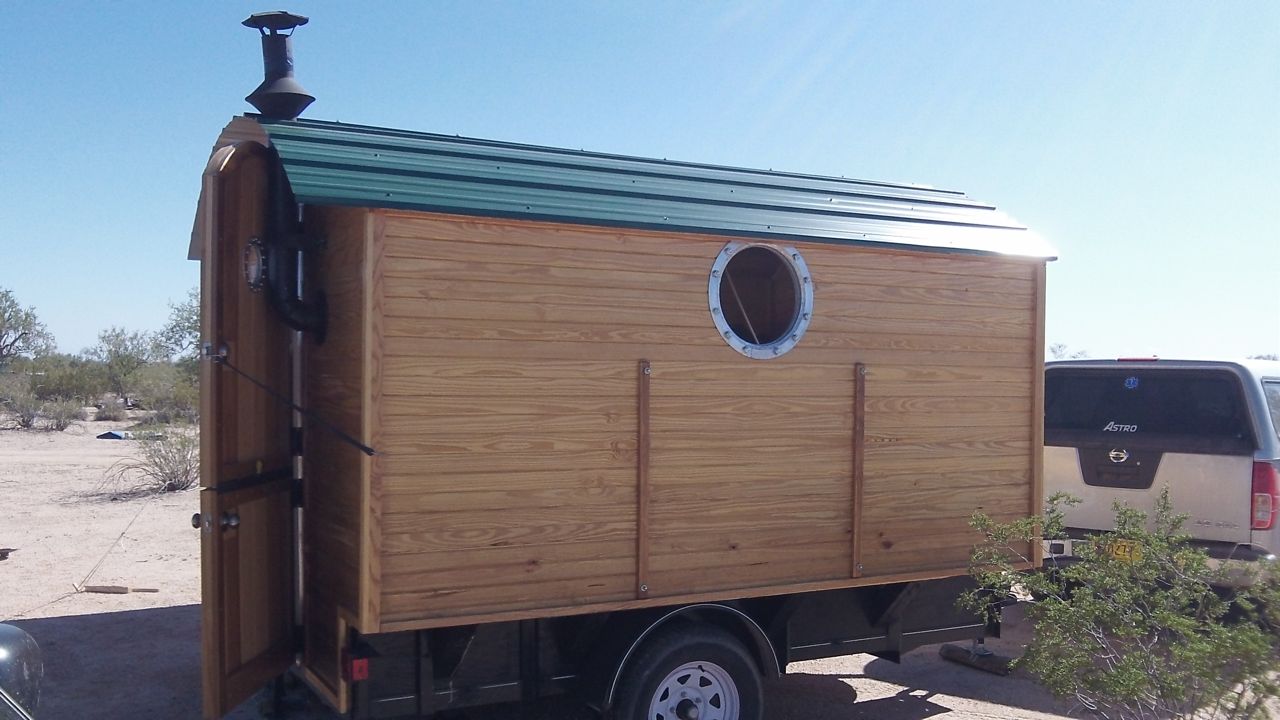





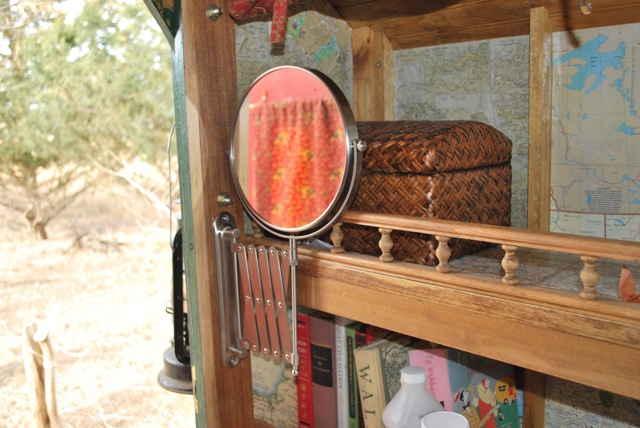


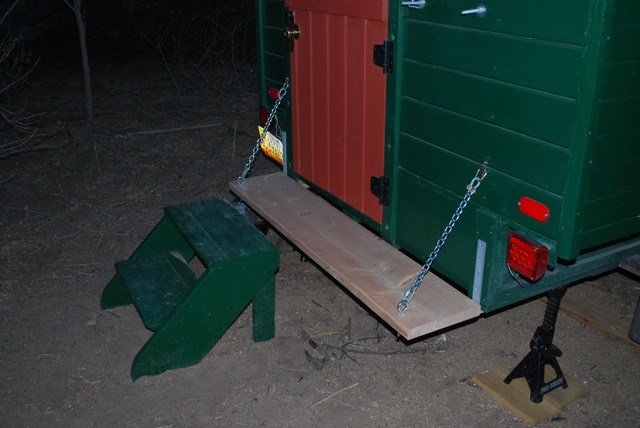
 Preindustrial Craftsmanship