Travel Shutters

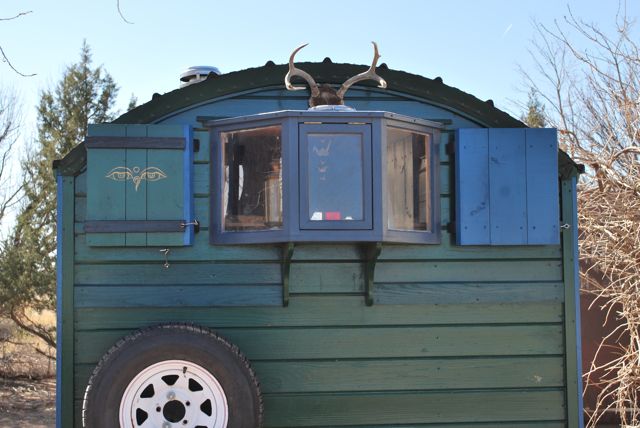
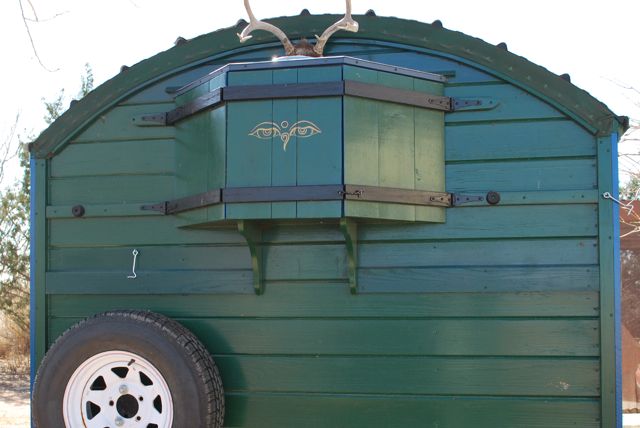
I wanted to put up photos of the travel shutters.  As the windows face forward, they take a real beating on the road.  After solving the issue of covering three sides, the construction was pretty simple.  Being small, I was able to knock these together from scraps around the barn.

Simple but effective. These should protect the windows from most flying debris.
Normal open position. There are rubber bumpers behind each to prevent the bumping sound in high winds.

More Vardos

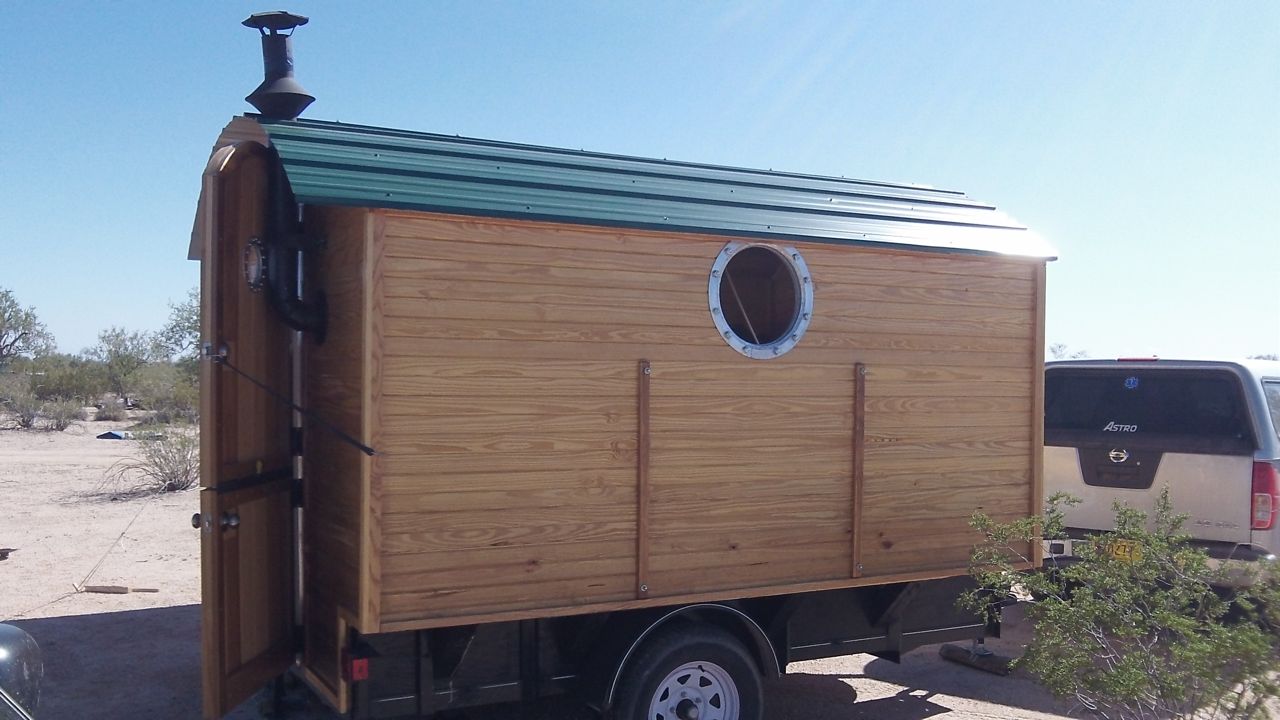
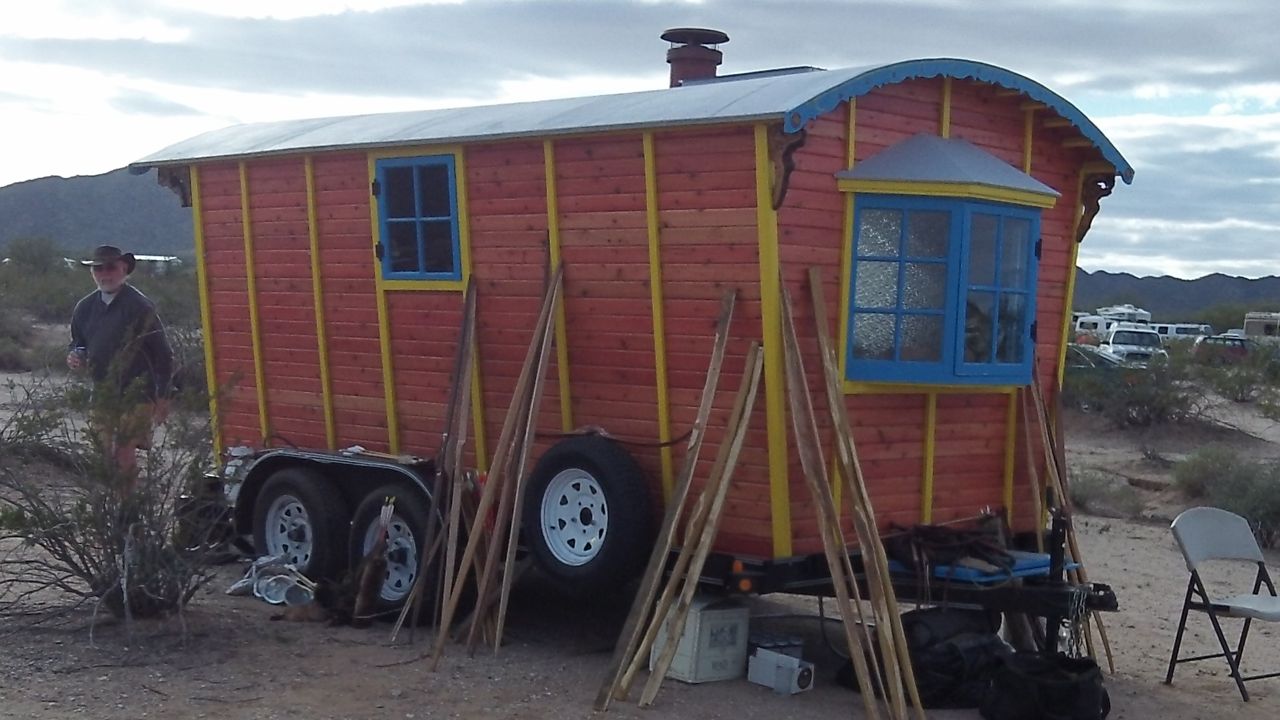
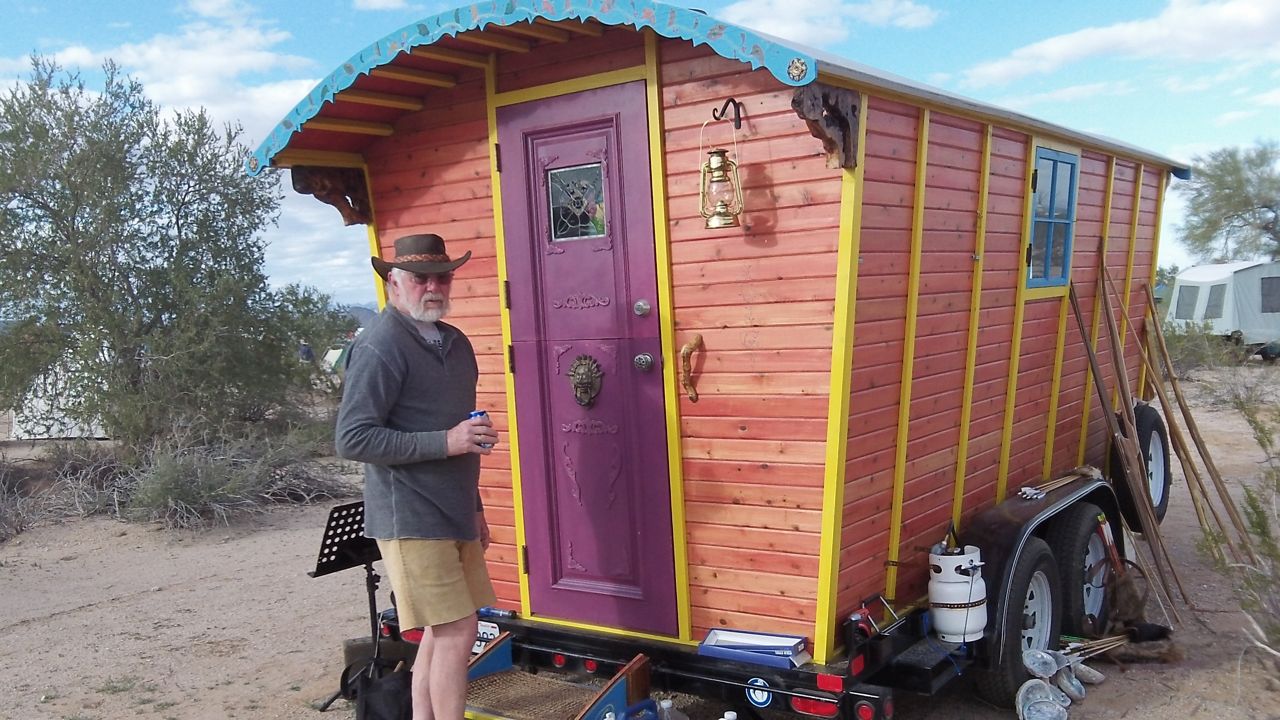
Here are a couple new Vardos found in the Arizona desert this February.

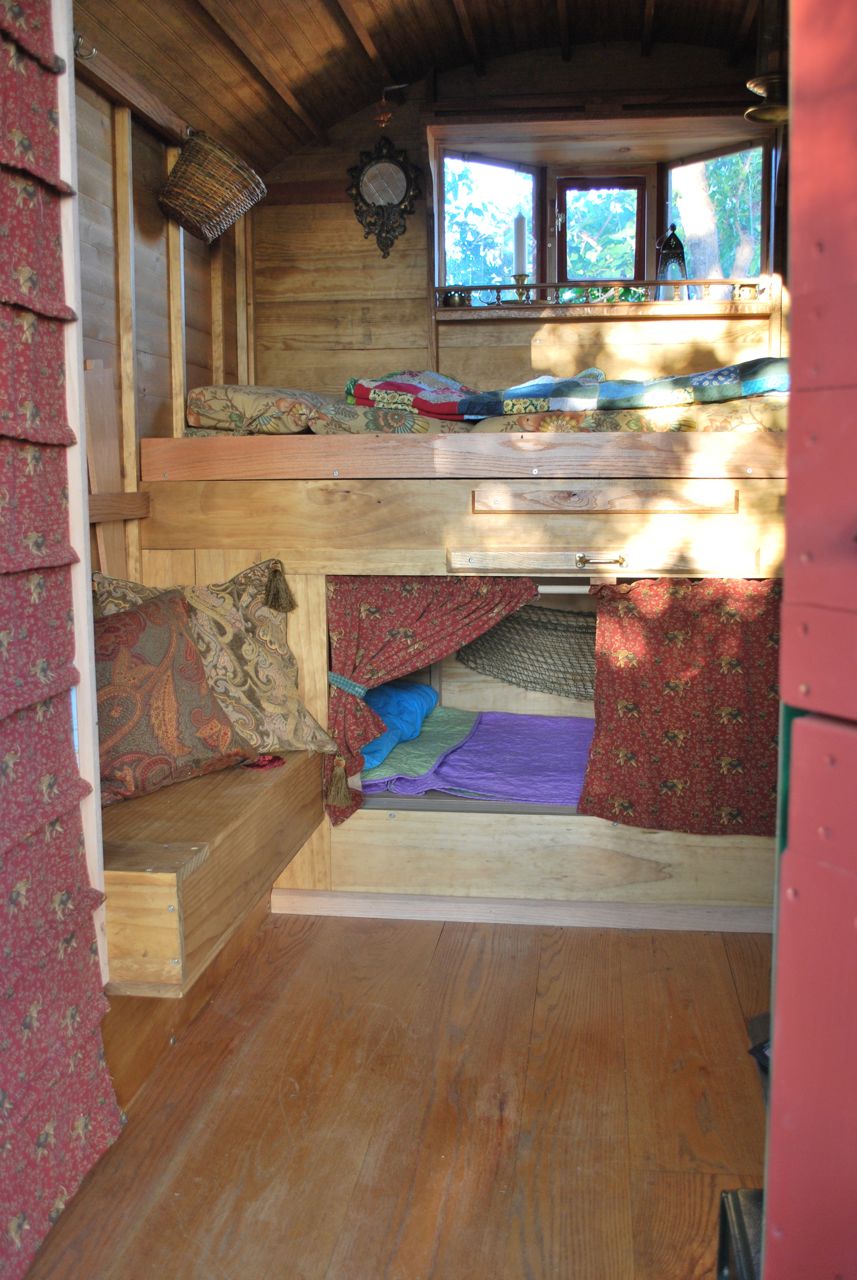
Jack’s wagon, nearly complete inside.  I helped him build the main structure in my driveway last summer and he has been trimming it out ever since.  It essentially the same design as mine (with a few logical improvements) and lengthened by two feet.

The portholes were purchased from a ship salvage company and add a cool nautical look.  This one is ten feet long (3 m) and feels very spacious inside.

Paul’s wagon is a beauty but I suspect weighs quite a bit.  The tandem trailer alone might outweigh my little rig.  This one is 14 feet (4.25 m) long and could host a small dance party inside.

The color scheme and interesting details really make this one stand out in the crowd.

Inspiring Plans, pt 2

A modern RV, like a house, is a structure enclosing a lot of empty space.  This is why a large house costs (the builder) substantially less per square foot.  It costs virtually nothing to build more floor space but a lot of resources go into things like corners and openings such as windows and doors.  The essentials of habitable structure are walls, a minimum of space for sleeping and storage, ventilation, and maybe heat.

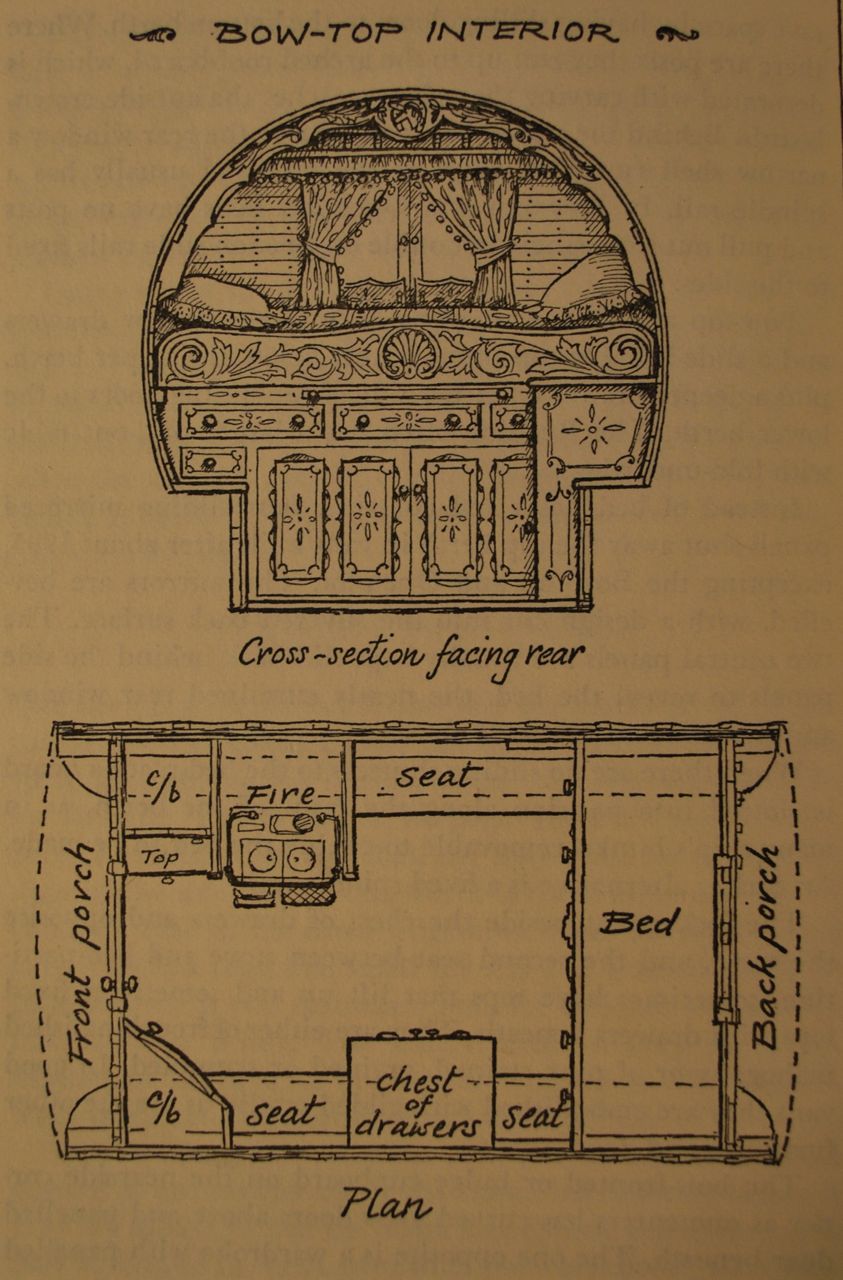
The beautiful illustrations here are from the book The English Gypsy Caravan.  Nineteenth century caravan builders distilled out the necessities of living on the move.  Not enough room to host a country dance but enough room to sleep, have some some privacy when necessary, and shelter from bad weather.  The Open Lot design, above, has a fair amount of seating, an expandable bed, and small amount of dedicated storage for personal items.  Prior to the twentieth century in the industrial world, most people “lived” outdoors with the “house” serving as protection and privacy.

The evolution into the Bow Top shows more storage and less room for seating but also the ability to cook inside and more dedicated storage.  It should be taken into consideration that wagon dwellers in the 19th and 20th century Europe generally slept outdoors unless in all but the worst conditions.  The wagons were safe havens to keep your possessions and children whereas adults slept under the stars or occasionally in tents.

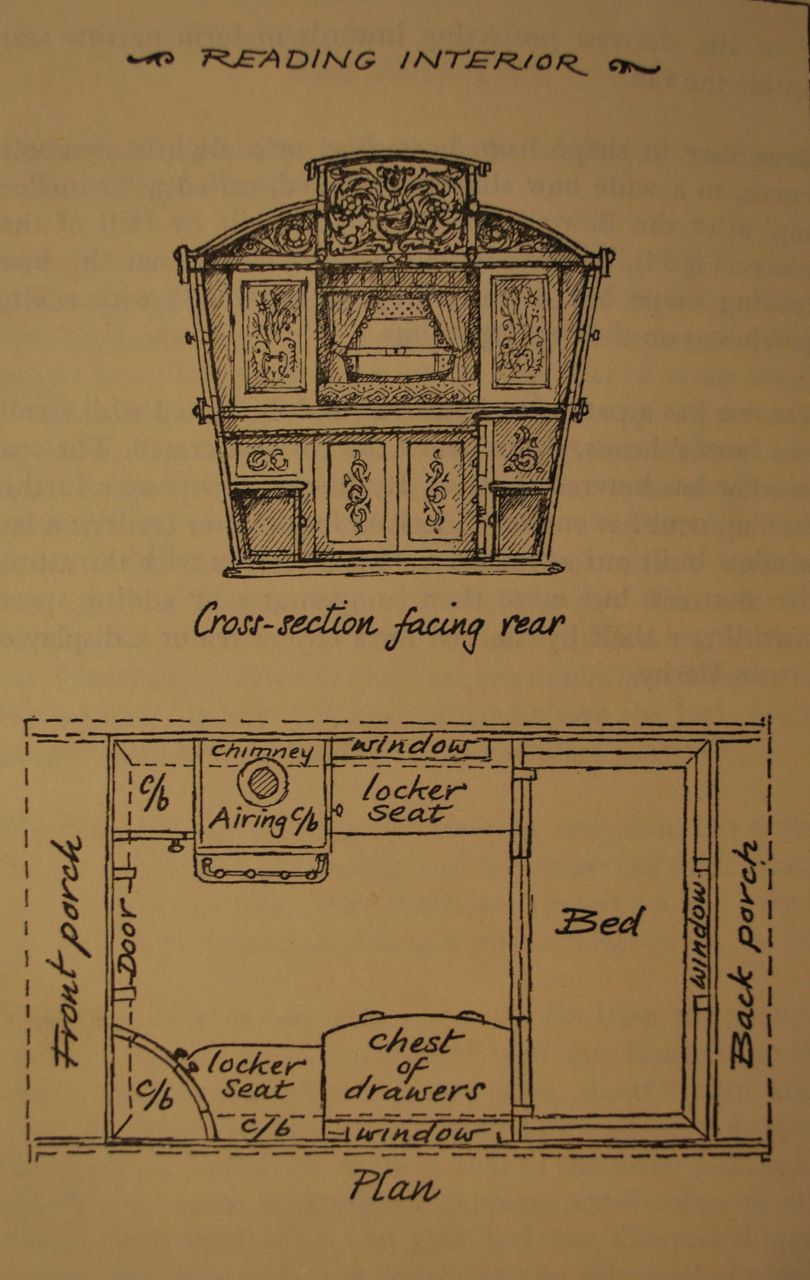
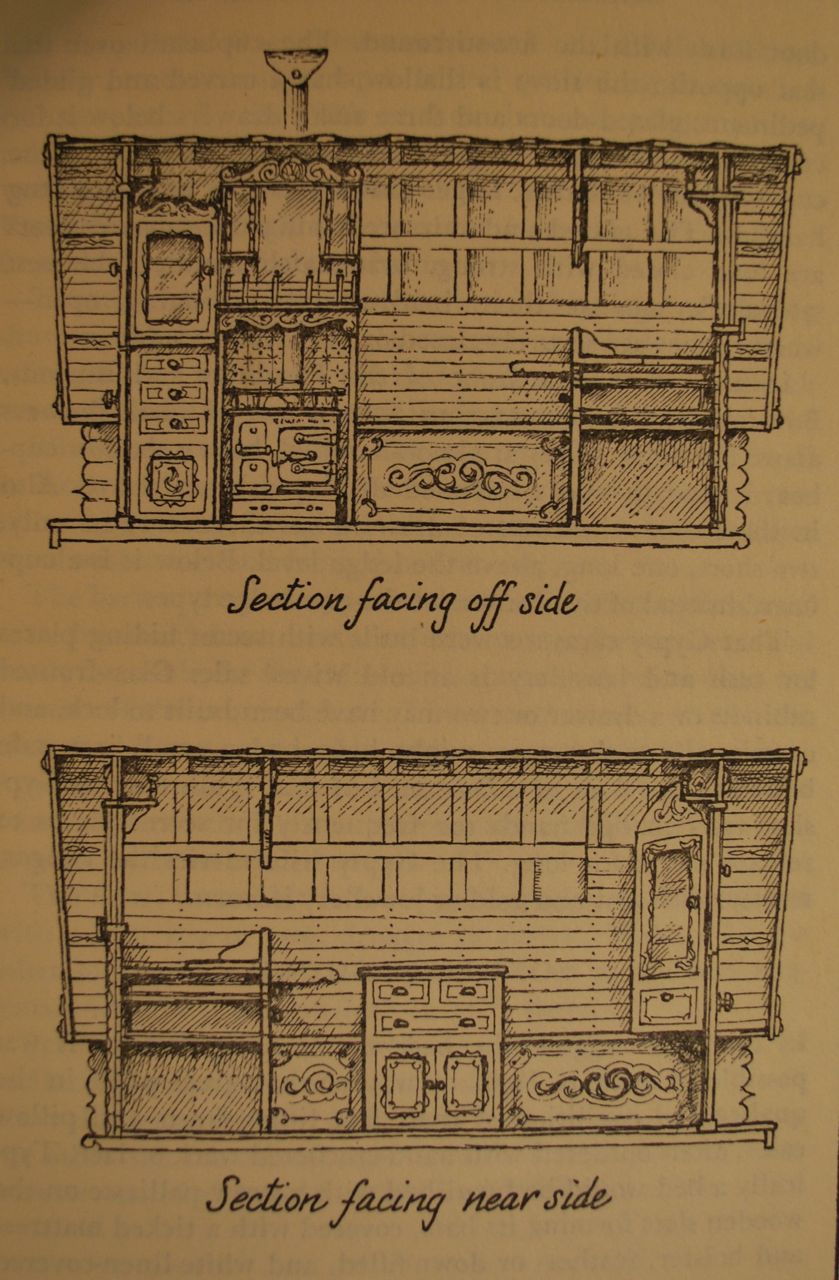
Many innovations came with the full development of the Reading wagon.  As the body is built more like a box, underseat storage really adds security to possessions on the move.  The chest of drawers remains but additional cabinetry adds ever more segregated storage.
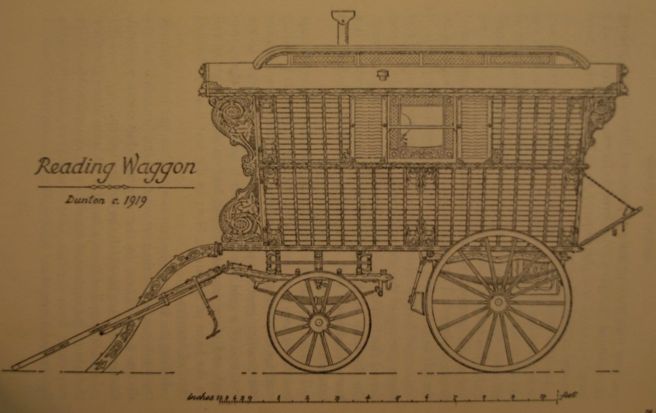
The finest wagons of the era included a mollycroft or central raised portion of the roof allowing for small windows for ventilation and light.  In the image above, you can even see the small chimney vent that was placed over the mounted oil lamp as coal oil produced a lot of soot lowering air quality inside.

Inspiring Plans, pt 1

The following are plans from The English Gypsy Caravan.  This book taught me a lot about layout in such a small space.  There is rarely anything new under the sun and the early builders thought through the process quite thoroughly.

Figure 20.

The figure numbers on the images are from the book.  The above is a classic “Open Lot”.  Essentially the simplest of the caravan designs.  More sturdy than something like an American Conestoga as the walls are at least partially wood lined and there are a couple built-in cabinets.  This could suit a couple people fairly well.

Figure 18.

The “Bow Top” is a more sophisticated version of the Open Lot.  More cabinetry, a small cook stove, and some shelving.  Notice the corner cabinets to use the vertical space in both the above plans.

Figure 16.

Finally, the famous Reading Wagon.  This is what most people envision when they think of the gypsy caravan or wagon.  Kite-shaped from the end-view, this wagon has a lot of useful indoor space.  Cupboards and underseat storage are integrated and these generally have substantial chest-of-drawers built in.  The later roofs had mollycrofts to allow more light and the walls were decked out with mirrors to give the illusion of spaciousness.  Straight wooden walls lend themselves to hooks, pictures, or small shelves everywhere.  At about ten feet long, this was and is the epitome of traveling luxury.

Odds and Ends

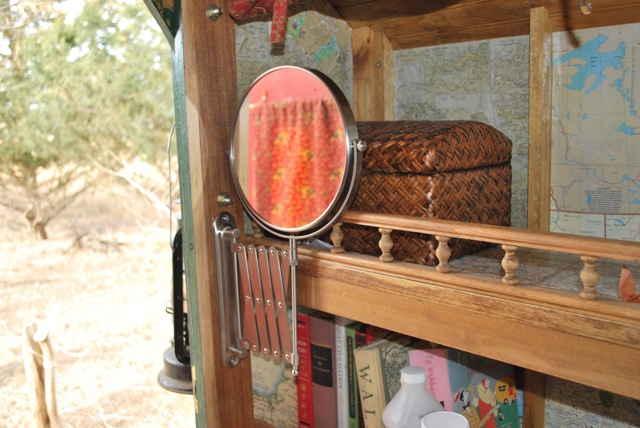
I finally found the shaving mirror that was perfect for the wagon.  I have seen them in photos of other western wagons.  Local hardware and bath stores only had very cheesy, lightweight mirrors on folding arms.  After some internet searching, I found this one that had good reviews on Amazon.  It is sturdy and appears to be well-built.

Below is the coffee grinder that was the fist housewarming gift for the wagon.  Thanks Mick.  It works well.

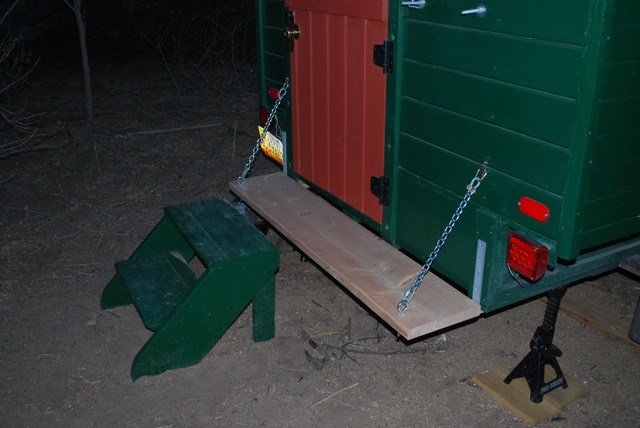
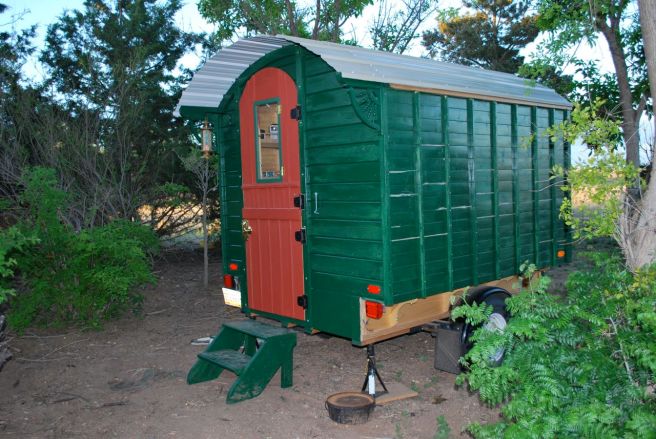
Finally, the step porch I have been debating over for a long time.  We’ll see if it works out.

Yet Another Modern Vardo


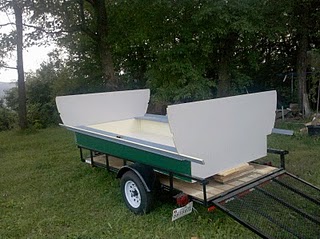
Another modern trailer vardo underway at “Vardo-a-go-go“.  It looks to be built to slide into a cargo flatbed and will apparently be used as a recreation vehicle.  The design is a modified “American Vardo” from Timothy Lemke.  I think the greatest benefit of this plan is its extreme light-weightness and relatively simple construction.  Good luck Libby and show us more photos!

N55 Walkinghouse

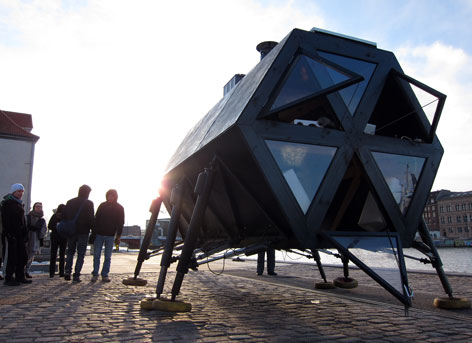
N55 is a group of artists and designers who have some interesting ideas.  I have been interested in the Walkinghouse since I first saw it.  Here is a link to its “manual” and here is a video of it walking in Copenhagen.  I selfishly wish they were doing this somewhere closer to me.  While on this website, its worth checking out some of their other ideas.  They are broken up into “manuals” and they also have a book you can download.

I like much of their design and hope to continue to see more as they progress.

My only real problem with this design is the lack of an easy-entry door.  I couldn’t imagine climbing in while holding anything (like a sack of groceries).  I do find the combination of solar-electric, hydraulic drive, and wood heat to be intriguing.

On the Road

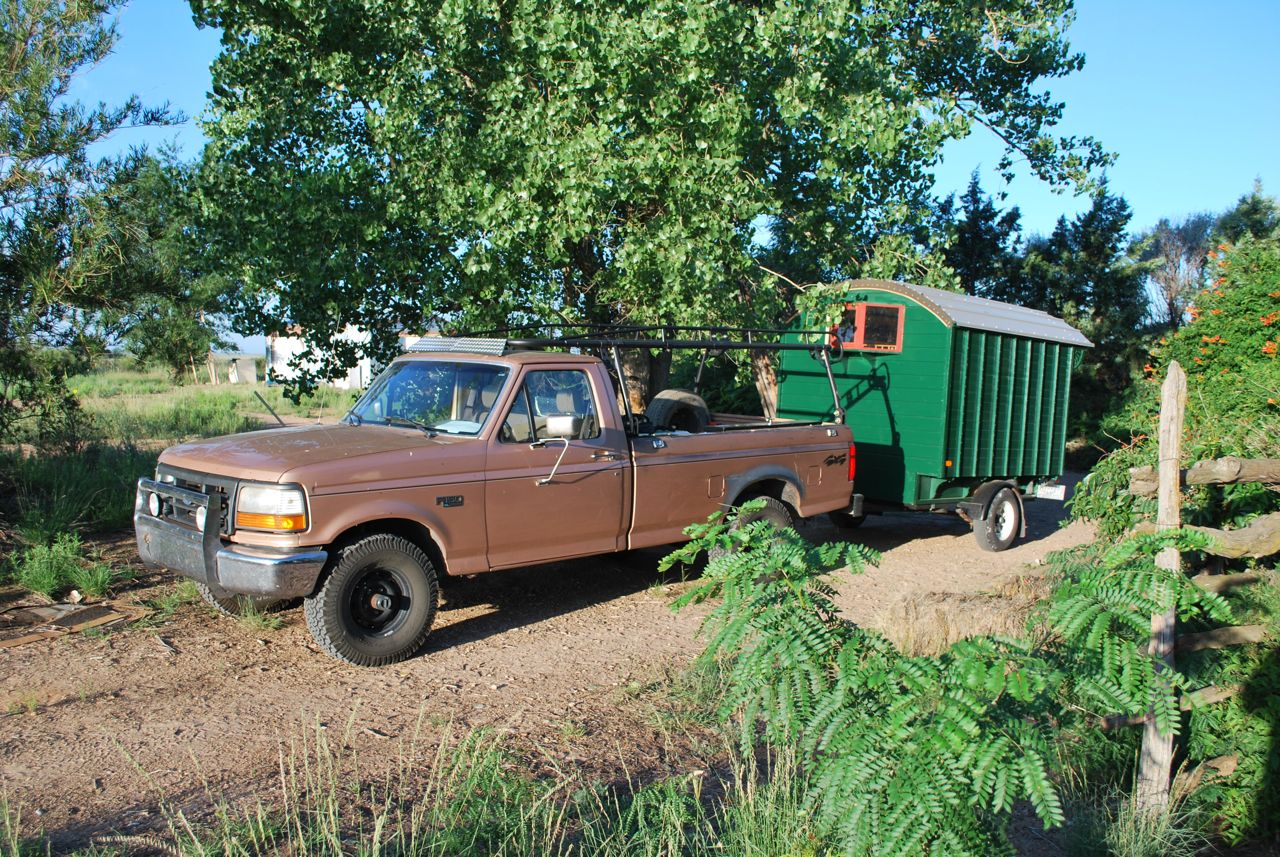
This was our trial run of the nearly finished vardo.  I had to stop tinkering long enough to pack it up and get ready to head out.

Packed for camping and ready to leave.

I should find a way to better secure the steps as the steep mountain grades caused some movement.

Taller tires have now made the wagon sit a little tilted.  I shall need to fix this with a drop down hitch.

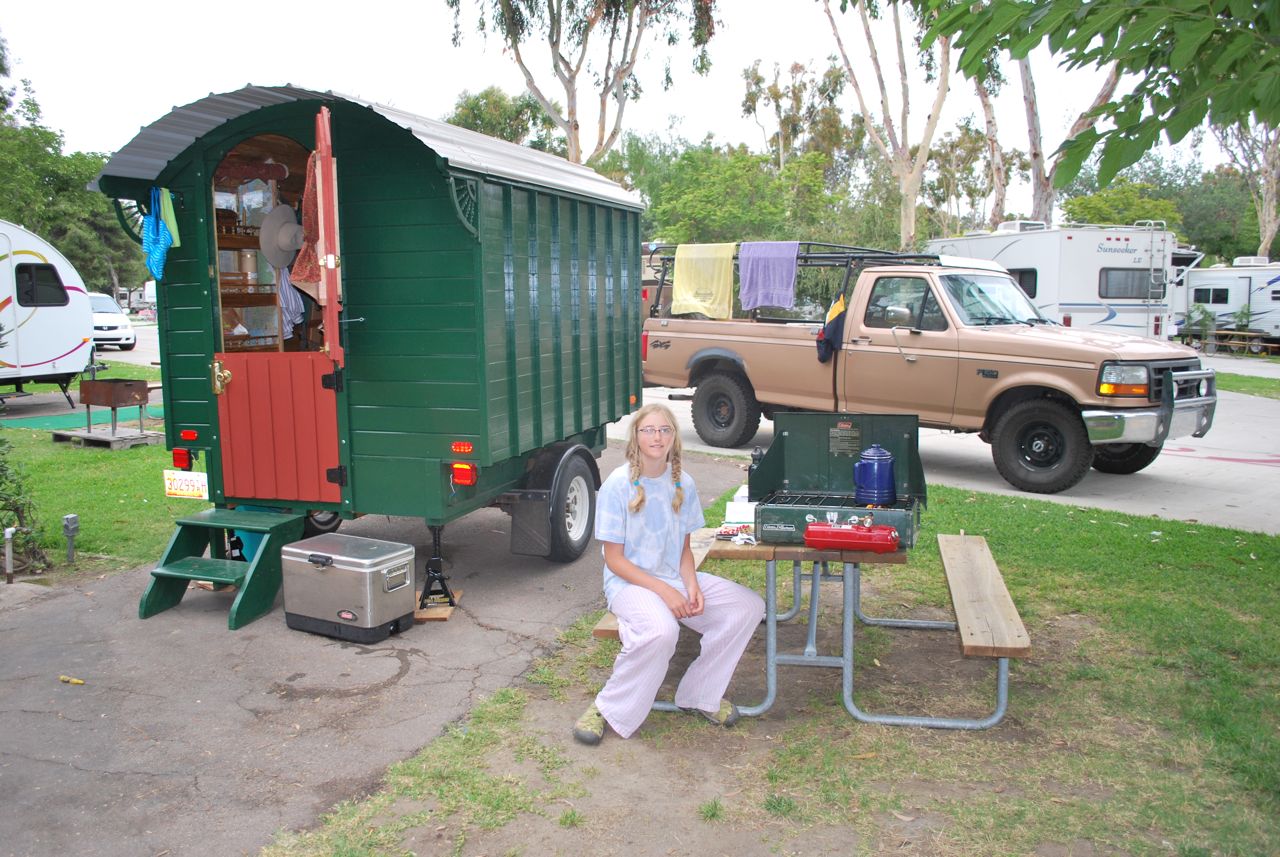
First RV style campground… ever.  I was actually very impressed with the facility.

The little vardo drew quite a bit of attention here amidst the $100,000+ RVs.

Vardo Table

Third try is the best.  After trying two other solutions for the table front, this is what I decided upon.  Oak with a simple brass sash pull.  Not very exciting I know, but still an important detail.

The two visible screw heads will be plugged to hide them better.  I just haven’t made it that far yet.

There are more small fixes and additions that have been made, just waiting to be posted here.