
Looks serene.
Adventures of an Imperfect Man In Search of a Handmade Life

Looks serene.

Found on Tumblr. The basic necessities never change. Just the execution and materials.
This is a re-post from an earlier entry. Say what you will about British imperial policy of the 19th and 20th centuries. They certainly worked out minimalist travel with a fair amount of style and comfort on a very personal level. These old catalogs give some great ideas for camp living.
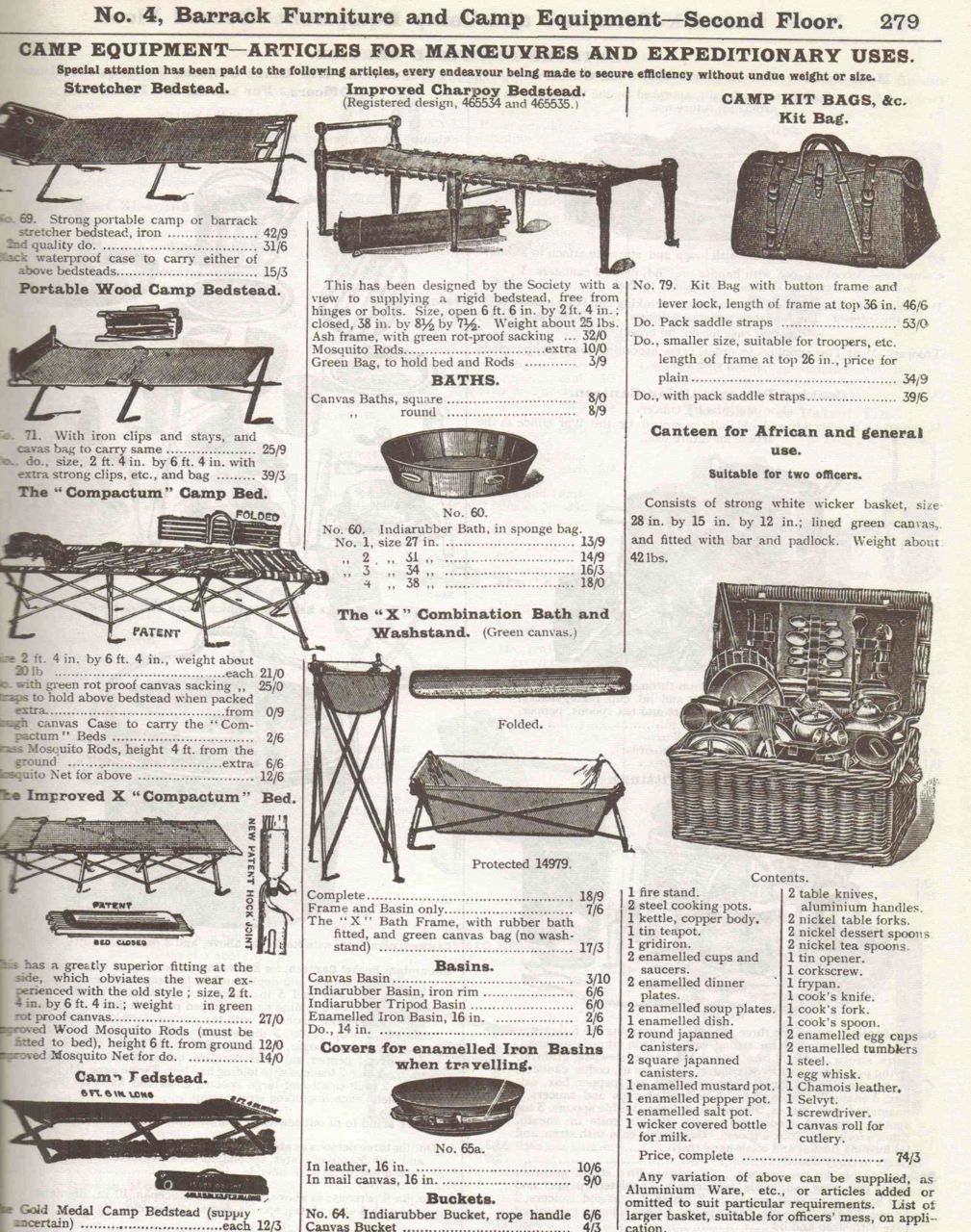


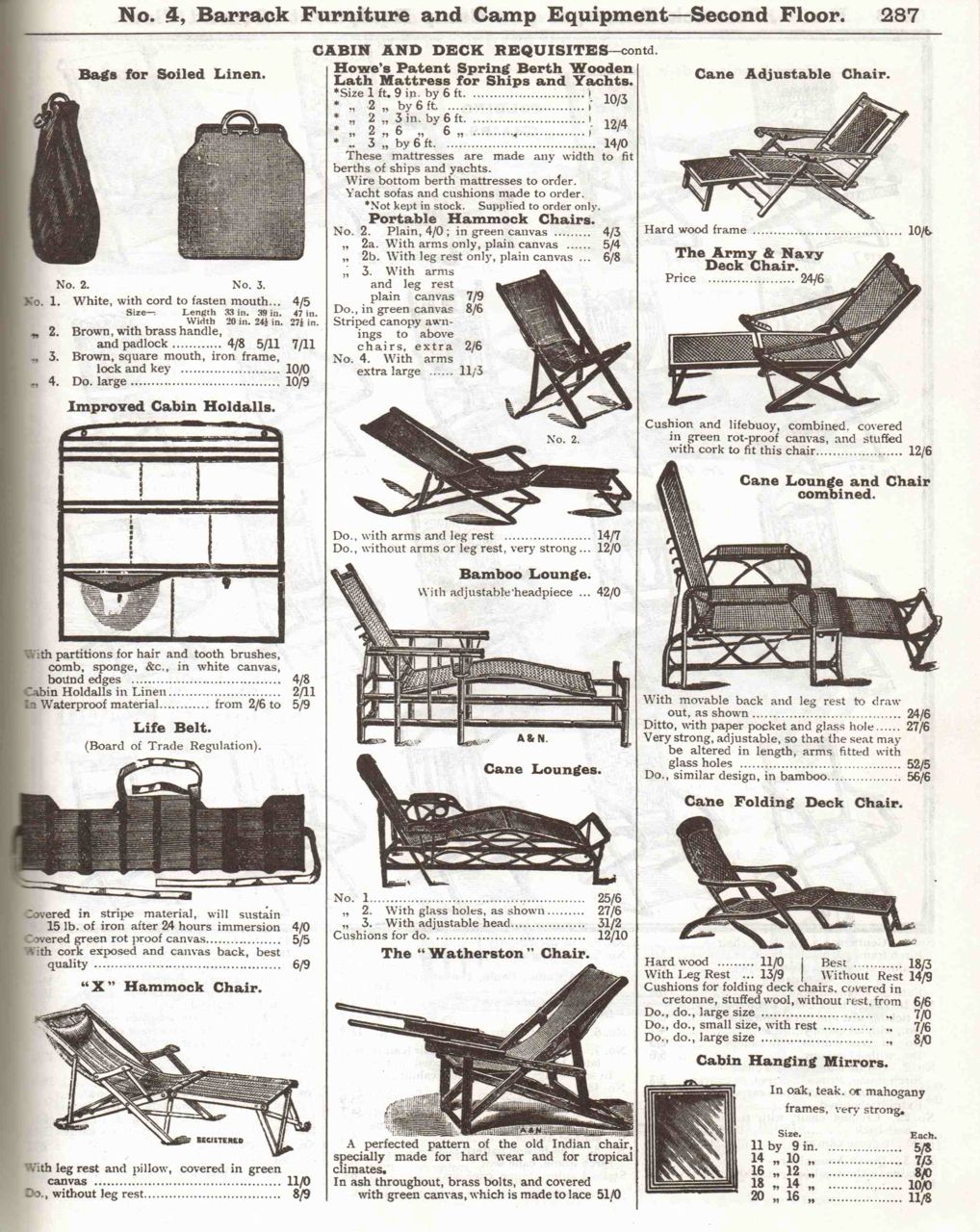

 There are some excellent items here that should give some inspiration for fabricating some classic and classy gear. From an era before the activity of “camping” was fully segregated from “regular living”.
Much more of this to come…
All animals need to eat. All the time. As humans, we eat every day if we are lucky. An average Westerner will have about 275,000 meals in a lifetime, not including snacks, munchies, and other nibbles. Once upon a time, we all caught, gathered, and ultimately made food for ourselves and our families. If we had some extra, we might have provided for the needy, the unlucky, or even the lazy. If we were entrepreneurial, we might have even exchanged our food for other stuff or services we needed. We cook our food to release nutrients, to make it easier to digest, and ultimately, to make it more delicious. After all, “A clever cook can make good meat of a whetstone” Erasmus.

Throughout our evolution here on Earth, food never came from an assembly line or even a grocery store. As time went on, we could choose to put some effort into our cooking and make delicious stuff. For this we developed cooking apparatus beyond the simple fire and we adapted just about every food into some sort of cooked dish. As true meat-loving omnivores, humans eat just about anything. “If it has four legs and is not a table, eat it!” Cantonese proverb.
 Every cowboy, Boy Scout, and classic camper in North America knows the amazing versatility of the cast iron Dutch Oven. Why “Dutch” you say? Well, those clever craftsmen from the Netherlands perfected sand casting for vessels such as this in the 17th Century and by the first decade of the 18th Century the English copied them perfectly and the name stuck (at least in England and America).
 This was not even remotely a new design for cookware, just a new material. A heavy thermal barrier to spread heat and hold a high temperature without drying out the food is a useful innovation. Moving farther afield you can find kindred spirits around the globe serving the same purpose including the Bedourie, the potjiekos, Sač oven, and the Nabemono.

Over on the British Museum Blog Sally Grainger has been writing about her experiments with, among other things, the Roman clibanus (a.k.a. clay Dutch oven). I had no idea that the rimmed lid for holding coals was such an ancient innovation but, of course, it makes perfect sense. Our ancestors were cooking on coals every day after all. There seem to be many variants on this design but the example here is something of an inverted version of our modern oven. The entire lid lifts off to expose the tray or shallow bowl lower portion. This makes for a serving vessel as part of the cooking apparatus.
 Just like it’s modern counterpart, an oven like this can be used to cook a wide variety of dishes, from meats, to stews, to breads.
 See her write-up of the experiments HERE.
 The descendents of this style oven may be seen in the tajine and it’s cousins found all around the Mediterranean, especially in North Africa.
A simple, slab-built portable grill could be a useful addition to one’s camp kitchen. Perfect for cooking a Mediterranean meal of shish kebabs and perfect for simple meals anywhere. Recent archaeological work has brought this back to light.

These are a relatively recent discovery in that their use is finally understood. Experimental archaeology is a great thing. Sometimes we can readily predict the answer we know to be correct, but sometimes the process teaches us something and clears up misconceptions lost to time. In this case, a type of artifact called a souvlaki tray of ancient Mycenae (Crete). These date to a period from over 3,200 years ago. These are rectangular ceramic pans that sat underneath skewers of meat, and are generally discovered in fragments. Prior to experimentation, archaeologists were not sure exactly how these were used, whether placed directly over a fire, catching fat drippings from the meat, or if the pans would have held hot coals like a portable barbeque pit. Attempting to cook on them directly over a fire proved useless, as the clay was too thick to allow efficient heat transfer, however, placing coals in the pan made an efficient hibachi-like portable grill.
A short article on the experiment may be found here: Mycenae Portable Grills.
References:
C. Grocock, and S. Grainger 2006. Apicius: a Critical Edition with Introduction and English Translation. Totnes: Prospect Books. Grainger, S. 1999 Cato’s roman cheesecakes: the baking techniques, Milk: beyond the dairy, Proceedings of the Oxford Symposium on food and cookery, Prospect books Totnes, pp.168-178.
Online:
The Medieval Spanish Chef – Looking for a perfect peacock recipe or interesting ways to cook a horse? Have a few extra rabbit hearts and don’t know what to do with them? Check out Suey on her blog for some really interesting, well-researched Medieval recipes.
Ancientfoods – Exploring the origins and history of food&drink around the world.
Savoring the Past – Mostly 18th Century Colonial Americas cooking.
The British Museum Blog – all kinds of nifty things including some ancient cooking.


 Ah, it was great to be home with family again!
Waiting for the plumbers gave me a few minutes to put up this post. This is a lot more than a bunch of nifty images (but it is that as well). There are some excellent items here that should give some inspiration for fabricating some classic and classy gear. From an era before the activity of “camping” was fulling segregated from “regular living”.
Much more of this to come…
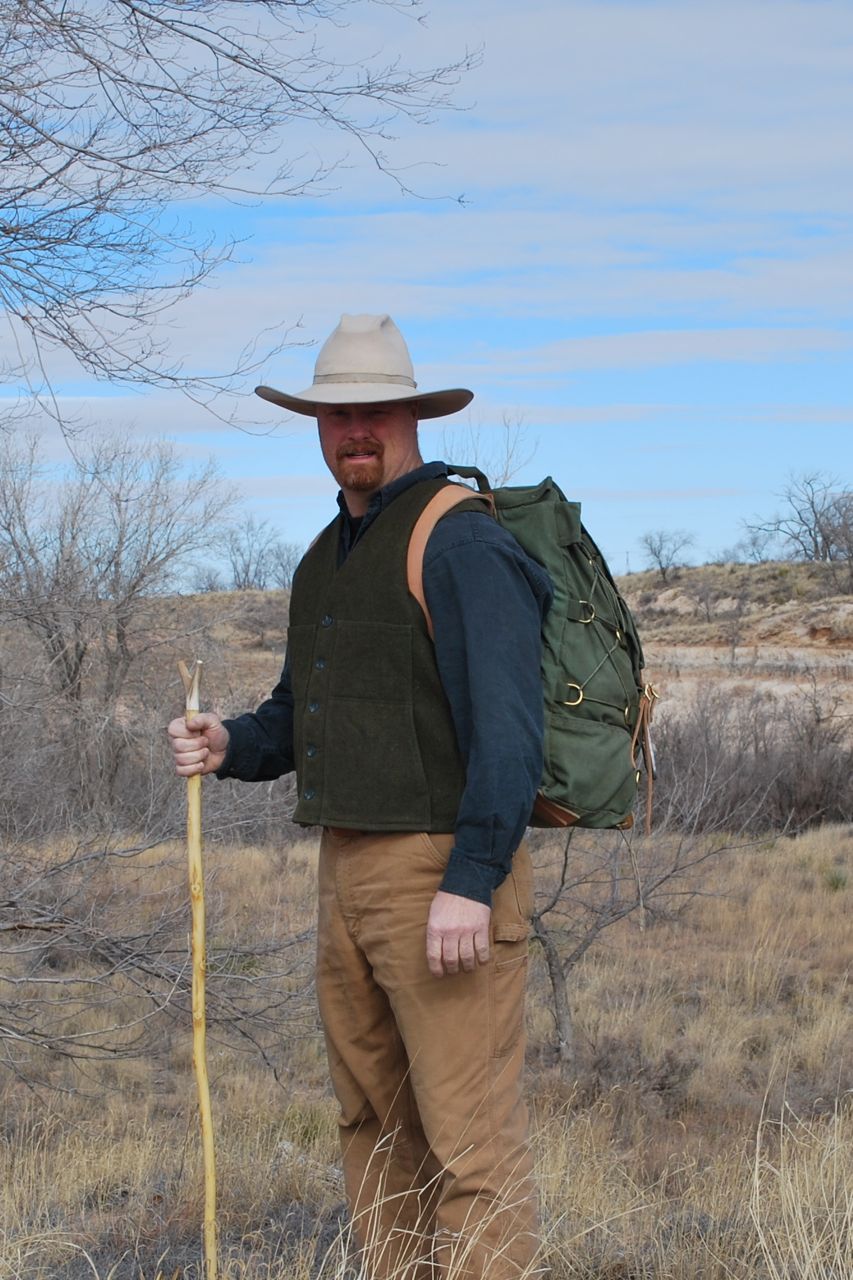 Field testing the nearly finished rucksack. It still needs a few closures and bits but is essentially as finished as anything I make. It’s poorly packed for a quick hike and not very full. More pictures to follow when I get some time off to tramp around with it.

Features: Heavy, waxed canvas truck tarp with 10-12 oz leather straps and all brass hardware. It has an axe sleeve, two long, exterior pockets, small flap pocket, two narrow pen-type sleeves, interior valuables pocket, compression D-rings on sides, D rings for shelter roll, and loops for carabiners.
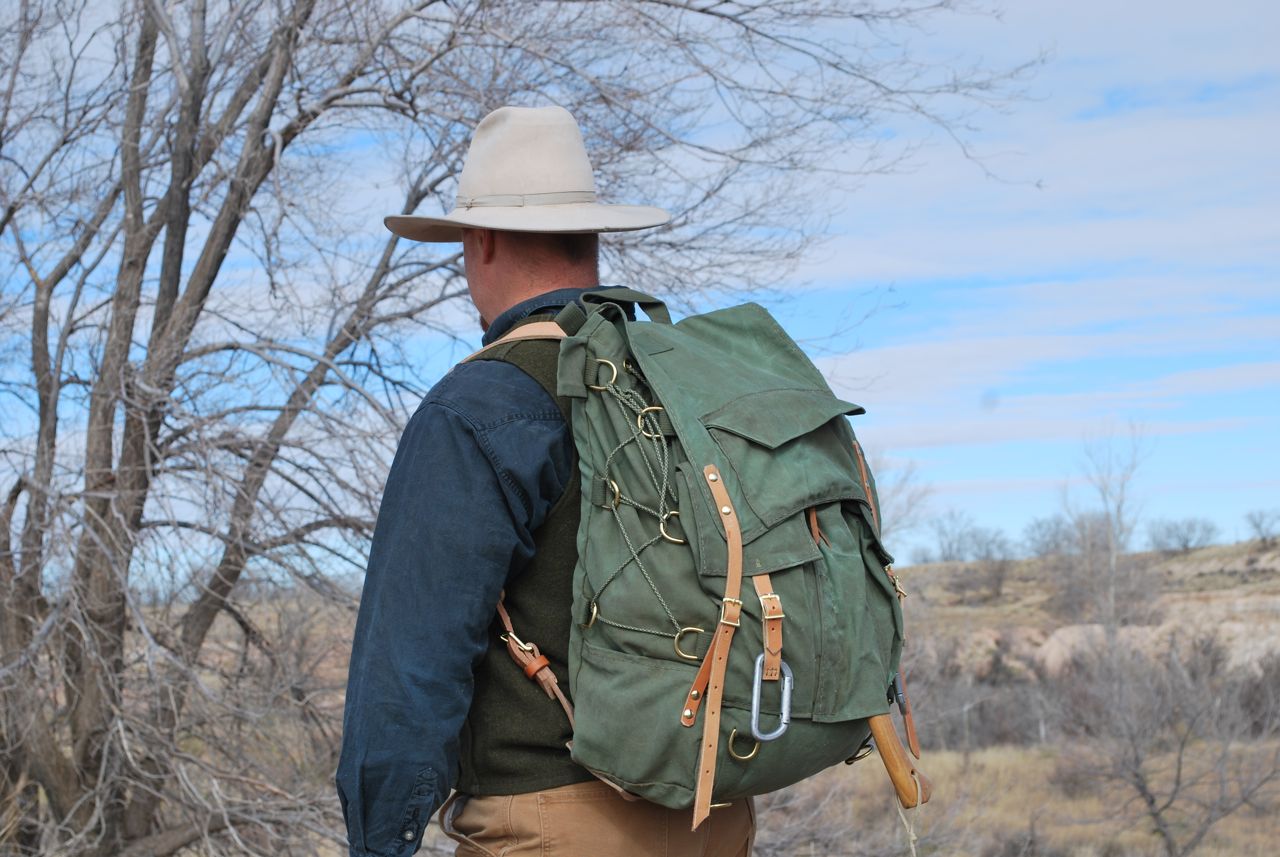
All hand saddle-stitched and riveted at stress points. I’ll put up a sketch of the pattern for anyone interested.
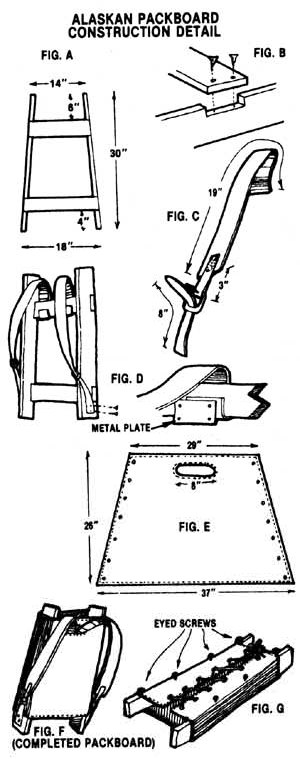
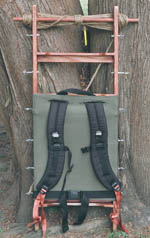
One of many projects happening around here this yule-tide season. A new classic-style rucksack is being sewn, much leatherwork is occurring, and this pack frame is being finished. The wood is shagbark hickory (Carya ovata) made from a bowstave section and some other scrap from the pile. All was split before finishing so the grain is perfectly aligned with the lumber. This made for easy steam bending. As I was working from many examples but no actual plan, there was a lot of mock-up and tweaking of the design to fit my size and intended needs. There’s no metal in the construction. The freight bar and cross members are half-lapped and lashed with rawhide. The bar is also pegged to prevent slipping under load. More to come as it gets finished and field tested.


Here’s a few older frames I could find around the ‘net:


First of all, a beautiful Bristol bowtop shown on Handmade Charlotte.
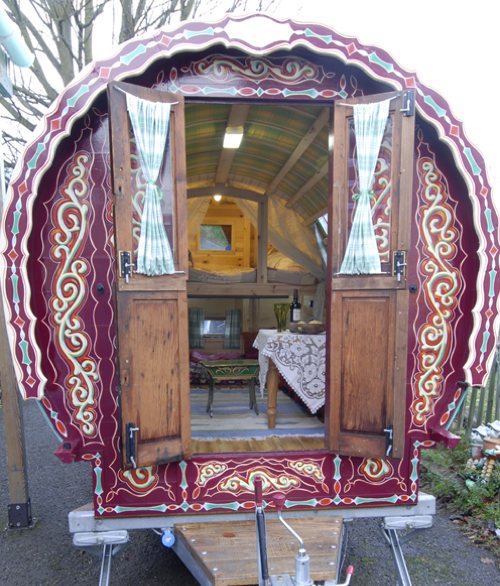

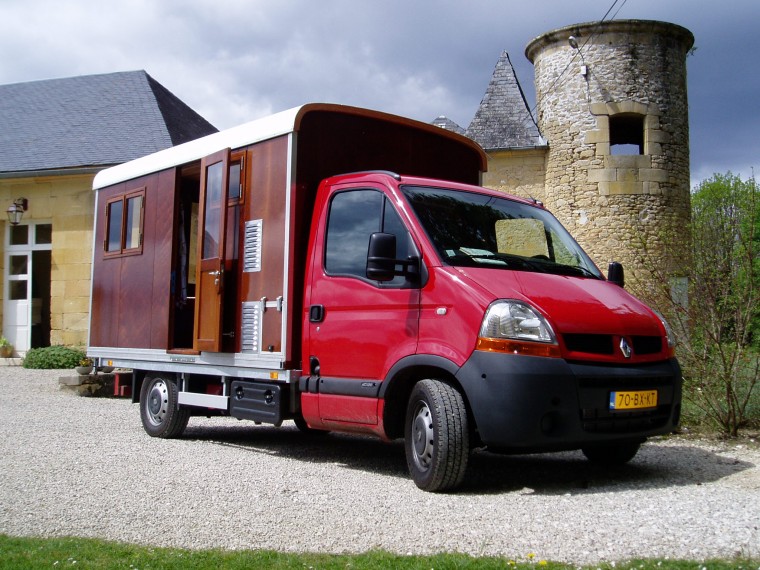
Tonke Campers make some amazing caravans in the Netherlands. The most remarkable part of this design is that the whole living compartment easily removes and can be left as an autonomous dwelling. Handy indeed.


A restored “showman’s” wagon found at shootfactory.co.uk.
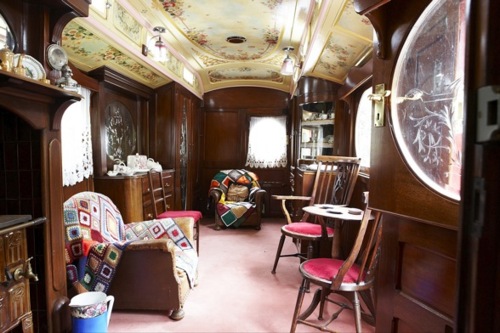
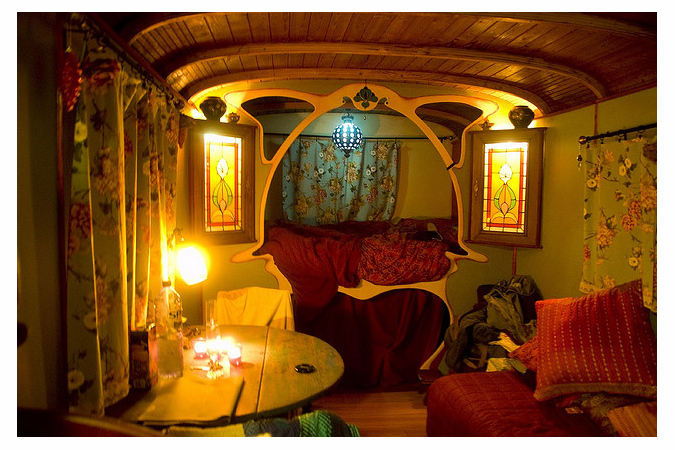
And a really great Art-Noveau style caravan. I want more pics of this one. I found this one here.
Finally, I don’t generally like the pop-up campers but when this one is “deployed” it’s pretty amazing. Designed by Axel Enthoven, it is appropriately called the Opera.


More information about this cunning design here.
 Preindustrial Craftsmanship