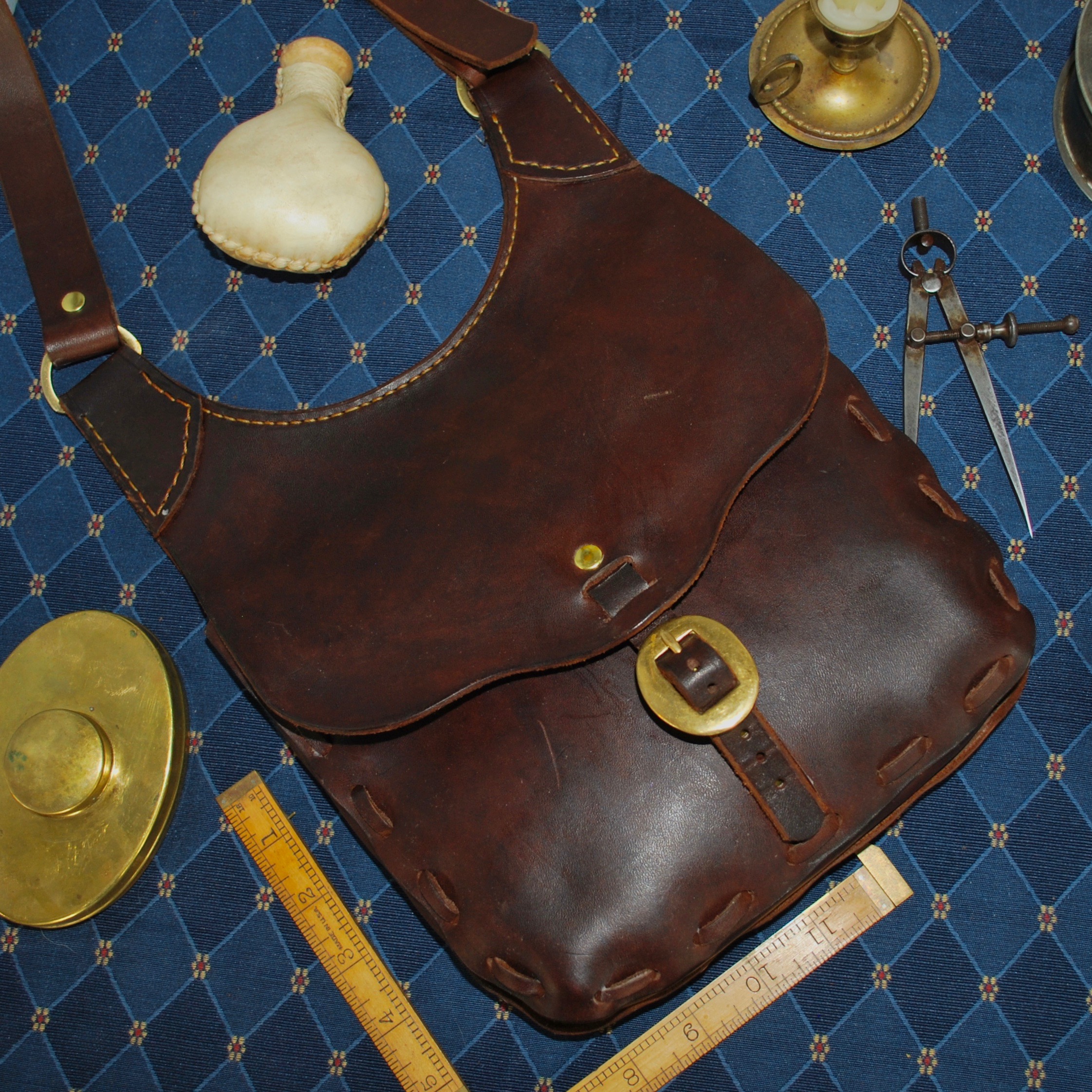
These have been my most popular item over the years but they are fairly time-consuming to make. They also use a lot of leather and generally a fair bit of hardware, especially if the strap is leather with a buckle. However, they are a lifetime investment and have made quite a few people very happy as they break in and age with use.
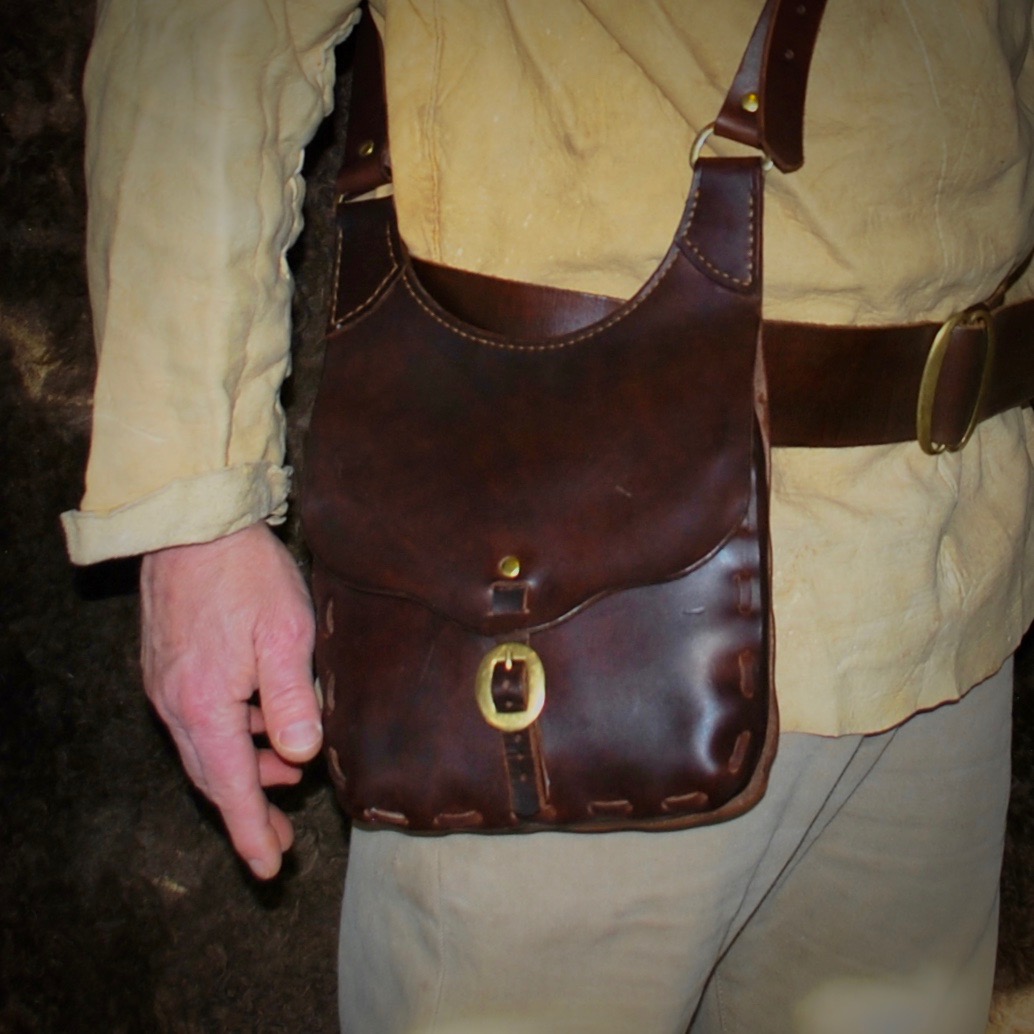
My take on the 18th Century English shooting bag.
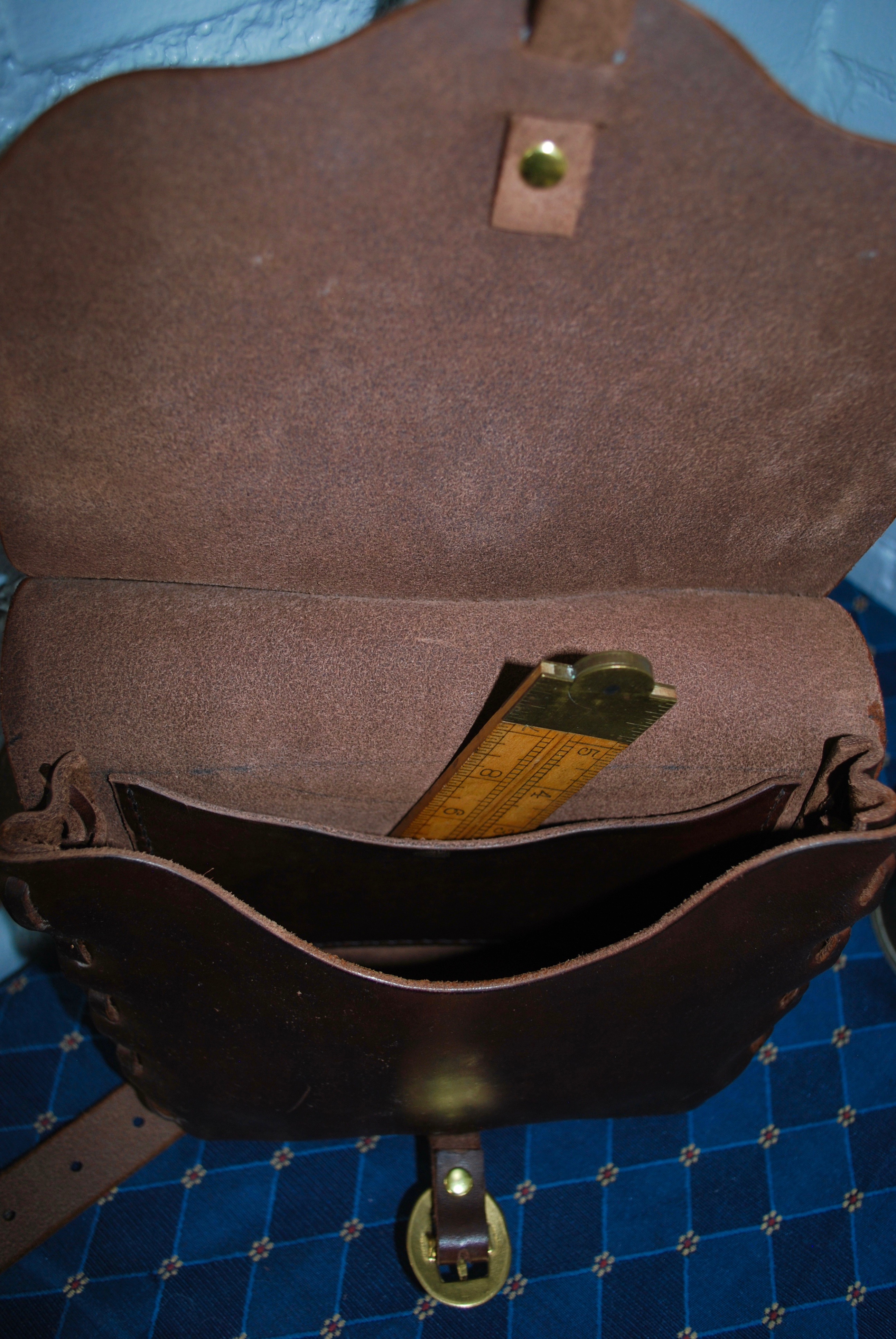
Interior pocket.
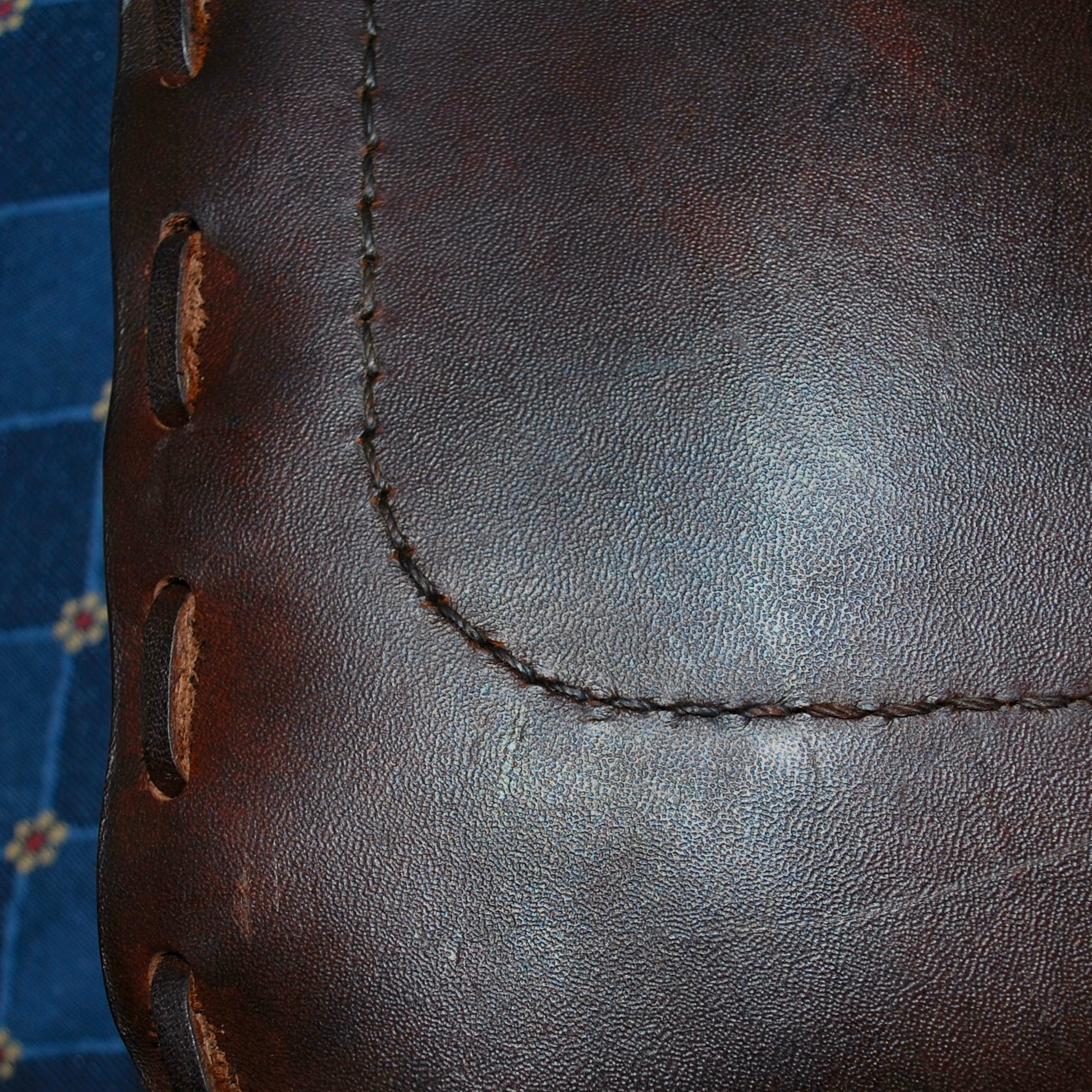
Pocket stitching.
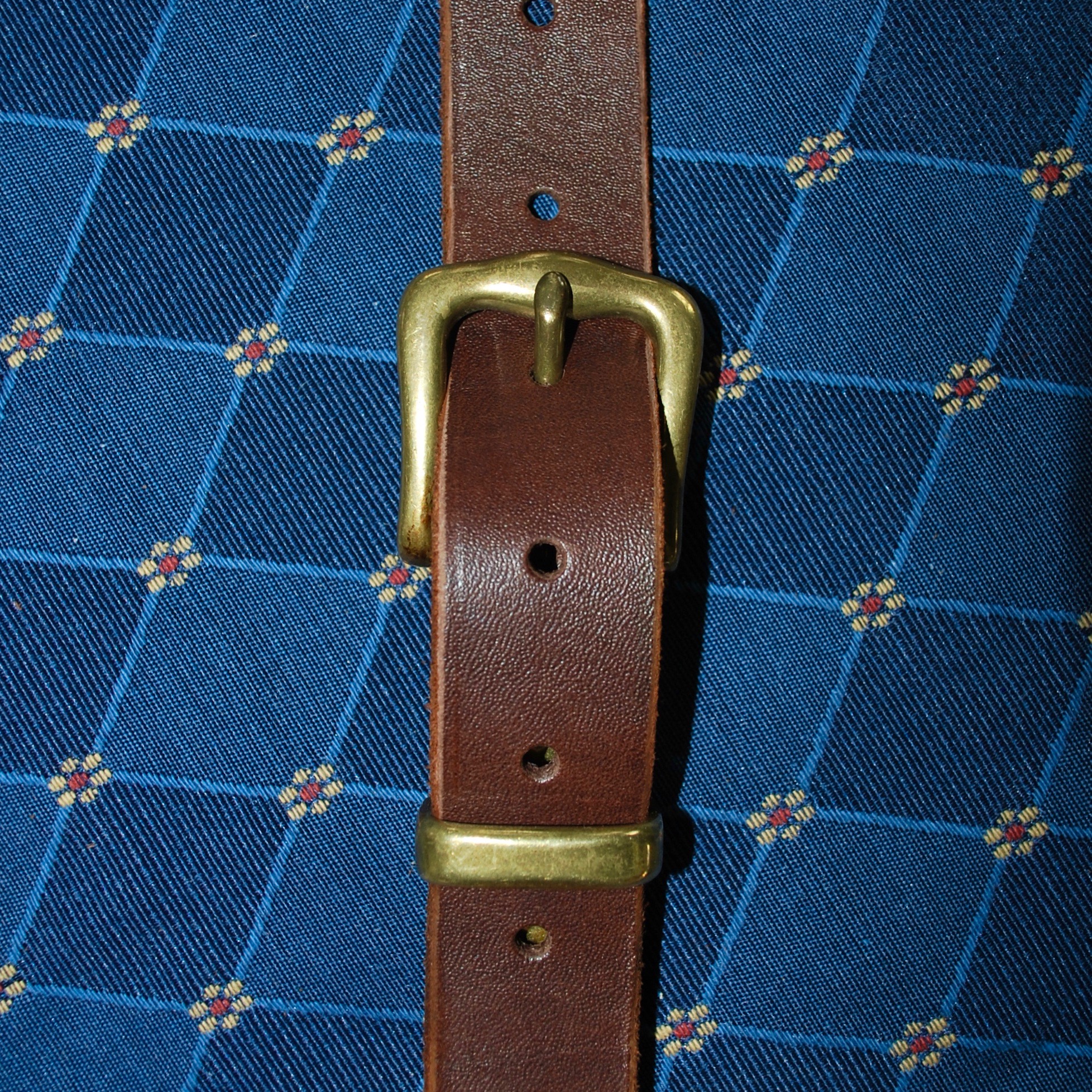
Vintage belt buckle and keeper from heavy solid brass. It’s good to comb thrift stores for unique findings.
“The truly sociable man is more difficult in his relationships than others; those which consist only in false appearances cannot suit him. He prefers to live far from wicked men without thinking about them, than to see them and hate them.”
— Jean-Jacques Rousseau, Dialogues
“Naturalistic Philosopher (28 June 1712 – 2 July 1778), steel engraving by Thevenin after a design by Gleyre with later colouring, after the 1764 portrait by M. Quentin de La Tour. He saw man in a state of nature as neither moral nor immoral, but suggested that the innate sense of pity was the foundation for the subsequent development of moral society. He saw the evils of society arising from competition and economic inequality, and hence science as a source of misery if not counteracted by civic and moral responsibility. His conclusion is that society has been drawn beyond its optimum happiness by the ambitions of progress and vain success. Some authors considering human evolutionary psychology in the context of civilization have adapted his thoughts.” (Click the image for more information about Rousseau).
This will be the last one for a while as I have other projects in the hopper.
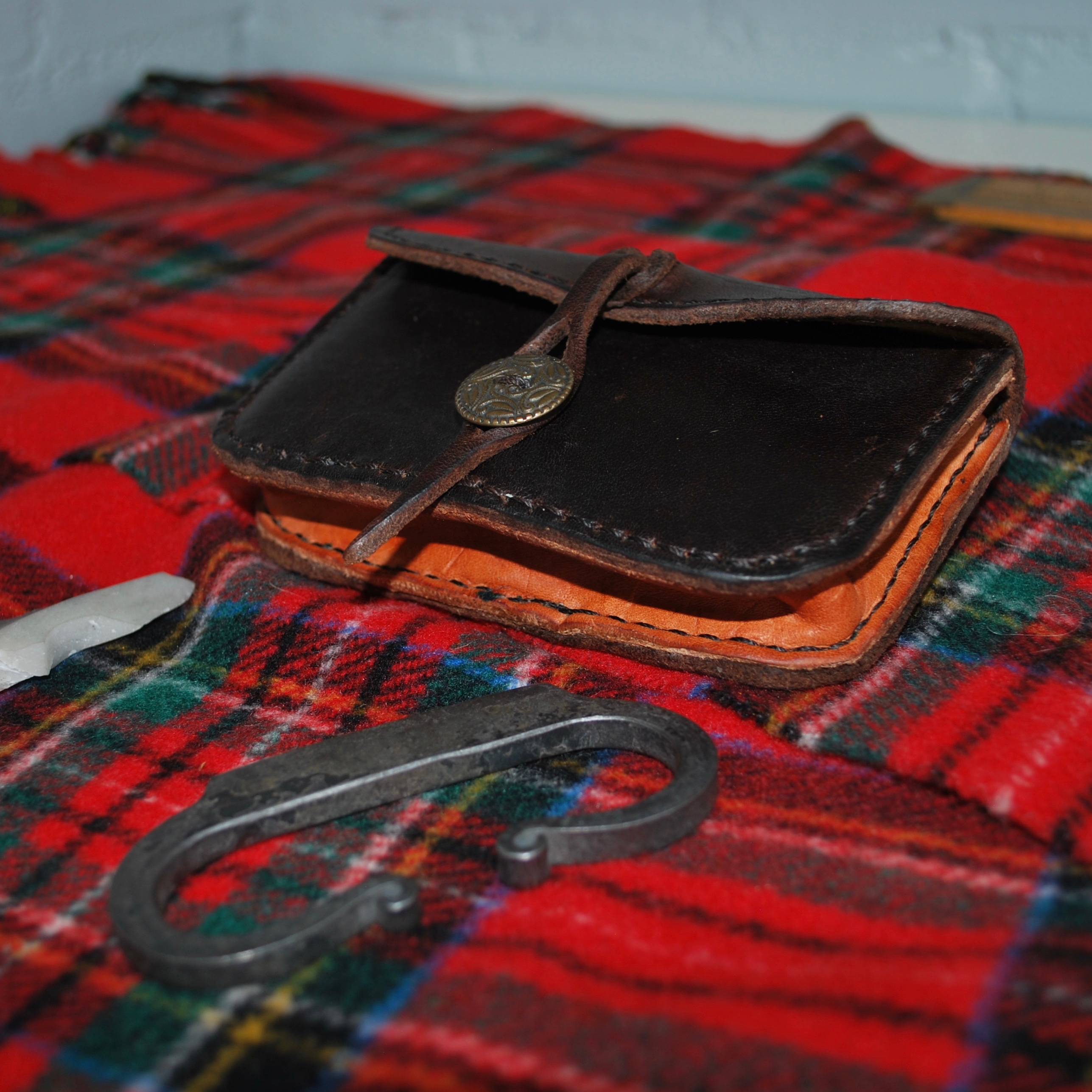
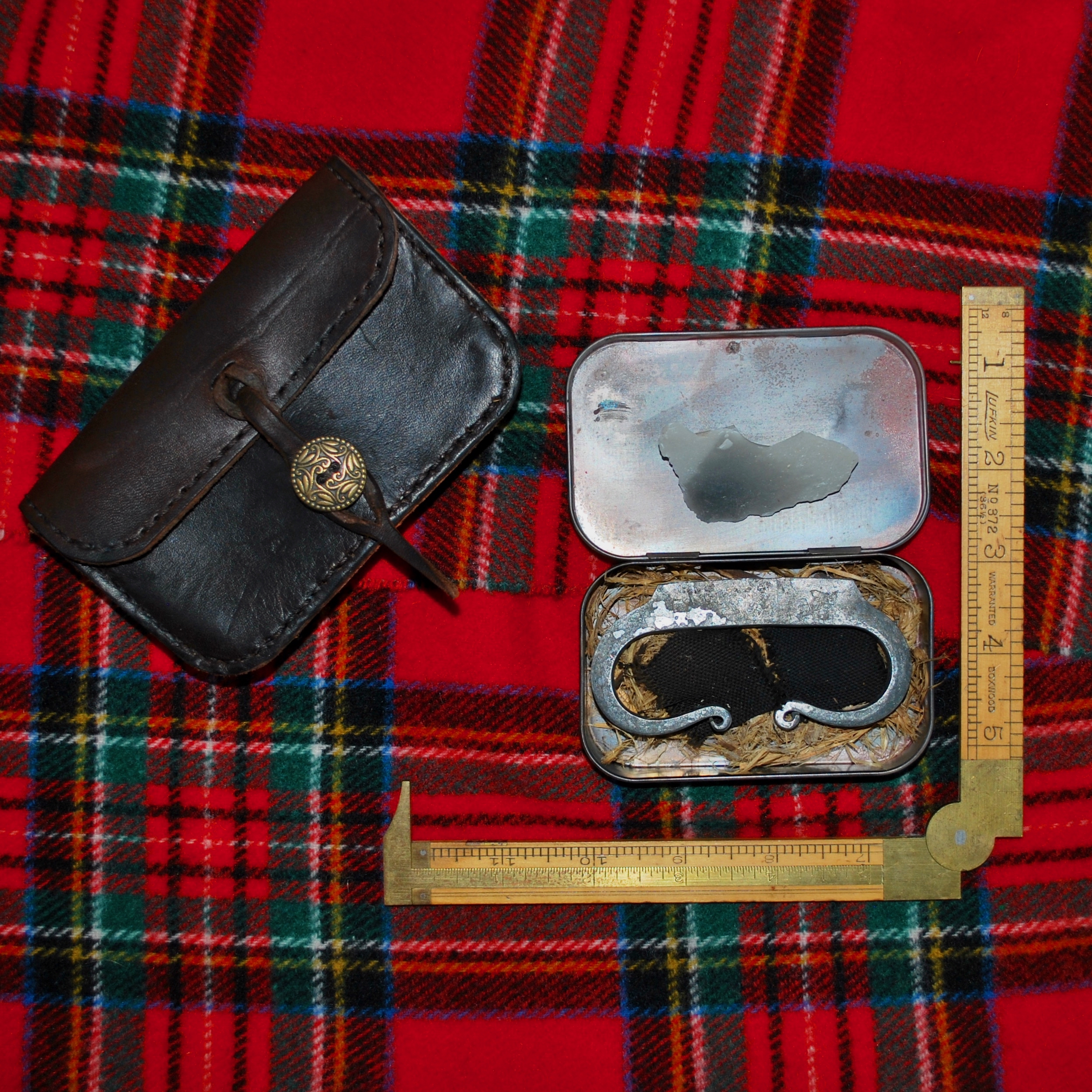
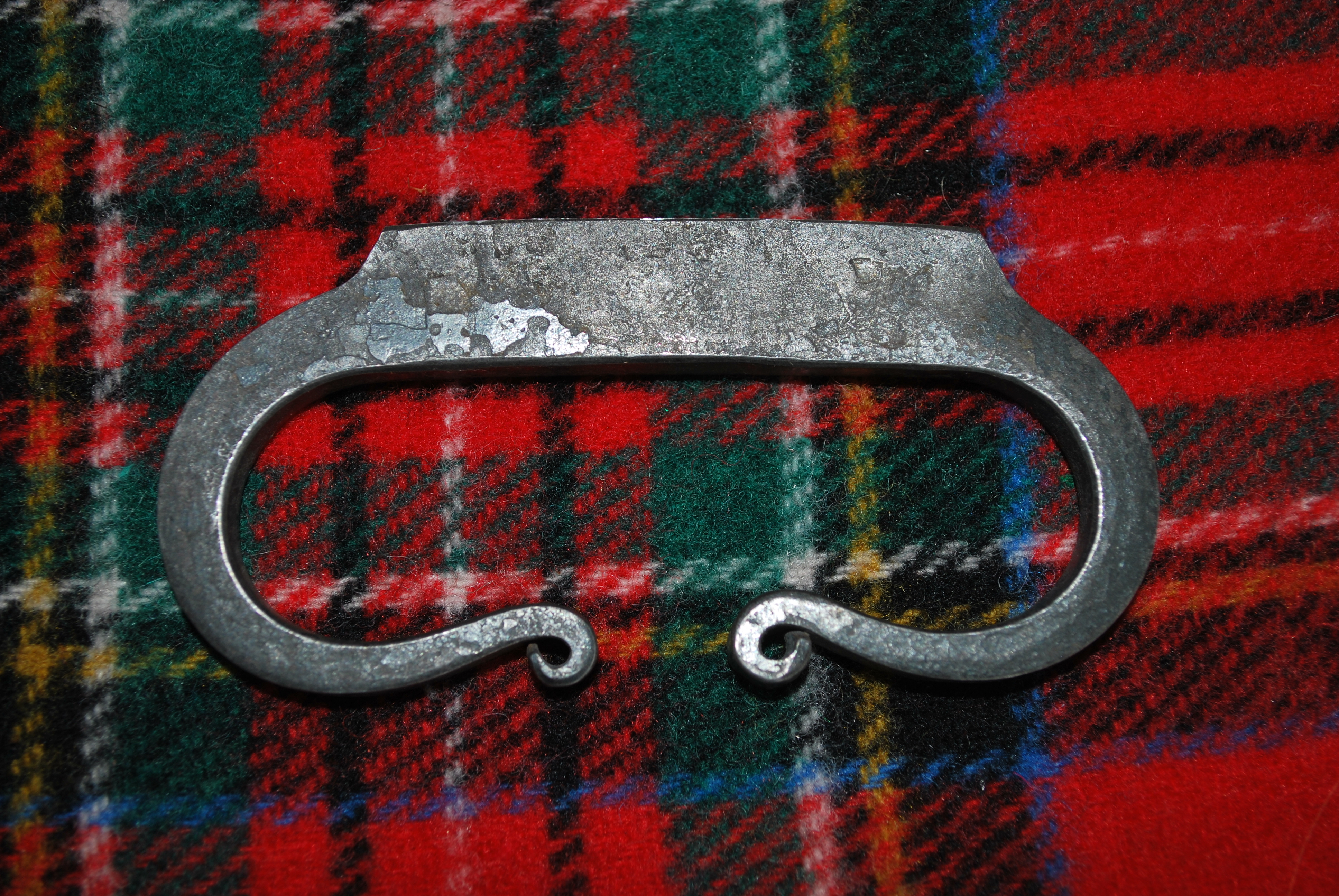
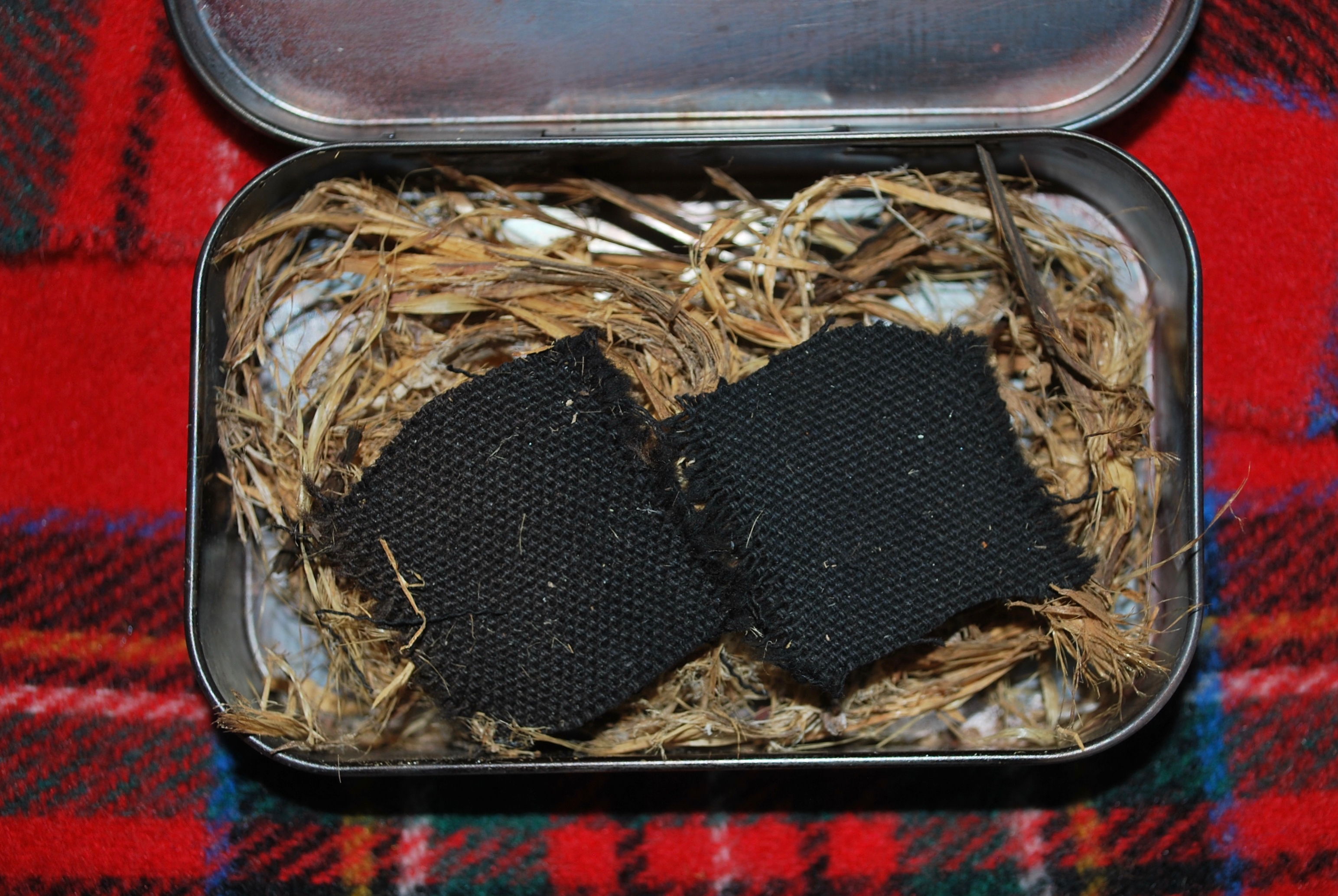
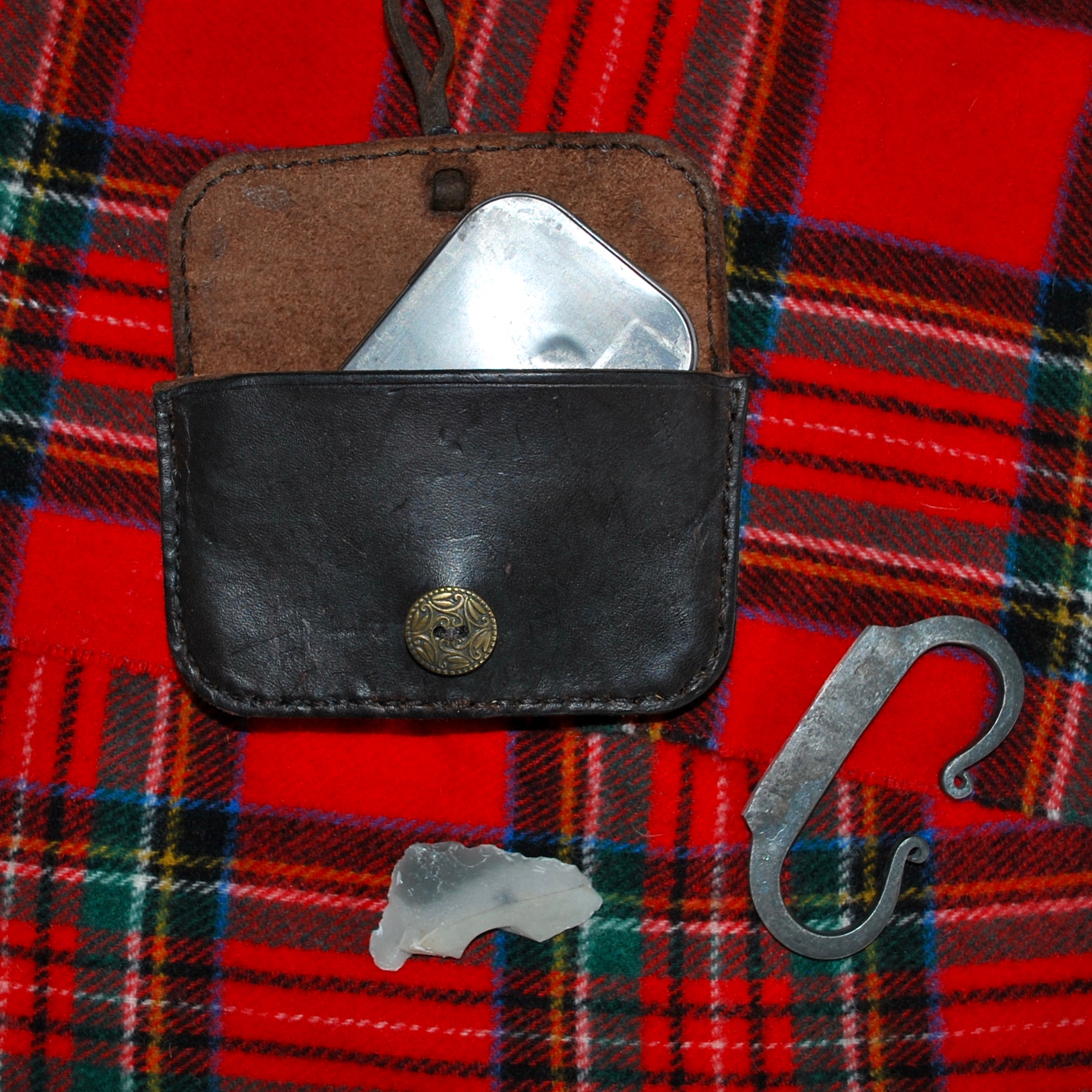
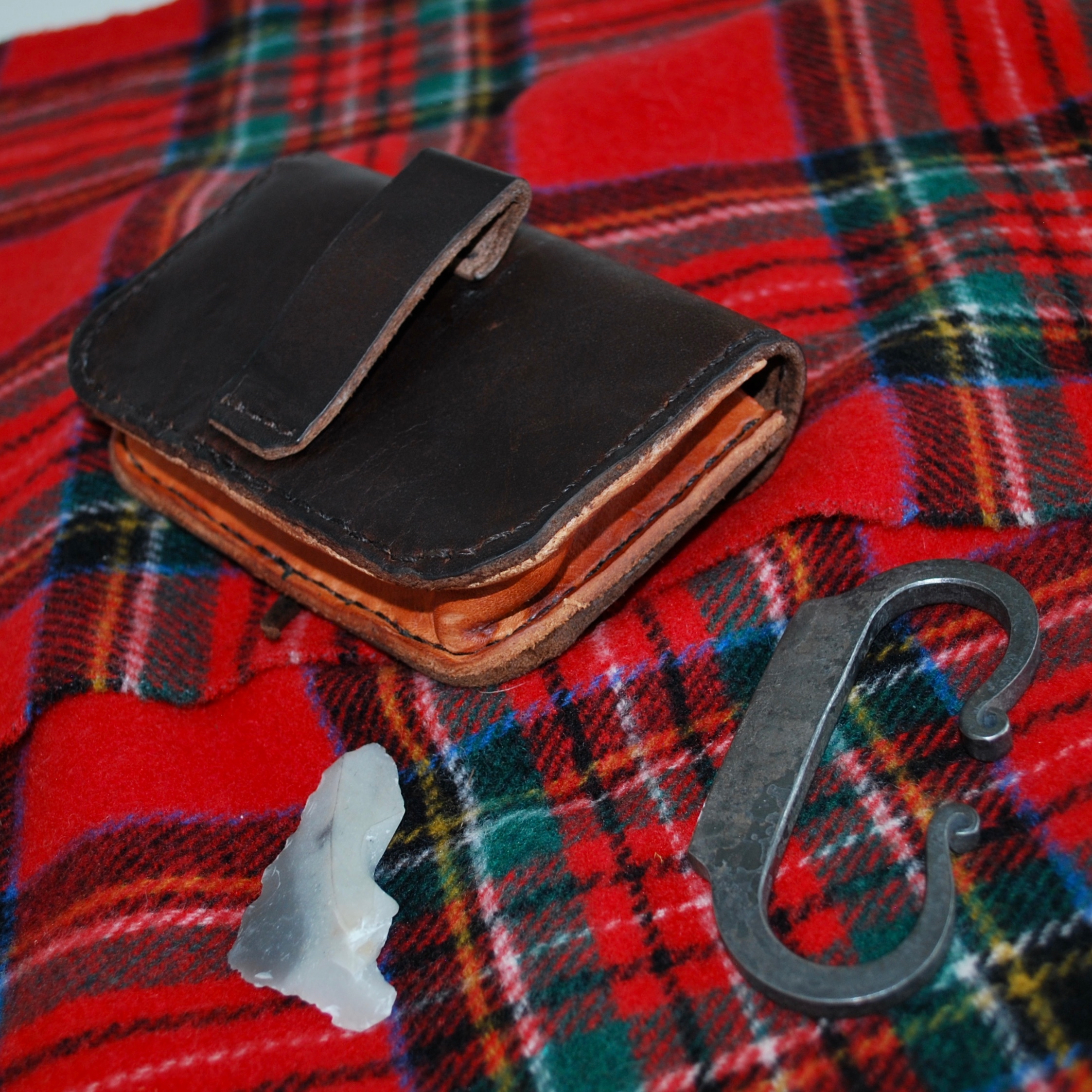
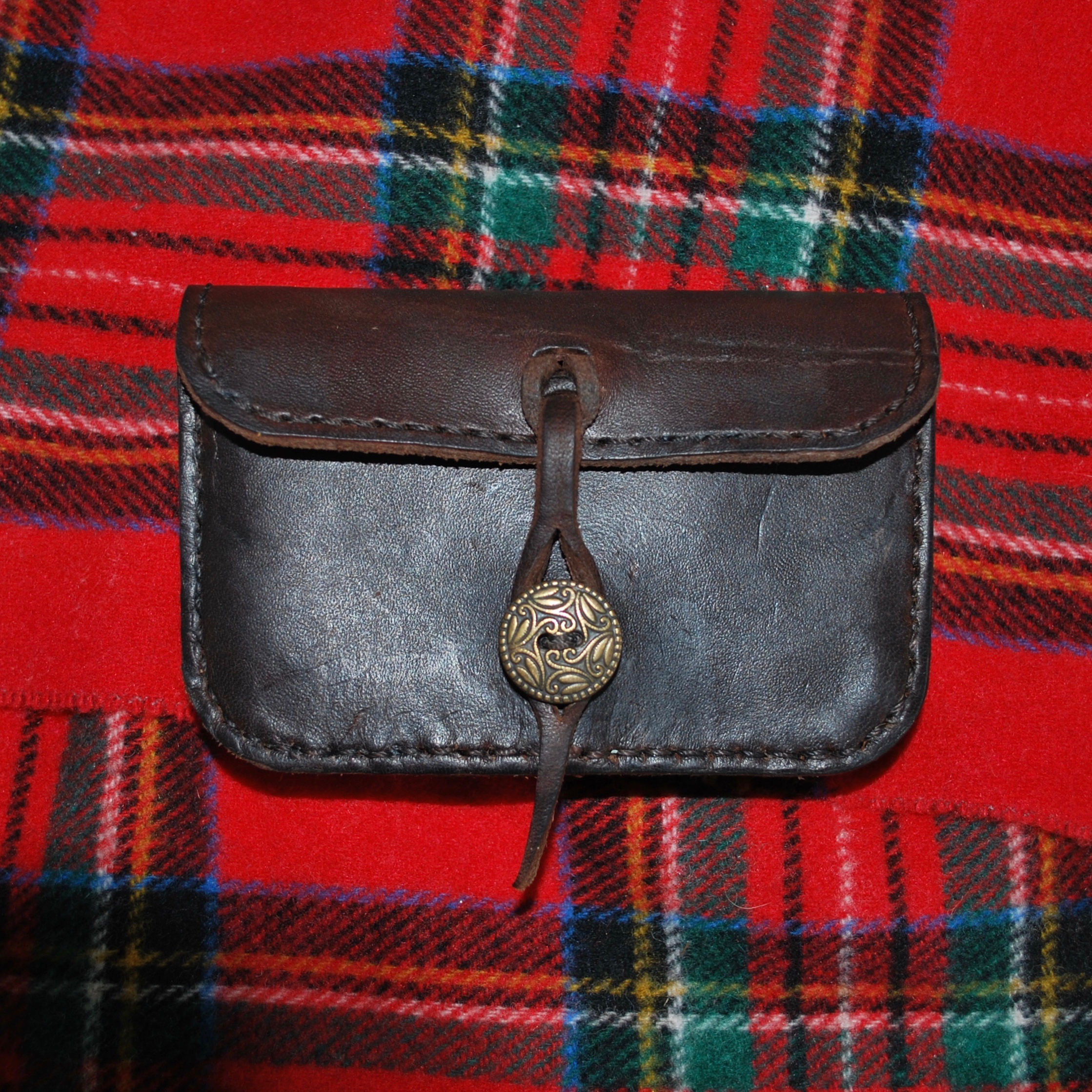
Two-toned 7 oz. leather.The complete kit will get you started and, if frugal, can start several fires.The strikers are custom made by my friend Eric at Colonial Iron.A bundle of juniper bark and ample charred cloth will spark up readily.Everything packs neatly in the purpose built bag. However, the belt pouch is great on its own if the kit is kept in the rucksack.If you are an outdoors person or just interested in history, it can be very rewarding to carry and use a traditional flint and steel fire kit like our ancestors have done for millennia.The loop accommodates a belt up to about 2 1/2 inches.Double needle saddle stitching, full grain veg tanned leather, and a vintage button should all age beautifully and last a lifetime.
This is available at our online shop Lost World Crafts where you can find a more detailed description of the kit.
Please check out the shop and consider following us as things are constantly being added and sold.
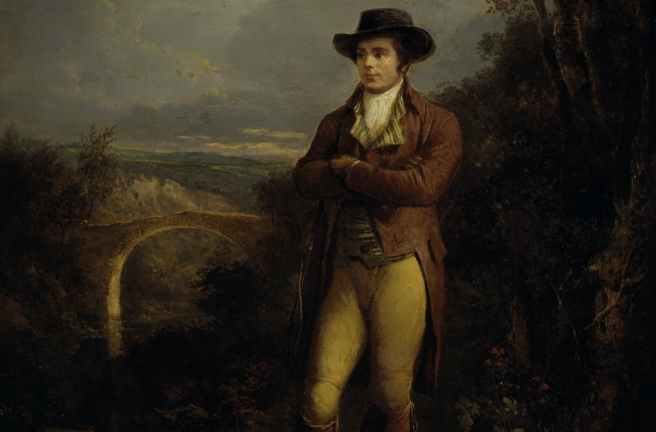
On this day before the coming Burns Night where we celebrate the Bard in virtual lockdown I invite you to pull up a chair, pour a tall drink of something potent, and enjoy a few poems from the master of Scottish vernacular. This evening, I strongly recommend you find a copy of Tam O’Shanter and read it as it will be done all across the globe. Happy birthday Rabbie.
Winter: A Dirge
The wintry west extends his blast, And hail and rain does blaw; Or the stormy north sends driving forth The blinding sleet and snaw: While, tumbling brown, the burn comes down, And roars frae bank to brae; And bird and beast in covert rest, And pass the heartless day.
“The sweeping blast, the sky o’ercast,” The joyless winter day Let others fear, to me more dear Than all the pride of May: The tempest’s howl, it soothes my soul, My griefs it seems to join; The leafless trees my fancy please, Their fate resembles mine!
Thou Power Supreme, whose mighty scheme These woes of mine fulfil, Here firm I rest; they must be best, Because they are Thy will! Then all I want-O do Thou grant This one request of mine!- Since to enjoy Thou dost deny, Assist me to resign.
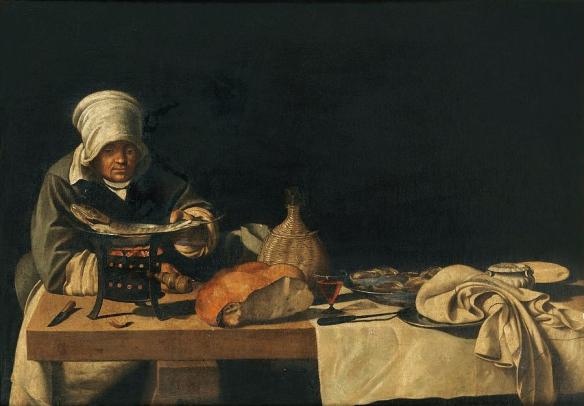
“And, pray, what can be pleasanter to behold? Talk, indeed, of your pantomimes and gaudy shows; your processions and installations and coronations! Give me, for a beautiful sight, a neat and smart woman, heating her oven and setting in her bread! And, if the bustle does make the sign of labour glisten on her brow, where is the man that would not kiss that off, rather than lick the plaster from the cheek of a duchess.”
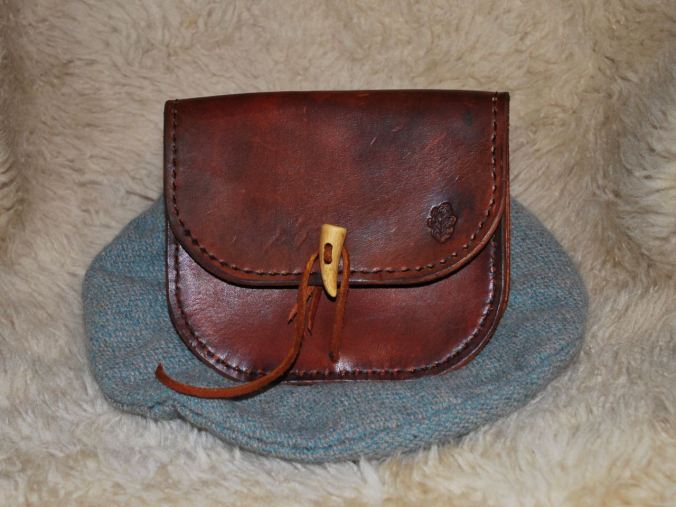
I have been wanting to make a few sporrans based on the classic 18th century style. This type, often referred to as a Rob Roy style, is a fairly simple, single pocket design that can have a number of variations. The one I’m making here is from 6 oz full-grain hide and should outlive it’s owner, even under hard use. A versatile belt pouch like this was originally intended to be worn with kilt or trousers as built-in tailored pockets are a rarity in history.
At 6.5 inches wide by 6 inches tall it can hold a fairly complete fire and survival kit in a handy position on almost any belt.
As with most of my leatherwork, this bag is hand sewn using a double-needle saddle stitch for strength and longevity.
The dye is wet in these photos, looking a bit uneven, so I’ll try to shoot a few more in better light when the weather improves.
The bellows design I chose stays flat but will expand to fit more gear as needed. Look for a follow-up soon. It is listed on my Etsy page so it will, hopefully, be finding a new owner in the near future.
Primitive is a loaded word for some people. To me, it means simple and lacking industrial materials. That’s not to say primitive cannot be complex or fine work; in fact, it’s often just the opposite. Sometimes even, it involves recycling the detritus of the modern world, such as tire rubber for shoe soles.
18th century style.
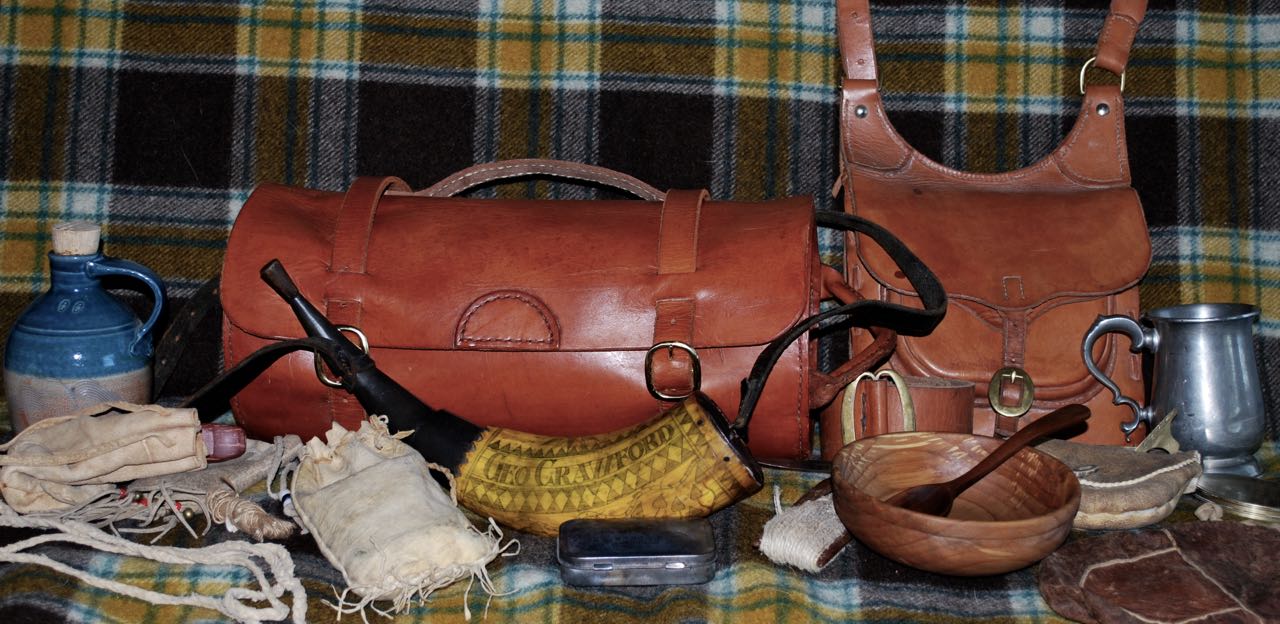
Looking at my high-graded and favorite camping gear I came to the realization a couple of years ago that by removing a few modern items my kit looks about 250 years out of date. That made me kind of happy. I’m not really a reenactor but I do occasionally participate in period events. It seems my tastes really do just lean toward a quieter, handmade, preindustrial world.
An overview of traveling gear. I see this format on the web a lot so I’m stealing the style from far better photographers than I.
The Blind Fiddler 1806 Sir David Wilkie 1785-1841, Tate Gallery Collection.
“An itinerant fiddler is playing for a humble country family. David Wilkie focuses on the listeners’ different expressions. Only two people seem to respond to the music: the baby and the boy on the right, who is imitating the fiddler by playing the bellows.When this picture was exhibited at the Royal Academy some critics thought the bust on the shelf represented a dissenting minister, and concluded that the family were nonconformists. The power of music to stir the passions of those supposedly suspicious of pleasure was thought to add to the painting’s subtlety.” From the Tate website 2007.
So many historic details in this painting: basket, copper work, cookware, walking stick, spinning wheel, stools, hats, dog, pipe, key, cup, and shovel. A snapshot of late 18th – early 19th century rural life.








 Preindustrial Craftsmanship