Antler and Bone

Despite my lack of free time currently, I have been re-inspired to get back to antler and bone as a medium for tool production.  My only issue with them is that they are enormously time intensive.  Even using a modern saw and occasionally a steel rasp these take a lot of energy to make.  However, the end product is amazing and I would really think they are often underestimated in the archaeological and primitive technology communities.  The rarity of these materials leaves most of us with such a lack of familiarity with them that they take a back seat to lithic weapons in study.  A little experiential archaeology goes a long way to clarify the devastating effectiveness these points have.

DSC_0398
Antler point and “scraper”-like tool used to produce it.

Archaeological terms that include function in the name are loaded from the beginning.  The term scraper is bandied about with little regard for the tool’s actual function. I believe, and experiments bear this out, that the type of unifacial knife-scraper-planer combo, shown above, was the essential backbone of a hunter’s tool kit for much of our prehistoric past.

DSC_0390
More antler points.

I don’t have ready access to the beautiful reindeer or caribou antler so treasured by our Upper Paleolithic ancestors but large mule deer, white tailed deer, and elk can suffice in a pinch.  Just as in Europe 15,000 years ago, these would be effective weapons against land or marine mammals of all sized.  My fairly limited use of antler points in “real life” indicates that antler is much tougher than stone and is easily resharpened if it is dulled or damaged.

DSC_0397
Tanged arrow point of antler.

The pithy cancelous (spongy) tissue inside some antler makes them less than perfect for large points.  The denser tissue on the outside can be cut off and works well for flat projects, like buttons or, in the above case, an arrow point.

DSC_0386
Sewing kit.

I find that one of the tougher tasks for the primitive craftsman is the making of eyed needles.  We know these have been produced for many millennia so we can imply some fine sewing. I find the eye particularly difficult to make but, for what it’s worth, here is what I have learned.

After getting the needle close to it’s desired finished size, flatten the area that is to become the eye on each side.  This flat area keeps the flake from rolling off the work piece while piercing the bone.  Instead of circular drilling, I find it a little more efficient to just scrape a tiny oblong hole by moving the flake tool back and forth.  Be patient, this takes a long time.  Holding it up to the light will tell how deep you’ve gone. When you are nearly through, flip the needle over and finish the hole from the other side.  Once you are through you can slowly widen the hole until it’s large enough to take your intended thread.  Finally, you can narrow the cylinder around the eye to make it as small as possible after the eye is safely made.  And note: you will break some; those become the short ones.

DSC_0387
The indispensable awl.

An awl for heavy stitching can be made simply from the metapodial (lower leg) bone of most grazers.  This is a tough and dense bone useful for making fish hooks, needles, knives, etc. The knobby end (metapodial condials) fit in the human hand very comfortably and make a great handle or grip.  More tool experiments and replicas are being made around here in the long winter’s evenings and I hope to post them when I get some photos taken.

Too much to do!
Practicing Primitive Daily

Primitive is a loaded word for some people.  To me, it means simple and lacking industrial materials.  That’s not to say primitive cannot be complex or fine work; in fact, it’s often just the opposite.  Sometimes even, it involves recycling the detritus of the modern world, such as tire rubber for shoe soles.

18th century style.
18th century style.

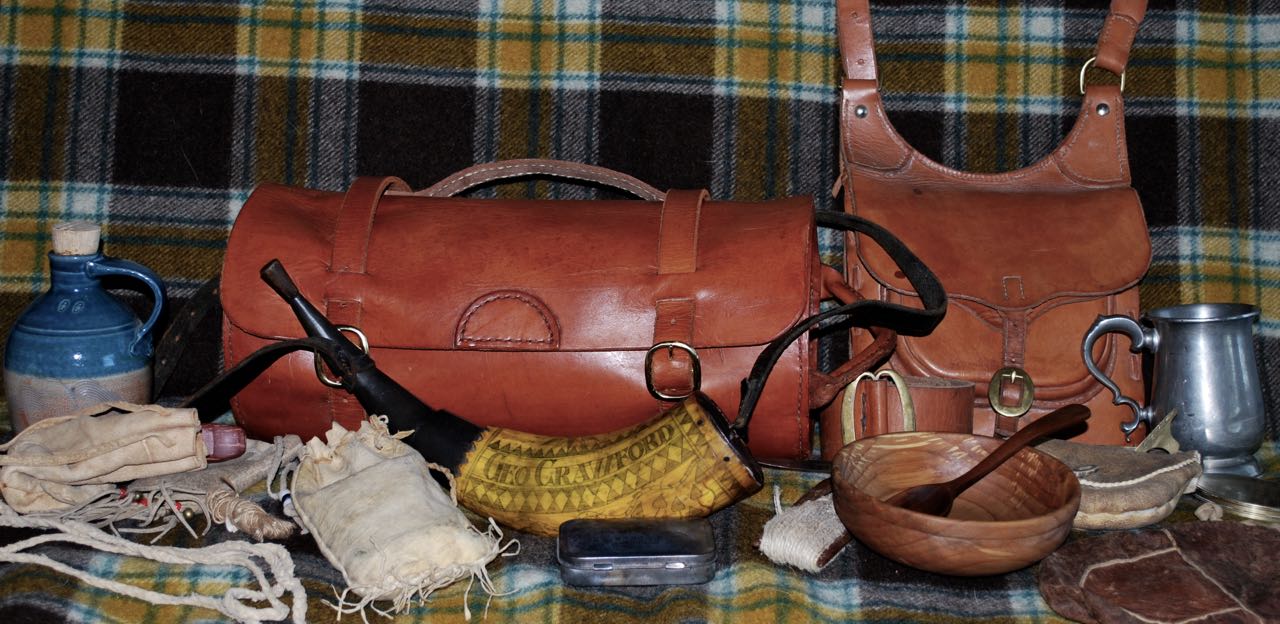
Looking at my high-graded and favorite camping gear I came to the realization a couple of years ago that by removing a few modern items my kit looks about 250 years out of date.  That made me kind of happy.  I’m not really a reenactor but I do occasionally participate in period events.  It seems my tastes really do just lean toward a quieter, handmade, preindustrial world.

An overview of traveling gear. I see this format on the web a lot so I'm stealing the style from far batter photographers than I.
An overview of traveling gear. I see this format on the web a lot so I’m stealing the style from far better photographers than I.

More Historic Caravans in Art

Copyright The Munnings Collection at The Sir Alfred Munnings Art Museum / Supplied by The Public Catalogue Foundation
Copyright The Munnings Collection at The Sir Alfred Munnings Art Museum.

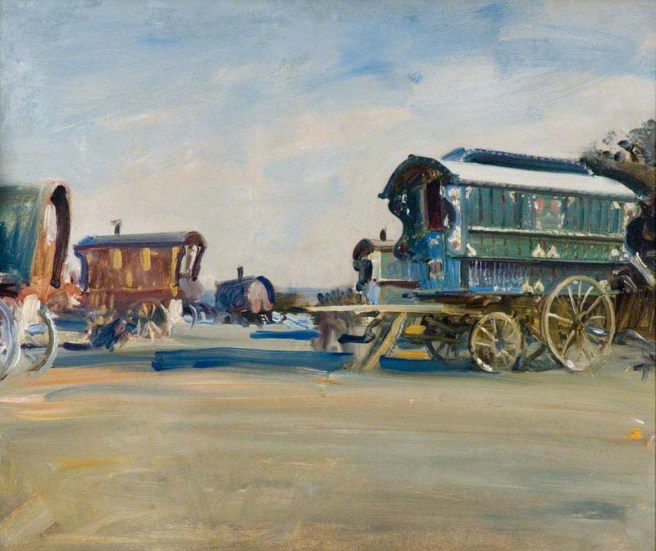
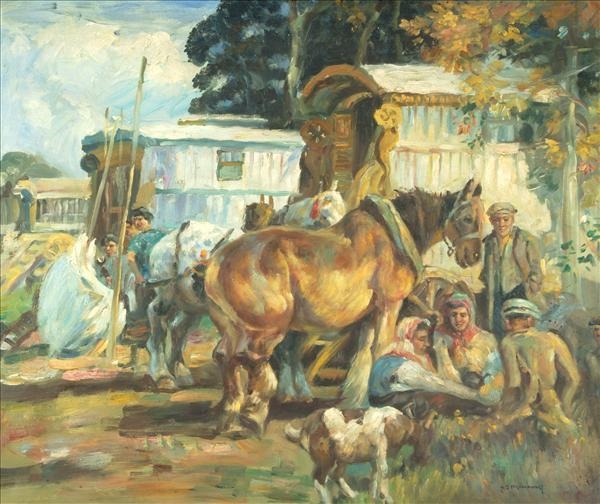
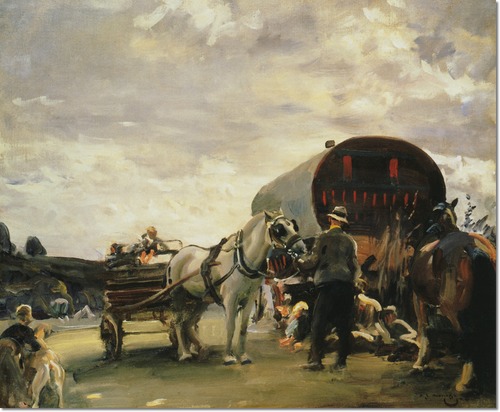
Here are a couple final Alfred Munnings images of Romani caravans in an English countryside.  As a keen observer, he definitely caught the important details of each type of caravan and the essentials of camp life.  The watercolor above is somewhat unusual for Munnings as it shows no animals, people, or campfire.

alfred-munnings-gypsy-encampment
Alfred Munnings.

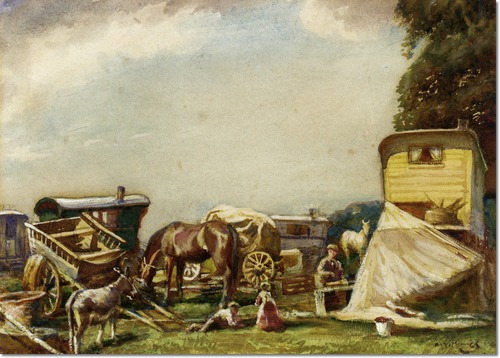
Above is a rarely shown rounded square-top among other carts and caravans with livestock milling about.  The variety detailed in these historic images should be helpful for those desiring to design and build a similar living accommodation.  The previous post gave a glimpse of Laura Knight’s work on the subject and her subjects are remarkably detailed and informative.

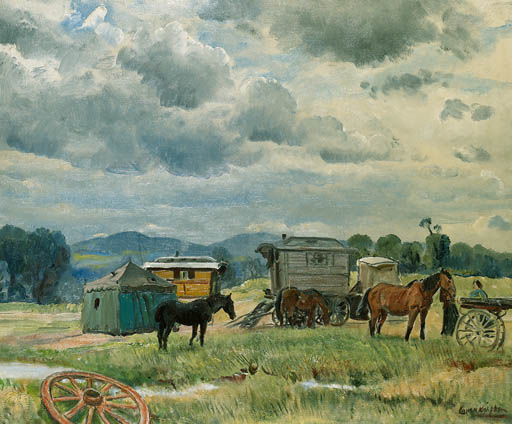
Gypsy Camp, ca 1938, Dame Laura Knight.

This is one of my favorite scenes of a camp in the countryside; two beautiful ledge wagons and a marquis tent in a field.  I could picture this in a high parkland of the Rocky Mountains.  Many people don’t know that the outlier tent, awnings, and tarps are almost ubiquitous with the old caravans.  This allows for a very flexible and expandable living arrangement or a sheltered kitchen area.

Young Gypsies 1937, Dame Laura Knight.

If you look closely at the sketch above, you can see that this is the same encampment from another angle, focusing on the kids at play.  It looks like a fine way to grow up.

gypsywagonandtent
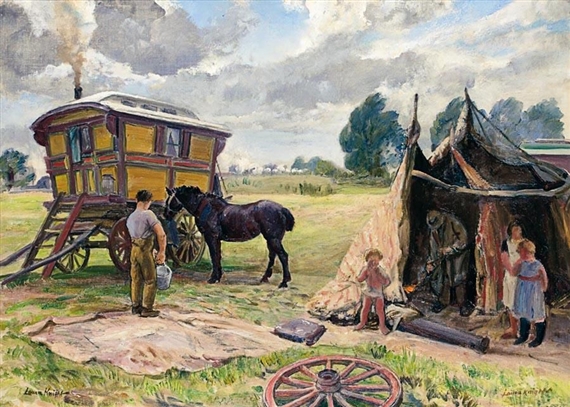
Gypsy Wagon and Tent, Dame Laura Knight, 1962.

And finally, another favorite of mine.  I suspect it’s the same little yellow wagon next to the sketchiest bender tent ever.  Probably a makeshift shelter for work or cooking.  A wagon wheel in the foreground seems to await repair while the kids look on.  Note the size of these caravans relative to today’s “needs” and remember that whole families lived and were raised this way.

If you missed the previous post about historic caravans in art go HERE or check out a whole page of images I have curated HERE.

Historic Romani Caravan Paintings

These images might whet the appetite for summer days, picnics, an caravanning off into the great unknown; or it might just be a bunch of pretty pictures if the former isn’t your cup of tea.  Anyway, these are generally labelled and classed as Gypsy images although we know that this is often seen as an offensive word to many Romani (Roma, Romany, etc.), I don’t think it was intended this way in many cases.  For that matter, when not applied to an actual people, the word gets thrown around in art, aesthetic style, dance, music, and many other ways.  I have only known a few “Gypsies” in my lifetime and that was the term used; maybe out of simplicity, maybe just as resignation to the common language.  But enough of this digression, enjoy the paintings.  There will be more to come.

Dame Laura Knight, Gypsy Caravans, 1935. LONDON.- Trinity House.

“Knight … bucked trends through depicting liminal sites, such as circuses and gypsy settlements, from the very beginning of her career. An example of this is her delightful work Gypsy Caravans (1935).”

The caravans depicted above are the Rolls-Royce’s of their day; highly ornamented Reading Wagons with mollycrofts, awnings, windows, and fine paint work.  They would catch they eye of any artist.  I am particularly fond of the domestic scene around the hearth; laundry being done and hung out to dry in the background.

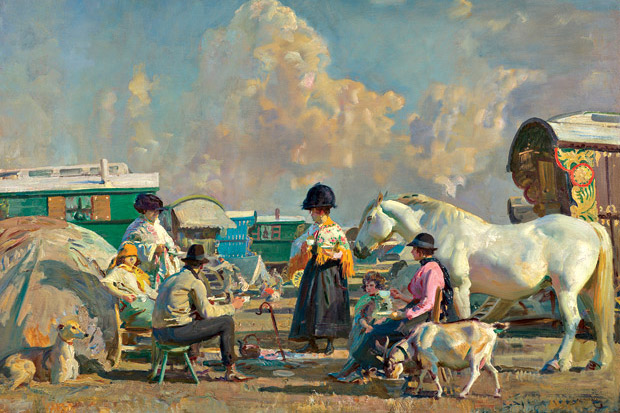
The paintings below are by Sir Alfred Munnings (1878-1959), a British artist who made many beautiful watercolor paintings of horses, encampments, and caravans.  What better, more colorful, and dynamic subject matter?  Alfred Munnings’s biography states that he clearly considered himself accepted among the gypsies when he was able to persuade several of the older women to bring out the brilliant shawls, boldly coloured aprons, and flamboyant ostrich feathered hats that were special occasion wear for the women.”

ALFRED-MUNNINGS
Sir Alfred Munnings.

The ubiquitous fire hook and kettle rest as the true center of this scene.  Everyone is done up in the Sunday best at Epsom Downs.  We see all kinds of accommodations from a bender tent to various quality of living wagon.  And no camp is complete without a lurcher (dog) and the milk goat.

Munnings became president of the Royal Academy and was made a Knight of the Victorian Orderwhile Dame Laura Knight (1877-1970) served on a panel of European judges for an international exhibition at the Carnegie Institute and was appointed as an official artist for the Nuremberg War trials for her technical abilities.  In other words, good documentary artists.

ALFRED-MUNNINGS3
Sir Alfred Munnings.

Travellers and their goat gather ’round the morning tea.  I envision Mick’s garden will look like this once Jim and I get our ‘vans parked for the summer.

alfred-munnings-gypsy-life-the-hop-pickers
Gypsy Life, the hops pickers, Sir Alfred Munnings..
ALFRED-MUNNINGS4
One of my favorites.  So much going on here and a great color scheme.

More images added HERE.

Progress is slow but steady, Vardo Remodel Part 7

The weekend was cold, I was tired (read lazy), and other things had to be attended to so this update is just baby steps in the big scheme.

DSC_0031 (1)
Inspired by the true pinnacle of Victorian wagon design.

Although mine is a purely pragmatic build, I wanted an homage to the classic Dunton Reading wagon.

Suffolk_Reading_Wagon_1887

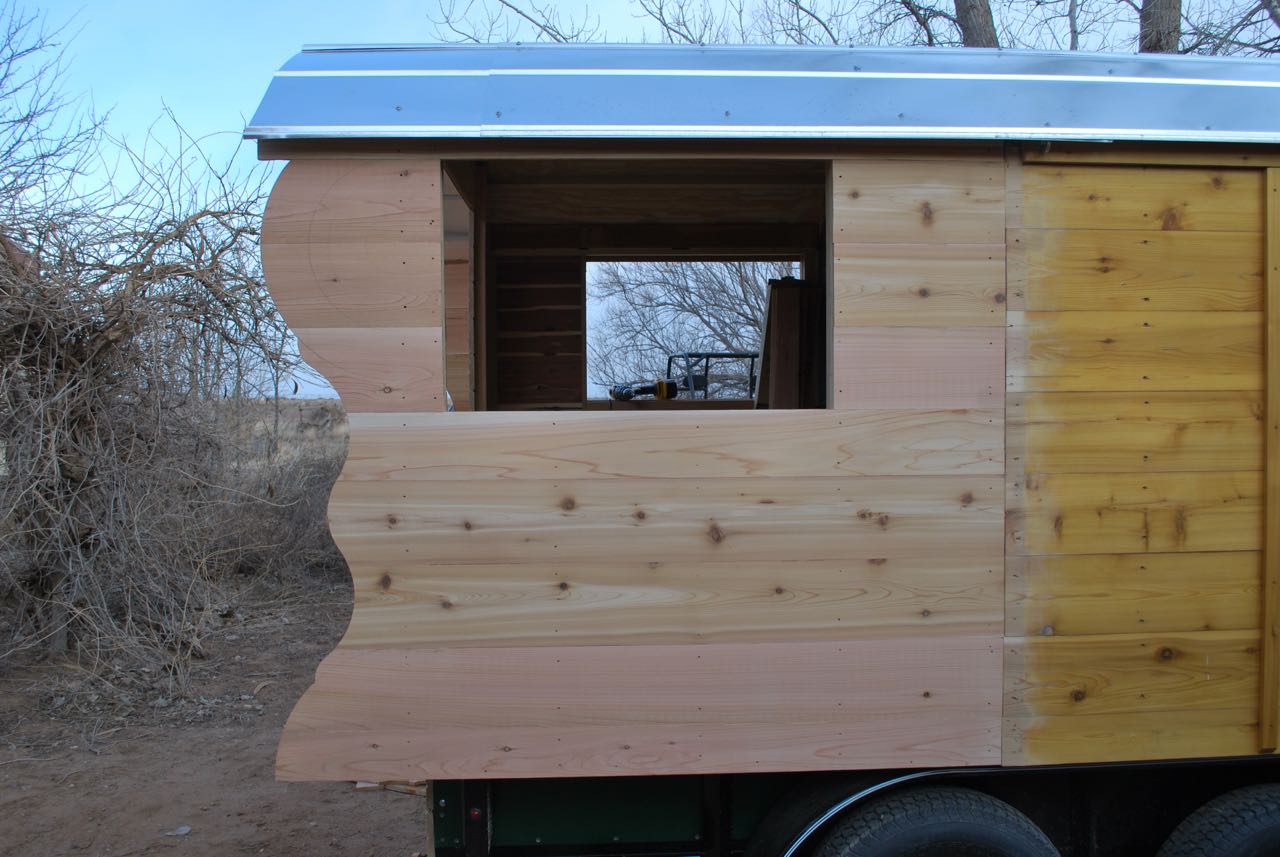
Taking a plain profile and giving it simple compass curves jazzes up the entire look, or so I hope.  If you notice the roof, there is a seam.  This is not a measuring error but the result of switching to off-the-shelf roofing steel.

DSC_0033 (1)
Sanding and finishing still required.

We wanted large windows for light and ventilation in the new room.  This one looks big enough to sell tacos and coffee from.

DSC_0034 (1)
I think I am liking where this is going.

I plan to take a day off work this coming week for important business in the afternoon.  However, if the weather holds, I should get a few hours under my belt for significant progressWe made what I think is an interesting decision about cabinetry which may be surprising.  Also, I am re-purposing a couple old desk tops as counters and I hope they look as good as I imagine they will.

Dreaming of travels to come...
Dreaming of travels to come…

If you are looking for Part 1 of the rebuild/addition then CLICK HERE.

On to Part 8!

The Vikings Used Comfortable Shoes

ThorNews's avatar

Osberg Ship Viking Shoe

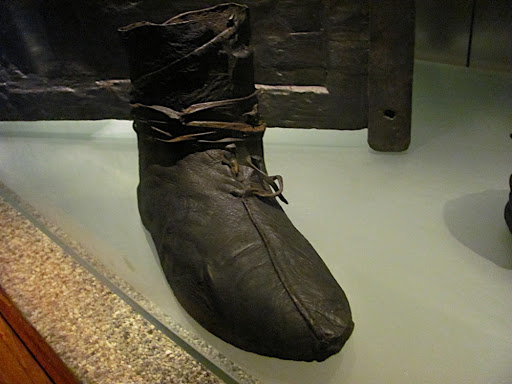
 One of the original boots found in the Oseberg Burial Mound dating back to 834 AD. (Photo: skinnblogg.blogspot.no)

A number of complete Viking Age shoes found in Scandinavia and England have the same characteristics. They are flexible, soft and mostly made of cattle hide, but also other kinds of leather was used.

There are complete shoes found in the Oseberg ship burial mound in Norway, Hedeby trading center in Denmark, and Coppergate (York, Viking Age Jorvik, Editor’s note) in England.

All three of these discoveries show a similar construction and form typical for the Middle Ages.

The shoes found in the Oseberg ship consists of two main parts, soles and uppers, and are so-called “turn shoes”.

(Article continues)

Reconstructed Oseberg Viking Shoes

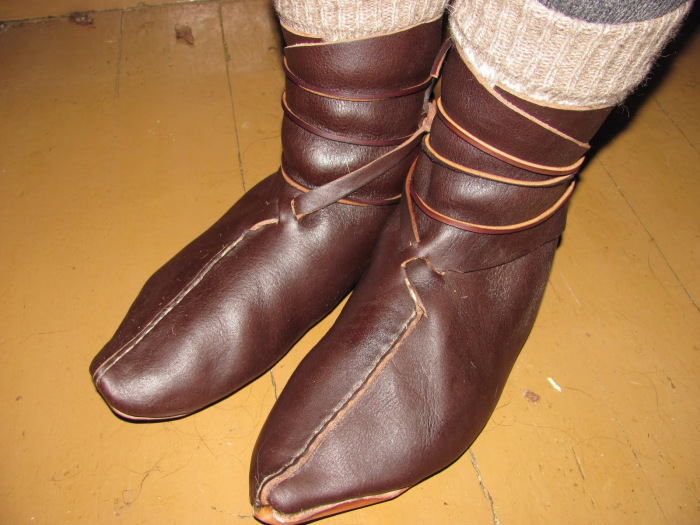
Reconstructed boots found in the Oseberg burial mound, by Bjørn Henrik Johansen. (Photo: Bjørn Henrik Johansen/ skinnblogg.blogspot.no) 

The shoemaker stitched the shoe together inside out, and then turned right side…

View original post 235 more words

Fitting the exterior, Vardo Remodel Part 6

What follows is a somewhat terse step-by-step of the past couple weeks.

I had about a week of stolen moments before the winter holidays to dive in and make as much progress as possible, knowing that winter could bring just about any kind of weather and a 60 degree variance in daily temperatures.  My goal was to have the roof covered before bad things could happen.  Last minute unexpected issues with work severely limited my time and ability to really focus so it was difficult to stay on track, but being exposed to the elements, the roof was a pressing issue.

DSC_0003 (6)
The addition taking shape, purlins set, and roof sheathing going on.

Building the wagon from the inside out, you can see the interior tongue and groove pine and the battens that will stiffen the wall and provide a place to mount the cedar siding.  As I feared, the arc I cut on the end wall was not perfect and had to be compensated for while setting the purlins (the small beams seen above that will ultimately hold the roof structure). This was a critical phase of measuring, eyeing, and double checking everything because it would be glaringly obvious to the most uncritical eye if the roof-line was not straight.  Needless to say, I fretted and tweaked each board until I felt sure from every angle that the alignment was right.

It was about this time that we began hearing a forecast for severe weather, including substantial snow and high winds, in the coming days.  This added a real urgency to the need for roofing and wrapping up the current steps.

DSC_0014 (4)
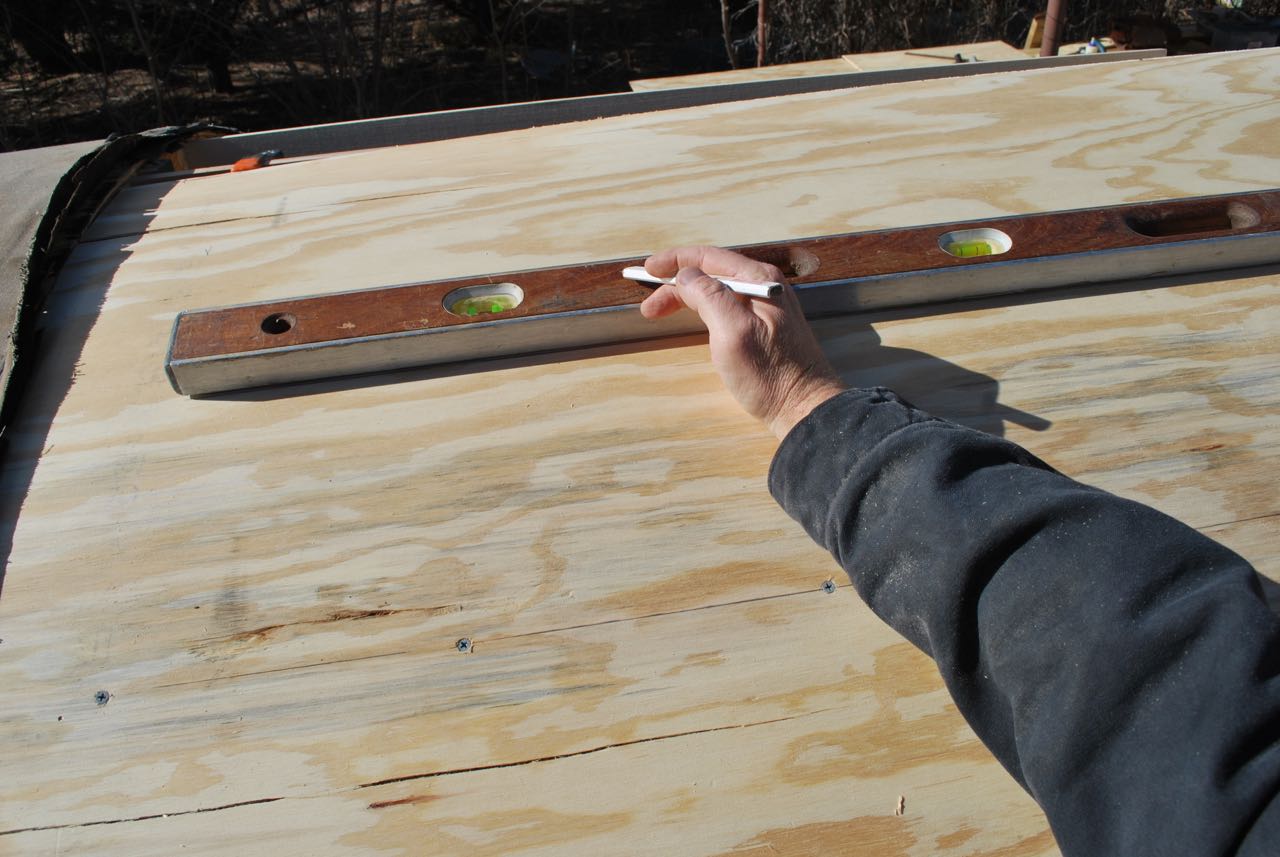
Checking the roof-line for a smooth transition.

After tacking down the plywood ceiling, it was time to mark screw locations.  A 3/4 inch  (ca. 2 cm) purlin is a small target to hit blindly.

DSC_0018 (2)
Laying out the lines.

A couple near misses with roofing nails were required to get things lined up but once marked, things moved along simply enough.

DSC_0004 (6)
Fastening down the roof.

I didn’t take photos of the roofing paper or waterproof canvas that overlays the plywood but those steps are pretty self-explanatory.

DSC_0029
Clamping the laminations that form the arch.

Now it was time to add a strengthening arch to the back wall.  After a couple of less-than-exact attempts to create a perfectly matched form from plywood I had a Eureka moment when I decided to use the wagon itself as the form.  Cutting a pile of 3/16 inch oak strips, I then glued and clamped them in place overnight.  Fortunately, the temperature stayed well above freezing through this entire step.  The metal was laid on the roof and tacked down while we hunkered down for the storm

Knowing where I live, and the capriciousness of the weather here, we took the blizzard warnings seriously and wrapped up the entire back half of the wagon in an enormous tarp, attaching it with roofing nails.  It was a good thing too.  What followed was over 30 hours of straight-line winds from 50-70 miles per hour (80-112 kph) with gusts reported at the nearby Air Force base up to 87 mph (140 kph).  Thousands of cattle died in the region and we had structural damage to one of our buildings but the vardo survived.

20151230sm
The 5 foot drift of snow, ice, and dust that filled our driveway.

The cold week that followed was time to take a break, eat, drink, and be merry over the holiday.

DSC_0032 (1)
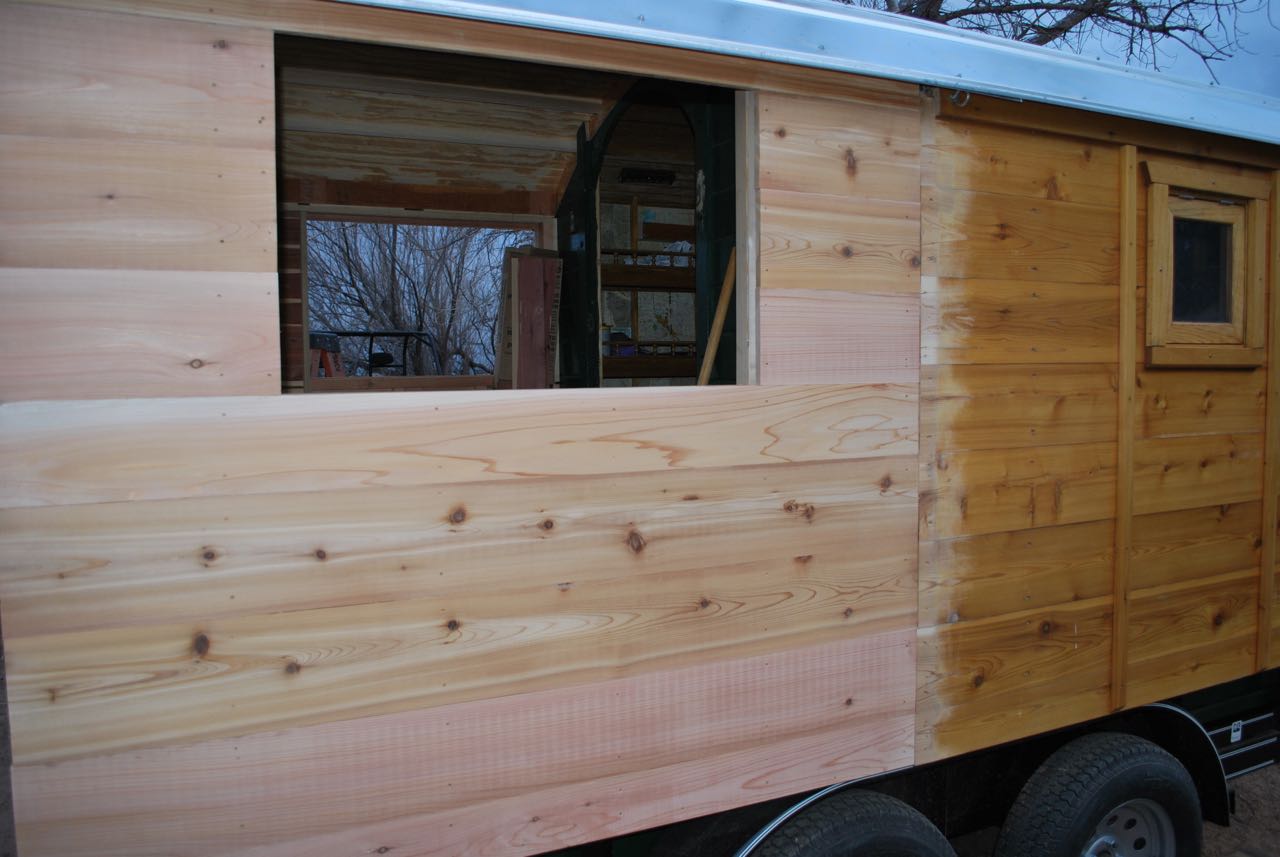
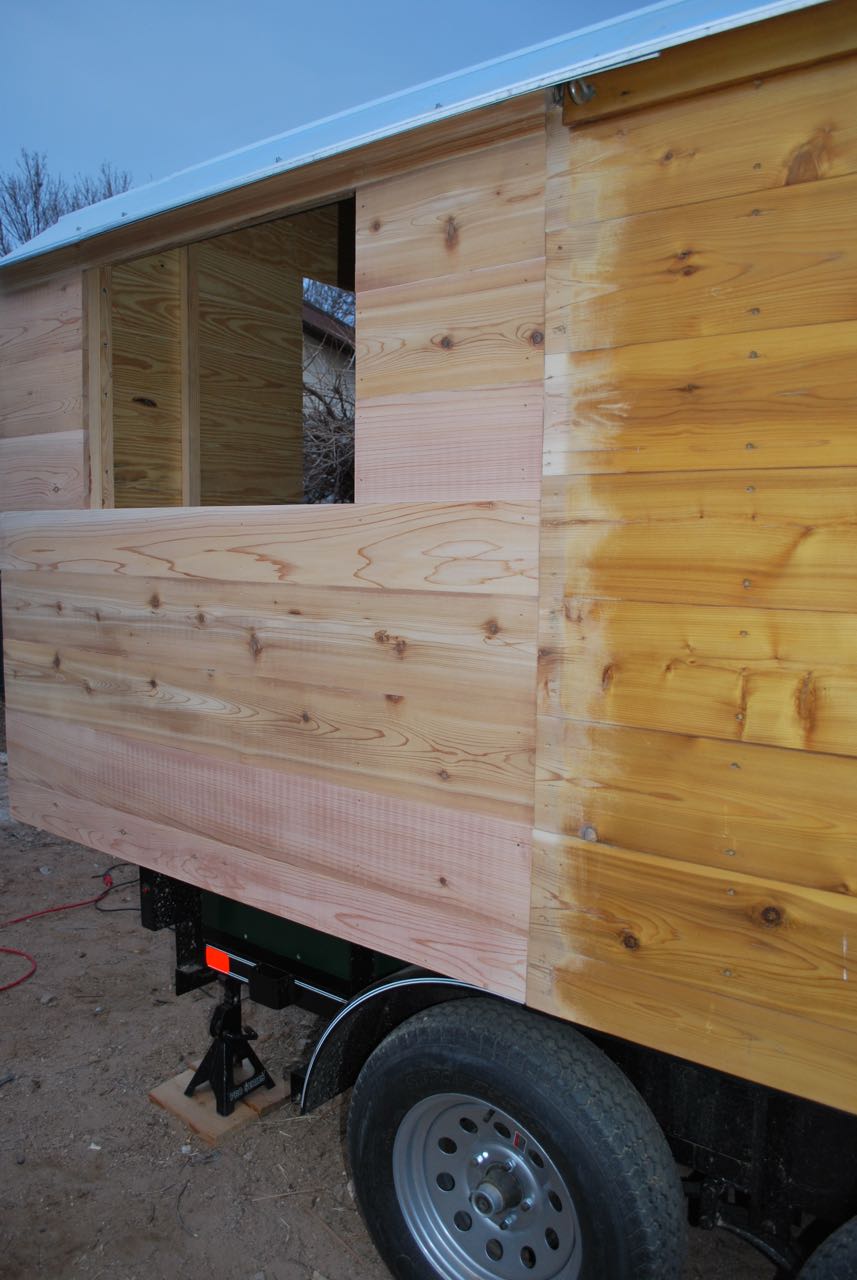
Metal attached and siding placed.

Getting back to the task at hand, the roof was finished and cedar planking added to the sides; the ends running long until they are cut into an ornamental shape.

DSC_0031
Siding running wild, awaiting it’s final shape.

DSC_0033
An ugly transition beginning to be sanded.

The butt-joint will be covered with another batten to seal the joint.

DSC_0034
I can finally feel some real progress but there is a long way to go before I can rest easy.

The weather had stayed cold, limiting some of the work but the need to weatherize the exterior presses on my mind.  I’ll be back to the grind in a little while and will update the progress as best I can.  Comments are certainly welcome!

If you are looking for Part 1 of the rebuild/addition then CLICK HERE.

On to Part 7!

Detailed to the Last Dollar

desk4

Not a pretty little Victorian-style caravan here today but a sturdy, well-thought-out modern living accommodation for someone looking to escape the mortgage anchor most of us have felt.

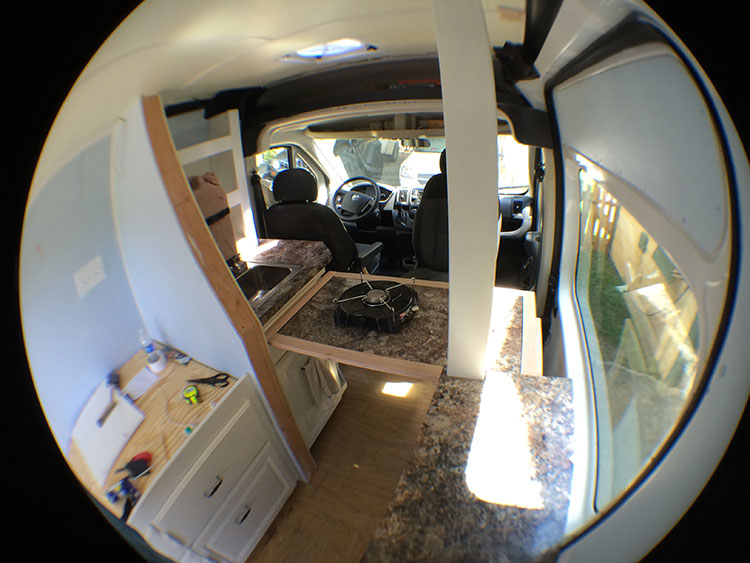
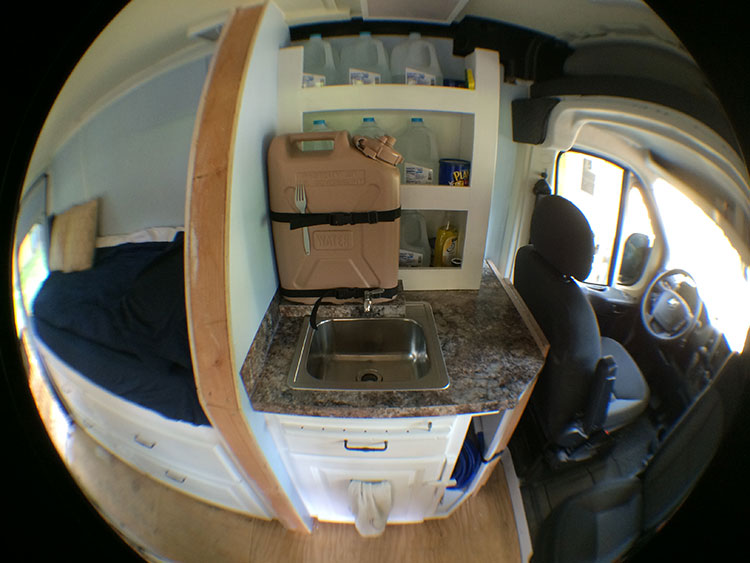
Here is an extremely well-documented van conversion into a very frugal but comfortable micro house created in 38 days from 2014-2015.  Sean (the builder) has done a remarkable job of tracking nearly every aspect of this life-changing event from the decisions that made this happen, to getting rid of everything that didn’t work in his 60 square foot dream, to purchasing and building his version of the perfect live-in rolling home.  There’s even a downloadable spreadsheet of the expenses incurred and great details for those seeking some real “how-to” guidance.

Sean’s blog takes us from the emptying and selling of THIS:

house

To the purchase and planning of THIS:

And through the entire build and beyond:

first-night2

It’s a remarkable journey and I thank him for sharing this with the world.  If you don’t have time or want just a quick overview, watch the short video:

And the entire write-up can be found here at:

F*ck the Banks, I’ll Build My Own Damn House


Let Go of the Things that Do Not Matter

“We live in an age when unnecessary things are our only necessities.”

— Oscar Wilde

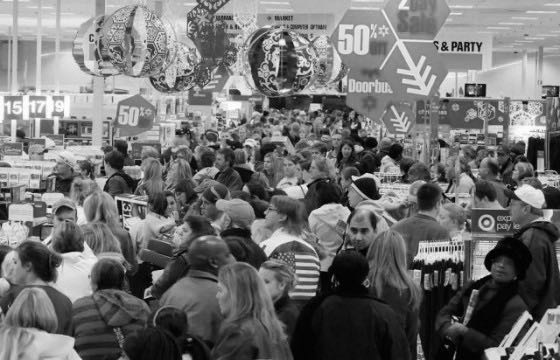
I’m not one for New Year resolutions.  However, it is a time of reflection and I’m glad for the progress I have made in decluttering my life and prioritizing what truly matters over the past few years.  Maybe 2016 is the year for another person out there to step away from the frenzy of mindless consumption.  More junk around house doesn’t make anyone more happy.  And it is certainly not your duty to spend your hard-earned capital only to increase corporate profit.

Alternatively, I don’t advocate volunteer poverty as such.  It is wonderful to have nice things; decent clothing, well-made furniture, good food, and a cozy house.  Just remember, unless you were born into wealth you did not earn yourself, the objects you buy don’t really cost money, they cost your time, freedom, and ultimately, your life.

My constant resolution is to become better, do better things, and be a better person than I was last year.

Happy New Year to all.

What are you resolved to do this year?