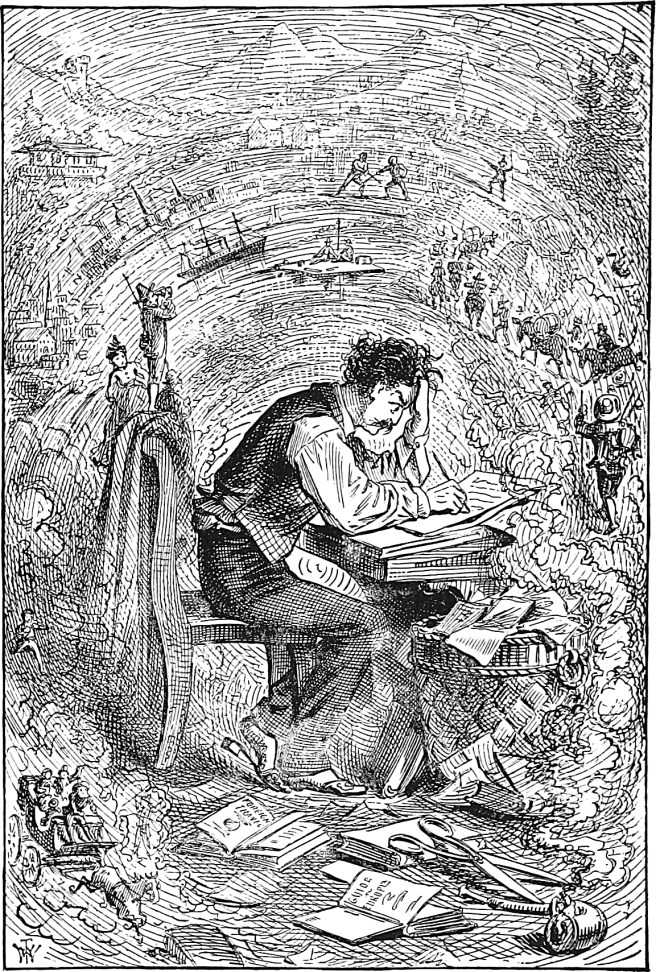
I really love this illustration from one of my favorite authors, Mark Twain. An image of his mind while recounting his many adventures on the road and playing the self-critical and self-deprecating American. This is how my thoughts appear to me much of the time.
Recently, I realized I needed to make a new batch of darts (spears) for an annual atlatl event at Blackwater Draw. This is a recurring problem when teaching large groups, so several years ago I came up with a system that works well for mass producing these Ice-Age weapons with just a few common power tools. Nothing about this project is particularly difficult but if you need to produce darts by the dozen, it can get pretty tedious and take many hours. Power tools, in this case, decrease the necessary time and energy allowing free time to pursue more satisfying occupations.
After several decades teaching and demonstrating primitive technology I have learned that people are not careful with other people’s hand-made items (kids doubly so) so making robust and easily replaced models is a real time-saver. Also, having tried many designs with kids and adults, I have found a size, weight, and flexibility that I think covers a wide range of body types and skill sets so that most people, most of the time, can have some success in just a few throws (except Jim Gnapp, he’ll just never get it). After promising to do this for several years now, I put together a recipe for mass producing atlatl darts.
GEORGE’S RECIPE FOR LARGE BATCH ATLATL DARTS –
INGREDIENTS:
Straight-grained kiln dried hardwood, 3/4″ oak or hickory; three side planed or better
Super glue, gel type or favorite fletching glue
Strong, thin thread (I use silk for my personal arrows and darts but any standard sewing thread is fine)
Feathers, TruFlight full length arrow feathers or other feather splits; three dozen or package of 50
TOOLS:
Table saw
Bench sander
Sandpaper, 100 and 150 grit; finer paper optional
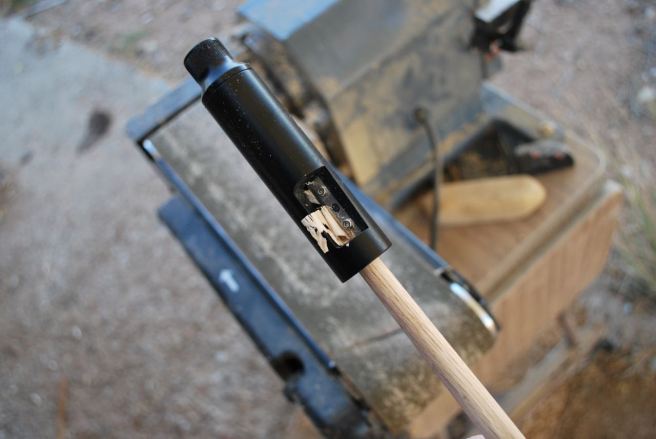
Optional: arrow taper tool for centering and precise fitting of points
Small hand saw, band saw, or similar to cut shafts to length
Tapered countersink drill bit
Ripping the board into 1/2″ strips.
Preparing the Shafts: Rip board into 1/2″ strips, then re-saw to create 1/2″ square cross-section.
Second rip to square off the shaft.
Set table saw to 45° to further re-saw shaft into octagon section. This can then be smoothed by hand with sandpaper or on the belt sander.
After the shafts have been ripped into octagons (six passes total for each), the bundle is cut to length. I generally make these 84″ (213 cm).
Cut shafts to length. I generally cut them to 7′ (84″).
Tapering the final 6″ to fit the points.
At this point you will notice that the shaft is far to wide for standard arrow field points so some free-hand shaping on the sander will be required. Taper the final 3-6″gently down to a scant 3/8″ diameter, rounding the shaft as you go.
Using a tapering jig for a tight fit to the head.
Taper the shaft to fit the field point and test fit a point.
The gang ready to be inserted into their heads.
Repeat until board is consumed and all shafts are all prepared. At this point, further shaping of the shaft can be accomplished on the bench sander to round out the octagon shape.
190 grain (ca 0.5 oz.) field point test fitted and ready to glue.
Mix a small batch of epoxy and attach the heads to the dart. I give them a final tap after insertion by holding the dart point down over a hardwood scrap and dropping it a couple feet, sealing the point. Wipe off any excess epoxy and wait the recommended cure time.
Tying down (whipping) the quill. This one is not pretty but will work.
Fletching: Tear off about 1/2 inch of the vane or barbs from the quill (the barb is the hairy or fuzzy part). Place a dab of super-glue on the forward end of the quill and hold down about 7-8″ forward of hind part of the shaft. Once this sets, repeat two more times placing the feathers evenly around the shaft (one-third way around). Trim the rear of the feather to make all three match in length.
Trimming to length.
Using a scant quantity of glue, attach each feather to the shaft. You can skip this and just tie them down but the glue makes for a robust and neat-looking fletching. Whip down the front and rear of the feather with thread and coat lightly with super glue to prevent unraveling.
Using a countersink to create the dimple.
Using the tapered countersink bit, create a notch in the base of the dart. For security and strength, I recommend whipping the final 3/8″ of the shaft with thread and coating with super glue to strengthen to wood.
Take a break, drink a beverage, and congratulate yourself on a job adequately done. You now have a set of tough darts for play and learning that should, with some care, last for several years of hard use.
THROWERS:
Whittled hook on hickory thrower.A smattering of throwers made in about 30 minutes for a class instruction. Ripped out on a band saw, roughly sanded to create smooth round edges, and steamed for 30 minutes prior to free-hand bending.
Now for the thrower… “It is to be created in the usual fashion, neither too long or too short, too heavy or too long.” ~pt
My personal favorite (at the moment).
Antler hook on hickory handle.
And, for mine, I added a turk’s head knot in vegetable-tanned leather to keep hand placement consistent.
The sacred connection.
Seriously though, there are myriad ways to create a stick with a hooked end and I won’t go into the finer points here. I will say that this is really the simple part and can be achieved with either hand or power tools in a short time. There is much about spear thrower design (atlatls) on the web and it is important to remember that most cultures world-wide used these efficient tools. As their prey and use varied, the styles varied as well. They broadly fall into a few categories but the most common in the U.S. are variations on the “Basketmaker” or “Great Basin” styles and what I like to think of as the hammer-handle styles (above). The latter are more akin to the early designs from the Ice Age and are found throughout Europe, often make from reindeer antler, over many millennia.
My second favorite; Osage orange wood, buckskin, sinew, pitch glue and red argylite.
As for style, I personally recommend finding a cultural group you are interested in or just a design that strikes your fancy and dive in. Wood is cheap, easily worked and plentiful. Worry about the details later.
Click the image to learn more about this thrower.
FINALLY, FIELD TESTING:
They work! and all survived a day of heavy use.
Oh but wait! There’s more! Here are a couple other respectable links to get you started:
Reposted from 2008; what a different life it seems now.
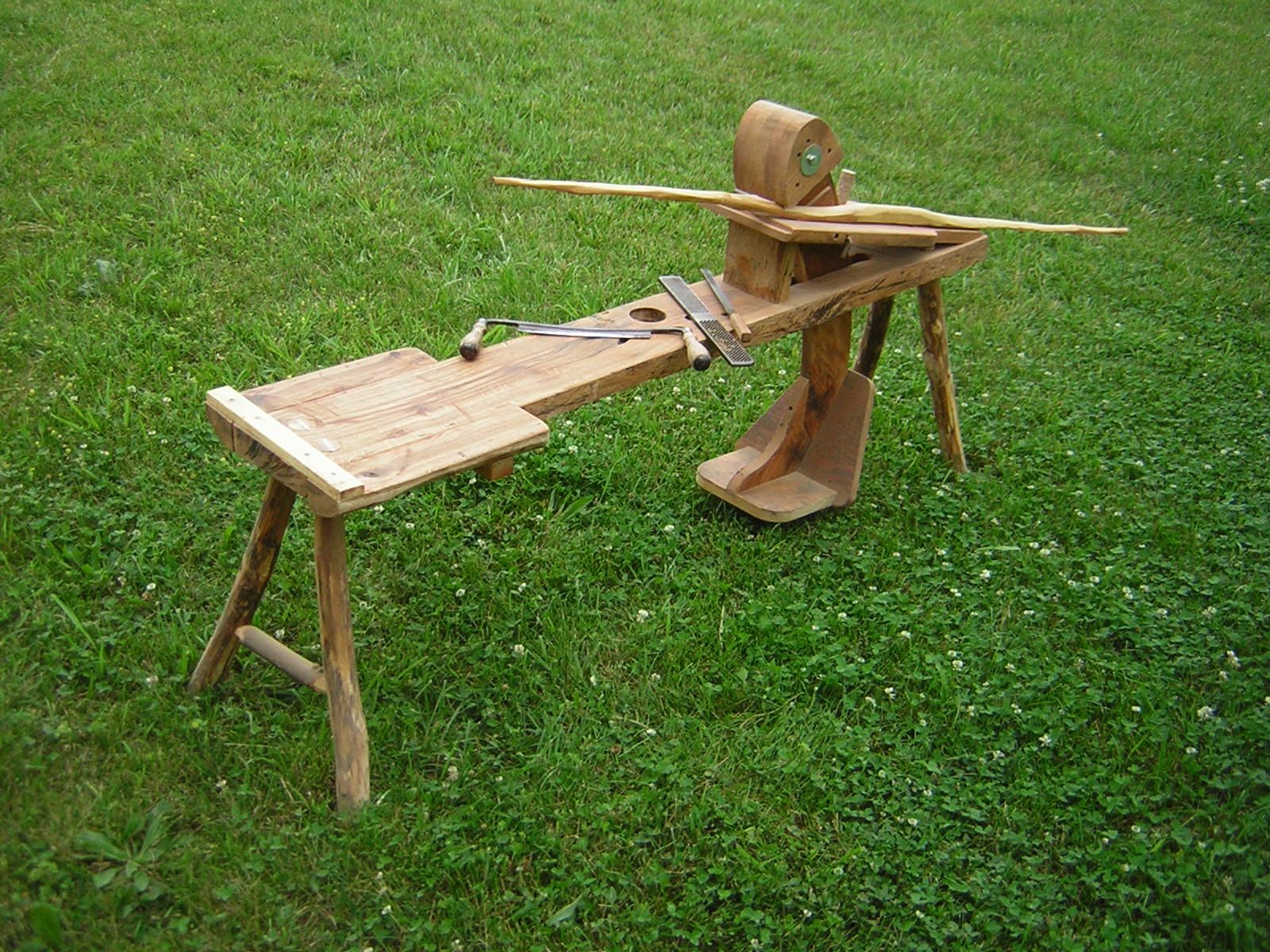
Here is one of my favorite old shave horses. It is made from a plank chainsawed from an enormous pin-oak limb that came down during a storm years ago.
It weighs quite a bit but the weight means more stability when using it as a work bench. All my other horses have had an adjustable table but this one is set to a good angle strictly for working bows.
There are plenty of depictions in old art and many made specifically for every occupation in Diderot’s Encyclopedia from the 18th century. I made my plans for this one based on several I measured over the years and made lots of adjustments to my first one to get the right “fit”. My second and third attempts got better and better. Total cost estimate: about $5.00 for bolt and a few screws.
Just how important is safety in a happy and complete life?
Don’t get me wrong. I have known people with little regard for their own well-being, be it physical or otherwise. Some of these are confirmed idiots. Whether they are just non-thinking zombies or the overly entitled who expect someone else to look out for them, they lay outside this commentary and deserve no further thought. However, fear of failure, fear of death, fear of the unknown; these all hinder us at some stage of our life. We are taught to seek safety. Everything is a balancing act; a never-ending series of choices sometimes with many possibilities and I feel strongly we often reap what we sow. Mostly, we drift along with the current of our culture, our circle of friends, down the river of expectations or wherever else circumstance leads. These thoughts are just an introduction to a thought I want to share.
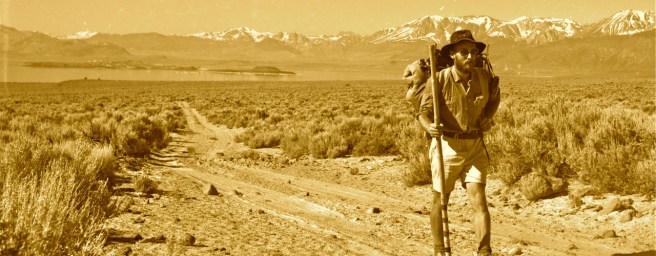
I found this quote in a book I read when I was very young. This influenced my thought deeply throughout my formative years. Not in immediate risk taking, but as a real thought on what safety is to us all.
But if you judge safety to be the paramount consideration in life you should never, under any circumstances, go on long hikes alone. Don’t take short hikes alone, either — or, for that matter, go anywhere alone. And avoid at all costs such foolhardy activities as driving, falling in love, or inhaling air that is almost certainly riddled with deadly germs. Wear wool next to the skin. Insure every good and chattel you possess against every conceivable contingency the future might bring, even if the premiums half-cripple the present. Never cross an intersection against a red light, even when you can see all roads are clear for miles. And never, of course, explore the guts of an idea that seems as if it might threaten one of your more cherished beliefs. In your wisdom you will probably live to be a ripe old age. But you may discover, just before you die, that you have been dead for a long, long time.
If you are not familiar with Colin Fletcher’s writings it is worth knowing that he helped create the backpacking movement in the form we know today by his seminal book “The Complete Walker” in all it’s revisions. Starting life as a Royal Marine Commando in the Second World War, Fletcher eventually ended up in the United States and began his writing career with his book The Thousand-Mile Summer about his hike describing his walk along the length of California. Check out his other titles HERE.
The Wilderness isn’t a place to escape to as so many refer to it. It is a place to be, just as valid, if not more so, as the comforts and safety of civilization.
I have been ignoring the blog for quite some time now but I have not been idle.
Far from it.
The vardo update project took on a life of it’s own and it feels like a complete renewal of the living space. In the coming month I hope to make a video tour of the new and improved house on wheels to show off the advantages and some disadvantages to the new setup. In the mean time, the exterior is getting new paint.
Other facets of life have taken precedent and time has become a scarce commodity for me. I have drafted many posts but none to a satisfactory level for publication. Some will be discarded I am sure. Plans and dreams keep changing and circumstance has an enormous influence on events lately; mostly for the good.
Finally, I’m not sure this is the best idea but a new blog may on the way. Cleaner, more focused, and a fresh start. Once it is fully operational I will share it openly.
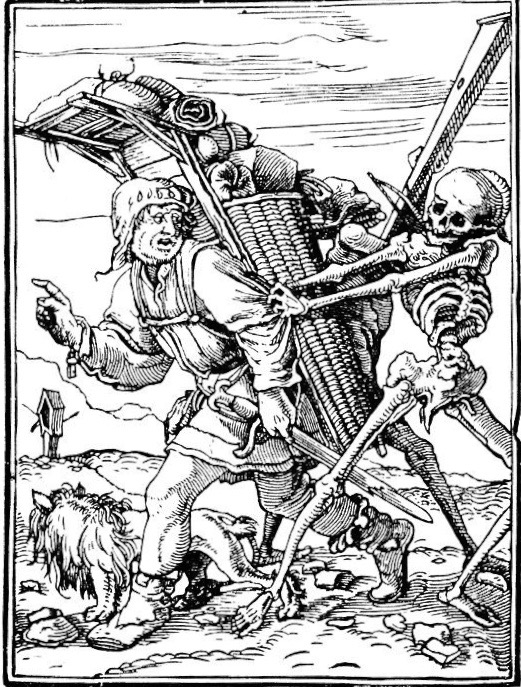
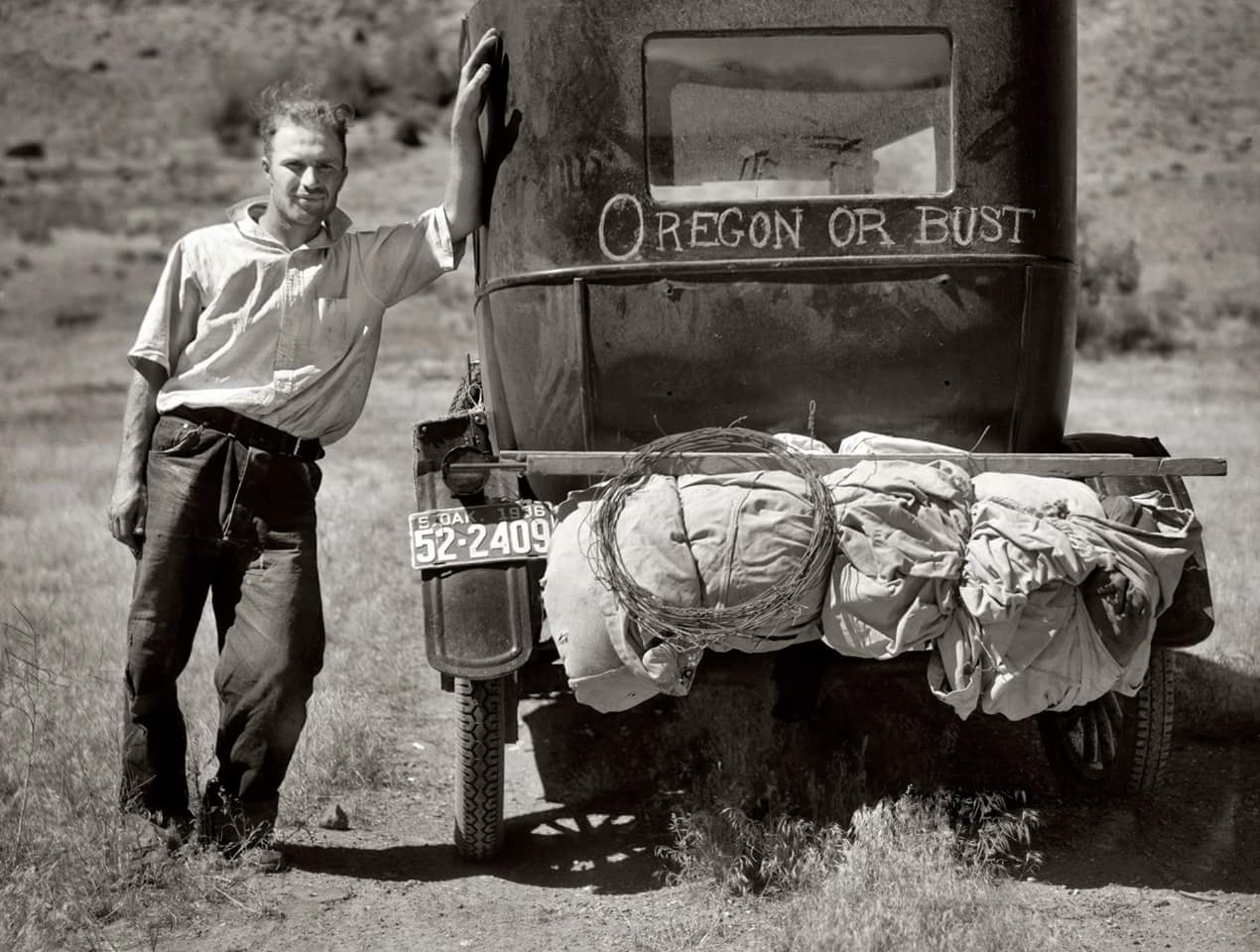
This image sums up how I feel some days lugging a burden and trying to escape. Death waits for no one and comes to us all. However, we can choose to move on to better places and surround ourselves with the right people before it catches up with us. Right living, good community, best choices.
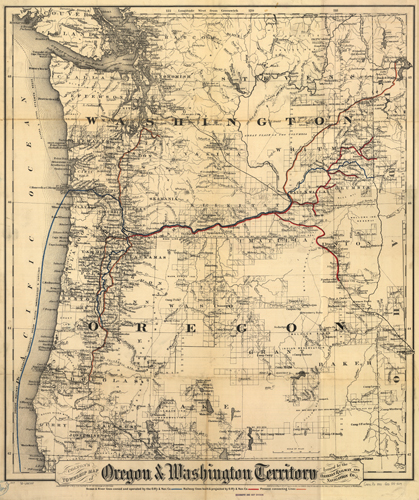
Our people aimed for Oregon
When they left Newburyport–
Great-grandma Ruth, her husband John,
But they pulled up in Wobegon,
Two thousand miles short.
It wasn’t only the dangers ahead
That stopped the pioneer.
My great-grandmother simply said,
“It’s been three weeks without a bed.
I’m tired. Let’s stay here.”
He put the horses out to graze
While she set up the tent,
and they sat down beside their blaze
And held each other’s hand and gazed
Up at the firmament.
“John,” she said, “what’s on your mind
Besides your restlessness?
You know I’m not the traveling kind,
So tell me what you hope to find
Out there that’s not like this?”
The fire leaped up bright and high,
The sparks as bright stars shone.
“Mountains,” he said. “Another sky.
A Green new land where you and I
Can settle down to home.
“You are the dearest wife to me.
Though I’m restless, it is true,
And Oregon is where I’d be
And live in mountains by the sea,
But never without you.”
They stayed a week to rest the team,
Were welcomed and befriended.
The land was good, the grass was green,
And slowly he gave up the dream,
And there the journey ended.
They bought a farm just north of town,
A pleasant piece of rolling ground,
A quarter-section, mostly cleared;
He built a house before the fall;
They lived there forty years in all,
And by God persevered.
And right up to his dying day
When he was laid to rest,
No one knew–he did not say–
His dream had never gone away,
He still looked to the west.
She found it in his cabinet drawer:
A box of pictures, every one
Of mountains by the ocean shore,
The mountains he had headed for
In the state of Oregon.
There beside them lay his will.
“I love you, Ruth,” the will began,
And count myself a well-loved man.
Please send my ashes when I die
To Oregon, some high green hill,
And bury me and leave me lie
At peace beneath the mountain sky,
Off in that green and lovely land
We dreamed of, you and I.”
At last she saw her husband clear
Who stayed and labored all those years,
His mountains all uncrossed.
Of dreams postponed and finally lost,
Which one of us can count the cost
And not be filled with tears?
And yet how bright the visions are
Of mountains that we sense afar,
The land we never see:
The golden west and golden gate
Are visions that illuminate
And give wings to the human heart
Wherever we may be.
That old man by dreams possessed,
By Oregon was truly blessed
Who saw it through the eye of faith,
The land of his sweet destiny:
In his eye, more than a state
And something like a star.
I wrote this poem in Oregon,
Wanting the leaden words to soar
In memory of my ancestor
And all who live along the way.
God rest their souls on a golden shore,
God bless us who struggle on:
We are the life that they longed for,
We bear their visions every day.
~ Garrison Keillor
I firsrt heard this 25 or more years ago. It moved me deeply then and even more so now. Enjoy, GTC.
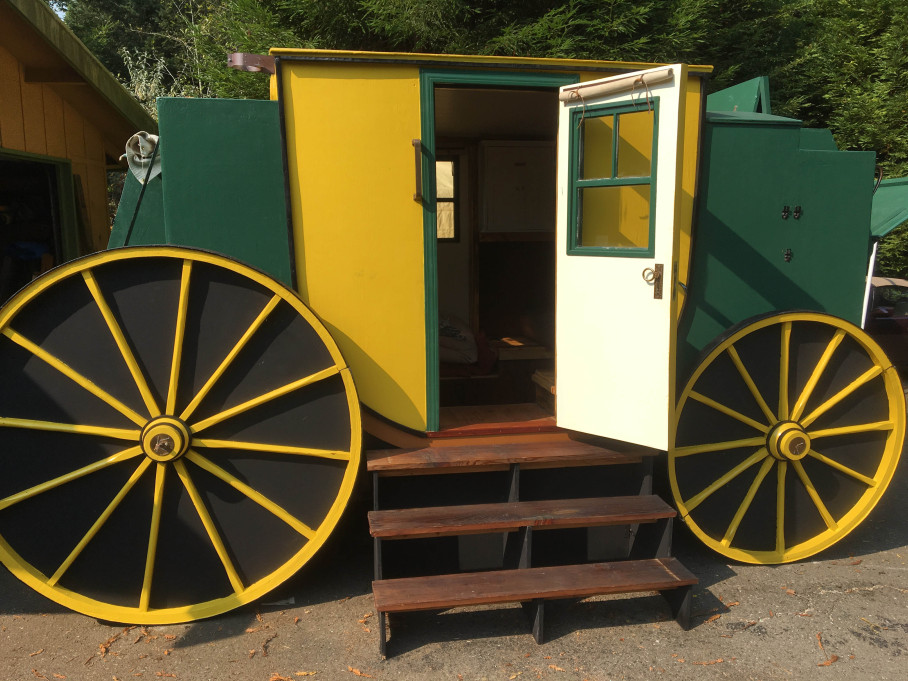
A home-built camper with a old-fashioned Mail Coach theme.
Tony passed on his links to me to share with the vardo community. When I first saw the giant wooden wheels I thought it was a stationary sculpture piece for the back garden. These actually remove for travel and are really just for show.
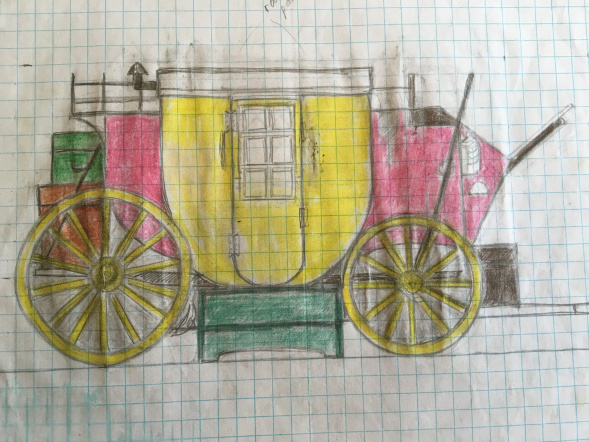
I’m always glad to see someone’s concept sketches as I have filled notebooks with these myself over the years.
Tony’s web page guides you through the entire process in photos (newest to oldest) so you can learn from his build.
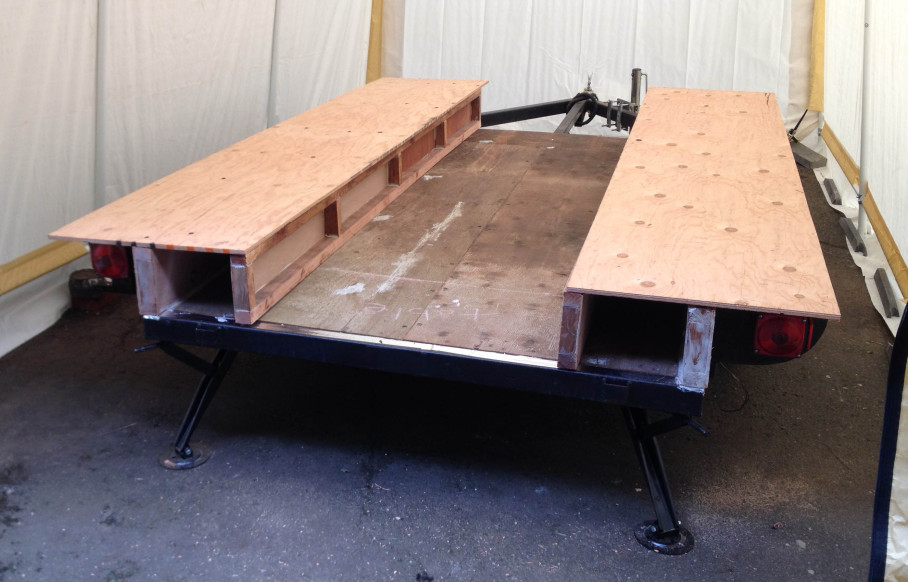
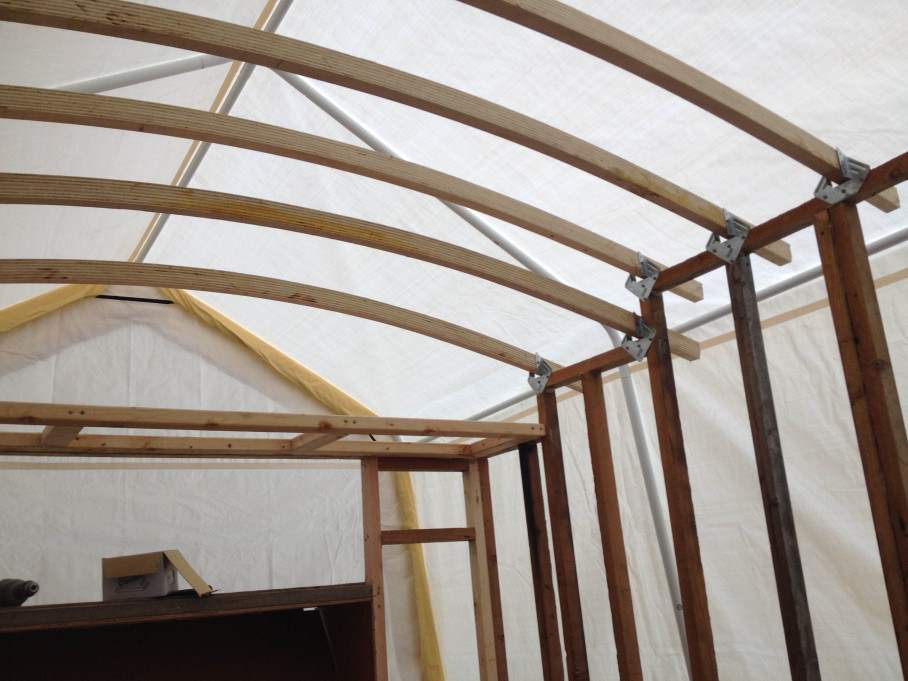
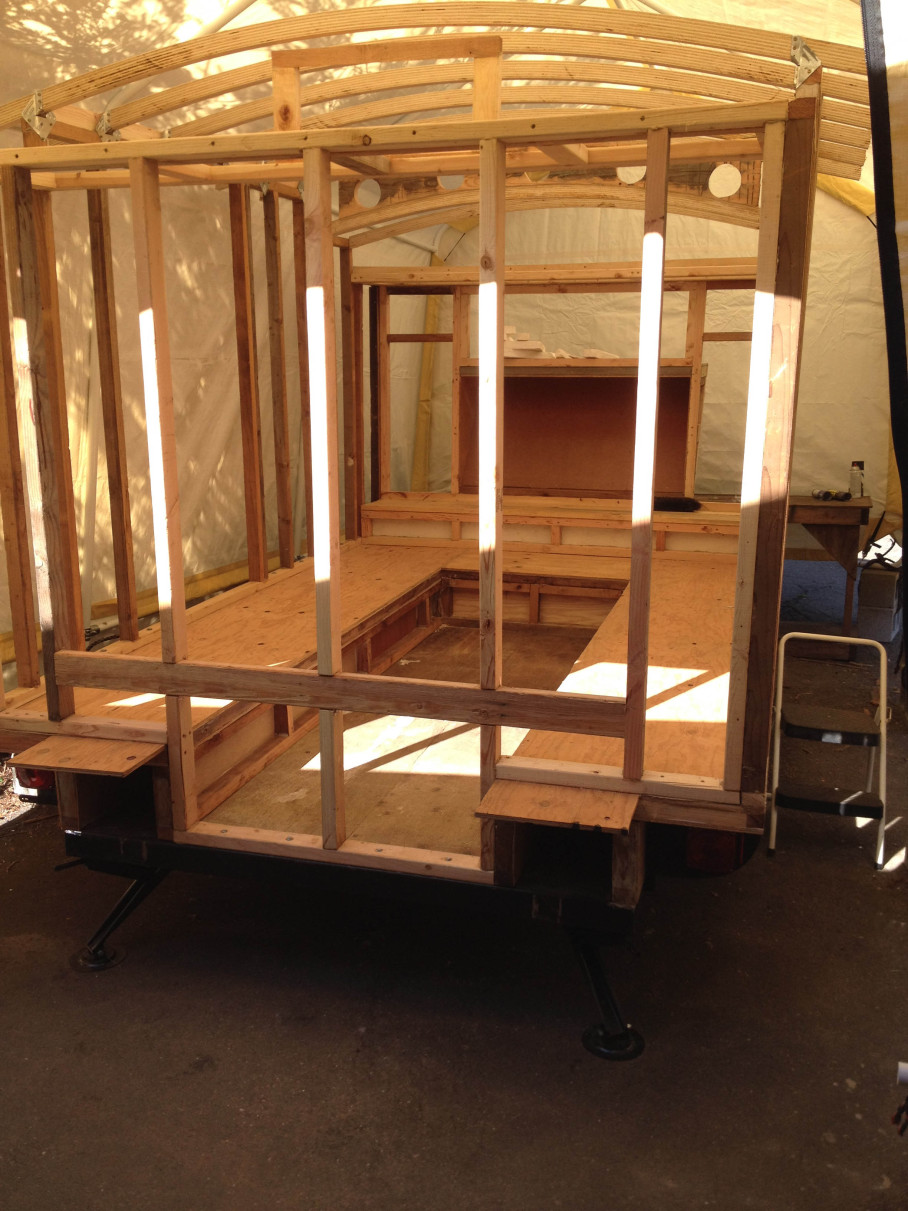
Note the “dead” space in the ledges as it becomes important storage later.
Straight forward off-the-shelf hardware is used throughout including things like Simpson Strong Ties for the rafter connections.
It’s a pretty whimsical design and I think this photo sums that up nicely.
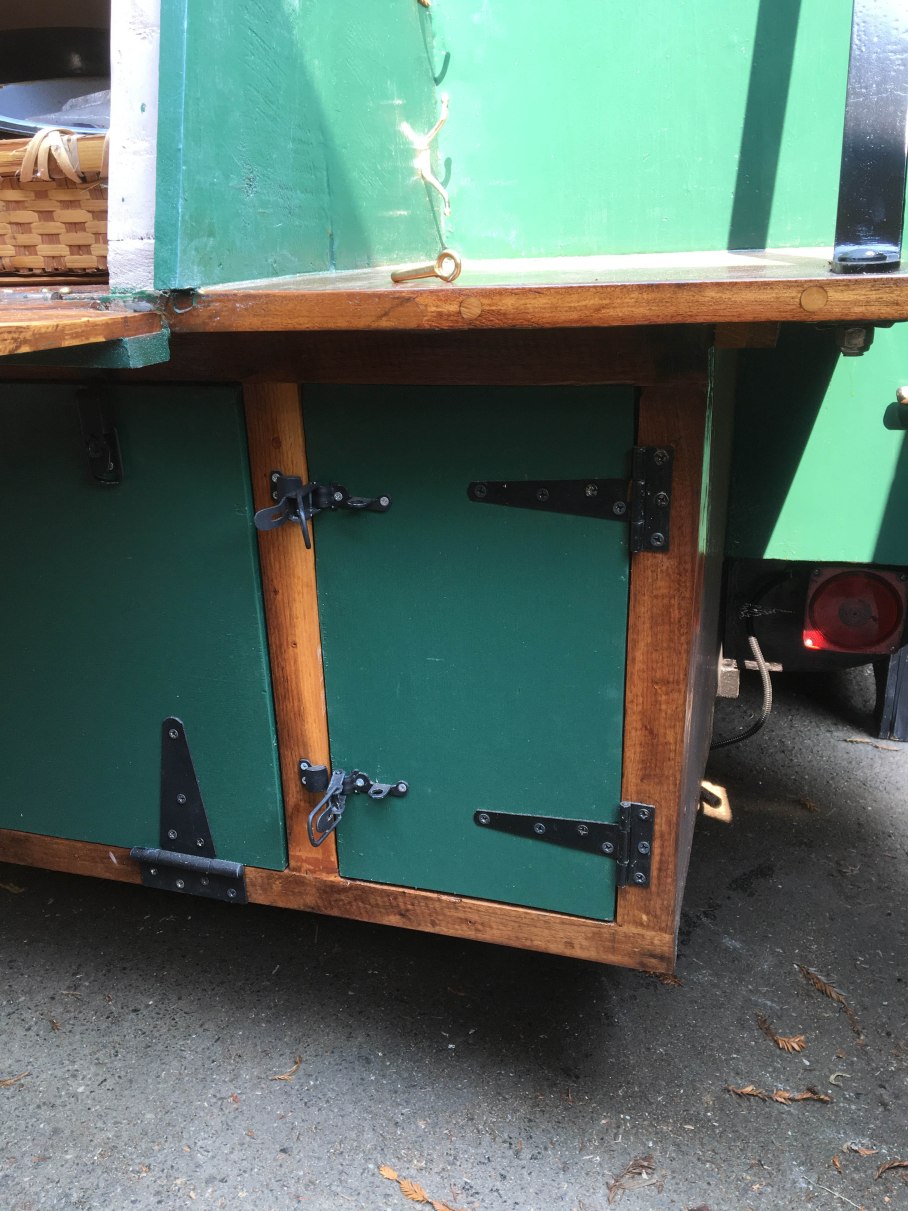
Storage door closed.
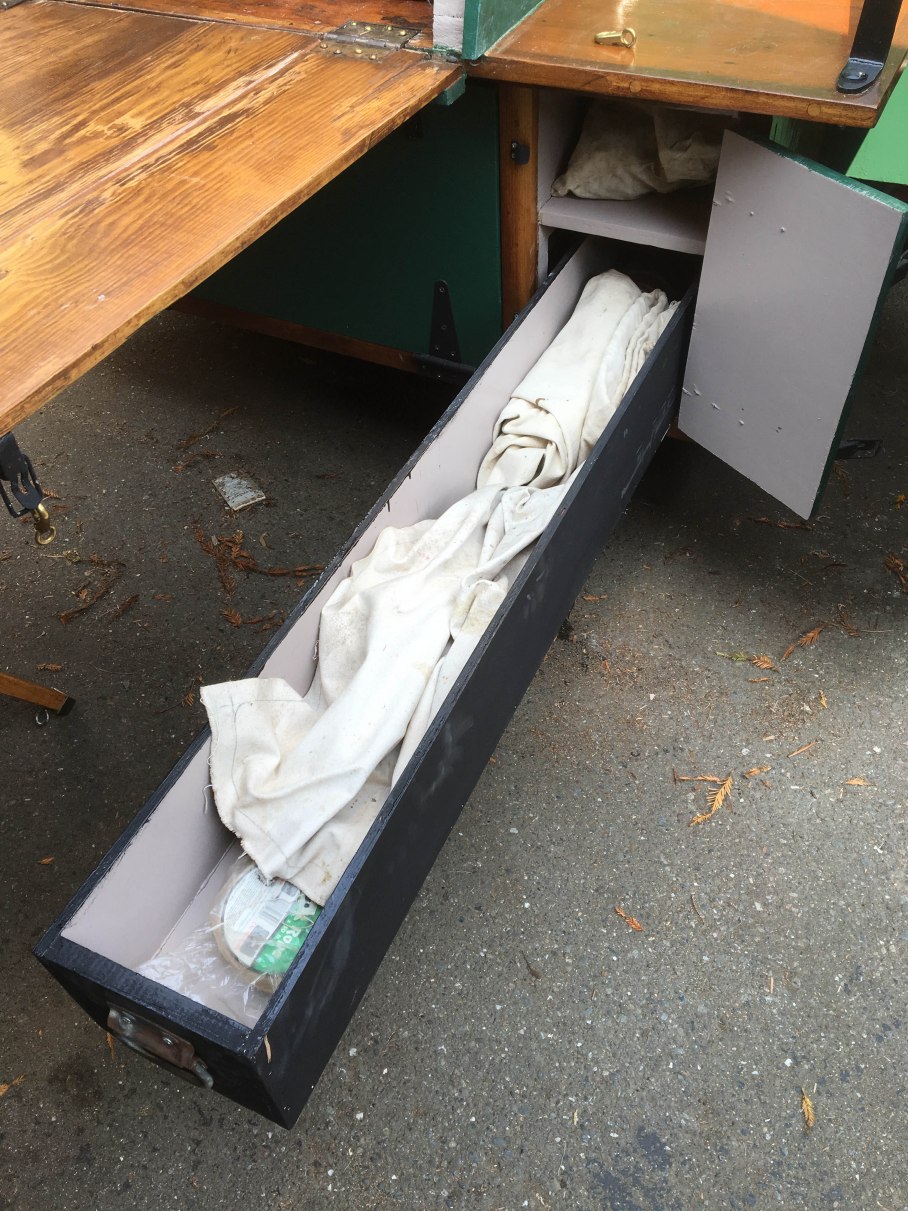
Door open to reveal a very long drawer.
A simple rustic look inside fills the bill and looks quite functional.
The little stove removes and stores in it’s own locker for travel.
If you are looking to build your own camper, vardo, or other living wagon, you can’t have enough great ideas so get over to Tony’s website and have a look:
Raise your hand if you’ve ever been there. I know I have. That moment when you think, “wow, I know I trained for a completely different career but wouldn’t it be great to just be out in the shop building furniture all day, every day.”
The truth is, as much as we hate to admit it, that’s never going to be economically viable for most of us. Vic Tesolin offers some great thoughts on the subject in the End Grain column of the current issue of Popular Woodworking, and what he wrote hasbeen on my mind all week. The short version is that he supposes there is a lot of fulfillment to be had in woodworking as a hobby that becomes elusive when it’s a job.
For me, even though the line between woodworking as hobby and source of income has been increasingly blurred over the last few months…














 Preindustrial Craftsmanship