Perpetual Beginner Mentality

Here’s a nearly perfect little essay from Greg Merritt about amateur woodworking that can be applied far beyond our chosen hobby. It’s a great way to start off the New Year on a positive note.

I particularly like this line: “To build furniture you need three basic skills.  You must know how to sharpen, layout accurately and then accurately cut the wood to layout.  That is it. Period.”

Greg Merritt's avatarHILLBILLY DAIKU

The following is written for those of you, like myself, who are amature/hobbiest woodworkers. We just want to build things with wood and enjoy the process as well as the result.

In days gone by, when the apprentiship system was in full swing, a person knew where they stood in the hierarchy. You entered as an apprentice and worked your way up through the ranks. Crossing milestones allong the way that advanced you to the next level. Eventually working your way up until you were considered a master craftsman, or whatever similar rank, depending upon your chosen proffession. My assumption is, that as these individulas moved up in the system their attitude changed as well. Gaining both confidence and a sense of reponsibility to the profession.

That was then, this is now.

Something I have observed over the years is that amature woodworkers are almost always viewed as perpetual beginners…

View original post 1,000 more words

Zenana Carriages, a minor mystery solved

Zenana– def. The place where the ladies reside. Origin: Urdu.

Any thoughts on this one? Please pass it on. I am curious to know.

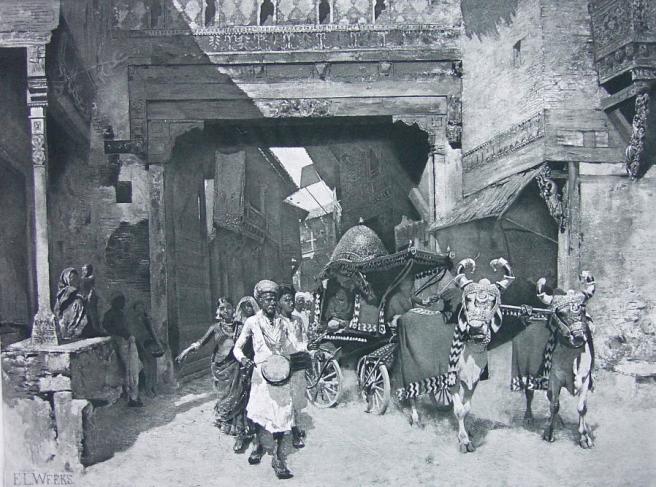
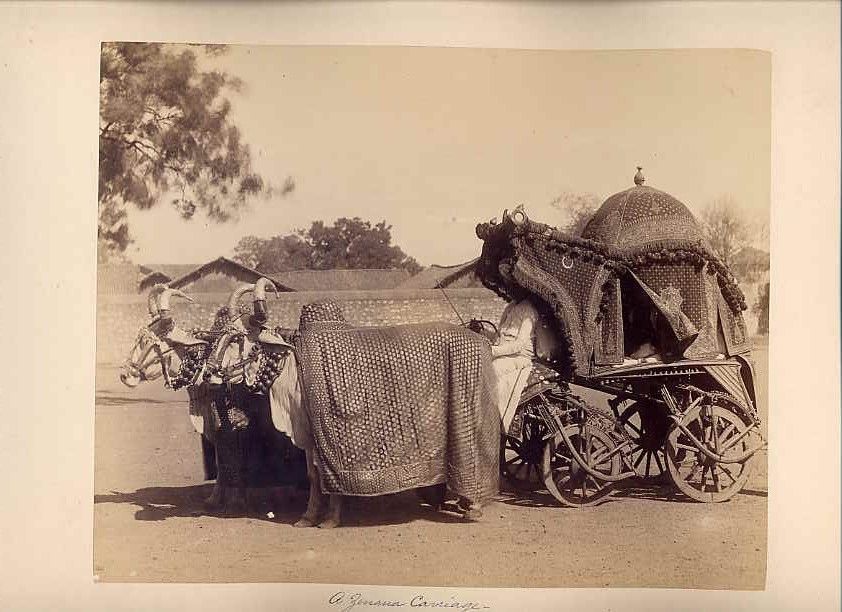
Yesterday I posted this cabinet card image found on Tumblr and asked for help in identifying the style.  Crowd-sourcing research on the blog certainly works.  “KB” responded with enough key words that a quick image search revealed the nature of this carriage.  Often called a Zenana Carriage, this one is extremely well-decorated and may be going to a wedding.  The practice is from the Urdu-speaking Hindustani but can be applied in several ways. This appears to be from British Raj period of India (the good ol’ days to the Brits but the Indians may beg to differ on this).

Really, I’m just in it for the vehicles.

The term seems to be applied rather broadly from sedan chairs to carts and wagons of various quality.  The key being a covered transport for the modesty of the lady enclosed.

It’s more of a concept than a carriage, except among the wealthy.  Zenana carriages for royals may even be made in silver and gold.  It reminds me of the old pilgrim woman in Rudyard Kipling’s Kim.  She was so old and beyond modesty, she would often even ride with the curtain partially open.

neuville1869
The Carriage of a Hindoo Lady.
zananacart
Zenana Cart.
Silver zenana carriage Baroda, 1895.
Sacred bullocks before state carriage - Baroda.
Sacred bullocks before state carriage – Baroda.

I suspect some of the design elements were influenced by British carriage building but overall, this is very much a regional phenomenon.  Perhaps there are some motifs and textures found in this genre to spice up a modern caravan.

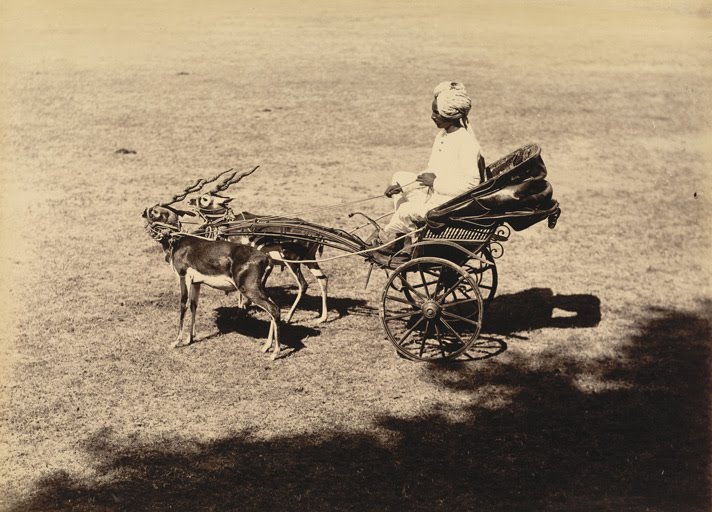
And finally, an interesting little cart I found while combing images in the wee hours.

Use whatever you can tame?