Apparently, this sold better than Coca-Cola in 1890. If only this was our problem now.

Yummy! Its tasteless AND makes you fat.
Adventures of an Imperfect Man In Search of a Handmade Life

Apparently, this sold better than Coca-Cola in 1890. If only this was our problem now.
Yummy! Its tasteless AND makes you fat.
This is a pretty good setup for any outdoorsman (our outdoors woman for that matter). By 1925, the scouts had worked out a pretty good uniform and gear setup based on many old experts not the least of which was the US Army.

If there’s a bit of a paramilitary look to the scouts it certainly owes much to its military background in Britain and further as a result of the Great War. Still, there’s a lot of good info to take away from this. These are truly the essentials.
The new internet Bushcraft world has very little on the old-timers knowledge.
Despite how much I like this photo, I have held off posting this image here because I couldn’t find any attribution or further information about this gentleman and his fine bicycle. I came across it several years ago and stuck it in my image files until I could find out more; alas, I have not.

My first interest was in the excellent baggage he’s carrying; a very modern looking frame bag, a tool roll or similar, nice front and rear bags, and what appears to be a wooden box along the top tube. His haversack is not visible although the strap is in this image. Any thoughts on the bike or image itself are welcome.
The rest? Maybe you can tell me…

(UPDATE: Thanks for the corrections sent by Luc and Patrick. Updates were made to reflect the new information.)

Some interesting Victorian thoughts and speculations about the “new woman” that bicycling and all its implications would bring.

A somewhat dilapidated or damaged vardo in France 1920s – 1930s. People with no fixed address have always drawn suspicion while simultaneously their lifestyle is romanticized.
In Britain and Ireland, the Romany Gypsys and the Traveller community are often associated with low-skilled work such as scrap dealers, horse traders, musical entertainers, or more nefarious activities outside the societal norms. However, there were plenty of skilled craftsmen and craftswomen providing goods and services to people around the country.
Below is an image of a couple, working together making footstools outside their vardo while another couple looks on from the comfort of their wagon.
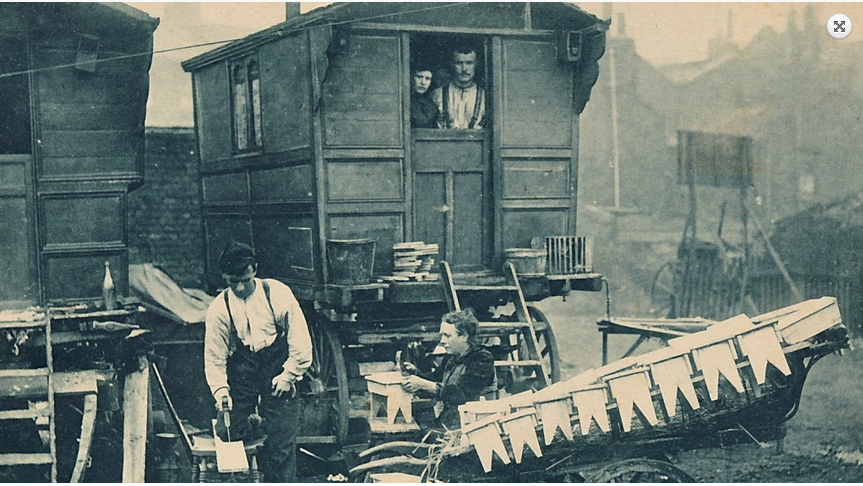
Other Gypsy families were blacksmiths, basket weavers, or similar occupations that could be taken on the road, required little stock or overhead, and could be performed independently or with a minimum of family help.
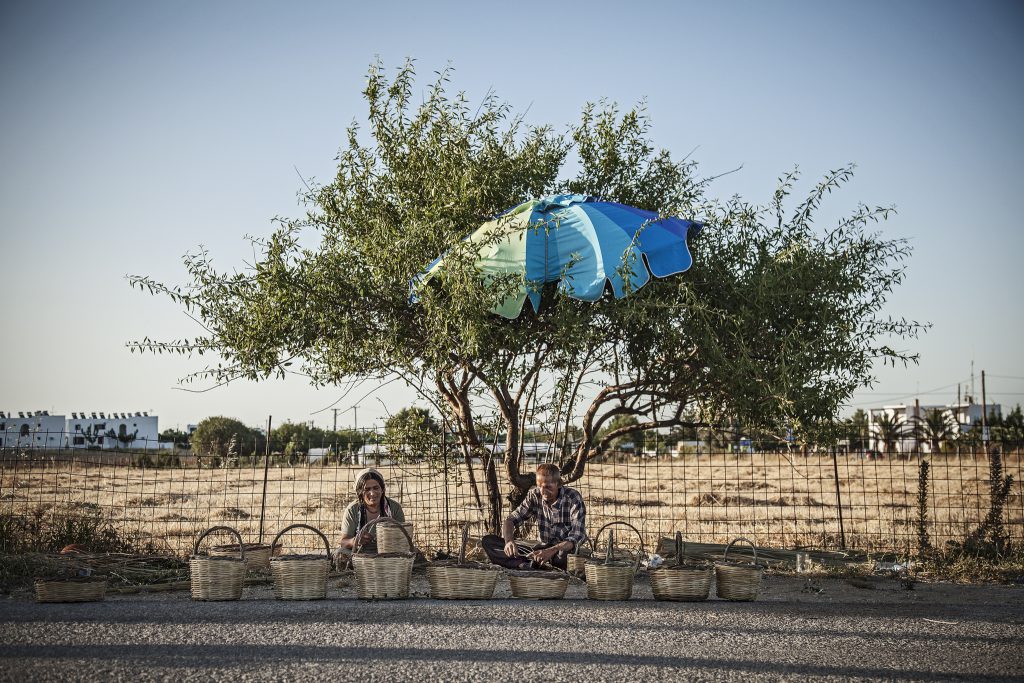
There is more to wandering people than the romantic or demonized images we carry. People are just people after all.
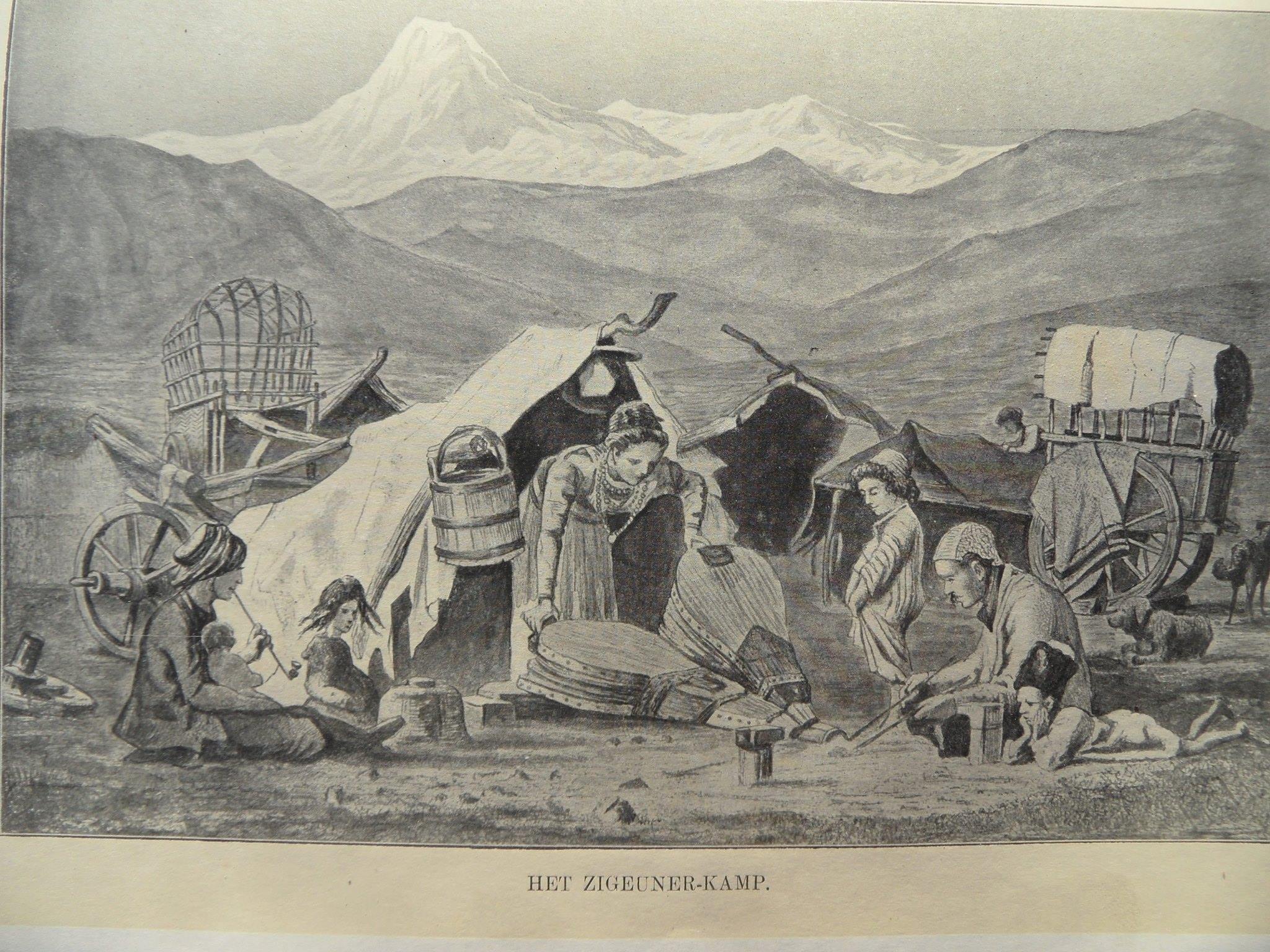

Nomads are not loners. In fact, humans do not do well alone in any setting. We have always been communal people, depending upon one another for help and support. Many hands make light work and it is essential to be near others you can depend on.
 I have been collecting images of Traveller communities for many years and I really enjoy the gritty, homespun feel of the old encampments with peeling paint and makeshift tarpaulin shelters. I’m sure this image was not welcome in settled communities around Europe and the shiftless nature of these wanderers led to many suspicions, both unfounded and real.
 These are not the rolling home of the wealthy showmen of idle rich but the best compromise for families destined to live on the road.
 The vardos bear many differences but within fairly tight physical contraints of size, weight, needs, and technology. It’s important to remember as well that historic travellers of most varieties didn’t design or build their own accommodations but often modified or improved that which they acquired.
 Even though they show few relevant details of the caravans themselves these are some of my favorite images; they give us a glimpse of the people who called them home.
 Although Traveller families lived (and live) on the margins of “normal” society they were (are) more like their neighbors than not.
 I hope you enjoy the photos as we head into the season of Thanksgiving here in North America and give thanks for what we have.

We are at our best and worst in groups, whether that is family or friends. Humans are social animals.
I love finding old images like this. They show that we never really change yet are on a continuum of adaptation. The bows that support the canvas top on this (I believe aftermarket) truck bed are reminiscent of much earlier wagons of the Old West.
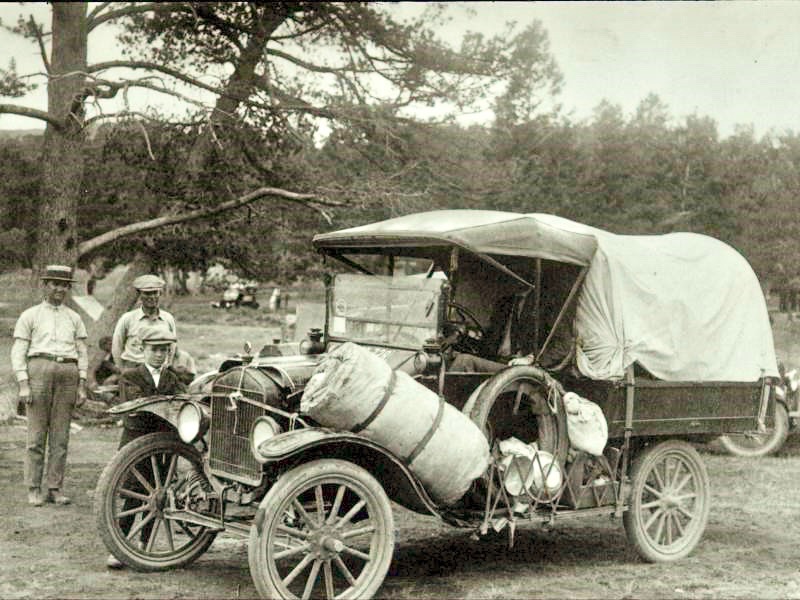
Space was extremely limited in the cab of these old vehicles so if there were three on-board, I suspect someone, probably the boy, rode in back with the luggage.

The Library of Congress has some pretty amazing stuff. I rarely find what I came for but I always find something pretty spectacular. This house (click to enlarge) is quite a piece of woodworking. Shingle siding all glass door, sturdy balcony, beautiful windows, under storage, and what I think is a pull out pan box on the back. The O’Donnell’s were certainly traveling in style.

The amount of joinery that went into the door and windows is probably more than is found in most houses today. I really like the old basement windows used as storage access underneath. As usual, I could find no interior photos but I suspect it was well appointed.
Original files can be found: http://www.loc.gov/pictures/item/npc2008007978/and http://www.loc.gov/pictures/item/npc2008007936/
If this isn’t inspiring, I don’t know what is.
Oh, and nearby photo caught my eye in the Library:

I’ve never known a woman with a garter flask before…
When it comes to making enough money to get by, the two have a unique system.
“In our ideal setting,” Hutchison explains, “is four months of working somewhere, [or] four months of volunteering somewhere, and then four months of traveling.”

FROM THE VERMONT PUBLIC RADIO ARTICLE:
“Many people spend most of their day in an office, and I was really, really tired of that and being tied to e-mail and my calendar.” Galiardi explains.
“We both had challenging careers,” she says. “The challenges were becoming, ‘How much more can I fit in?’ Rather than [fitting in] what I really want to be doing.”
Now the couple uses the trailer as a home base, spending much of their time outdoors: kayaking, biking and hiking.

On fitting the few things they own into a tiny space:
“It’s a lot like a sailboat. In that, everything has to have its place,” says Hutchison. “When you go look for that thing, it’s there. And then it goes back there when it’s done.”

If you are interested in learning more they have been keeping a blog of their adventures over the past few years. You can read more by clicking here: Tales from a Mid-Lifeventure.

 Preindustrial Craftsmanship