Historic Romani Caravan Paintings

These images might whet the appetite for summer days, picnics, an caravanning off into the great unknown; or it might just be a bunch of pretty pictures if the former isn’t your cup of tea.  Anyway, these are generally labelled and classed as Gypsy images although we know that this is often seen as an offensive word to many Romani (Roma, Romany, etc.), I don’t think it was intended this way in many cases.  For that matter, when not applied to an actual people, the word gets thrown around in art, aesthetic style, dance, music, and many other ways.  I have only known a few “Gypsies” in my lifetime and that was the term used; maybe out of simplicity, maybe just as resignation to the common language.  But enough of this digression, enjoy the paintings.  There will be more to come.

Dame Laura Knight, Gypsy Caravans, 1935. LONDON.- Trinity House.

“Knight … bucked trends through depicting liminal sites, such as circuses and gypsy settlements, from the very beginning of her career. An example of this is her delightful work Gypsy Caravans (1935).”

The caravans depicted above are the Rolls-Royce’s of their day; highly ornamented Reading Wagons with mollycrofts, awnings, windows, and fine paint work.  They would catch they eye of any artist.  I am particularly fond of the domestic scene around the hearth; laundry being done and hung out to dry in the background.

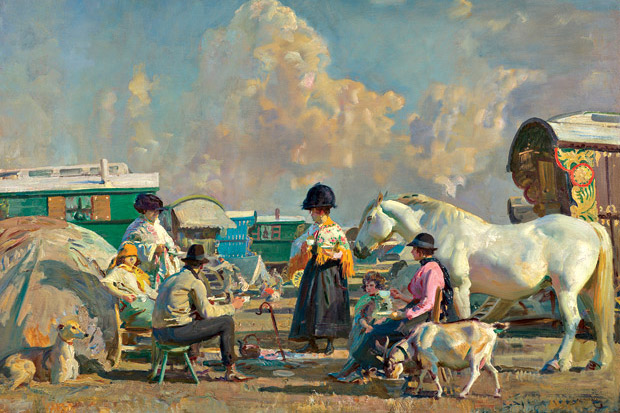
The paintings below are by Sir Alfred Munnings (1878-1959), a British artist who made many beautiful watercolor paintings of horses, encampments, and caravans.  What better, more colorful, and dynamic subject matter?  Alfred Munnings’s biography states that he clearly considered himself accepted among the gypsies when he was able to persuade several of the older women to bring out the brilliant shawls, boldly coloured aprons, and flamboyant ostrich feathered hats that were special occasion wear for the women.”
ALFRED-MUNNINGS
Sir Alfred Munnings.

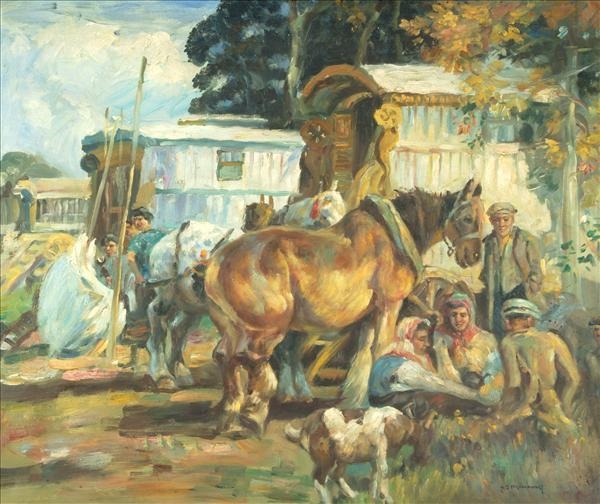
The ubiquitous fire hook and kettle rest as the true center of this scene.  Everyone is done up in the Sunday best at Epsom Downs.  We see all kinds of accommodations from a bender tent to various quality of living wagon.  And no camp is complete without a lurcher (dog) and the milk goat.

Munnings became president of the Royal Academy and was made a Knight of the Victorian Orderwhile Dame Laura Knight (1877-1970) served on a panel of European judges for an international exhibition at the Carnegie Institute and was appointed as an official artist for the Nuremberg War trials for her technical abilities.  In other words, good documentary artists.
ALFRED-MUNNINGS3
Sir Alfred Munnings.

Travellers and their goat gather ’round the morning tea.  I envision Mick’s garden will look like this once Jim and I get our ‘vans parked for the summer.
alfred-munnings-gypsy-life-the-hop-pickers
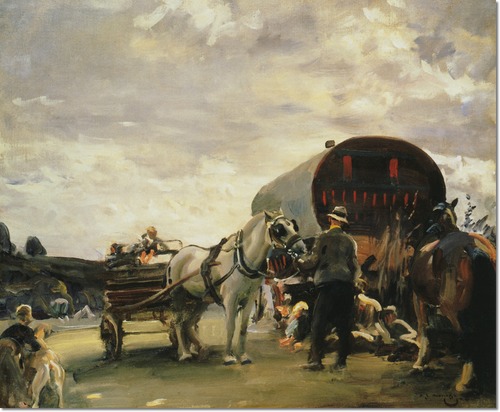
Gypsy Life, the hops pickers, Sir Alfred Munnings..
ALFRED-MUNNINGS4
One of my favorites.  So much going on here and a great color scheme.

More images added HERE.

A few more Vardos (sort of) from Around the Web

squaretop

I’m always keeping an eye out on the web for interesting living vehicles, rolling homes, and related Traveller – Modern Nomad stuff.  The right key words and a little luck on historic image sites land a lot of photos, but often with little real information about the vehicle in question.  As I was rummaging through my old image files over the weekend I decided to start throwing some of the images up here; for inspiration and ideas if nothing else.  Where possible, I’ve linked to the source where I found it.

carnieconversion
This is an interesting conversion for a Carnival or Circus worker. Wood burning stove, mollycroft, and transom windows. I like it.
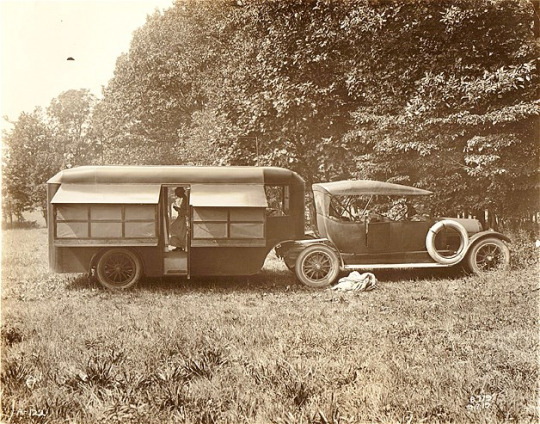
earlycaravan
I’ve posted this innovative little beast on Facebook.

I like this early fifth-wheel design for several reasons, not the least of which is the hitch.  This is the earliest image I have of a “slide-out” expandable space.  I suspect they actually fold up but they already deal with increasing space while keeping the traveling width narrow.  The final feature is the dogtrot effect created by the opposing doors.  I think this caravan was built with summer travel in mind.

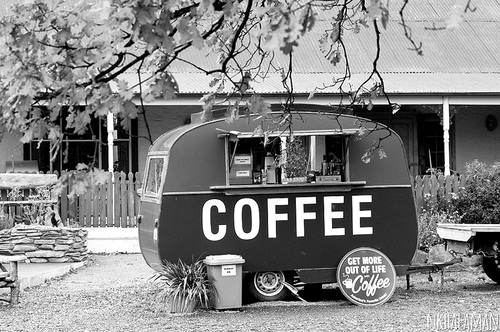
coffee
Recycled “canned-ham” caravan.
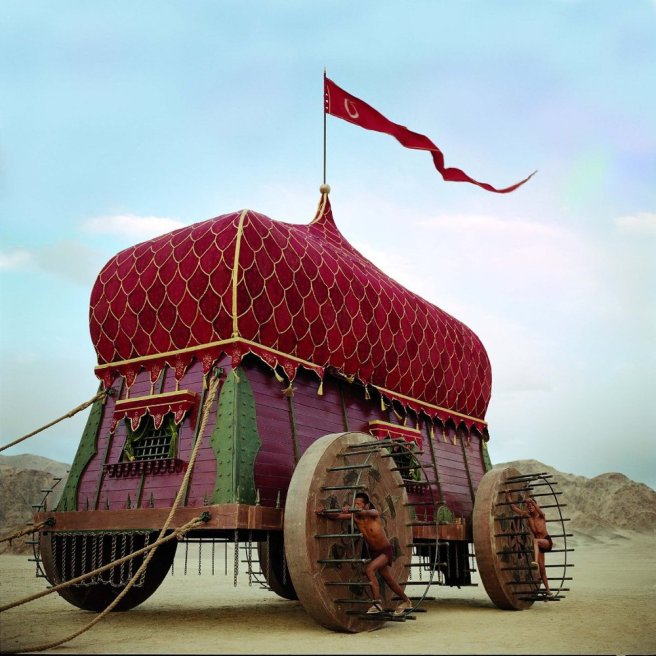
Interesting propulsion.  Looks like post-apocalyptic servitude?
Interesting propulsion. Looks like post-apocalyptic servitude?
Atkisson's Wagon.
Atkisson’s Wagon.

The above wagon aesthetic has a Persian feel to the decorations.  From the pillows right down to the slippers.  Click the photo for an article about this wagon.

Found over at the Voice of the Monkey.
Found over at the Voice of the Monkey.  An eclectic image blog.

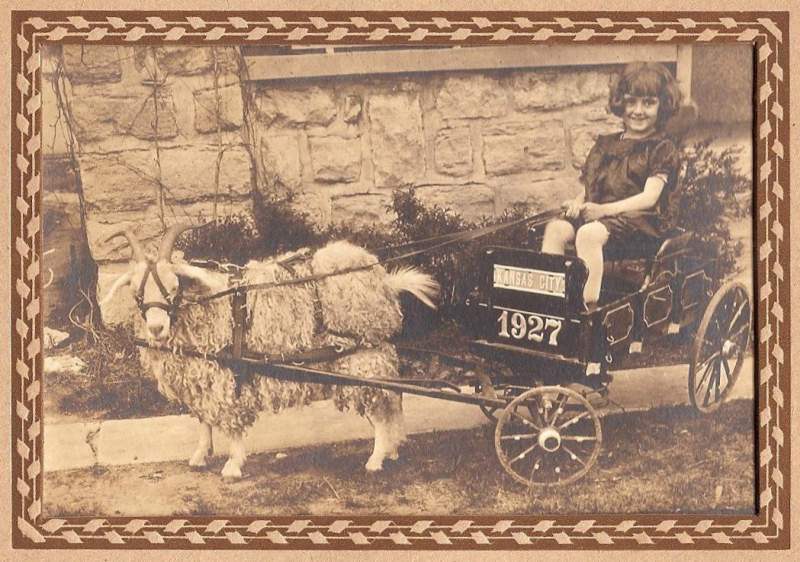
Okay, I just posted this cool little goat wagon as I would have loved this as a kid.  Who wouldn’t?  There is a clear attention to detail on this one down to the wheel spokes and fine paint work.  Apparently there is some tie to Kansas City.   Maybe a carriage maker’s model?

And finally, the best part of all… exploring a 1914 Dunton Waggon, Part 1 with historian John Pokkett.  You can find the next parts on Youtube if they don’t auto-follow.

An Open Lot Accommodation

A little something for Wagon Wednesday.  A simple bow-top accommodation.  Very little of the wagon is seen in the image but we can rest assured that it was painted green at one time.  Hedley picked up some fine details here including bolts, boards, the tarp attachment, and a very nice little driving lamp.

LastLast in Market, Ralph Hedley 1885.  Hedley really captured life in rural northern Britain.

Choosing Our Stuff

William_Morris_age_53

“Have nothing in your house that you do not know to be useful, or believe to be beautiful.”

— William Morris

I have come across these words many times in my long quest for a decent life.  Sometimes when you read something it just rings true.  William Morris really strikes a chord deep down in my heart.  He was a true genius and polymath and his contributions are often forgotten in our modern world.  I think this will be my mantra, and painted over my door.

Traveler’s Life

Getting back to our theme of traveler’s, caravans, and other wanderers of the world… a few images from Pascal Dagnan-Bouveret a French Naturalist Painter of the late 19th and early 20th centuries.

"Dans la forêt-Musée des beaux-arts de Nancy."
“Dans la forêt-Musée des beaux-arts de Nancy.”

I believe I would enjoy siting around this campfire.

chevaux-a-l-abreuvoir---pascal-dagnan-bouveret
“Chevaux à l’abreuvoir.”

Once a common scene, now virtually lost in an era of loud, fume-belching machinery.

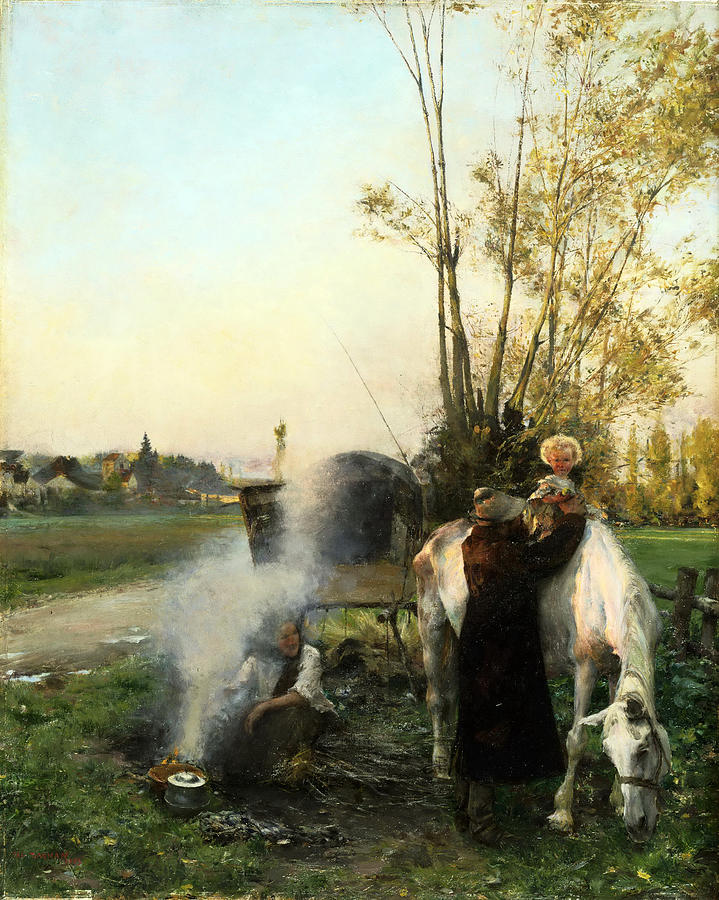
"Gypsy Scene."
“Gypsy Scene.”

A peaceful morning cooking breakfast in the morning dew.  The caravan is obscured by the smoke of the campfire.