Scenes of life on the road and around the campsites.


Adventures of an Imperfect Man In Search of a Handmade Life

Scenes of life on the road and around the campsites.

A painting by the Scottish artist John Burr (1831-1893). Tinkers were originally tinsmiths or “tinners”. One of many itinerant jobs pursued by a class of casual laborers. These were mostly skilled and specialized crafts like basket making, shoe repair, leather work, and metal work but many poorer workers were migrant farm labor picking hops and tending the market gardens during the peak harvest. The fellow in the image above appears to be a fairly well-off repairman mending a seam in a pot. This from a time when new items were a rare purchase.
I love deciphering images like this for the details of domestic life. Unlike most photos, there is real intention in what the artist chose to include or not in the painting. The house is clearly a poor one but a freshly killed chicken hangs from a nail on the wall by some dry roots. A handmade broom leans against the wall next to a basket that has the tradesman’s coat lying across it. The oldest daughter tends the infant while the mother stands by the laundry basin with a toddler behind. All the children look on while the novel worker plies his trade in a waistcoat and hobnail walking shoes.
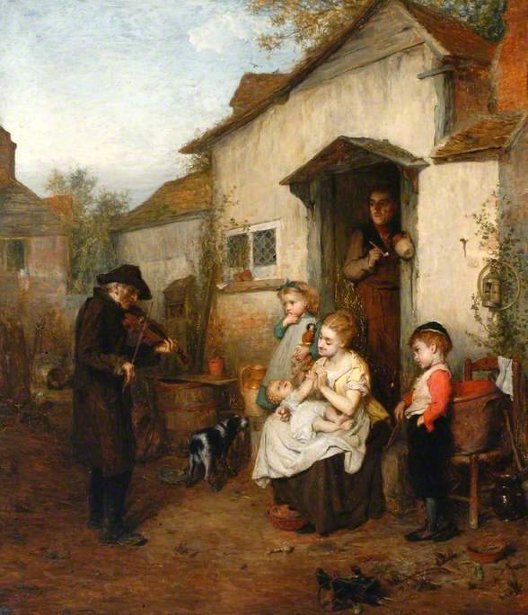
Here is a painting by the Scottish artist John Burr (1831-1893) of an itinerant fiddler playing for a family in a Scottish lane probably trying to make enough money to eat or maybe even receive some food for his entertainment. I can’t help but think the father looking out has a skeptical look; possibly wondering what this will cost in the end.
Music and storytelling were a very different commodity in an age of widespread illiteracy and 24 hour media. It’s hard to even imagine a time when all music was handmade and intimate and not an item to be mass marketed.
The Lady Go Lightly…
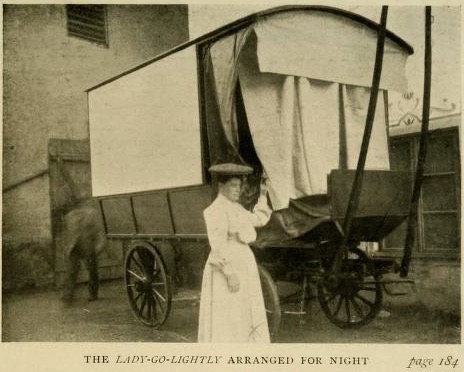
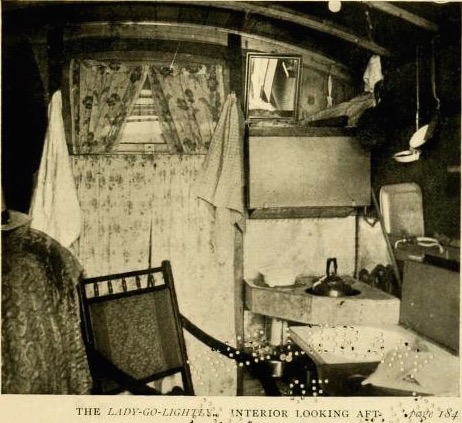
Images from:

A somewhat dilapidated or damaged vardo in France 1920s – 1930s. People with no fixed address have always drawn suspicion while simultaneously their lifestyle is romanticized.
In Britain and Ireland, the Romany Gypsys and the Traveller community are often associated with low-skilled work such as scrap dealers, horse traders, musical entertainers, or more nefarious activities outside the societal norms. However, there were plenty of skilled craftsmen and craftswomen providing goods and services to people around the country.
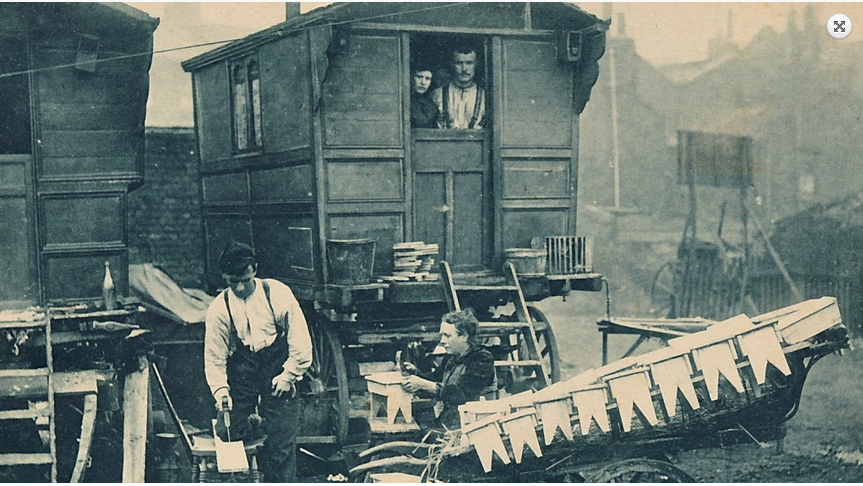
Below is an image of a couple, working together making footstools outside their vardo while another couple looks on from the comfort of their wagon.
Other Gypsy families were blacksmiths, basket weavers, or similar occupations that could be taken on the road, required little stock or overhead, and could be performed independently or with a minimum of family help.
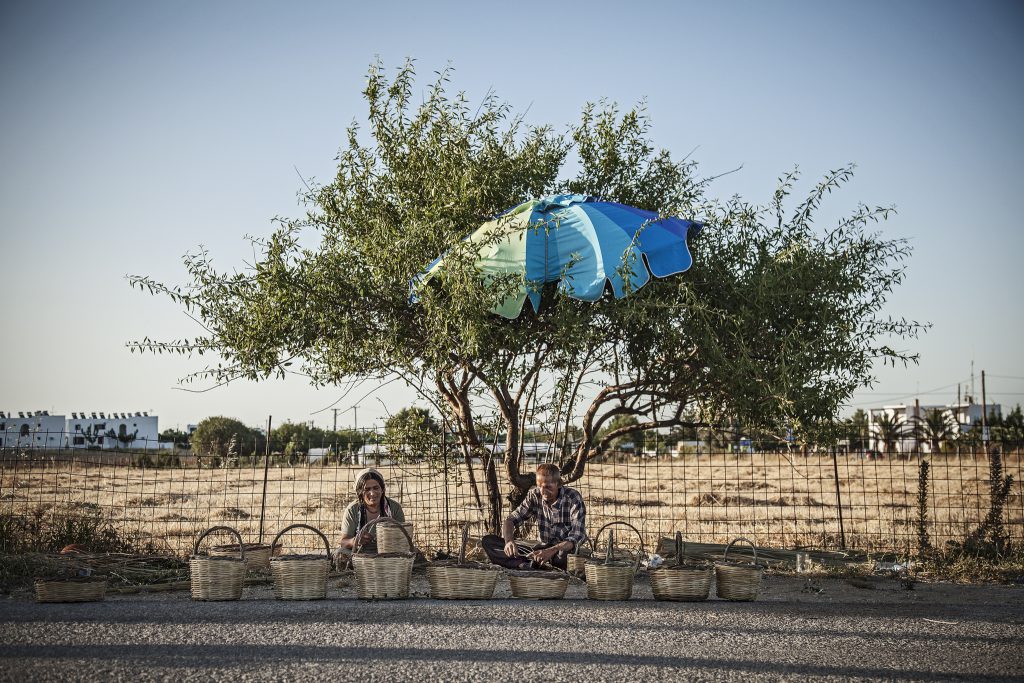
There is more to wandering people than the romantic or demonized images we carry. People are just people after all.
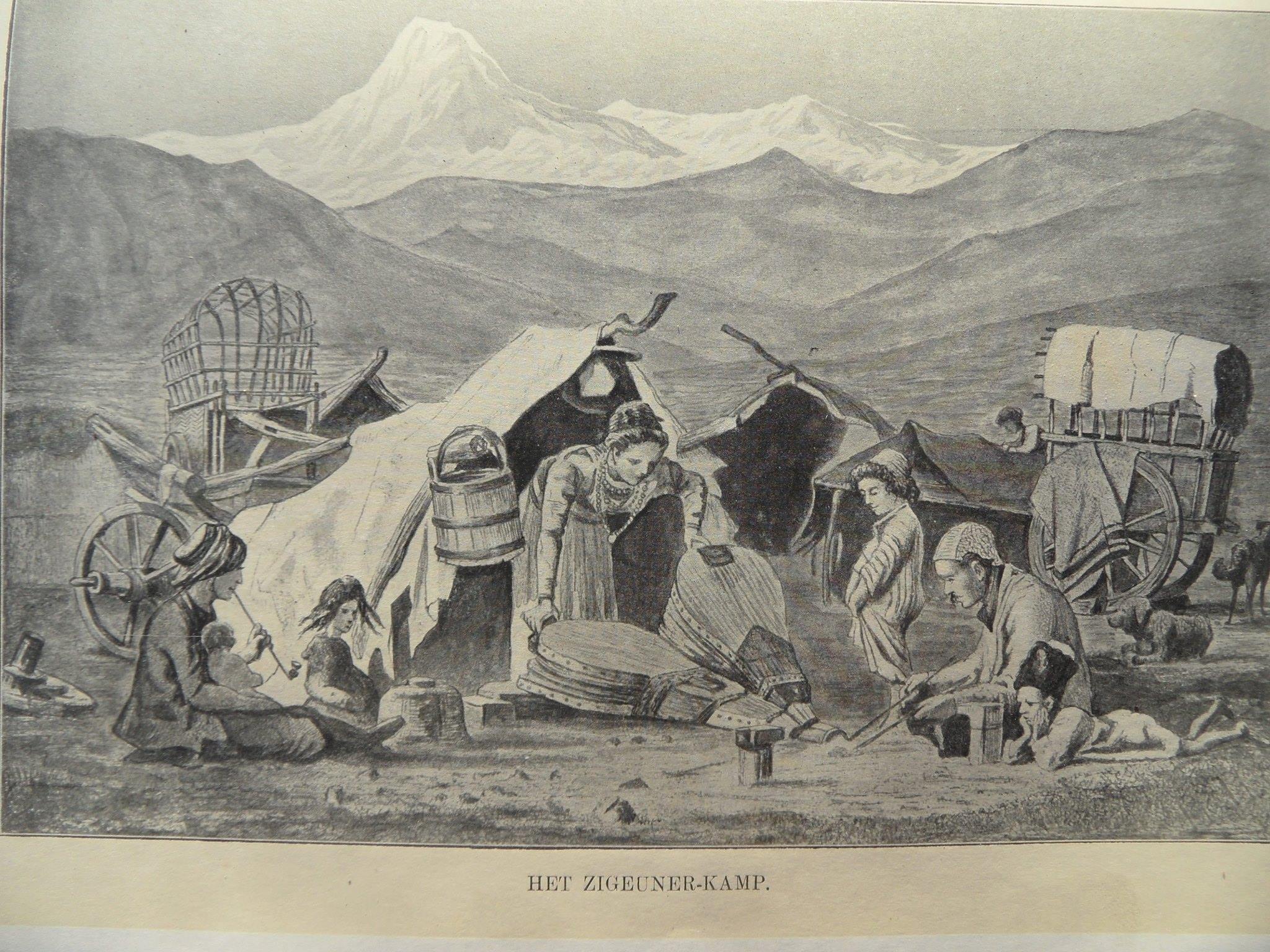
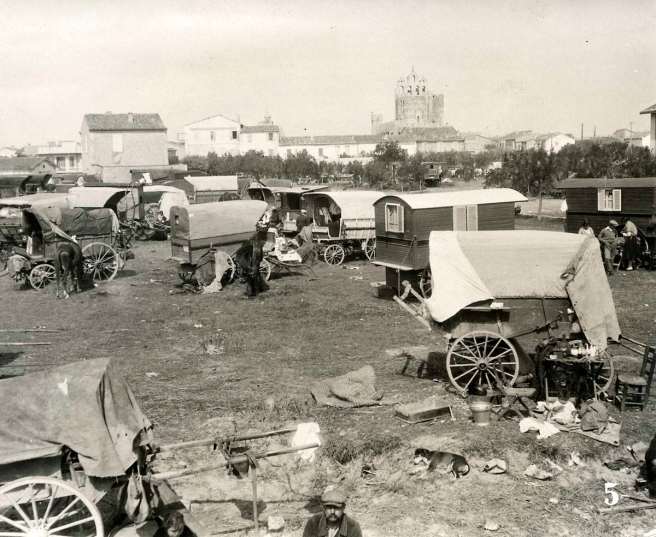

Travellers in Europe and Britain have always been associated with a style tent called a bender. This comes from the construction technique of cutting saplings and bending them into a dome, elongated dome, or half cylinder shape, These frameworks were then covered with tarps and made watertight in the temperate damp. The origins of this design are lost in the mists of time and are believed by archaeologists to be one of the earliest style of recognizable tent structure used by humans.

Even after a certain level of affluence allowed some Romany and other Travelling folk to own living wagons, the bender continued (and continues) to be a way to extend the living space without the need for a lot more gear.
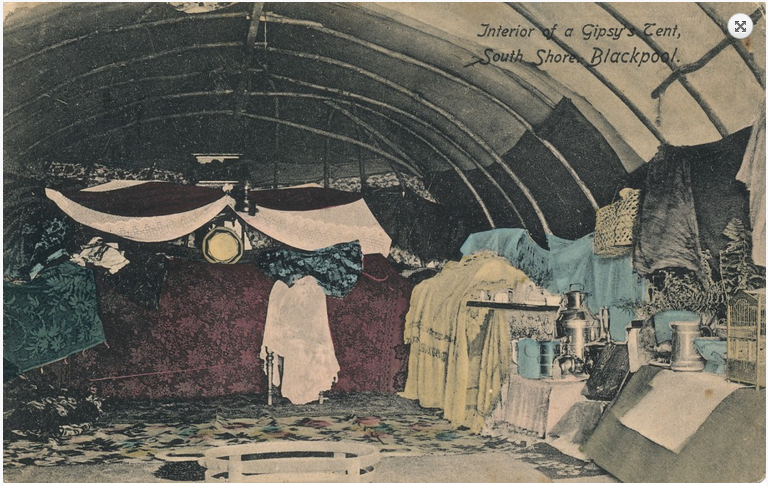
The fact that a tent becomes the subject for a Blackpool post card shows the ongoing fascination with “Gypsy Culture,” especially in the British Isles where Travellers are simultaneously suspect and romanticized.

If you have family that me be Romany, Traveller, or Fairground folk in Britain or just want to learn more, check out the Romany & Traveller Family History Society at http://rtfhs.org.uk/.

I really like everything about the image above. We see three very different types of wagon-home-conveyances and a family, wearing clothing of the time. Travellers on the margin of mainstream society have been shunned, persecuted, and culturally dismissed while at the same time romanticized for their freedom and seeming lack of attachment to a more mundane life. I am glad to see a revitalization and pride from reconnecting with family roots.

People who have lived “off-grid” so to speak often have few documents or any official standing, making family histories more difficult to trace. Hospital records, cemetery documents, or government permits, such as the Pedlar’s Certificate above, are the only way for many to trace their ancestry.

Fortunately, there is a concerted effort in Britain by the Romany & Traveller Family History Society (RTFHS) to create a clearinghouse for descendants of those often overlooked by the mainstream.
About the RTFHS: Back in the early 1990s, a group of keen family historians with British Gypsy ancestors first met at a Gypsy family history conference organised by the historian and author, the late David Smith. Until that moment we’d all thought that we were pretty much alone in trying to trace our travelling ancestors and that there was no-one out there to learn from or share our experiences, trials and tribulations with.
 Here’s another excellent photo of a pack of vardos (caravans) in the wild. It looks like everyone came out and maybe even spruced themselves up for the photo. I couldn’t find any metadata on this one but it looks fairly early, probably late nineteenth century. These appear to be high-end models in great condition still.

Happy travels!
Nomads are not loners. In fact, humans do not do well alone in any setting. We have always been communal people, depending upon one another for help and support. Many hands make light work and it is essential to be near others you can depend on.
 I have been collecting images of Traveller communities for many years and I really enjoy the gritty, homespun feel of the old encampments with peeling paint and makeshift tarpaulin shelters. I’m sure this image was not welcome in settled communities around Europe and the shiftless nature of these wanderers led to many suspicions, both unfounded and real.
 These are not the rolling home of the wealthy showmen of idle rich but the best compromise for families destined to live on the road.
 The vardos bear many differences but within fairly tight physical contraints of size, weight, needs, and technology. It’s important to remember as well that historic travellers of most varieties didn’t design or build their own accommodations but often modified or improved that which they acquired.
 Even though they show few relevant details of the caravans themselves these are some of my favorite images; they give us a glimpse of the people who called them home.
 Although Traveller families lived (and live) on the margins of “normal” society they were (are) more like their neighbors than not.
 I hope you enjoy the photos as we head into the season of Thanksgiving here in North America and give thanks for what we have.

We are at our best and worst in groups, whether that is family or friends. Humans are social animals.
 Preindustrial Craftsmanship