Here’s another excellent photo of a pack of vardos (caravans) in the wild. It looks like everyone came out and maybe even spruced themselves up for the photo. I couldn’t find any metadata on this one but it looks fairly early, probably late nineteenth century. These appear to be high-end models in great condition still.
Nomads are not loners. In fact, humans do not do well alone in any setting. We have always been communal people, depending upon one another for help and support. Many hands make light work and it is essential to be near others you can depend on.
I have been collecting images of Traveller communities for many years and I really enjoy the gritty, homespun feel of the old encampments with peeling paint and makeshift tarpaulin shelters. I’m sure this image was not welcome in settled communities around Europe and the shiftless nature of these wanderers led to many suspicions, both unfounded and real.
These are not the rolling home of the wealthy showmen of idle rich but the best compromise for families destined to live on the road.
The vardos bear many differences but within fairly tight physical contraints of size, weight, needs, and technology. It’s important to remember as well that historic travellers of most varieties didn’t design or build their own accommodations but often modified or improved that which they acquired.
Even though they show few relevant details of the caravans themselves these are some of my favorite images; they give us a glimpse of the people who called them home.
Although Traveller families lived (and live) on the margins of “normal” society they were (are) more like their neighbors than not.
I hope you enjoy the photos as we head into the season of Thanksgiving here in North America and give thanks for what we have.
We are at our best and worst in groups, whether that is family or friends. Humans are social animals.
I had to wait a while to publish this one but maybe I just need to get it out…
I like to think I’m a safe person. At least to the point of looking out for others if not always myself. I don’t drive aggressively, I maintain my vehicles, and don’t take big chances on the road. That said, I probably stress my truck and the vardo more than most people would. The truck has spent sixteen years as an archaeologist’s field vehicle and has gone into places I would have never thought I would take it. I have crept into BLM campsites with the vardo that required it to be tipped up to 45 degrees and I was certain it was going to go over. I’ve intentionally jack-knifed the whole thing just to push it into place between boulders.
These things are just the nature of travel in the…
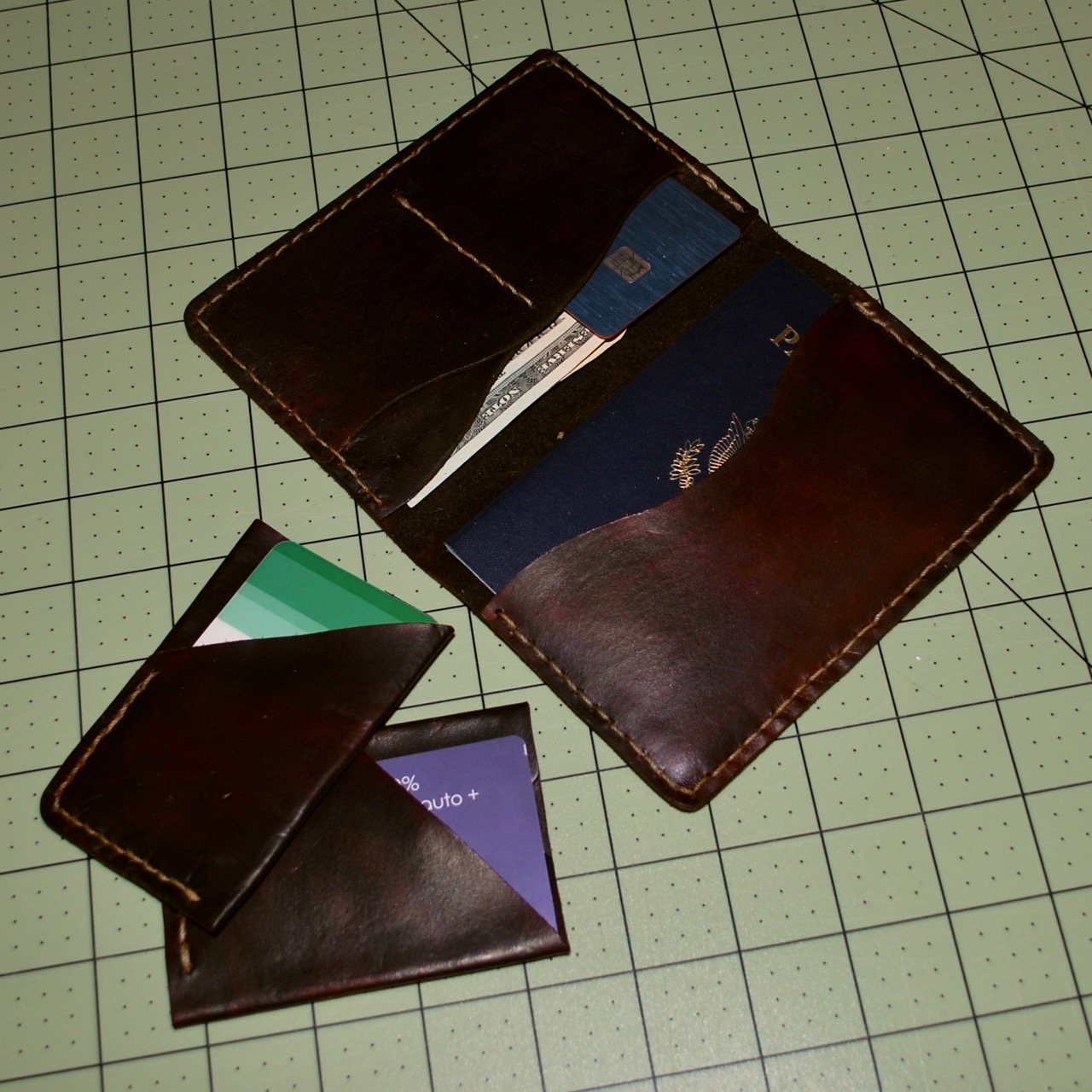
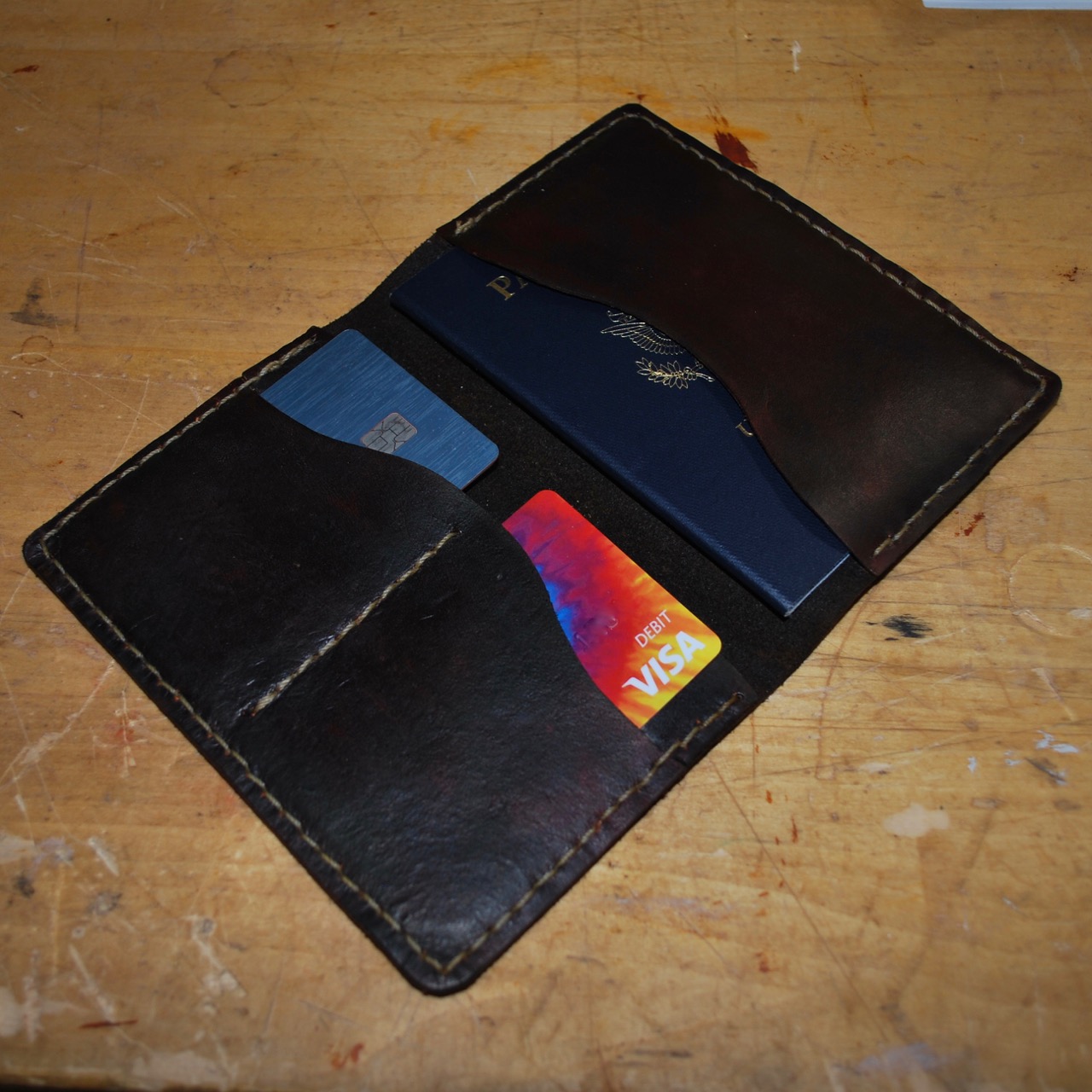
Maybe this is a little mundane but I’ve been using the cold and snowy weather as an excuse to do some cutting and sewing of leather. I completed a passport wallet and finished up another minimalist wallet design. I got the pattern for the larger travel wallet from Tony, the owner/designer at DieselpunkRo. He sells finished goods, patterns, and gives a lot of good advice for makers working from his patterns on his Facebook group page.
My three newest creations.
If you follow his Facebook group, he will occasionally share free, downloadable patterns. I have two patterns from him so far and they are both great.
The large wallet is a handy, four pocket affair that snugly holds a standard passport, cards, and cash.
This is another good starter project that easily yields a great product.
We were acting like shut-ins today because of a surprise snow storm so I’ve been able to jump to another leather-related project. I’ll share some photos soon.
Working away on a weekend day a little while back. Enjoying time on the prairie in my little rolling home; coffee, a banjo, and connection to a HotSpot so I can get some work done. The best of all worlds.
A reminder to myself as to how the vardo is in constant change. Little updates happen all the time and I often forget them until looking back on a photo like this one.
I don’t remember for sure but I suspect there is a dog or two laying on the floor or, more likely, under the wagon keeping an eye out for wildlife. I’m itching to get back out on the road.
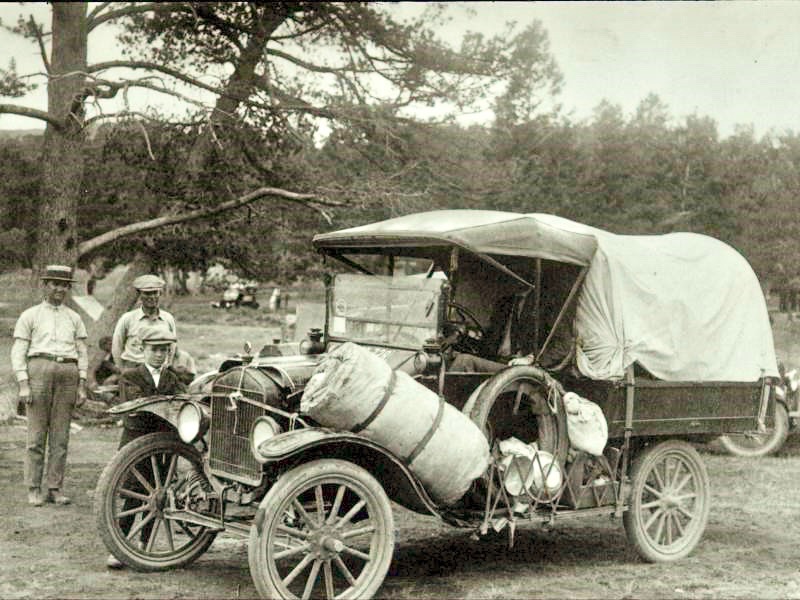
I love finding old images like this. They show that we never really change yet are on a continuum of adaptation. The bows that support the canvas top on this (I believe aftermarket) truck bed are reminiscent of much earlier wagons of the Old West.
Camping in Yellowstone 1924 – Mattress on the fender, pots, pans and a tool kit on the side board, these spiffy fellas were ready for an adventure. Image – https://www.nps.gov/parkhistory/
Space was extremely limited in the cab of these old vehicles so if there were three on-board, I suspect someone, probably the boy, rode in back with the luggage.
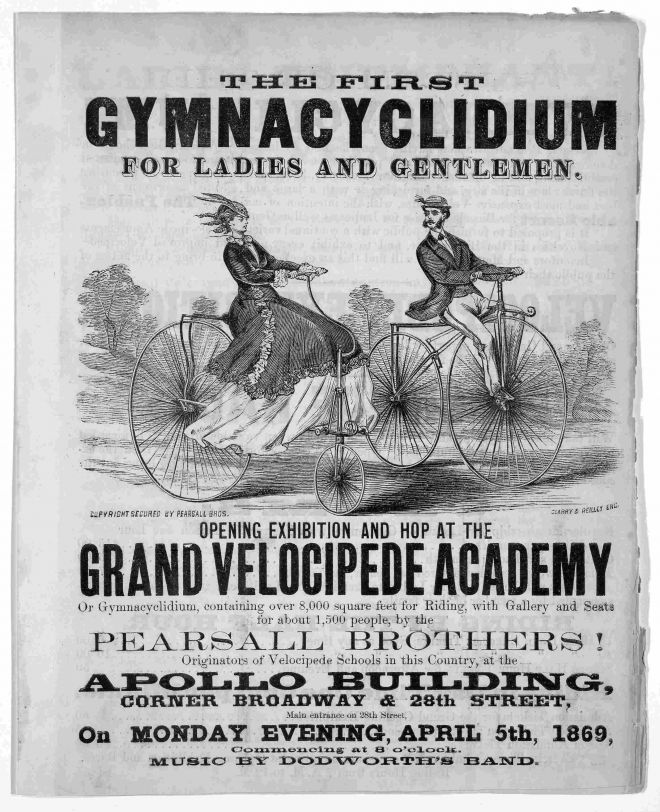
Gymnacyclidium– This sounds like something for which you could be administered a shot to clear it up. I thought these monstrosities worth looking at for the danger factor if nothing else. Let’s hope the young lady is wearing adequate undergarments as it seems certain she will be taking a spill or two in the very near future. I do like the curly cue fender thingy on the front though.
A bit of history about the bicycle: Invented more-or-less as we know it around 1817 with various propulsion systems added from about 1839 through the 1860s when bikes became more like what we know today. A major step forward occurred in 1888 when Dunlop developed the pneumatic tire, making cycling more comfortable and practical.
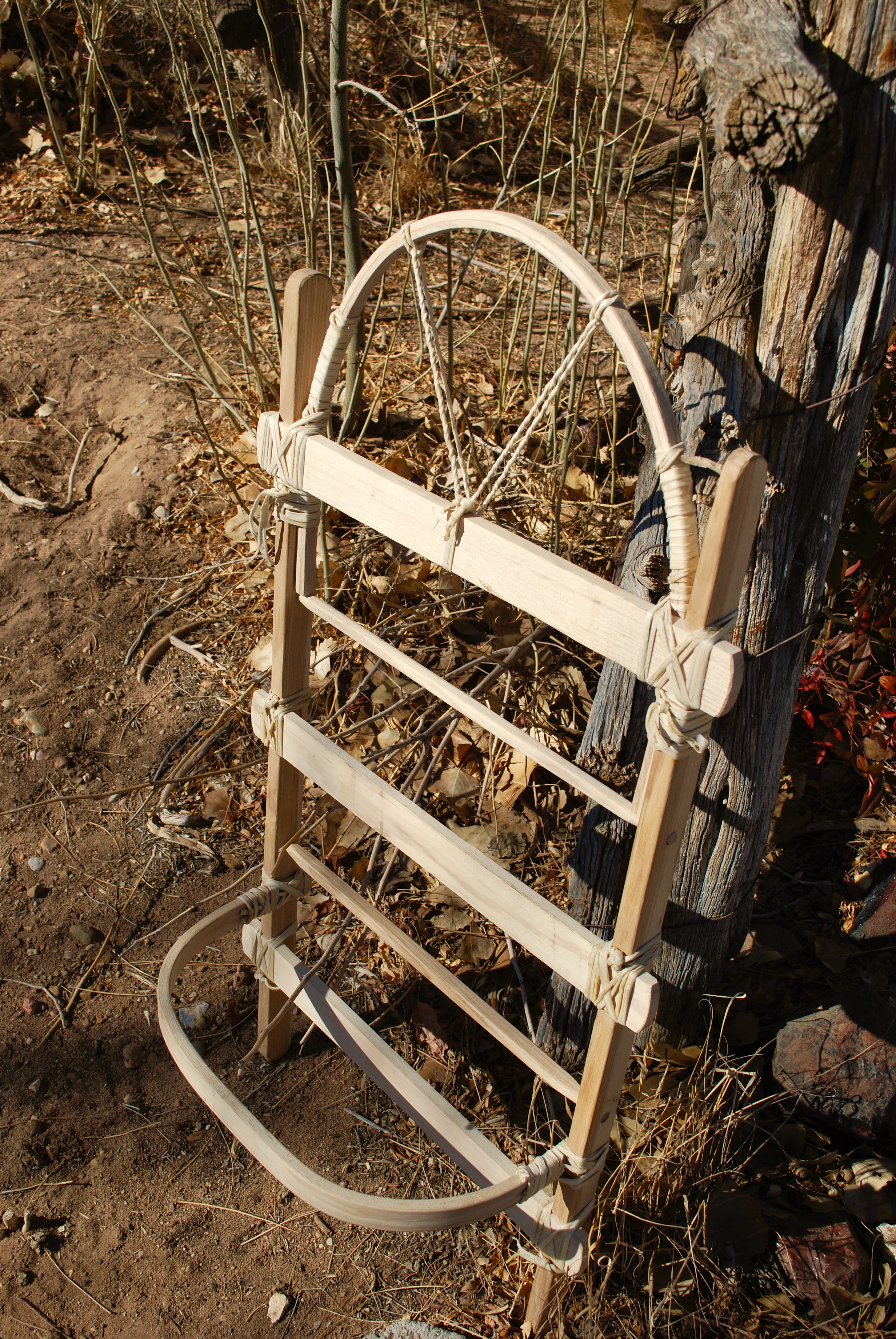
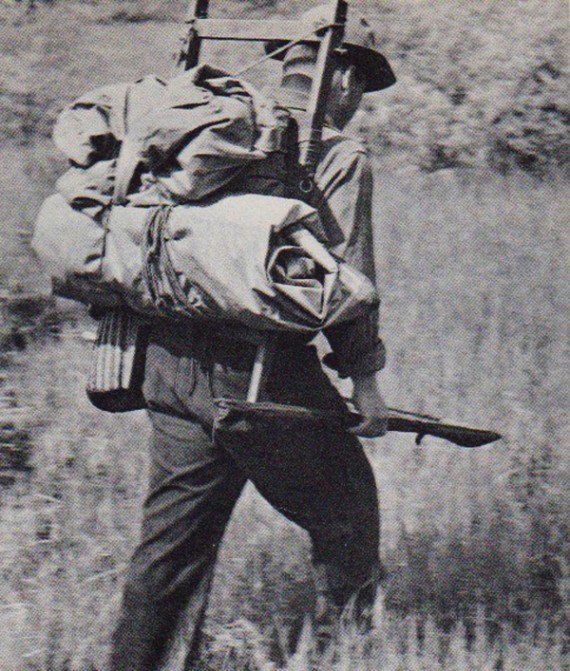
In 2012 I decided to build a wooden packframe. What started out as a Sunday afternoon project led me down many paths, from Iron-Age Europe to 21st Century military designs and it took about a year of stewing around before I actually got around to building something. It was fortuitous for me that Markus at 74 FOOTWEAR DESIGN CONSULTING wrote and excellent little history of frame packs at almost exactly the same time I began researching them myself. Shortly thereafter, I discovered Steve Watts and Dave Wescott were delving into the same subject (great minds think alike I guess). After collecting many photos and drawings I dove in, and using human measurements as much as possible, I built the frame below.
A few hickory boards and some simple steam bending created a design I liked.
I decided against metal fasteners for the original project so everything was pegged and tied with rawhide.
It didn’t take long to build and tying it all up with rawhide was a simple evening job. The next step was to create some sort of support to keep the frame from my back and attach shoulder straps. This wasn’t as easy as it sounded since comfort and strength had to be combined while keeping possible chafing to an absolute minimum.
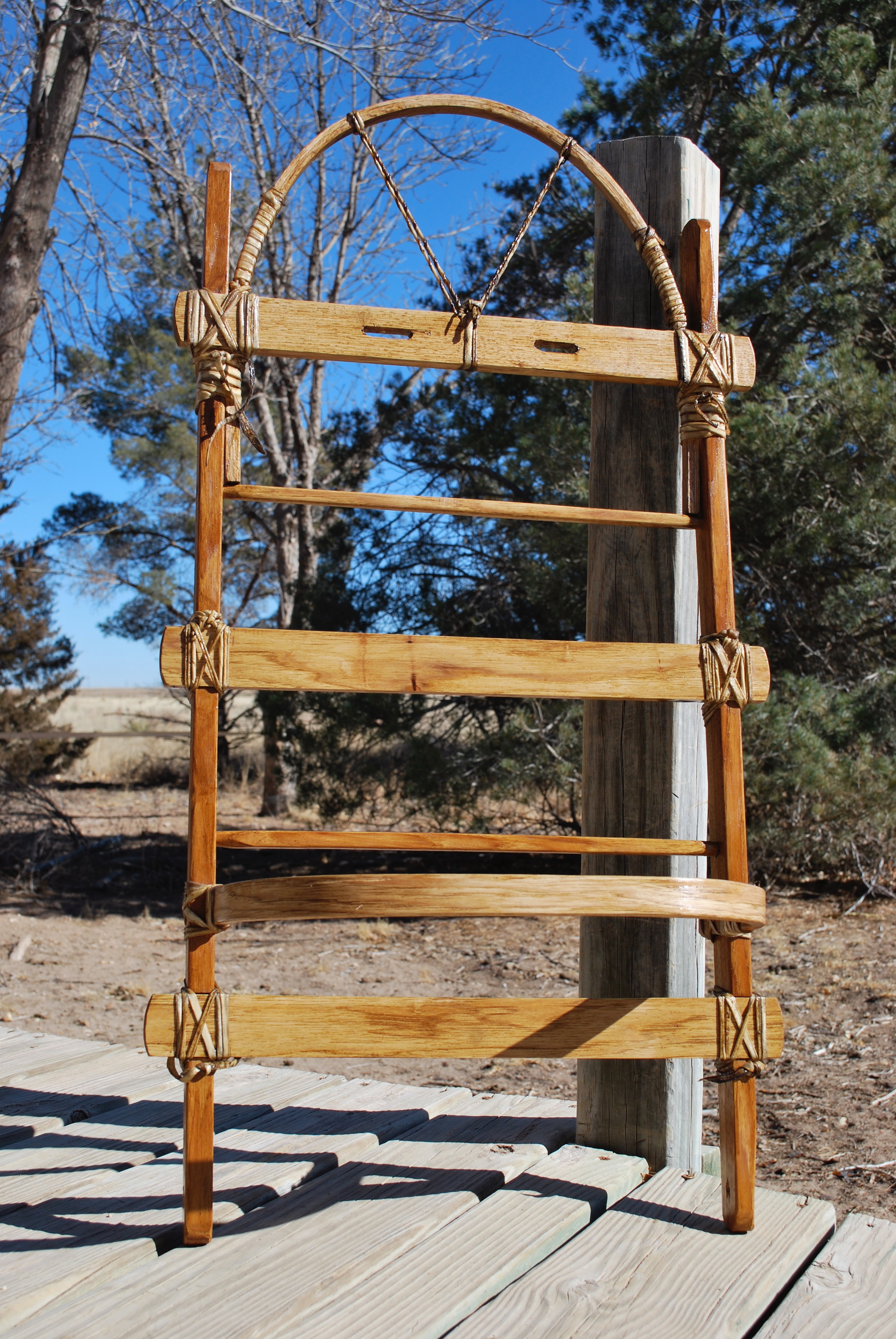
The two horizontal rods keep the uprights from converging under tension and the three cross-strakes are stabilized by being set in grooves on the uprights. The steam bent support and top bar add to the overall sturdiness of the frame.I decided that simple was best so I used heavy leather, stretched tight, across the back kept the straps fairly straight-forward.Several people asked about the need for a curved top bar; well why not? I like curves and I think it reminiscent of the Otzi-style simple frame.
An Otzi reconstruction. Click the image to see the article there.
Was it good enough?
The answer is probably. It was mostly used to pack gear in for demonstrations and spent most of its time as a show-piece. Honestly, over the years I owned it, it only went on one real backpacking trip, and that was even a fairly short one. However, I learned some things along the way. I like the shape, it was fairly comfortable, it was certainly sturdy enough,and it carried a heavy load without much difficulty or discomfort. So the design was more-or-less right for me.
On problem was that I didn’t like the tensioning of the leather back straps as it was difficult to draw them tight enough. That’s how packframe number 2 came to be. I began by deciding to improve the back padding system but with a few other minor changes in mind, this happened.
A bunch of new parts generated themselves on my workbench one lazy afternoon.
Parts –
Recycled fir for the uprights came from a 125 year old door frame, some planks for the cross-bars came from the scrap pile, and a couple pieces were pulled from the first packframe. Before I knew it, I was bending a thicker and better arch for the top piece and construction began. Since I wasn’t working from a plan and there is no real standard for this type frame I pondered the whole thing for a couple days to decide how to fasten the parts (pegs, lashings, screws, or glue) and began assembly a few nights later. I have gathered quite a few old screws of various sizes over the last couple years in my housing restoration so I decided to use those for the basic construction.
After too long a mental debate, construction went pretty quickly.
Construction technique –
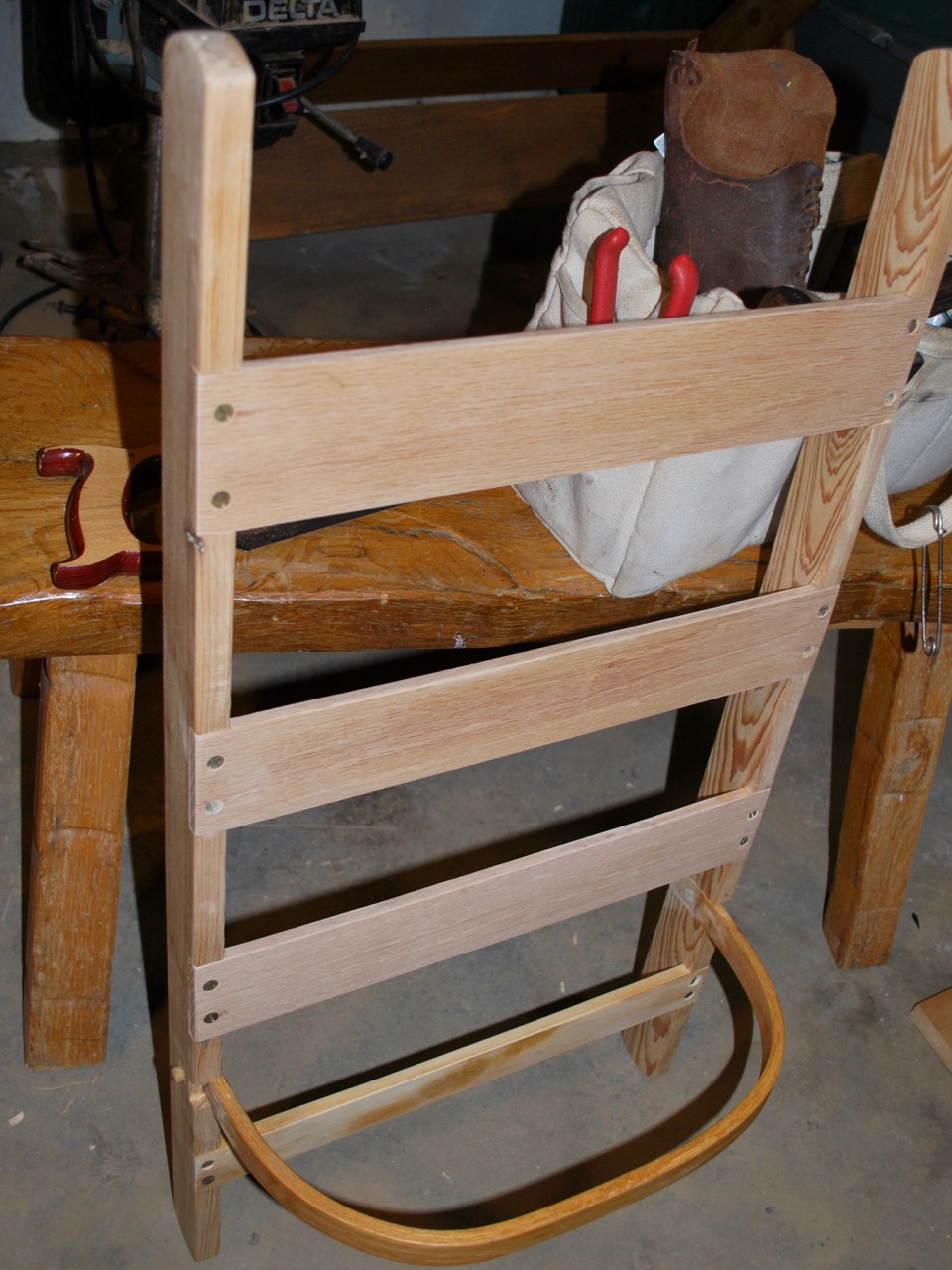
As can be seen in the images, the cross-bars are let into the uprights in a simple lap joint for strength and racking stability and fastened with reclaimed brass screws. The platform support is lapped and pegged with wooden dowels.
Side view showing lap joints and side supports.
I added a small oak angle brace to further support the platform support which is also lapped and pegged. The small missing piece visible here is operator error. When I was cutting the laps I was in such a groove that I cut the low one on the wrong plane. I’ll probably fill the gap with a small wood piece, but for now, I live with the hideous disfigurement. Also visible here are the walnut caps I pegged to the bottom of the uprights. Old Douglas fir is a fine wood but can be very brittle and the end grain would probably not fare very well under hard use on rocky terrain.
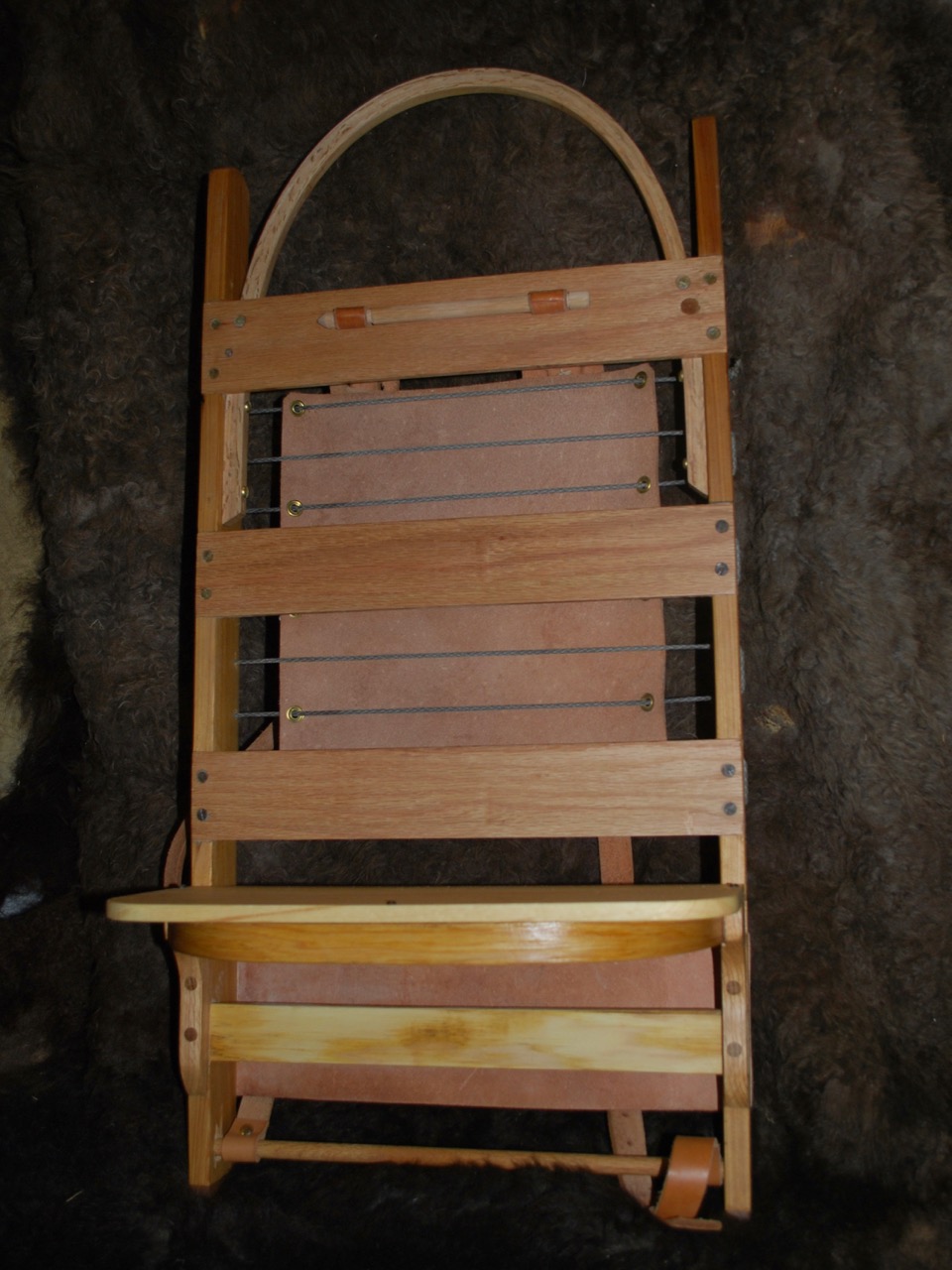
The frame in all its glory, waiting to be packed and carried off into the sunset.
Straps and Suspension –
I chose 12 oz Hermann Oak leather for the lower pad stretched tight and permanently fastened to the frame with brass screws and finishing washers. The essential suspension depends solely on the cordage being strung tight while the leather pad distributes to stress across a smooth and wide surface. I think it will be quite comfortable.
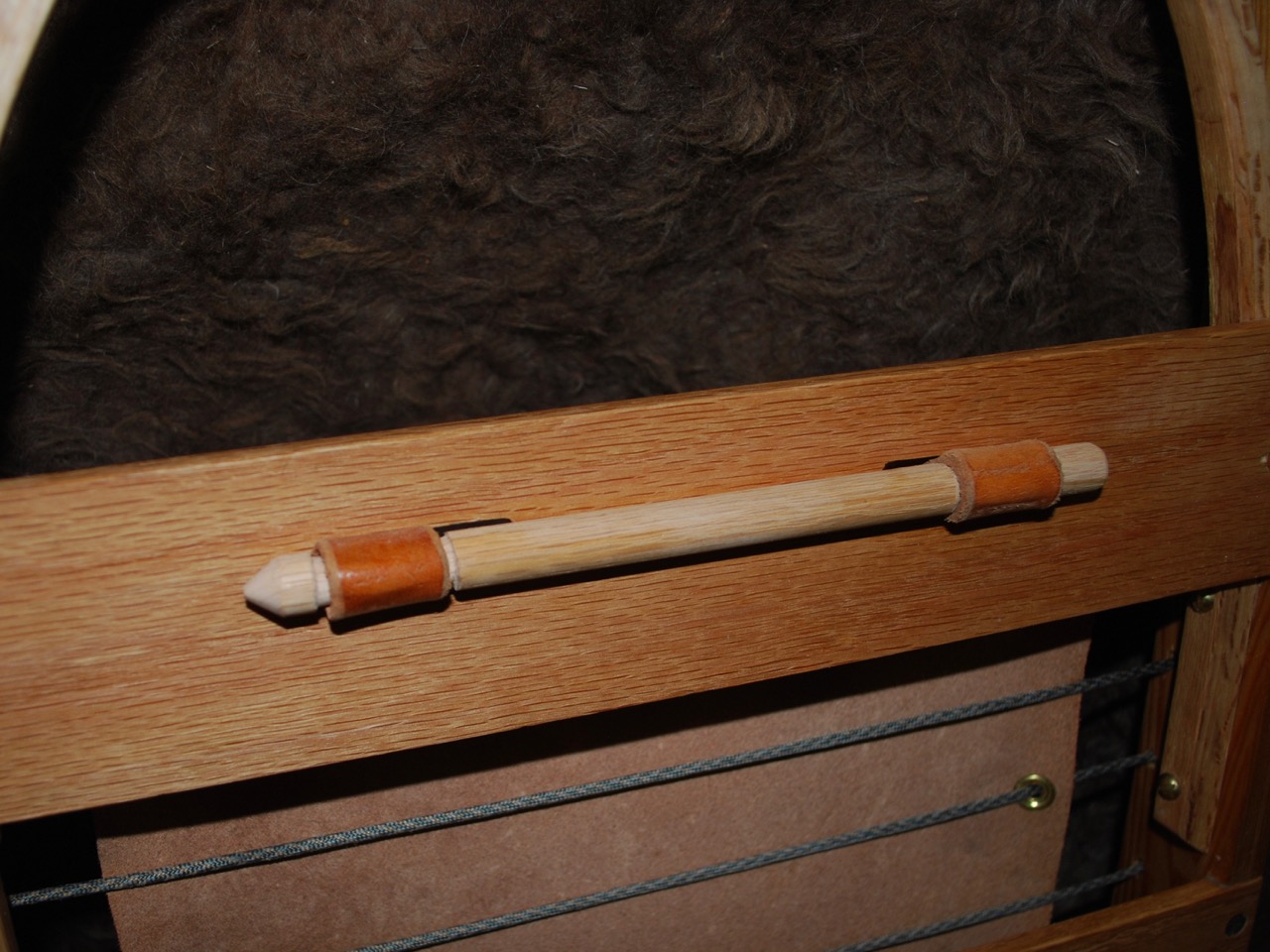
Shoulder strap connection, a whittled oak dowel that is easily removed.
I would like to make a removable rucksack for this frame and would like to be able to utilize the straps either so making them easily removable was a must.
Waist support, 12 oz harness leather. 6-7 oz leather was used for the back pad.
As for hip belts; I’m still undecided at this time but I suspect that sometime soon I will be constructing one.
A better view of the top arc and the overall harness.
I’ll continue to update the progress here and try to remember to take more photos along the way. It really hinders work to have to think about documenting yourself along the way but I know people appreciate seeing the steps.
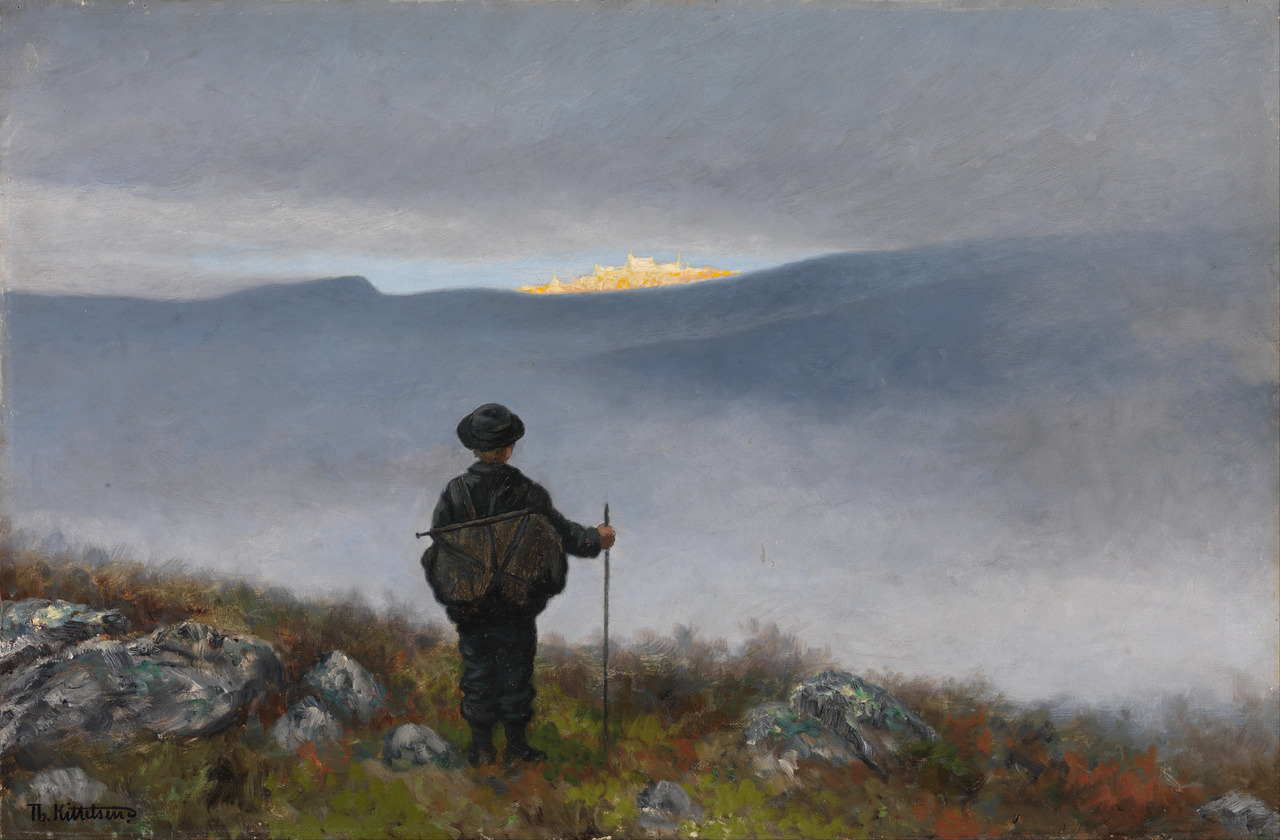
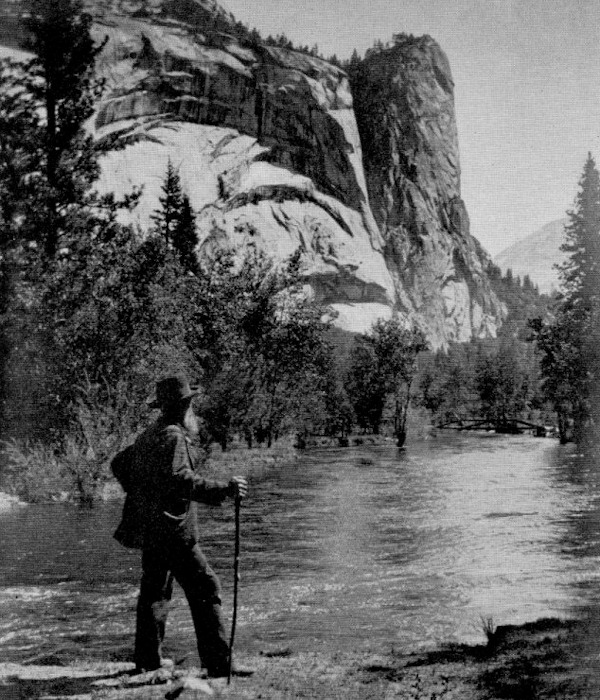
“Hiking – I don’t like either the word or the thing. People ought to saunter in the mountains – not hike! Do you know the origin of that word ‘saunter?’ It’s a beautiful word. Away back in the Middle Ages people used to go on pilgrimages to the Holy Land, and when people in the villages through which they passed asked where they were going, they would reply, “A la sainte terre,’ ‘To the Holy Land.’ And so they became known as sainte-terre-ers or saunterers. Now these mountains are our Holy Land, and we ought to saunter through them reverently, not ‘hike’ through them.” John Muir
___
I’ve spent a lot of my adult life walking long distances, without a trail to follow, through wild and untouched places, mostly as part of my job. This can be a thousand miles or substantially more some years and it was usually the most enjoyable part of my work.
Walking gives you a lot of time to think or meditate and is really a lost art to modern folks. I have worked with college students who don’t know how far or fast a human can walk in a day or even in an hour.
Hiker with walking cane, hat and backpack – Photographer: Eduard Schlochauer – via Getty Images)
___
I find that I walk a little slower than most of my colleagues and friends. I am a natural saunterer and like to look around which is maybe why, as an archaeologist, I find a lot of artifacts and cultural features when I walk. I want to take in the landscape, the plants, animals, the geology, and the smells of a place. I like to walk in silence. It is rarely a race for me and I don’t like to focus on the destination as much as the walk. Many people I know walk with a pack by putting their head down and looking at the ground while trying to walk as fast as their bodies will take them along. This is no fun to me. Walking is about the most enjoyable thing I can do. That’s why I’m so fond of writers like John Muir and Henry David Thoreau. They loved to walk and see its value on so many levels.
___
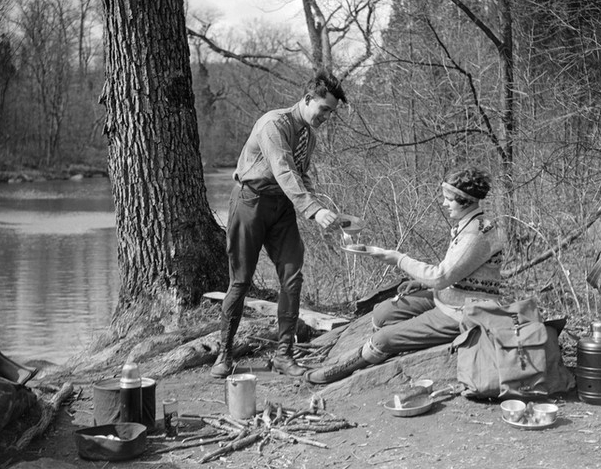
So, I’d like to suggest leaving the insanity behind for a while, pack a small rucksack, grab your best guy or gal friend, and take a walk in the wild. Your mind will thank you for the break.
Who knows what great memories you’ll make along the way?
When I’m asked if I want to go hiking or backpacking I usually say ‘no but I’ll walk with you while you hike.’

 Here’s another excellent photo of a pack of vardos (caravans) in the wild. It looks like everyone came out and maybe even spruced themselves up for the photo. I couldn’t find any metadata on this one but it looks fairly early, probably late nineteenth century. These appear to be high-end models in great condition still.











 Preindustrial Craftsmanship