This will be the last one for a while as I have other projects in the hopper.
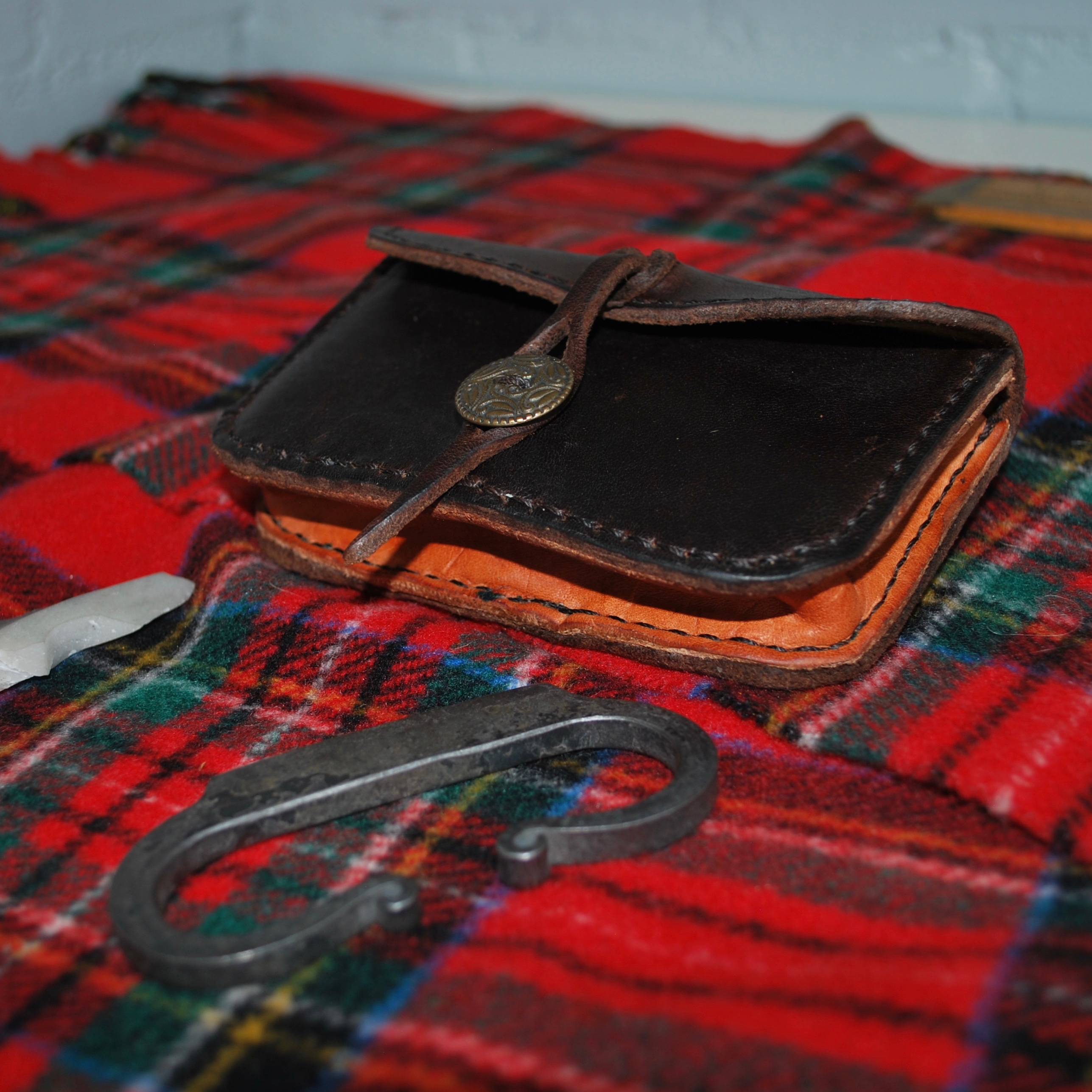
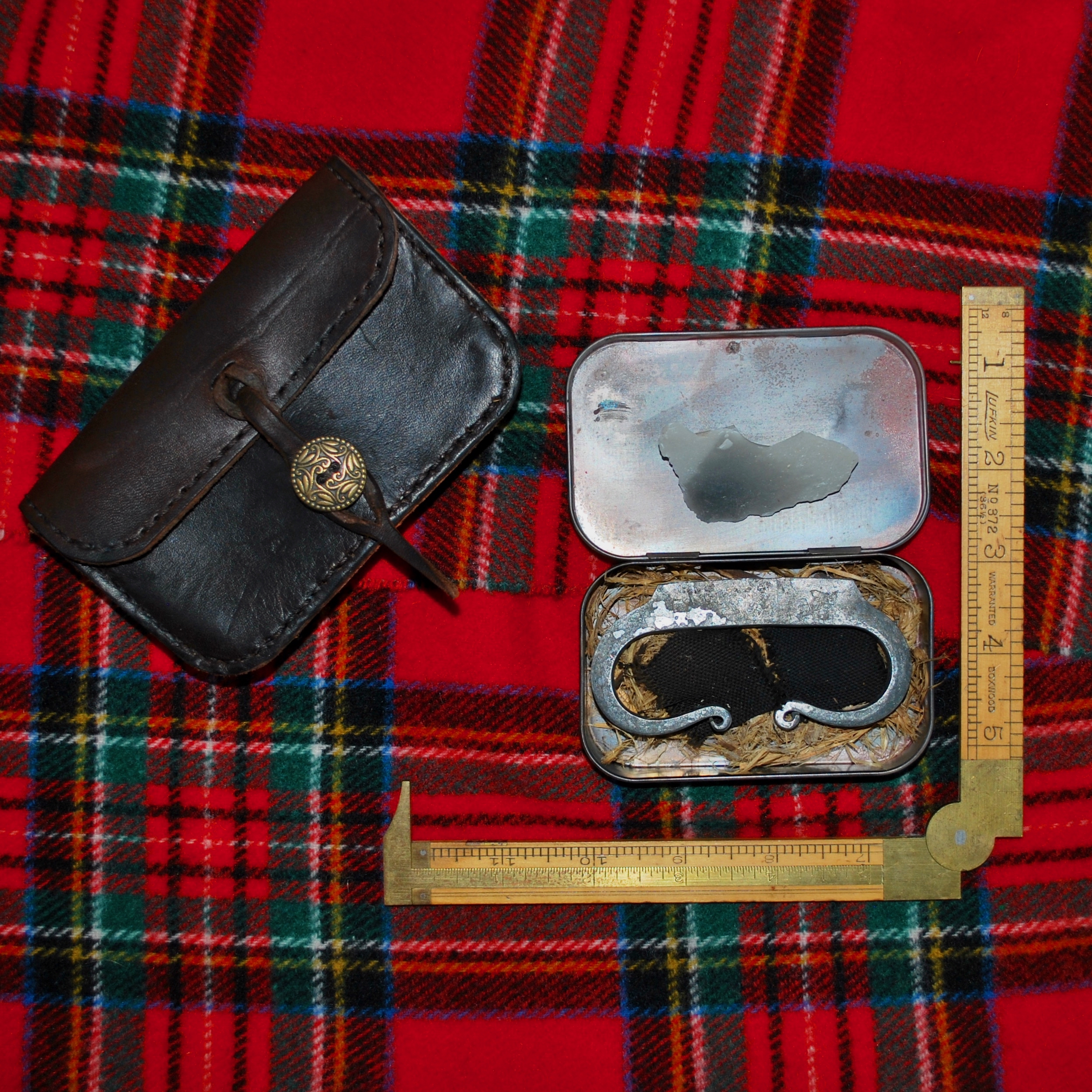
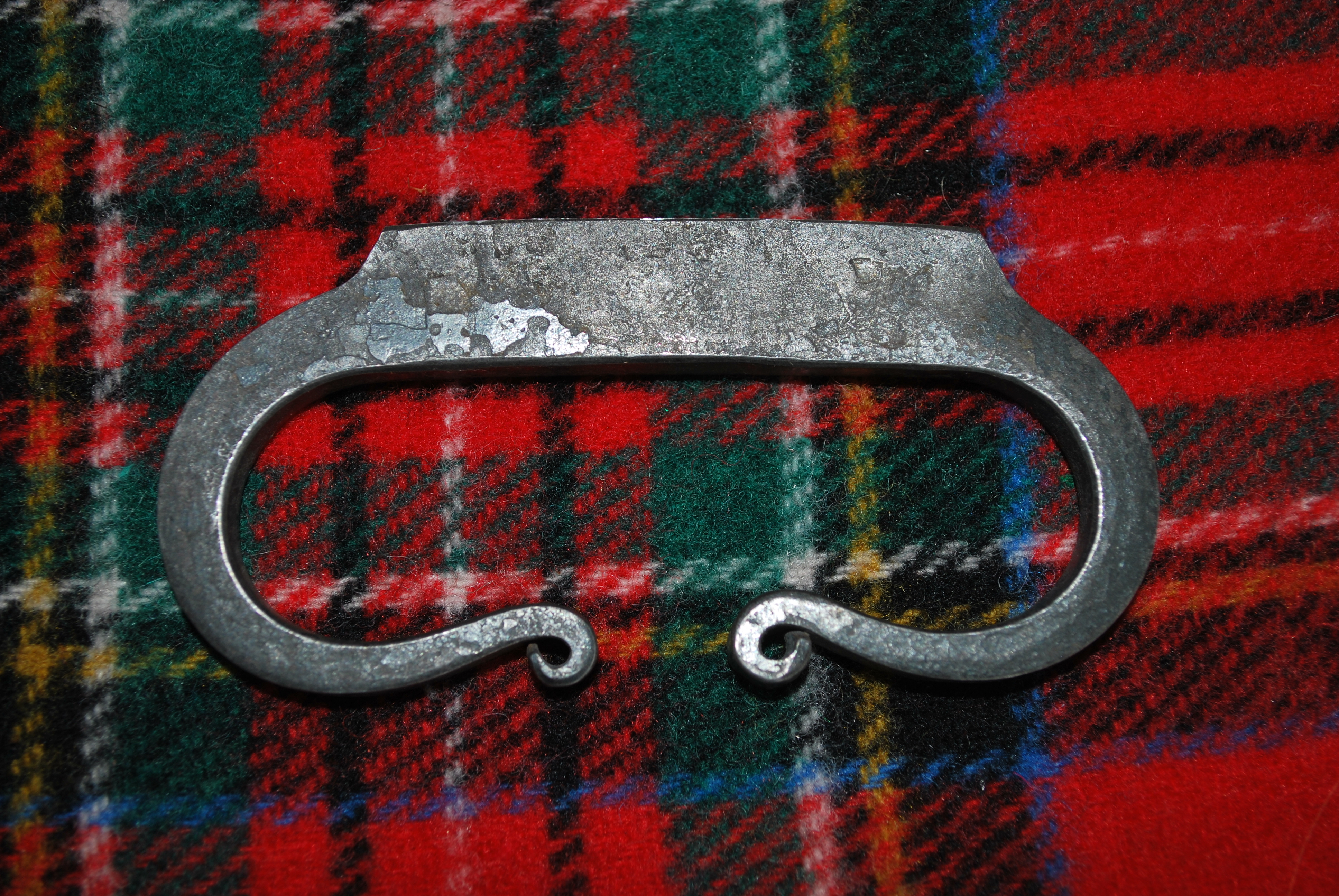
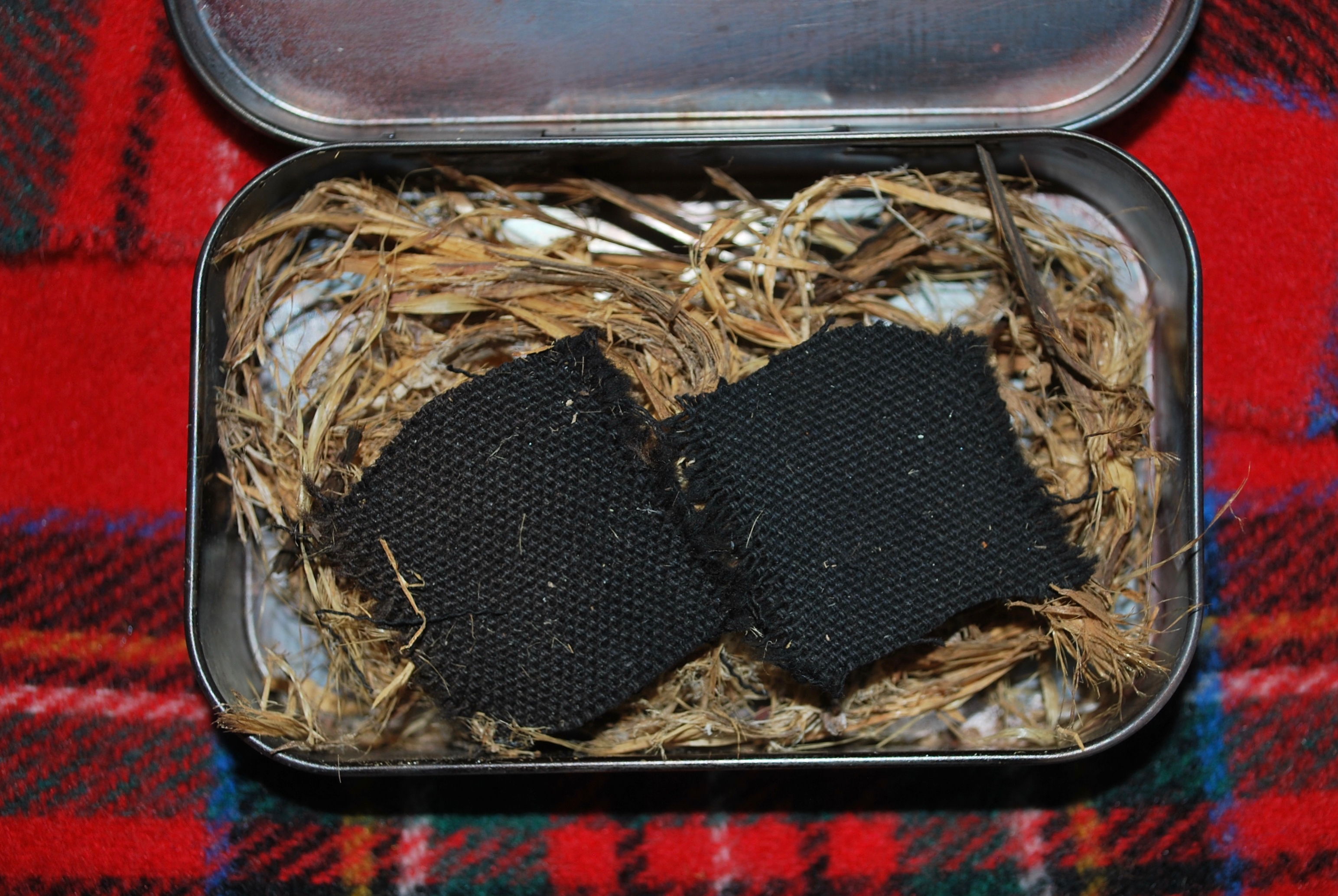
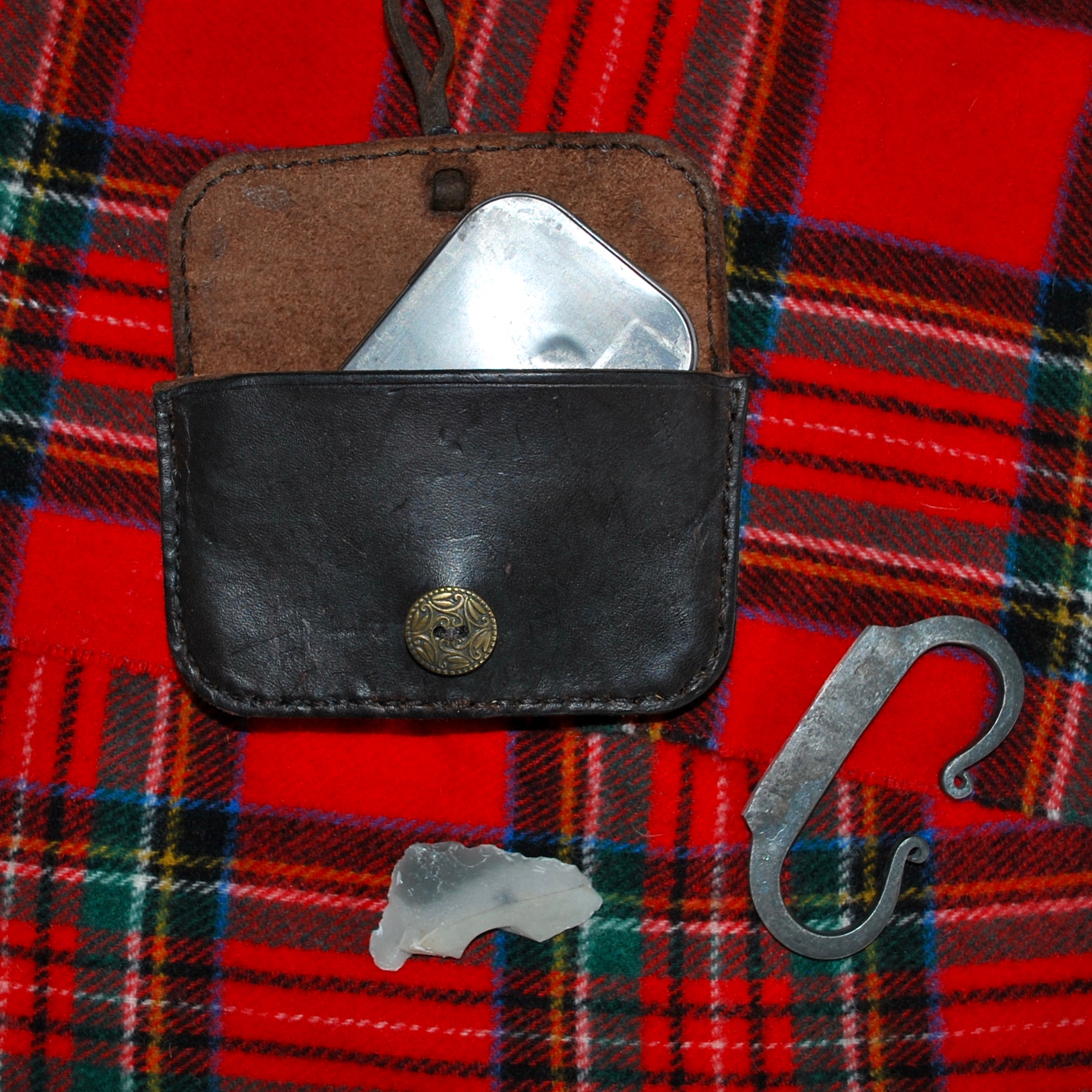
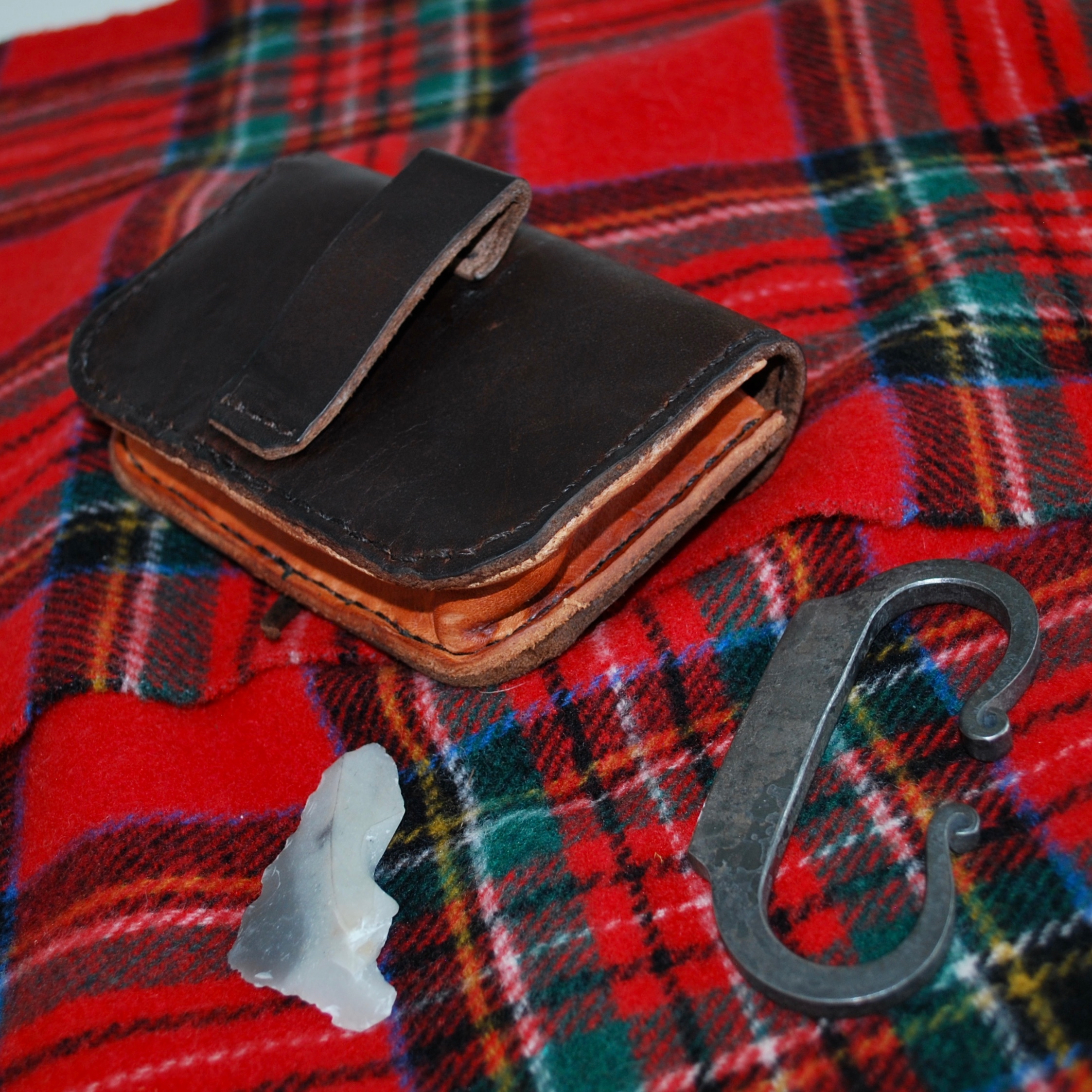
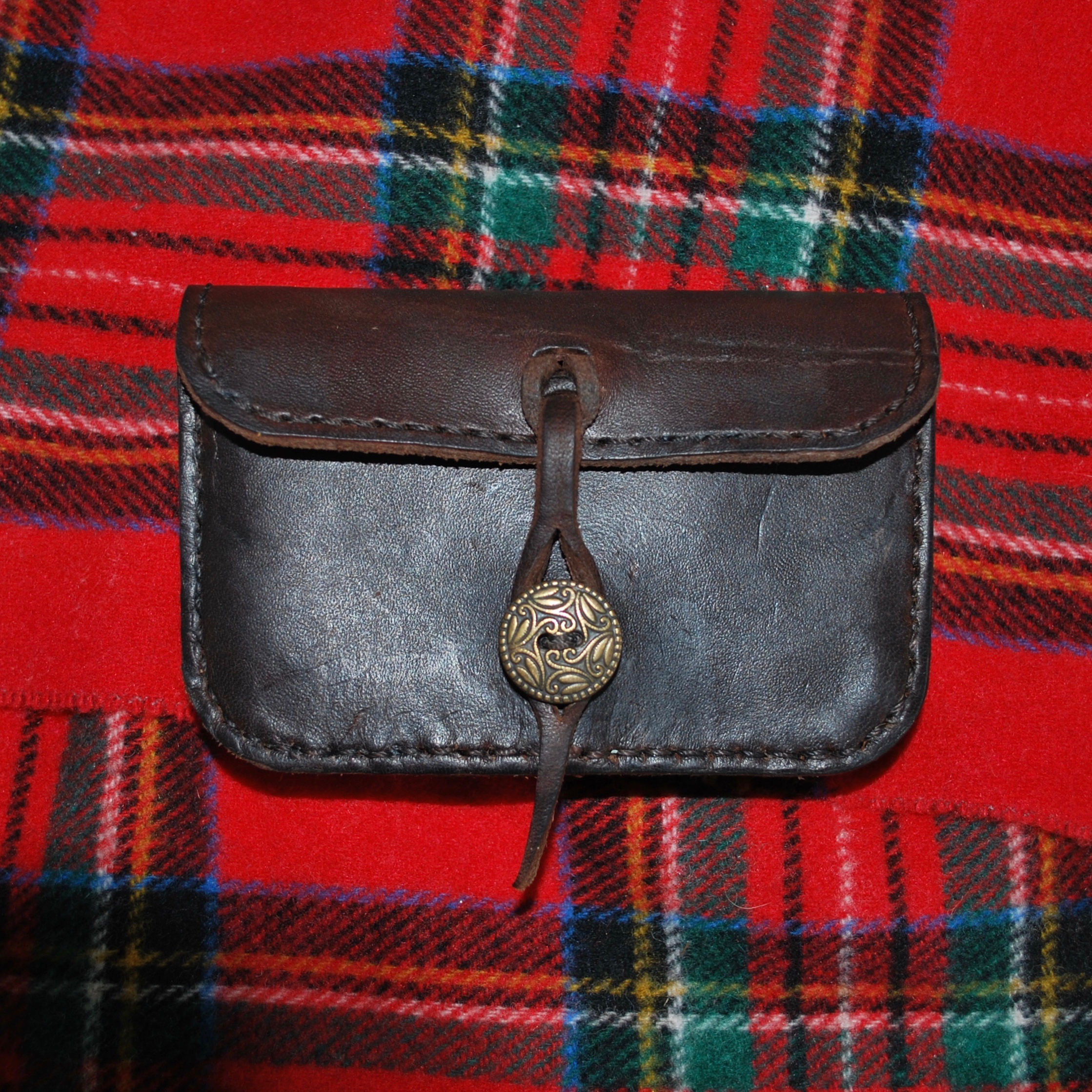
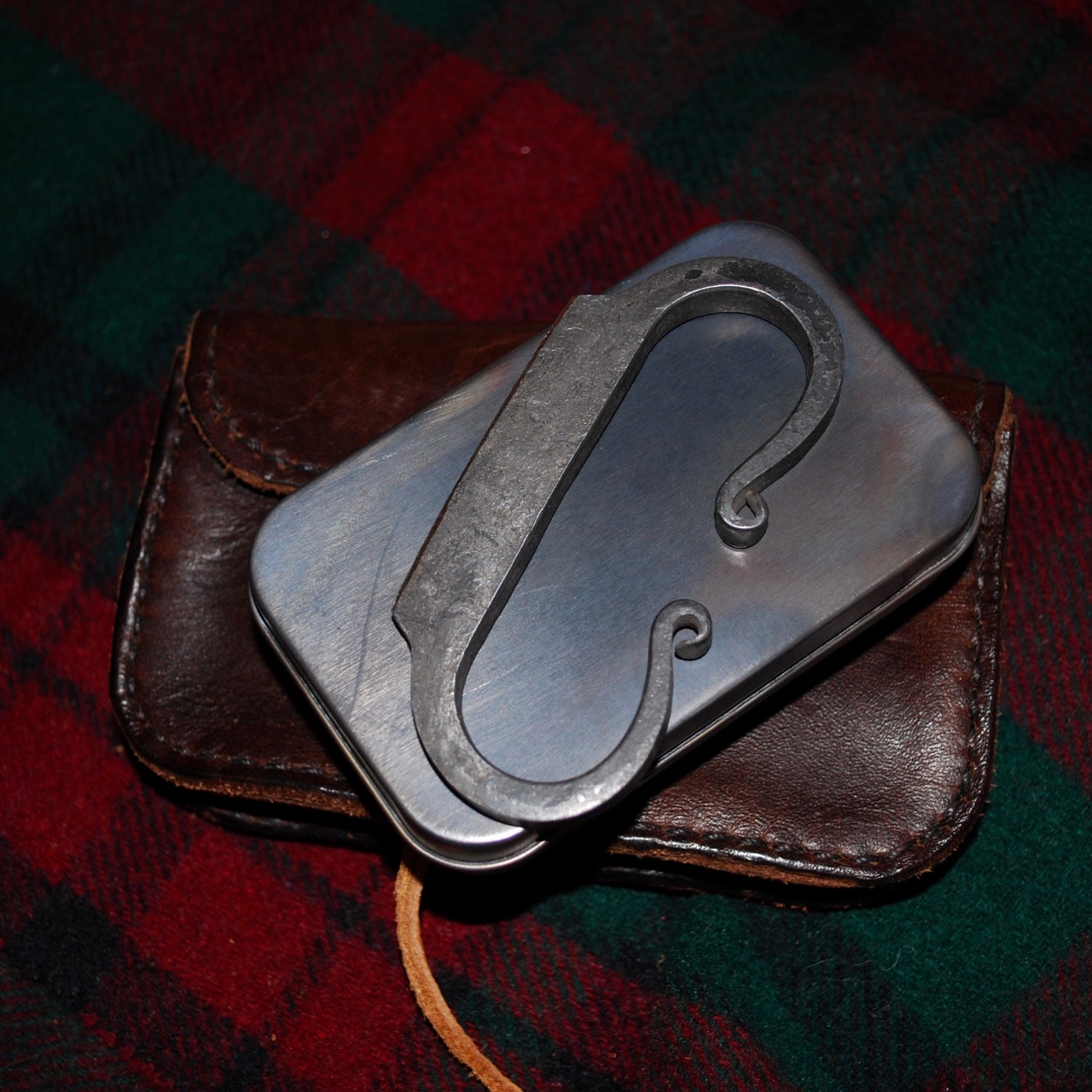
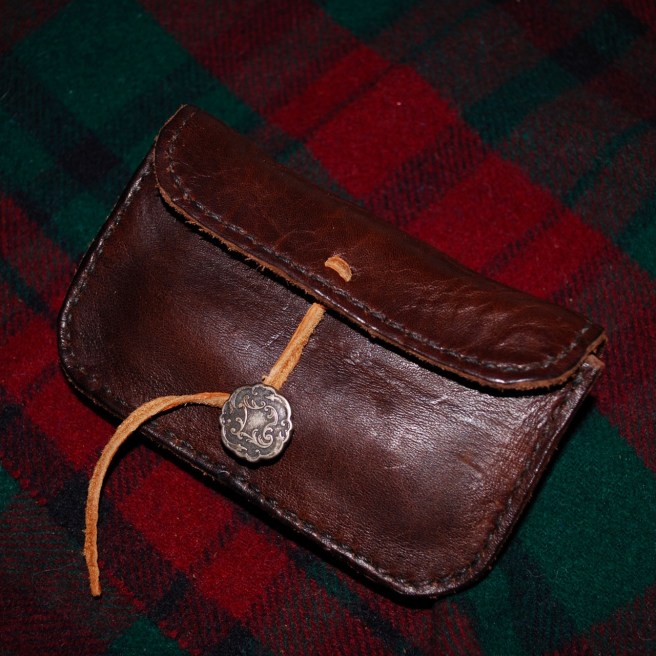
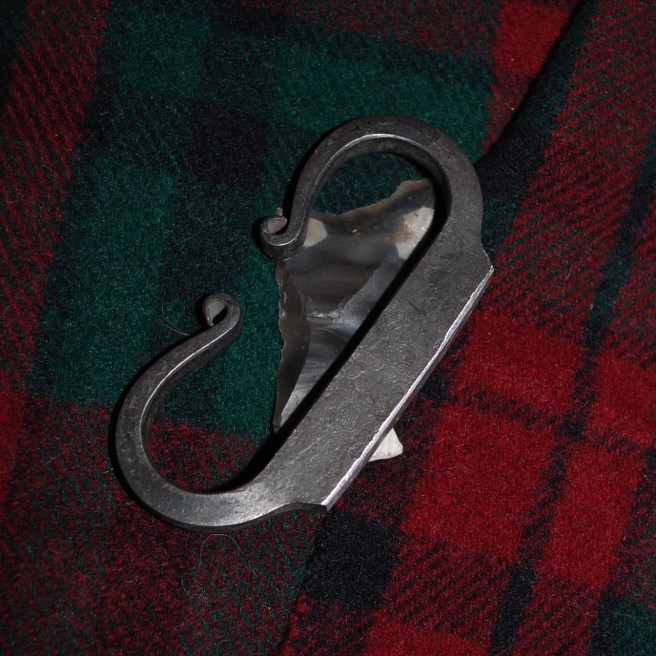
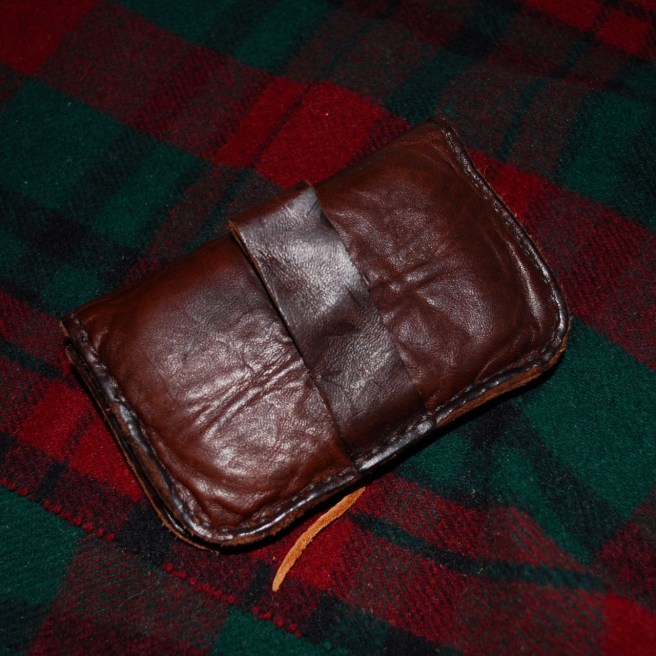
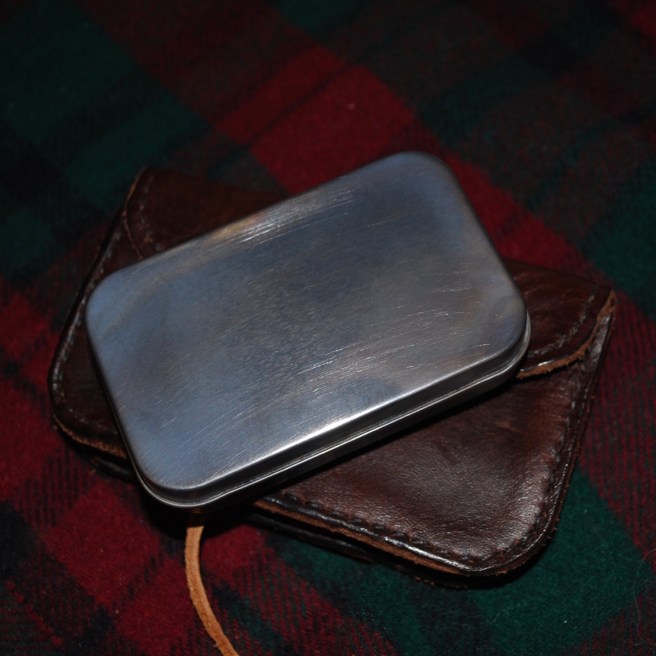
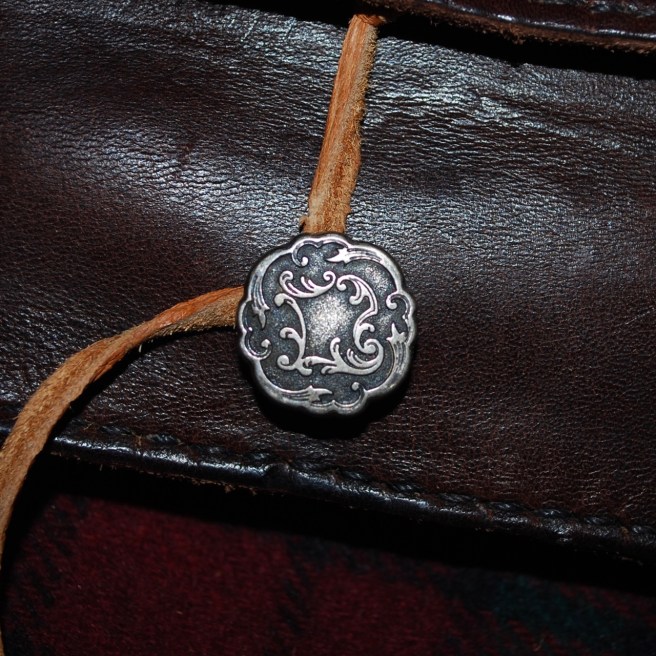
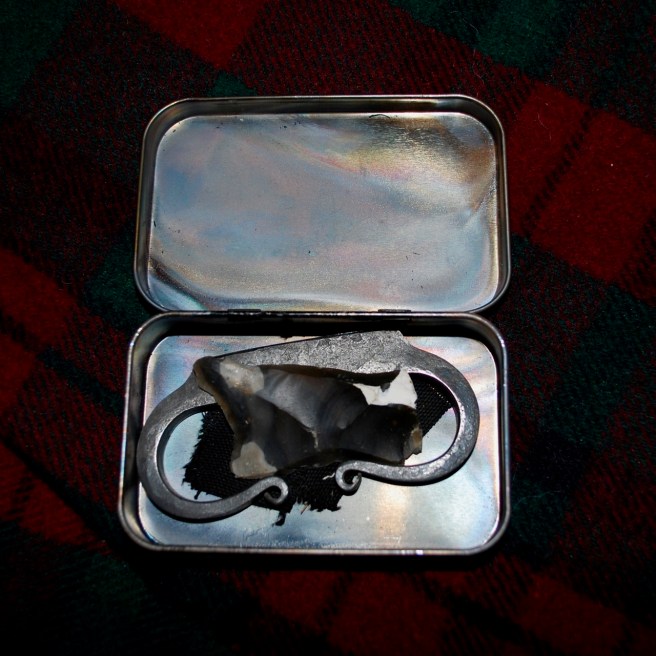
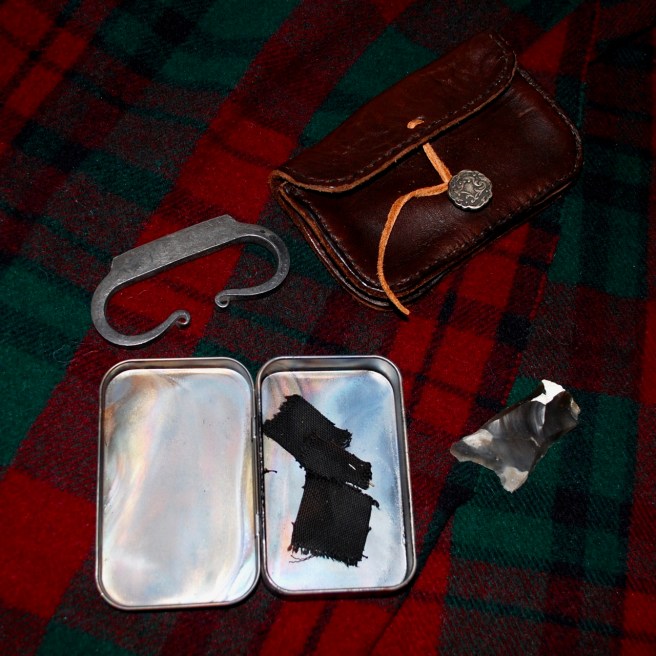
Two-toned 7 oz. leather.The complete kit will get you started and, if frugal, can start several fires.The strikers are custom made by my friend Eric at Colonial Iron.A bundle of juniper bark and ample charred cloth will spark up readily.Everything packs neatly in the purpose built bag. However, the belt pouch is great on its own if the kit is kept in the rucksack.If you are an outdoors person or just interested in history, it can be very rewarding to carry and use a traditional flint and steel fire kit like our ancestors have done for millennia.The loop accommodates a belt up to about 2 1/2 inches.Double needle saddle stitching, full grain veg tanned leather, and a vintage button should all age beautifully and last a lifetime.
This is available at our online shop Lost World Crafts where you can find a more detailed description of the kit.
Please check out the shop and consider following us as things are constantly being added and sold.
These Flint and Steel Fire Kits are hard to keep in stock. Since I don’t mass-produce things, I’m pretty slow at filling the shop. We did well enough last year that I still haven’t caught up but hope to in the coming weeks and months. Please check out the shop and consider making it a Favorite to keep up on the new listings.
Here’s another small project happening amidst all the “real work” that needs to get done during this quarantine.
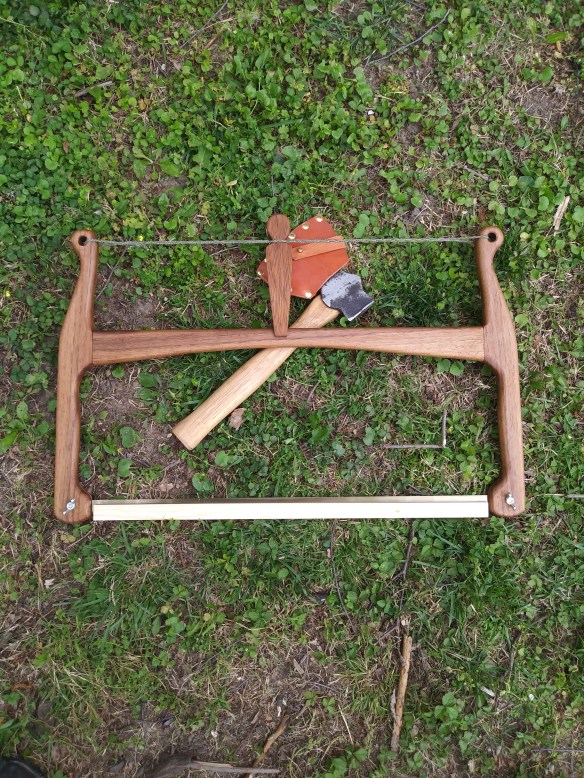
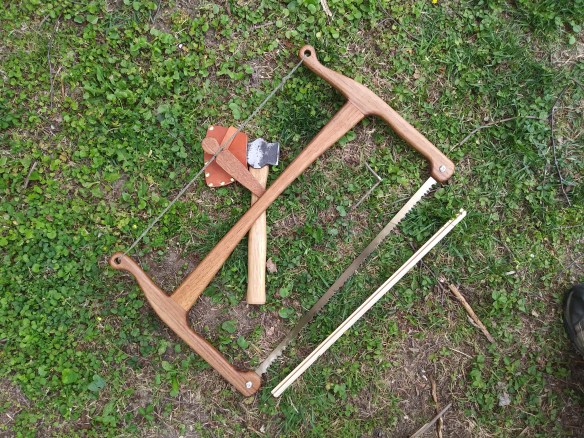
24 inch frame saw made from Missouri grown walnut. The “hanged man” style flapper is a scrap of mahogany from some repurposed shelves. The sheath here is pine.
I seem to sell or occasionally give away the saws I make. I needed a new one. The last one went into the Winter Count raffle as the prizes were looking a little scant this year.
I went into the workshop without much of a specific plan but came out with this little gem. Just a matter of removing the unnecessary bits really.
Finally, the pin sheath is stained and a canvas quiver is made to cover the saw when broken down for travel. This one is from old,, heavyweight canvas salvaged from a truck tarp. It will all fit into a neat 24 inch bundle.
I want to keep this one but after inquiries rolling in, it may go into the shop (or another just like it).
Be Safe!
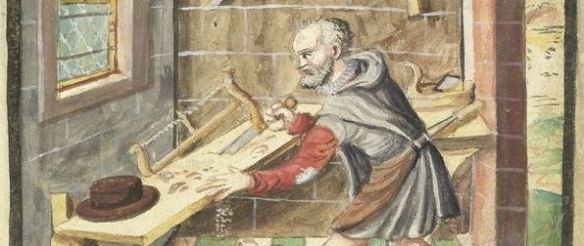
For your enjoyment: a Carpenter from 1589, Mendel Manuscript.
This post came from looking through a few class photos from Rabbitstick several years ago based on an inquiry. This is one of the years I taught my favorite sandal design, an ancient one though still cleverly marketed as a modern style.
I call them saint sandals as they look like something you would see on a medieval depiction of some holy wanderer from Europe or the Middle East. To me, these are the greatest sandals I have ever owned.
This design is a good introduction to leather working and specifically, making footwear, which can be a bit more complex than most people know. Shoes really need to fit well in order to not cause pain or damage to the feet so an open design is a good way to start on this craft.
As I make them, the sewing is fairly minimal and can be eliminated entirely with the use Barge Cement. The sewing makes them a stronger design and I think adds a sense if beauty and craftsmanship to the final product. It is also a good introduction to double needle saddle stitching.
With a little dedication, these can be made in a long half day and are ready for use immediately.
Thank you to all the patient students who have learned this and taken home to teach others. I look forward to this class each time I offer it.
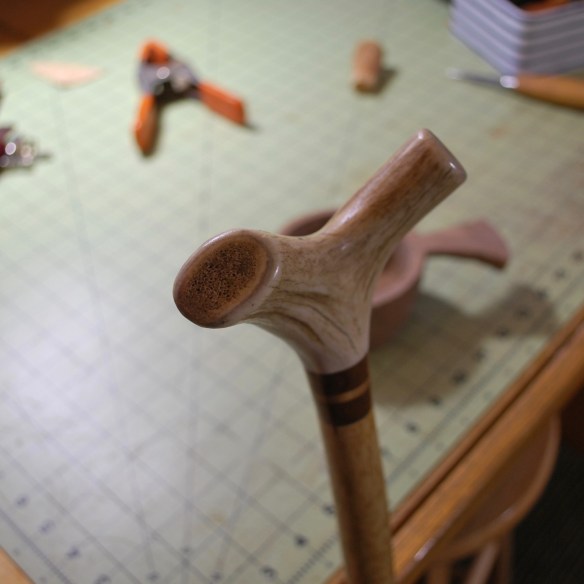
I’ve been carrying this walking stick in one form or another since 2001. What does that mean? I just can’t leave well enough alone, that’s what. It was a straight knobbed staff before attaching the stag horn but I decided it would be more useful and aesthetically pleasing with the fork on top.
A quick polish with walnut oil this morning.
The fork is not only good for resting the thumb but works well for creating shelter and provides a bit of heft should it be needed for persuasion.
The cancelous tissue is fairly light in this one as the buck had an unfortunate highway encounter with a truck. That’s how I found it.
This stick has long been a comfort on walks where stray dogs, javalinas, or other beasties may be encountered. I remember that it took me weeks of wandering around the high country, looking to find the right diameter, length, and character in a sturdy oak, in this case Quercus gambelii or Gambel oak). I don’t kill trees lightly, especially in marginal environments, as they are slow to grow and benefit the earth so much.
It’s always difficult to photograph walking sticks and longbows.
The foot of this one is capped in heavy copper to prolong life of the wood. It’s good to save those bits of hardware for re-purposing.
Terrible “selfie” of the previous hickory staff that this antler was mounted on. I can’t leave well enough alone so I changed it.
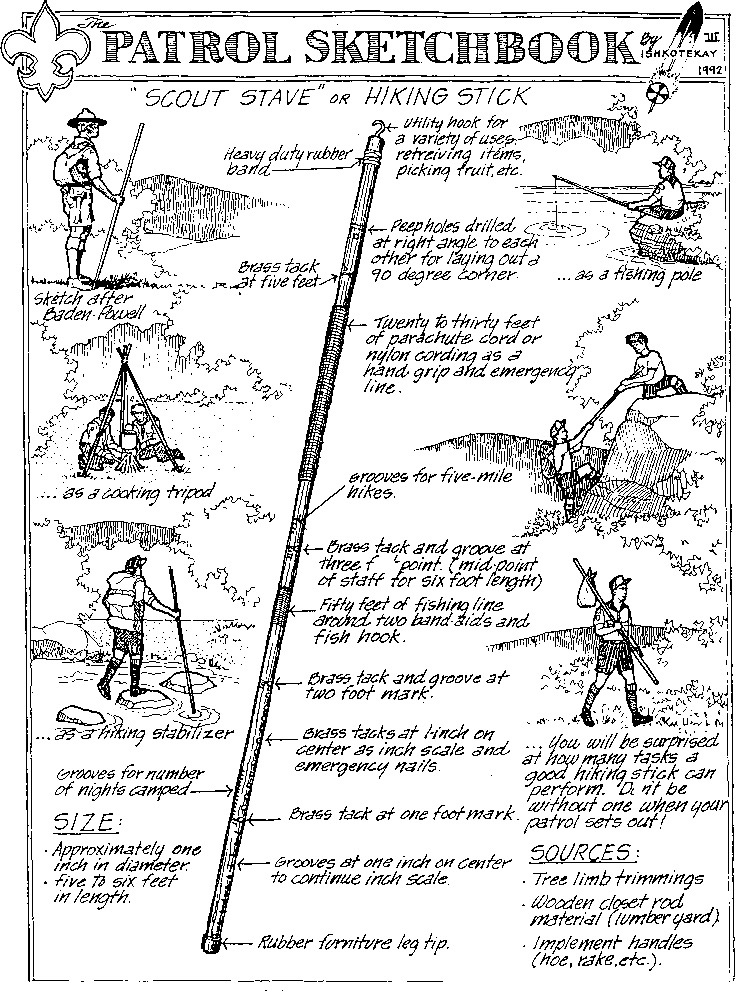
And just for fun, here is a nifty Sketchbook drawing of some uses for the traditional Scout Staff from and artist who goes by “Ishkotekay.”
Complete Camping Cook Outfit for Only $6.15! Get your’s today!
I want to share a classic camping advertisement for the F. C. Wilson & Co. from the 1916 Sears, Roebuck and Co. catalogue. Weighing in at 20 pounds it might be a bit heavy for backpacking but would be great for the car, wagon, pack-horse, or canoe. According to the online Inflation Calculator, this $6.15 kit would cost an equivalent of $149.05 in today’s U.S. dollar. At first this sounds ridiculous but after looking at a recent REI catalog I think it might actually be quite a good deal.









 I want to share a classic camping advertisement for the F. C. Wilson & Co. from the 1916 Sears, Roebuck and Co. catalogue. Weighing in at 20 pounds it might be a bit heavy for backpacking but would be great for the car, wagon, pack-horse, or canoe. According to the online
  Preindustrial Craftsmanship