
Travellers at Home
Adventures of an Imperfect Man In Search of a Handmade Life

The Lady Go Lightly…
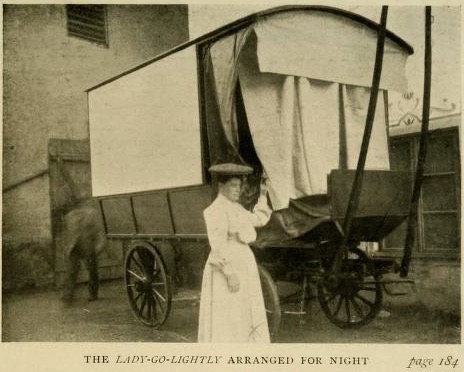
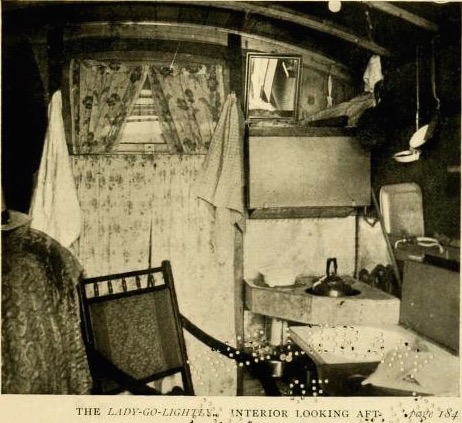
Images from:

A somewhat dilapidated or damaged vardo in France 1920s – 1930s. People with no fixed address have always drawn suspicion while simultaneously their lifestyle is romanticized.
In Britain and Ireland, the Romany Gypsys and the Traveller community are often associated with low-skilled work such as scrap dealers, horse traders, musical entertainers, or more nefarious activities outside the societal norms. However, there were plenty of skilled craftsmen and craftswomen providing goods and services to people around the country.
Below is an image of a couple, working together making footstools outside their vardo while another couple looks on from the comfort of their wagon.
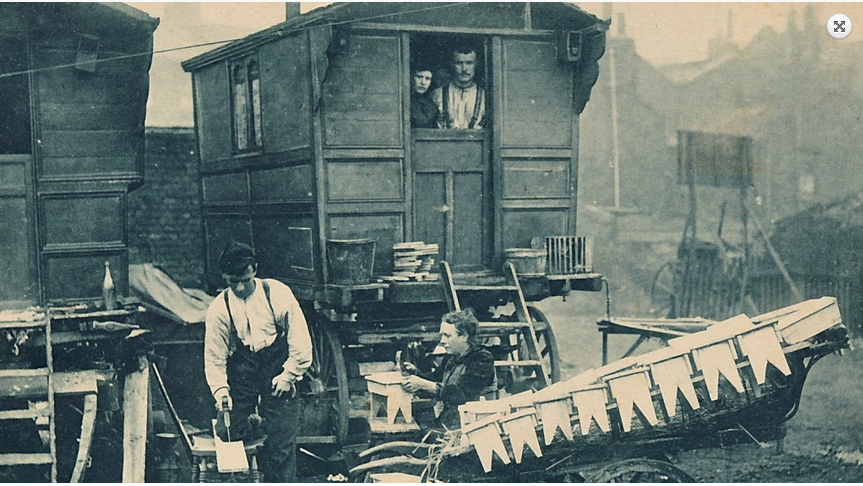
Other Gypsy families were blacksmiths, basket weavers, or similar occupations that could be taken on the road, required little stock or overhead, and could be performed independently or with a minimum of family help.
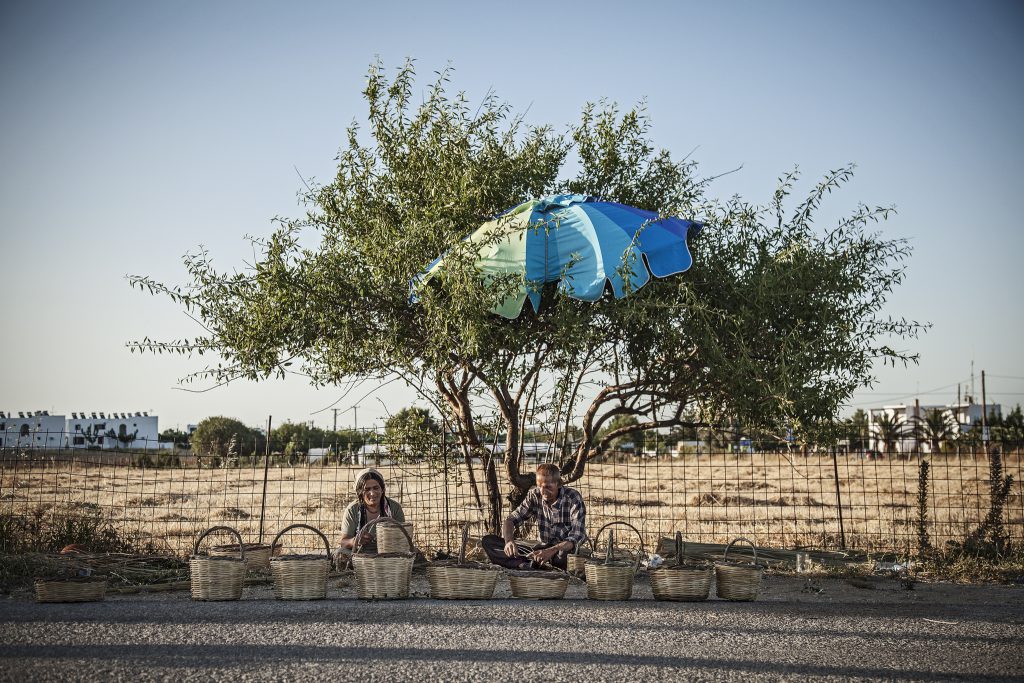
There is more to wandering people than the romantic or demonized images we carry. People are just people after all.
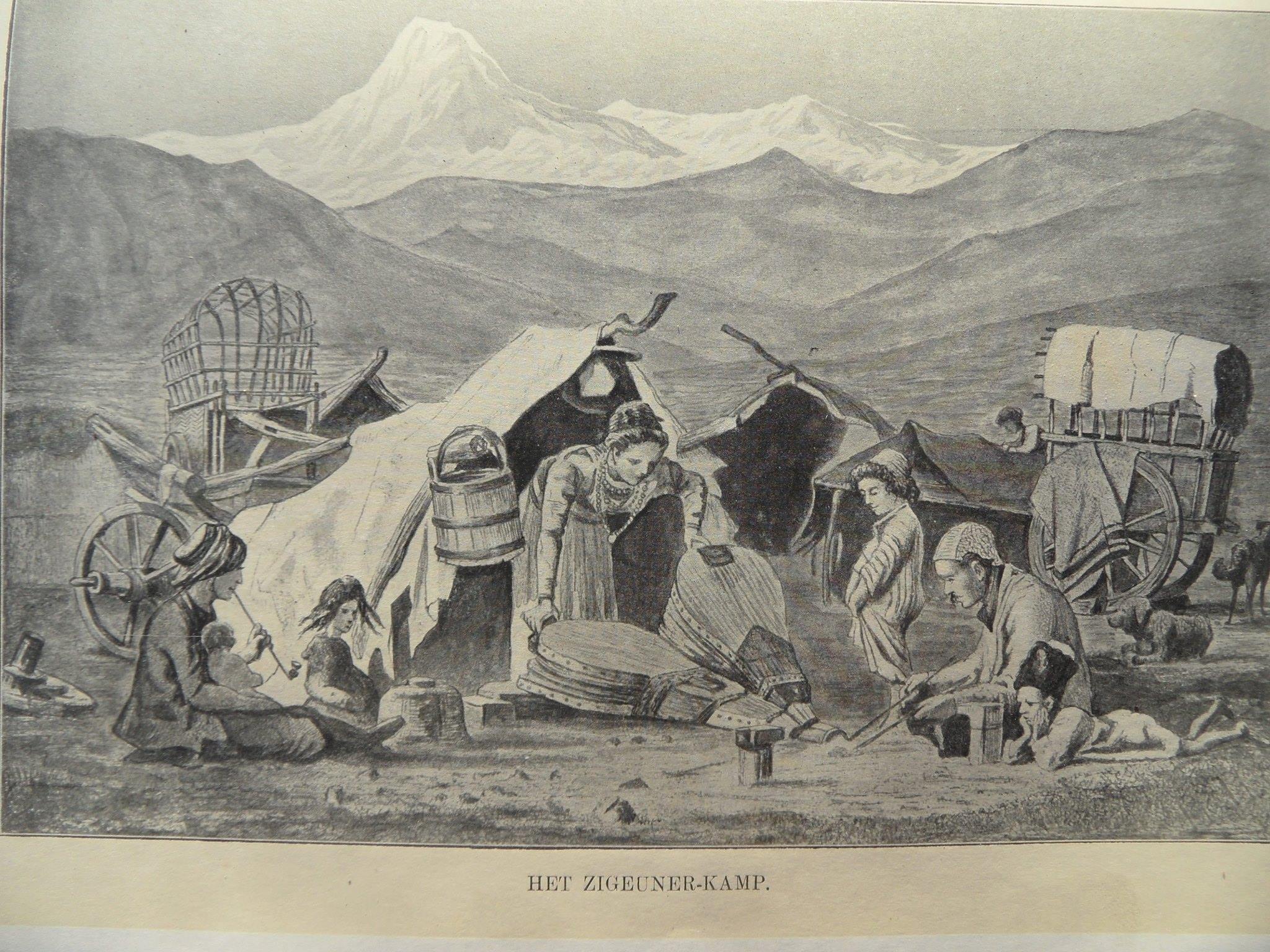

I really like everything about the image above. We see three very different types of wagon-home-conveyances and a family, wearing clothing of the time. Travellers on the margin of mainstream society have been shunned, persecuted, and culturally dismissed while at the same time romanticized for their freedom and seeming lack of attachment to a more mundane life. I am glad to see a revitalization and pride from reconnecting with family roots.

People who have lived “off-grid” so to speak often have few documents or any official standing, making family histories more difficult to trace. Hospital records, cemetery documents, or government permits, such as the Pedlar’s Certificate above, are the only way for many to trace their ancestry.

Fortunately, there is a concerted effort in Britain by the Romany & Traveller Family History Society (RTFHS) to create a clearinghouse for descendants of those often overlooked by the mainstream.
About the RTFHS: Back in the early 1990s, a group of keen family historians with British Gypsy ancestors first met at a Gypsy family history conference organised by the historian and author, the late David Smith. Until that moment we’d all thought that we were pretty much alone in trying to trace our travelling ancestors and that there was no-one out there to learn from or share our experiences, trials and tribulations with.
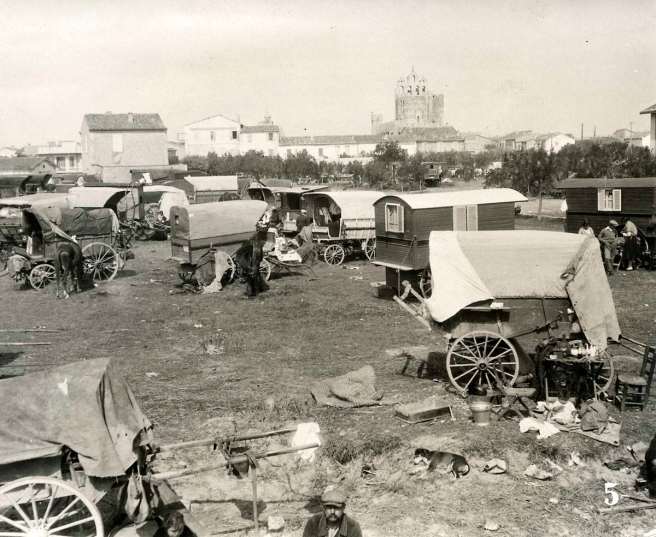
 Here’s another excellent photo of a pack of vardos (caravans) in the wild. It looks like everyone came out and maybe even spruced themselves up for the photo. I couldn’t find any metadata on this one but it looks fairly early, probably late nineteenth century. These appear to be high-end models in great condition still.

Happy travels!
Nomads are not loners. In fact, humans do not do well alone in any setting. We have always been communal people, depending upon one another for help and support. Many hands make light work and it is essential to be near others you can depend on.
 I have been collecting images of Traveller communities for many years and I really enjoy the gritty, homespun feel of the old encampments with peeling paint and makeshift tarpaulin shelters. I’m sure this image was not welcome in settled communities around Europe and the shiftless nature of these wanderers led to many suspicions, both unfounded and real.
 These are not the rolling home of the wealthy showmen of idle rich but the best compromise for families destined to live on the road.
 The vardos bear many differences but within fairly tight physical contraints of size, weight, needs, and technology. It’s important to remember as well that historic travellers of most varieties didn’t design or build their own accommodations but often modified or improved that which they acquired.
 Even though they show few relevant details of the caravans themselves these are some of my favorite images; they give us a glimpse of the people who called them home.
 Although Traveller families lived (and live) on the margins of “normal” society they were (are) more like their neighbors than not.
 I hope you enjoy the photos as we head into the season of Thanksgiving here in North America and give thanks for what we have.

We are at our best and worst in groups, whether that is family or friends. Humans are social animals.
I decided this was worth a re-post. An incident that could have gone far worse in many ways.
I had to wait a while to publish this one but maybe I just need to get it out…
I like to think I’m a safe person. At least to the point of looking out for others if not always myself. I don’t drive aggressively, I maintain my vehicles, and don’t take big chances on the road. That said, I probably stress my truck and the vardo more than most people would. The truck has spent sixteen years as an archaeologist’s field vehicle and has gone into places I would have never thought I would take it. I have crept into BLM campsites with the vardo that required it to be tipped up to 45 degrees and I was certain it was going to go over. I’ve intentionally jack-knifed the whole thing just to push it into place between boulders.
These things are just the nature of travel in the…
View original post 861 more words
So, a vardo is a small space, especially when living with a dog.

The old dog loved sleeping under the rig as she took her guard duties seriously but unfortunately, she is no longer with us. The youngster, on the other hand, has no interest in that sort of nonsense and only wants to be by my side as much as possible. She loves enclosed spaces so the vardo is a big attraction for her. She spends much of her time under the main bed, hidden away, and often forgotten about until she decides to get under foot. I even lost her for the better part of a day when she snuck in while I wasn’t looking, slipped into her bed, and was locked in for several hours. When I found her, she looked content enough and came out stretching like a sleepy child.

Much of 2016-2017 I was lucky enough to spend many nights camped in the gypsy wagon with just my dog for company. She doesn’t get on furniture inside the house but the dog has decided the floor or her bed are not good enough when she’s in the vardo. Since she knows she not really supposed to sneak into the bed, the (too small) bench seat is often her compromise in the wagon. She doesn’t really fit but I guess it makes her feel like one of the family.

A couple years ago I learned to be extra careful when sliding out of bed, especially in the dark, as she often plants herself on her favorite felted rug; right under my feet. In this case, it also happens to be in front of the ceramic heater on a chilly morning.

Even while getting ready to go to work, she seems to manage a photo-bomb; always lurking nearby and not wanting to be left behind. Just because it’s a small space, there is still plenty of room for a dog; sort of.
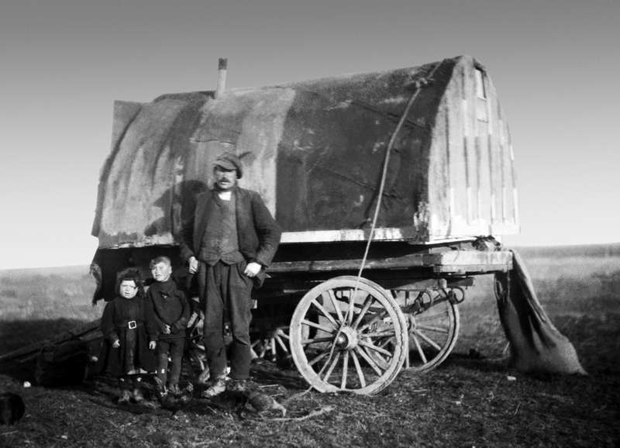
Here’s a wonderful old photograph of a “Tinker Family in Scotland.” It is believed to be taken sometime in the 1920s but the location was not identified. The wagon could just about pass for a western American sheep camp. Even thought they had the wealth to own a wagon it was still a pretty tough life, often unwanted in non-traveller (sic) communities, these people have been marginalized for centuries.
I found this one while perusing the Johnston Collection on the Document Scotland webpage. Have a look if you are interested in great images of a beautiful country.

 Preindustrial Craftsmanship