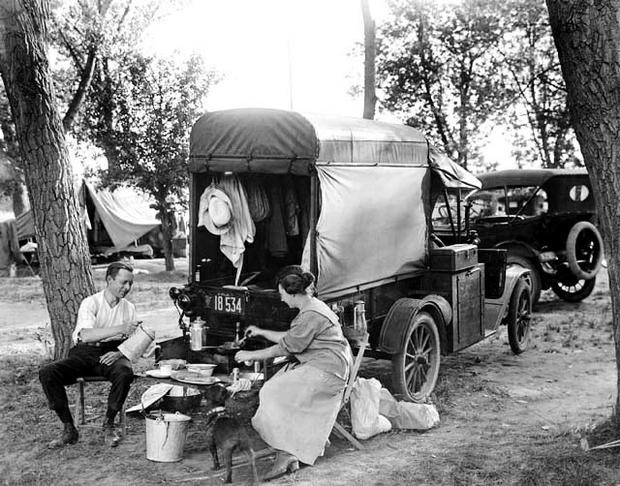
A little car camping in 1918. No attribution found.
In the heady days of 1918 while the German threat was being finished off in Europe Americans began to take leisure time in a new direction. Automobiles were almost commonplace and Yankee ingenuity was applying itself to this new platform of creativity. Patents were being filed to sell improvements on the original designs while pioneer camping technology was far from lost. Money was tight for the average person and the economy was devastated world-wide encouraging frugal holidays.
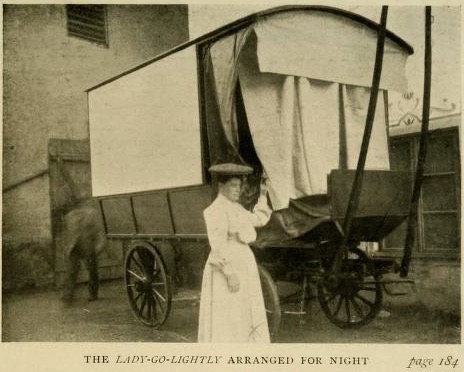
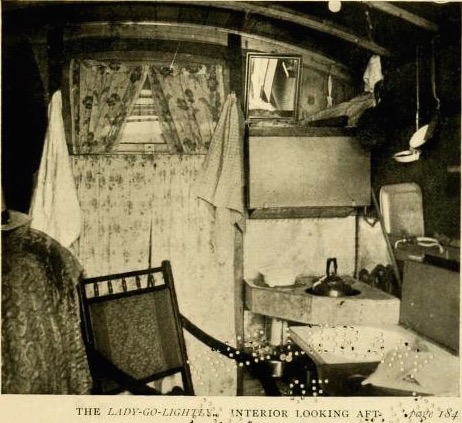
There is a little stove on the pull-out, a hurricane lamp on the side shelf, and just enough of the comforts of home under the wagon cover to make for an easy vacation.
A mix of old and new technology. Horse power on modern running gear. Photo by Peter van Beek. Click the image to view the photo album.
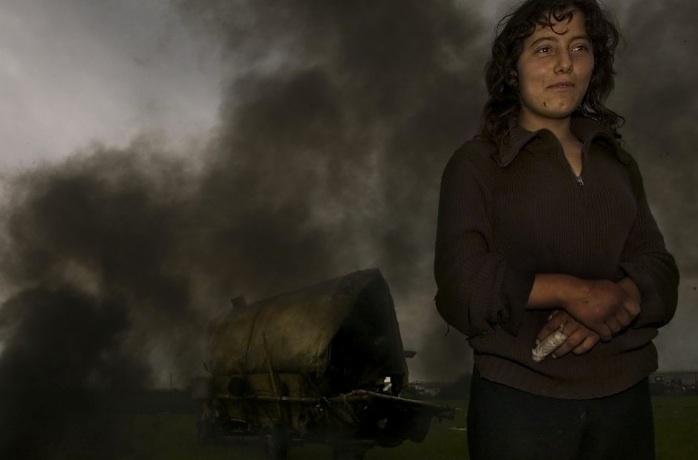
Peter van Beek has documented the difficult life of nomads in a modernizing Europe. Fear, stereotypes, and unfamiliarity dominate their way of life and place them into a partially self-imposed, marginalized portion of society. Although there is terrible poverty, he documents family life and survival of these remarkable people.
Simple shelter as used by our ancestors since the beginning of time.It isn’t easy being a nomad in a modern technological world. There is easy place for this lifestyle.The world has changed but many traditions have not.
There are certainly exceptions to nomadism. Many Romany cling to their traditions and morph them into a new lifestyle. All of our people have done this.
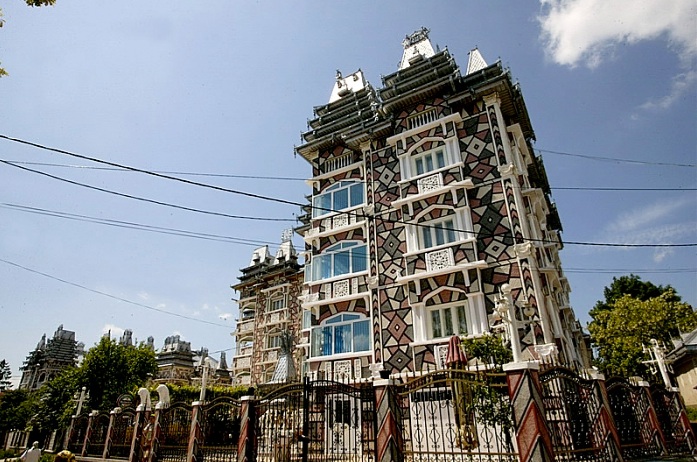
But it isn’t all oppressive poverty “By collecting and selling iron they get very rich and build their own village with huge palaces where they started living.” While settling down, the community keeps it’s own unique sense of style.
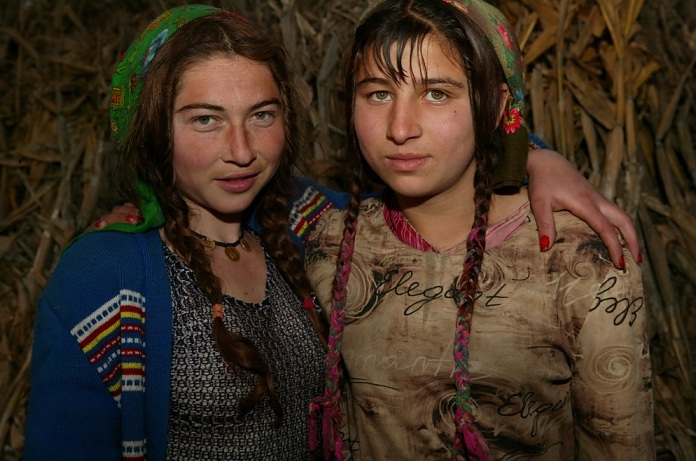
Hard work and some flexibility can make assimilation slightly easier.Ethnic identity shows in this vernacular style.Beautiful young women with a foot in both worlds.
“Many Kaldarash people (the coppersmiths) still wear colorful clothes, living in a beautiful traditional way. In some villages, time seems to stand still.”
From Peter van Beek’s website:
“The only nomadic gypsies in Europe live in Romania, the country that joined the European Union in 2007. Living a hard life in Romania these semi-nomadic people hold on to traditions and rituals. Amongst them are story-and fortunetellers, musicians and coppersmiths. Despite a law against nomadic life these gypsies still live in their harsh and remarkable way.”
Images found at Peter Van Beek Photography. Check out his beautiful work and consider buying his book about the Roma:
Scenes of life on the road and around the campsites.
October 1951: Mrs Robert Matthew, an MP’s wife, campaigning at a gypsy encampment.Kids at the campsite.A classic image of Traveller children.Modern gypsies (Romany) in their simple accommodation.I really love these little bender tents.A fine caravan for a successful traveller.
This is part of a series of images, mostly Romany, Irish, and Scottish Travellers collected from around the internet. Many of these historic images found on the web are without citation. When a clear link to a source is found, I try to include it. If a source is known, please pass it on and I will gladly include it or remove it if necessary.
A tiny accommodation, side entry single horse style. It is documented that the adults with this style wagon generally slept outdoors except in very bad weather. It was a good way to confine the children and the valuables.
This is part of a series of images, mostly Romany, Irish and Scottish Travellers collected from around the internet. Many of these historic images found on the web are without citation. When a clear link to a source is found, I try to include it. If a source is known, please pass it on and I will gladly include it or remove it if necessary.
Wonderful rolling home.
This is part of a series of images, mostly Romany, Irish and Scottish Travellers collected from around the internet. Many of these historic images found on the web are without citation. When a clear link to a source is found, I try to include it. If a source is known, please pass it on and I will gladly include it or remove it if necessary.
A somewhat dilapidated or damaged vardo in France 1920s – 1930s. People with no fixed address have always drawn suspicion while simultaneously their lifestyle is romanticized.
In Britain and Ireland, the Romany Gypsys and the Traveller community are often associated with low-skilled work such as scrap dealers, horse traders, musical entertainers, or more nefarious activities outside the societal norms. However, there were plenty of skilled craftsmen and craftswomen providing goods and services to people around the country.
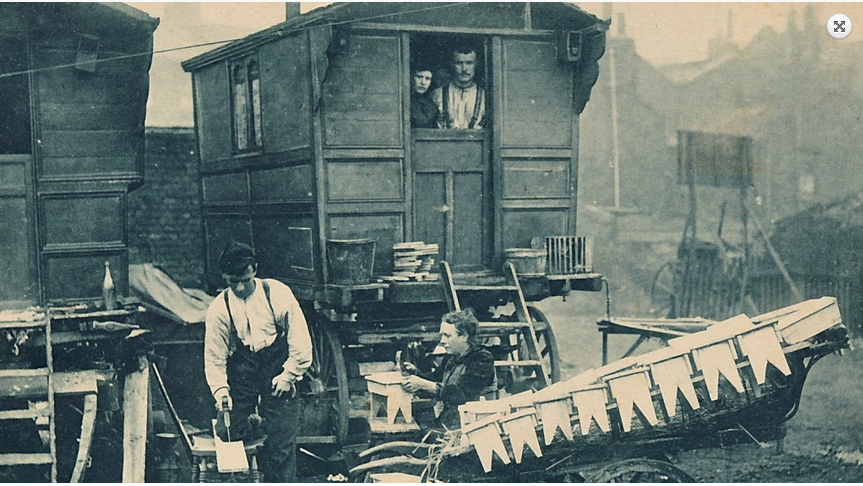
Below is an image of a couple, working together making footstools outside their vardo while another couple looks on from the comfort of their wagon.
Gypsy carpenters making small and large stools for market. From an early 20th century postcard. Source: Romany and Traveller Family History Society.
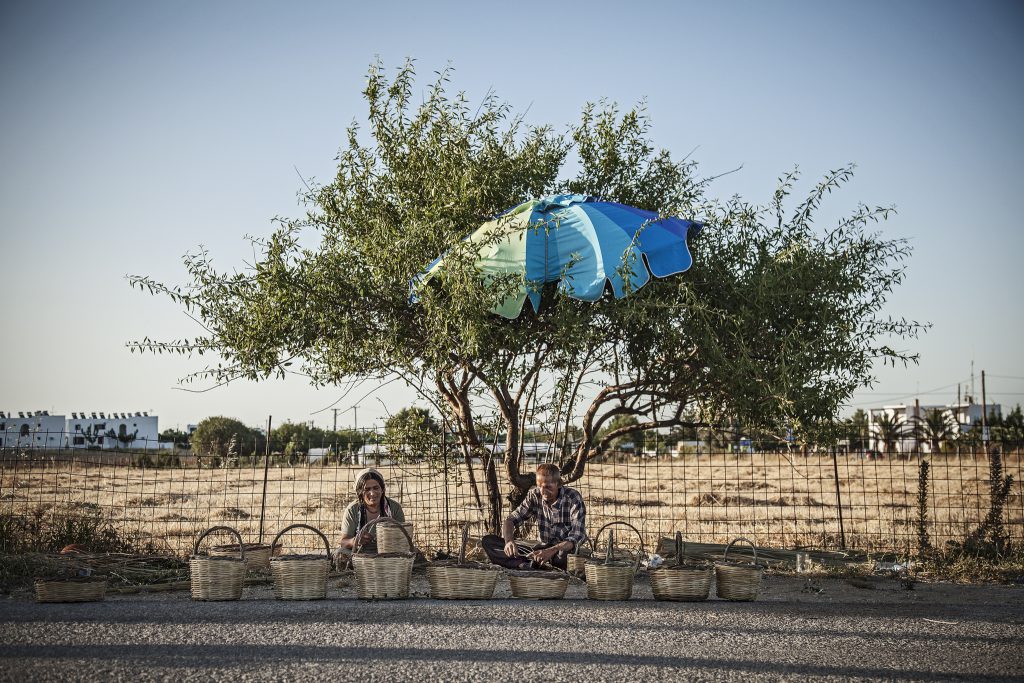
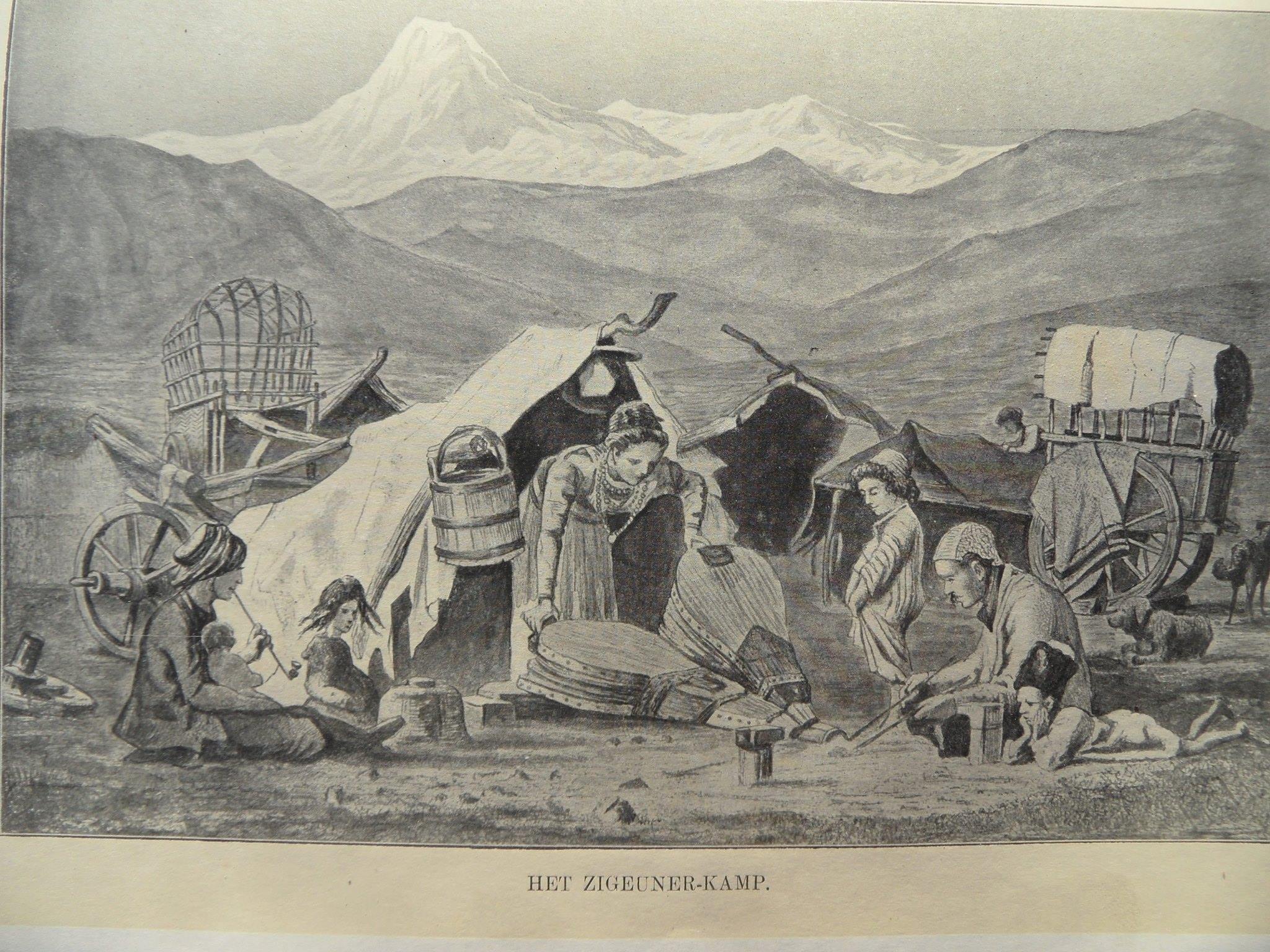
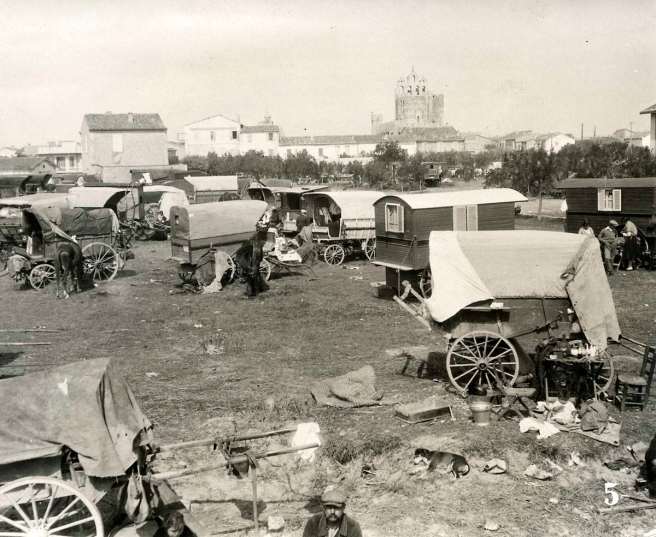
Other Gypsy families were blacksmiths, basket weavers, or similar occupations that could be taken on the road, required little stock or overhead, and could be performed independently or with a minimum of family help.
The bender tent provides shelter from the damp while keeping the living space outdoors.
Travellers in Europe and Britain have always been associated with a style tent called a bender. This comes from the construction technique of cutting saplings and bending them into a dome, elongated dome, or half cylinder shape, These frameworks were then covered with tarps and made watertight in the temperate damp. The origins of this design are lost in the mists of time and are believed by archaeologists to be one of the earliest style of recognizable tent structure used by humans.
This size bender can more than double the living space of a vardo in a matter of minutes.
Even after a certain level of affluence allowed some Romany and other Travelling folk to own living wagons, the bender continued (and continues) to be a way to extend the living space without the need for a lot more gear.
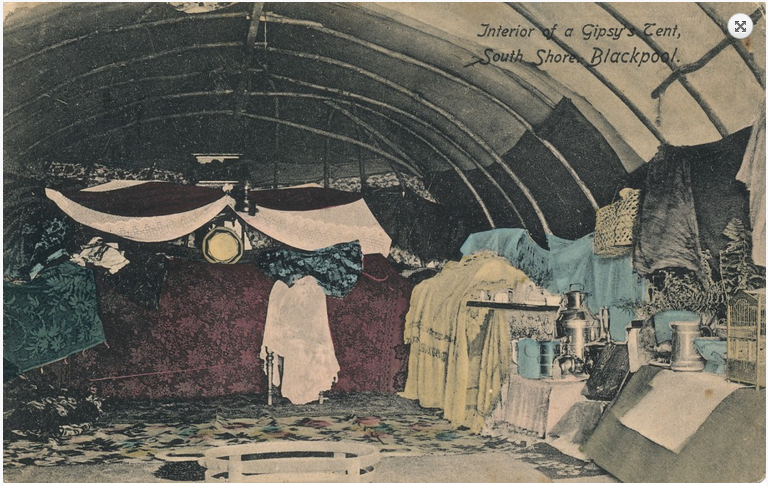
In England, Gypsy women often used their homes for fortune-telling, especially around the Gadjo (non-Gypsy) vacation centers. Image, early 20th century. Source: Romany & Traveller Family History Society.
The fact that a tent becomes the subject for a Blackpool post card shows the ongoing fascination with “Gypsy Culture,” especially in the British Isles where Travellers are simultaneously suspect and romanticized.
The front or vestibule provides a place to do business in relative privacy. Source: Romany & Traveller Family History Society.
If you have family that me be Romany, Traveller, or Fairground folk in Britain or just want to learn more, check out the Romany & Traveller Family History Society at http://rtfhs.org.uk/.
Near Boglehill in Midlothian, Scotland, n.d. late 19th century. Source: Romany and Traveller Family History Society.
I really like everything about the image above. We see three very different types of wagon-home-conveyances and a family, wearing clothing of the time. Travellers on the margin of mainstream society have been shunned, persecuted, and culturally dismissed while at the same time romanticized for their freedom and seeming lack of attachment to a more mundane life. I am glad to see a revitalization and pride from reconnecting with family roots.
Legal Documents.
People who have lived “off-grid” so to speak often have few documents or any official standing, making family histories more difficult to trace. Hospital records, cemetery documents, or government permits, such as the Pedlar’s Certificate above, are the only way for many to trace their ancestry.
Diaper Family Portrait.
Fortunately, there is a concerted effort in Britain by the Romany & Traveller Family History Society (RTFHS) to create a clearinghouse for descendants of those often overlooked by the mainstream.
About the RTFHS:Back in the early 1990s, a group of keen family historians with British Gypsy ancestors first met at a Gypsy family history conference organised by the historian and author, the late David Smith. Until that moment we’d all thought that we were pretty much alone in trying to trace our travelling ancestors and that there was no-one out there to learn from or share our experiences, trials and tribulations with.












 Preindustrial Craftsmanship