The Internet is neither good nor bad. It is just a repository of information like a giant disorganized library that is constantly in flux. Like a library, it is a tool and like a library it can be a meeting place. Probably the two best things about having an Internet presence is the vast amount of knowledge that can be shared or learned and the bringing together of like-minded individuals that would have never met otherwise. I have had meaningful discussions and comments from all over the world about this oddball and eclectic blog and I would like to share a recent email of a connection made through the website from Rob Hanson of Evenfall Studios. This, for me, sums up the heart of the message; “It makes me feel less solitary, as we are not the most common demographic these days.”
Hi George,
I enjoy your blog, and your approach to making and living. Thanks for sharing it.
Dick Proenekke lived in remote Alaska and made his cabin at Twin Lakes as well as much of whatever else he needed with tools that didn’t require power. Sure it was out of necessity, but I like that he didn’t make a big deal out of it. He just did what he needed to live, knowing the season to complete this was short. Dick was maybe somewhat of an uncommon adventurer in the late 1960’s, but 75 years prior, he would have been much more a common man in the western states. Hours of our day in pre-industrial time were spent like Mr. Proenneke’s, assuring we had our life in order. Prepared for living life as it comes. It was everyone’s daily do.
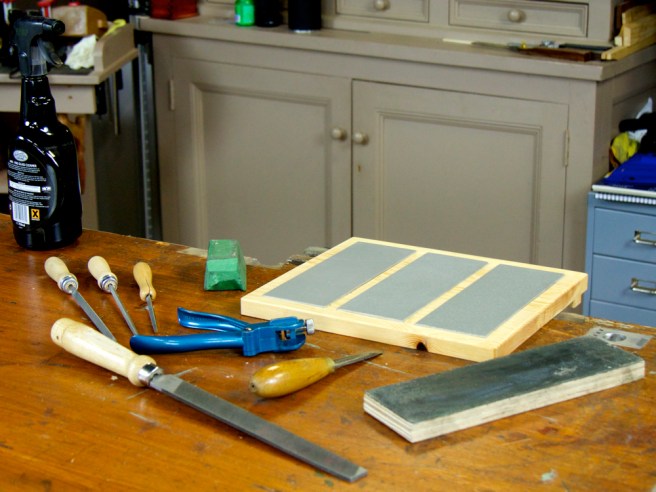
I make hand tools for a living. I make pre-industrial tools, sort of. Probably developed in the early period of sloyd. Shooting boards, sawing and drilling tools, sharpening tools. I don’t do this because I intend to be pre-industrial, I do it because the premise of these tools is still amongst a “best method” approach to making things. Industrialization didn’t necessarily improve the possible outcomes, and so the relevance of these tools today is still alive.
I sort of got lucky. My Grandparents on both sides of the family were born very early in the 20th century and brought up on dairy farms. This was in the Pacific NW about 30 years after settling there began, so there was a lot of frontier knowledge in both sides of the family. Everything was still really old school. One great granddad had been in furniture making before coming to the west coast. He taught my granddad a lot that was passed on. This granddad had only daughters, so he waited a while longer for grandsons. Anyway, both grandfathers and dad were always independent makers, and I got a front row seat. They were hybrid. They did use power tools too, but their original skills were hand tools, and often they would choose the hand tool over the powered one.
The thing was, it was never as much about the tools as it was about having the skill and doing a good job when you make. It was inspirational to me and eventually after other careers, I had the opportunity to be a toolmaker and I took it. As a Toolmaker, I understand that this is about tool acquisition for many of my clients – they aspire to have a working shop. My deeper hopes are always in that the tools I make inspire them to be able to make what they envision and do so more directly. It’s one thing to have a tool, and another to become skilled with using it. Then you can “see” things in your mind’s eye and just make them.
I like that you have “made” with your hands and tried it out, made adjustments and evolved what you build while using tools that are the means to the end. This is the real process behind how things evolved. People read your blog and think oh, that’s how you do that, I could do that! They begin to get a taste for what they didn’t know they could do and they like it. This is inspirational. Once you have the skills that create craftsmanship, no one can take them from you. You could parachute into anywhere and scab up tools. Tools from ordinary things. Make shelter. Fire, food. things you’ll need, all with skill because you understand how to wield the tools. This is more between the head and the hands than in the environment. I hope that makes sense.
I think you probably understand our ancestors given your profession, and I like that you have endeavored to understand them in your hands as well as your head. It’s the physical understanding that is hardest to convey. Experiential knowledge. It isn’t imparted from reading about it, you have to do, or live it. Post Industrial life has perhaps blurred this connection to our past. Your blog shows people this and how rewarding it can be to reconnect. I hear from a lot of people who want to get reconnected, and it’s an enriching endeavor.
Paleotool has shared a lot of cool philosophy and stuff. Stuff isn’t the loss for a better word. Stuff, as in the physical examples of all sorts of pre-industrial life, and people are trying to get their hands around it. Trying to do it. They can leave their televisions and still be able to do. You are helping people leave their couch and go “live” instead of “watch” life. It’s cool!
Not everyone can do what Dick Proenneke did, or even do what you have done and are doing, because they may be afraid, or their life path won’t currently accommodate it so completely, but they get to try a leg up. You have piqued their interests. Trying a bit on allows them to grow, and it lights them up. I lit up when I saw what you were doing too. I have a busy business, and so free time is minimal, but I do get to work with my hands in craftsman skills and do what I love, so thanks for being another who uses the skill and lives a life you can love. It makes me feel less solitary, as we are not the most common demographic these days.
If you have time and you like, my website is at www.evenfallstudios.com. Check the menus because there is a lot there. I have a blog and an online library with old books on making from all the old craft and trade ways. If you have time, I’d love to hear back from you sometime.
Best,
Rob Hanson, Evenfall Studios
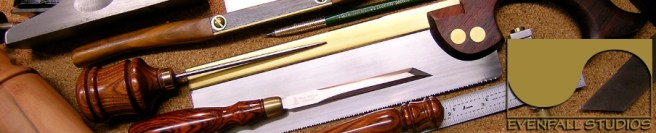 Have a look at the beautiful tools at Evenfall Studios but even more importantly, don’t miss the articles or immense library of downloadable books assembled there. Thank you Rob!






 Preindustrial Craftsmanship