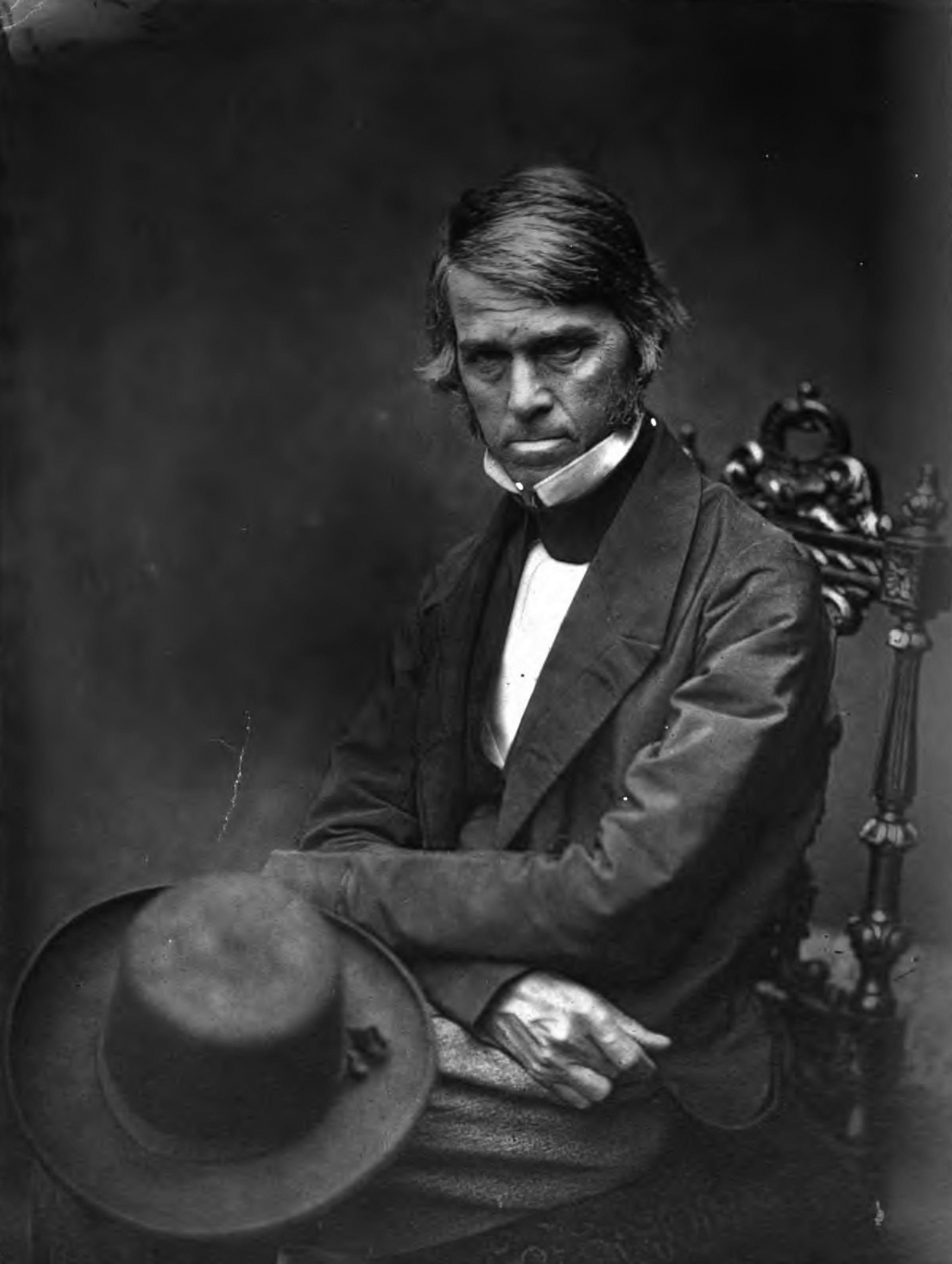
” The courage we desire and prize
is not the courage to die decently,
but to live manfully. “
~ Thomas Carlyle
Adventures of an Imperfect Man In Search of a Handmade Life

” The courage we desire and prize
is not the courage to die decently,
but to live manfully. “
~ Thomas Carlyle

“I never let my schooling interfere with my education”
Mark Twain
Wise words. Sometimes I think we’re entering a Dark Age just at the moment when we have vastly more knowledge at our fingertips than ever before. We can look far out into space and at the tiniest of the tiny to understand our universe like never before. Schooling is not the same thing as education. I believe in both. One teaches us what we need to know to cope with the basic expectations of society; a normalization of sorts whereas the other teaches us to think and analyze and build upon our prior knowledge. Neither does the job perfectly and both are necessary for a decent life.
A look at the news or social media shows that people like simple answers and especially those that reinforce what they already feel or want to believe.

Never stop learning…

Because they didn’t know better, they called it “civilization,” when it was part of their slavery. Tacitus, Agricola, Book 1, Paragraph 21.
Here are some good words about responsibility I would like to share from the Northwest Woodworking Studio.
I had this crazy idea about the world and how I’d like to change it today.
Hear me out.
What if folks acted as if they were responsible for their actions? That whatever they did out in the world had a pond and ripple effect? That they are not alone on their computer, on a phone, in their world, entitled to more of everything at the expense of everyone else?
It would be like working at the bench if you will allow me. Where when you screw something up you are the one who did this. You are the one who has to fix it. You can’t turn to your neighbor, the car next to you or the bike rider, big business or the government, or your sad upbringing and history and blame them for it. You have to take responsibility for who you are and where you are in…
View original post 138 more words
If it takes five times, build it five times. I feel this sentiment almost everyday. I think that means we really care about what we do.

“The things you own end up owning you.” Chuck Palahniuk, Fight Club
There’s a lot of recent talk about Minimalism as a social movement and this fits well with my personal philosophy and my interests in preindustrial technology and survival. Not long ago, minimalism was mostly associated with artists, aesthetes, wanderers, mystics, and philosophers. That is to say, the fringe element, outsiders, and weirdos. These things come in cycles and I think, as a backlash against generations of sell-out philosophy and the creation of a professional consumer class, many people are reaching for something new.
We come to learn that everything old is new again.
I’ve been pondering history and prehistory on a full-time professional basis for several decades now. As hard to believe as it may be, I even get paid a salary to do it. One of my professional interests involves the tools, tool-kits, and strategies for surviving that various people have come up with for dealing with the world. As a sometimes primitive skills-survival instructor and full-time frugalist I think it important to not reinvent a lifeway when we have millennia of ancestors who dealt with most of the same issues we do today.

For most humans, for most of our history, owning too much stuff has never really been an issue. We had what we needed and either made what we needed or did without the things we didn’t have. It brings a smile to my face to know that more than 2,500 years ago, various thinkers people in China, India, Greece, and the Middle East were contemplating the nature and evils of acquiring stuff; some were even writing about it. That’s not to say that I have immediate plans to become a wandering mendicant like a medieval friar (as appealing as that might sound to some) but I do have an interest in lightening my material load and some very specific goals for the coming year.

My foundation as a minimalist (and I may not be very good at it)-
I have been thinking about what stuff a person needs to survive since I was a teenager who enjoyed backpacking and travel. Like virtually every young boy, I had grand ideas of escaping the family and traveling unhindered across the world. My family weren’t exactly readers but I devoured Jack London and Mark Twain stories as a kid. I loved the extensive and well-thought out gear lists provided in the Boy Scout Handbook, the Explorer’s Handbook, and the Philmont Guides. I read Larry Dean Olsen’s great book of Outdoor Survival Skills and Colin Fletcher’s The Complete Walker again and again. I read about the mountain men of the fur trade, and always, took note of what they carried or didn’t seem to need. I would copy lists into a notebook and revise them while sitting in some boring high school class, making my own lists of what I have, what I need, and what I want. This thinking encouraged me to work and save money to buy a better knife, backpack, or camping stove. I was probably the only kid I knew who wanted, and got, a file and whetstone for Christmas one year (my grandpa was good that way). My friends and I spent our teens and early twenties hiking and camping year round, mostly in the woods of the Ozarks in southern Missouri testing our mettle at that time in life time when all teenagers know they are invincible. Some of us even made it to Europe, Asia, Africa, and beyond.

In a modern sense of survivalist, many people look to the military or the loonies of the social media. Often, military service is the time when young men and women are introduced to such things for the first and only time in their lives. Realistically however, the military itself acknowledges it’s shortcomings on a personal basis as (with the exception of a few special operations units) its entire system is dependent on lengthy and complex supply lines, support chains, and de-emphasis of the individual and personal decision making. Military survival is generally approached as a means of keeping alive until help arrives. Great for fighting a war, but not always so good when you are turned loose into the world. This sort of survival strays from our point here anyway.
More (and less) to come soon.
* here are a few links to modern Minimalists of various ilks and philosophical merit. A journey through these links will hint at the breadth and depth of people on different paths but moving in the same direction.
Read, research, think, and enjoy!

Starting fresh in a new place means we’re in for some work this spring. Although I suspect that many things have grown in this yard in the last century, other than the small plot I turned over last year, we have mostly lawn. Even our lame little herb and tomato plot yielded some great results. Our worst pests are definitely squirrels, with birds and raccoons running a close second. The seed catalogs are in, orders are being placed soon, and preparations are ready to begin.

With the risk of sounding like a nonconformist, I really feel that every creative act minimalizes our interaction in a consumer economy, is a small personal victory. Our war is a personal one now. Planting food, mending clothes, buying local (or not buying at all) is a triumph of the will. Knowing where our food comes from is a good beginning on a path to a better life.

For many Americans, simply planning and making a great meal from scratch feels like a success; and it is. It just takes small steps and eventually, these skills and habits become second nature. Your food is better, your health will improve, and you will have an invaluable skill. Teach your children well.

And finally, food preservation is the next logical step. With refrigeration as the norm in the industrial world, we should take a little time to ponder what happens when the power goes out. Hurricanes, tornadoes, earthquakes, or acts of terrorism are all very real things, even if we don’t feel them every day. There is a thin line of convenience that can be quickly swept away and a little preparedness goes a long way. One great start is the Ball Canning Jar Company’s Blue Book. It has been around for over 100 years and has helped people preserve food without much experience and at a low cost. Even though there some initial monetary outlay, remember that most everything is re-usable.

A good reference like this keeps you healthy and safe. The modern, up-to-date version is readily available at nearly any retailer who sells cookbooks.
 If you haven’t grown your own food, or you haven’t in a while, consider making this your year for better food.
Nota bene! The following ramble was written at three in the morning and may contain sentiment, ramblings, and a bit of opinion. I don’t want this to sound preachy. What was intended as a few childhood pictures from primitive technology events ran away with itself in the dark hours between sleeps. ~G

There is a certain amount of balance that can become of the unique skills we gain along the path of our lives. Some people come to events, take classes, and return to the ‘normal’ life at the end of the week relatively unscathed by the learning they paid for and the time spent.

To closely paraphrase a linguistic anthropologist I knew long ago,
“Some things we love are embraced the way most people embrace their religion, they take away some message, feel strongly about it, but leave it for Sundays. When we find the thing that is our passion, we embrace it like a lover; it encompasses all our thoughts and becomes our entire life.” ~L.F.
This is how I feel about primitive skills, wilderness living, and pre-industrial craftsmanship. Without consciously trying, it just became a part of life growing ever stronger from teenage into full adulthood. While living in the consumer world, this alternative floated in the background of the mind and continued to influence activities when our child came along.


We were not perfect parents. Far from it. But we were consciously better than our own. We really tried. We learned. I sometimes wish I had it to do all over again. Overall, I think we did pretty well and were lucky in many ways. We encouraged exploration, learning, and self-reliance. By not child-proofing everything or creating needless prohibitions, we were forced to be more aware and in the present. Yes, it is probably more work and yes, it can be exhausting but children should learn their most valuable lessons at home from family, whatever ‘family’ may mean to you and yours.


Every kid and every family is different. They aren’t robots and it is clear to any observer that they have a mind and ideas of their own from a very early age. We can only steer them as best we can, present them with our ideas and beliefs, and provide the types of opportunities we think will give them a good grounding for their future lives before setting them free to try their skills in the world.
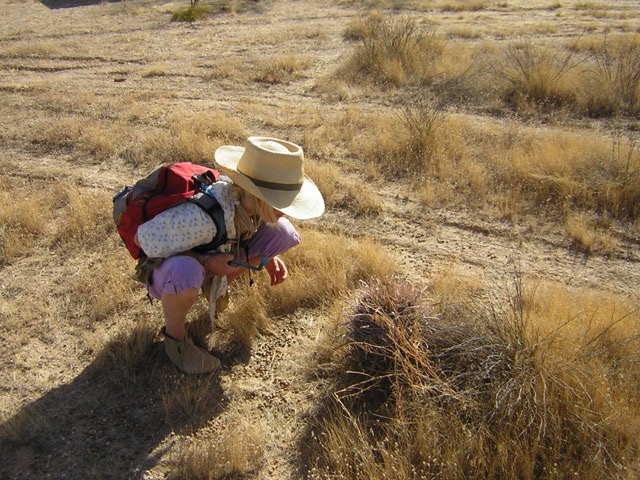
It makes me sad hear or to read in social media that parents that I actually know are so down on the next generation. Complaining that they don’t go outdoors, have useful lifeskills, proudly hitting them, or even ridiculing them for using the technology they themselves provided. If that is the case, the blame is only ours! We cannot place the blame on media and movies and video games, schools, government or a general millennial malaise. It is not anyone else’s job to raise our children well. We are, to a large degree, culpable. When I hear a parent complain that their kid watches too much TV, or plays too many video games, I am baffled.
None of us are perfect, but we can give the following generations the values and ideals we may only cherish in the abstract.

The intended descriptions have strayed into a hopelessly sentimental post, but anyway, enjoy some of my favorite photos I dug out recently.

I leave you with this broad paraphrasing of Edward Abbey:
Give them the skills and encouragement to get out there and hunt and fish and mess around with friends. Let them ramble out yonder and explore the forests, climb the mountains, bag the peaks, run the rivers, breathe deep of that yet sweet and lucid air. And at the end of the day, sit quietly for a while with them and contemplate the precious stillness, the lovely, mysterious, and awesome space we call earth.
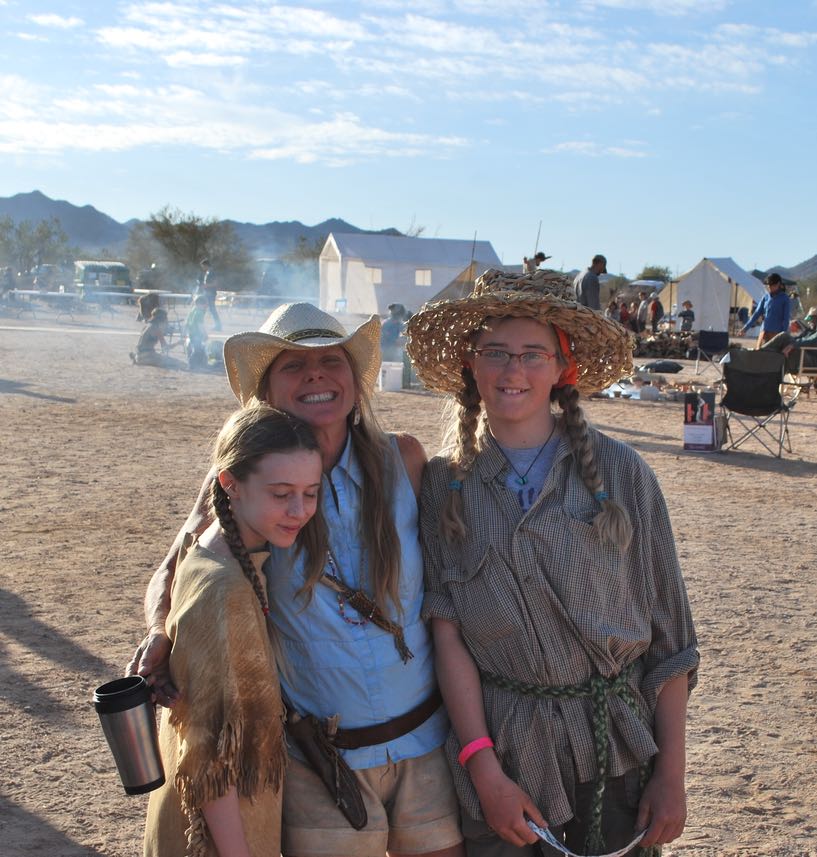

I hope to see a few of you in the great outdoors very soon. And don’t forget to bring the family if you can.

” You cannot do a kindness too soon, for you never know how soon it will be too late.”
 “The price of anything is the amount of life you exchange for it.”
~ Henry David Thoreau


 Preindustrial Craftsmanship