A Little Art and Some Wise Words from Thoreau for the End of the Week

Vincent-van-Gogh-Public-domain-Wikimedia-Commons
The Starry Night by Vincent van Gogh.

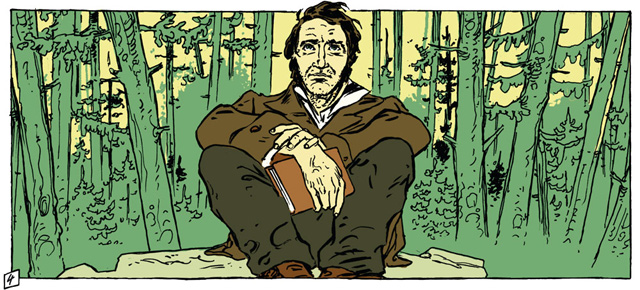
However mean your life is, meet it and live it; do not shun it and call it hard names. It is not so bad as you are. It looks poorest when you are richest.  The fault-finder will find faults even in paradise. Love your life, poor as it is. You may perhaps have some pleasant, thrilling, glorious hours, even in a poorhouse. The setting sun is reflected from the windows of the almshouse as brightly as from the rich man’s abode; the snow melts before its door as early in the spring. I do not see but a quiet mind may live as contentedly there, and have as cheering thoughts, as in a palace. The town’s poor seem to me often to live the most independent lives of any. Maybe they are simply great enough to receive without misgiving. Most think that they are above being supported by the town; but it oftener happens that they are not above supporting themselves by dishonest means, which should be more disreputable.
Bastein-Lepage_Diogenes
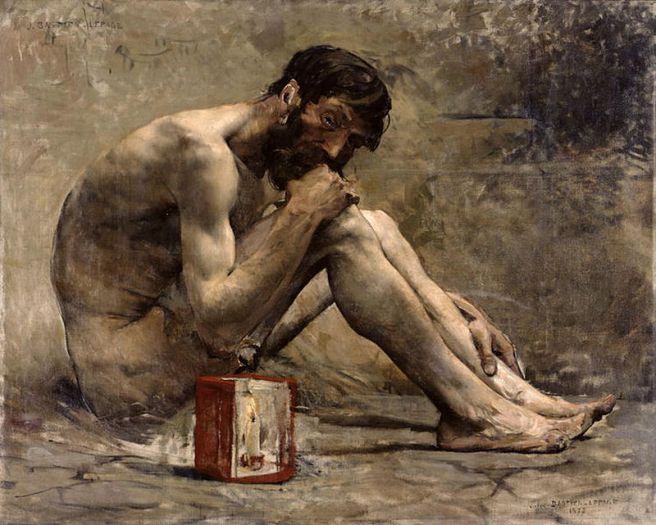
Diogenes in poverty by Jules Bastien-Lepage.

Cultivate poverty like a garden herb, like sage. Do not trouble yourself much to get new things, whether clothes or friends. Turn the old; return to them. Things do not change; we change. Sell your clothes and keep your thoughts. God will see that you do not want society. If I were confined to a corner of a garret all my days, like a spider, the world would be just as large to me while I had my thoughts about me. The philosopher said: “From an army of three divisions one can take away its general, and put it in disorder; from the man the most abject and vulgar one cannot take away his thought.” Do not seek so anxiously to be developed, to subject yourself to many influences to be played on; it is all dissipation. Humility like darkness reveals the heavenly lights. The shadows of poverty and meanness gather around us, “and lo! creation widens to our view.” We are often reminded that if there were bestowed on us the wealth of Croesus, our aims must still be the same, and our means essentially the same. Moreover, if you are restricted in your range by poverty, if you cannot buy books and newspapers, for instance, you are but confined to the most significant and vital experiences; you are compelled to deal with the material which yields the most sugar and the most starch. It is life near the bone where it is sweetest. You are defended from being a trifler. No man loses ever on a lower level by magnanimity on a higher. Superfluous wealth can buy superfluities only. Money is not required to buy one necessary of the soul.”

From the Conclusion of Walden by Henry David Thoreau.  Emphasis and layout are mine.

You can change your life.  Have an excellent weekend.
You can change your life.

Winter Wonderland

Even on the Southern High Plains of New Mexico, we get some snow.  Real winter seldom lasts for more than a couple weeks here but it can become extreme at times.  With occasional swings of 60 degrees Fahrenheit up or down in a matter of a couple hours, the inconsistency makes it difficult to plan.  Unseasonable warmth has now turned to single digit temperatures at night and 6-10 inches of snow around the property.

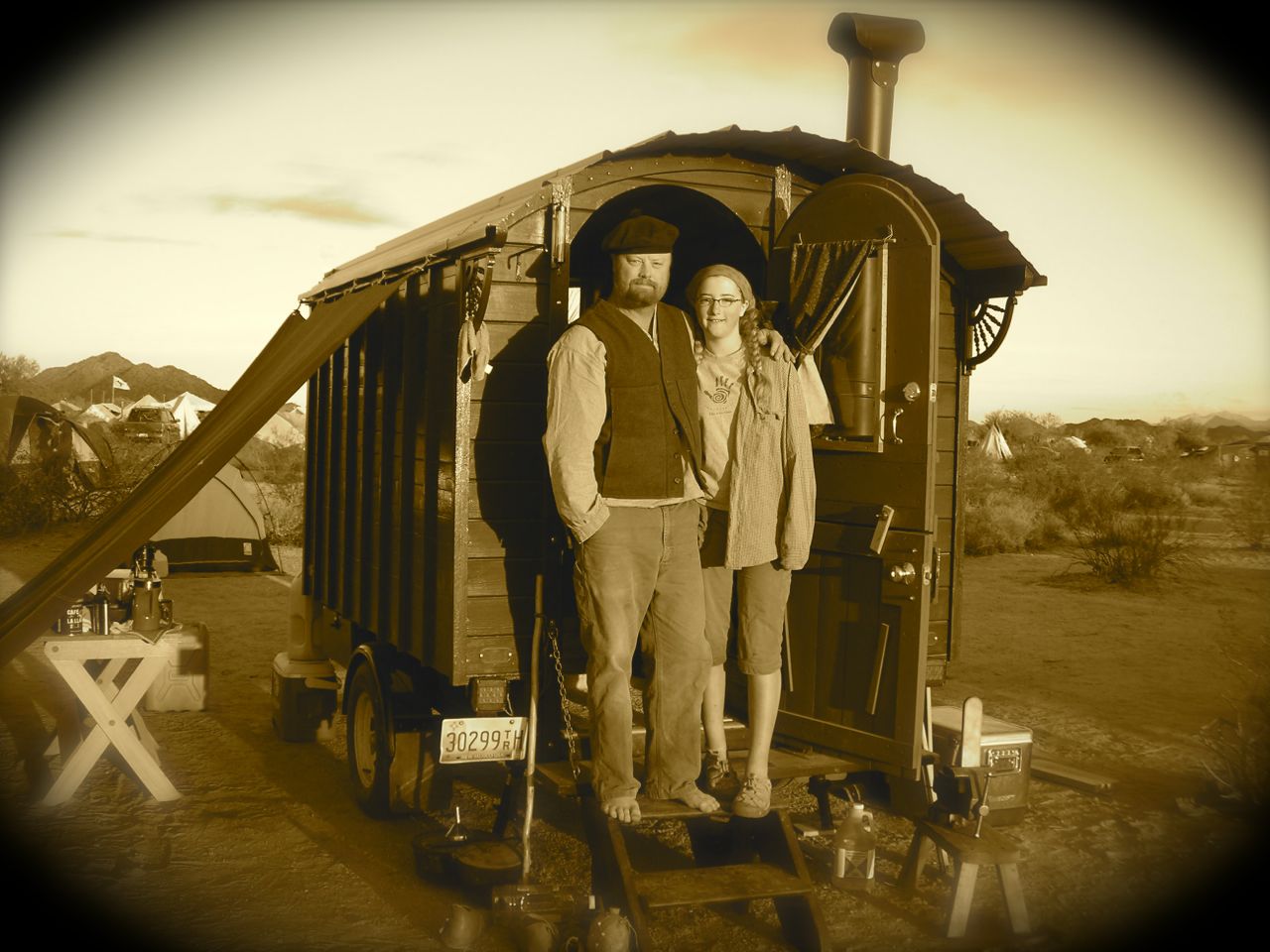
DSC_0013A little snow on the wagon this morning as we head into Twelfth Night and back to the work grind next week.

Butcher block counter top.

Wise and thoughtful words for Makers.  It’s the thoughtfulness that a hand-craftsman puts into his project, not the speed or even cost that makes something worth making in the first place.

woodworkernetwork's avatarWoodworker Network

“If you remain insensitive to the individual characteristics of the material you are working with and cut regardless to a predetermined, exact measurement, then the finished piece will lack a certain wholeness and be little better than something you could have bought from a factory.” – Graham Blackburn

1508176_10205386881171912_423654881548567290_n

View original post

Roman Loculus

Or what we might call a messenger bag.

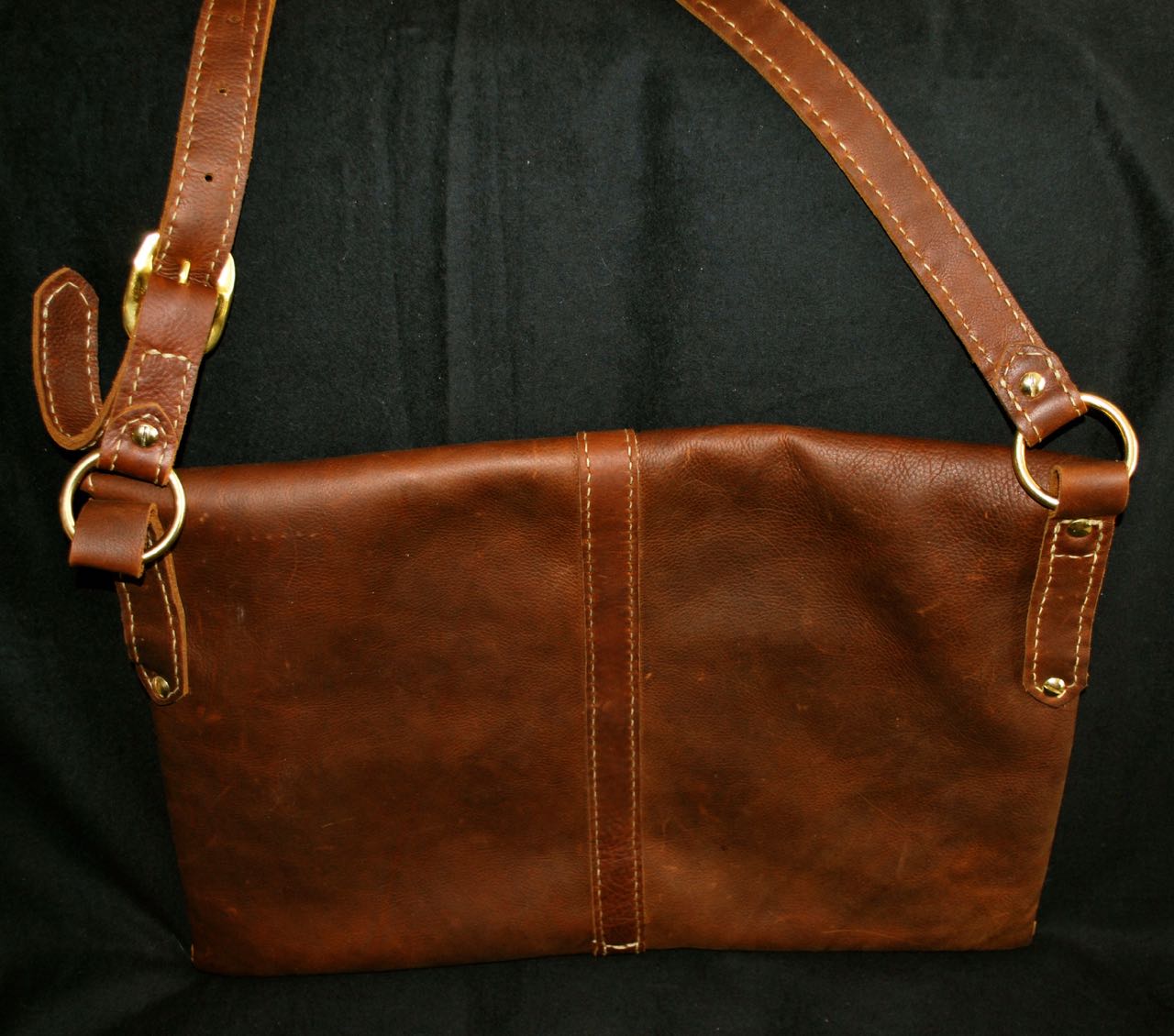
I finally finished the commissioned bag from last month based on the beautifully proportioned Roman design.  As far as I know, this design dates back to at least the First Century C.E. and judging by it’s logic, probably much further.

Loculus1I think the true loculus (satchel) utilized an envelope design from a single small goat hide but as they survive only in art, we have to make a few guesses as to construction.  The one I made has a few more modern features including inner dividers and a cell phone pocket.

Loculus4The leather is an oiled cowhide with a slightly scotched (textured) surface.  This type of leather wears well, is weather-resistant, and comes back to life with a wipe down.

Loculus2A simple button closer secures the flap while the straps cover the seams and give it body.  The sewing is all double needle saddle stitch done by hand.

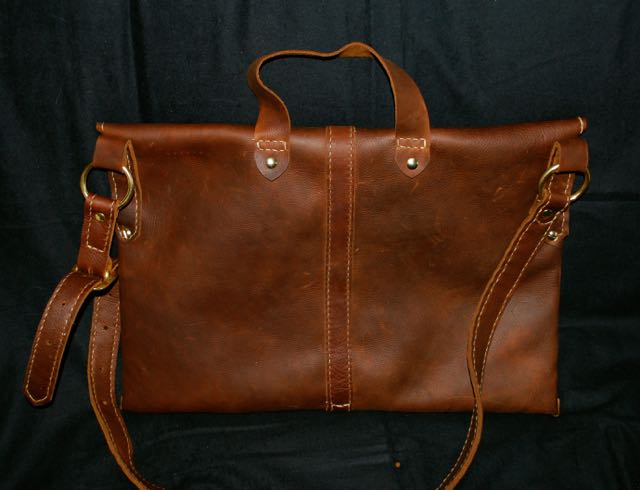
Loculus3The body is divided into three pockets with an added cell phone holder.

handleFinally, the handle.  Historic examples appear to have used this handle over the end of the staff with a cross piece through the loops, keeping it from sliding side-to-side as the one below.

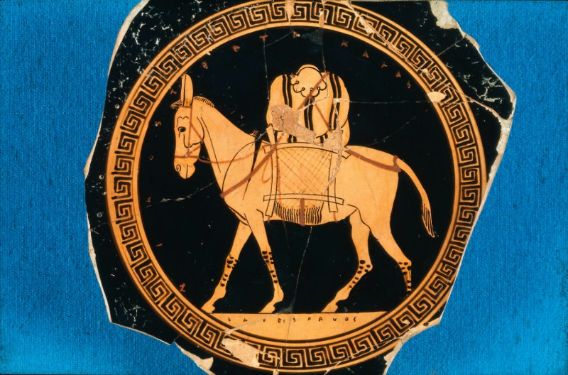
pack-on-scutum-web-sml
To remain unencumbered, Roman Legionaries carried this bag on the furca (travel staff).

I hope Gen, it’s new owner, loves it and finds it useful.


Ramblings

In an effort to make my mark, I’m working on a splash page image, a logo, and a flag.  Something catchy and symbolic, but not already taken. Simple, smart, and understandable.  This one about sums it up but I  think it may already be in use. compasssquarelevelMy personal image for the web page needs to be something as iconic as this pre-war “selfie” by J. Harris Stone.  A travelling man like myself.

CaravanningEx01Also, in the spirit of the early caravanners of a century ago, I am attempting to create a logo, without restricted use, for kindred spirits to fly from their rigs when on the road.  This idea struck me several years ago when seeing one of the simple logos from the Society of Primitive Technology on a car in the parking lot of a bookstore far from home.

rabbitstickI knew, when I saw it, there was likely a kindred spirit nearby.  Probably someone I know or have very few degrees of separations from.  In other words, a person I could probably trust in a pinch.wintercountThis was reinforced on me this year while I was driving a thousand miles from home, someone recognized my rig and had his young son hold up an image he knew I would recognize.  How cool is that?  Icons work to let us know, in this overpopulated yet disjointed world community, who belongs to our tribe.  Just as gang members have signs, symbols, and colors, so do law enforcement, military, and fraternal organizations.  I’m not saying this is necessarily good, just that it is.

We are tribal at heart for good or ill.  I want to put it to work for good.

CoverontheroadThis photo dates back to a time prior to the completion of my caravan but far enough along to travel across the country.  Maybe not iconic, but a document in the life-history of my home.

As there are more and more of us in our circle of fellow travellers, sometimes we are readily recognized.

CoverWintercountVSometimes we are not.  Maybe we need a flag of our own to fly when we’re lost on the road and maybe not so recognizable.  Something like the pennon of the Caravan Club in Europe before the Great War.

CCVI welcome designs from fellow travellers but I hope to create something no matter what.  Or maybe it’s just the Saturday evening cocktail talking.

Baumeister_-_Holzschnitt_von_Jost_Amman_-_1536.svgAfter this ramble, it’s clearly time to get back to work on the bigger problems; seeking knowledge and trying to make my little world a better place.

Project: Mayhem Shoes

“The first rule of Project Mayhem is that you do not ask questions…”

this may be my new teaching mantra

I am considering calling my custom footwear “Mayhem Shoes” (at least until Chuck Palahniuk’s space monkey lawyers make me stop).

I teach a couple classes about low-tech shoemaking a few times per year in the primitive survival skills community.  The designs I focus on are styles that can be made by one person in one day; a popular theme in early historic examples.  Some require a lot of cutting, some require sewing.  There is an off-grid, dystopian attitude about making your own shoes.  In fact, I think I will register the name Distopian Leather Works as my new business.  I’m considering a small business venture to go into custom production of the shoes I teach people to make as well as expanding the custom leather work I currently produce.

DSC_0111The kinds of people that take these classes are from all walks of life, not just survivalists, historical nerds, or experimental archaeologists, but folks who want to make things for themselves for whatever reason.  I’m finding that there are others who might just want the handmade product without the labor of making them. DSC_0156In a day, an attentive student can produce a wearable (and good looking) pair of serviceable shoes like the carbatana (ghillies) above.

DSC_0100For those looking for a more modern look a fine pair of sandals can be made with just a few hours, cutting and sewing.  These are easily re-solable and should last the better part of a lifetime.  Look familiar?  Chaco and Teva didn’t exactly re-invent the wheel; just updated the materials and outsourced the work overseas.  Even in the wilds of Canada, tradtional ghillies can be a useful part of the wardrobe.  Mike made these two years ago and they still protect his sturdy peasant feet.

DSC_0082There is something very satisfying about taking a piece of nondescript, vegetable tanned leather and creating a lasting and useful object with your own hands.

DSC_0081The beauty is truly in the details.  Serious students often bevel and burnish edges to give their shoes a “finished” look, suitable for public wear.

DSC_0092
In progress photo with tools of the trade. The authors well worn sandals are on the left of the photo.

Above, a student trial fits the uppers before attaching the outsole.  In my classes, the outermost sole on any of these shoes may be a durable Vibram material, a softer but grippy Soleflex, or natural leather.  The latter option is popular with those who are interested in treading lightly on the earth or those who are concerned with earthing or grounding.

DSC_0089Learning as community.  It is always a very social event to teach these courses.  No matter the variety of backgrounds, we are sharing an ancient craft in common.

DSC_0087

As in all leatherwork, neatness counts.  A good hand with a knife is a great asset for shoemaking.

DSC_0086Test fitting the straps for buckle placement and strap length.

DSC_0084This style sandal may be tied or buckled but I have found that a 3/4″ center bar buckle is about the easiest to work with and adjust.

DSC_0104Bowing to modern convenience.  For the classes, we use contact cement to adhere the insole, mid-sole, and outsole.  This insures a good connection and will hold up even if the stitching doesn’t last forever.

DSC_0119The author demonstrates the wrong way to rough out a pattern.  Cutting out oversize pieces for the sake of time-savings.

DSC_0118Tough rubber soles will make these sandals last years and are easily replaced.

DSC_0137Trial fitting a ghillie after soaking in water.  They feel ridiculously thick and stiff for the first hour or two but tend to suddenly relax an become a part of the foot after a soak in the neatsfoot oil.

DSC_0136Ready for staling the game or dancing at a cèilidh

DSC_0134Sometimes it helps to take a hammer to the leather when it is stiff and wet.

DSC_0130It is important to leave the channels free of glue so that the straps may be adjusted in future.  You never know when you might need to wear some black socks with those sandals.

DSC_0131 DSC_0133Helping a student skive out some particularly stiff areas.

DSC_0154Mom tries on her new shoes before going home to make some for the whole family.  DSC_0139Even an old shoemaker is interested in this ancient design.

DSC_0180  DSC_0178 Happy and diligent students show off their newest creations.

DSC_0176

Above are few photos from previous classes.  Thanks to all who come and make!