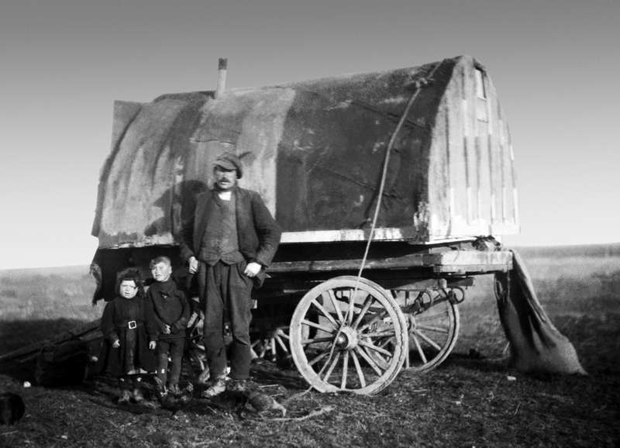
Here’s a wonderful old photograph of a “Tinker Family in Scotland.” It is believed to be taken sometime in the 1920s but the location was not identified. The wagon could just about pass for a western American sheep camp. Even thought they had the wealth to own a wagon it was still a pretty tough life, often unwanted in non-traveller (sic) communities, these people have been marginalized for centuries.
I found this one while perusing the Johnston Collection on the Document Scotland webpage. Have a look if you are interested in great images of a beautiful country.
This is a beautiful photo of Travellers in Britain, 1950. I came across it a while back while searching out vardo images for my own inspiration. This one has some great details and has a distinctive Scottish feel.
There’s a flag of the Scottish Caravan Club flying on the roof and some great signage on the walls as well as the typical harness brass horse shoe on the door. I would love to find out more about this one. Comments? Thoughts?
I would like to re-share this older post I wrote about a caravaner, scholar, and philosopher I am quite intrigued by – Dugald Semple
Dugald Semple was a Scottish philosopher of the early 20th Century and an advocate for simple living. After becoming and engineer he took to the woods and, for a period, a life on the road, living in a tent and in various caravans in order to write and travel and avoid the enslavement of increasingly urban society.
Semple on the beach.
His major question was always “How ought we to live?” an ancient subject for thinkers the world-over and a very important topic in Asian philosophy as well. His teachings are interesting and he still has a serious following of vegans, fruitarians, and Christian Phlosophers around the world. He apparently never ate meat, eggs, or cheese, and subsisted on a mostly fruit diet. It clearly worked well-enough, as he died at the age of 79 in 1964. Not bad, but think of all the bacon he missed!
Of course, my interest in Dugald lies primarily in his simple lifestyle and his fondness for caravans and living in the open. He married well. Cathie, his wife was a widow who was independently wealthy, owning a large house and grounds. This certainly contributed to the success of the life-long experiment in simple living. Even as he settled down, he still philosophized and associated with his old friends who roamed the countryside and set up guilds of craftsmen (Nerrissa Wilson, Gypsies and Gentlemen). He envisioned a new generation of skilled travelers who could pack up their trades and families and move to where the work was, thus alleviating some of the new stress of urban life.
Semple in his summer camp.
I love this camp. This wagon seems perfectly suited for summertime use with the fully opening sides. Too bad his dream didn’t catch on, but he admitted that life on road could be stressful and difficult. At least we can give it a try; even if in a limited capacity.
As an end note, here’s a quote he is well known for on his philosophy of a vegan lifestyle:
Personally, I began rather drastically over 50 years ago by cutting out not only all meat or flesh foods, but milk, eggs, butter, tea and coffee. Cheese I have never eaten; indeed I hate the very smell of this decayed milk. Next, I adopted a diet of nuts, fruit, cereals and vegetables. On this Edenic fare I lived for some ten years, and found that my health and strength were greatly improved. Probably this was also because I lived more in the fresh air and closer to Nature. (Emphasis added by the ed.).
I just don’t know if I can fully trust a man who won’t eat cheese…
Working away on a weekend day a little while back. Enjoying time on the prairie in my little rolling home; coffee, a banjo, and connection to a HotSpot so I can get some work done. The best of all worlds.
A reminder to myself as to how the vardo is in constant change. Little updates happen all the time and I often forget them until looking back on a photo like this one.
I don’t remember for sure but I suspect there is a dog or two laying on the floor or, more likely, under the wagon keeping an eye out for wildlife. I’m itching to get back out on the road.
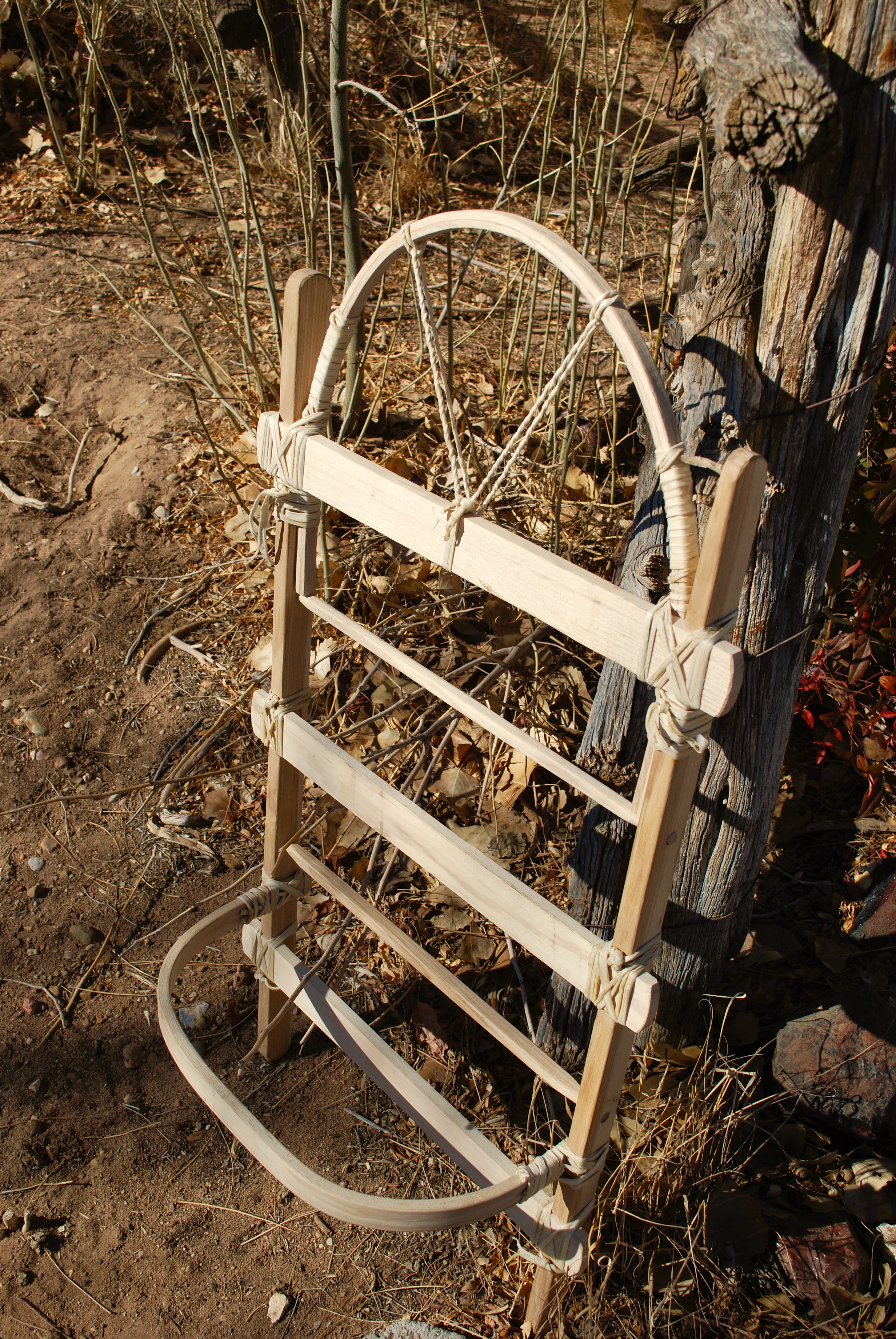
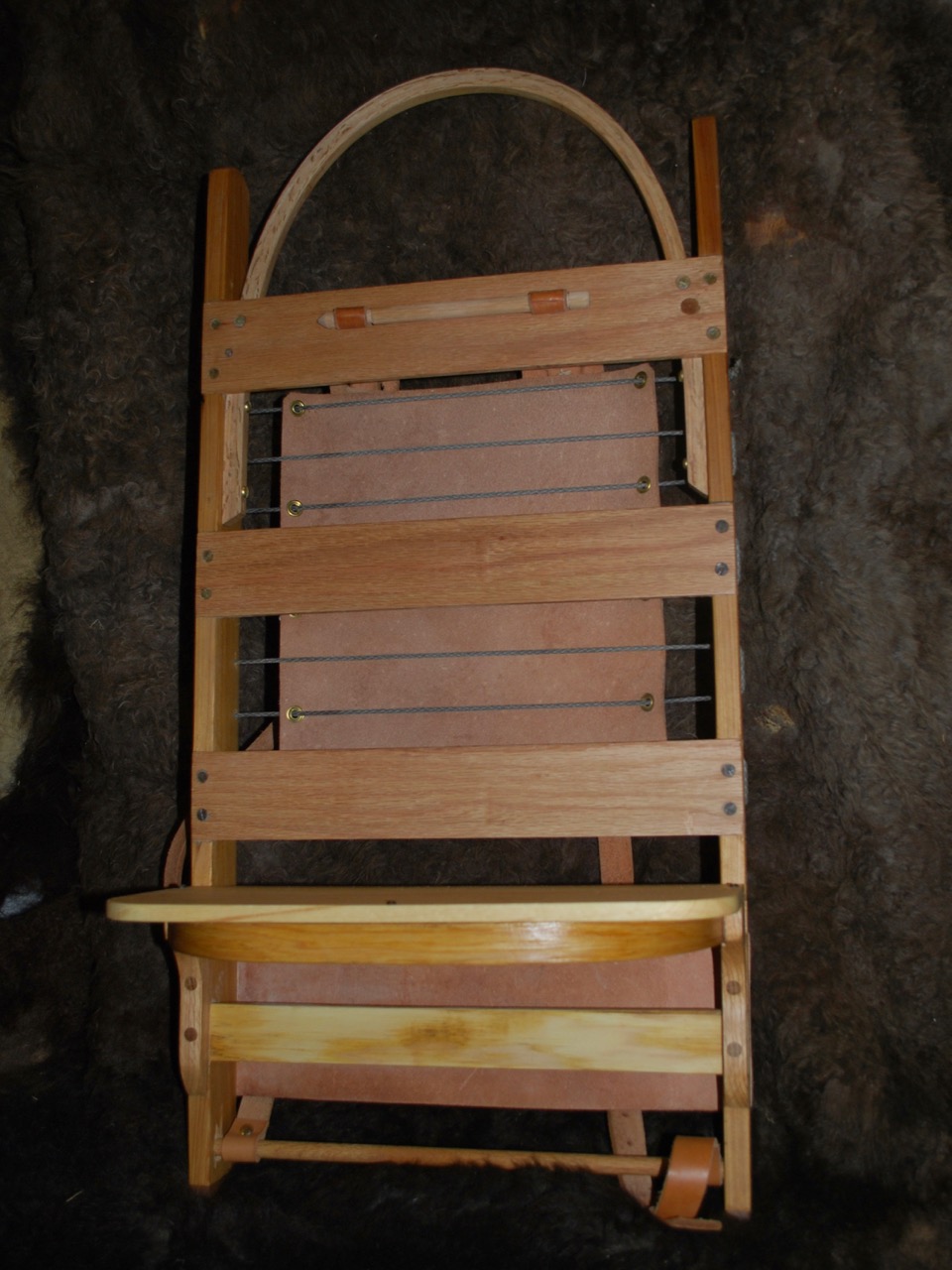
In 2012 I decided to build a wooden packframe. What started out as a Sunday afternoon project led me down many paths, from Iron-Age Europe to 21st Century military designs and it took about a year of stewing around before I actually got around to building something. It was fortuitous for me that Markus at 74 FOOTWEAR DESIGN CONSULTING wrote and excellent little history of frame packs at almost exactly the same time I began researching them myself. Shortly thereafter, I discovered Steve Watts and Dave Wescott were delving into the same subject (great minds think alike I guess). After collecting many photos and drawings I dove in, and using human measurements as much as possible, I built the frame below.
A few hickory boards and some simple steam bending created a design I liked.
I decided against metal fasteners for the original project so everything was pegged and tied with rawhide.
It didn’t take long to build and tying it all up with rawhide was a simple evening job. The next step was to create some sort of support to keep the frame from my back and attach shoulder straps. This wasn’t as easy as it sounded since comfort and strength had to be combined while keeping possible chafing to an absolute minimum.
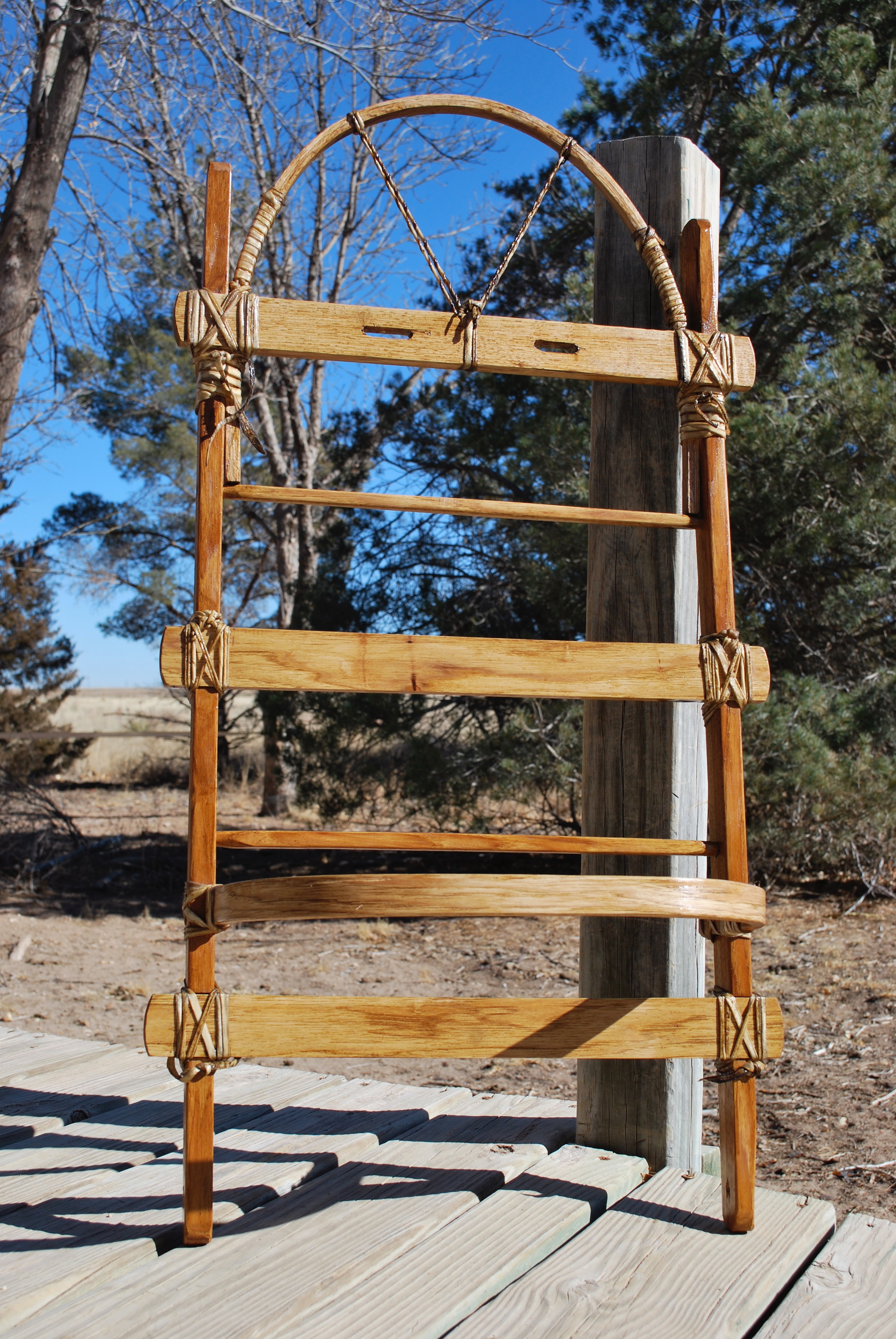
The two horizontal rods keep the uprights from converging under tension and the three cross-strakes are stabilized by being set in grooves on the uprights. The steam bent support and top bar add to the overall sturdiness of the frame.I decided that simple was best so I used heavy leather, stretched tight, across the back kept the straps fairly straight-forward.Several people asked about the need for a curved top bar; well why not? I like curves and I think it reminiscent of the Otzi-style simple frame.
An Otzi reconstruction. Click the image to see the article there.
Was it good enough?
The answer is probably. It was mostly used to pack gear in for demonstrations and spent most of its time as a show-piece. Honestly, over the years I owned it, it only went on one real backpacking trip, and that was even a fairly short one. However, I learned some things along the way. I like the shape, it was fairly comfortable, it was certainly sturdy enough,and it carried a heavy load without much difficulty or discomfort. So the design was more-or-less right for me.
On problem was that I didn’t like the tensioning of the leather back straps as it was difficult to draw them tight enough. That’s how packframe number 2 came to be. I began by deciding to improve the back padding system but with a few other minor changes in mind, this happened.
A bunch of new parts generated themselves on my workbench one lazy afternoon.
Parts –
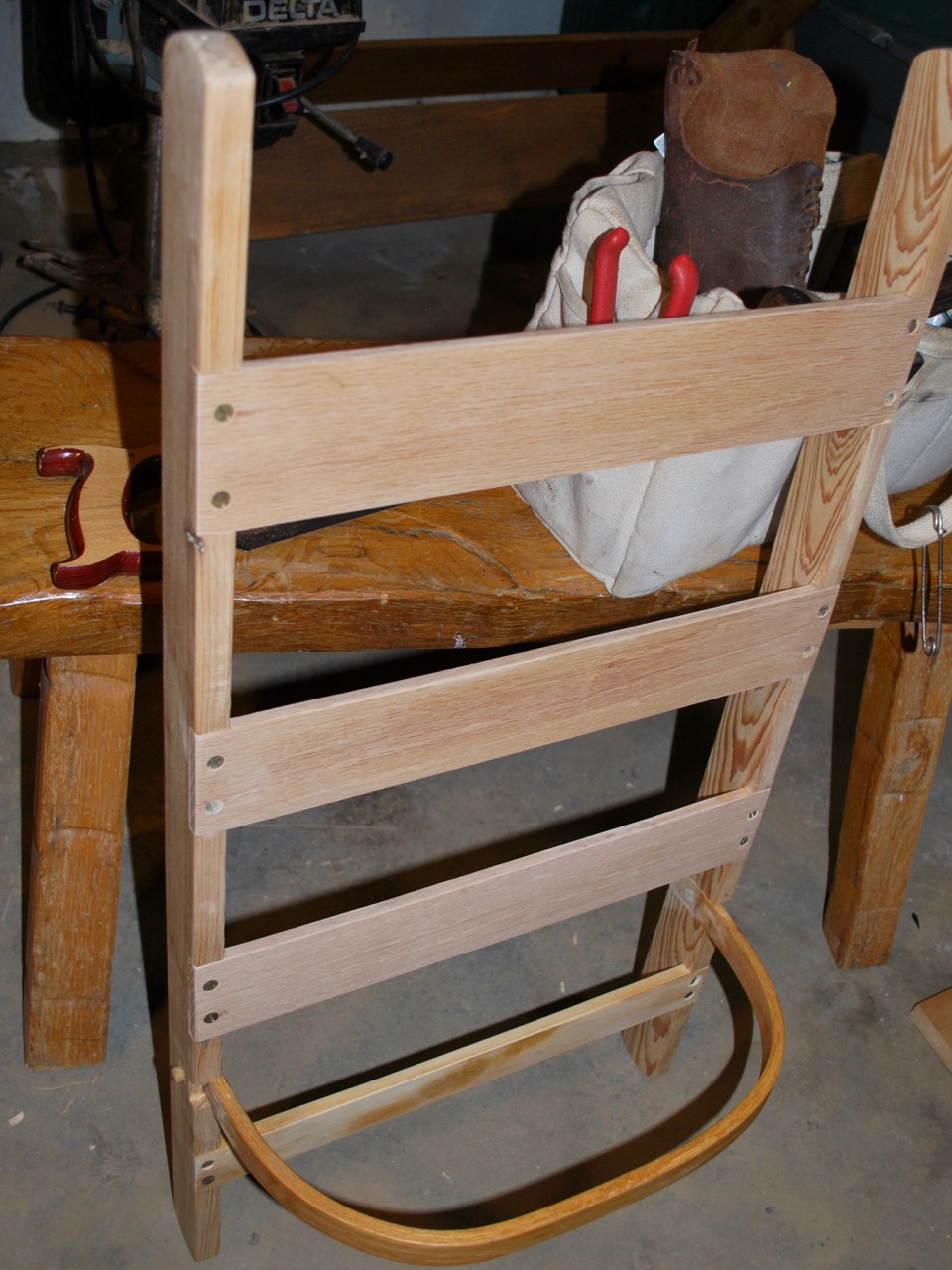
Recycled fir for the uprights came from a 125 year old door frame, some planks for the cross-bars came from the scrap pile, and a couple pieces were pulled from the first packframe. Before I knew it, I was bending a thicker and better arch for the top piece and construction began. Since I wasn’t working from a plan and there is no real standard for this type frame I pondered the whole thing for a couple days to decide how to fasten the parts (pegs, lashings, screws, or glue) and began assembly a few nights later. I have gathered quite a few old screws of various sizes over the last couple years in my housing restoration so I decided to use those for the basic construction.
After too long a mental debate, construction went pretty quickly.
Construction technique –
As can be seen in the images, the cross-bars are let into the uprights in a simple lap joint for strength and racking stability and fastened with reclaimed brass screws. The platform support is lapped and pegged with wooden dowels.
Side view showing lap joints and side supports.
I added a small oak angle brace to further support the platform support which is also lapped and pegged. The small missing piece visible here is operator error. When I was cutting the laps I was in such a groove that I cut the low one on the wrong plane. I’ll probably fill the gap with a small wood piece, but for now, I live with the hideous disfigurement. Also visible here are the walnut caps I pegged to the bottom of the uprights. Old Douglas fir is a fine wood but can be very brittle and the end grain would probably not fare very well under hard use on rocky terrain.
The frame in all its glory, waiting to be packed and carried off into the sunset.
Straps and Suspension –
I chose 12 oz Hermann Oak leather for the lower pad stretched tight and permanently fastened to the frame with brass screws and finishing washers. The essential suspension depends solely on the cordage being strung tight while the leather pad distributes to stress across a smooth and wide surface. I think it will be quite comfortable.
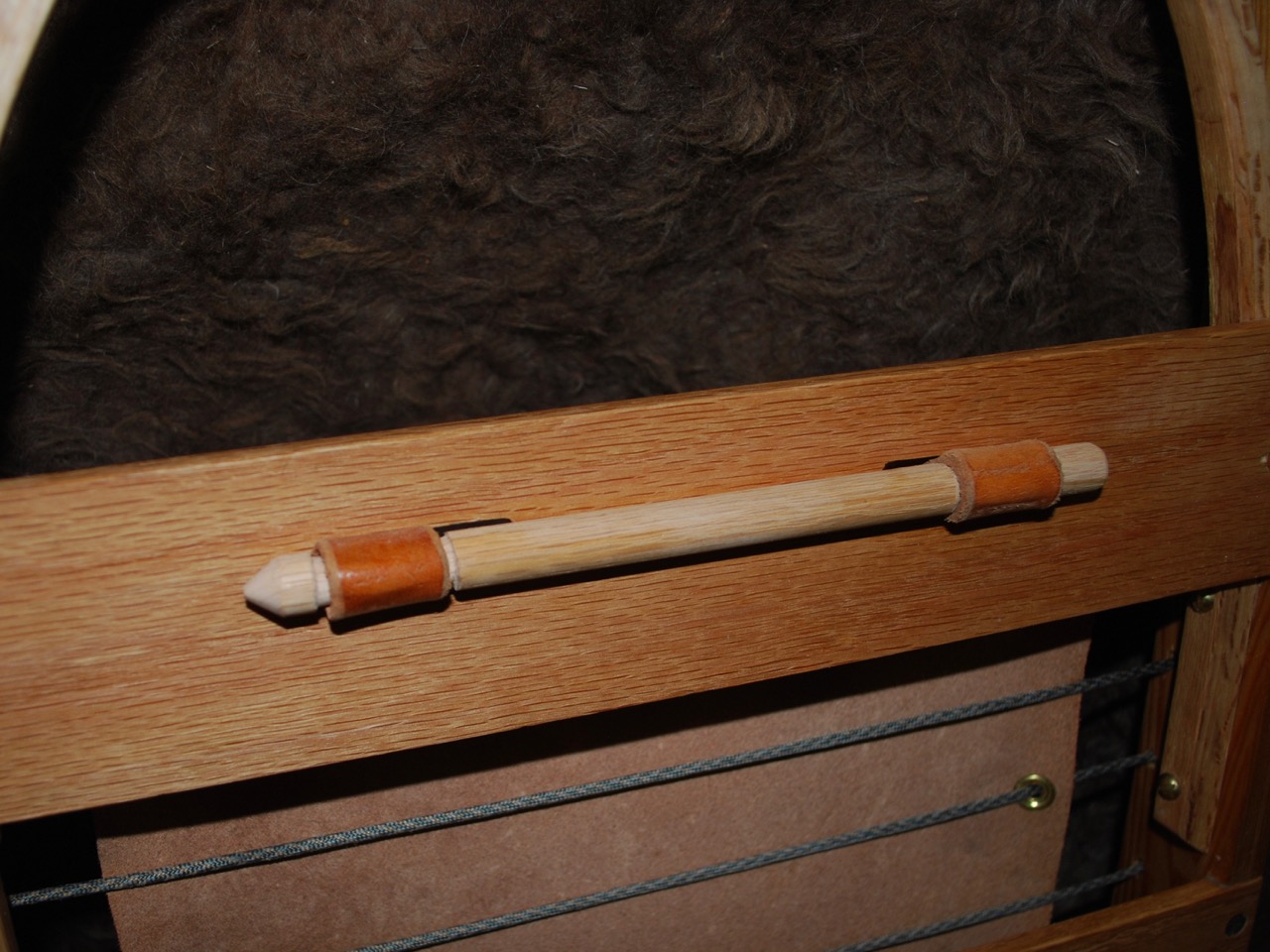
Shoulder strap connection, a whittled oak dowel that is easily removed.
I would like to make a removable rucksack for this frame and would like to be able to utilize the straps either so making them easily removable was a must.
Waist support, 12 oz harness leather. 6-7 oz leather was used for the back pad.
As for hip belts; I’m still undecided at this time but I suspect that sometime soon I will be constructing one.
A better view of the top arc and the overall harness.
I’ll continue to update the progress here and try to remember to take more photos along the way. It really hinders work to have to think about documenting yourself along the way but I know people appreciate seeing the steps.
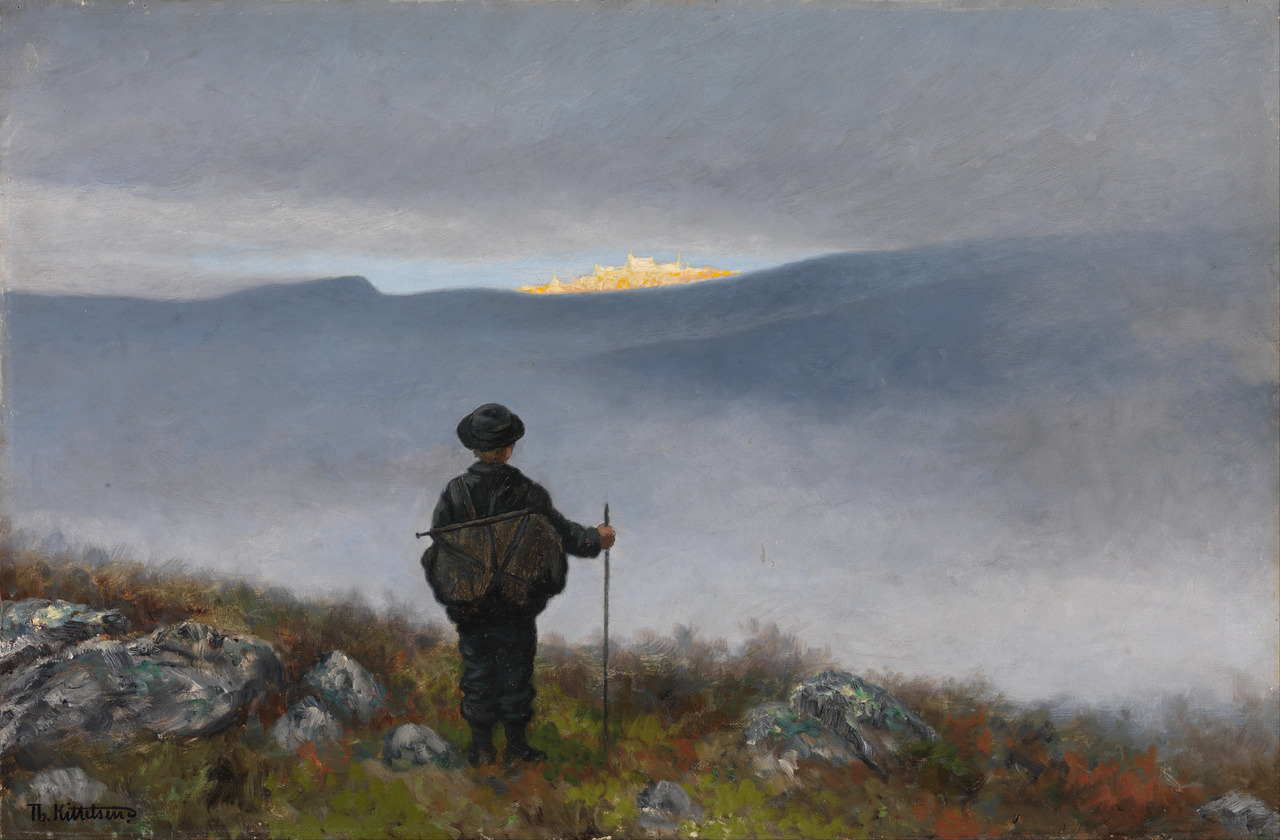
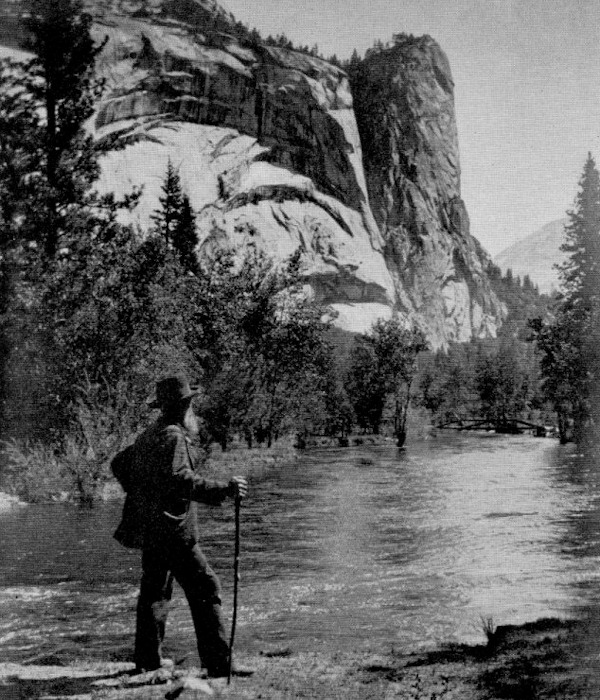
“Hiking – I don’t like either the word or the thing. People ought to saunter in the mountains – not hike! Do you know the origin of that word ‘saunter?’ It’s a beautiful word. Away back in the Middle Ages people used to go on pilgrimages to the Holy Land, and when people in the villages through which they passed asked where they were going, they would reply, “A la sainte terre,’ ‘To the Holy Land.’ And so they became known as sainte-terre-ers or saunterers. Now these mountains are our Holy Land, and we ought to saunter through them reverently, not ‘hike’ through them.” John Muir
___
I’ve spent a lot of my adult life walking long distances, without a trail to follow, through wild and untouched places, mostly as part of my job. This can be a thousand miles or substantially more some years and it was usually the most enjoyable part of my work.
Walking gives you a lot of time to think or meditate and is really a lost art to modern folks. I have worked with college students who don’t know how far or fast a human can walk in a day or even in an hour.
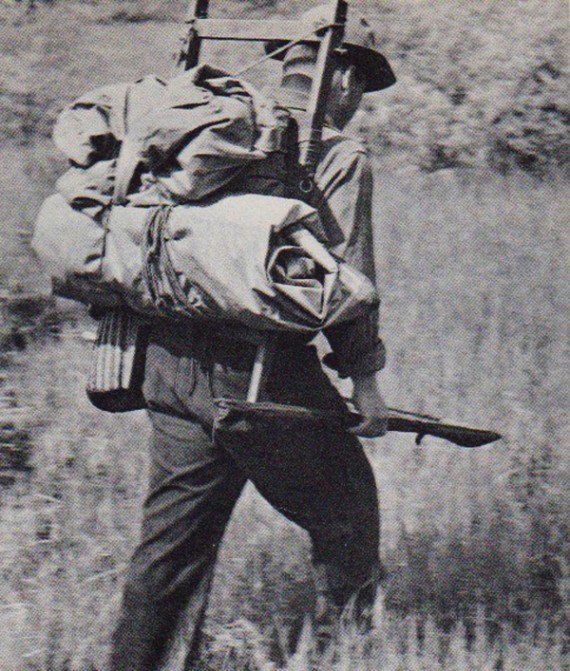
Hiker with walking cane, hat and backpack – Photographer: Eduard Schlochauer – via Getty Images)
___
I find that I walk a little slower than most of my colleagues and friends. I am a natural saunterer and like to look around which is maybe why, as an archaeologist, I find a lot of artifacts and cultural features when I walk. I want to take in the landscape, the plants, animals, the geology, and the smells of a place. I like to walk in silence. It is rarely a race for me and I don’t like to focus on the destination as much as the walk. Many people I know walk with a pack by putting their head down and looking at the ground while trying to walk as fast as their bodies will take them along. This is no fun to me. Walking is about the most enjoyable thing I can do. That’s why I’m so fond of writers like John Muir and Henry David Thoreau. They loved to walk and see its value on so many levels.
___
So, I’d like to suggest leaving the insanity behind for a while, pack a small rucksack, grab your best guy or gal friend, and take a walk in the wild. Your mind will thank you for the break.
Who knows what great memories you’ll make along the way?
When I’m asked if I want to go hiking or backpacking I usually say ‘no but I’ll walk with you while you hike.’
I love these the old sheepherder camps. I’ve seen quite a few parked on ranches from Colorado to Idaho and even a few in Arizona. I know they aren’t highway capable but it seems they could provide a real housing alternative for low-income minimalists who have access to land. Far better than a housing complex or apartment for sure if you can deal with a small footprint.
Originally designed on a narrow wagon box, the builders took advantage of every square inch of space. Since weight wasn’t really an issue, many have large stoves like the one above for heating and cooking. As most of these wagons were homes for ranch workers in the western U.S., they needed to be prepared for extreme cold and windy environments. When I was building my vardo, I took a fair amount of design inspiration from these wagons, adding their vibe to the more European designs I was ingesting. My stove is small and I envy this one above; at least the cook top.
Off-the-shelf or build it yourself? It’s the details of hand-built structures that make them stand out and this chimney cap is no exception. This looks far more interesting to me than the local hardware store option.
The photos are from Ken Griswold’s Tiny House Blog. If you haven’t figured it out yet, I’ve been a fan of his site for a long time now and recommend it for anyone with an interest in Tiny Homes. Here’s a link to the full article about Lorna’s wagon.
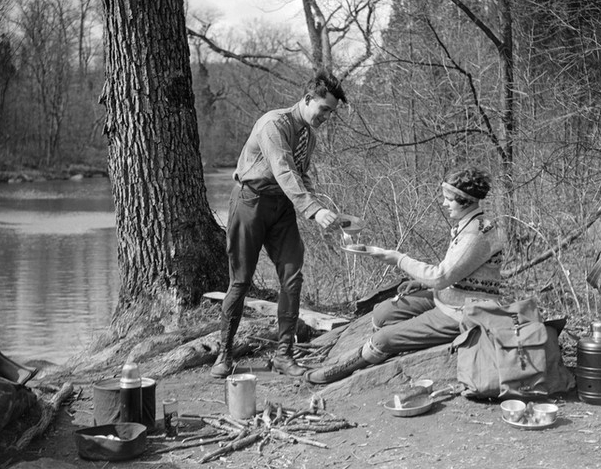
From the ingenuity of the Roaring 20s. Pack up with your favorite Flapper and head to the wide-open spaces!
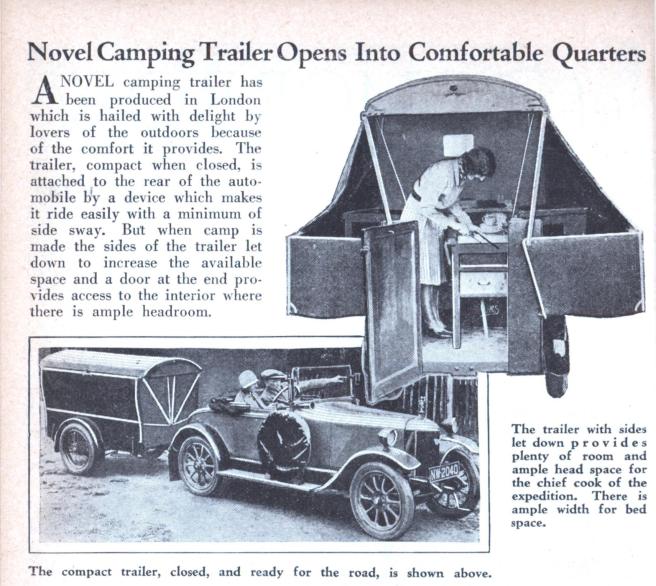
Novel Camping Trailer Opens Into Comfortable Quarters
A NOVEL camping trailer has been produced in London which is hailed with delight by lovers of the outdoors because of the comfort it provides. The trailer, compact when closed, is attached to the rear of the automobile by a device which makes it ride easily with a minimum of side sway. But when camp is made the sides of the trailer let down to increase the available space and a door at the end provides access to the interior where there is ample headroom.
Rolling homes go back almost as far as rolling vehicles and the modern era of motor driven cars is not an exception. If you have followed this blog at all you may have seen some great contraptions, especially from the 1920s and 30s. The counter-culture of the 1960s lead to a generation of rolling home builders and dwellers ready to hit the road.
Luckily…
Photographer Paul Herzoff took a series of photos of some of the interesting, home-built, house trucks between 1971 and 1973 on the American West Coast. Many of these images are now housed at the Smithsonian American Art Museum. Since I save a LOT of reference images, I sometimes forget what is even there. I picked a few from my files to share here since they gave me many ideas since I first encountered them many years ago.
Paul Byrd’s Old West-themed truck is among my favorites and has a lot of charm in the details. I hope it survives somewhere today.This thing looks like a mid-century sheep wagon mated with and early Airstream (its descendant) and gave birth to a little COE camper. The giant drop down porch looks like a precursor of a modern day Toy Hauler camper.The interior of Bob’s Bus. It appears to have a lot of great storage space and utilizes a loft for added room. You have to love the plants as well.This one is called “Cab, Craftsman’s Van.” Again, I just love the homeyness of the plants on board.Not much information about this other than the title “David.” It is a very utilitarian door that appears to be made from a recycled packing crate and a re-purposed window. I wouldn’t put a hasp on the outside unless it could be locked in the open position. I think there would be too much chance of mischief.Here’s another pragmatic interior with a guy named George. Small bed, maybe it folded out?Here’s another bus interior decorated with recycled cloth. Very Bohemian.Craig’s house truck really speaks to me. It has a great form with the compound curve of the roof and a mollycroft. You’ll notice the water barrel on top and the ever important stove pipe poking up.Another view of Craig’s home. Not only does it have a mollycroft, but it has a sunroof as well.Here’s a pragmatic plywood beauty. Maybe not very aerodynamic but it sure looks spacious.And finally, probably my favorite from the set. I suspect it is ridiculously heavy but I think this truck can handle it. There are a lot fine details to note with this one.
If you are preparing to build a rolling home, there has never been a better time to find pertinent examples to learn from on the web. Enjoy the views.














 Preindustrial Craftsmanship