Five Years and 20,000 Miles Later…

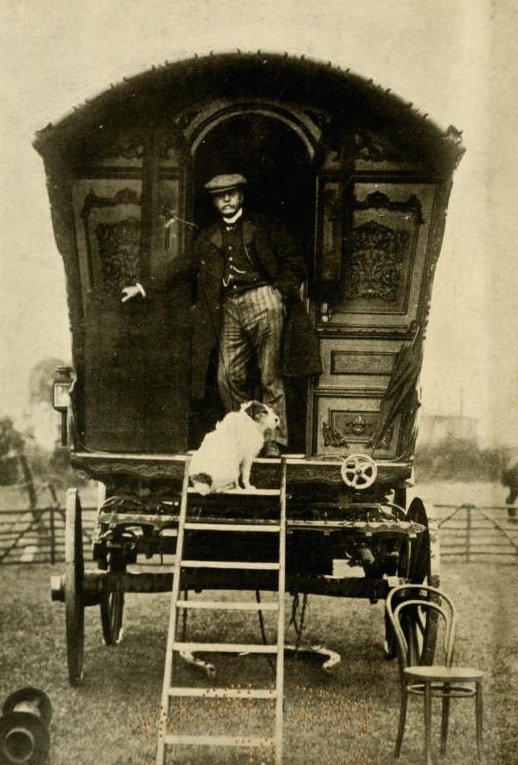
The vardo known as the Snail turned five years old a few months ago and shortly after, crossed the 20,000 mile mark.  It’s just an arbitrary number, I know, but it feels like a milestone in our lifelong journey.  Changes have been made, details reconsidered, and minor additions have created a cozy little living space.  We now know how to use the space when traveling, eating, sleeping, or just hanging out.  The dog thinks of it as home and recognizes the signs when we’re preparing for a trip.

DSC_0082
Heading out.

This is a bit of a sentimental recapitulation of some high points so far.

There are many little wagons that are much more artistic than mine but I have been lucky and have received awards from both Popular Mechanics and the good people at Maker’s Faire.  While at the Faire, the wagon was staged for viewing, allowing visitors to walk through and ask questions.  Thousands of people came inside and checked it out.

The north woods of Idaho, 2014.

Life has slowed down for the Snail but we still take it out regularly and it makes a safe and comfortable home on the road.  In case you missed it, here’s a quick overview of the construction.

Heading out on the road.

Taking a break.
Taking a break.
Packed and ready to go.

I hope to show a few of the recent updates and changes to the living space in the next few days.  Thanks for following.

Sheep Camps are Alive and Well in the West

I have posted quite a few images and links to classic old-time sheep camps here over the years.   If you travel the small byways of the Mountain West you will still see plenty of old sheep camps in use or parked around ranch houses today.  But the sheep camp isn’t just a thing of a past generation, they are still being rebuilt, restored, or made in shops for modern use.

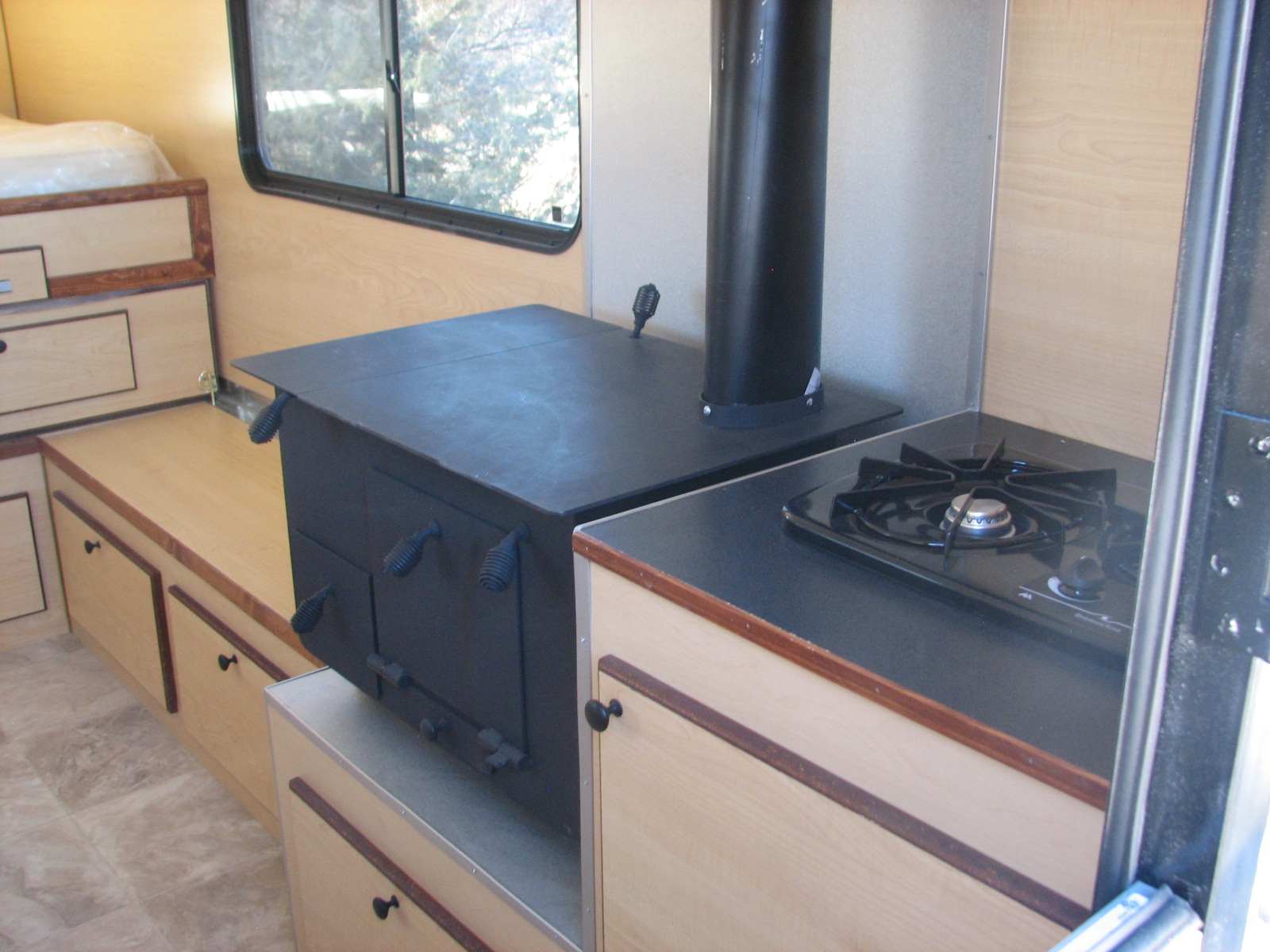
2012-11-09-09-30-54If you aren’t sure how this differs from a modern RV, you may not be alone.  However, there are some subtle but significant differences.  First of all, the sheep camps tend to be built much more sturdily than their recreational cousins and almost always have a wood stove for heat due their use in remote mountains.  The over-built bodies and heavy-duty frames allow them to be dragged into all sorts off-road locations without damage.  As a working accommodation they tend to be more spartan than many new RVs.

img_3415Note the traditional wheel arrangement on the model above. This type of running gear allows the wagon to be pulled into any location and is always set-up.  No need for jacks if you can find a relatively level patch of ground.  However, if the wagon is to be primarily pulled on the highway, a more modern configuration adds to their towability as seen below.

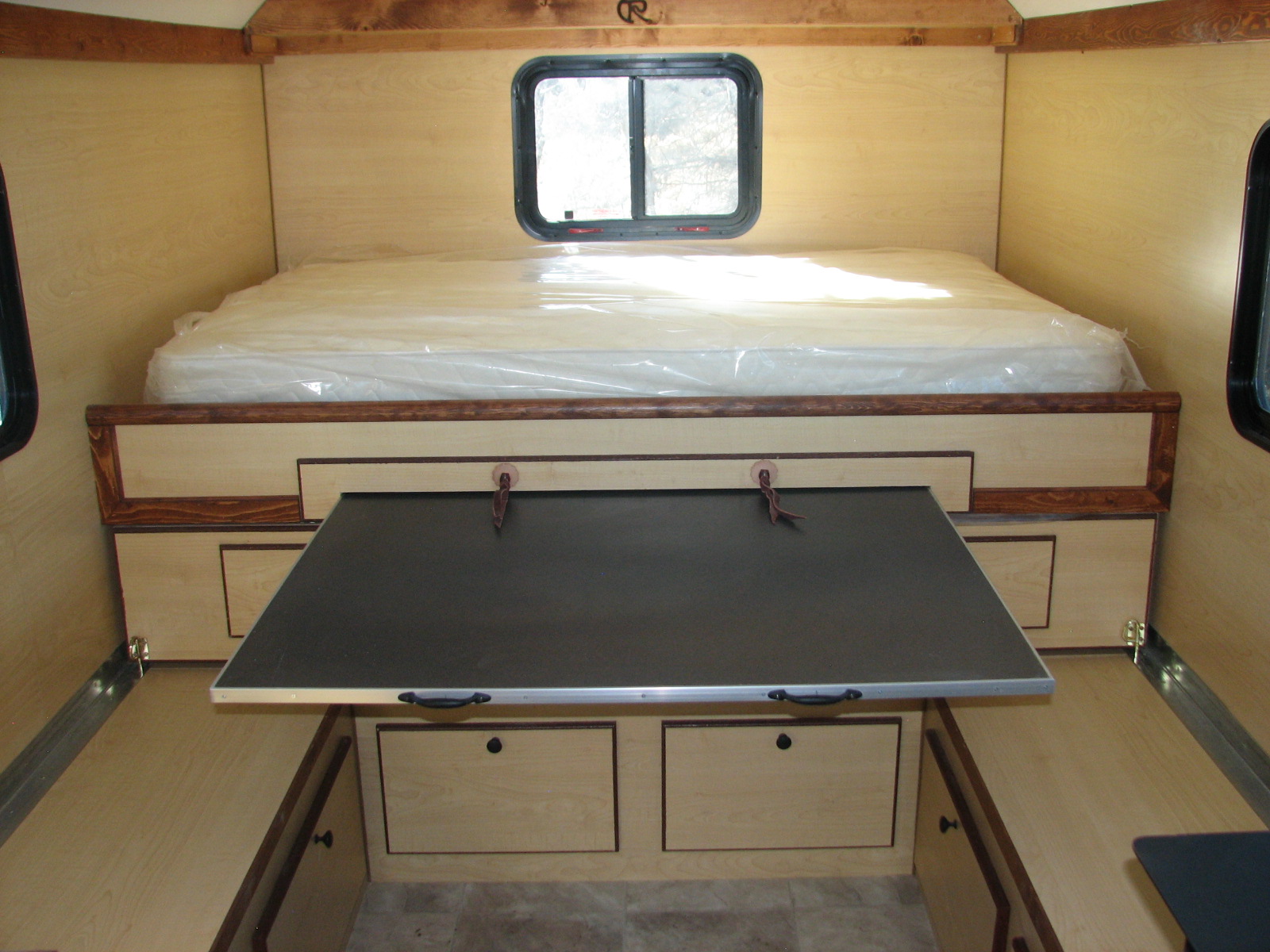
img_3844legend-outlinedThe layout is classic (I modeled my layout, in part, on this style wagon) with the bed across the back and a stowaway table.  The people at Timberline Range Camps, who create the wagons pictured here, have preserved the classic features in a fully modern “camp”.

TRC

I get no endorsement from them but please go and check out their work.

img_3361

Tiny sink, lots of storage, and a two burner stove are perfect for a couple working folks or an cold weather hunting camp.img_3360_0

Nothing fancy required in an off-grid home like this.img_3365Although the wagons have grown in size to accommodate the modern worker I appreciate their dedication to simplicity.  One of the coolest features, I think, is the bed-under-the-bed.

img_3368The lower bunk slides in and out as a drawer to completely stow away with a minimum of wasted space when not needed.  If you want the vardo-caravan-sheep camp lifestyle but cannot bring yourself to build it, explore the many options of the modern builders.  This is just a small sample of what they offer, check out their web page and blog to see many more photos: http://sheepcamps.com/

Sharpening is a Simple Act

Thank you Paul Sellers for stating an obvious but nearly lost truth.  There are far too many needless and complicated gizmos, devices, and “new technologies” for a 2,500 year old task.  Clever marketers have figured out that we can blame our laziness and impatience on our tools and not ourselves.

Maybe I am speaking out of turn as my tools are always for from perfect. 

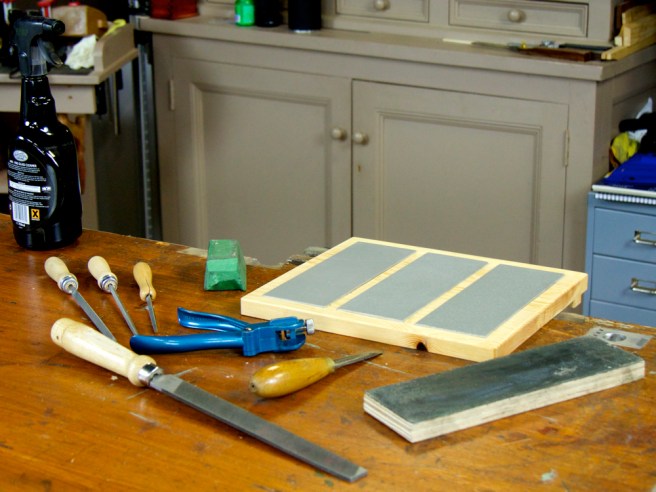
Catalogs are full of overpriced specialty devices designed to do the seemingly impossible; polish a sharp edge onto a piece of steel.  I realize now that I was very fortunate.  I learned to use a file and whetstone as a very young child.  I even learned about setting saw teeth and how to use the hard straight razor stone.  Before there were special stones to resurface a stone, we simpletons used a hard, sandy, and flat concrete surface before graduating on to sandpaper stuck to a sheet of glass.

Some of the best sharpeners I know still do virtually everything with Arkansas whetstones and some very-fine emery paper.  One thing to remember though; you have to actually do it.  If you don’t regularly keep things sharp, it only becomes more of a chore and takes more time.  I think the old idea of spending a few minutes before you begin work of sharpening and stropping is a wise idea.

If you use tools, consider a real pair of Arkansas whetstones.  Here’s a couple of sources to try:

NewAddBoone

stonelogo3In the mean time, head over to Paul Sellers’ excellent as usual blog for his take on sharpening as well.  Notice his very simple set-up.

Paul Sellers' Sharpening System.
Paul Sellers’ Sharpening System.


Draw Knives

One of my favorite tools and one I have seen misused by too may people over the years.  Often these are snatched up at auctions by antiquey people who want a wall hanging but quality ones can be found on places like Ebay.  I have several styles and they each have their virtues.

DrawknivesMy carriage maker model gets all the heavy work where the carpenter’s razor gets the other 80%.  And let’s not forget the humble but beautiful cabinet scraper.

Drawknife

Saw Bench Update

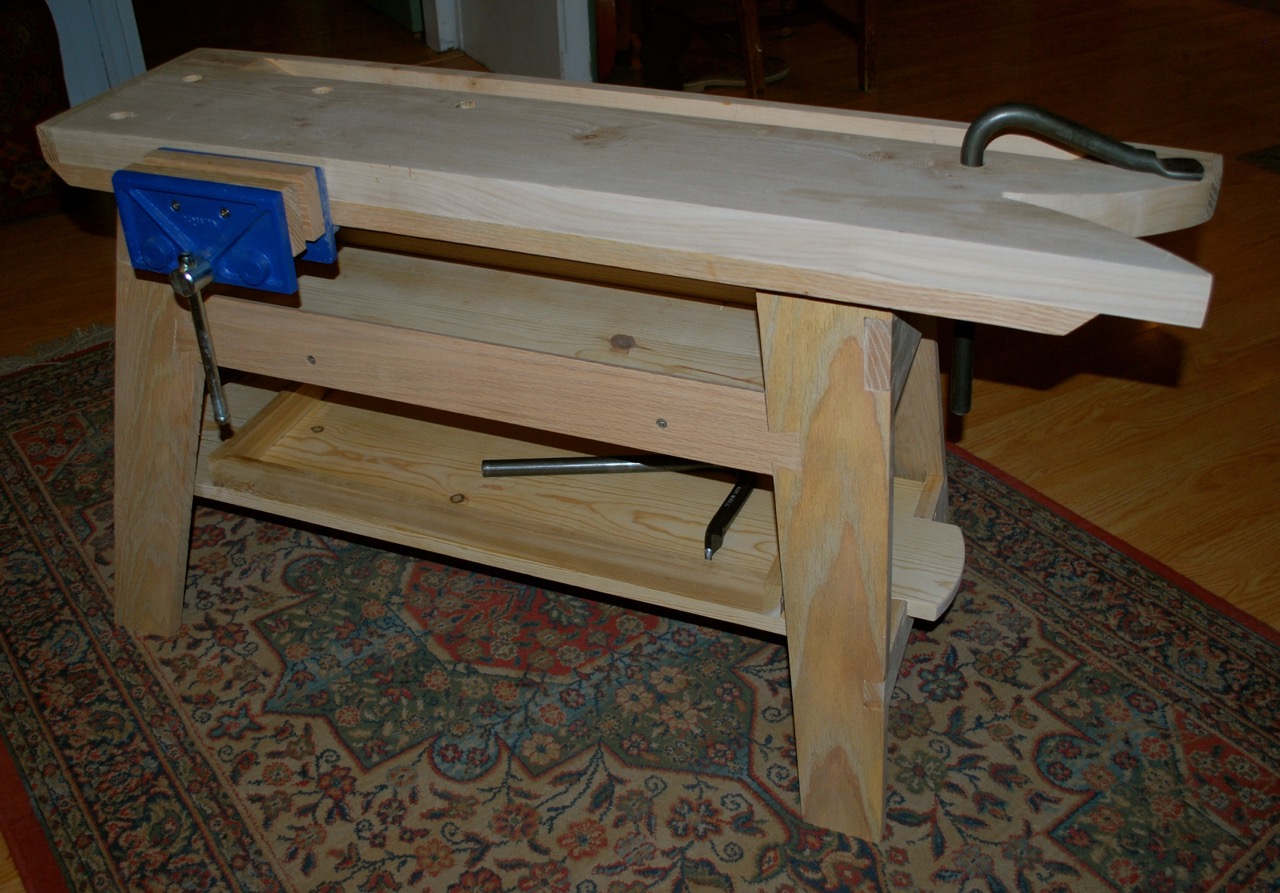
I worked on the bench a little more last weekend and have already put it to work over the last few evenings for some small projects.  I have found it’s usefulness and it is a tool I know I won’t regret owning.

bench1
Front side.

A second till shelf has been added to store saws, bench hook, etc. and a few holdfast holes have been bored through.

bench2
The off-side.

I realize now I didn’t get any low angle shots.  I’ll take those when I get it oiled up a pretty.

bench3
View of the bottom till.

Sturdy and low-cost, this project allowed me an opportunity to employ some free-form joinery, use some rough-looking scraps and enjoy a bit of wabi-sabi* design.  It’s not perfect, but neither am I.

*Wabi-Sabi: an aesthetic based partly on the acceptance of transience and imperfection. The aesthetic of wabi-sabi can be described as a beauty that is “imperfect, impermanent, and incomplete.”