The Lady Go Lightly…
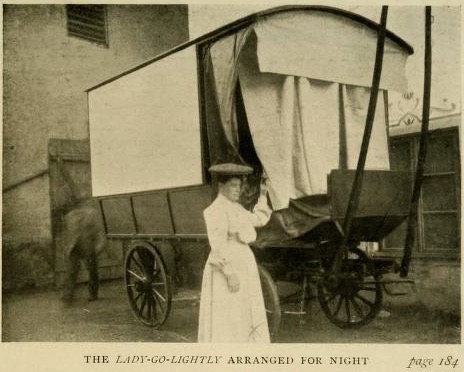
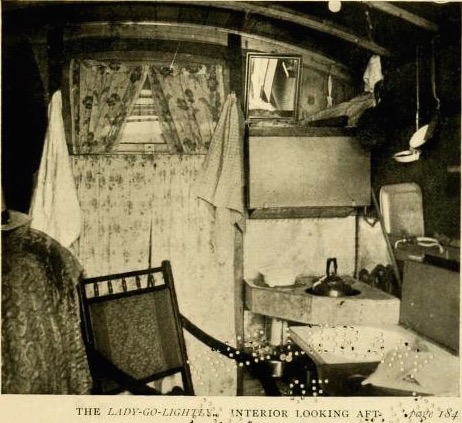
Images from:
Adventures of an Imperfect Man In Search of a Handmade Life

The Lady Go Lightly…
Images from:
In Britain and Ireland, the Romany Gypsys and the Traveller community are often associated with low-skilled work such as scrap dealers, horse traders, musical entertainers, or more nefarious activities outside the societal norms. However, there were plenty of skilled craftsmen and craftswomen providing goods and services to people around the country.
Below is an image of a couple, working together making footstools outside their vardo while another couple looks on from the comfort of their wagon.
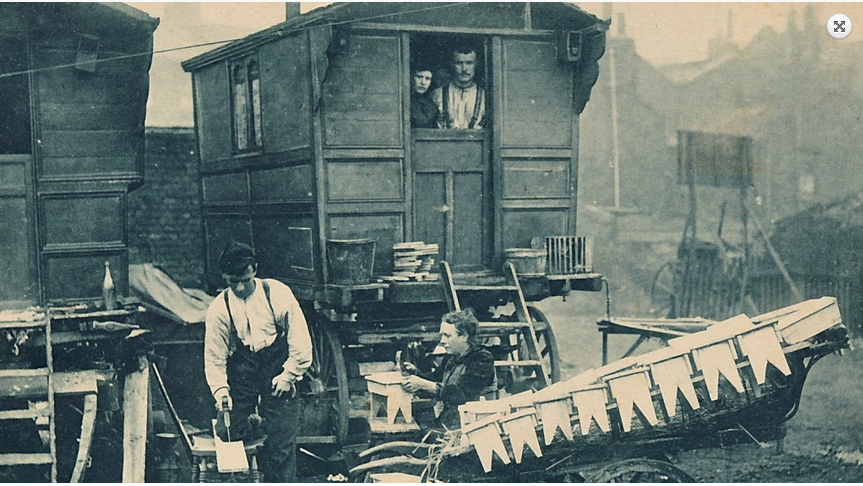
Other Gypsy families were blacksmiths, basket weavers, or similar occupations that could be taken on the road, required little stock or overhead, and could be performed independently or with a minimum of family help.
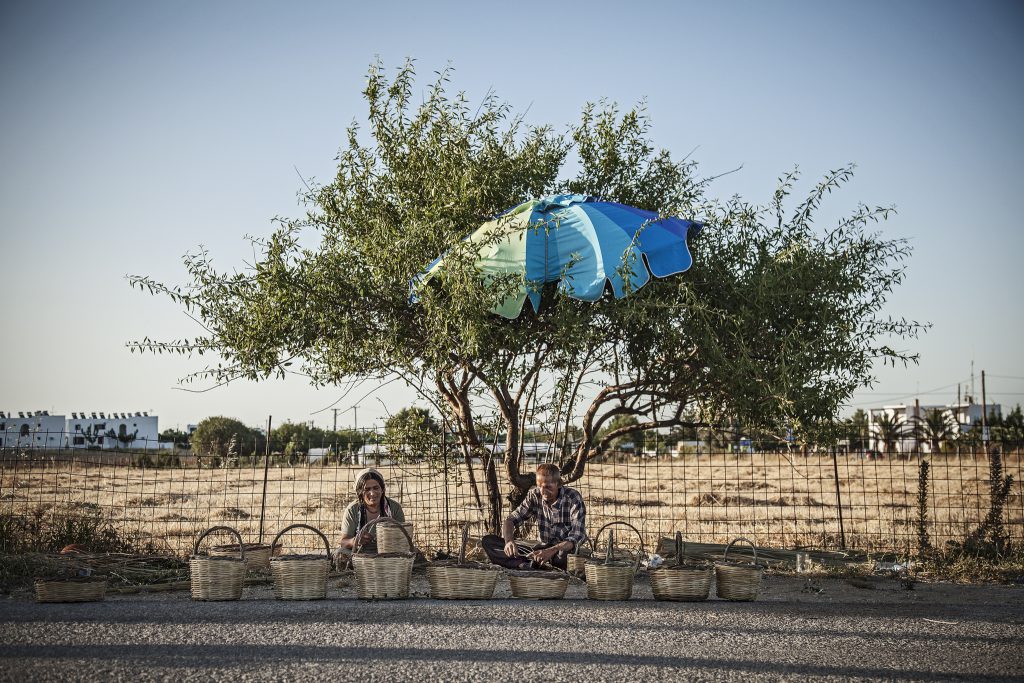
There is more to wandering people than the romantic or demonized images we carry. People are just people after all.
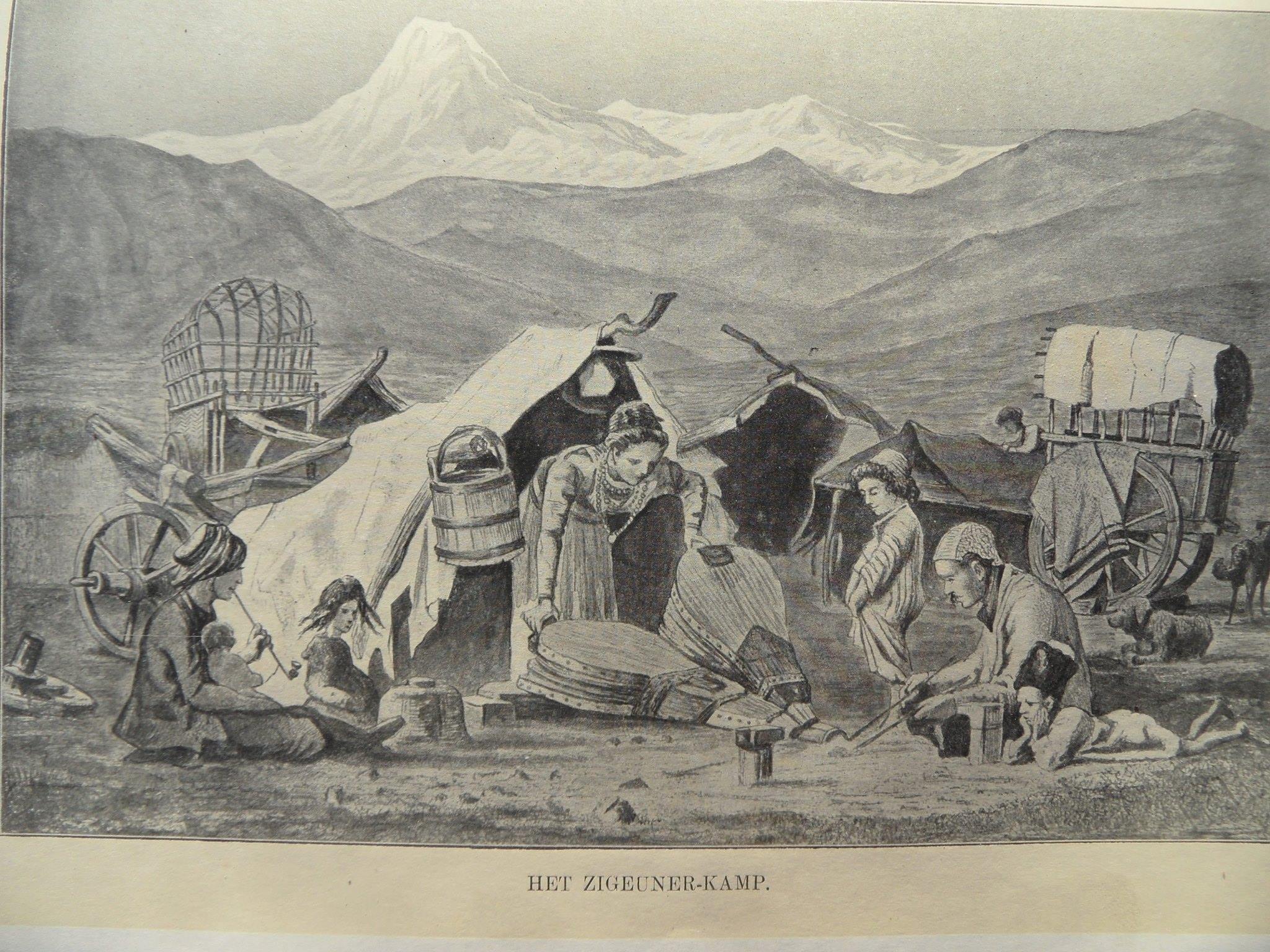

I really like everything about the image above. We see three very different types of wagon-home-conveyances and a family, wearing clothing of the time. Travellers on the margin of mainstream society have been shunned, persecuted, and culturally dismissed while at the same time romanticized for their freedom and seeming lack of attachment to a more mundane life. I am glad to see a revitalization and pride from reconnecting with family roots.

People who have lived “off-grid” so to speak often have few documents or any official standing, making family histories more difficult to trace. Hospital records, cemetery documents, or government permits, such as the Pedlar’s Certificate above, are the only way for many to trace their ancestry.

Fortunately, there is a concerted effort in Britain by the Romany & Traveller Family History Society (RTFHS) to create a clearinghouse for descendants of those often overlooked by the mainstream.
About the RTFHS: Back in the early 1990s, a group of keen family historians with British Gypsy ancestors first met at a Gypsy family history conference organised by the historian and author, the late David Smith. Until that moment we’d all thought that we were pretty much alone in trying to trace our travelling ancestors and that there was no-one out there to learn from or share our experiences, trials and tribulations with.
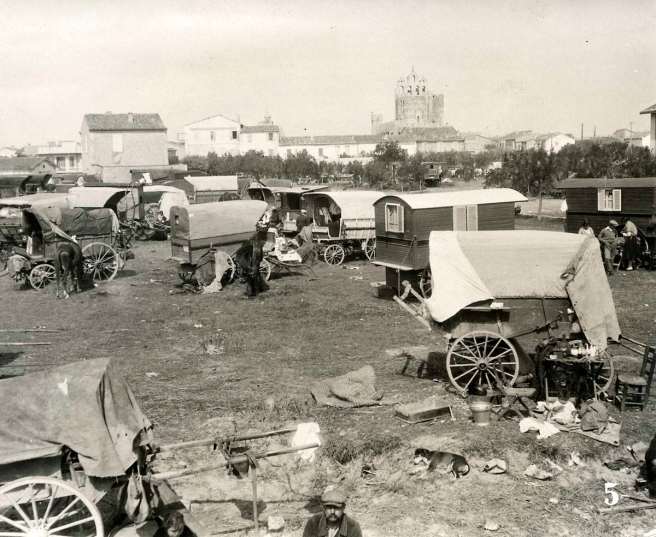
 Here’s another excellent photo of a pack of vardos (caravans) in the wild. It looks like everyone came out and maybe even spruced themselves up for the photo. I couldn’t find any metadata on this one but it looks fairly early, probably late nineteenth century. These appear to be high-end models in great condition still.

Happy travels!
Nomads are not loners. In fact, humans do not do well alone in any setting. We have always been communal people, depending upon one another for help and support. Many hands make light work and it is essential to be near others you can depend on.
 I have been collecting images of Traveller communities for many years and I really enjoy the gritty, homespun feel of the old encampments with peeling paint and makeshift tarpaulin shelters. I’m sure this image was not welcome in settled communities around Europe and the shiftless nature of these wanderers led to many suspicions, both unfounded and real.
 These are not the rolling home of the wealthy showmen of idle rich but the best compromise for families destined to live on the road.
 The vardos bear many differences but within fairly tight physical contraints of size, weight, needs, and technology. It’s important to remember as well that historic travellers of most varieties didn’t design or build their own accommodations but often modified or improved that which they acquired.
 Even though they show few relevant details of the caravans themselves these are some of my favorite images; they give us a glimpse of the people who called them home.
 Although Traveller families lived (and live) on the margins of “normal” society they were (are) more like their neighbors than not.
 I hope you enjoy the photos as we head into the season of Thanksgiving here in North America and give thanks for what we have.

We are at our best and worst in groups, whether that is family or friends. Humans are social animals.
So, a vardo is a small space, especially when living with a dog.

The old dog loved sleeping under the rig as she took her guard duties seriously but unfortunately, she is no longer with us. The youngster, on the other hand, has no interest in that sort of nonsense and only wants to be by my side as much as possible. She loves enclosed spaces so the vardo is a big attraction for her. She spends much of her time under the main bed, hidden away, and often forgotten about until she decides to get under foot. I even lost her for the better part of a day when she snuck in while I wasn’t looking, slipped into her bed, and was locked in for several hours. When I found her, she looked content enough and came out stretching like a sleepy child.

Much of 2016-2017 I was lucky enough to spend many nights camped in the gypsy wagon with just my dog for company. She doesn’t get on furniture inside the house but the dog has decided the floor or her bed are not good enough when she’s in the vardo. Since she knows she not really supposed to sneak into the bed, the (too small) bench seat is often her compromise in the wagon. She doesn’t really fit but I guess it makes her feel like one of the family.

A couple years ago I learned to be extra careful when sliding out of bed, especially in the dark, as she often plants herself on her favorite felted rug; right under my feet. In this case, it also happens to be in front of the ceramic heater on a chilly morning.

Even while getting ready to go to work, she seems to manage a photo-bomb; always lurking nearby and not wanting to be left behind. Just because it’s a small space, there is still plenty of room for a dog; sort of.
Someone asked for the recipe I used to make the artisan-style Dutch oven bread I posted a few days ago. This loaf is a crusty, chewy, large air-hole artisan-style bread that is great with soups or for hearty sandwiches.
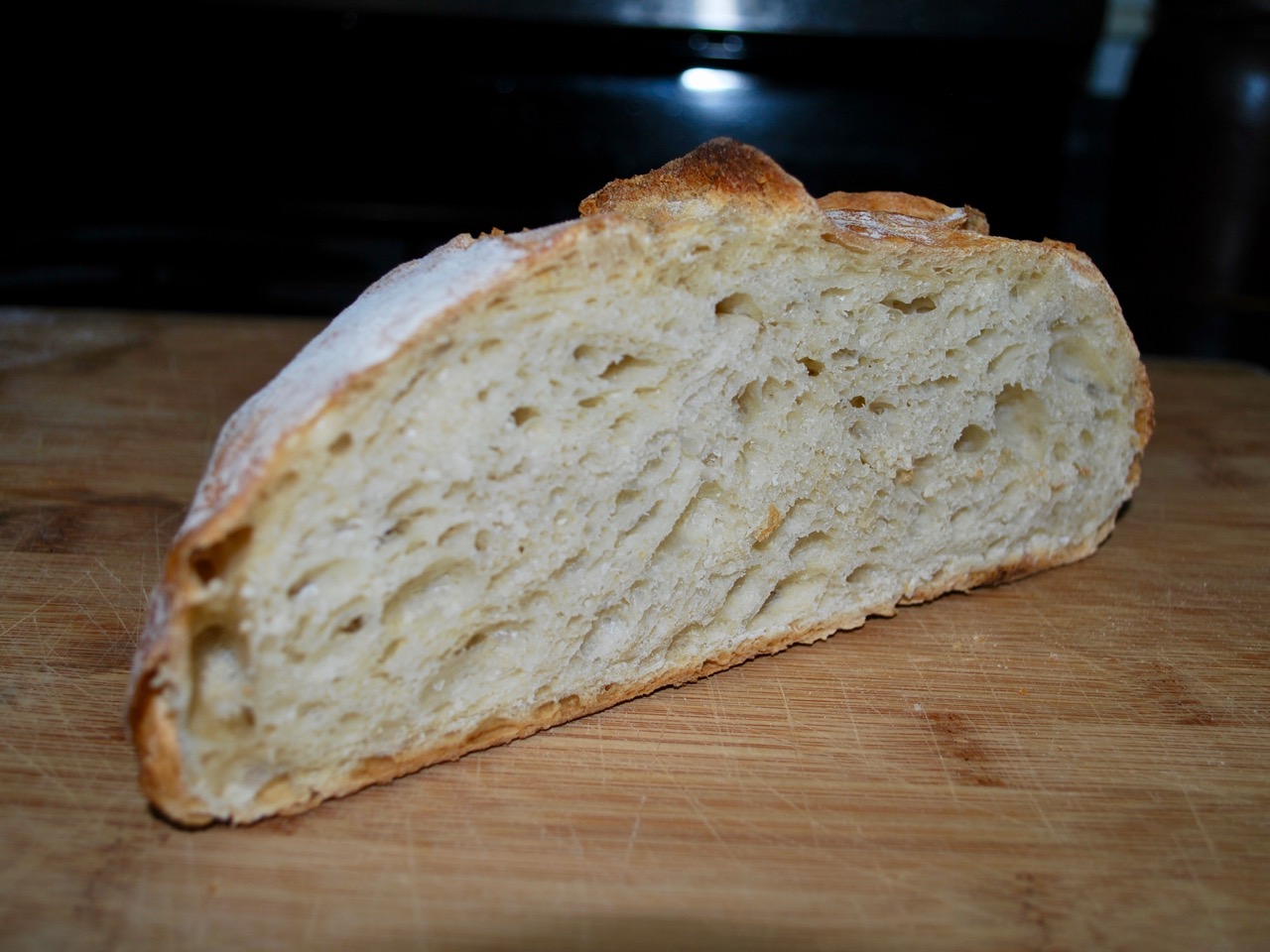 There are many recipes out there and I’m not sure I’m the qualified baker to speak with any authority. However, ask and you shall receive as someone once said so here it is:
 This recipe has worked well for me in many variations over the years and can be modified in many ways. I have a multi-grain seed bread I make more often than this that is a bit more complicated and maybe I’ll share it when I get time.
I found this video which may help visualize the process. It’s nearly the same as I relayed above with a slightly different size loaf.
I try to live by the creed of learning and making something good every day.

As we have been pondering the holiday season it seemed a good time to get a jump on some leatherworking projects I’ve had in mind the past few months. This morning, before getting to work on other chores, I decided to take a little time and work out a slightly modified Minimalist Wallet. If you have followed this blog for long, you may have seen a couple earlier wallet projects we shared HERE and HERE. This isn’t a complicated project and might be a good one to start with if you trying your hand at leatherworking for the first time.

Making the Pattern –
It would be pretty optimistic to just dive in and start cutting out a wallet without knowing what needs to fit. I used a debit card for scale as there will inevitably be a couple of these in just about any modern traveler’s pocket. I didn’t put a lot of time into the pattern as I have made a similar style before and knew the basics of what I wanted; essentially two pockets and very little sewing.

To create two pockets, there needs to be three layers; two on the outside and one to divide. To make the cards more accessible, the outer pocket will be a “reveal” and I chose to do this the simplest way possible, by a diagonal straight line.

I ended up tightening the width and lengthening the entirety just a bit from my original estimates for a better fit. The difficult part is over.
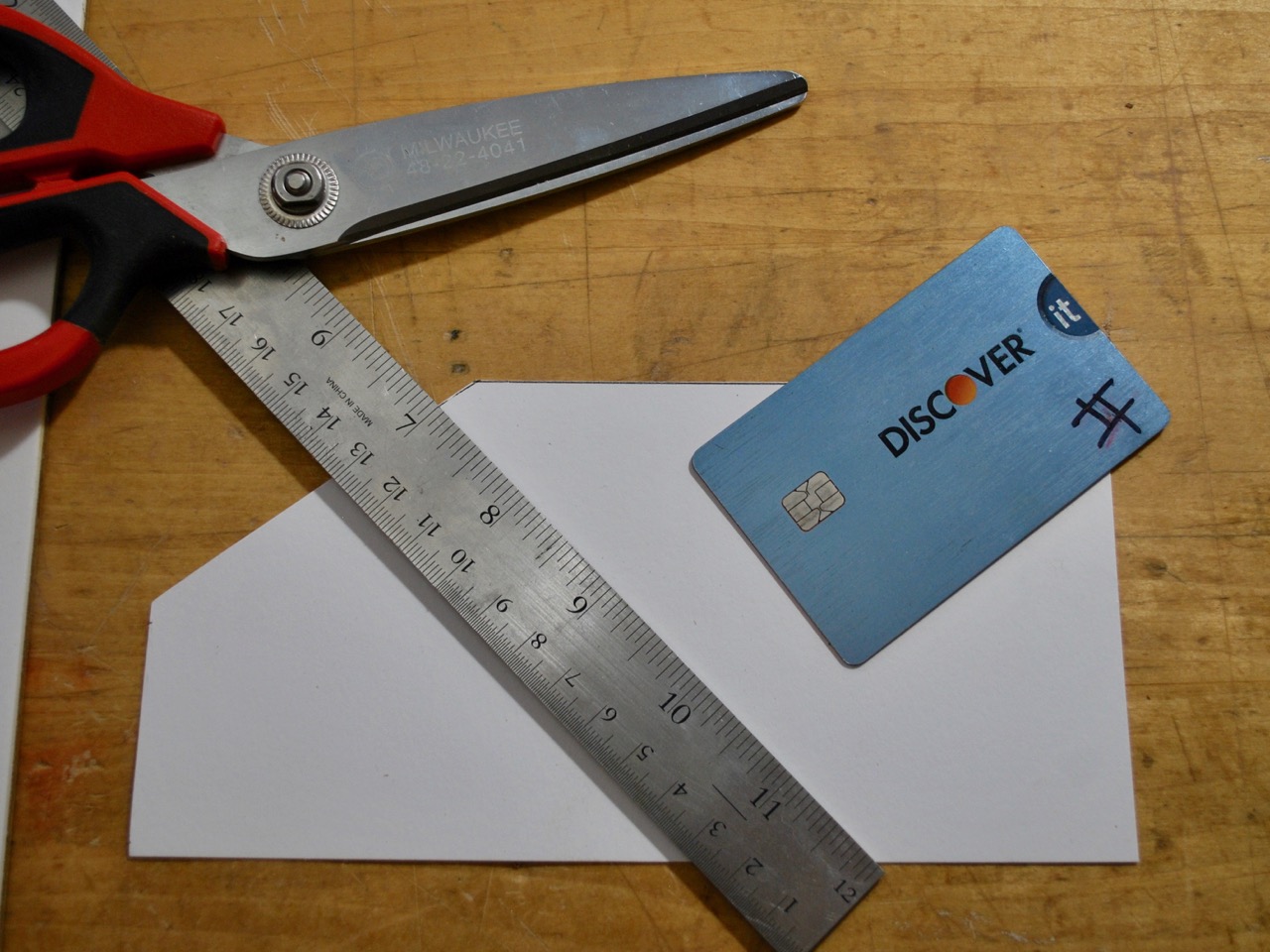
After the pattern is transferred to the card stock, it can be used many times without fuss. It is a good idea to label your patterns before storage as they begin to look alike when you amass a large folder of them (was this a pocket, part of a shoe, some sort of handle cover?).
Getting Down to Business –

The next step is to cut out the pattern on appropriate leather. I’m using Hermann Oak 1.5 mm tooling side that was leftover from an earlier project. Neatness in cutting is very important as it will affect the look of the entire piece if the cuts are even a millimeter or two off or wavering in any way. Since most people seem to prefer dark leathers for this sort of thing I chose to dye it Medium Brown with Fiebings Leather Dye.

After the dye sets you’re free to move on. I started by marking and awling the stitching holes at about a 5 mm increment. I will admit, this was not my straightest set of stitching lines ever.
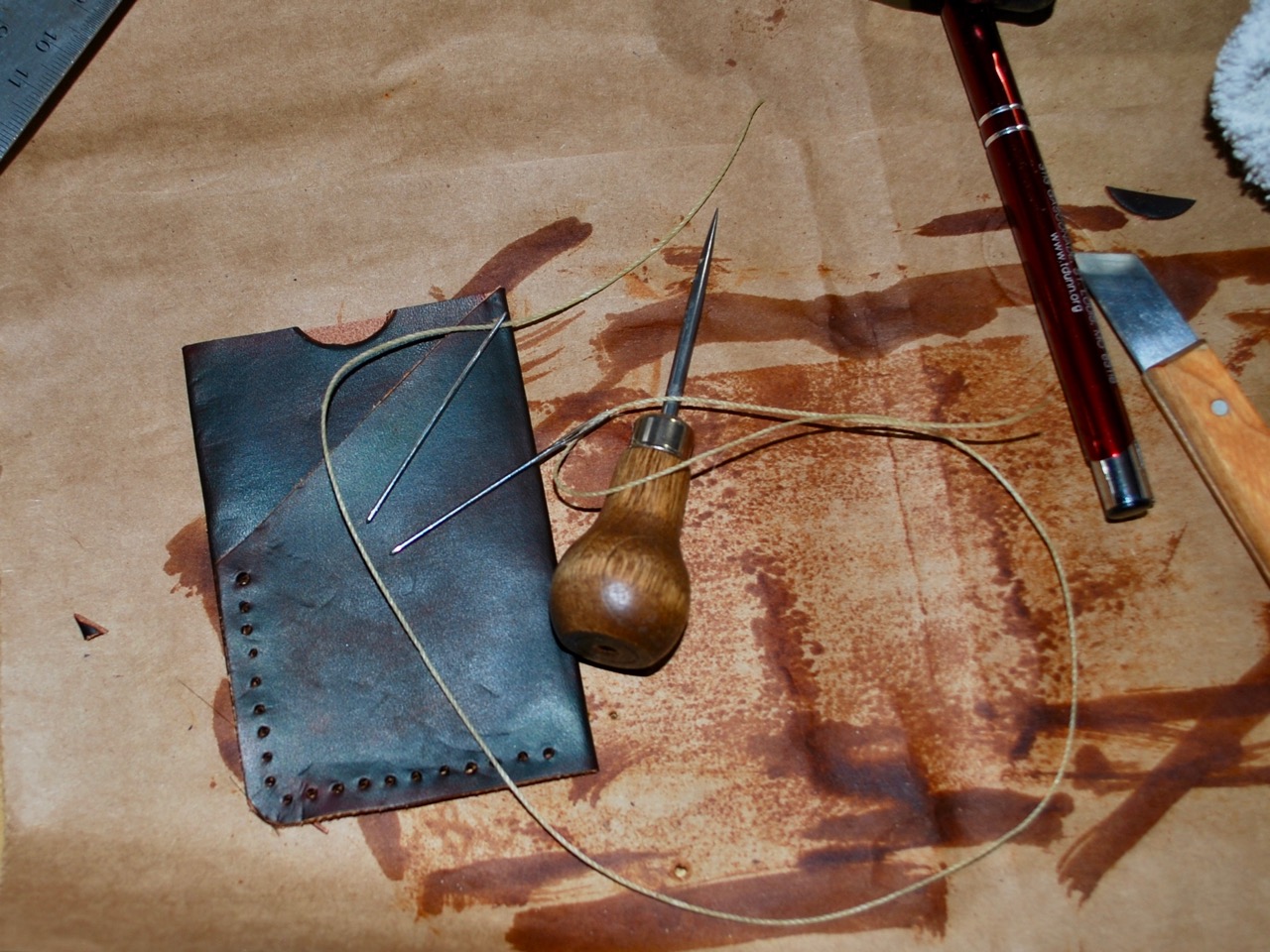
I almost always use a double needle saddle stitch when sewing leather as it is the best and strongest choice in most cases. I chose a contrasting thread to give it a fine finished look.
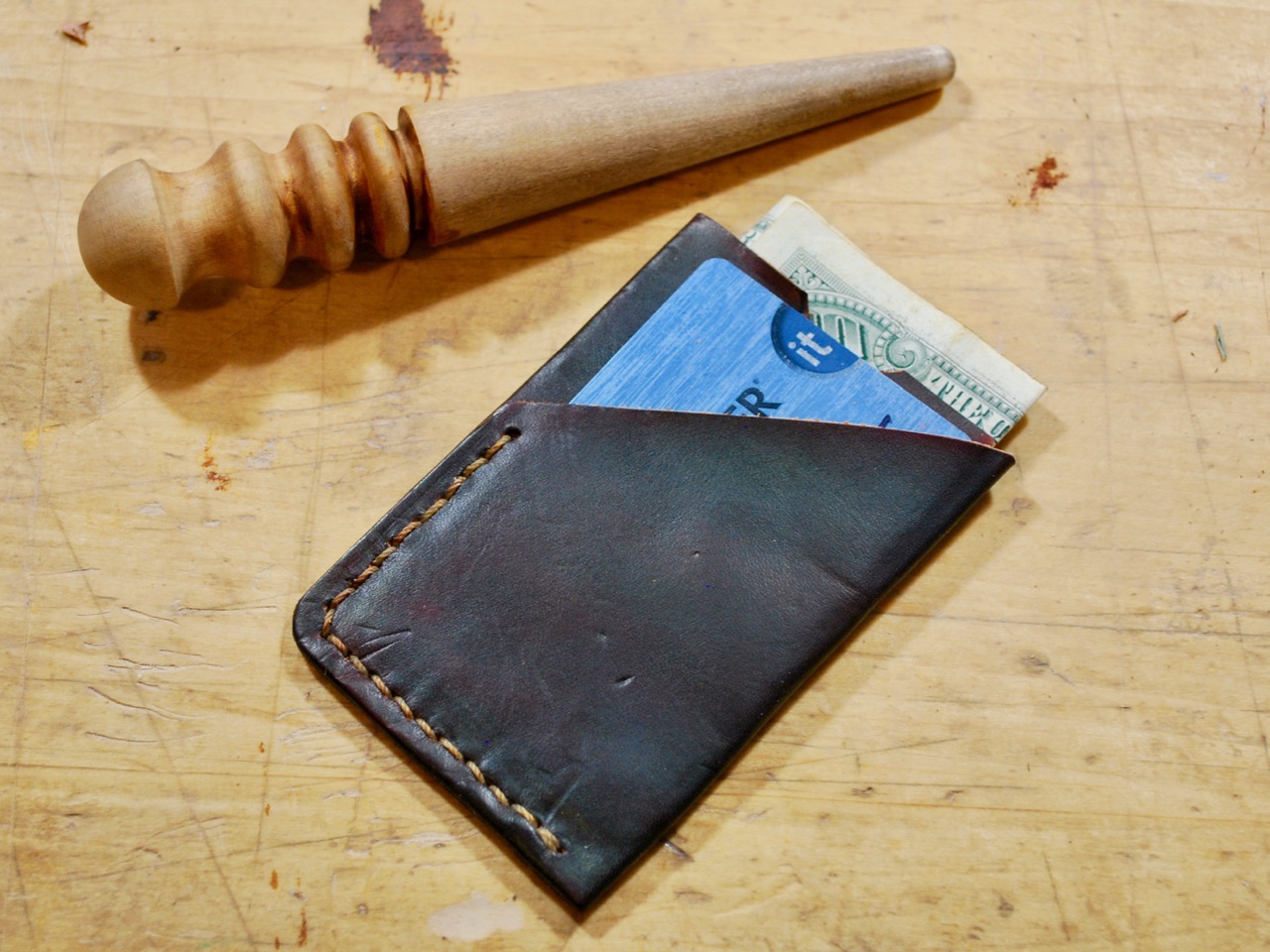
And finally, the edges were dyed again and burnished to create a smooth, finished look. Overall, I’m quite satisfied with the outcome. This one will be the prototype to work from and I’ll be able to take a little more care now that I have learned from this one. If I ever get around to making enough to sell, I’ll put them on my Etsy Store.
To view this project on Instructables, click the link here: Minimalist Wallet
I have a slightly more complex project laid out for later. If I take the time to document it, I’ll post it up here.
I would like to re-share this older post I wrote about a caravaner, scholar, and philosopher I am quite intrigued by – Dugald Semple
Dugald Semple was a Scottish philosopher of the early 20th Century and an advocate for simple living. After becoming and engineer he took to the woods and, for a period, a life on the road, living in a tent and in various caravans in order to write and travel and avoid the enslavement of increasingly urban society.

His major question was always “How ought we to live?” an ancient subject for thinkers the world-over and a very important topic in Asian philosophy as well. His teachings are interesting and he still has a serious following of vegans, fruitarians, and Christian Phlosophers around the world. He apparently never ate meat, eggs, or cheese, and subsisted on a mostly fruit diet. It clearly worked well-enough, as he died at the age of 79 in 1964. Not bad, but think of all the bacon he missed!

Of course, my interest in Dugald lies primarily in his simple lifestyle and his fondness for caravans and living in the open. He married well. Cathie, his wife was a widow who was independently wealthy, owning a large house and grounds. This certainly contributed to the success of the life-long experiment in simple living. Even as he settled down, he still philosophized and associated with his old friends who roamed the countryside and set up guilds of craftsmen (Nerrissa Wilson, Gypsies and Gentlemen). He envisioned a new generation of skilled travelers who could pack up their trades and families and move to where the work was, thus alleviating some of the new stress of urban life.

I love this camp. This wagon seems perfectly suited for summertime use with the fully opening sides. Too bad his dream didn’t catch on, but he admitted that life on road could be stressful and difficult. At least we can give it a try; even if in a limited capacity.

As an end note, here’s a quote he is well known for on his philosophy of a vegan lifestyle:
Personally, I began rather drastically over 50 years ago by cutting out not only all meat or flesh foods, but milk, eggs, butter, tea and coffee. Cheese I have never eaten; indeed I hate the very smell of this decayed milk. Next, I adopted a diet of nuts, fruit, cereals and vegetables. On this Edenic fare I lived for some ten years, and found that my health and strength were greatly improved. Probably this was also because I lived more in the fresh air and closer to Nature. (Emphasis added by the ed.).
I just don’t know if I can fully trust a man who won’t eat cheese…

Working away on a weekend day a little while back. Enjoying time on the prairie in my little rolling home; coffee, a banjo, and connection to a HotSpot so I can get some work done. The best of all worlds.

I don’t remember for sure but I suspect there is a dog or two laying on the floor or, more likely, under the wagon keeping an eye out for wildlife. I’m itching to get back out on the road.
 Preindustrial Craftsmanship