Sandals of the New Kingdom, Egypt (1550 – 1070 B.C.)

Some shoe solutions from the Bronze Age, North Africa.

SandalMaker
This image is virtually a sandal pattern ready to be made.

Sandal maker – New Kingdom, 18th Dynasty from Thebes ca. 1504–1425 B.C.  

Like a Diderot illustration this gives a good insight to the workshop of an artisan with the essentials of his trade.  There’s the stool, which is useful in leatherwork as it gives a good lap to work on.  A beam, probably implying that the leather is made on-site.  A couple of awls in handles are shown and what is probably a curved awl, made from antelope horn, useful when weaving leather (my speculation based on huaracheros and other traditional weaving tools).  The sole of the sandal looks to be leather and is being punched with the awl.  Other sandals are made from fiber, probably by a different artisan specialist, while burial sandals were likely a specialty industry and are often made from wood or precious metals.

Sandals2

Papyrus fiber sandals.  Second Intermediate Period–Early New Kingdom, 17th-18th Dynasty, Thebes ca. 1580–1479 B.C. These are constructed using a coil basketry technique which involves wrapping a soft fiber around a thicker, linear element while “sewing” into the adjacent coil.

Sandals

Papyrus fiber sandals.  Second Intermediate Period–Early New Kingdom, 17th-18th Dynasty, Thebes ca. 1580–1479 B.C.

SandalsRed

Red ochre stained calfskin leather sandals.  New Kingdom 18th Dynasty during the joint reign of Hatshepsut and Thutmose III ca. 1473–1458 B.C.  These are interesting as they are tooled to look like woven sandals.  The leather might be harder-wearing but the woven style may have denoted more wealth (i.e., flimsy shoes equates to more wealth or less need to labor).  A very simple design used for thousands of years and well-illustrated in the sandal maker panel above.  This is a good survival sandal that could be made quickly in the field from many materials today.

two pair

SandalsAu2

Finally, a couple pair of golden burial sandals (women’s) from Thebes, New Kingdom 18th Dynasty during the reign of Thutmose III ca. 1479–1425 B.C.  Note the embossing to imitate stitching.  A simple design that could be made up in a very short time.

SandalsAu

All of the above images are from the Metropolitan Museum of Art, New York and clicking any of the photos will take you to the appropriate page for the artifact.  I chose these sandals as I believe the best survival solutions are tried and true and generally exhibited in the archaeological record if the material survives.  Make yourself a pair of shoes.  With a little practice, basic footwear can be made that is serviceable and fit for public wear.  Our ancestors did this for thousands of years, we can too.

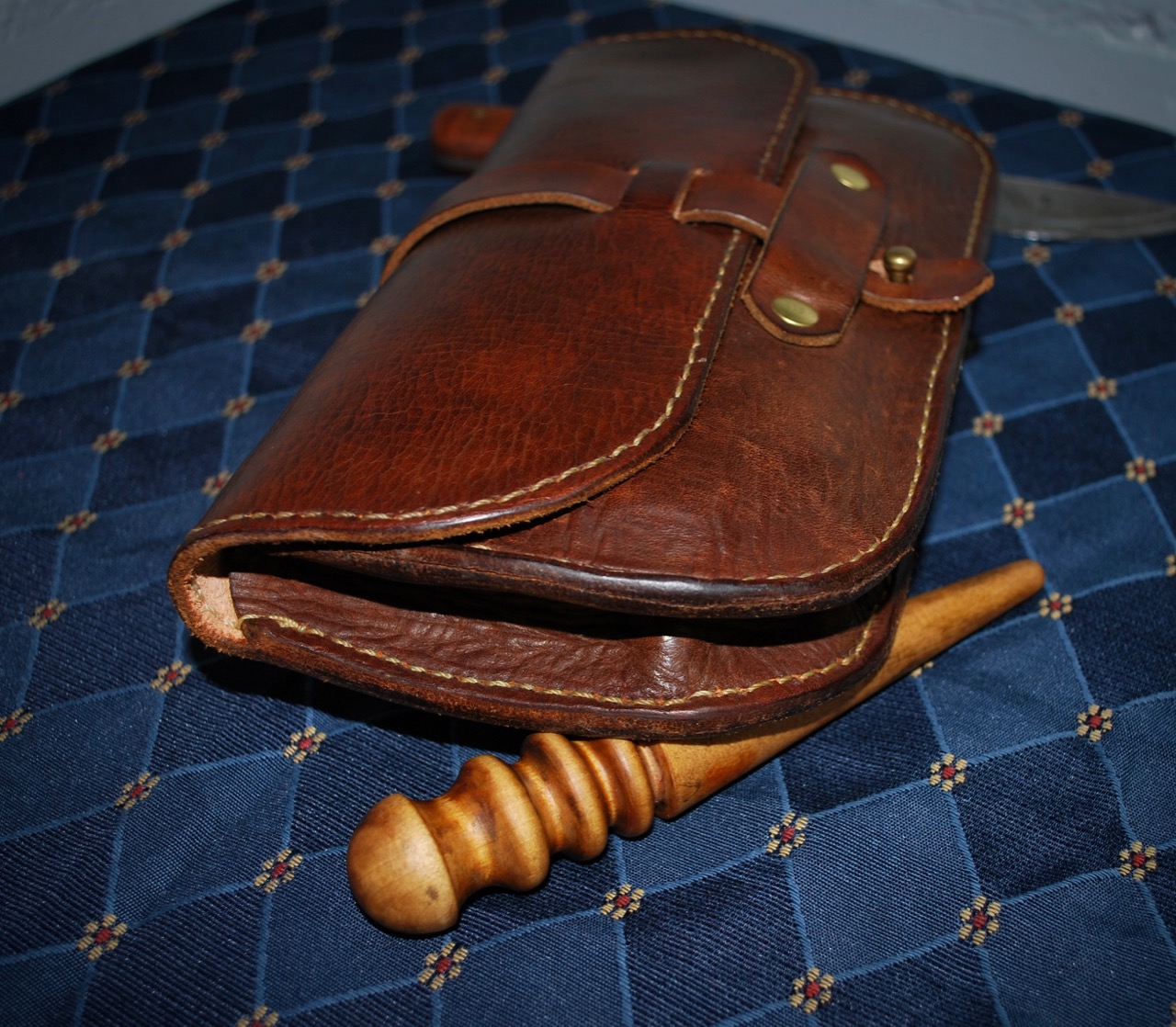
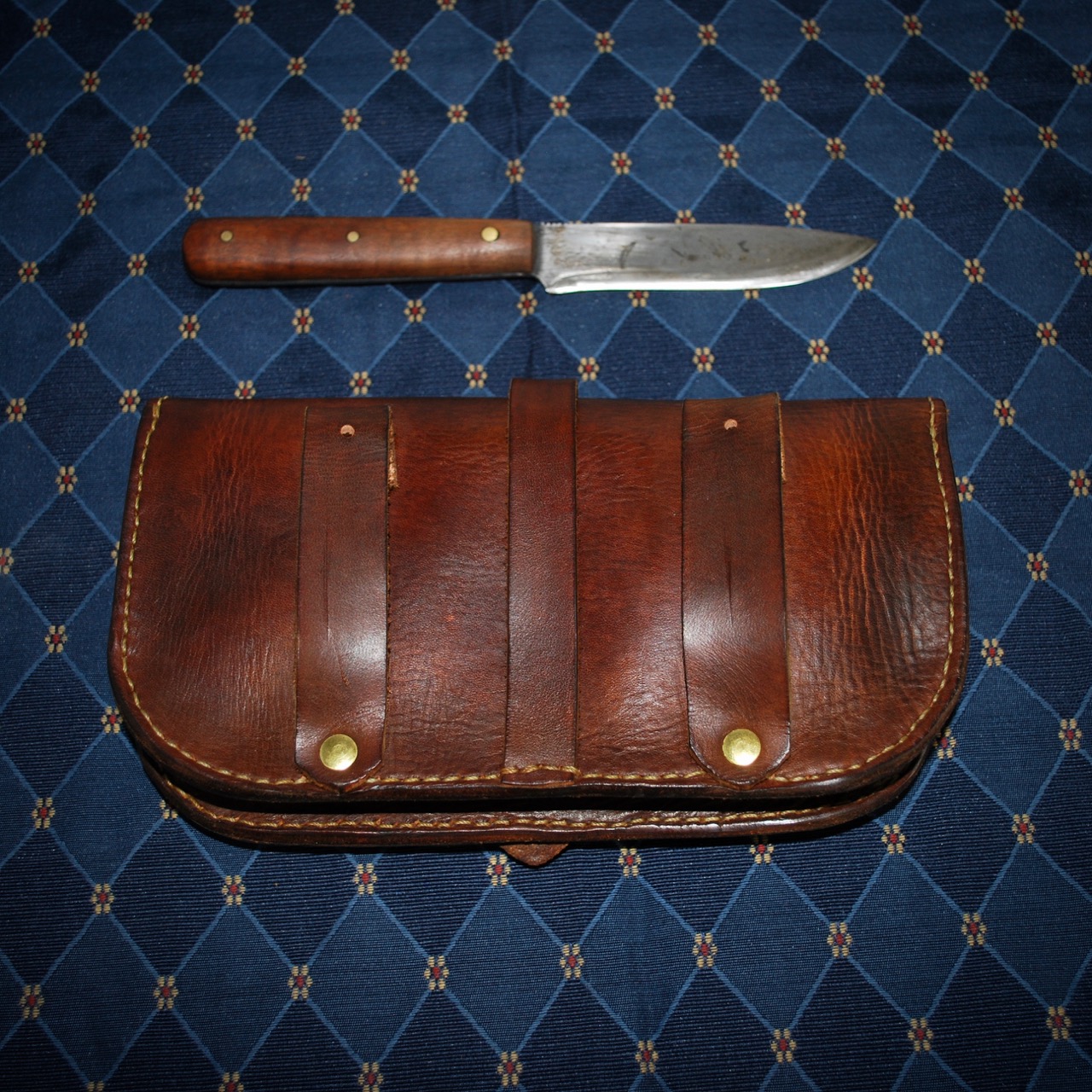
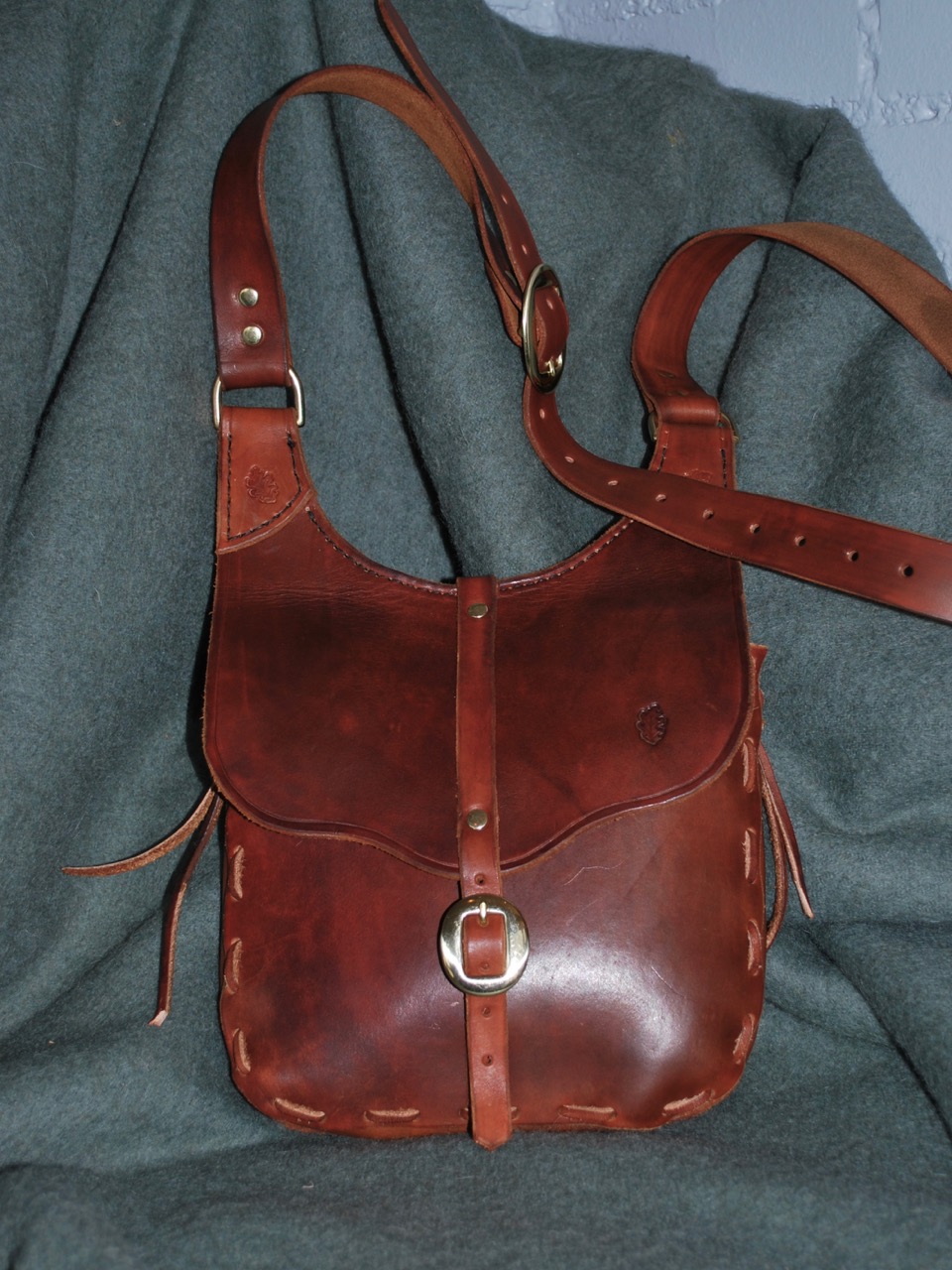
Small Possibles Bag for the Belt

Sometimes it’s nice to have the security of a bag strapped closely to the body and not swinging around your neck and shoulders. This little 9 x 5 x 2 inch design has done quite well over the past year and has been a popular seller in the shop.

Made from 7 oz. veg-tanned leather it will last through a lifetime of hard use.
Solid brass hardware will never rust and patinate beautifully over time.
If you like this kind of work, please consider clicking the “like ” button and follow my shop on Etsy.
I worked to give this pouch a distressed look for a little extra character right out of the box.
Double needle saddle stitching will provide security and strength for many years.

Available at Lost World Crafts on Etsy.

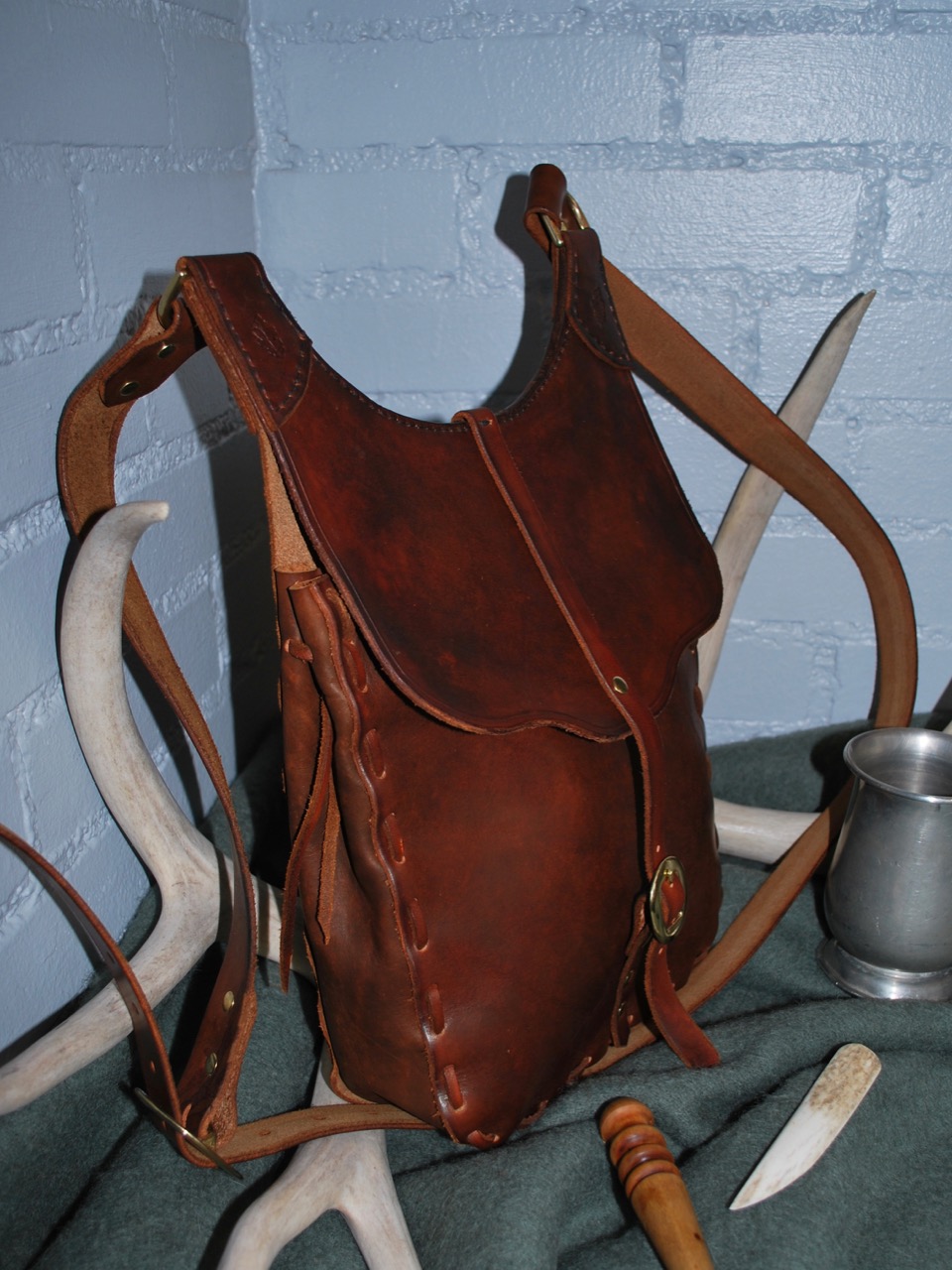
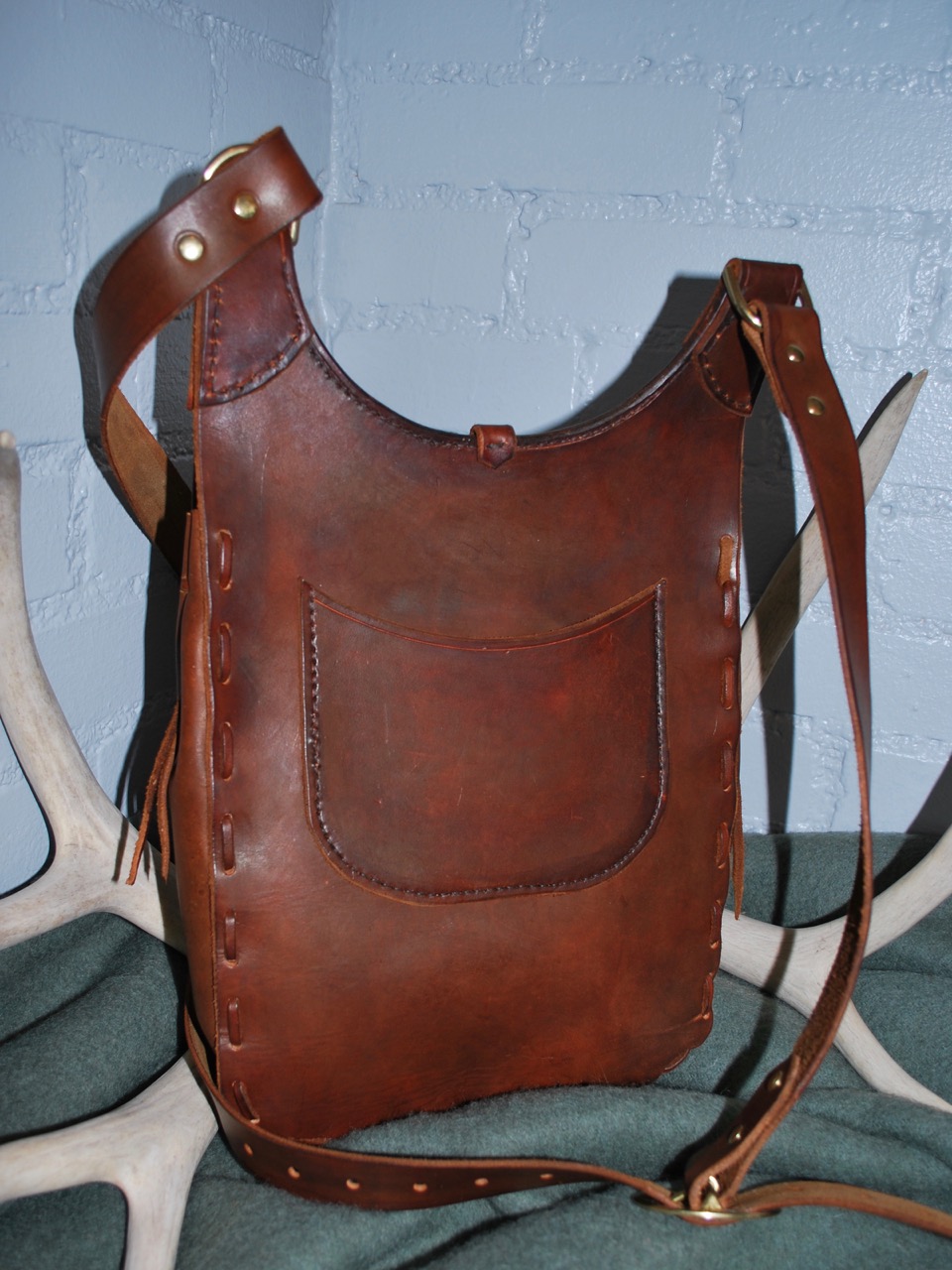
Large Possibles Bag

Another possibles bag completed and out the door.  This one was designed, at the request of a customer, to fit a specific case that would fit inside.  This is clearly my favorite “go to” design and will make an excellent bushcrafter’s kit.

This one is about 3 1/2″ deep and a little over 12″ by 9″ inside the body.  Front and back are 7 oz. leather and the gusset is about 5 oz. to give some flexibility.

All the hardware and rivets are solid brass for all weather use and this one features a flat pocket inside and out to organize small items.

The gussets are cinched to keep the top contracted but can be opened if necessary.

The security strap is left open so that objects can be tucked under if desired.

Obviously, I like this design and all its variations and I hope the new owner can put it to good use for many years.

Deluxe Possibles Bag

In my shop, 18th century style is still in style.

More shameless promotion from the workshop.  This is my new, deluxe model possibles bag for the right mountain man or woman.  This design has proven to be practical and popular.  The leather is veg-tanned Hermann-Oak and all sewing is double-needle saddle-stitch.  The hardware is premium solid harness brass.  This bag will only get better with time and wear.  I’ve been carrying the same design for a decade and it is just getting more beautiful with age.

https://www.etsy.com/listing/669145808/deluxe-shooting-bag-possibles-bag?ref=shop_home_active_1

Photo Gallery

I’ve added a photo gallery in the sidebar to the right of the main blog feed.  I think nearly all these projects have been shared here over the years but this makes for easy viewing.  I’ll continue to add images and re-post some older work as I get time so please check back feel free to continue the feedback, and I hope you enjoy.

017 (1)
Or just click the image to get to the gallery.

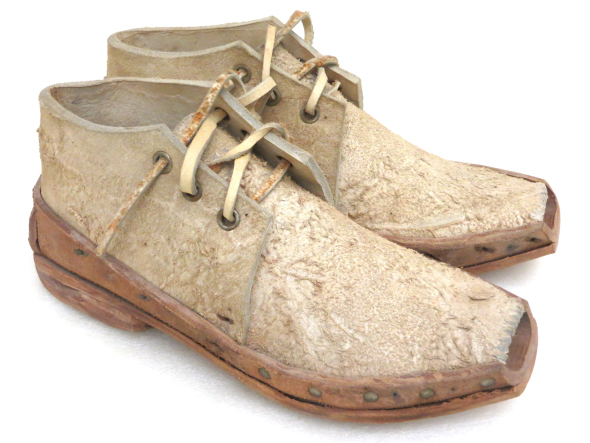
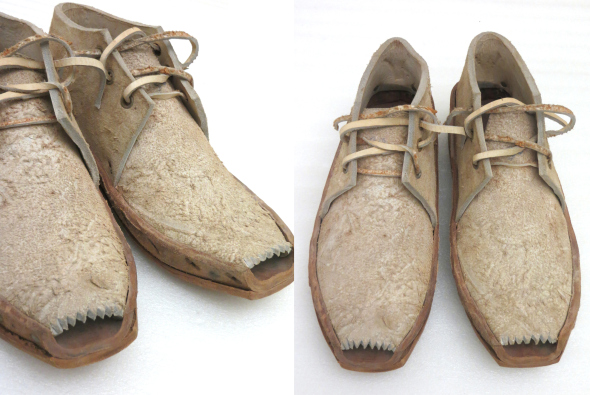
Early Burras from Uruapan

Some very thick leather shoes. They would last a remarkably long time under the worst conditions.

huaracheblog's avatarHuarache Blog

I have posted about the traditional Mexican Burra Footwear already a couple of times on this blog and consider Burras another fascinating area of footwear research. These Burras I was lucky to photograph also at the Bata Museum in Toronto, their origins are from the 1950’s Uruapan area of Mexico. Although I have never seen a similar Burra design during my research in Mexico.

IMG_4433SML   Mexican Burras, Burras

View original post

Make a Shop Apron

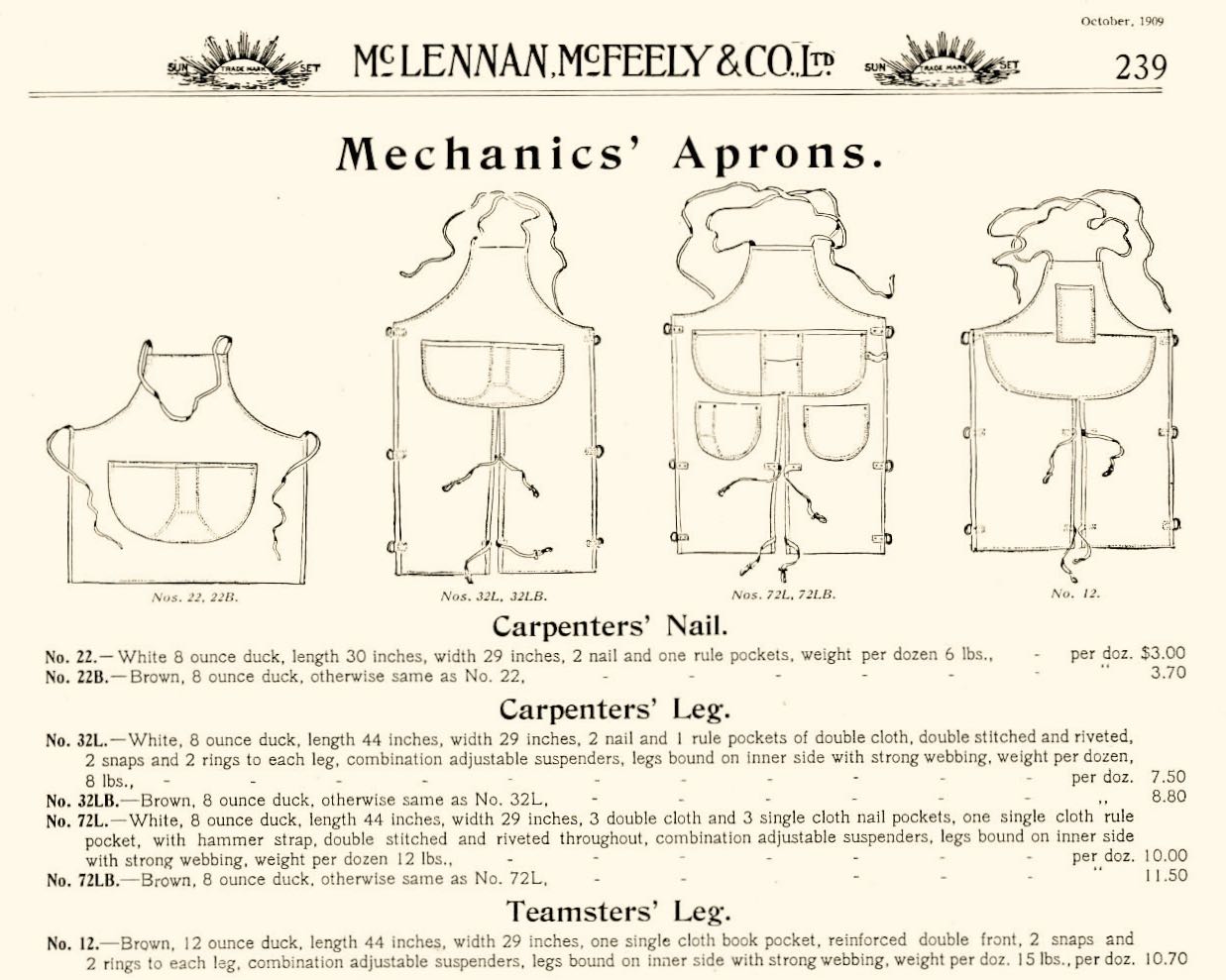
ApronsShop aprons are not as widely used as in the past.  I believe this is related to our modern view on clothing and how it has changed over the past century.  Not only are we training less in the trades, our clothes are ridiculously cheap in the modern world.  Low prices and availability keeps our incentive to protect them pretty low.  As I have reduced my quantity of clothing I have grown to appreciate the humble shop apron more than ever.  In the past, my only incentive was for protection when grinding metal or welding but now I begin to understand the real role a good apron can play in the shop.

A good shop apron can cost quite a bit of money ($40 – $100 or more) so I present the above catalog page as a starting point for construction.  Heavy canvas or leather are the obvious choices for material.  Although heavier, I prefer leather as is it is fireproof and offers some protection against cuts.  As for protection, here’s an image I found when looking for designs.  It’s from a Navy singlestick exercise.  Somehow the design seems familiar.

navysinglestickDSC_0003

Cobbler’s Workbenches

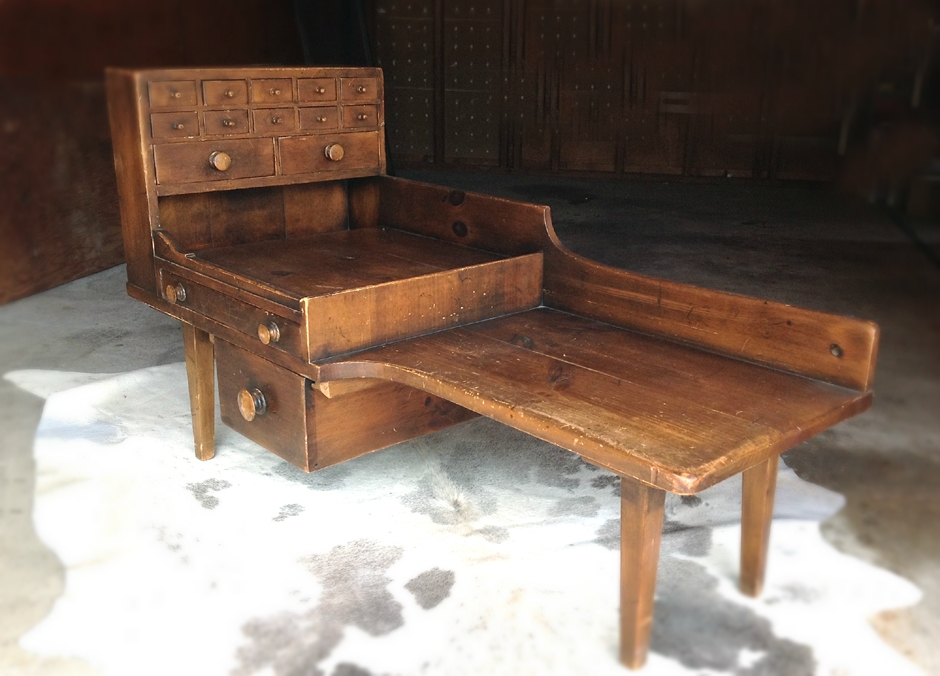
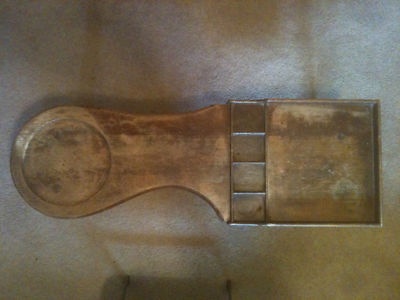
7000910_1_lI have come across these little benches for quite some time and I find them fascinating. I even started a folder in my image library for them.  A quick search around the web finds many of these in auction houses, on Ebay, Craigslist, and elsewhere, generally at exorbitant prices.  It appears they generally end their long lives as side-tables in a middle class home, assisting in the creation of nothing; just a curiosity to a collector. cobblers-benchThey really are remarkable and interesting professional tools; clearly bespoke to the needs and means of the craftsman who used them.  You can almost see their ancestry written upon them; a Roman or Medieval bench with simple splayed legs, a cutaway for seat, a little rail to keep tools from rolling away.  Later some small tills might be created to segregate nails and needles, and knife slots added so that they might be handy but safe.Genuine-Cushman-Colonial-Creations-Cobblers-Bench-Coffee-Table-245-Dealer-5534Really, a simple slab of wood, but as “needs must” it becomes a little workshop, self-contained.
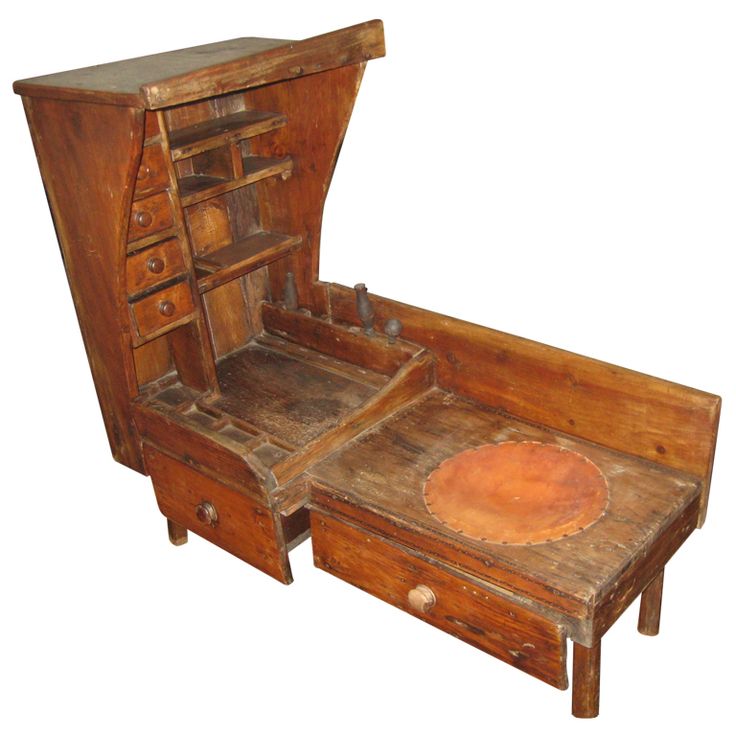
Drawers or cubbyholes became a natural addition to the workspace as the bench replaces tool caddies.  Some can be locked up for safe-keeping and fancy builders made more comfortable seats.

shakercobbler2The essential layout seems to always be the same.  We are, after all, given the same basic human shape and the need is the same.  Organization, convenience, and a solid place to work.cobblerI can see this type bench being useful for other crafts as well but it would definitely end up modified over time to suit the specifics.CBENCHEven the above humble specimen has found a home, holding more collected crafts.  Slowly dying as a curio for some of us to ponder as a useful holdover from an era when we made for ourselves.CLbenchThe designs seem varied as the places they originate and the ingenuity of the makers.  Cordwainers, cobblers, leather bag makers, can all find the beauty in this design.primitivecobblerMany a zapatero could still find great assistance with a shop setup like this.earlycobblerI could make great use of this as an itinerant craftsman.  And maybe I shall someday.
shakercobbler
Perhaps, by looking into the past, we are seeing a better, simpler future

Cobbler at work, no citation, no date. Click for "source".
Cobbler at work, no citation, no date. Click for “source”.

“Round and ’round the cobbler’s bench, the monkey chased the weasel…”

Petite Portmanteau

One cannot have enough baggage in one’s life.

Especially if one is a traveller.  On that note, I put together this 18th century style portmanteau to attach to the bottom of my rucksack.  It is on the small side for this style bag but the dimensions are based on a convenient size to attach to the backpack and the scrap shoulder I was using.  I also foresee this working as a front bag for the scooter or even on the bike.

PortOutside dimensions are 16″ (40.6 cm) x 7 3/4″ (19.7 cm) diameter for about 680 cubic inches (11 litres).  One step closer to a handcrafted life.