
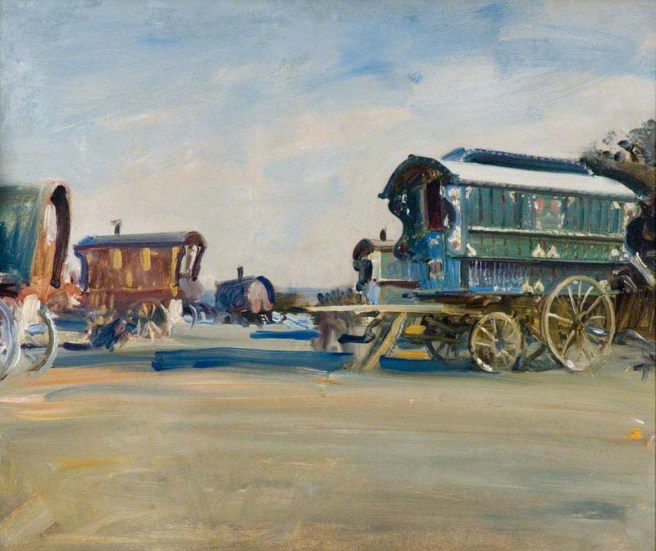
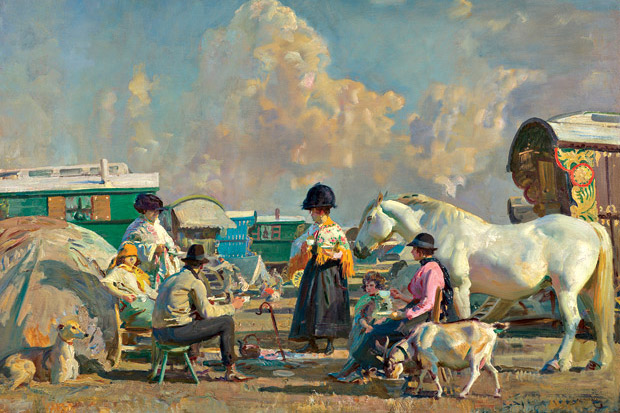
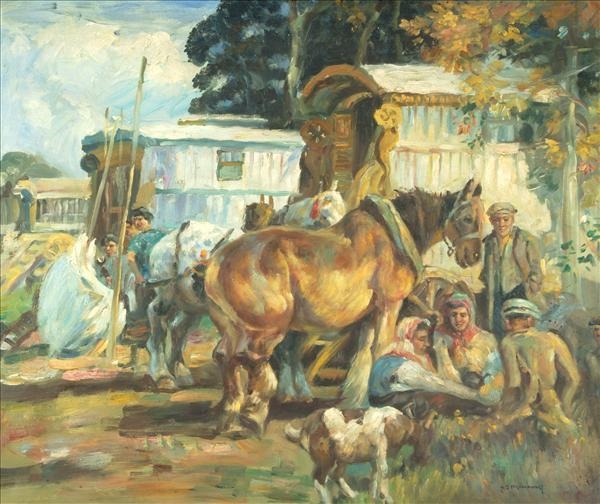
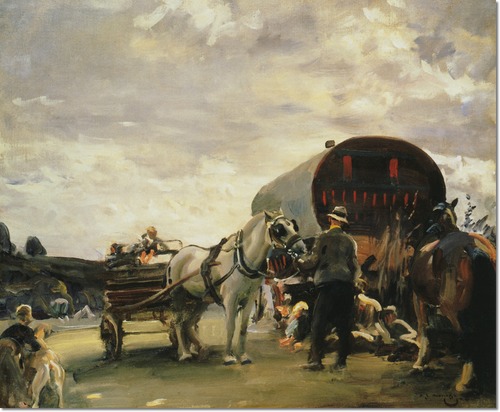
Here are a couple final Alfred Munnings images of Romani caravans in an English countryside. As a keen observer, he definitely caught the important details of each type of caravan and the essentials of camp life. The watercolor above is somewhat unusual for Munnings as it shows no animals, people, or campfire.
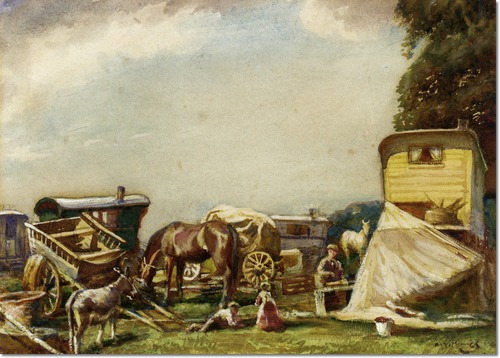
Above is a rarely shown rounded square-top among other carts and caravans with livestock milling about. The variety detailed in these historic images should be helpful for those desiring to design and build a similar living accommodation. The previous post gave a glimpse of Laura Knight’s work on the subject and her subjects are remarkably detailed and informative.
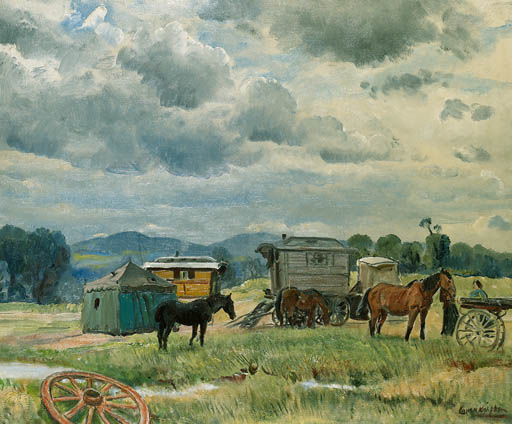
This is one of my favorite scenes of a camp in the countryside; two beautiful ledge wagons and a marquis tent in a field. I could picture this in a high parkland of the Rocky Mountains. Many people don’t know that the outlier tent, awnings, and tarps are almost ubiquitous with the old caravans. This allows for a very flexible and expandable living arrangement or a sheltered kitchen area.

If you look closely at the sketch above, you can see that this is the same encampment from another angle, focusing on the kids at play. It looks like a fine way to grow up.
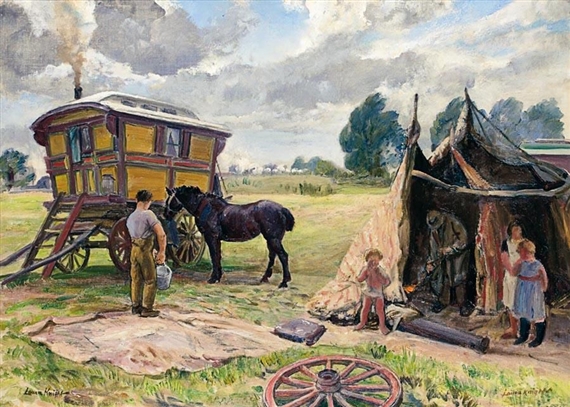
And finally, another favorite of mine. I suspect it’s the same little yellow wagon next to the sketchiest bender tent ever. Probably a makeshift shelter for work or cooking. A wagon wheel in the foreground seems to await repair while the kids look on. Note the size of these caravans relative to today’s “needs” and remember that whole families lived and were raised this way.
If you missed the previous post about historic caravans in art go HERE or check out a whole page of images I have curated HERE.


 Preindustrial Craftsmanship