Home is Where the Hearth Is

…and the Vardo Will be Close by.
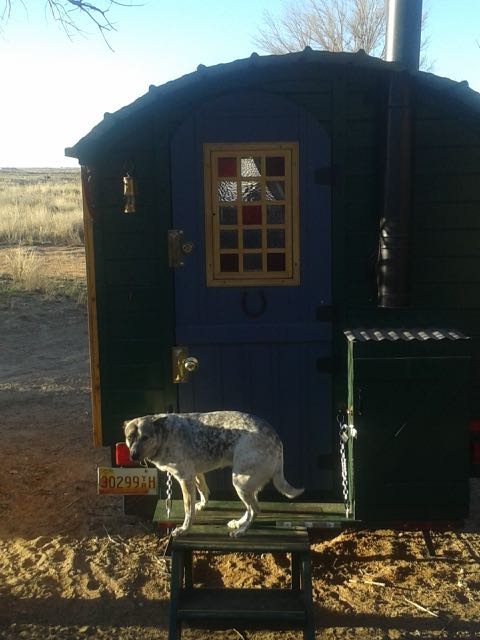
20150329_073652
Somebody hates to be left out.

Some important facts about caravan living before the ultra-modern RVs came along that may help people understand some of the choices I have made about my own wagon:

atHome
At the most basic level, life revolves around food and shelter.
  • The caravan is the hub around which camp is built, but most “living” actually takes place outside in the wide world.  Sometimes this means tents or other temporary structures provide added protection from the elements.  Prior to the second world war, caravan Travellers in Europe often slept outdoors, under the caravan when necessary while the kids were corralled inside.  This makes a lot a sense as adults stay up later, and kids can wander off.
  • Cooking is done outdoors, over a fire.  The stove, when there is one, is for heat and drying.  The hearth is the focus of family life, just as it has been for a million years.  That is where people congregate, music and stories happen there, and it is provides comfort and cheer.
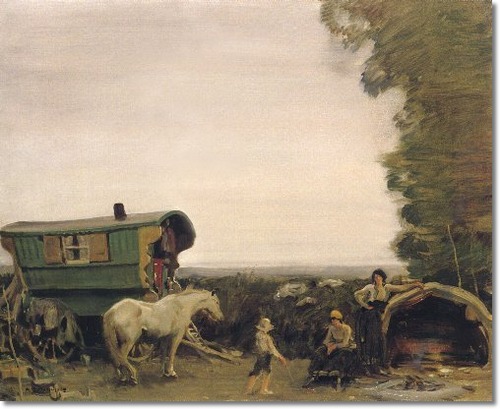
Hearth and home has a real meaning.
  • There is no water closet or toilet inside the caravan.  That is considered by connoisseurs to be repugnant in such a small space.  Needing to defecate in such a small space is a modern, and to some, a filthy idea.  However, this is one of the most common criticisms I hear about mine or other traditional wagons; seemingly from folks with little travel or camping experience.
J. Lequesca's sheep graze in Jordan Valley, Oregon.
J. Lequesca’s sheep graze in Jordan Valley, Oregon.
  • A consistent anthropological observation about nomads is the strict rules of hygiene and cleanliness.  Working and wandering outdoors can be a dirty business so strict rules are adhered to.  Some of these reach the level of taboos and can be traced back over at least a thousand years.  Living on the road can make one appreciate this need.Family

    Family
    A happy family from the road.
  • The fancy wagons of 19th century Britain are the exception, not the rule.  Functional but sometimes homely carts and wagons have likely served as the home base for nomads of various types since 500 B.C. or before.  They came to their peak of perfection in Britain in the 19th century before morphing into the RVs we see today.
TravellerinSWengland
A Traveller in southwest England. This simple accommodation is much cheaper and more readily built from cheap or found materials than the fancy production models.

Then as today, a conscientious traveller uses a fire pan to prevent scorching the earth by the roadside.  Mine is an old plow disk.

And finally, above are a few examples of outside extensions added to late 19th century caravans across Britain exhibiting the functionality of canvas to extend the living space in less-than-perfect weather.
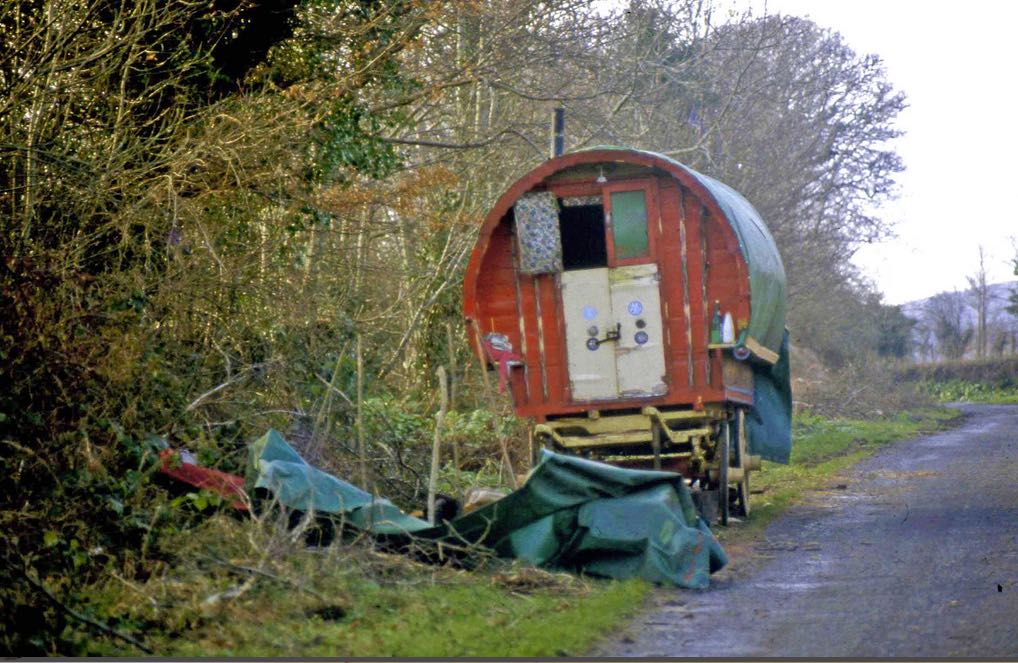
Caravanroadside
You never quite know where the day might end.


More Joinery

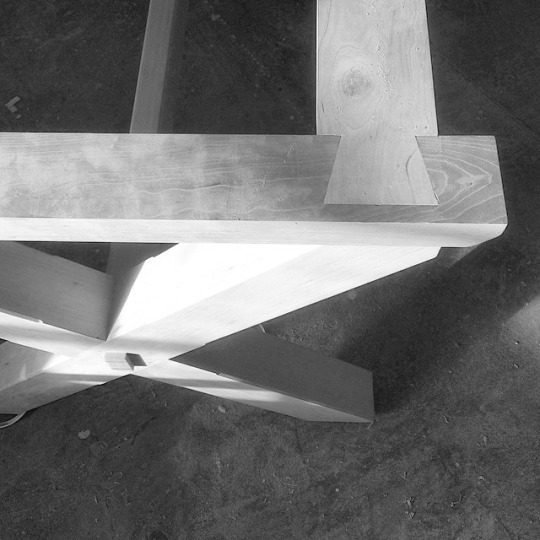
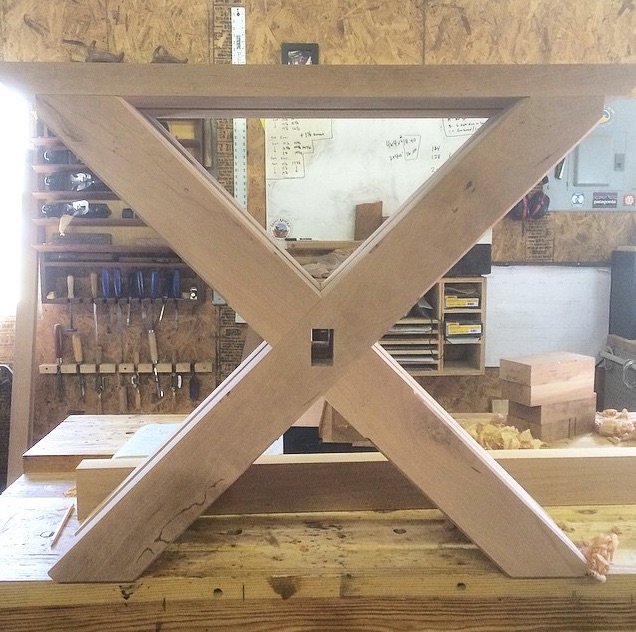
Here’s a beautiful trestle table coming together in Andy Rawls’ studio; spotted on his Tumblr this morning.

trestleSeeing this makes me realize I can’t wait to get some projects done over the three day weekend.  It makes me a little sad to say something like that.  Choosing a job for pay instead of a love for what you do every day.  Of course, the grass always looks greener…

dovetailtressleThis will be one solid table and will last for ages if treated well.  This kind of craftsmanship has slipped away from most of our daily lives.  You won’t find this at a big chain furniture store.  Have a look at more of his remarkable work by clicking the link below.

Rawls_weblogo2

Tools of the Bowyer

I have been working on a bow-making tutorial for quite a long time now.  Trying to be as explicit as possible while not dumbing everything down is a tricky narrative to follow.  Just gathering the appropriate images of the process is time-consuming and difficult but truly, a good image is worth a thousand words.

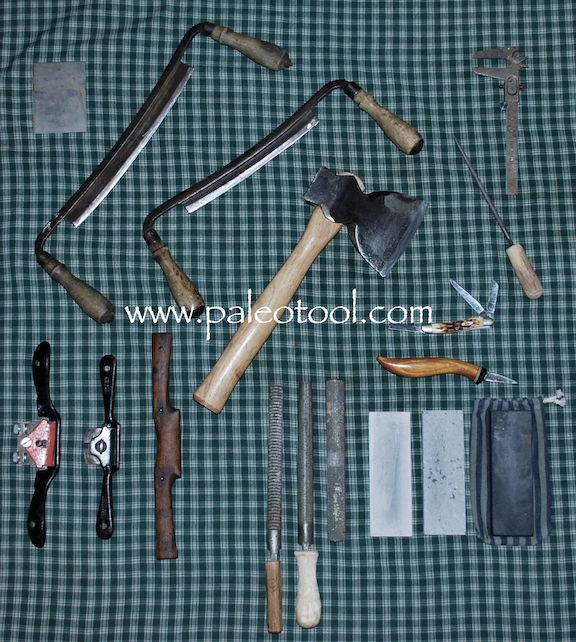
bowyertools
The basic hand tools used on bow making.


Sharpening is a Simple Act

Thank you Paul Sellers for stating an obvious but nearly lost truth.  There are far too many needless and complicated gizmos, devices, and “new technologies” for a 2,500 year old task.  Clever marketers have figured out that we can blame our laziness and impatience on our tools and not ourselves.

Maybe I am speaking out of turn as my tools are always for from perfect. 

Catalogs are full of overpriced specialty devices designed to do the seemingly impossible; polish a sharp edge onto a piece of steel.  I realize now that I was very fortunate.  I learned to use a file and whetstone as a very young child.  I even learned about setting saw teeth and how to use the hard straight razor stone.  Before there were special stones to resurface a stone, we simpletons used a hard, sandy, and flat concrete surface before graduating on to sandpaper stuck to a sheet of glass.

Some of the best sharpeners I know still do virtually everything with Arkansas whetstones and some very-fine emery paper.  One thing to remember though; you have to actually do it.  If you don’t regularly keep things sharp, it only becomes more of a chore and takes more time.  I think the old idea of spending a few minutes before you begin work of sharpening and stropping is a wise idea.

If you use tools, consider a real pair of Arkansas whetstones.  Here’s a couple of sources to try:

NewAddBoone

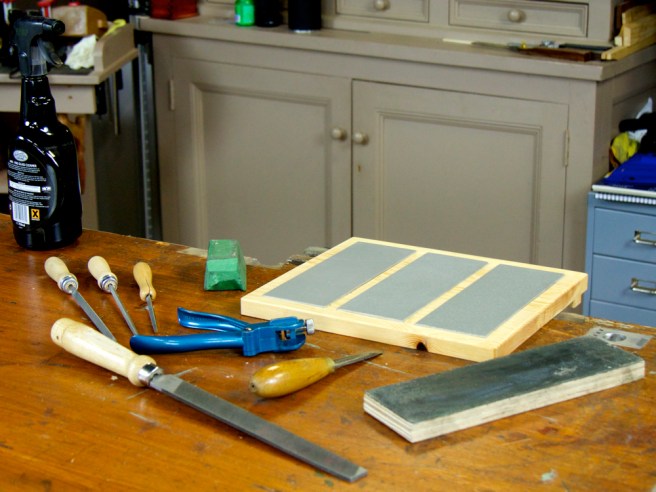
stonelogo3In the mean time, head over to Paul Sellers’ excellent as usual blog for his take on sharpening as well.  Notice his very simple set-up.

Paul Sellers' Sharpening System.
Paul Sellers’ Sharpening System.


The Making of a Cabinetmaker – Part I

“I believe I was fitted by nature to become a woodworker, and had my father been a wagonmaker or millwright, a carpenter or cooper, I would have been taught by my father the trade that he knew. He saw that I would whittle something, for when I was even smaller and lived in the woods I would ask for his knife whenever he came home. He always demurred, saying, “You will cut your fingers,” for a woodworker’s knife is always sharp.

I would tease until he would hand it out with the remark, “Now you will cut yourself.” I invariably did, and it was generally the fore finger of my left hand. That finger is just covered with small scars of every possible shape. I was bound to whittle something. Father knew it, so he calculated to give me a trade where I could whittle away and bring in a little money thereby.”
Chris Weeks
Wood Craft – December 1905

Ravenlore Tiny Home

Tiny Green Cabins has some pretty nice and well thought-out designs. I find their website a little difficult to navigate but their blog has some interesting stuff on it.  I am very much a traditionalist and a form-follows-function kind of guy.  However, I think they have some new and innovative designs as well as some very nice features for comfortable living.

HPD

Check out this house tour of one of their recent builds.  It’s worth the 13 minutes.