
They may have been a smug lot. Not exactly the type you’d expect to spend a lively Saturday night with, but at least they have a nice living wagon. Even a few plants out on the front porch.
Adventures of an Imperfect Man In Search of a Handmade Life

They may have been a smug lot. Not exactly the type you’d expect to spend a lively Saturday night with, but at least they have a nice living wagon. Even a few plants out on the front porch.

Now that I was confident that the box was going to hold up under the stress of the transfer I was ready to slip the trailer under the body. It was a whole lot less dramatic than I was afraid it would be, and that was a good thing.

With the vardo teetering on it’s blocks we prepared to slide the trailer under it. For safety sake, we did this by hand to decrease the chance of bumping the structure or blocks. Because of the layout of the tail light assembly and fenders we couldn’t just suspend the entire body and make the transfer in one run.
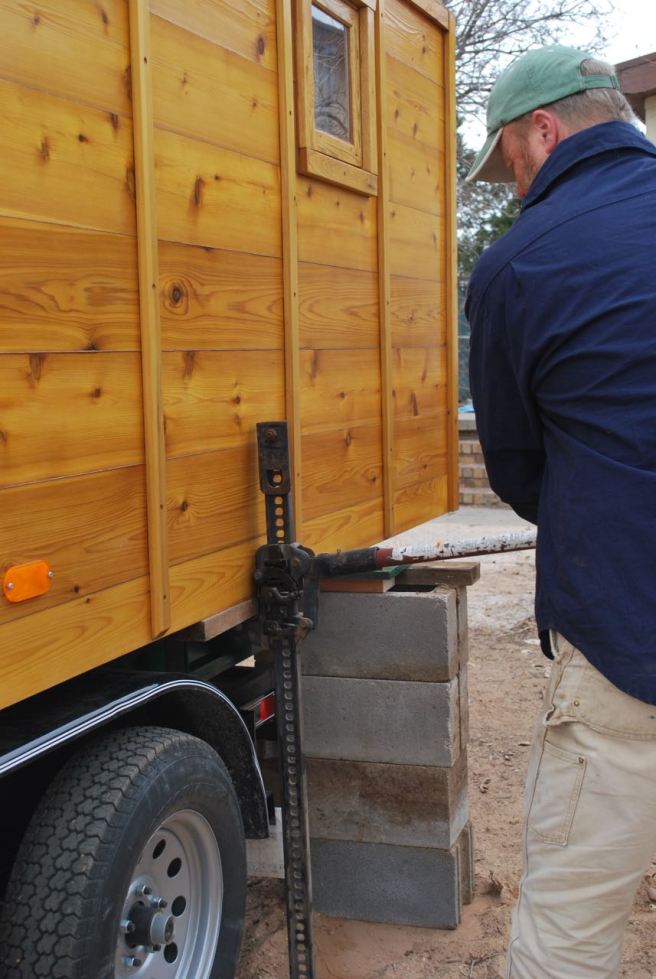
I used the Hi-Lift jack to easily support the body while we shifted the blocks around. I wanted to get the trailer as far under as possible to ease the final move.
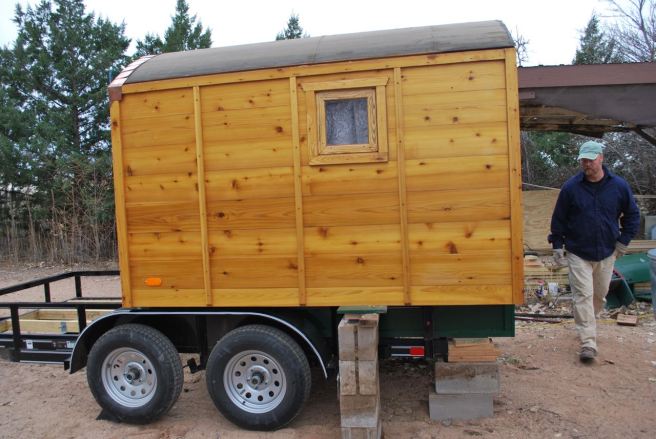
I was feeling pretty accomplished at this point and we were nearly ready for the final push.

Since there were only two of us, we greased the rails under the vardo body to limit the friction while pushing. This made a huge difference and allowed us to slide it into place with relative ease.
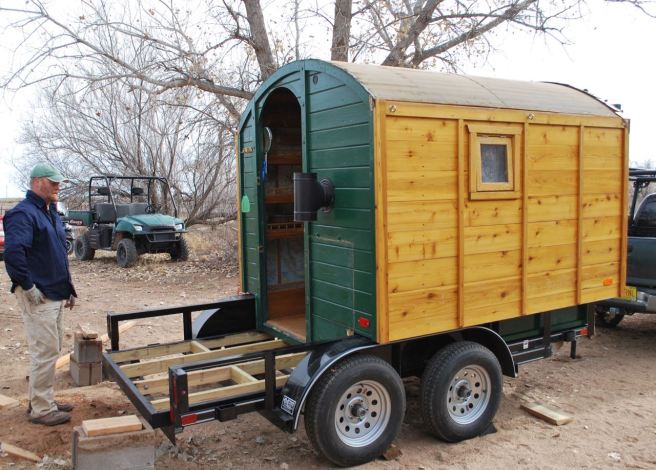
You can see that everything possible was stripped off the body to lighten the weight including the metal roof, stove-pipe, and door. Bolts were used to secure the body to the frame but I’ll likely add a couple more steel straps as we near completion.
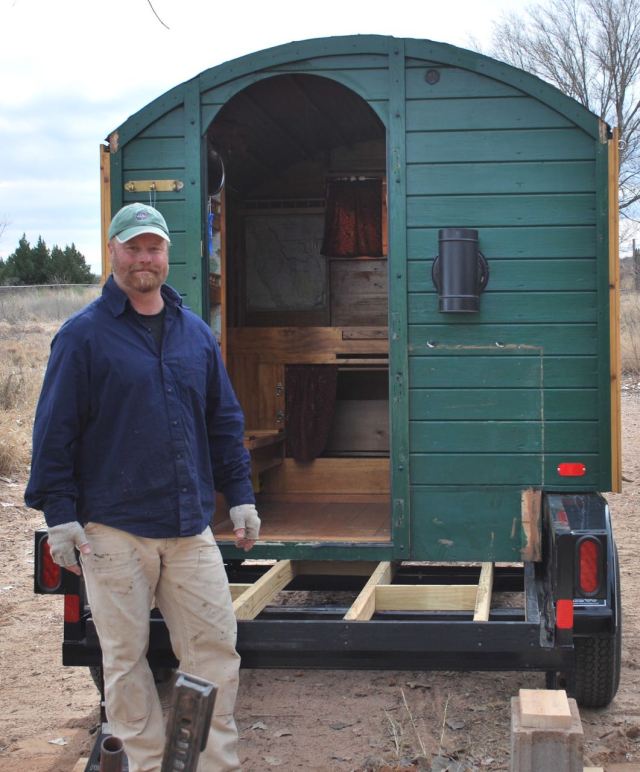
I intend to make the addition look as seamless as possible and to keep the same aesthetic in the addition. For me, it’s a modern living accommodation informed and inspired by the late Nineteenth Century caravans and Sheepherder wagons. They were ultra-modern in their time but had a certain warmth, comfort, and hand-made quality that most modern day RVs lack. Even on a small budget, a solid, warm, and safe home can be built by nearly anyone.
If you are looking for Part 1 of the rebuild/addition then CLICK HERE.
Caution – suggested nudity, implied whiskey, and some old-fashioned Scottish engineering to liven up the day.


Saturday morning came and it was time to start stripping down to the bare essentials (hence the first part of the title, suggested by SB).
After an evening of pulling everything out of the wagon (the first time it has been absolutely bare in over five years) it was time to commence preparations for the move onto the new trailer. This afforded me an opportunity to really look over the entire structure for movement, wear, water damage, etc. and to make changes if necessary. Happily, the structure has held up quite well considering the many thousands of miles and the extensive off-roading I have put it through. Examining the roof, walls, and under sides, the only water marks discovered were those from some seepage through the tongue-and-groove on the front wall from several years back. High-speed driving through torrential downpours really test the tightness of any wooden vessel. As I already knew about this, there were no surprises.

The exterior ledge bracing, storage boxes, and some trim pieces had to be removed to facilitate the fit on the new trailer bed. Stacey hunkered down and puzzled out how they were all connected and spent several hours turning nuts, removing bolts, and unscrewing screws, forming a mighty pile of wood, filling buckets with hardware, and pitching out old fasteners.

After a thorough examination for wear and damage (we found none), screw holes were filled and a fresh coat of oil paint was applied to the nether regions as some parts will become difficult to access once on the new trailer.
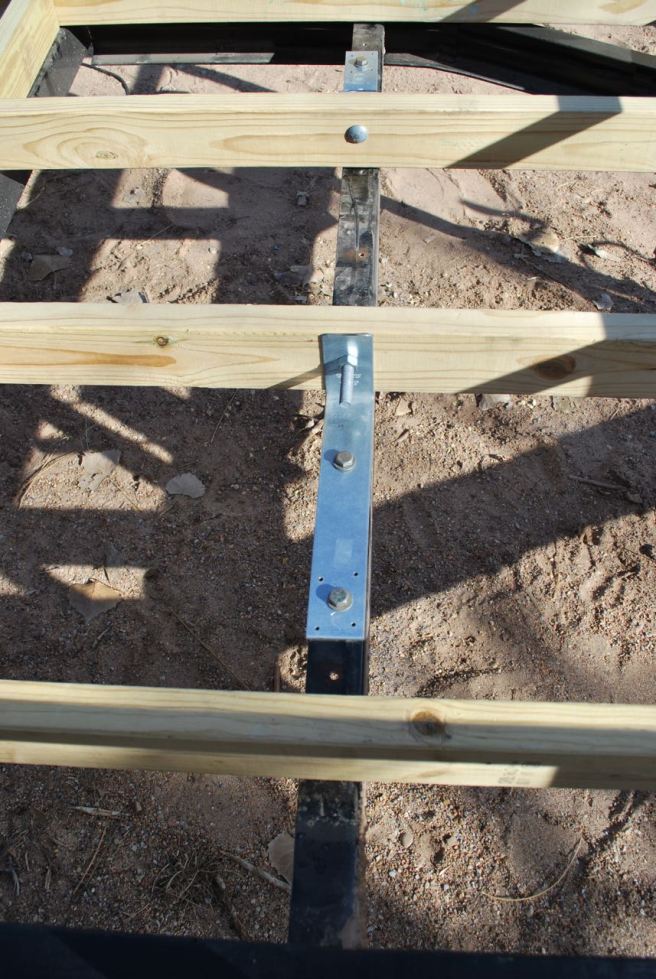
I sprinkled a half dozen Simpson Strong Ties around the frame for strength and safety; all recycled from the original wagon and an old barn project. The vardo will be fastened directly to the steel frame as well but when it comes to this sort of safety “too much is never enough.”
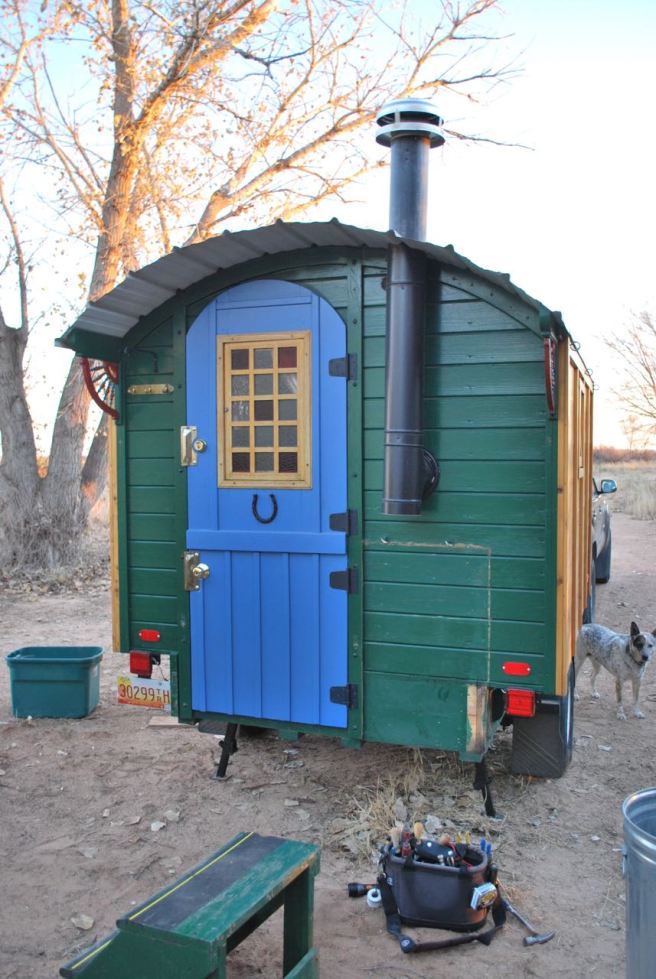
Although no major injuries were discovered in the 20,000 mile check-up, a lot of little issues were dealt with while we had the opportunity. It really drove home to me how much of the original build was done with salvaged lumber and recycled hardware. I have been slowly replacing standard fasteners with stainless, especially below the water-line; this gave me the opportunity to continue this practice (expensive but far-sighted).
While Stacey continued her exterior work, I crawled around underneath disconnecting bolts and steel straps to dismount from the frame. A handful of these could no longer be accessed from inside and had to be persuaded with a Sawzall.

How did I remove the frame? Not owning a forklift or other heavy machinery I used the simplest method I could think of. By using the tongue jack and some concrete blocks I was able to first lower the front, thus raising the rear-end. While the rear was up high, I stuffed the blocks and wood under the body to hold it at an appropriate height. Raising the front then disconnected the frame from the rear and allowed blocks to be placed under the front. My only fears revolved around the overall strength and stiffness of the body; would it take the stress in places the appropriate places? As I lowered the unit down, freeing the trailer, I was relieved to hear no creaks or see any flex anywhere.

Over the past couple weeks I have racked my waking brain for an easy and safe way to move the box from one frame to the other. It was at 3:30 in the morning a few days before the move when it came to me. Knowing my wagon fairly intimately, I knew that it was very close to neutrally balanced (i.e., the balance point was very near the center of the body) and this might be used to my advantage. If I could load the back end with enough weight to counterbalance the structure, the body could be cantilevered by 50% or more, like a big kid on a see-saw. The only concern I had then was the overall strength of the vardo body after the steel frame was removed. The fulcrum point would bear a lot of strain.

To sum up this rambling explanation, YES, it dis indeed work!
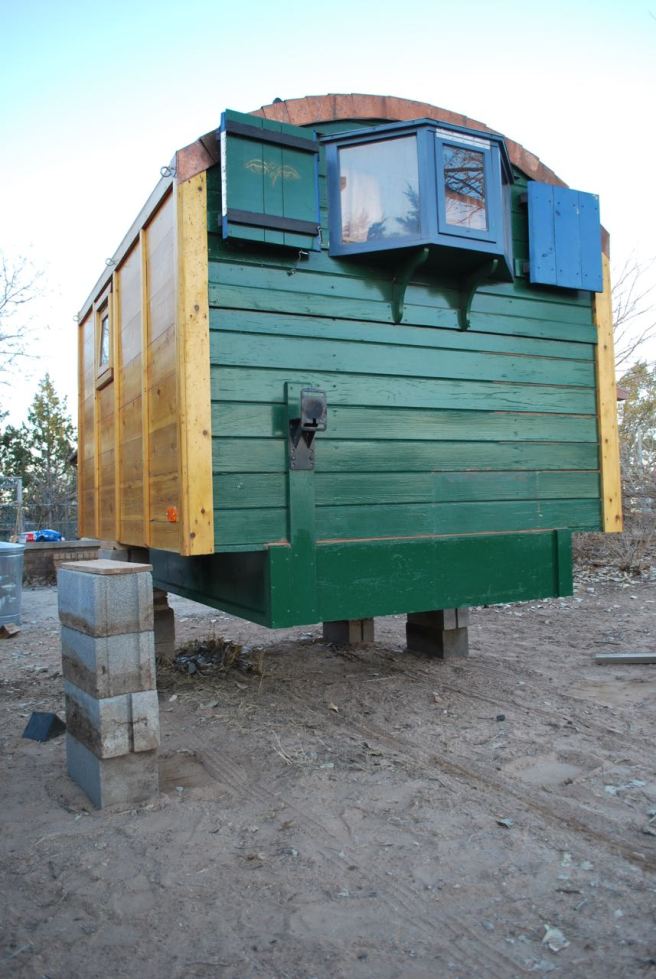
Voila! I felt like a stage magician levitating his beautiful assistant for an audience full of suckers; in this case, a dog, cat, and a slew of poultry. The old trailer was pulled away to be sold on Craigslist.
I secured about 400 pounds of weight near the door allowing the front end to float while we prepared to maneuver the new gear into place.
With the early winter sunset I decided the next step would have to wait for morning. Don’t worry, I re-jacked the front end overnight for safety sake. I didn’t want a crushed dog should the worst occur.
If you are looking for Part 1 of the rebuild/addition then CLICK HERE.
A couple of issues had to be addressed before any real construction could begin. Unfortunately, a day job and early sunsets dictate my work hours so I only have a short time each night to get something done throughout the week. Here’s the summary:

The trailer arrived at about 990 pounds. I liked the floor but the extra weight was not desirable. I was going to need to lift the old ledge body about 1 1/2″ anyway (to get the current ledges over the welded rails) so I decided to replace the original floor with a wooden frame to provide the proper height. Does anybody want to buy some 2 x 8s for cheap?
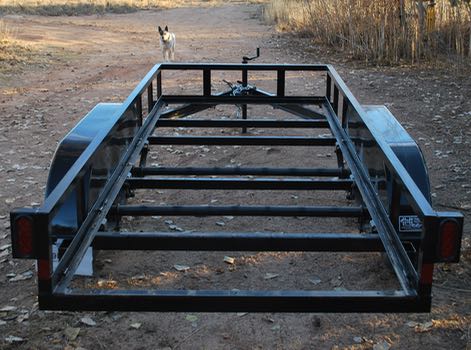
A half hour of work, after locating the proper T40 screw driver head for the drill, and the boards were free. Removing the floor boards from the flatbed relieved us of 209 unnecessary pounds, bringing the trailer down to about 780 pounds. That weight-savings can be better used elsewhere and we already have a plan for it.

I’m not a fan of the chemicals in treated lumber but I bow to it’s remarkable ability to survive some pretty harsh treatment. My desired dimensions overhang this trailer by a couple of inches and this was a pretty good way to support that plan without compromising any length. Every inch counts, right? Before you ask, the asymmetrical layout is due to old habits of building on standard centers (16″ in this case). It will only really benefit the laying down of the sub-floor but it saved me some arithmetic. It’s comforting to slip back into zen construction mind.
The coming weekend will hopefully yield some real progress as we are now coming into the difficult bit… moving the old vardo onto the new frame.
If you are looking for Part 1 of the rebuild/addition then CLICK HERE.
A REAL BEAUTY!
Here is an overview of a most remarkable modern Vardo build by Greg Ryan. Not only does it document an amazing build, it is a really well put together little film as well. I wish I could hit this level of craftsmanship someday. This is one that will really inspire the budding builder out there.

The Library of Congress has some pretty amazing stuff. I rarely find what I came for but I always find something pretty spectacular. This house (click to enlarge) is quite a piece of woodworking. Shingle siding all glass door, sturdy balcony, beautiful windows, under storage, and what I think is a pull out pan box on the back. The O’Donnell’s were certainly traveling in style.

The amount of joinery that went into the door and windows is probably more than is found in most houses today. I really like the old basement windows used as storage access underneath. As usual, I could find no interior photos but I suspect it was well appointed.
Original files can be found: http://www.loc.gov/pictures/item/npc2008007978/and http://www.loc.gov/pictures/item/npc2008007936/
If this isn’t inspiring, I don’t know what is.
Oh, and nearby photo caught my eye in the Library:

I’ve never known a woman with a garter flask before…

The details here are remarkable including the decorative framing around the windows and planter boxes … with plants! I believe this sits on solid rubber teeth-rattling tires. You can probably tell from the caption but this is apparently from Germany in 1922. I wish I knew what the function of the trailer was; workshop, spare bedroom, animals, kitchen?
When it comes to making enough money to get by, the two have a unique system.
“In our ideal setting,” Hutchison explains, “is four months of working somewhere, [or] four months of volunteering somewhere, and then four months of traveling.”
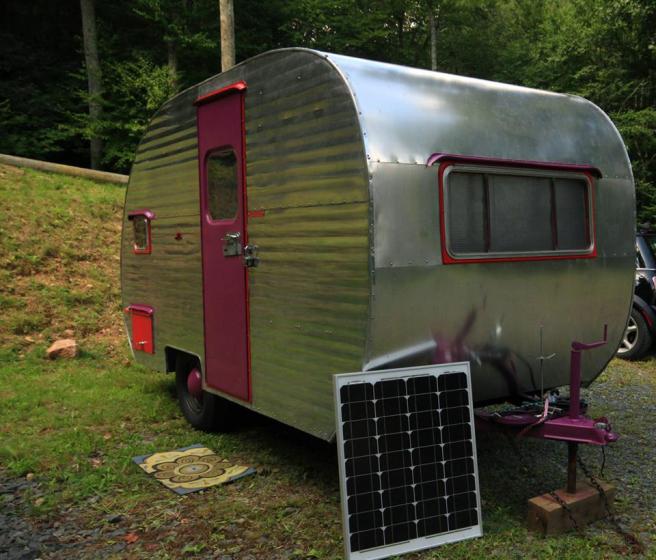
FROM THE VERMONT PUBLIC RADIO ARTICLE:
“Many people spend most of their day in an office, and I was really, really tired of that and being tied to e-mail and my calendar.” Galiardi explains.
“We both had challenging careers,” she says. “The challenges were becoming, ‘How much more can I fit in?’ Rather than [fitting in] what I really want to be doing.”
Now the couple uses the trailer as a home base, spending much of their time outdoors: kayaking, biking and hiking.
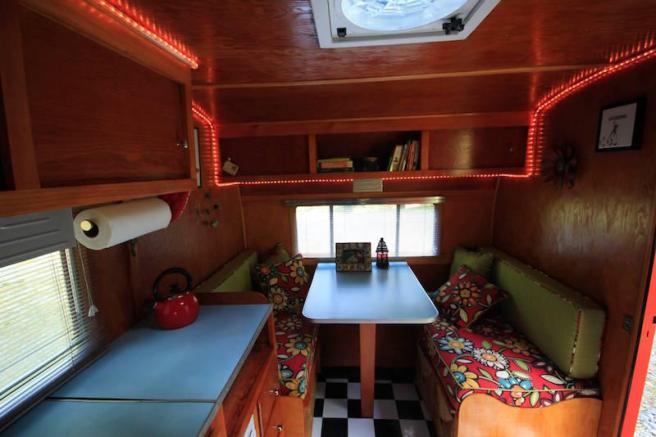
On fitting the few things they own into a tiny space:
“It’s a lot like a sailboat. In that, everything has to have its place,” says Hutchison. “When you go look for that thing, it’s there. And then it goes back there when it’s done.”
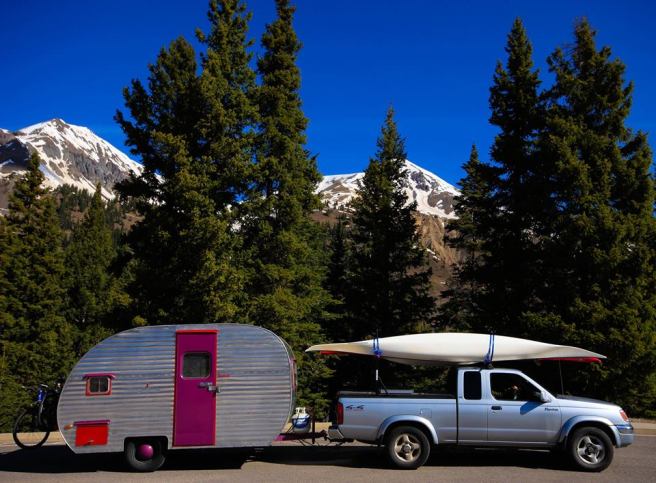
If you are interested in learning more they have been keeping a blog of their adventures over the past few years. You can read more by clicking here: Tales from a Mid-Lifeventure.
Danger, geek stuff ahead as I share a little story from last week…
Recently, on my occasional foray into our local charity shop I saw something mysterious. I’m not much of a shopper but before I was even certain as to what this fellow was, I was pretty sure I needed to possess it. Knowing nothing about this entire class of antiquity, I also had no idea what a good price would be but I knew that the listed amount would be worth my entertainment. The tag asked for about the price of a decent dinner out in small town rural New Mexico. And they say it goes to a charity, right?

I find about one thing per year in this store that actually piques my interest. This slightly battered black box was pushed back on a bottom shelf mixed in with some old-style slide projectors and video recorders. I thought maybe it was a film camera or possibly a projector. Whatever it was, the case appeared to be from a better era of construction, and judging by the battered handle and nicks in the covering, it was well-loved and was much carried around. The fact it had a key and functioning lock gave me hope.
So What Is It? A Clockwork Ipod? An Early Laptop?
Some of you savvy collector-types who know antiques probably spotted it for what it is immediately.
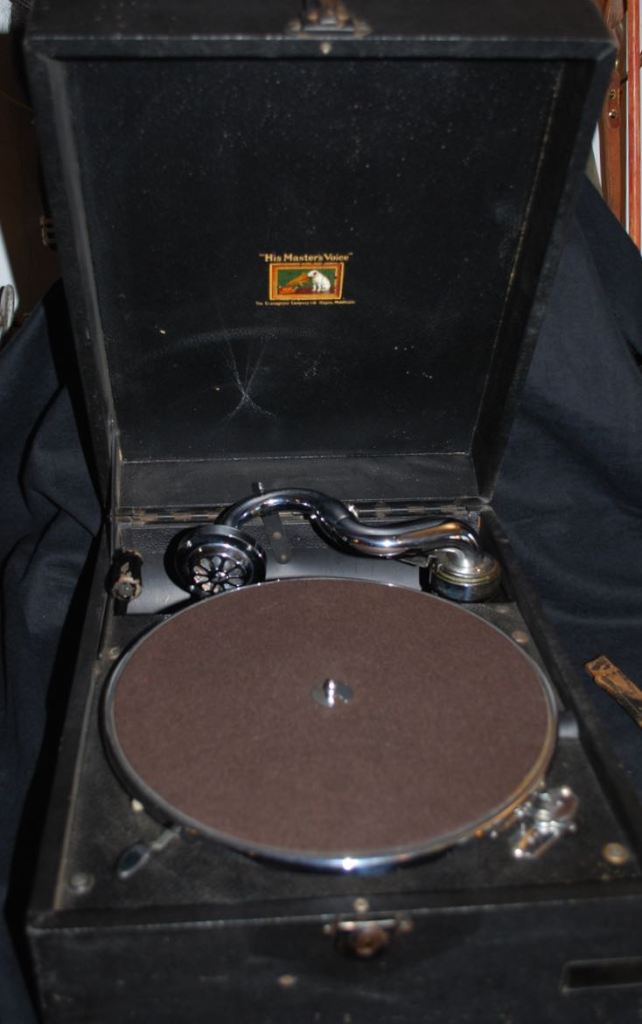
Opening it up, I was excited to see it was a 78 RPM gramophone. I honestly had very little hope that this thing would work or that all the parts would even be present much less in working order. My experience is that thrift store patrons are a rough lot whose goal it is to disassemble and loot as much of the merchandise as possible; merely for the entertainment. Nevertheless, I was intrigued.
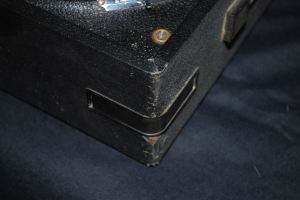
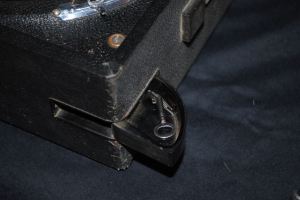
I honestly had no experience with this sort of contraption but, lacking any sort of electrical motor or plug, and having a crank handle stowed inside, I quickly deduced that this was an escapement clockwork mechanism. The moving parts still moved. The solid bits remained solid. Better yet, there was a small, hand-written note inside reading: “We purchased this in England in the 1930s. Brought it over here in 1970.”
Only this, and nothing more.
Under the watchful glare of the shop attendant, I examined every part, figured out what moved where, felt out the spring by cranking it up, testing the stop and start mechanism, fondled the styluses, and generally examined this little beast like a dairy cow at a county fair. No part went untouched, if you know what I mean.

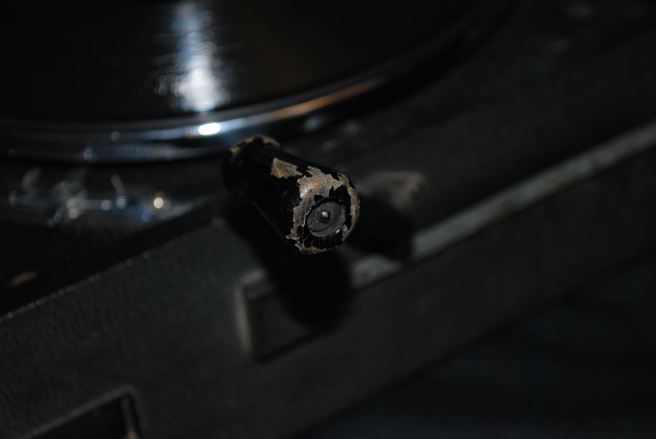
Cranking it for the first time, I felt for any oddity in turning. It felt smooth and tightened slowly. I had no idea if it should turn five or one hundred times.

I inserted a needle and brushing it with my finger I could tell it had plenty of sound. There’s some use for calloused skin I suppose.


I think they used to make some good stuff in England.

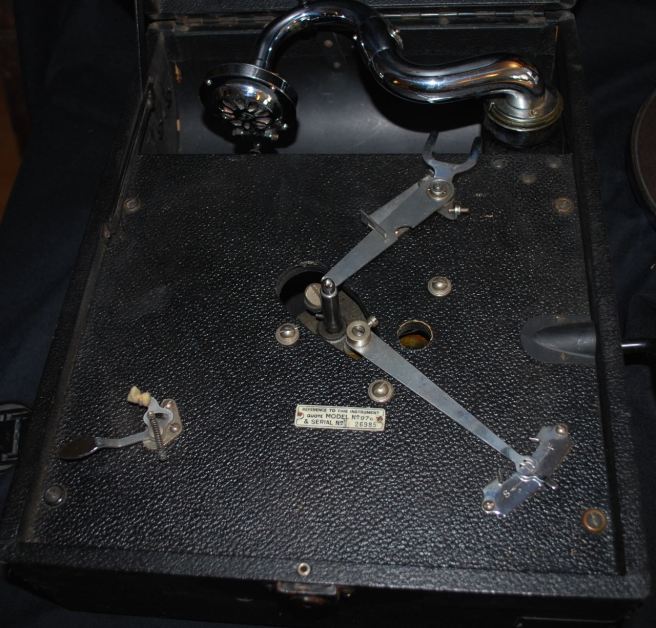
Being, in the words of Shakespeare, one of those people known as the rude mechanicals, I was able to figure out the basic functions of the machine with just a little experimentation. They were spectacular. Appealing to my somewhat Luddite, but also slightly retro-futuristic aesthetic, I desired to possess this creature. It turned when cranked. The stop mechanism stopped. It had all the right parts (I thought). It was a beauty to behold.
However…
I decided, in accordance with my Minimalizing lifestyle, to close it up, put it back on the shelf, and walk away… I issued the nolle prosequi for the moment. I let that train sail from the station. If it was still there in two weeks, I would reconsider.

I thought long and hard about this. It was nearly perfect.
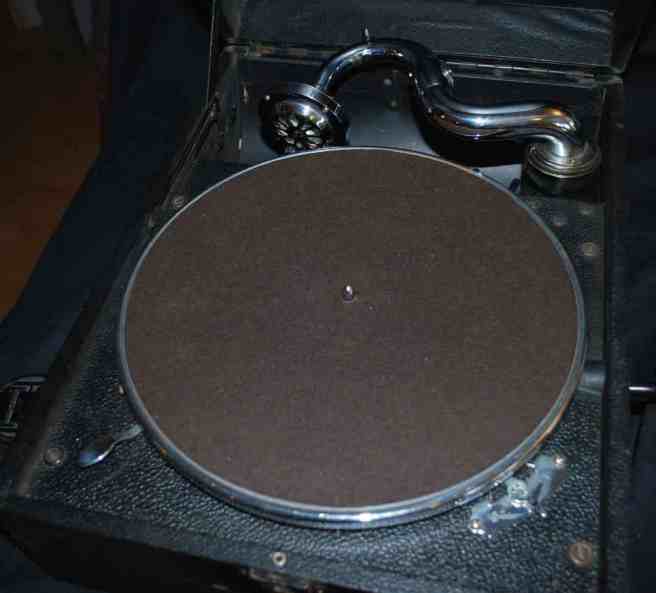
Not long ago, I would have snatched it up just because it was fun and cheap; even just as a novelty. Nowadays, I don’t make purchases without a lot of consideration. Do I need this? Not really. Do I think it will bring some pleasure? Hell yeah. Is it expensive? Not really. In fact, I partially justified it to myself that I could always re-sell it on Ebay, at more than ten times the asking price judging by others I found online. So, of course,
I bought it.
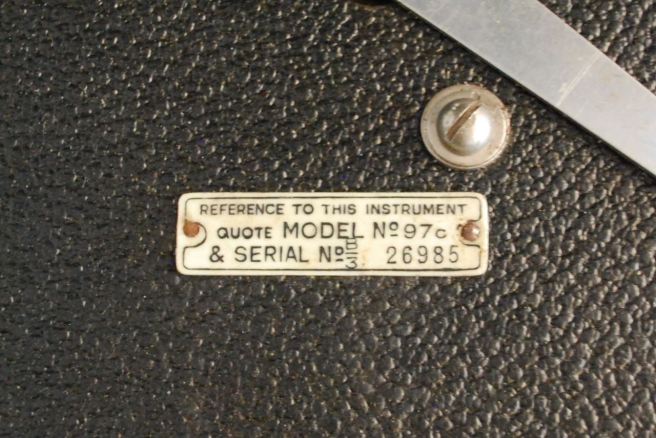
A little Internet research taught me a lot about this type of instrument. Here’s some model-specific information I came up with:
HMV Model 97c – The “c” is a year designation for the 1939 model although one collector site thought it might be a 1938 model. This makes little difference to me as it’s still 76 years old. The Model 97 was designed as a cheaper alternative to the ever popular HMV Model 102 costing £2-£3 in the mid 1930’s compared to the £5-£6 price-tag of the 102 (I’m told this is about £395.00 and £795.00 in today’s economy). It has a 10” turntable, HMV No.21 sound box, automatic and manual brakes, a pivoted front corner needle bin and it originally came with a record carrying tray (now sadly missing). It is finished in a black Rexine® (fabric comprised of cellulose nitrate, camphor oil, pigment, and alcohol, embossed to look like leather) cloth-covered case with a steel-reinforced leather handle.

Of course, I remember 78s being around in my elder’s record collections as a kid but I am definitely of the age of vinyl and now electrons in some sort of cloud. Fortunately, there are loads of reasonably priced 78 RPM records and replacement needles out there so providing some sustenance for the HMV was for me, but the work of a moment (and an exercise in PayPal). Here’s a rather dull video I made of the little box in action (my first YouTube upload) just to show how well it works.
Pulling the arm out to the right kick-starts the motor by unlocking the turntable, and it stops by triggering the lock again as the arm reaches the inner radius. Needles need to be replaced after every use so there is a small expense involved. The little box is remarkably loud and the old adage from the Victrola era “put a sock in it” rings true unless you happen to be hosting a dance. I understand that these were popular for picnics and outdoor soirées as they made plenty of noise and required no external power. A sort of boom box of their day. Anyone having unwanted 78s lying around feeling neglected can send them my way as I think this will be a novel little device for the long winter evenings in the Vardo.
Here’s another look at an image I posted quite a while ago. I really like this photo. These Scottish Travellers give a glimpse of some less-than-stereotypical living waggons (sic). Very few wanderers could afford the classic Dunton Reading wagon but made do with more affordable accommodations; possibly even owner-built.

All three of the caravans pictured have mollycrofts for light and air but are of a pretty simple variety. I am struck by the one on the right mostly by how plain it is (plank siding without exposed ribs) and it’s very small proportions. I suspect there were many more of this variety than the elite, custom-built wagons on the roads in Britain in the heyday.
 Preindustrial Craftsmanship