
Some shoe solutions from the Bronze Age, North Africa.

Sandal maker – New Kingdom, 18th Dynasty from Thebes ca. 1504–1425 B.C.
Like a Diderot illustration this gives a good insight to the workshop of an artisan with the essentials of his trade. There’s the stool, which is useful in leatherwork as it gives a good lap to work on. A beam, probably implying that the leather is made on-site. A couple of awls in handles are shown and what is probably a curved awl, made from antelope horn, useful when weaving leather (my speculation based on huaracheros and other traditional weaving tools). The sole of the sandal looks to be leather and is being punched with the awl. Other sandals are made from fiber, probably by a different artisan specialist, while burial sandals were likely a specialty industry and are often made from wood or precious metals.

Papyrus fiber sandals. Second Intermediate Period–Early New Kingdom, 17th-18th Dynasty, Thebes ca. 1580–1479 B.C. These are constructed using a coil basketry technique which involves wrapping a soft fiber around a thicker, linear element while “sewing” into the adjacent coil.

Papyrus fiber sandals. Second Intermediate Period–Early New Kingdom, 17th-18th Dynasty, Thebes ca. 1580–1479 B.C.

Red ochre stained calfskin leather sandals. New Kingdom 18th Dynasty during the joint reign of Hatshepsut and Thutmose III ca. 1473–1458 B.C. These are interesting as they are tooled to look like woven sandals. The leather might be harder-wearing but the woven style may have denoted more wealth (i.e., flimsy shoes equates to more wealth or less need to labor). A very simple design used for thousands of years and well-illustrated in the sandal maker panel above. This is a good survival sandal that could be made quickly in the field from many materials today.


Finally, a couple pair of golden burial sandals (women’s) from Thebes, New Kingdom 18th Dynasty during the reign of Thutmose III ca. 1479–1425 B.C. Note the embossing to imitate stitching. A simple design that could be made up in a very short time.

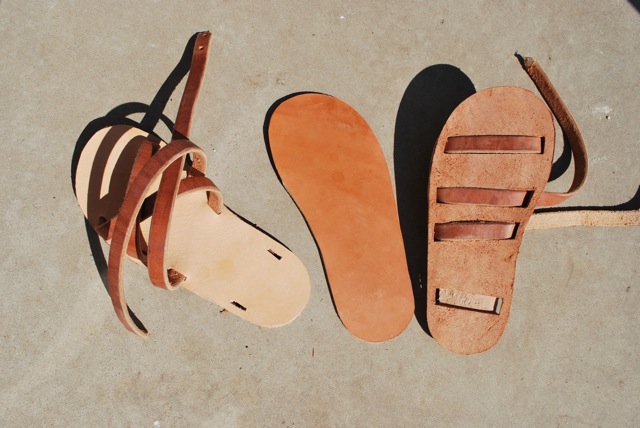
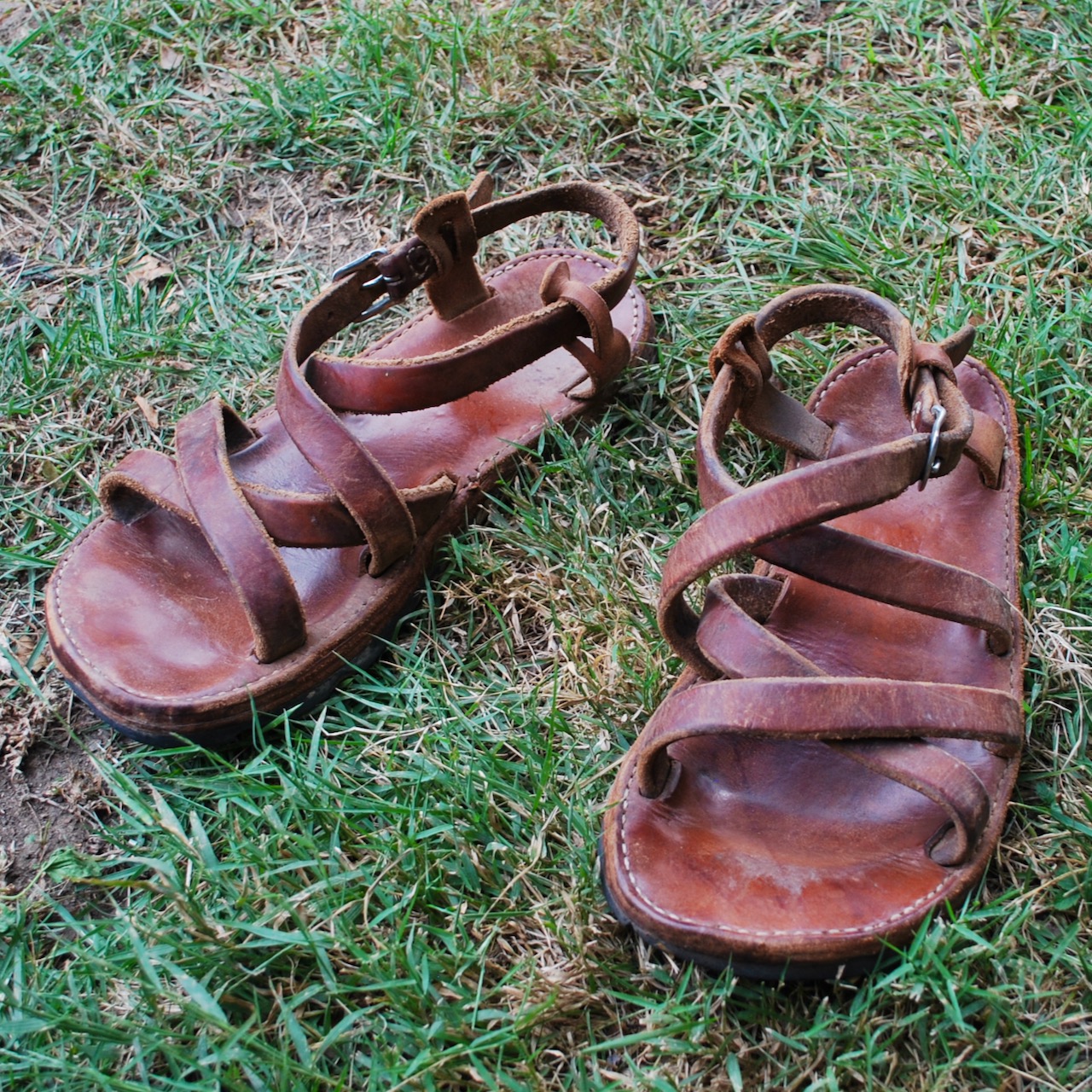
All of the above images are from the Metropolitan Museum of Art, New York and clicking any of the photos will take you to the appropriate page for the artifact. I chose these sandals as I believe the best survival solutions are tried and true and generally exhibited in the archaeological record if the material survives. Make yourself a pair of shoes. With a little practice, basic footwear can be made that is serviceable and fit for public wear. Our ancestors did this for thousands of years, we can too.
Everything you build, every entertainment you make, every meal you procure yourself frees you from the market economy and liberates you a little more from the consumer system.


 Preindustrial Craftsmanship