

But the tobacco companies claimed that smoking was completely harmless and if you can’t trust big business who can you trust. Yeah right – Ted
Image found at Casa de Ricardo
Adventures of an Imperfect Man In Search of a Handmade Life

But the tobacco companies claimed that smoking was completely harmless and if you can’t trust big business who can you trust. Yeah right – Ted
Image found at Casa de Ricardo
Especially if one is a traveller. On that note, I put together this 18th century style portmanteau to attach to the bottom of my rucksack. It is on the small side for this style bag but the dimensions are based on a convenient size to attach to the backpack and the scrap shoulder I was using. I also foresee this working as a front bag for the scooter or even on the bike.
 Outside dimensions are 16″ (40.6 cm) x 7 3/4″ (19.7 cm) diameter for about 680 cubic inches (11 litres). One step closer to a handcrafted life.
For those who can’t or don’t have chickens: free range, cage-free, vegetarian-fed, certified humane? Here’s an explanation of the legalese.
 From TakePart.com.
I think I need one.

Indian is an American brand of motorcycles originally manufactured from 1901 to 1953 by a company in Springfield, Massachusetts, US, initially known as the Hendee Manufacturing Company but which was renamed the Indian Motocycle Manufacturing Company in 1928.
The Indian factory team took the first three places in the 1911 Isle of Man Tourist Trophy. During the 1910s Indian became the largest manufacturer of motorcycles in the world. Indian’s most popular models were the Scout, made from 1920 to 1946, and the Chief, made from 1922 to 1953.
The Indian Motocycle Manufacturing Company went bankrupt in 1953. A number of successor organizations have perpetuated the name in subsequent years, with limited success. In 2011 Polaris Industries purchased Indian Motorcycles and relocated operations from North Carolina, merging them into existing facilities in Minnesota and Iowa. Since August 2013, three motorcycle models that capitalize on Indian’s traditional styling have been…
View original post 31 more words
 Here’s a man making his way in the modern world but likes being stuck in the late 18th century. Farrier, blacksmith, storyteller, and musician living in his bowtop.
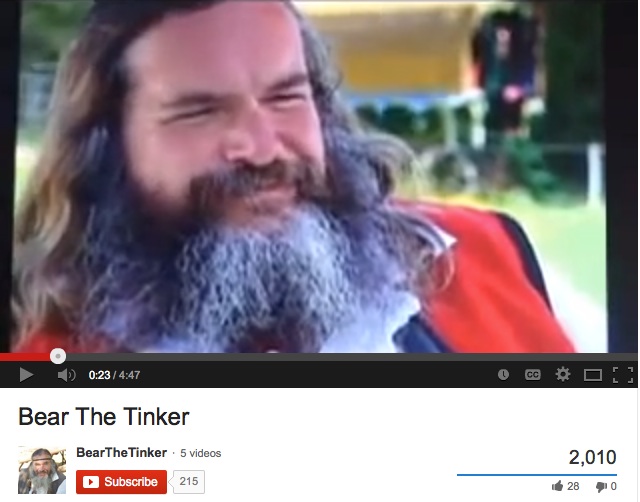 Above is a short interview with the man himself from a few years back (opens in a new window).
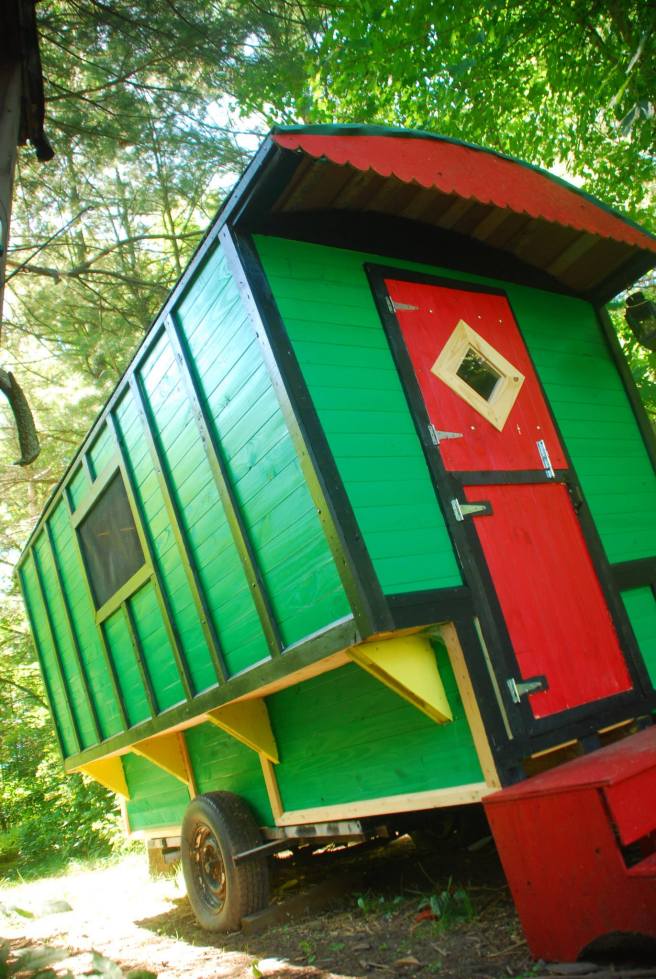 Living in the 21st century, he even maintains a Facebook presence, of sorts. Click on his new little Ledge Wagon above to see what he’s up to.
600 Sq. Feet in Little Rock, Arkansas.
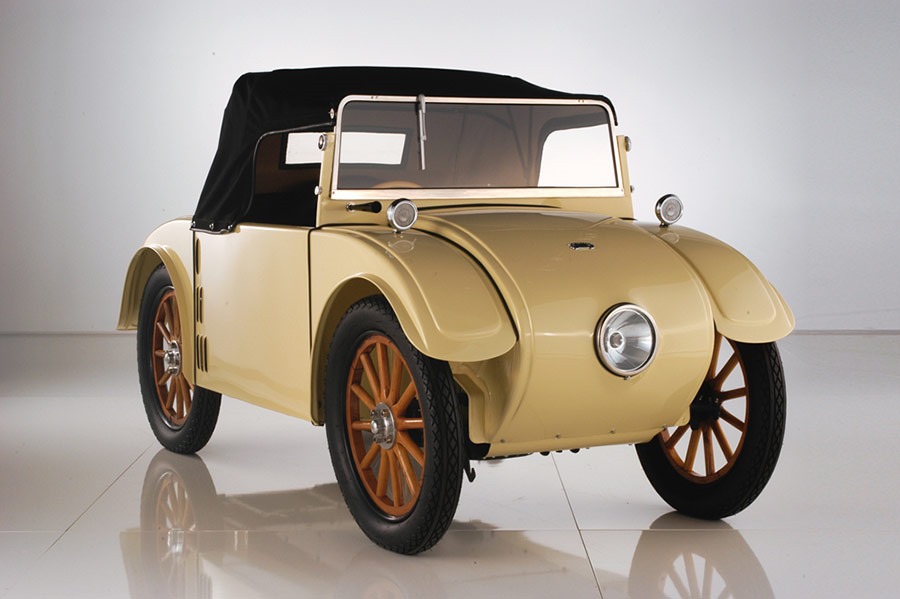
The Hanomag 2/10 PS was an economy car manufactured by Hanomag from 1924 to 1928. It was one of the first cars with envelope styling. It was affectionately referred to as the “Kommissbrot” or “Loaf of Rye Bread” due to its small squarish shape.
With a fuel consumption of 4.0 litres per 100 kilometres (71 mpg), the 2/10 PS was the world’s most fuel efficient mass-production car between the two World Wars. This was because it was the only mass-produced car of that time with a low-friction one-cylinder-engine and its light weight.

The 2/10 PS (two taxable / ten brake horsepower) had a single-cylinder half litre engine at the rear. The rear axle was chain-driven, with no differential.
The fenders, or wings, of the 2/10 PS were integrated into the bodywork of the car, allowing the passenger space to be wider than it would have been with the traditional…
View original post 97 more words
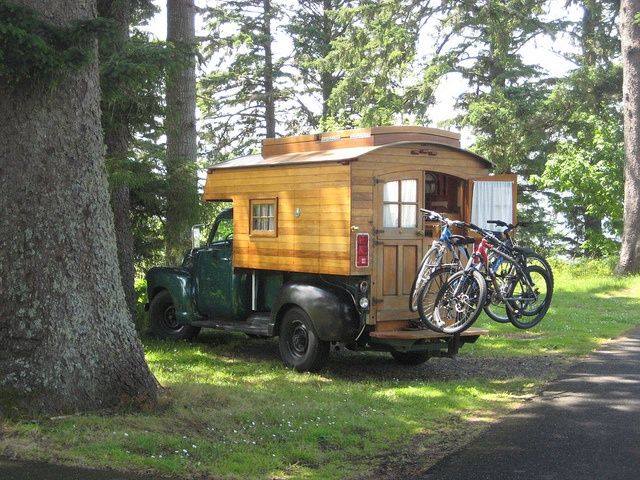
Seen on the Road to Glamperland Facebook page.
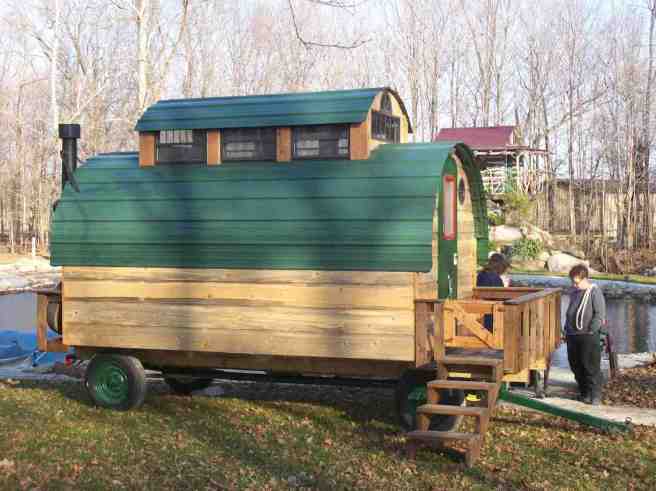
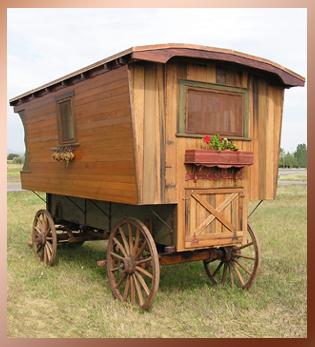
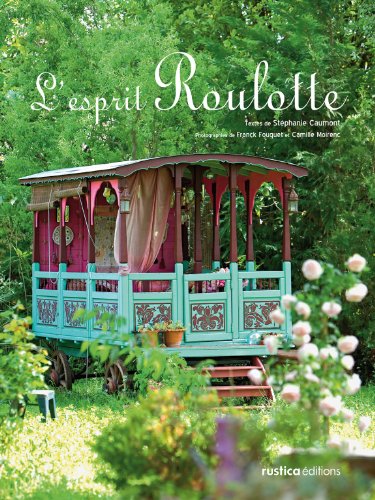
After several requests for information, here is my short list of inspirational sites found on the web. Culling the web for Vardo style so you don’t have to. I will try to morph this into it’s own page soon as a place to add more links as they become available.











MORE TO COME
Continuing my search for backpacks and rucksacks throughout history, I keep coming across various types of boxes and baskets strapped to people’s backs. While querying the web today for variations of the Asian pack box, I saw this nifty solution. Cheap, easy to construct and extremely functional.

I can imagine this as an excellent platform for a street performer or busker. Solidly built, this can be a table or a seat and provides a high degree of protection for the contents. This one is very simply built and harkens back to a medieval concept but note the sweet dovetails holding it together. I just want a peek inside. I would be sorely tempted to fill it with compartments.
More nifty ideas to follow.
 Preindustrial Craftsmanship