Some New Leatherwork

There are some new projects coming off the bench.Here’s a new minimalist traveler’s wallet.  I’m still working through the design and construction process but like it so far. Simple three-pocket design; a vertical a horizontal card pocket  as well as a large one for bills.

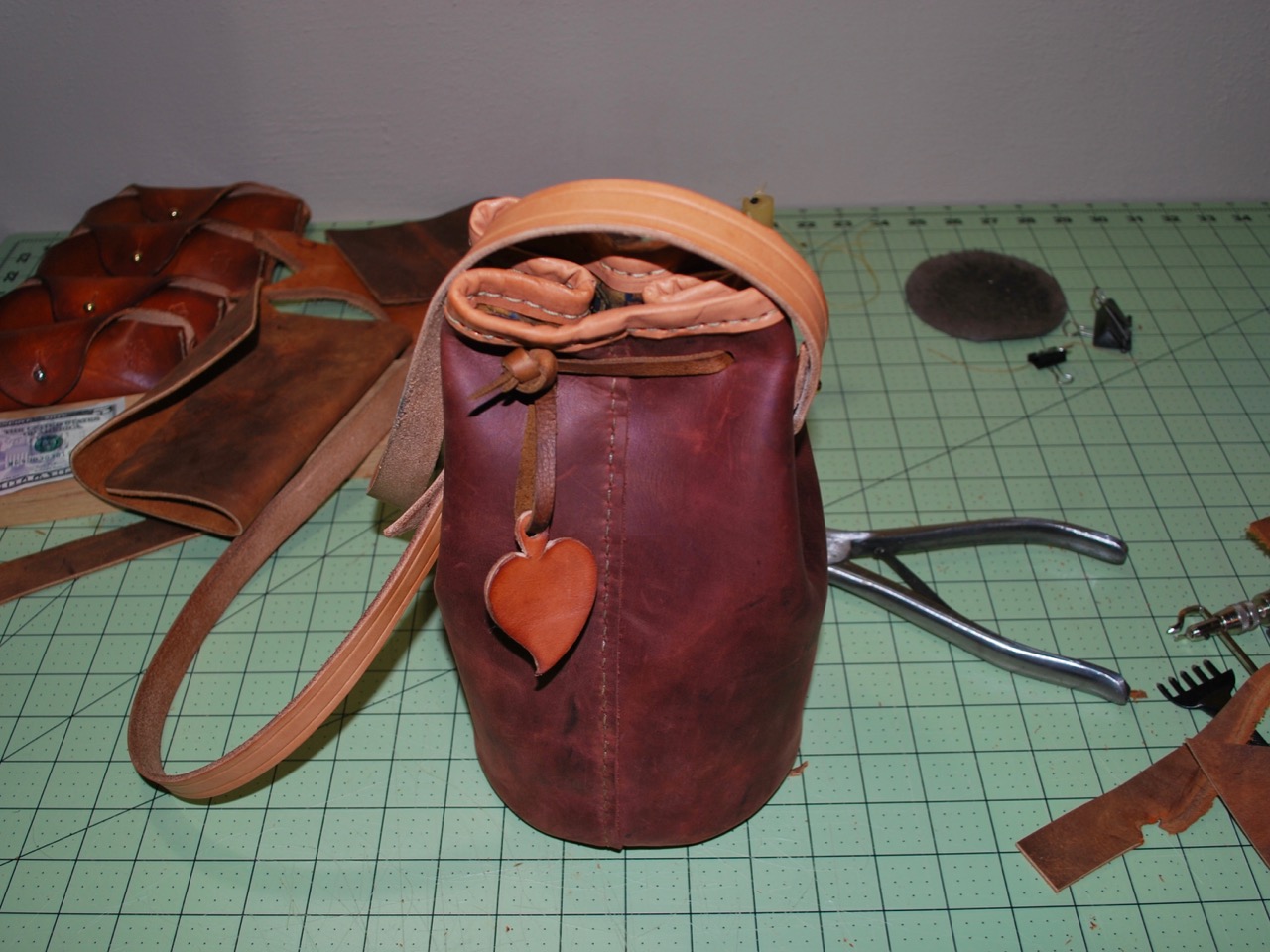
A bucket purse made from an oil-tanned leather.  Welted and bound with thin harness-grade bark tanned leather with a heavier leather shoulder strap.

I try to put some sort of bling into projects.  This is a historic heart design was cut freehand and balances the antler toggle on the other side.

Fully lined with a batik print my daughter bought for a skirt.

Welted bottom.

The Caveman Catalyst in Your Tinderbox

It’s always time to up your fire-building game. Survival Sherpa Todd Walker does just that in this post. Check it out.

Survival Sherpa's avatarSurvival Sherpa

by Todd Walker

The Caveman Catalyst in Your Tinderbox - TheSurvivalSherpa.com

The human love affair with fire is intimate and ancient. Over the flames we cook, celebrate, spin tales, dream, and muse in the swirls of wood smoke. Fire is life. Its warming glow draws us like moths to a flame.

It’s not a stretch to believe that a Stone Age chemist recognized the idea of using carbon for future fires. Disturbing the leftover carbon ashes from the night fire, she stares at sparkles of light glowing like the pre-dawn stars above. She carefully nurses a baby “star” back to life to warm her hearth and home.

It ain’t rocket surgery. Even cavemen knew the importance of the sixth most abundant element in the universe.

Carbon and Future Fires

The game of chasing lightning strikes for each fire was no longer required. This unreliable practice was abandoned for twirling sticks together to create enough heat to initiate the…

View original post 1,375 more words

The World is Your Workshop

In Britain and Ireland, the Romany Gypsys and the Traveller community are often associated with low-skilled work such as scrap dealers, horse traders, musical entertainers, or more nefarious activities outside the societal norms.  However, there were plenty of skilled craftsmen and craftswomen providing goods and services to people around the country.

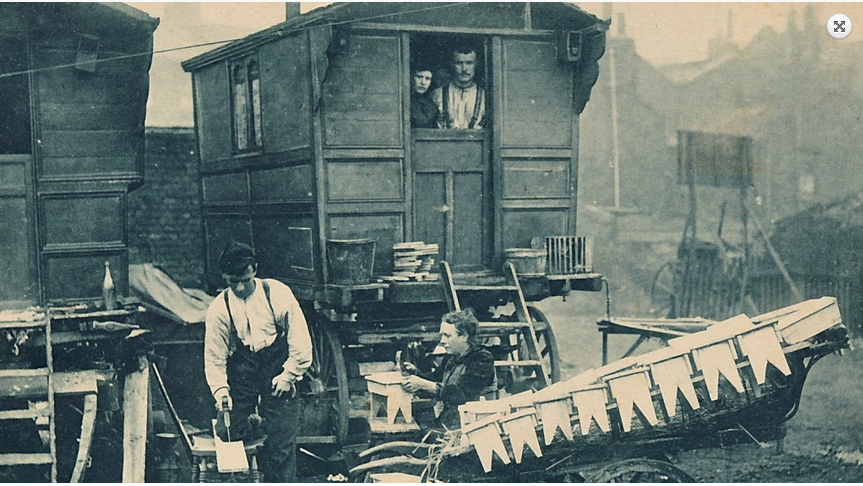
Below is an image of a couple, working together making footstools outside their vardo while another couple looks on from the comfort of their wagon.

Gypsy carpenters making small and large stools for market. From an early 20th century postcard.  Source: Romany and Traveller Family History Society.

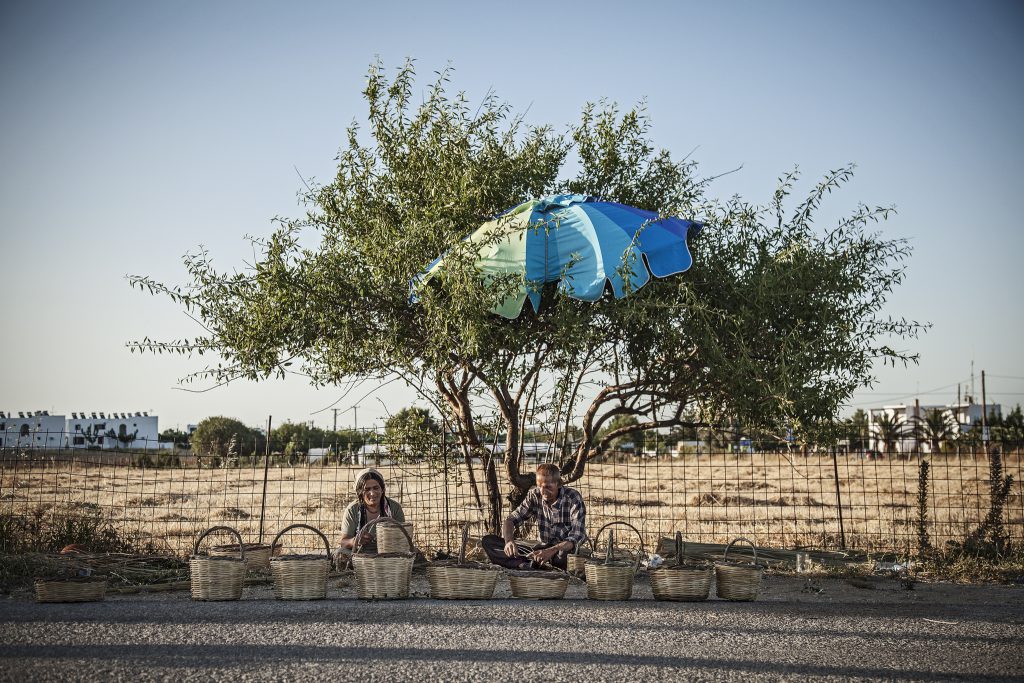
Other Gypsy families were blacksmiths, basket weavers, or similar occupations that could be taken on the road, required little stock or overhead, and could be performed independently or with a minimum of family help.

Gypsy Basket Weavers on Skyros. Source: http://from-hand-to-hand.org/.

There is more to wandering people than the romantic or demonized images we carry.  People are just people after all.

Gypsy Blacksmith. Source.
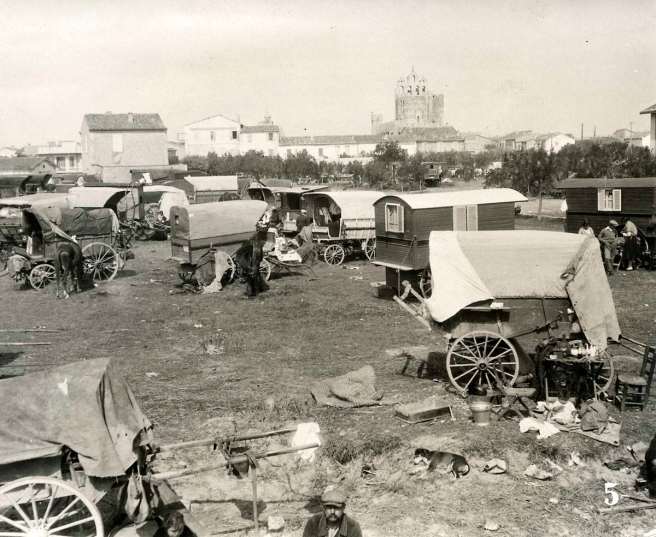
Gypsies France 1930s-1960s
Encampment on a pitch somewhere in France, early mid-20th century.

Tents and the Vardo Life; What is a Bender?

vardoandbender
The bender tent provides shelter from the damp while keeping the living space outdoors.

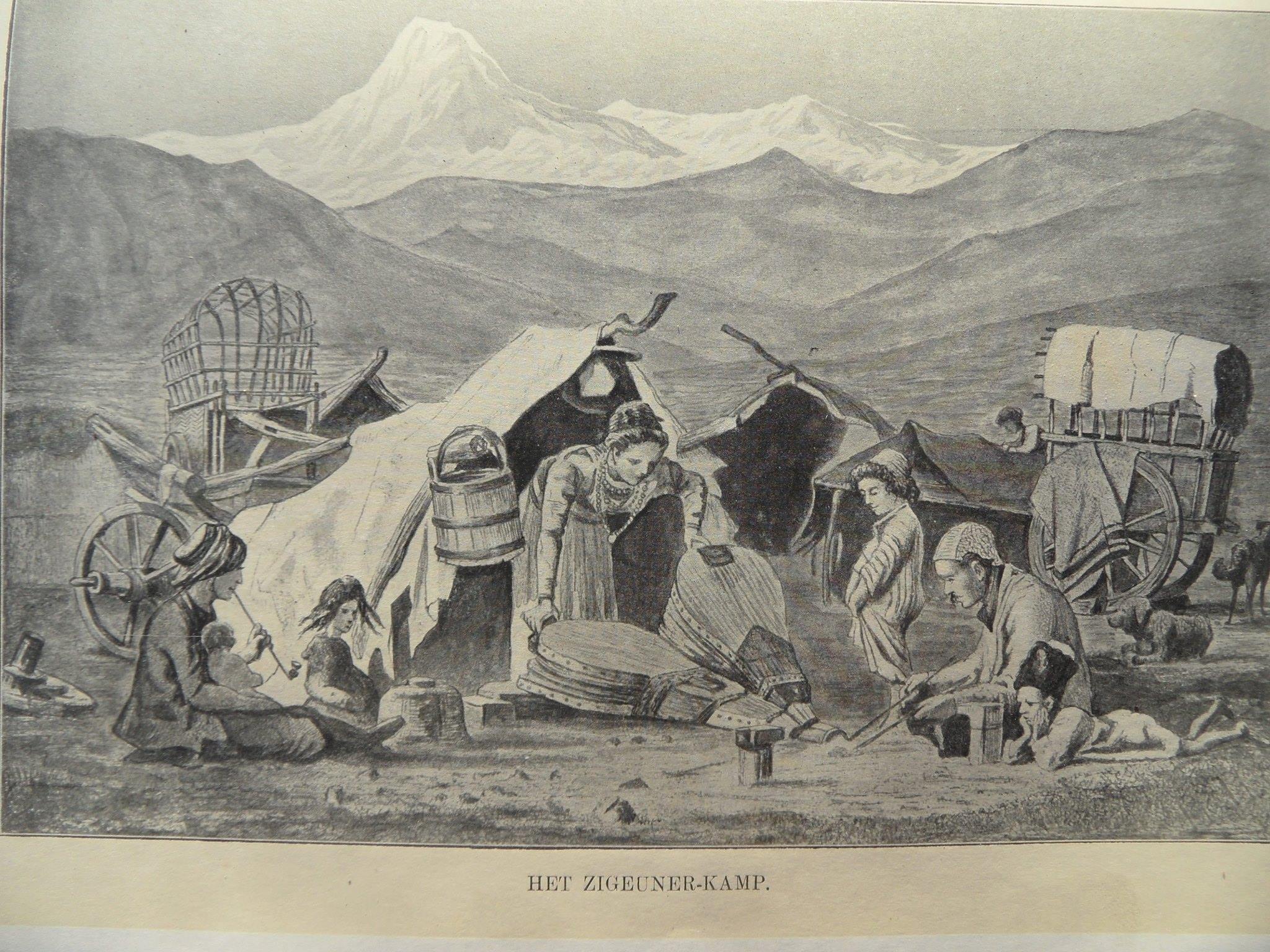
Travellers in Europe and Britain have always been associated with a style tent called a bender.  This comes from the construction technique of cutting saplings and bending them into a dome, elongated dome, or half cylinder shape,  These frameworks were then covered with tarps and made watertight in the temperate damp.  The origins of this design are lost in the mists of time and are believed by archaeologists to be one of the earliest style of recognizable tent structure used by humans.

Screen Shot 2018-11-21 at 19.45.31
This size bender can more than double the living space of a vardo in a matter of minutes.

Even after a certain level of affluence allowed some Romany and other Travelling folk to own living wagons, the bender continued (and continues) to be a way to extend the living space without the need for a lot more gear.

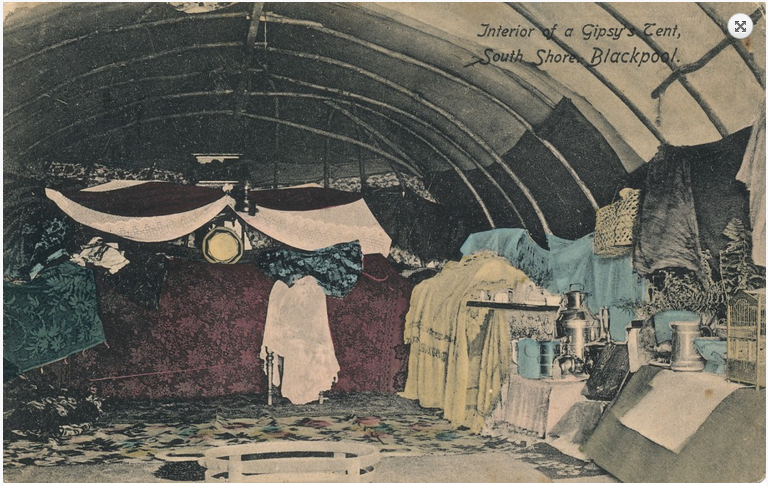
In England, Gypsy women often used their homes for fortune-telling, especially around the Gadjo (non-Gypsy) vacation centers. Image, early 20th century. Source: Romany & Traveller Family History Society.

The fact that a tent becomes the subject for a Blackpool post card shows the ongoing fascination with “Gypsy Culture,” especially in the British Isles where Travellers are simultaneously suspect and romanticized.

Fortune Teller
The front or vestibule provides a place to do business in relative privacy. Source: Romany & Traveller Family History Society.

If you have family that me be Romany, Traveller, or Fairground folk in Britain or just want to learn more, check out the Romany & Traveller Family History Society at http://rtfhs.org.uk/.

A Romany Family in Scotland

Near Boglehill in Midlothian, Scotland, n.d. late 19th century. Source: Romany and Traveller Family History Society.

I really like everything about the image above.  We see three very different types of wagon-home-conveyances and a family, wearing clothing of the time.  Travellers on the margin of mainstream society have been shunned, persecuted, and culturally dismissed while at the same time romanticized for their freedom and seeming lack of attachment to a more mundane life.  I am glad to see a revitalization and pride from reconnecting with family roots.

Legal Documents.

People who have lived “off-grid” so to speak often have few documents or any official standing, making family histories more difficult to trace.  Hospital records, cemetery documents, or government permits, such as the Pedlar’s Certificate above, are the only way for many to trace their ancestry.


Diaper Family Portrait.

Fortunately, there is a concerted effort in Britain by the Romany & Traveller Family History Society (RTFHS) to create a clearinghouse for descendants of those often overlooked by the mainstream.

About the RTFHS:  Back in the early 1990s, a group of keen family historians with British Gypsy ancestors first met at a Gypsy family history conference organised by the historian and author, the late David Smith. Until that moment we’d all thought that we were pretty much alone in trying to trace our travelling ancestors and that there was no-one out there to learn from or share our experiences, trials and tribulations with.

Community of Wanderers

Nomads are not loners.  In fact, humans do not do well alone in any setting.  We have always been communal people, depending upon one another for help and support.  Many hands make light work and it is essential to be near others you can depend on.

1930sI have been collecting images of Traveller communities for many years and I really enjoy the gritty, homespun feel of the old encampments with peeling paint and makeshift tarpaulin shelters.  I’m sure this image was not welcome in settled communities around Europe and the shiftless nature of these wanderers led to many suspicions, both unfounded and real.

4203n Woonwagenkamp, een draaiorgel komt langsThese are not the rolling home of the wealthy showmen of idle rich but the best compromise for families destined to live on the road.

FamilyVardoThe vardos bear many differences but within fairly tight physical contraints of size, weight, needs, and technology.  It’s important to remember as well that historic travellers of most varieties didn’t design or build their own accommodations but often modified or improved that which they acquired.

Dutch1940Even though they show few relevant details of the caravans themselves these are some of my favorite images; they give us a glimpse of the people who called them home.

Although Traveller families lived (and live) on the margins of “normal” society they were (are) more like their neighbors than not.

I hope you enjoy the photos as we head into the season of Thanksgiving here in North America and give thanks for what we have.

We are at our best and worst in groups, whether that is family or friends.  Humans are social animals.

Ghillie Shoe Commission

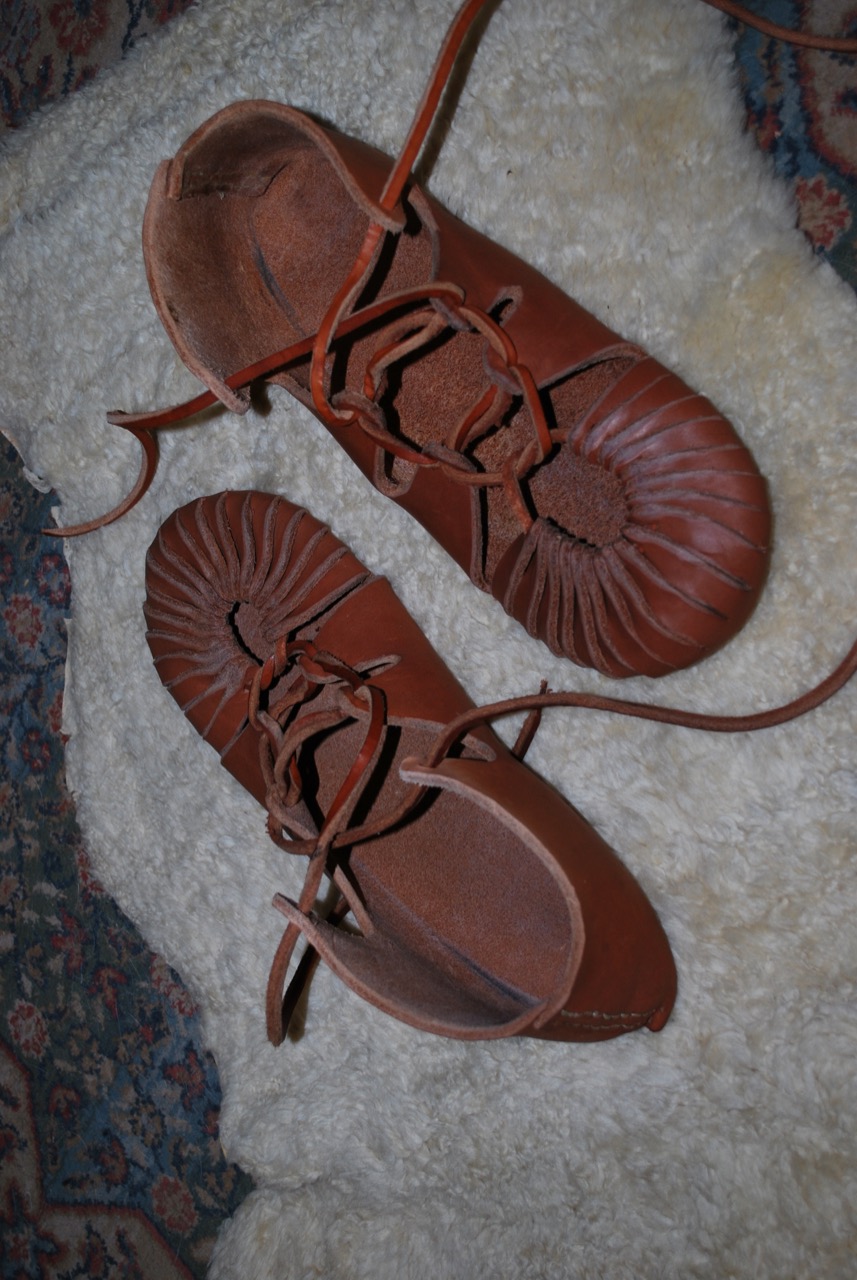
A while ago I received a request to make a pair of carbatinae (ghillie shoes) for a reenactor.  It was the first time I have done this long-distance without being able to measure the foot directly.  Luckily, we had good communication and I had a shoe last in his size so with these factors and the fact that this style is a fairly forgiving fit, I was able to create something he was happy with.

Being constructed from 12 oz Hermann-Oak harness leather, these should last for a very long time if not worn extensively on wet concrete.

I really love the simplicity of this design and continue to learn and modify my technique with each new pair.  With high quality commercially tanned leather, they can’t be made particularly cheap, but with high quality materials you certainly get what you pay for.

Very little sewing makes this shoe a fairly quick project to complete once the cutting is done.

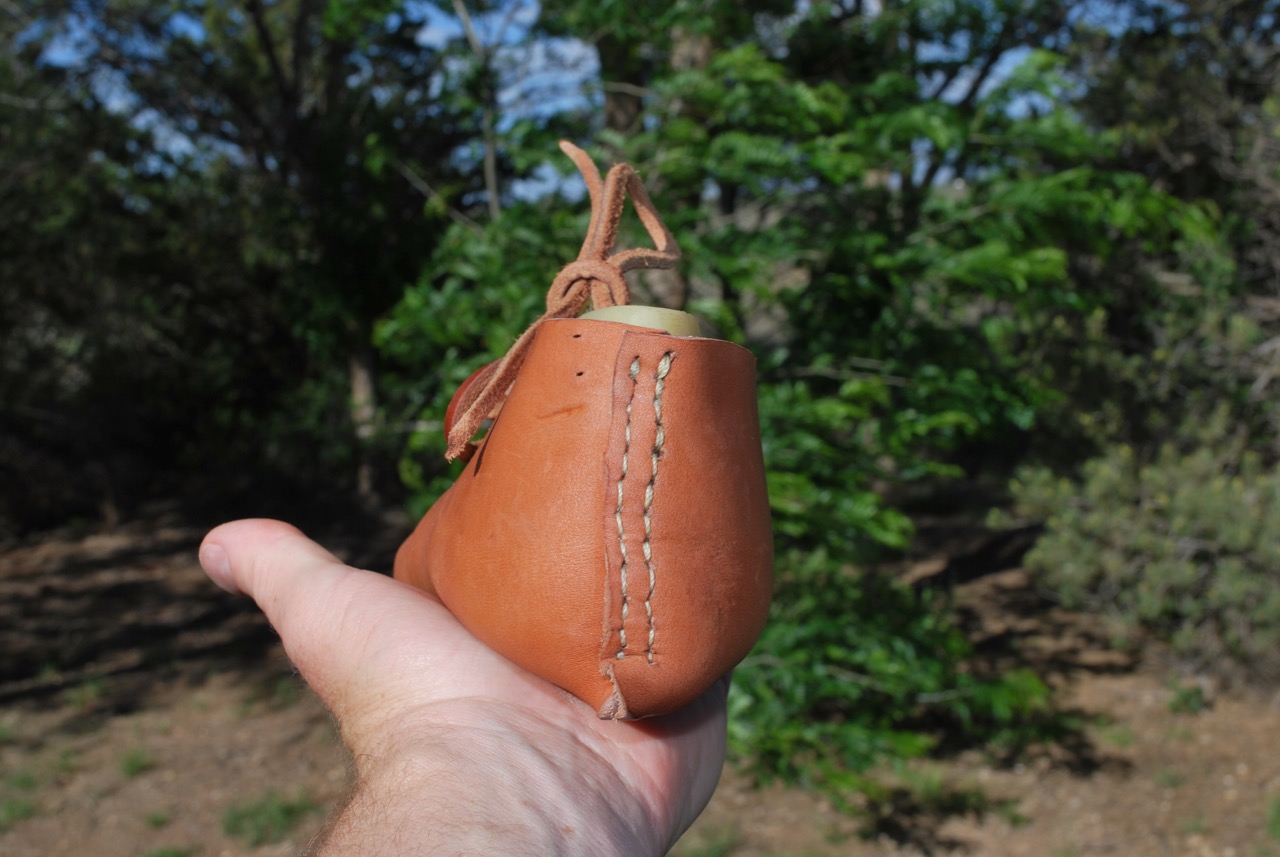
This was the first time I used a last to make this type shoe but it was a big help in the forming stage.

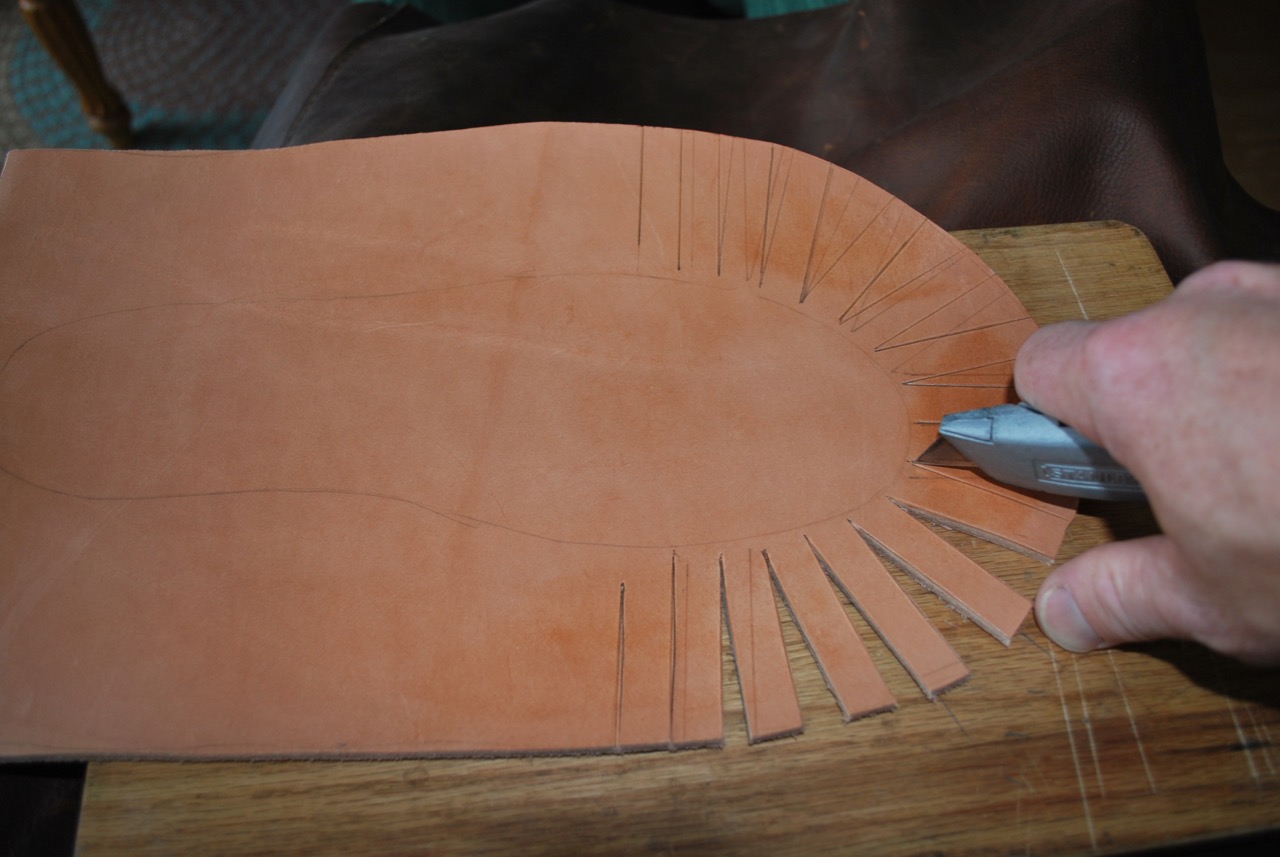
Setting the pattern and cutting them out is most of the battle.

Once they’re broken in, they fit your foot like a leather stocking, allowing for a barefoot, but well-protected feel.  I certainly like this shoe.