Outside the Box

I like architecture that thinks beyond the ordinary while still trying maintain functionality.  Here are some interesting stairs designed by TAF – Gabriella Gustafson & Mattias Ståhlbom courtesy of http://hovercraftdoggy.com/.

Looking down.

My only question is how you could get this past most of the building inspectors I have dealt with.

UPDATE: Luc sent a comment and link to “miller’s stairs” (see comments) for tight spaces:  http://www.mier.be/realisaties/trap_1.html.  I think that early american houses had more ladders in tight spaces, at least in the appalachians and the ozarks.

Shadows and Stone

George Crawford's avatarTHE ACCIDENTAL ARCHAEOLOGIST

Despite what many of us were taught while learning the trades of the cultural resource management world, archaeological imaging does not have to be dull, drab, or black-and-white.

Ken Williams’ photography, as seen on ShadowsandStone.com, highlights some amazing stoneworks of prehistoric western Europe with an eye for emphasizing the beauty, alignments, and surroundings of these structures in brilliant colors and contrast.  He also highlights some photos of actual archaeological work in progress and this interest my cartographic side greatly.

They are performing a 360° scan, collecting about 500,000 data points per second.

Also, check out his blog here: http://blog.shadowsandstone.com/

View original post

Literature du jour

Appendix to the great western story Roughing It by Mark Twain, Published in 1872 and worth a read in these topsy-turvy times.  Maybe not 100% accurate but it is a commentary by a man who actually knew Brigham Young.

Appendix. A. Brief Sketch of Mormon History.

Mormonism is only about forty years old, but its career has been full of stir and adventure from the beginning, and is likely to remain so to the end. Its adherents have been hunted and hounded from one end of the country to the other, and the result is that for years they have hated all “Gentiles” indiscriminately and with all their might. Joseph Smith, the finder of the Book of Mormon and founder of the religion, was driven from State to State with his mysterious copperplates and the miraculous stones he read their inscriptions with. Finally he instituted his “church” in Ohio and Brigham Young joined it. The neighbors began to persecute, and apostasy commenced. Brigham held to the faith and worked hard. He arrested desertion. He did more–he added converts in the midst of the trouble. He rose in favor and importance with the brethren. He was made one of the Twelve Apostles of the Church. He shortly fought his way to a higher post and a more powerful–President of the Twelve. The neighbors rose up and drove the Mormons out of Ohio, and they settled in Missouri. Brigham went with them. The Missourians drove them out and they retreated to Nauvoo, Illinois. They prospered there, and built a temple which made some pretensions ….

Click to read the entire text

Retro-Futuristic

I’m a big fan of Retro-Futuristic design.  Maybe that’s why some of the better Steam Punk designs appeal to me.  I don’t mean the stuff that’s just hot-gluing old watch gears onto some leather or carrying a toy ray-gun around in an old-western holster.  I want art that can actually be part of our daily lives.  To paraphrase a better writer than I, Life Should Be Art.  However, it shouldn’t just look cool or pretty, our tools, houses, and transportation can be practical, well-engineered, and well-made.  Things that are crafted by hand from good materials tend to be better thought out, have individual character, and have the quality of an heirloom.

Some mass-produced things are still pretty cool and it’s not always practical or affordable for us, in the modern rat-race, to make or have made, everything in our lives.  In this direction, I have noticed quite a few Makers repurposing or redesigning their possessions.  In other words, “hacking” the designs of others.

While looking for images of old scooters last night, I came across these amazing guys in Japan who took a pretty average-looking Honda scooter that looked like this:

and tore it down to the essentials before rebuilding it into this classy ride:
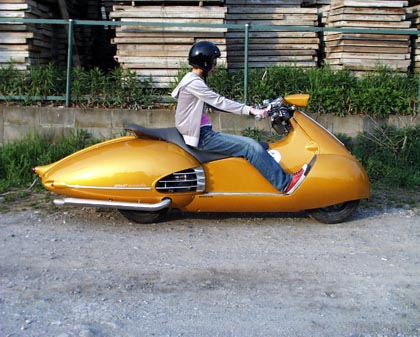
It is such a cool, yet realistic design, my first impression was that this was a 1930s or 40s scooter rebuilt.

Here’s another shot:

And it’s final color!
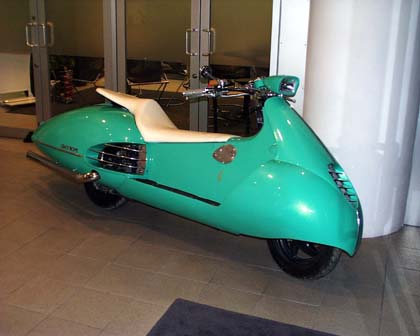
Click on the image above to have a look at their tear-down and build.  There’s a lot of pages but it’s a well-documented process.

Antler Points

I am very interested in the European Upper Paleolithic.  There are many amazing artifacts of antler and bone known from good archaeological contexts.  Having lugged a load of antler and bones around over the last several years, it seemed to be time to make some new goodies.  I went through a phase 15-20 years ago cutting and shaping using only purely traditional means, so I know it can be a long, slow process.  For these tools I used steel saws, files, and sandpaper to speed up the process but even with these conveniences there are many hours in these points.
I’ve always liked the look of these points and it seems clear to me why these were effective weapons used from 25,000-30,000 years ago across Eurasia to almost present day in parts of the Arctic.  However, until I made a few, I didn’t really appreciate how deadly and functional these points are.  As each barb is carved and sharpened, there becomes nowhere to hold the point safely while working without wrapping it in buckskin.    Not just a thrusting weapon, harpoon, or spear; I can imaging thrusting this into a rodent or badger den, using the barbs to pull out a good meal.

The plastic nature of antler will give these tools long life and resistance to breakage and can be re-sharpened many times.

The scraps are becoming arrow points like the one above.  Some will be made to modern legal specifications so that they may be used for hunting in the coming seasons.


Semi-Bowtop for Sale…

…and Some Other Nice Work

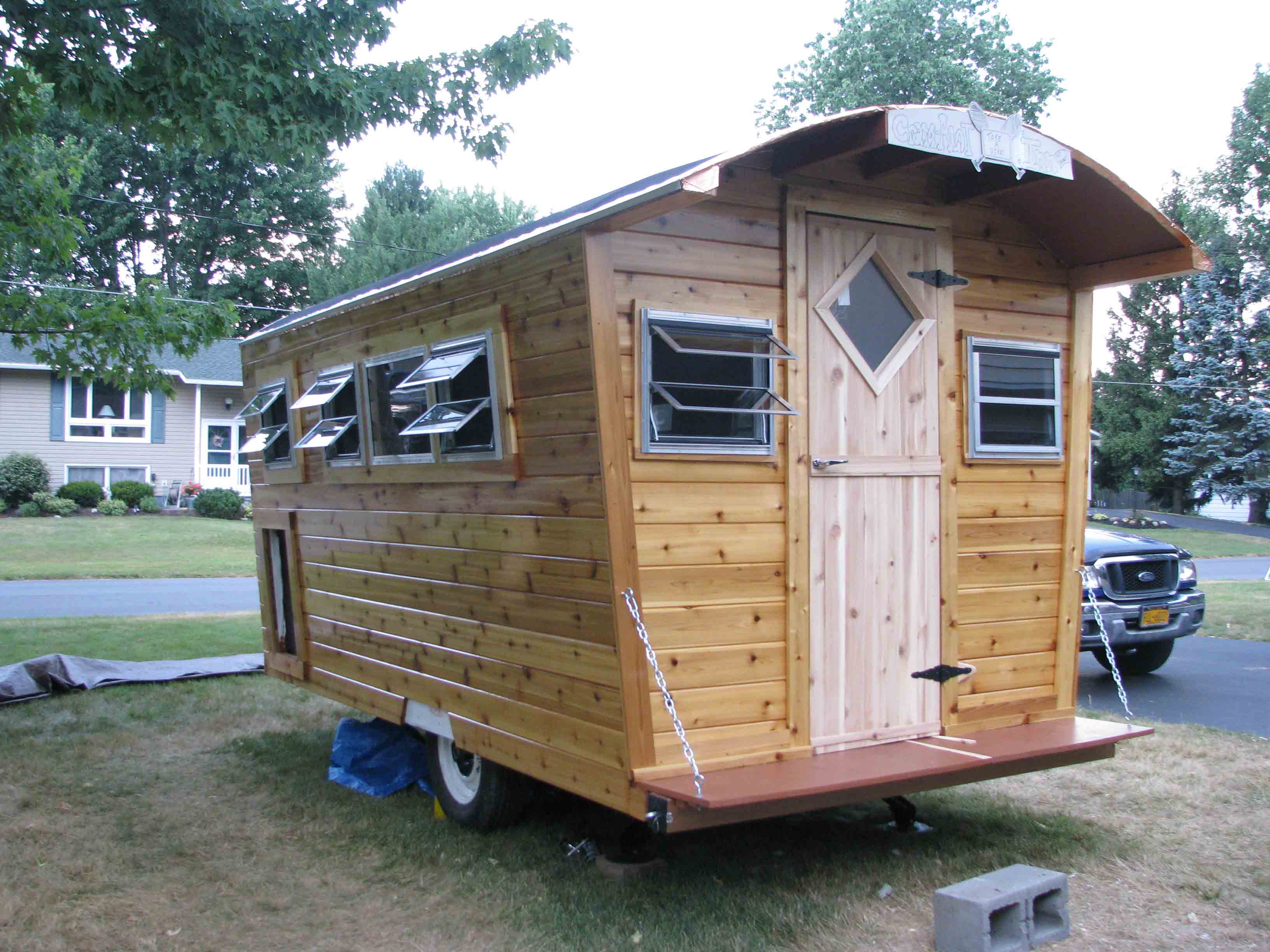
Daphne at Daphne’s Caravans has been busy this summer and appears to have another beautiful wagon nearly ready to sell.  Her description is “all cedar, with a roof like a cedar strip canoe.  7′ long, 6′ wide at the ledge, and 6′ high in the centre.”  I presume the roof will be epoxied over glass or there will be a covering over the entire thing.  If you’ve wanted your very own mini caravan but don’t have the time, tools, or inclination, this might be one for you.

Below is another creation of hers from earlier this summer.  Click the photo to see more at her website.

Walking Shoes


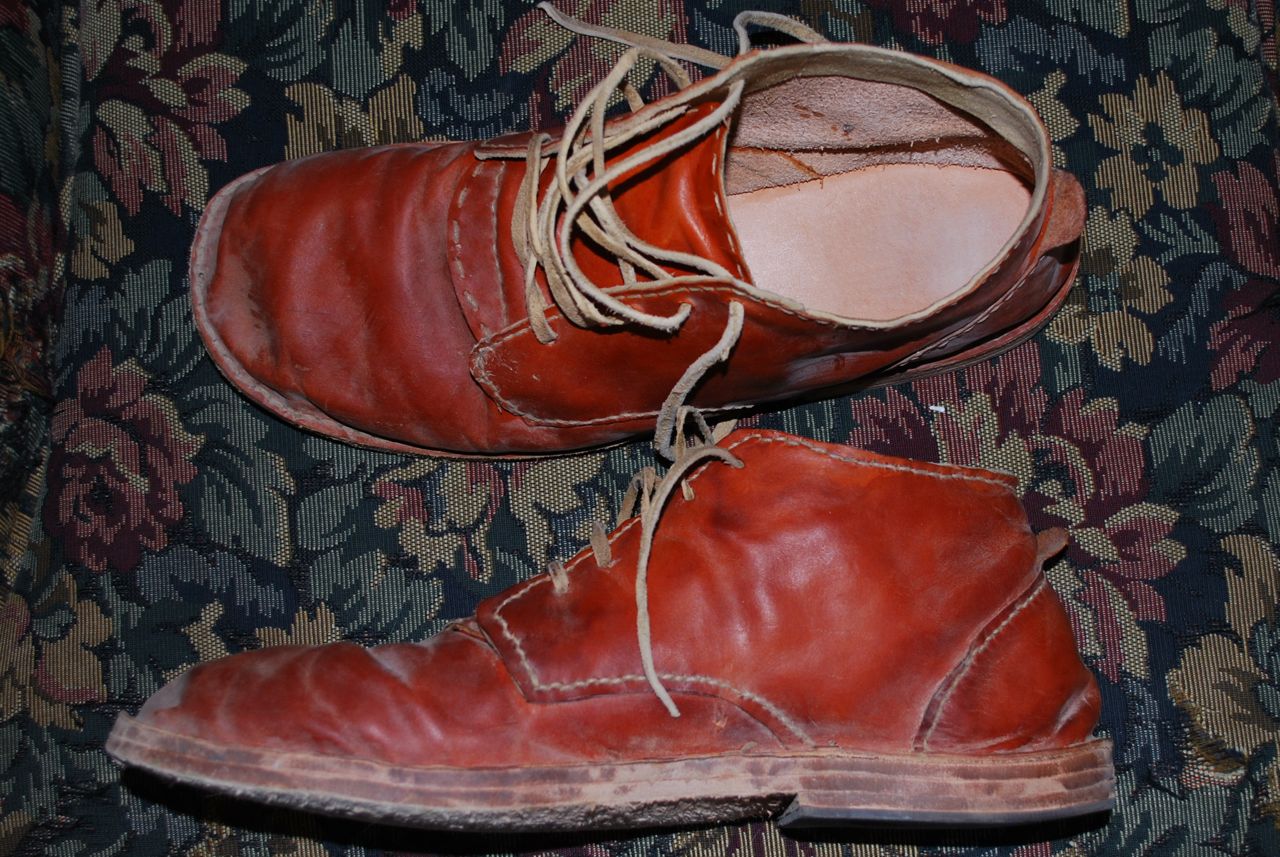
My new walking shoes.  Simple stitch-down design weighing in at about 14 oz (0.4 kg) each.  The leather is Hermann Oak 2/3 oz for the uppers and 12 oz (I think) for the mid-sole and out-sole.  There is also a double layer stacked heel that has a thin rubber layer on the bottom.

They have about 6 trail miles on them in this photo.  They are dyed “light tan” and coated in home-made dubbin.*

The goal was to create an extremely lightweight shoe that will protect from the gawd-aweful sand burrs, cacti, and other sharpies that get into the sandals.  They are loosely based on “desert boots” but provide a bit more protection.  They are re-soleable, environmentally friendly, and made without sweatshop labor.  Since I have little fashion sense, they can be worn with anything and in public.  My only change in design will be to make the toe portion of the upper in slightly heavier leather as they will hold their shape better.

*A waterproofing concoction, in this case made from beeswax, olive oil, and walnut oil.
 

A few more images:

The shoes are unlined.  Constructed with a double needle saddle-stitch.  I wasn’t even concerned with stitching on this pair so they aren’t perfectly straight or small.  The tongue is lined with brain-tanned deer hide and there is a band of brain-tan around the top edge for comfort.  The laces are also brain-tan deer from a heavier hide.

The out-sole stitch is trenched in about 1/8″ to protect the thread.

They may not be fashionable but I think they have style.


More Cool and Vintage(ish) Wagon Homes

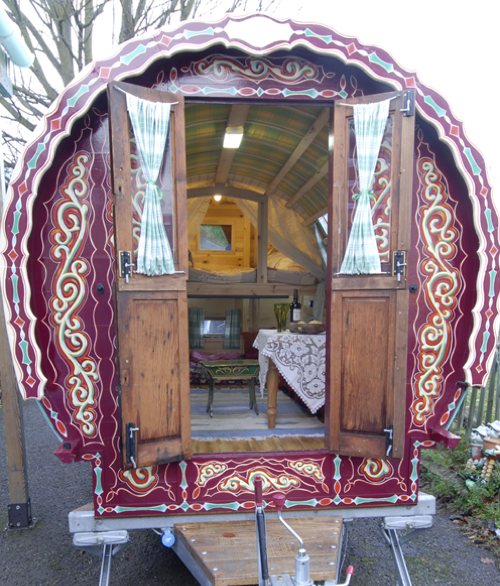
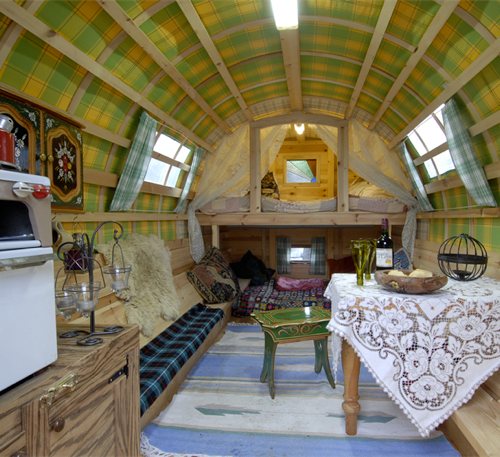
First of all, a beautiful Bristol bowtop shown on Handmade Charlotte.

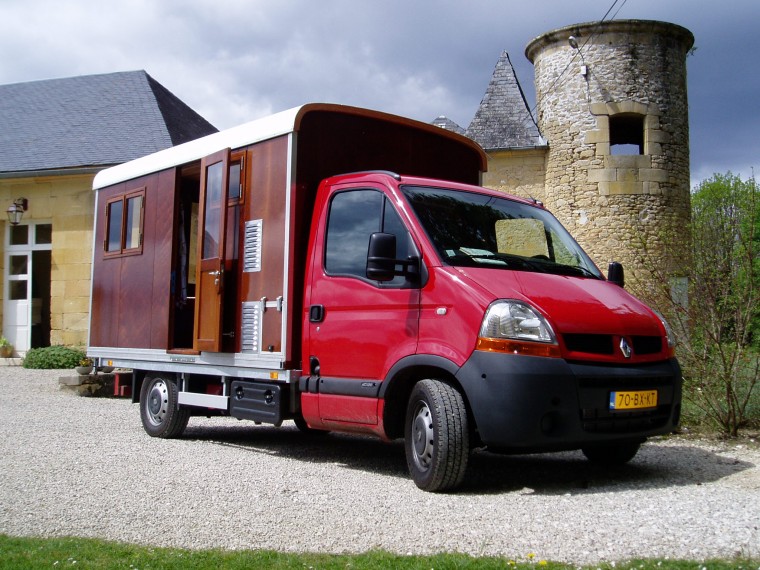
Tonke Campers make some amazing caravans in the Netherlands.  The most remarkable part of this design is that the whole living compartment easily removes and can be left as an autonomous dwelling.  Handy indeed.


A restored “showman’s” wagon found at shootfactory.co.uk.

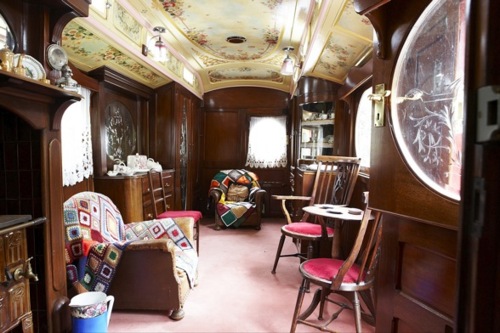
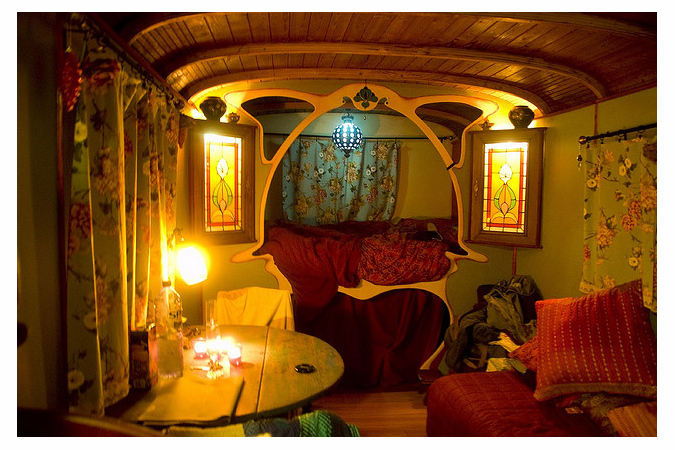
And a really great Art-Noveau style caravan.  I want more pics of this one.  I found this one here.

Finally, I don’t generally like the pop-up campers but when this one is “deployed” it’s pretty amazing.  Designed by Axel Enthoven, it is appropriately called the Opera.

More information about this cunning design here.