Lightening my load

About an addiction I didn’t even realize I had.

BOOKS. A hidden addiction.

It seems that minimalism is the word du jour around the internet these days.  Tiny houses, the 100 Thing Challenge, Non-Conformist work strategies, and urban homesteaders are filling blog-space with ideas and adventures outside the old consumerist norm.  Many people are looking for something more in their lives and realizing that Stuff is not the answer.  There is often an epiphany in someone’s life when they come to the realization that humans are not just professional consumers or targets for marketing strategies.  Shopping is not a valid pastime.  Hopefully there is more to our short existence than reality TV.  Having lived without regular television for quite a few years I feel very lucky to miss out on political soundbites, sit-coms, and mass marketing of sports-watching.  Unfortunately, even with my relative isolation, I know about these things from reading the news on the Internet almost daily.

Choosing to not buy into most popular-culture lightens my mental load a lot and (hopefully) allows time for deeper and more elevated thinking as well as crafting a better life.  Daily walks, exercise, building things, cooking good food, and reading make for a calmer mind and a lower stress level.  These are intentional activities not the imposed sedation of consumer culture.
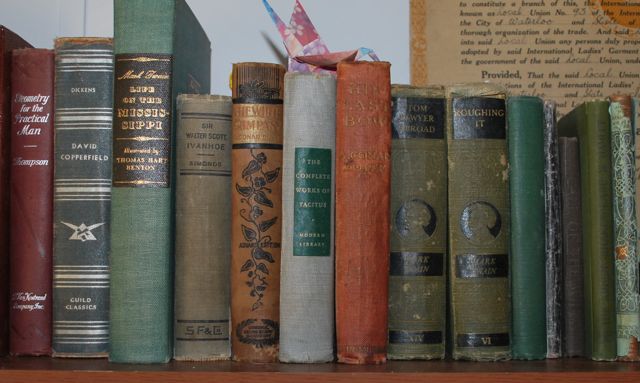
When I had to leave Flagstaff about eight years ago, I began uncluttering my belongings.  I don’t think of myself as a collector, but I had amassed an enormous library of books.  This is what people on an academic path do … right?  Who did I think I was?  Some nineteenth-century English aristocrat?  Why would I possibly need a personal library?  It hit me one day that this was crazy.  I have hauled books around since I was a teenager until it became truckloads to move while nearly always living within twenty minutes of a large, academic library.
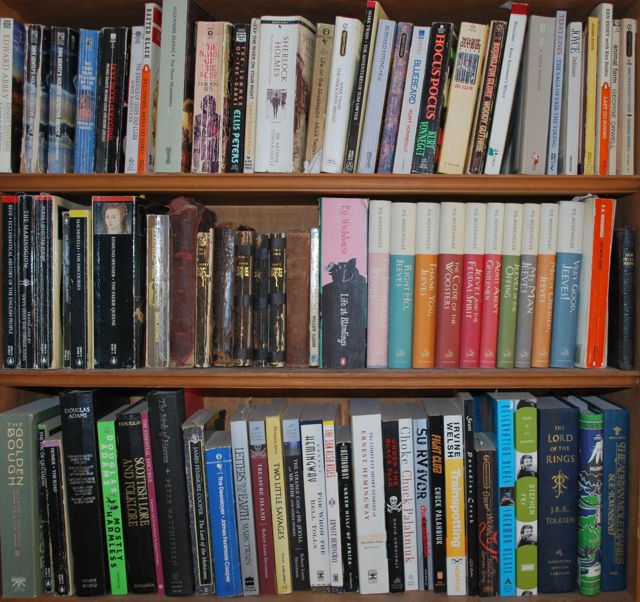
Sure, as a person who researches writes for work there are certain references and sources I need to have on hand and could not adequately perform my job without, but I had fallen into the trap of keeping books around “just in case” I wanted them again.  That’s not to say that there aren’t recreational books I would never want to be without and I hope to read or reference many more times before I die.

I was able to sell a fair number of books and make a few dollars from them but, in the end, found that there isn’t a high monetary value on most books.  These I gave away.  I gave away even more to the local library and to the Goodwill store.  I still have far too many books, but now its really just the one’s I love or have a need for.  The ones I may not need but can’t quite part with are: a few rare antiques, first editions, special editions, and expensive academic tomes.

I’m still giving away books but I’m still buying them as well.  Being far from a real bookstore actually makes it easier, not harder, to shop, read reviews, preview and purchase books.  Without getting up I can order a book and expect it in my post office box in a week.  Such is the Amazon.com culture.

I still read voraciously, but now, when considering a book, I really try to consider how much I want to own it and do I want to lug it around? Another anchor holding me down.  Can my local library get it?  This has been a difficult addiction to overcome.  I’ve bought books since I was fourteen and, on some level, prided myself on having such an extensive collection at my fingertips.  It felt good to put another dozen or so hardbacks in my Goodwill box this morning.  Just a few hundred more to let go (but a few more are on their way to my post office).
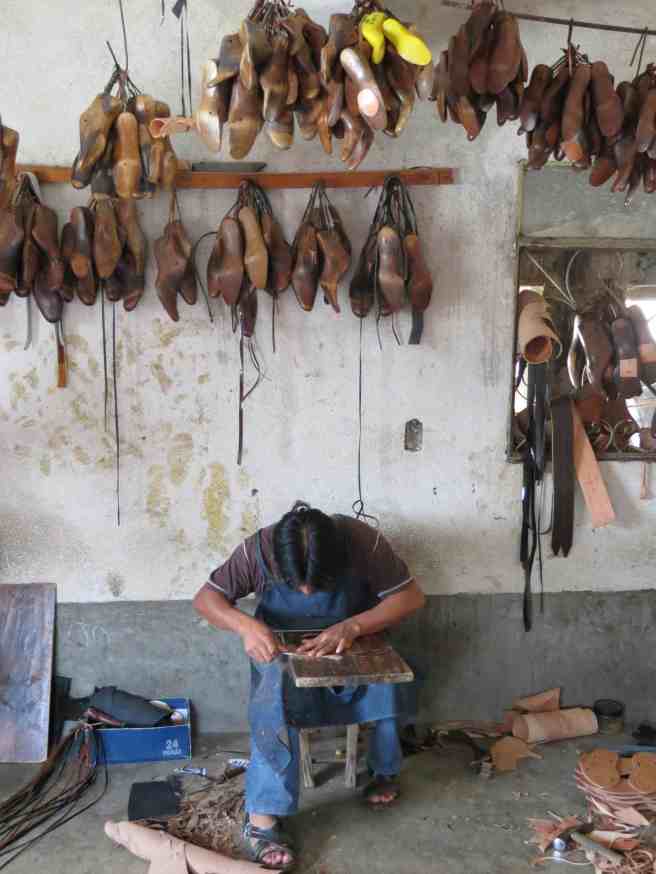
Huaracheria Aquino in Yalalag, Oaxaca (reblogged)

This is a great series of photos of a surviving craft still producing their own leather. This maintains an economy (for them) that could have very little cash outflow, replacing the cost of raw materials with labor. I hope these industries survive.

A great photo of a huarachero from the series.

huaracheblog's avatarHuarache Blog

Nestled into the Sierra Norte mountains of Oaxaca is the small town of Yalalag.

Yalalag is very precious town, not only for it’s strong Pre-Hispanic traditions, but also because like only a handful of other small towns in Mexico, most of the Yalalag population is still dedicated to the traditional craft of Huarache making.

Huaracheria Aquino is the largest ‘Taller’ workshop in Yalalag and they are well known for their high quality Zapotec Huaraches.

What also sets this family run business apart from most other Huarache makers in Mexico is that their crafting process begins at their in-house tannery, where they vegetable tan all their leathers to their precise specifications.

Huaracheria Aquino is famous for their traditional women’s Zapotec Yalalag sandals (the only existing traditional women’s leather sandal/huarache style in Mexico).

Photo of young Zapotec Woman in Mitla, by Guy Stresser-Péan, 1957

Their ‘Tejido’ Huarache also stands out for the…

View original post 153 more words

Union made

Reposted:

Did you know that labor unions made the following 36 things possible?
1.Weekends without work
2.All breaks at work, including your lunch breaks
3.Paid vacation
4.Family & Medical Leave Act (FMLA)
5.Sick leave
6.Social Security

7.Minimum wage
8.Civil Rights Act/Title VII – prohibits employer discrimination
9.8-hour work day
10.Overtime pay
11.Child labor laws
12.Occupational Safety & Health Act (OSHA)
13.40-hour work week
14.Workers’ compensation (workers’ comp)
15.Unemployment insurance
16.Pensions
17.Workplace safety standards and regulations
18.Employer health care insurance
19.Collective bargaining rights for employees
20.Wrongful termination laws
21.Age Discrimination in Employment Act of 1967 (ADEA)
22.Whistleblower protection laws
23.Employee Polygraph Protection Act (EPPA) – prohibits employers from using a lie detector test on an employee
24.Veteran’s Employment and Training Services (VETS)
25.Compensation increases and evaluations (i.e. raises)
26.Sexual harassment laws
27.Americans With Disabilities Act (ADA)
28.Holiday pay
29.Employer dental, life, and vision insurance
30.Privacy rights
31.Pregnancy and parental leave
32.Military leave
33.The right to strike
34.Public education for children
35.Equal Pay Acts of 1963 & 2011 – requires employers pay men and women equally for the same amount of work
36.Laws ending sweatshops in the United States
THANK A UNION !!!

Huarache Blog

If you are interested in Huaraches, this blog is the end-all of huarache information.

huaracheblog's avatarHuarache Blog

Señor Alfaro is 70 years old and the last Huarachero in Sayula, Jalisco. Although his woven Huaraches have won him awards in regional craft competitions, today like may Huaracheros his business has become very difficult. Although Señor Alfaro has done very well to stay in a trade where many have quit, he melancholically tells me that Huarache making is a craft headed for extinction and that he has advised all his family not to get into it.

Sadly most towns in Mexico have at most one Huarachero left, whereas 30 years ago each town used to have many. Señor Alfaro told me that at one time 90% of Sayula locals wore Huaraches and 10% wore shoes, today that ratio is inverted and only 10% wear Huaraches.

But besides the reduced consumer base, there are 2 major difficulties facing skilled Huaracheros today, the rising costs of vegetable tanned leather and rubber tyres, and that…

View original post 163 more words

Huaraches!

There are Huaraches north of old Mexico.

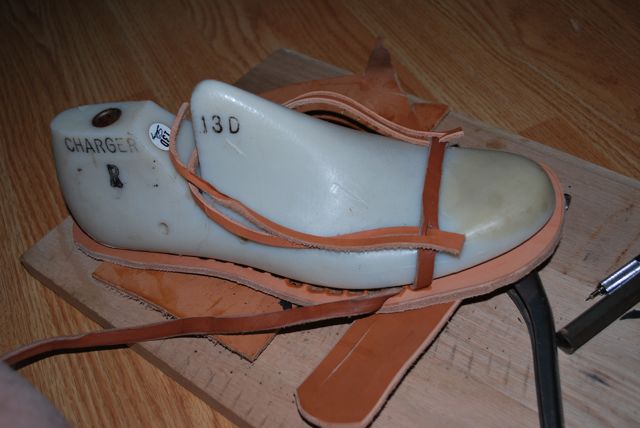
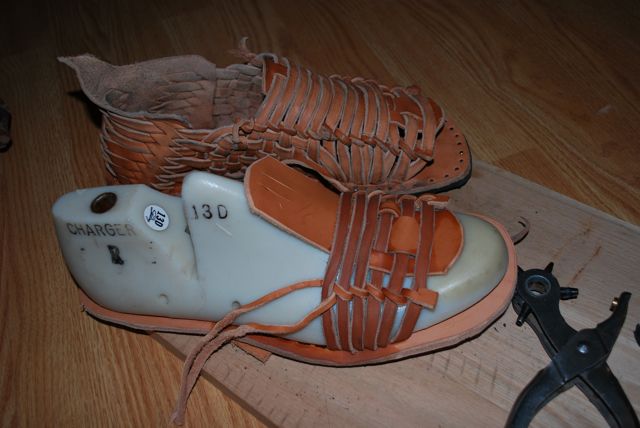
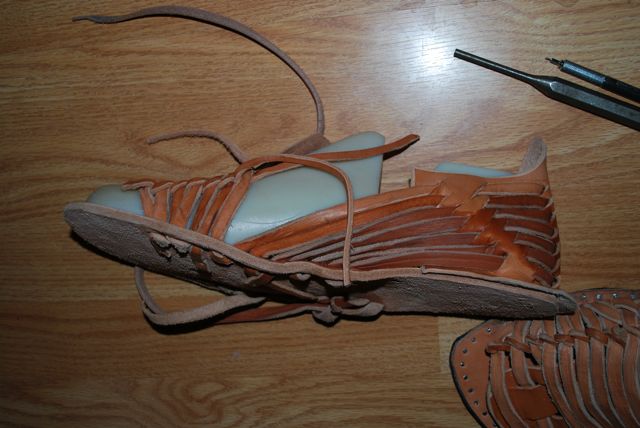
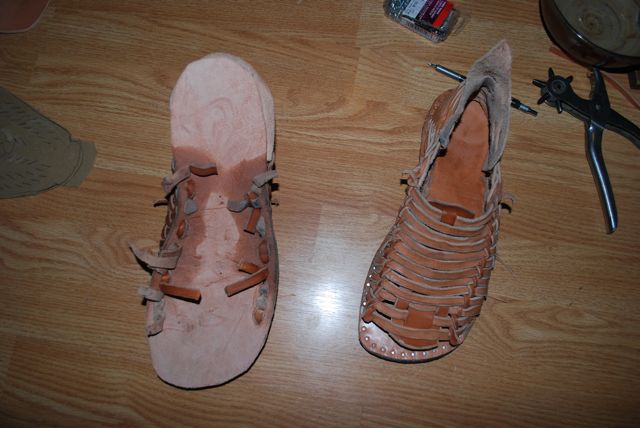
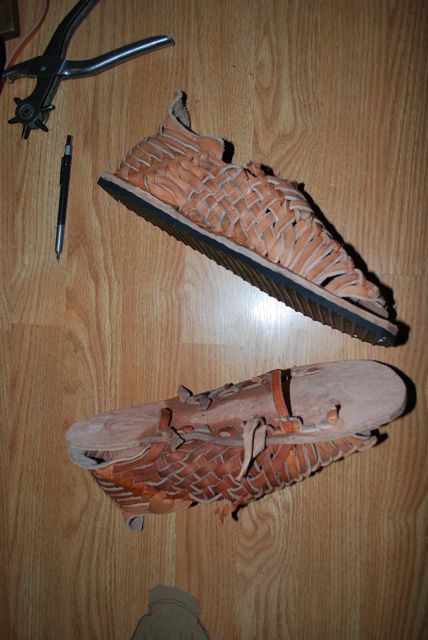
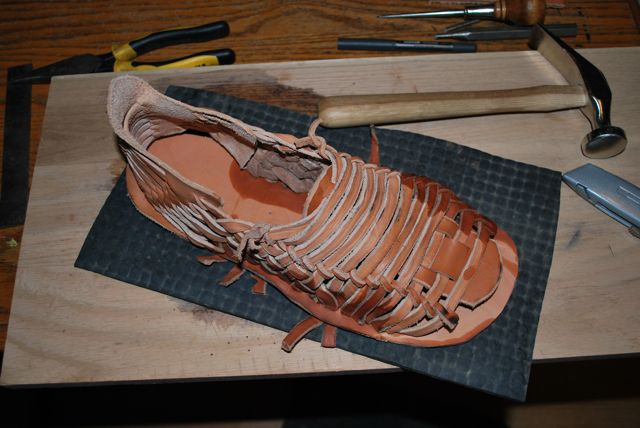
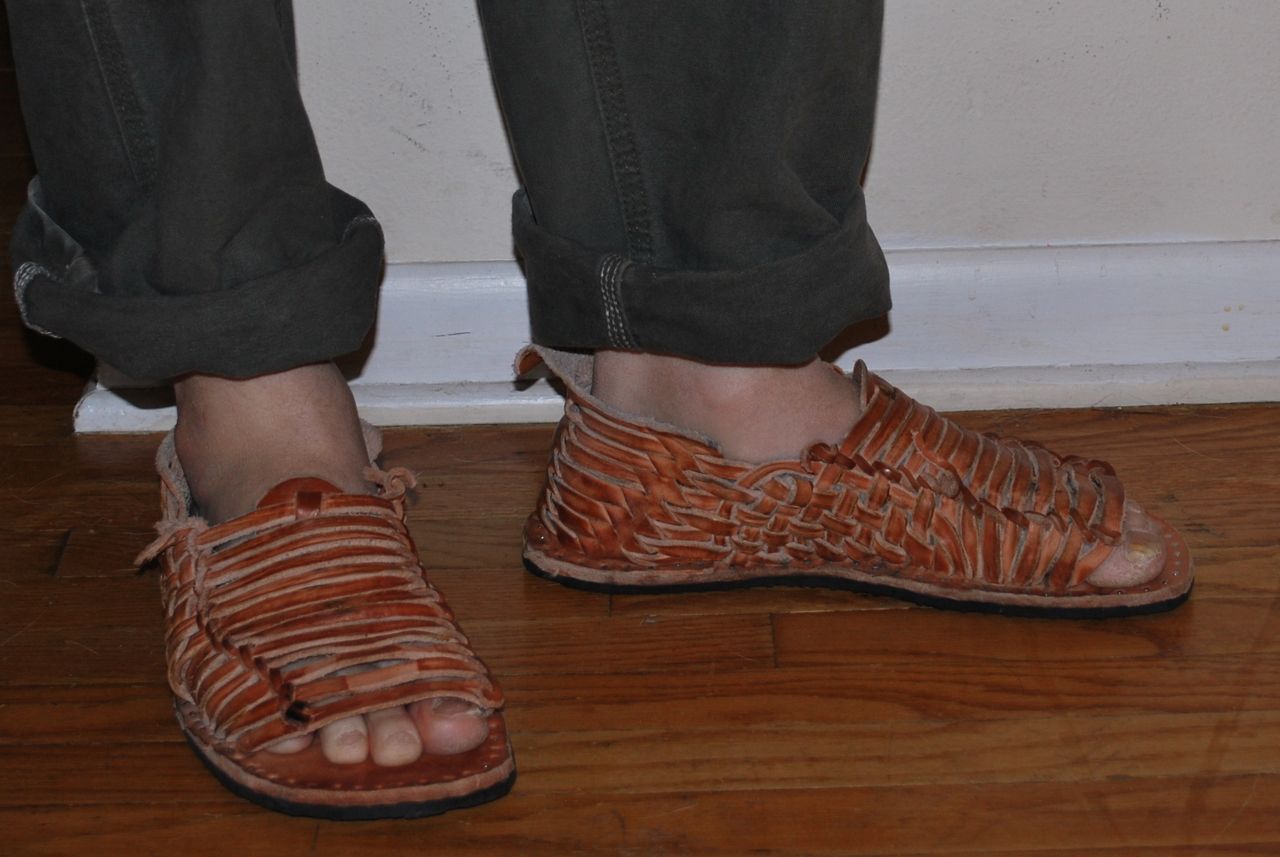
As a craftsman of sorts, I understand that making a “one-off” of something does not imply expertise and replication builds a real understanding of the object being produced. However, this is certainly not my first leather working or shoemaking project but a major improvement on a theme.  The lasts I purchased earlier in the year on Ebay have finally been used to actually make a shoe so I documented the process as it came along last week; mistakes and changes included in the process.  While searching for huarache construction, I have only been able to find the simplest tire sandal designs and many links to “barefoot” running sandals.  I recently found the Huarache Blog and scoured it for inspiration and design secrets from real huaracheros in old Mexico.

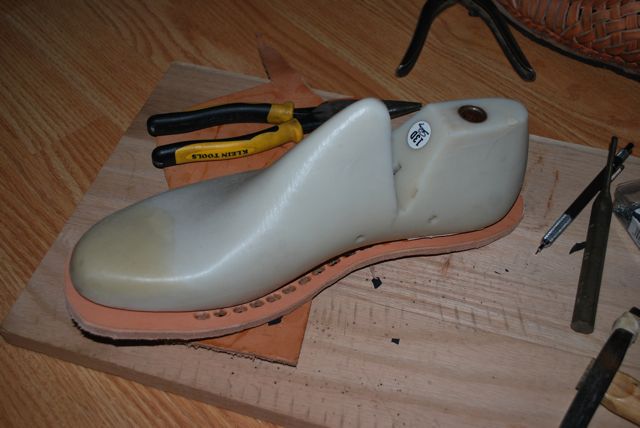
Sole cut out, punched for strapping and nailed to the last.

The lasts shown here seem to fit me well but are an Oxford dress shoe style, I think, meaning they run a little long in the toe.  New lasts are pricey (ca. 50 euros/70 US), but I think it will pay in the long run to invest in a better design for myself and those people I might make shoes for.

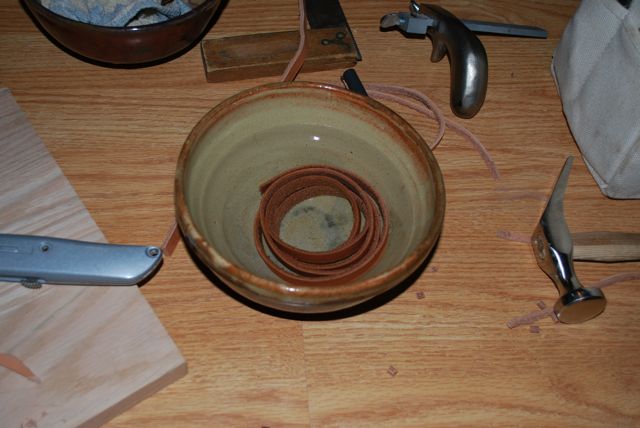
Wetting out the first strap.

I didn’t show the strap cutting process as there is little to be learned about that.  My fancy new Osbourne strap cutter can be seen in the upper right of this photo

Since this project was experimental, I used scrap leather, meaning I could only get about three foot (one meter) straps.  In future, I’ll probably use 6 foot or longer pieces (2+ meters).

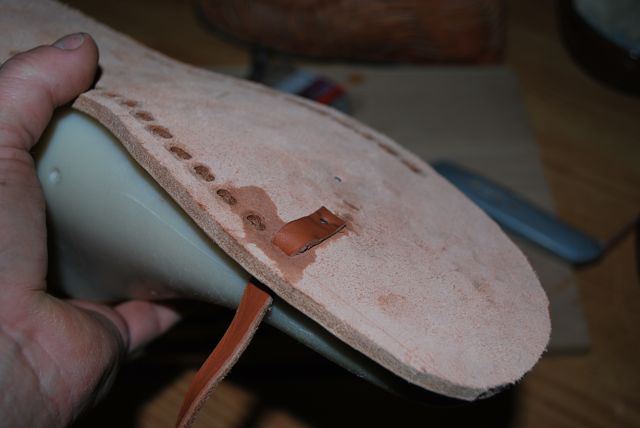
Nailing the strap to the last.

Pre-punched holes in the mid-sole and away we go.  A little tallow on the straps helps cut the friction of the leather but ended up being not worth the trouble.

Placing the twining thong.

This is a signature of the style I chose.  The vamp or tongue-like piece was later removed as I didn’t like the way it looked.  I’ll experiment more with that later.

Lacing and twining.

Unlike normal, I completely finished the first shoe and removed it from the last to check size and shape to determine any major changes that would need to be made.

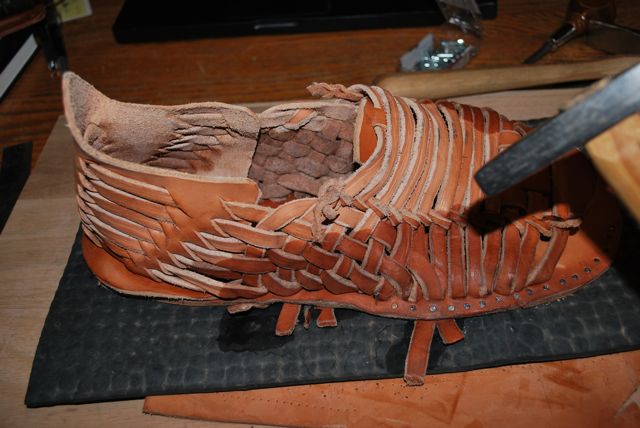
Heel added and lacing up the back. I think this step shows the evolution of the strap sandal to the modern huarache.

The straps running under the mid-sole look like a problem here but are ultimately skived down, wetted, and hammered flat.

Straps ends as added in. Longer straps would lessen the ends here.

I used simple wire nails to attach the soles but sewing would work too.

Ends to be trimmed and skived, and a finished sole.

Pulled from the last, they actually matched.  I don’t know why I was surprised but that made me happy.

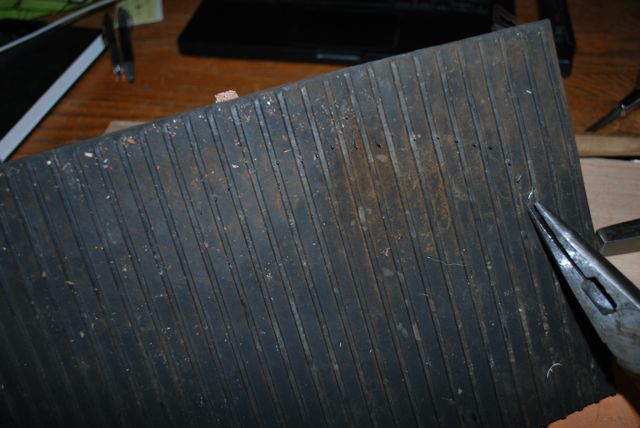
Preparing to nail the sole.

This method is fast and efficient, and I suspect rather tough.  The nails are pressed through the leather and rubber into a thick leather scrap below.  Otherwise, you would need to pry it up from the work board.

Nailing the sole.
Bending the nails in preparation for clinching.

The nails are bent over (inward) to prepare to “clinch” them.  There are no photos of this part of the process but this was done by setting the shoe back upright on a small anvil and hammering the nails down tight with a punch.  The pre-bending causes the nail to curl inward and back up into the sole.  Voila!  The Huaraches below have about five miles of hiking on them now and they’re beginning to have some character.

Huaraches you say?  Do tough guys wear such things?  In an era of cheap, slave-made garments, its easy to forget how self-reliant our ancestors were for such things as raiment.  I include this excellent photo of Capitan Alcantar I found on the Huarache Blog as a great historical image of a man of action wearing his huaraches and ready for war.

Click the image for more historic photos like this.